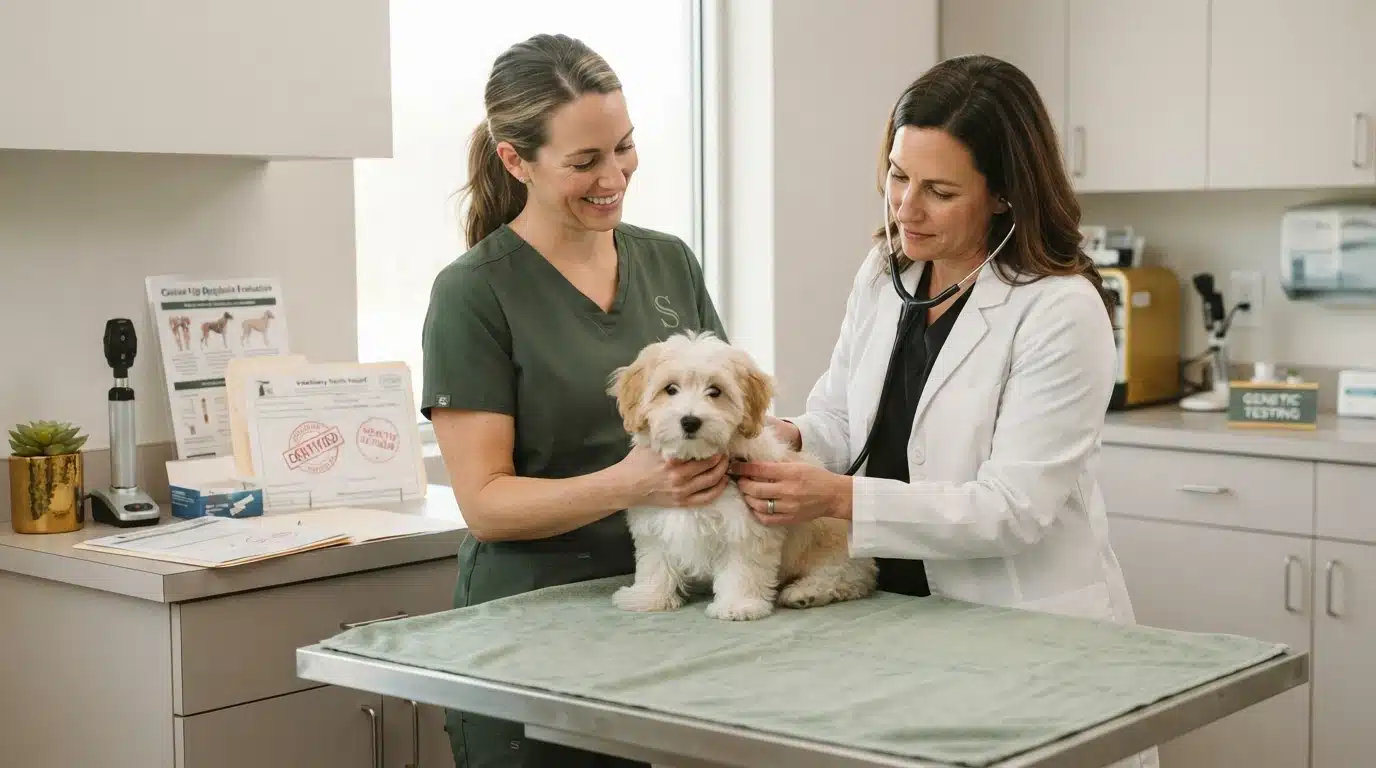
Quick Summary: Small-breed puppies can thrive in Utah winters, but those under 16 weeks need extra caution because they lose heat quickly and may encounter parvovirus on public ground. Keep outings short, use caution below 45°F, limit walks below 32°F, and stay indoors below 20°F while watching for shivering, lifted paws, or pale skin. Rinse and dry paws after every walk to remove de-icing salt, and get a breeder’s vaccination, vet, transport, and weather-delay details in writing before pickup.
A Salt Lake Valley family can hold a Havanese or Cavapoo on the front step in January and stay perfectly safe. Put that same puppy on a walk at 28 degrees in February, and the story changes fast. A 7-pound body with a single coat and a belly close to frozen ground sheds heat far quicker than a 70-pound northern breed.
That gap is the challenge this guide solves: knowing when Utah winter puppies are actually at risk, and when the snow is just fun. We cover cold tolerance by age and size, early signs of hypothermia and frostbite in dogs, paw care around de-icing salt, and smart questions to ask before a winter pickup or delivery.
As a South Jordan breeding program raising Havanese, Havapoo, and Cavapoo puppies, we see Utah’s elevation, inversions, and icy sidewalks every day. This guide pulls that local experience together so your small-breed puppy stays warm, healthy, and happy through the snowy months.
Winter Puppies in Utah: What the Season Changes for a Small-Breed Dog
Winter puppies in Utah can absolutely work, and many families find the quieter season makes early training easier. The season just changes the setup. Small breeds like Havanese, Havapoos, and Cavapoos need shorter potty trips, warmer rest spots, and extra paw care on icy sidewalks. If you plan for those three things, a snowy start is a good start.
A quick checklist before you decide:
- Age matters. A puppy under 16 weeks has an unfinished vaccination series, so limit public surfaces while parvo risk lingers.
- Coat matters. Single-coated small breeds chill fast, even fluffy ones.
- Your schedule matters. Frequent short trips beat long cold outings.
Winter-Born Versus Winter-Arriving: Two Different Starting Points
A puppy born in December learns snow as normal. A puppy arriving mid-winter from a warm whelping room meets cold as a surprise, so expect a short adjustment period. Both can thrive. The difference is patience: winter-arriving pups need slower introductions to outdoor time. When breeders like those at Sage Puppies plan pickups around weather and travel, that transition gets easier.
Why Small Breeds Behave Differently in Cold
Small breed puppy cold tolerance is mostly math. A 7-pound body loses heat far faster than a 70-pound northern breed, because little dogs have more skin per pound and less insulation. Havanese do carry a double coat, which helps, but a shaved belly still touches frozen ground. Watch for shivering, tucked tails, and lifted paws.
The Utah Factor: Elevation, Dry Air, and Inversions
Utah winters run cold and very dry. Salt Lake City’s elevation and air density make weather feel different from the Midwest, and inversions trap cold air in the valleys for days. Dry air cracks puppy paws and noses, so balm helps. De-icing salt also demands consistent paw care after every walk.
Setting Outdoor Time With Temperature, Age, and Coat
Published Temperature Bands and What They Mean
What temperature is too cold for a small-breed puppy? Most vets treat 45°F as the first caution line, 32°F as the point where you shorten outings, and 20°F as a hard limit. The bands below show how a Utah winter puppy fits each one.
| Band | What It Means | Who Shifts It Down |
|---|---|---|
| 45-60°F | Comfortable for most dogs | Unacclimated or under-16-week puppies |
| 32-45°F | Use caution, shorten walks | Small breeds, thin coats |
| 20-32°F | Limit to short potty trips | Single-coated dogs like a Havanese |
| Below 20°F | Stay indoors, brief breaks only | Every puppy |
Federal standards for regulated dogs require housing at 45°F or higher for sensitive or unacclimated animals, per this USDA tech note.
How Age and Acclimation Shift the Limit
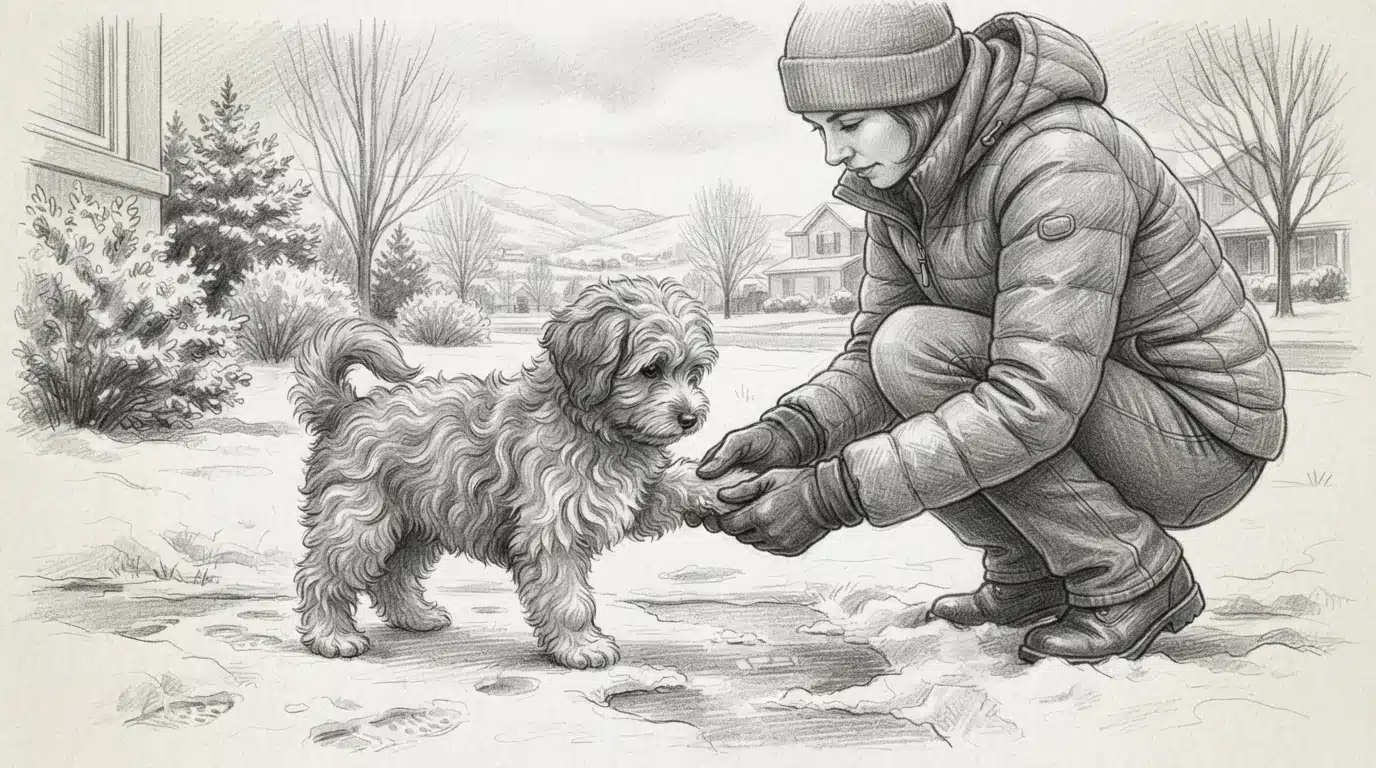
Age matters as much as the thermometer. Puppies under 16 weeks lose heat fast and tire quickly, so their bands sit tighter. Corners, wind chill, and elevation move the real feel lower than the reading. Embark’s guide recommends extra caution below 32°F for small or thin-coated dogs.
Reading the Signs of Cold Stress
Watch for shivering, a tucked tail, lifted paws, hunching, or slowing down. Cornell’s winter safety page lists ears, paws, and tail tips as frostbite-prone. Bring your puppy in at the first sign.
Snow, Ice, and De-Icing Salt: Foot and Skin Care
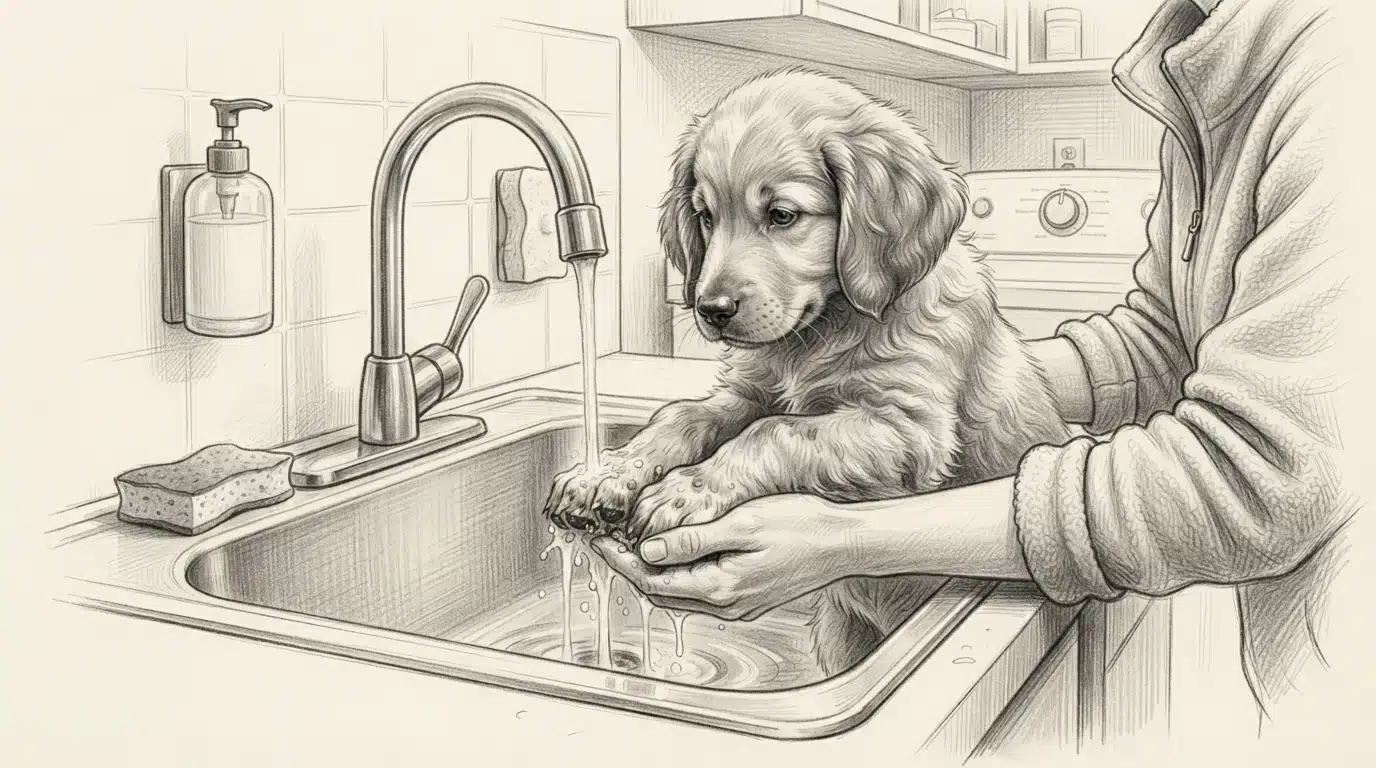
Protecting your puppy’s paws from road salt comes down to one habit: a short rinse and dry routine after every walk.
- Rinse paws in lukewarm water or wipe them with a damp cloth.
- Dry fully, including between the toes.
- Check pads for cracks, redness, or stuck ice.
- Watch for licking, which can upset your puppy’s stomach if salt is still on the fur.
That last step matters more than most owners expect. Salt and de-icing chemicals can burn paw pads and cause stomach trouble when licked, according to DoveLewis. One exposure stings. A winter of Utah sidewalks turns that sting into cracked, sore pads.
Iceballs, Cracks, and the Bedding Between Toes
Wet snow packs between toe pads and forms hard iceballs. They pull at fur, make walking painful, and split skin. Trimming the hair between toes keeps packing to a minimum. A dab of paw balm before a walk helps too, but only on pads, never between toes where ice grips.
Frostbite Recognition and First Response
Watch ears, tail tip, and paws. Frostbitten skin turns pale gray or blue, feels cold and firm, then reddens and may blister as it warms. Per Small Door Veterinary, move your puppy somewhere warm and contact your vet. Warm the area with lukewarm water, never rub it, and never use a hair dryer or direct heat.
Choosing Winter Gear That Actually Helps a Small Breed
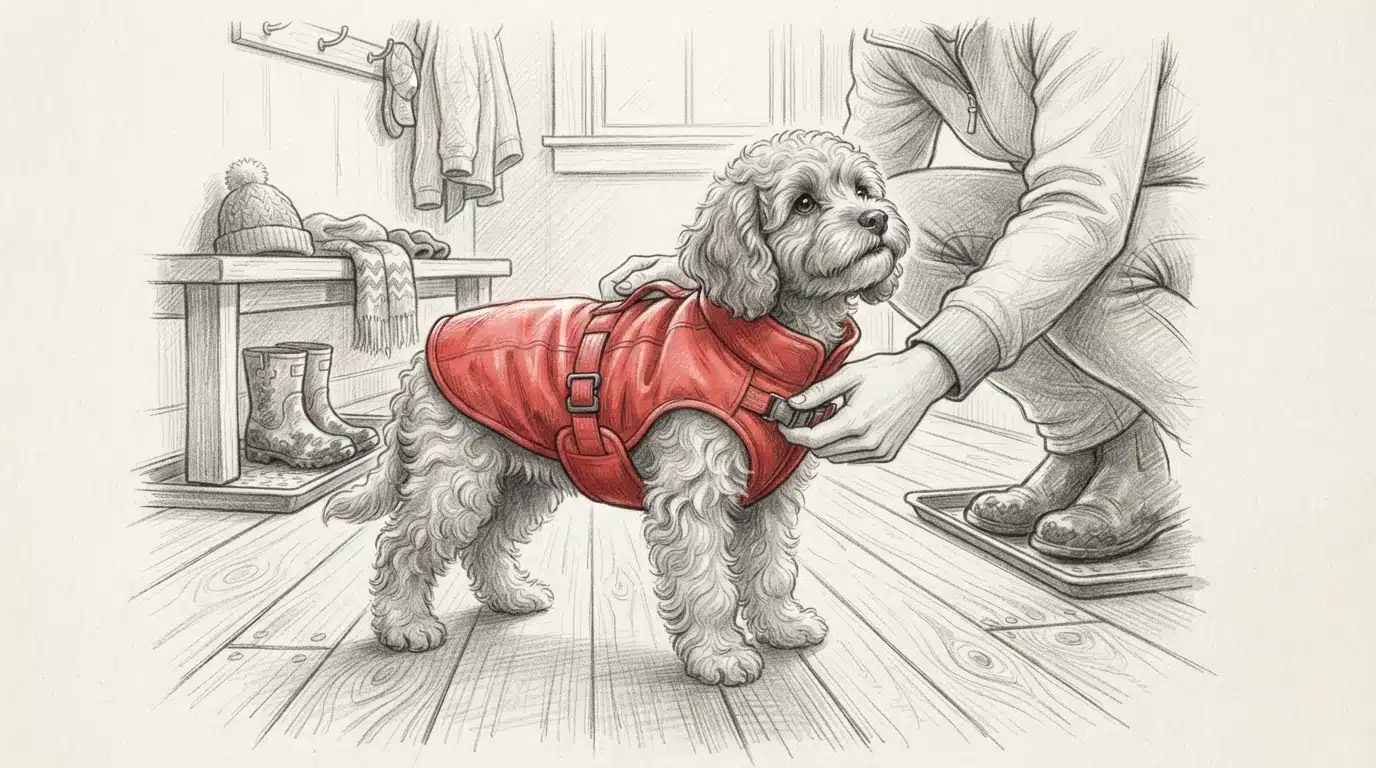
Yes, Havanese, Havapoo, and Cavapoo puppies need winter coats in Utah. All three carry hair rather than a thick double coat, and a 7-pound body loses heat fast once temperatures drop toward freezing. Good gear meets three criteria: it covers the chest and belly, fits snugly without rubbing, and stays put during play.
Coats and Sweaters: Coverage and Fit
Pick a coat that shields the chest and belly, where snow splash hits hardest. Waterproof shells beat knit sweaters for wet snow, though fleece works for quick potty breaks above 32°F. Check that two fingers slide under the strap without slack, and that the back hem reaches the tail.
Fit, Habituation, and Alternatives
Let your puppy wear new gear indoors for a few minutes first, with treats. If scratching or freezing in place continues, try a different cut rather than forcing it. Booties help with salt and ice, but many puppies hate them; paw balm and a quick rinse work too. For Utah winter puppies, fit and patience matter more than price tags.
Coat Condition and Winter Grooming
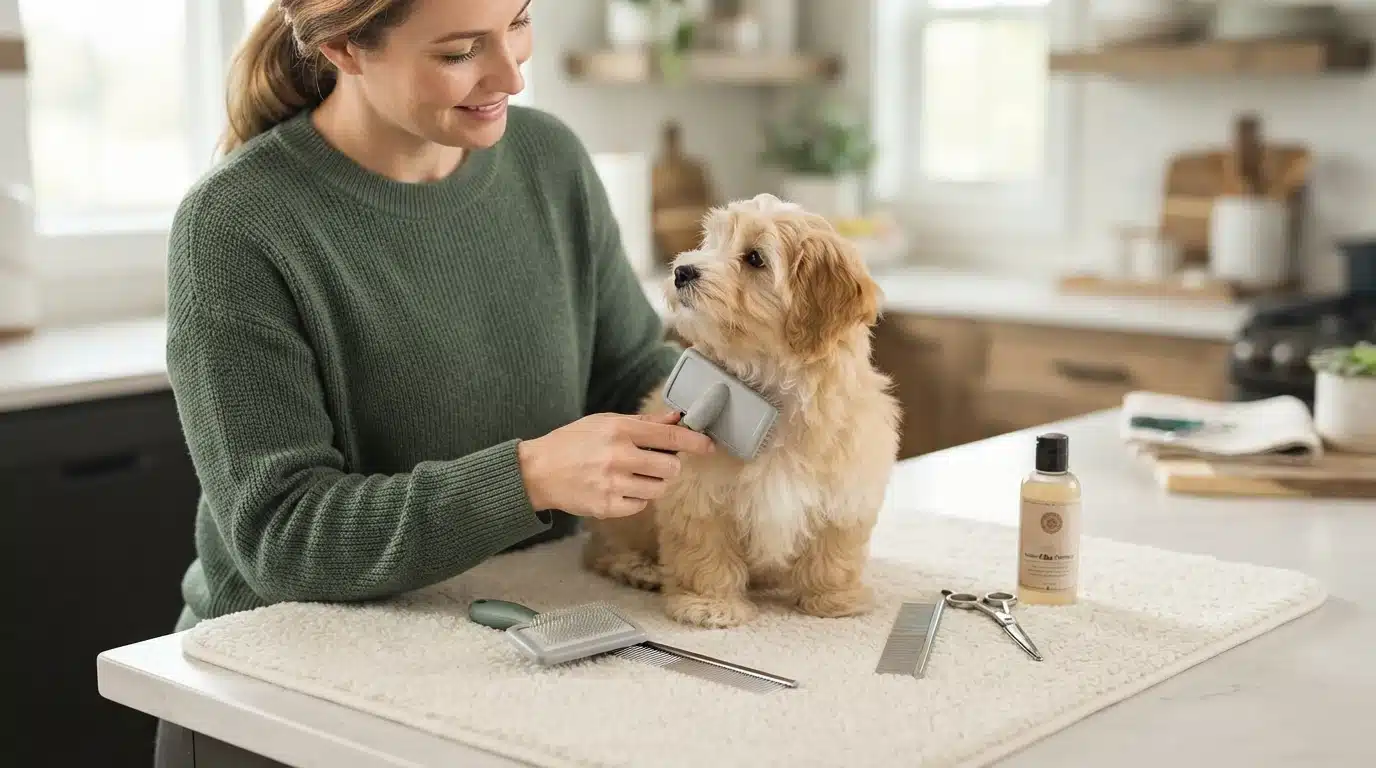
Keep the hair between paw pads trimmed short so ice balls cannot form there. Never shave a winter coat to the skin, since loose hair still insulates. Brush before walks to remove mats that hold moisture, and towel the belly dry after every outing. For a Havanese, Havapoo, or Cavapoo puppy in Utah, clean and dry beats fluffy.
Indoor Life in a Cold Season: House Training, Play, and Rest
House Training When Outdoors Is Short
Cold snaps turn potty breaks into quick sprints, so build a routine around them. Pick one spot close to the door, keep it shoveled, and take your puppy out on the same schedule every time. Praise the instant they go, then head back in. If you are still mapping out costs and timing for a new puppy, this look at puppy price factors covers what else to plan for.
Enrichment That Burns Energy Indoors
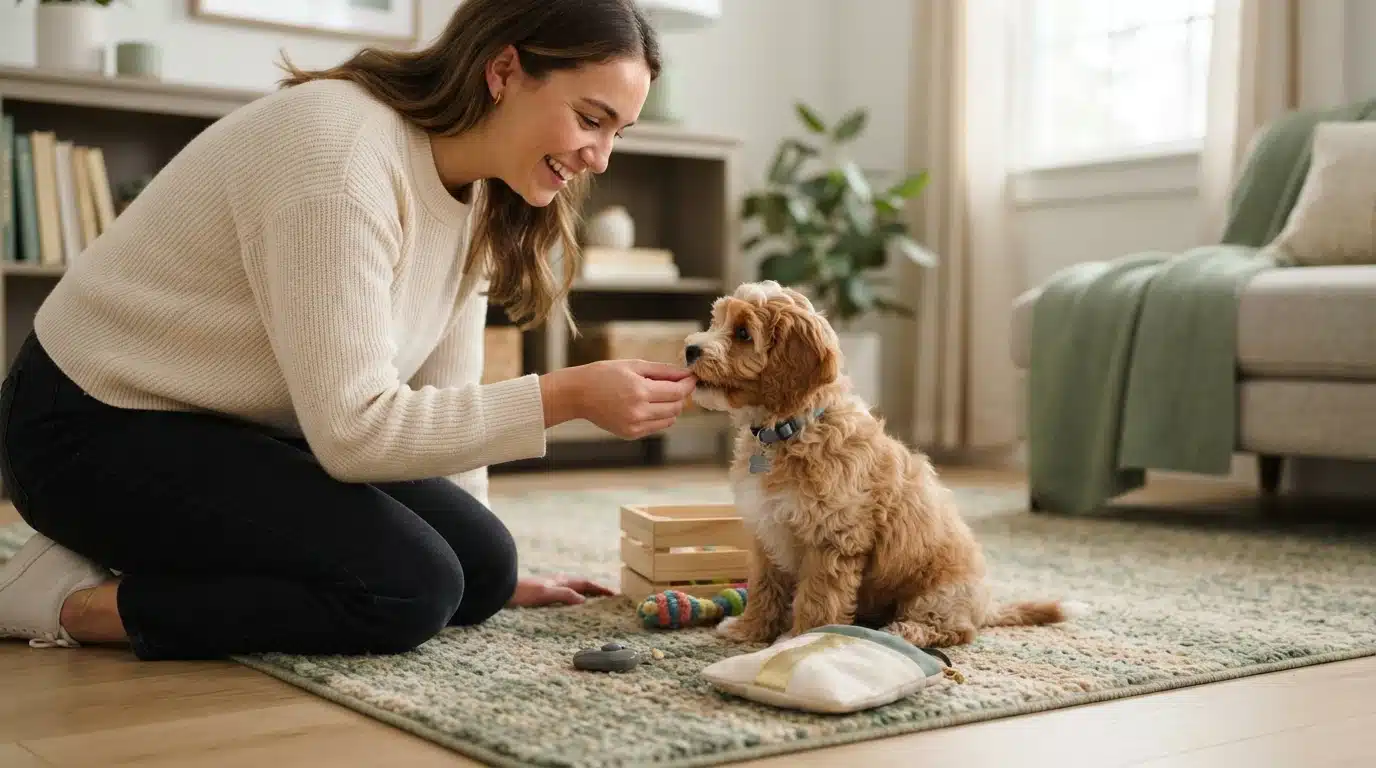
A puppy stuck inside still needs to work its brain. Ten minutes of sniffing games, a snuffle mat, or kibble scattered across a towel can tire a small dog more than a long walk. Short training sessions help too, since learning a new cue costs real mental energy.
Rotate two or three toys instead of leaving everything out, so nothing goes stale.
Sleeping Areas and Warmth Choices
Where your puppy sleeps matters more in winter. Federal standards for regulated dogs require housing at 45°F or higher for sensitive animals, and a small breed needs warmth even more than that minimum suggests. Keep the crate away from drafty doors and cold floors, and offer a washable bed rather than an open pad. A heated pad made for pets is fine if it stays low and leaves room to move off it. Most Havanese, Havapoo, and Cavapoo puppies settle warm and content with a soft bed and a quiet corner.
Health, Vaccinations, and Vet Planning Through the Cold Months
Vaccination Schedule and Public Ground Risk
Your puppy’s shots and the season interact more than most people expect. Puppies finish a core vaccination series around 16 weeks, and until then parvo risk on public ground stays real. Snow hides waste and standing water where the virus can survive, so park trips and pet-store runs wait until your vet clears the series. Use your yard and quiet sidewalks, and stick to the schedule even in bad weather, because winter delays are how windows stay open.
Winter Wellness Exams and Conditions That Worsen in Cold
Book a winter exam soon after your puppy comes home. It sets a baseline, confirms weight gain, and catches issues early. Cold makes some conditions worse: arthritis and old joint injuries stiffen up, and ear, skin, and respiratory infections tend to flare when warm indoor air meets damp outdoor chill. Small breeds with hair coats can also show dry, itchy skin in heated homes. Ask your vet what to watch for so you act early rather than late.
Antifreeze, De-Icer, and Engine Risks
Three winter hazards need constant attention. Antifreeze tastes sweet but is deadly in tiny amounts, so wipe up driveway spills and store jugs sealed. De-icing salt irritates paws and is toxic when licked off, so rinse feet after every walk and check between toes for packed ice. Finally, knock on your hood before starting the car, because outdoor cats climb into warm engines. Keep these habits, and winter stays safe.
Buying a Winter Puppy: Questions to Ask a Utah Breeder in Writing
A winter pickup or delivery adds variables most buyers forget to check. Ask these questions by email or text, so answers become a record you can hold a breeder to.
What to ask in writing:
- How old is the puppy at pickup, and is the vaccination series on schedule?
- Has a licensed vet examined the puppy, and what does the record show?
- How will you keep the puppy warm during transport?
- What deposit terms apply if winter weather delays the handoff?
What Health and Veterinary Documentation to Request
Ask for a written vet exam date, vaccination dates, and deworming history before you pay anything. Request the actual records, not a summary, and confirm the puppy saw a licensed Utah veterinarian rather than a breeder-only check. If a puppy travels across state lines, ask which health certificate it will carry. Breeders with clean paperwork send copies without prompting; hesitation is your answer.
Contract, Deposit, and Availability Terms in Writing
Get the deposit amount, refund rules, and pickup deadline on paper. Winter storms delay flights and close canyon roads, so ask what happens if weather pushes the date back a week. Confirm the price covers everything, since extras add up; Sage Puppies lays out how pricing is built on its Utah puppy price factors page. Never accept verbal-only terms in January.
Winter Pickup and Delivery Logistics
Ask exactly where the handoff happens: home pickup, a ground courier, or a flight nanny. Ground transport in a heated vehicle beats cargo flights for a 7-pound puppy, and federal standards require 45°F or warmer housing for unacclimated animals. Confirm travel duration, break schedule, and who holds the puppy overnight. Then ask what to bring: a warmed crate, towels, and water for the drive home.
A Winter Plan You Can Start Before the Snow Arrives
The Pre-Snow Setup Checklist
December in Utah is the wrong week to buy gear. Start in October or November, while choices are still calm:
- A waterproof shell and fleece liner, sized for a puppy
- Paw balm and a rag for wiping de-icing salt after each walk
- Booties if you plan to use them, so you can practice fit early
- A pee spot you can clear of snow, for house training on bad days
- A vet appointment, so vaccines stay on schedule before you risk public ground
A wider adoption checklist for new owners covers gear and setup in more depth.
Your Written Outing Rules
Cold decisions go better on paper. Before the first storm, write down your temperature bands, your time limits, and who walks the puppy on school mornings. Post it by the door. Then everyone follows the same rule at 20°F, instead of guessing. Review the sheet monthly, and tighten the bands as your puppy grows and grows into a sturdier coat.
Where to Go Next With Sage Puppies
If you are still choosing a breeder, ask how litters handle cold weeks, whether pups go home in winter, and how transport stays warm. Cassie’s application and matching process at Sage Puppies covers pickup in South Jordan and heated ground delivery nationwide, and she will tell you plainly which season suits a young Havanese, Havapoo, or Cavapoo best.

Ready for a snowy-season start? Explore Sage Puppies to meet our Havanese, Havapoo, and Cavapoo puppies. Apply online, plan pickup in South Jordan, or arrange heated nationwide delivery, and raise your small-breed puppy through winter with confidence.
Frequently Asked Questions
Q1: What should I ask a Utah breeder about a winter puppy?
Ask in writing: the puppy’s age and vaccination status, vet exam records, how transport stays warm, and deposit terms if storms delay pickup. Breeders with clean paperwork answer without hesitation.
Q2: What temperature is too cold for a Havanese puppy?
Below 32°F, shorten outings; below 20°F, stick to brief potty breaks only. Watch for shivering and lifted paws, and bring your puppy inside at the first sign.
Q3: Do Havapoo and Cavapoo puppies need winter coats in Utah?
Yes. All three breeds have hair coats, not thick fur, and small bodies lose heat fast. Choose a waterproof coat that covers the chest and belly.
Q4: How do I protect puppy paws from de-icing salt?
Rinse paws in lukewarm water after every walk, dry fully between the toes, check for cracks, and trim hair between pads so iceballs cannot form.
Q5: Can my puppy go to the park before all vaccinations?
Not until the series finishes around 16 weeks. Snow hides parvo risks like waste and standing water, so use your yard and quiet sidewalks first.
Conclusion
Raising winter puppies in Utah comes down to a few habits. Know your temperature bands, keep outings short, rinse paws after every walk, and hold the vaccination schedule until parvo risk closes. Watch for shivering, cracked pads, and pale ears, because small breed puppy cold tolerance shifts fast at this size. Buy gear early, put your outing rules in writing, and get breeder answers on paper before a snowy pickup or delivery. Do those things, and a Havanese, Havapoo, or Cavapoo puppy can come home in January and settle in just as happily as a spring pup.