
A playful Cavapoo may toddle straight to your feet, but pause before you scoop her up. Ask to see health records, learn how she was socialized, and hear why the breeder selected her parents.
Many families meet Cavapoo puppies with a full heart and leave with key details still unclear. The right Cavapoo breeder questions help you look past a sweet first impression and judge the care behind the puppy.
This guide gives you clear Cavapoo breeder questions to bring to a visit, plus what to watch for and what documents to request. You will know how to ask Cavapoo breeder staff about health, temperament, pickup, and delivery without making the meeting feel like an interrogation.
Thoughtful Cavapoo breeder questions protect your family and help you choose with confidence.
Ask About the Breeding Pair and Their Health Evidence
A friendly meeting should include clear proof, not vague promises. Ask to discuss both the sire and dam, even if only one parent is on site.
What health tests have both parents completed?
Ask which tests were done, who performed them, and when. A Cavapoo breeding plan should consider the health needs found in both Cavalier King Charles Spaniel and Poodle lines.
Start with this simple checklist:
- Heart screening
- Eye exam
- Patella, or kneecap, evaluation
- Hip evaluation where appropriate
- DNA testing for breed-relevant inherited conditions
The OFA explains that its records can include DNA results plus heart, eye, and patella exams. Testing does not promise a puppy will never get sick. It shows the breeder made thoughtful choices with the best facts available.
Ask about the whole pair, not just the parent with the strongest test list.
Can I see the certificates or verify the results?
A responsible breeder should be comfortable showing certificates, lab reports, or registry records. Match each document to the parent’s registered name, microchip, or other permanent ID.
| What to check | Why it matters | Good follow-up question |
|---|---|---|
| Parent name and ID | Confirms the record belongs to that dog | “How does this report match this parent?” |
| Test date | Some exams need current results | “When is the next exam due?” |
| Result and test type | Helps you understand what was screened | “Was this a DNA test or a vet exam?” |
You can also search the parent in the OFA database. OFA notes that normal submitted results are public, while owners may choose whether abnormal results appear.
What do the results mean for this particular litter?
Ask the breeder to explain the pairing in plain language. For DNA conditions, ask whether each parent is clear, a carrier, or affected, and how the match avoids producing affected puppies.
For physical exams, ask what the result says today and whether close relatives raise any concerns. Health testing lowers risk. It cannot erase every inherited or future health issue.
A calm, direct answer is a good sign. If you are meeting Sage Puppies in South Jordan or reviewing details before delivery, save the reports and questions with your puppy records.
Also Read: Health-Tested Puppies for Sale Near Me: What Proof Matters
Ask How the Pairing Supports Genetic Diversity
What is the litter’s inbreeding coefficient?
Ask for the planned litter’s coefficient of inbreeding, often called COI. It estimates how likely a puppy is to receive matching gene copies from related ancestors.
A breeder should explain the number, the pedigree depth used, and how it shaped the pairing choice. Lower is not a magic guarantee, but a thoughtful pairing avoids repeating close relatives without a clear reason.
| Ask to see | Why it matters |
|---|---|
| COI calculation and pedigree depth | Shows how the result was reached |
| Parent names and registration details | Lets you match records to documents |
| Health results from close relatives | Adds context beyond the two parents |
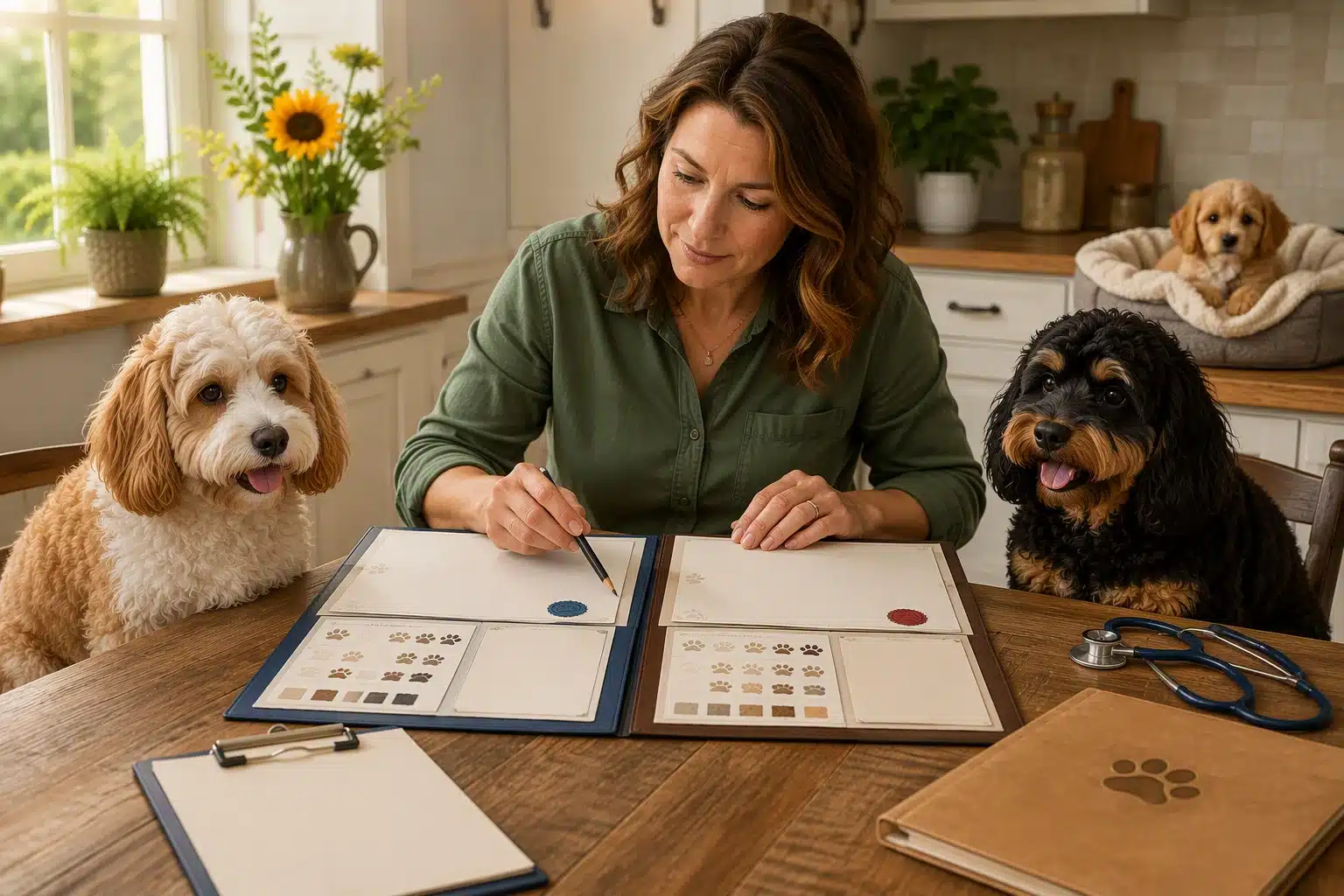
A vague reply such as “they are not related” is not enough. Ask for the records that support it.
The OFA advises breeders to assess a proposed pairing’s pedigree for health strengths and weaknesses. That is a stronger answer than a single clearance certificate.
How do you evaluate genetic diversity before choosing a pairing?
Listen for a clear process, not buzzwords. A careful breeder may:
- Review pedigrees for repeated dogs and close relationships.
- Compare DNA results and health screens for both parents.
- Look at siblings, parents, and prior offspring where records exist.
- Balance genetic diversity with sound temperament and breed health.
Ask what would make them reject a pairing. The answer should show judgment, not a promise of a perfect puppy.
OFA notes that health information from close relatives helps breeders make more informed choices.
Also Read: Havanese, Havapoo & Cavapoo Puppy Care Blog
Ask to See the Puppies’ Early Socialization in Practice
What people, sounds, surfaces, and routines have they experienced?
Ask for clear examples, not a vague promise that puppies are “well socialized.” Early, positive exposure to people, sounds, and new settings can help shape a puppy’s comfort with daily life. A JAVMA study found that puppies with more early exposure had fewer reported fear signs around noises and crates.
Ask whether the litter has calmly experienced:
- Gentle handling by adults and children
- Household sounds, such as vacuums and doorbells
- Carpet, tile, grass, and safe play surfaces
- Brushing, nail touch, crate time, and short alone time
- Regular meals, rest periods, and potty-area routines
Good socialization is gradual and calm. A puppy should never be pushed past fear just to “get used to it.”
How are Sage Puppies’ Cavapoos socialized before going home?
Ask the Sage Puppies team to walk you through the litter’s real daily rhythm in their South Jordan home. Look for details you can picture and repeat after pickup or delivery.
| Area | Useful question | What a clear answer sounds like |
|---|---|---|
| Handling | Who handles the puppies? | Family members provide gentle, age-right contact. |
| Home life | What normal sounds do they hear? | They experience daily home activity in a controlled setting. |
| Care routine | How do you begin grooming and crate comfort? | Short, positive sessions are part of routine care. |
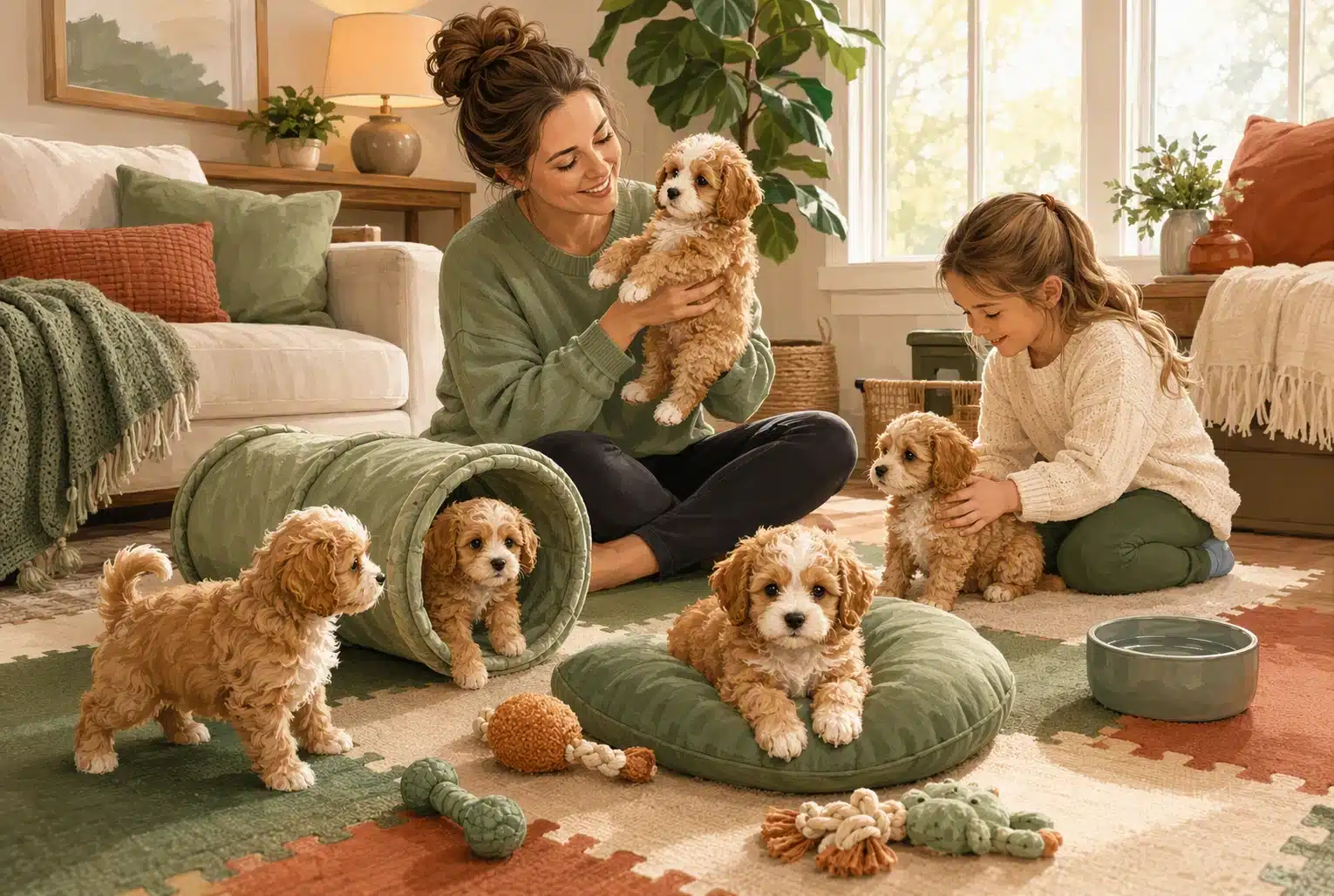
The AVMA notes that social settings can carry disease risks for young puppies, so careful hygiene and safe exposure matter as much as variety.
What should I observe during the visit?
Watch the whole litter before choosing one puppy. Normal puppies may pause, nap, or startle at a new sound. What matters is whether they recover with calm support.
Look for:
- A clean, lived-in space with room to rest and play.
- Puppies who explore, engage, then settle.
- Gentle handling from the breeder, without forcing contact.
- A breeder who welcomes specific follow-up questions.
Do not expect a “perfect” puppy. Look for thoughtful care, honest context, and a plan you can continue at home.
Ask How Temperament Is Matched to Your Family
What have you noticed about each puppy’s temperament?
Ask for real examples, not labels like “sweet” or “calm.” A thoughtful breeder should describe what they have seen during daily care and play.
Ask:
- Which puppy settles fastest after play?
- Who seeks people out but can relax alone?
- Who is more bold with new sounds or surfaces?
- How does each puppy respond to gentle handling?
- Which puppy plays well without overwhelming littermates?

A good match weighs temperament more heavily than coat color or sex. The AKC notes that breeders can make better placements when they understand both puppy behavior and family life.
A puppy’s behavior at eight weeks is a useful snapshot, not a lifelong promise. Training, routine, and kind socialization still shape the adult dog.
| What you hear | What to ask next |
|---|---|
| “This one is easygoing” | “What did they do that showed you this?” |
| “That puppy has energy” | “How do they settle after activity?” |
| “They love kids” | “What supervised child contact have they had?” |
What do you need to know about our home?
Welcome the questions back. A careful breeder should ask about your household, work hours, children, pets, training plan, and travel or pickup needs.
Share the details that affect fit:
- Your children’s ages and dog experience.
- Whether anyone is home during the day.
- Your activity level and comfort with grooming.
- Other pets and their temperaments.
- Whether you plan South Jordan pickup or nationwide delivery.
At Sage Puppies, clear answers help guide a family-first conversation, not a rushed choice. The best breeder may recommend a different puppy than the one you first notice.
Choose the puppy whose needs fit your real routine, including busy school mornings and quiet evenings.
Also Read: How to Check Puppy Breeder Contracts, Guarantees, and Return Policies
Ask What Care and Records Come Home With Your Puppy
Which health and care records will we receive?
Ask for a clear take-home file, not a verbal summary. It should show each vaccine and deworming dose, dates, product names, and any vet visits. Request parent health-testing records and a record of your puppy’s feeding and care.
For a puppy traveling out of Utah, ask whether a health certificate is needed. An interstate certificate of veterinary inspection may be required based on the destination.
| Record | Ask to confirm |
|---|---|
| Vaccine record | Dates and next-dose timing |
| Deworming record | Product, date, and dose |
| Vet paperwork | Exam notes and health certificate, if needed |
| Parent records | Health tests relevant to each parent |
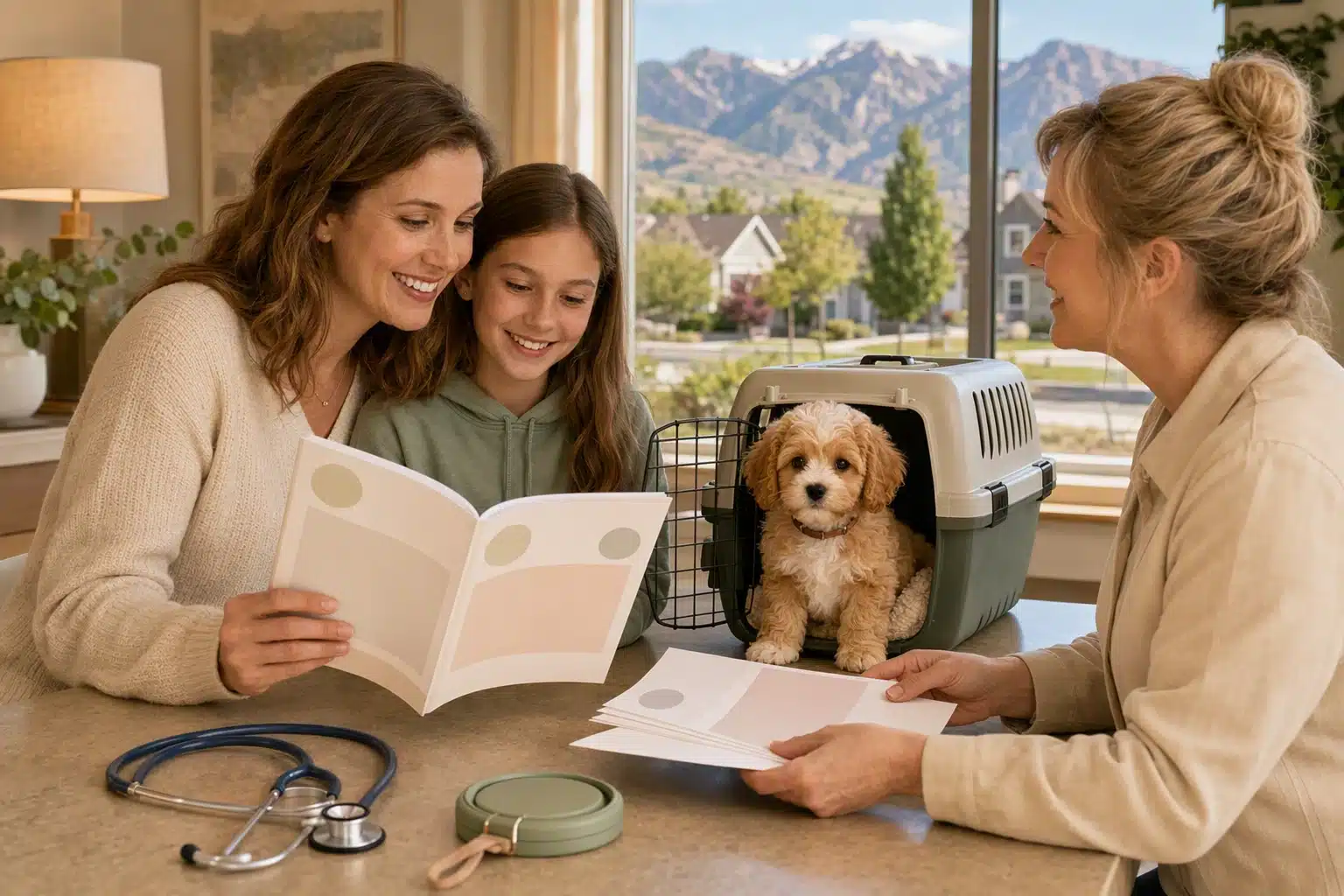
Keep these papers for your first vet visit. Your own vet will set the next care plan.
What does the contract and support process include?
Read the contract before you reserve. Ask what it says about payment, pickup or delivery, return terms, and each party’s duties. Get clarity on who answers questions after pickup and how to reach them.
A good breeder explains the handoff without rushing you. Sage Puppies families can also ask what support is available as the puppy settles in.
- Who handles a concern during travel?
- What should we do if our vet finds an issue?
- Which questions can we ask after pickup?
What food, sleep, grooming, and training routine should we continue?
Ask for the exact food, meal times, crate routine, nap schedule, grooming tools, and current potty cues. Keep that routine steady for the first week, then make changes slowly.
Ask what your puppy already knows, including crate comfort, handling, and outdoor potty trips.
Also Read: 10 Signs a California Puppy Listing Is a Scam – Sage Puppies
Ask How Pickup or Delivery Will Work
If we are local, what happens at pickup?
Ask for the exact South Jordan pickup plan before you reserve. A clear answer should cover:
- The pickup date and time window.
- Who may attend and how long the handoff takes.
- Which records, food details, and care notes come home with your puppy.
- What to bring, such as a secure carrier, towel, and water for the ride.
Confirm where you will park and whether the breeder will review the puppy’s routine with you. Plan a calm, direct trip home.
A thoughtful pickup is not rushed. You should leave knowing your puppy’s current feeding, sleep, and potty routine.
What should nationwide families ask about delivery?
Ask whether delivery is by ground transport, a flight arrangement, or another option. Get the total cost, likely travel date, pickup point, handoff contact, and plan for delays in writing.
| Question | Why it matters |
|---|---|
| Who handles the puppy during travel? | You know who is responsible at each handoff. |
| How will you update us? | You can plan for arrival without guessing. |
| What happens if weather changes plans? | You know the backup process before travel day. |
Commercial transporters must follow federal animal welfare standards, and puppies transported in commerce must be at least eight weeks old and weaned, per USDA APHIS guidance.
Use the Meeting to Assess Transparency, Not Just Charm
Green flags worth taking seriously
A sweet Cavapoo can win anyone over. Let the breeder’s actions carry equal weight.
- They show you the puppy’s living area and welcome clear questions.
- They explain the parents’ health testing and share the actual records. Health testing should match each parent breed, not rely on a vague “vet checked” claim. AKC guidance on health testing explains why both DNA and physical screenings matter.
- The mother is present, calm, and comfortable with her litter.
- Puppies look clean, alert, and well cared for.
- The breeder asks about your home, schedule, children, and dog-care plan.
- You receive clear details on pickup or delivery, records, and next steps.
A thoughtful breeder does not rush a family into a deposit or a same-day choice.
Red flags that should slow you down
Pause if answers stay broad or documents never appear.
| What you notice | Why it matters |
|---|---|
| “Health tested” with no proof | You cannot confirm what was tested or reviewed |
| Pressure to pay immediately | A good match needs time and care |
| No access to the mother or puppy’s normal setting | You lose key context about care and temperament |
| A breeder avoids questions | Openness should go both ways |
Watch how adult dogs and puppies respond to the breeder. Clean space, lively pups, and calm handling are meaningful signs, as AKC breeder guidance notes. Walk away if your concerns are brushed aside.
Also Read: Puppy Care Blog & Resources | Sage Puppies
Turn Your Answers Into a Confident Next Step
A five-minute after-visit review
Before emotions take over, write down what you saw and heard. A clear breeder should make the next step feel calm, not rushed.
| Review point | Green flag | Pause and ask |
|---|---|---|
| Parent health | Test results were shared and explained | Claims had no records |
| Puppy behavior | Bright, clean, curious, and comfortable | Lethargy, fear, or poor conditions |
| Breeder support | Clear answers and follow-up access | Pressure to reserve immediately |
- Compare the breeder’s answers with the documents you received.
- Ask whether the puppy’s needs fit your home, schedule, budget, and children.
- Sleep on it before sending a reservation.
AKC guidance recommends asking to see the parents’ health-testing results. Testing can lower risk, but it cannot promise a problem-free life.
A good match matters more than a quick yes. If any answer feels vague, ask for clarity in writing.
If the visit felt open, the puppy seemed well cared for, and the plan fits your family, move forward with confidence.

Ready to meet a Cavapoo with better questions and clear standards? Sage Puppies offers home-raised, thoughtfully started Cavapoo puppies, with transparent health and care details. Explore available puppies, ask what matters, and choose local South Jordan pickup or nationwide delivery.
Frequently Asked Questions
Q1: What health tests have the Cavapoo parents undergone, and can I see their certificates?
Ask to review current parent health records and understand what each result means. A responsible breeder should explain the records clearly and share documentation before you commit.
Q2: How are Sage Puppies’ Cavapoos socialized before going home, and can I see their early experiences?
Ask about daily handling, household sounds, grooming, crate time, and age-appropriate play. Sage Puppies can walk you through each puppy’s early routine and progress.
Q3: What’s the inbreeding coefficient of the Cavapoo puppies, and how does Sage Puppies ensure genetic diversity?
Ask for the puppy’s coefficient and pedigree context. Lower figures can support diversity, but a breeder should also explain parent selection and health results.
Q4: Can I meet the puppy’s mother?
You should ask. Meeting her offers useful clues about size, coat, and temperament.
Q5: What happens after pickup or delivery?
Confirm your pickup or delivery plan, records, feeding routine, and support steps before bringing your puppy home.
Conclusion
A good Cavapoo meeting should leave you with more than a sweet first impression. Ask to review parent health records, observe how the puppies respond to people, and learn how daily care and early social time are handled.
Bring your questions, slow down, and write down anything that needs follow-up. A responsible breeder welcomes careful families and asks thoughtful questions in return. The AKC’s breeder guidance also advises families to look for clean surroundings, a settled mother, lively puppies, clear records, and a real contract. Trust what you can verify, not just what sounds reassuring.





