Quick Summary: Before reserving a Havanese puppy, verify both parents’ current hip, patella, and eye exam results through OFA, then review the puppy’s veterinary, vaccination, and deworming records. Meet or live-video the dam, read the contract and health guarantee, and confirm that the breeder screens buyers and provides ongoing support. Walk away from pressure tactics, refusals to show the dam, missing paperwork, or untraceable payments; Sage Puppies is presented as a transparent program that shares health and care records openly.
Most buyers meet a Havanese breeder with one real question left to ask, and it is the one that matters most: can you show me the records? Health paperwork tells you more than any website or puppy photo ever will. The challenge is knowing what to ask a Havanese breeder, and which answers hold up. This guide on what to ask a Havanese breeder before you reserve gives you a simple verification workflow built on the current Havanese Club of America health statement. We cover the questions to ask Havanese breeder before reserving, plus the red flags Havanese breeder ads often hide. You will learn to separate the puppy’s own vet records from parent screening and DNA results, so you can judge a breeder on evidence, not charm.
Before You Start
Assemble the records you will ask for
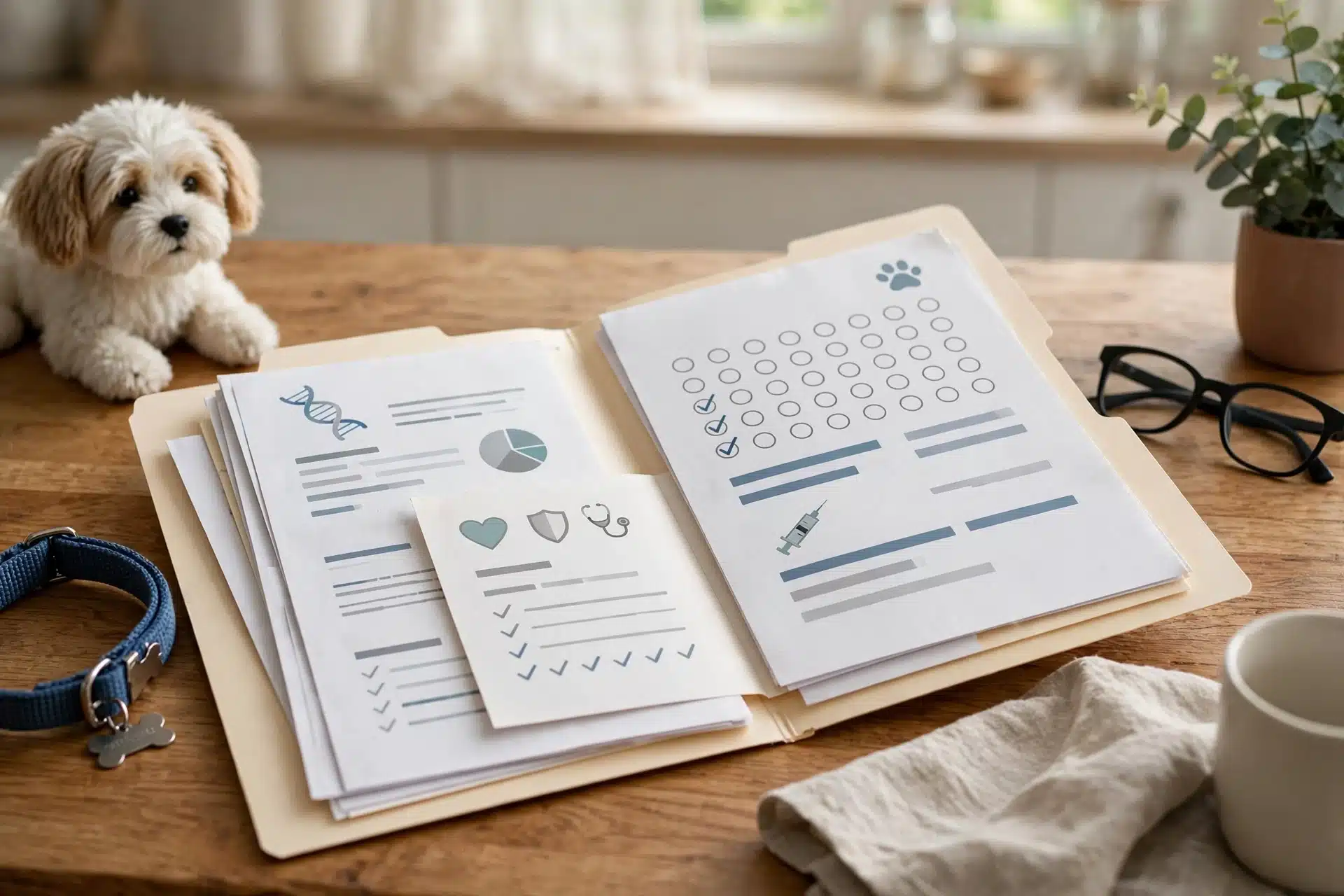
Set up one folder before you contact anyone. Include the parent health screening results, DNA test reports, the puppy’s vet exam notes, and vaccination dates. A checklist for Havanese puppy care covers what to keep on hand at home.
Separate facts from opinions in every answer
Treat verifiable documents as facts and breeder commentary as opinion. “Both parents passed their patella exams” is checkable; “our lines never have joint issues” is a claim. Ask for the paper behind each confident answer.
Step 1: Ask What Health Testing the Parents Have Completed
Open the conversation with one direct question: what health testing have both parents completed? A good breeder answers fast and hands over paperwork. The current Havanese standard is set by the OFA’s CHIC program, which issues a number once a dog passes the breed’s required tests and is microchipped or tattooed. Many older checklists still list four tests, but the requirements changed in May 2022.
The three tests that currently produce a CHIC number
Today, three results earn a Havanese its CHIC number:
- Hip x-rays evaluated by OFA, rated fair, good, or excellent, or a PennHIP evaluation
- Patella certification, because small breeds are prone to luxating kneecaps
- An eye exam through CAER, done by a board-certified ophthalmologist and repeated annually
The BAER hearing test was removed from the CHIC list by the Havanese Club of America because deafness is rare in the breed, so a breeder citing four tests is quoting an old list, not hiding something. Check the current requirements on the OFA CHIC program page.
How to verify the results yourself
Don’t take a screenshot as proof. Here’s the short workflow:
- Ask for each parent’s registered name and CHIC number
- Search that name at ofa.org and confirm the hip, patella, and eye results are public
- Check that eye exams are current, since they expire yearly
- Ask whether the dam and sire both carry a CHIC number, not just one parent
You can compare what a breeder should share before you commit in this guide to questions about health-tested puppy parents.
What a CHIC number does not tell you
A CHIC number confirms the tests were done. It does not promise the results were passing. OFA publishes ratings like fair or mild, and the CHIC program is open rather than a guarantee, so a number means “tested,” not “cleared.” Always read the actual scores.
Screening beyond the minimum
Serious breeders also run DNA panels for inherited conditions and sometimes record cardiac exams. Ask what extra screening they do and why; a confident answer shows they breed for health, not just paperwork.
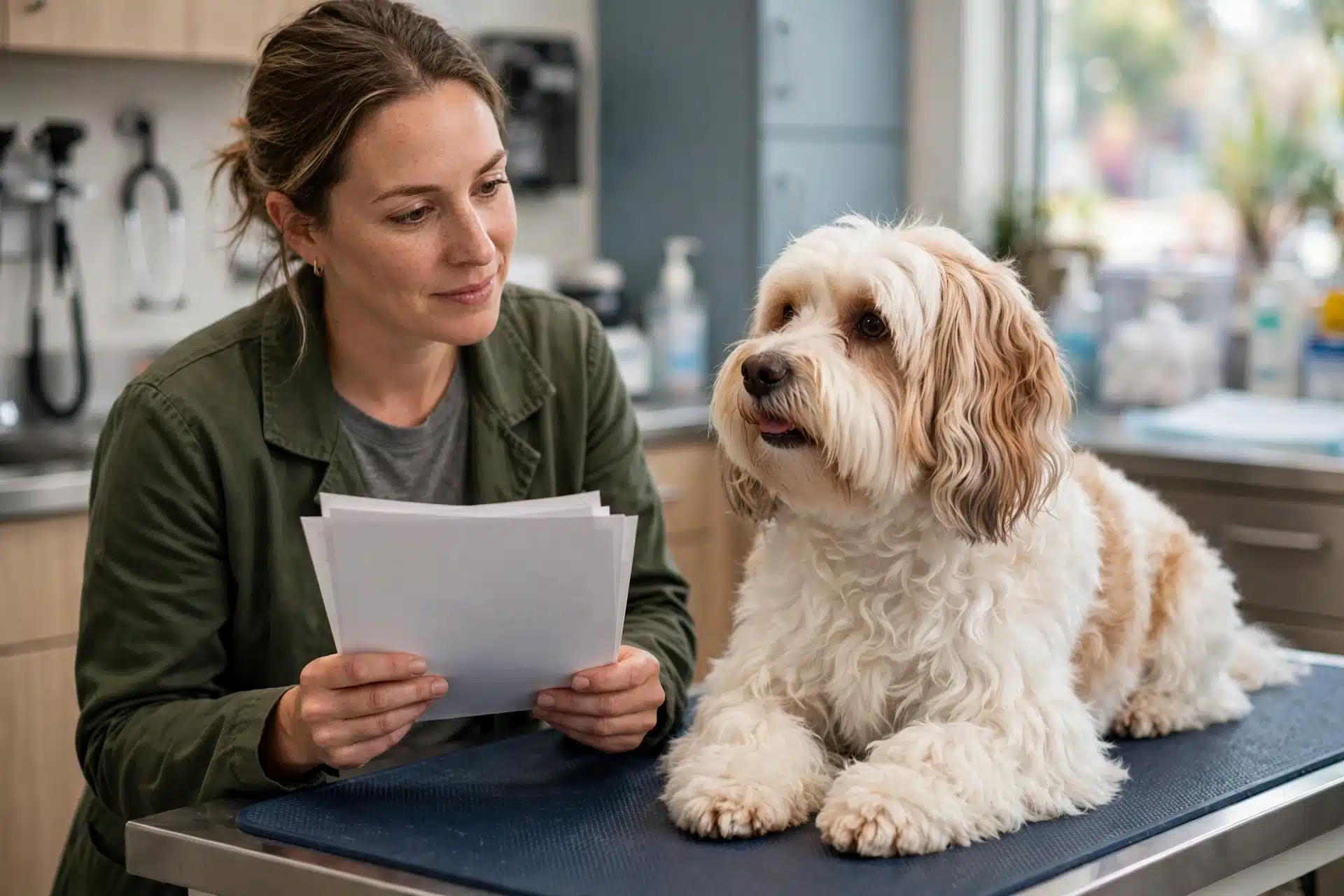
Step 2: Ask to See the Puppy’s Own Veterinary Records
Parent testing tells you about the bloodline. The puppy’s own records tell you how it has been cared for in its first weeks. Both matter, and a good breeder can show you both without hesitation. Knowing which documents should exist helps you ask for the right things and spot gaps early.
The documents that should exist
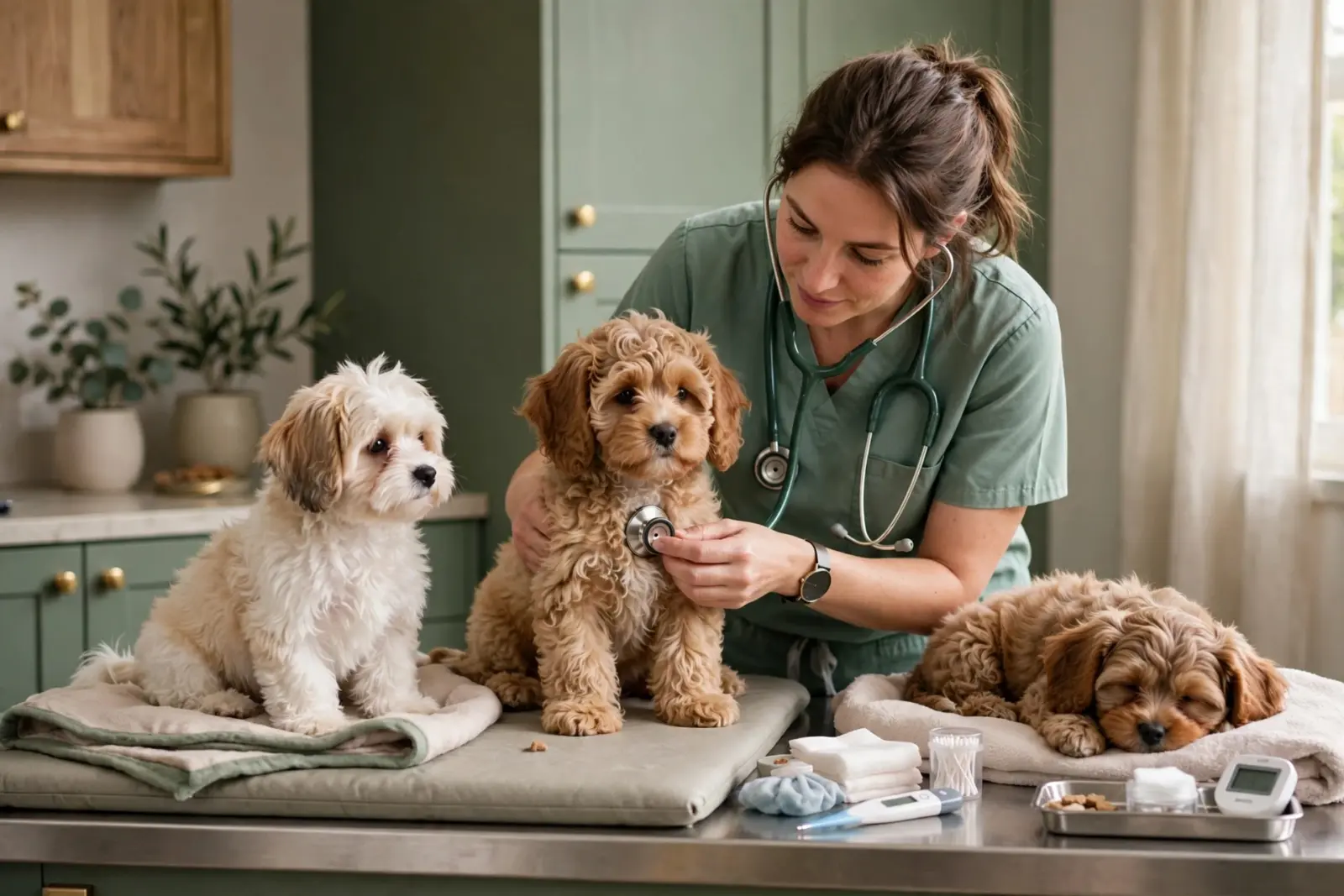
Ask for three items. First, a dated exam record from a licensed veterinarian, ideally on clinic letterhead with contact details intact. Second, a vaccination record showing the puppy’s age at each dose, the vaccine given, and who gave it. Third, a deworming history with the product used and the dates. If the puppy has a current health certificate, review it closely: it should list the exam date, the vet’s name, and any findings.

Questions about the veterinary relationship
Beyond paperwork, ask how the litter is actually cared for. Useful questions include:
- Which veterinary clinic does the breeder use?
- Who examined the puppies, and when was the last visit?
- Were vaccines given by a vet or by the breeder at home?
- Has any puppy in the litter had a health issue so far?
Vague answers are a signal to slow down. A breeder who keeps a real relationship with a clinic will answer these quickly and specifically.
Step 3: Ask to See the Mother and Father
Yes, you should see the mother of a Havanese puppy before buying whenever you can. The dam, or mother, tells you the most about how your puppy may look, act, and age. Meeting the sire is a bonus, since many breeders use outside studs. If a visit is impossible, a live video call with the dam and litter is the next best thing. What matters is seeing the dogs themselves, not just photos.
Why seeing the dam matters most
The dam should be on site with her puppies. Watch how she moves, how she greets strangers, and how her coat and eyes look up close. A nervous or limping mother is a warning you cannot see on paper. Good breeders expect this request, and guides like AKC’s breeding resources treat the dam’s care as central to the litter’s health.

What to ask the sire’s owner or handler
Many Havanese breeders use a stud they do not own, so the sire may live elsewhere. Ask these questions:
- Where does the sire live, and who cares for him?
- Can I see recent photos or a live video of him?
- What are his health test results, and can I see the paperwork?
- Why was he chosen for this dam?
A confident answer with documents beats a smooth excuse.
When you cannot travel to the breeder
If distance blocks a visit, ask for an unedited video call at a set time. Ask the breeder to walk through the whelping area, pan to the dam, and let you see the puppies move. Recorded videos alone are weaker, because they can be borrowed or edited. Pair the call with the written evidence from Step 2: health certificates, DNA results, and the puppy buying checks the AKC recommends. Breeders like Sage Puppies in South Jordan, Utah, run owner-managed matching with live video visits for out-of-state families, which shows what a transparent setup looks like. A breeder who refuses every way to see the dam deserves your doubt.
Step 4: Review the Price, Contract and Reservation Terms
What the price should include
A fair Havanese puppy price covers more than the puppy. Expect first vaccinations, a deworming series, a microchip, and a veterinary health exam before go-home day. Many breeders also include AKC registration papers, starter food, and a sample of the puppy’s current diet. Sage Puppies prices its puppies at $3,500 to $4,500, which reflects this kind of full care record. Ask what is itemized so you can compare quotes fairly.
Contract terms worth reading closely
A solid Havanese puppy contract should include the puppy’s identifying details, the total price and deposit amount, a health guarantee with clear time frames, and a spay or neuter clause if one applies. Look for a return provision that requires the breeder to take the dog back at any age, since reputable breeders never want their puppies in shelters.
Read the guarantee carefully. Some cover only genetic conditions proven by your vet’s exam, and most require a checkup within a few days of pickup. Ask what voids the guarantee, such as missing a vaccine appointment. Get every promise in writing, not just in texts.
Deposit and timing questions
Ask these before you send money:
- Is the deposit refundable, and under what conditions?
- Does it apply to a specific litter or just a waitlist spot?
- When is the balance due, at pickup or earlier?
- What happens if the litter is smaller than expected?
Never pay the full price by wire transfer, gift card, or payment app with no buyer protection. Scammers push these methods because the money is hard to recover. Card or a documented payment gives you recourse if the puppy never arrives.
Also confirm go-home timing in writing, since delays happen when litters run small or vet checks move dates.
Step 5: Ask About Matching, Support and What Happens After Pickup
How puppies are matched to homes
Ask how the breeder pairs a specific puppy with your family. Good programs use your application, your experience with dogs, your household, and each puppy’s own temperament, not just the order deposits arrived. Some, like Sage Puppies, run this matching directly through the owner rather than handing you the next available puppy. Ask whether you can meet or see photos and videos of the litter first, and how she decides which pup fits an active home versus a quieter one. A breeder who asks you just as many questions is a good sign.
Support after the puppy goes home
A responsible breeder stays reachable long after pickup day. Ask these questions now:
- Can I call or text with training, feeding, or health questions, and for how long?
- What happens if I cannot keep the dog? Many contracts require you to return the dog to the breeder.
- Will you send me breeders references or past puppy families I can talk to?
- What do you recommend for the first week: food, vet visit timing, and crate setup?
Get the answers in the contract, not just in conversation.
Questions about the breed itself
Finally, ask about the breed, not just the puppy. Havanese are companion dogs that want company, so ask how the breeder handles families who work long days. Compare her answers with the AKC’s Havanese breed profile. Someone who talks you out of a mismatch cares about the dogs.
Step 6: Recognize Red Flags Before You Reserve
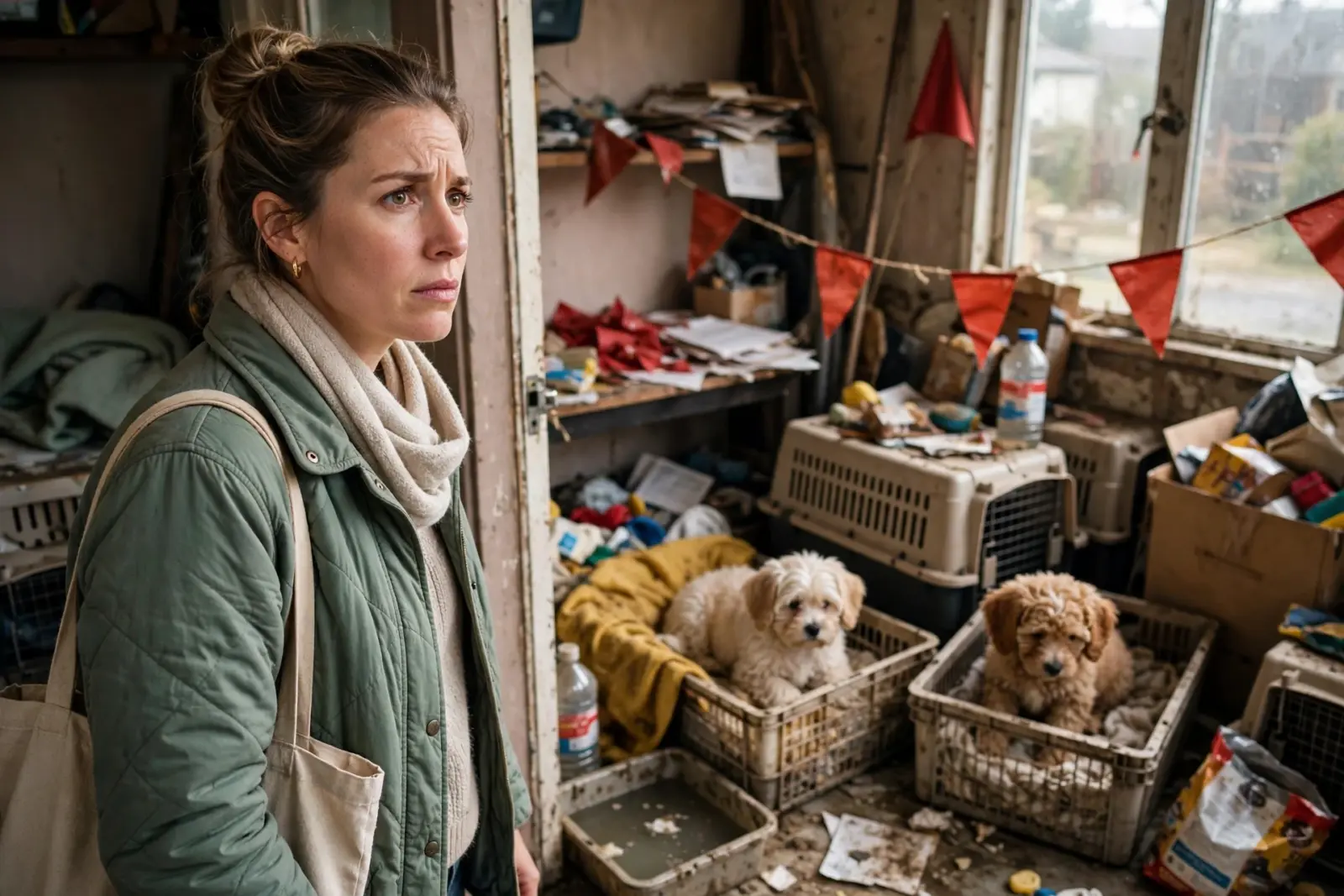
Some red flags when contacting a Havanese breeder matter more than others. Walk away fast if you see any of these:
- Refuses to meet the dam or show where puppies live
- No health screening paperwork for either parent
- Pressure to pay a deposit today or lose the puppy
- Wants payment by gift card, wire, or app
- Ships a puppy before you’ve talked live
- No written contract covering health terms and returns
- Multiple litters, always available, in several breeds
Any single one of these should end the conversation. Two or more means the decision is already made.
Behaviors that should end the conversation
Pressure tactics are the biggest warning sign. A reputable breeder will screen you as hard as you screen them, so someone who takes any applicant instantly is selling, not placing. Also watch for vague answers about the parents’ health tests, excuses about why you can’t visit or video call, and prices quoted with no explanation. A seller who texts you a puppy photo and demands cash app payment within the hour is running a common scam pattern, not a breeding program.
Incomplete information versus real problems
Not every missing answer is a lie. Some small breeders keep records in a folder, not a spreadsheet, and may need a day to scan them. That’s normal. A real problem looks different: the breeder changes the story when asked twice, claims every test “passed” without naming the test, or gets defensive about the dam. Confusion is human. Evasion is a red flag.
A verification routine you can repeat
Use the same check every time you evaluate a breeder. Ask for parent health records, request a video of the dam with the litter, read the contract before paying anything, and call one past buyer if references are offered. Write down what you got and when. This is also how to tell if a Havanese breeder is reputable: the documentation arrives without drama, and the answers stay consistent from first contact to pickup day.
Common Mistakes to Avoid
Mistakes that weaken your position
Paying a deposit before you have paperwork is the biggest one. Never send money by wire transfer, gift card, crypto or a payment app, because scammers favor methods you cannot reverse; the AKC’s scam guide also flags sellers who promise “papers are coming later.” Next, taking a breeder’s word about parent health testing instead of checking the OFA records yourself. And putting money down before you see the dam, the contract, or the puppy’s vet records. Each of these hands the breeder leverage you could have kept.
Mistakes that make you a difficult buyer
Breeders talk to each other, so a bad reputation follows you. Don’t haggle the deposit, demand a puppy outside your stated timeline, or ignore the application questions. Answer honestly about your schedule and experience, reply to messages promptly, and follow the pickup process the breeder sets.

When you’re ready to reserve, choose a program that answers these questions before you ask. Sage Puppies shares health records, parent screening and daily care openly, so you can reserve a Havanese puppy with confidence instead of guesswork.
Frequently Asked Questions
Q1: What health testing should I ask a Havanese breeder about?
Ask whether both parents have hip x-rays (OFA or PennHIP), patella certification, and a current CAER eye exam. These three tests earn a CHIC number; BAER hearing testing was removed from CHIC, so a breeder citing four tests is using an outdated list.
Q2: How can I tell if a Havanese breeder is reputable?
The paperwork arrives quickly and stays consistent. Verify each parent’s CHIC number at ofa.org yourself, meet or video call the dam, read a written contract, and check the breeder screens you in return. Evasion, not confusion, is the real warning.
Q3: Should I see the mother and father of a Havanese puppy before buying?
See the dam whenever possible; she should live on site with her litter. The sire often lives with a stud owner, so ask for his test results and a live video instead. Refusal to show either is a red flag.
Q4: What should a puppy health certificate include?
A vet exam date, the veterinarian’s name and clinic contact details, and any findings, plus vaccination and deworming records showing ages and dates.
Q5: Is a CHIC number proof of passing health tests?
No. It confirms testing was done, not that results cleared. Read the actual hip, patella, and eye ratings on OFA.
Q6: How much does a Havanese puppy cost?
Expect roughly $3,500 to $4,500 at programs like Sage Puppies, which typically includes first vaccines, deworming, a microchip, and a vet exam.
Conclusion
Asking the right questions comes down to evidence. Check both parents’ hip x-rays, patella certification, and eye exam results on OFA, since the Havanese Club of America health statement 2025 no longer requires BAER hearing testing for a CHIC number. Then review the puppy’s own veterinary health certificate and vaccination records, see the dam in person or on video, and read every contract and deposit term before money changes hands. Verify what you can yourself, ask for references, and stay alert to scam warning signs like pressure tactics and untraceable payments. A breeder whose paperwork arrives quickly, matches what OFA shows, and stays consistent is one you can trust with your reservation.