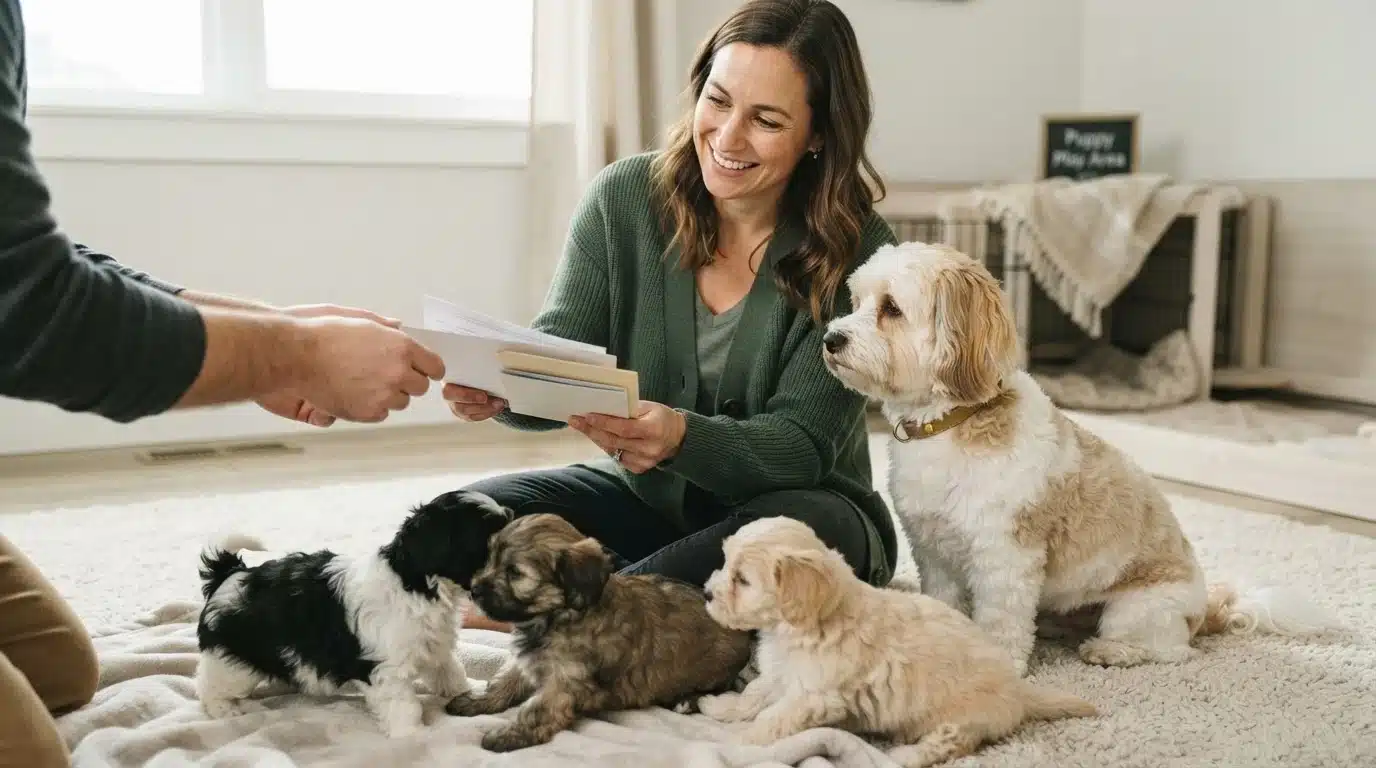
Quick Summary: Utah puppy buyers should focus on three checks before paying any breeder: verified OFA health testing, a written contract with clear deposit terms, and a breeder who interviews you as carefully as you interview them. Small companion breeds like Havanese, Havapoos, and Cavapoos lead Utah search demand and typically run $3,000 to $5,000, with first-year care adding another $1,500 to $5,000 for vet visits, grooming, and training. Red flags include no health records, always-available litters, parking-lot meetings, and pressure to pay a deposit on the spot. Sage Puppies, a boutique program in South Jordan, illustrates the model the guide recommends: owner-managed matching, health-tested parents, transparent pricing at $3,500 to $4,500, and flight-nanny delivery for out-of-state families.
Type “buying puppies Utah” into a search bar and you’ll get a wall of KSL listings, Adopt-a-Pet profiles and Facebook threads. Almost none of them tell you whether the breeder behind the photo is doing the basics right. That’s the real challenge: Utah puppy breeders vary widely, and the cutest listing often hides the thinnest care.
This guide gives you the framework to tell the difference. You’ll learn what a responsible program looks like, what puppies actually cost here, how health testing and early socialization should work, and what delivery involves if you’re coming from out of state.
We run Sage Puppies, a small South Jordan program focused on Havanese, Havapoo and Cavapoo litters, so we see both sides daily, including families searching for Havanese puppies Utah-wide and beyond. We’ll use our own process as the worked example throughout, so every standard in this guide is one we hold ourselves to.
What the Utah Puppy Market Actually Looks Like in 2026
Utah families buying puppies here have three real paths, and knowing the differences saves weeks of searching.
Hobby breeders, boutique programs, rescues and delivery
Most Utah litters still come from hobby breeders: families with one or two mother dogs who raise puppies at home. Waitlists are common, and health testing varies a lot between households. Boutique programs are smaller still, but they treat breeding as a craft, with documented health testing, structured socialization and a written process. Rescues offer wonderful dogs, though fewer puppies, and mixes under a year old go fast. The newest option is delivery. Several Utah programs now fly or drive puppies to out-of-state families, which widens your choices well past the Wasatch Front. Boutique programs such as Sage Puppies pair that delivery with owner-managed matching, so you can see currently available puppies before you commit. Whatever path you pick, the AKC’s breeder guidance is a fair baseline: visit if you can, ask about health testing, and expect questions back.
Why small companion breeds dominate Utah searches
Search data tells a clear story. Utah’s most-wanted puppies are small, low-shedding companion breeds: Havanese, Cavapoos, Havapoos and similar doodle crosses. There are practical reasons. Many Utah families live in suburbs with modest yards, apartment-friendly size matters, and allergy concerns push people toward coats that shed less. National trend data backs this up, with toy and companion breeds holding strong spots in state-by-state popularity rankings. When you’re buying puppies in Utah, expect competition for well-bred small breeds and plan for a wait rather than a same-week pickup.
Featured snippet answer: In 2026, Utah puppy buyers mostly choose between home-based hobby breeders, small boutique programs, and rescues, with delivery now common for out-of-state families. Small companion breeds like the Havanese, Cavapoo and Havapoo lead search demand.
Anyone can post cute photos and a price. When buying puppies in Utah, the difference between a responsible breeder and a volume seller shows up in paperwork, questions, and how they react to yours.
How to Tell a Responsible Utah Breeder From Everyone Else
A good breeder proves claims with records, screens you right back, and never pressures a same-day decision. That pattern is easy to check once you know what to ask for.
Health testing you should see, not just hear about
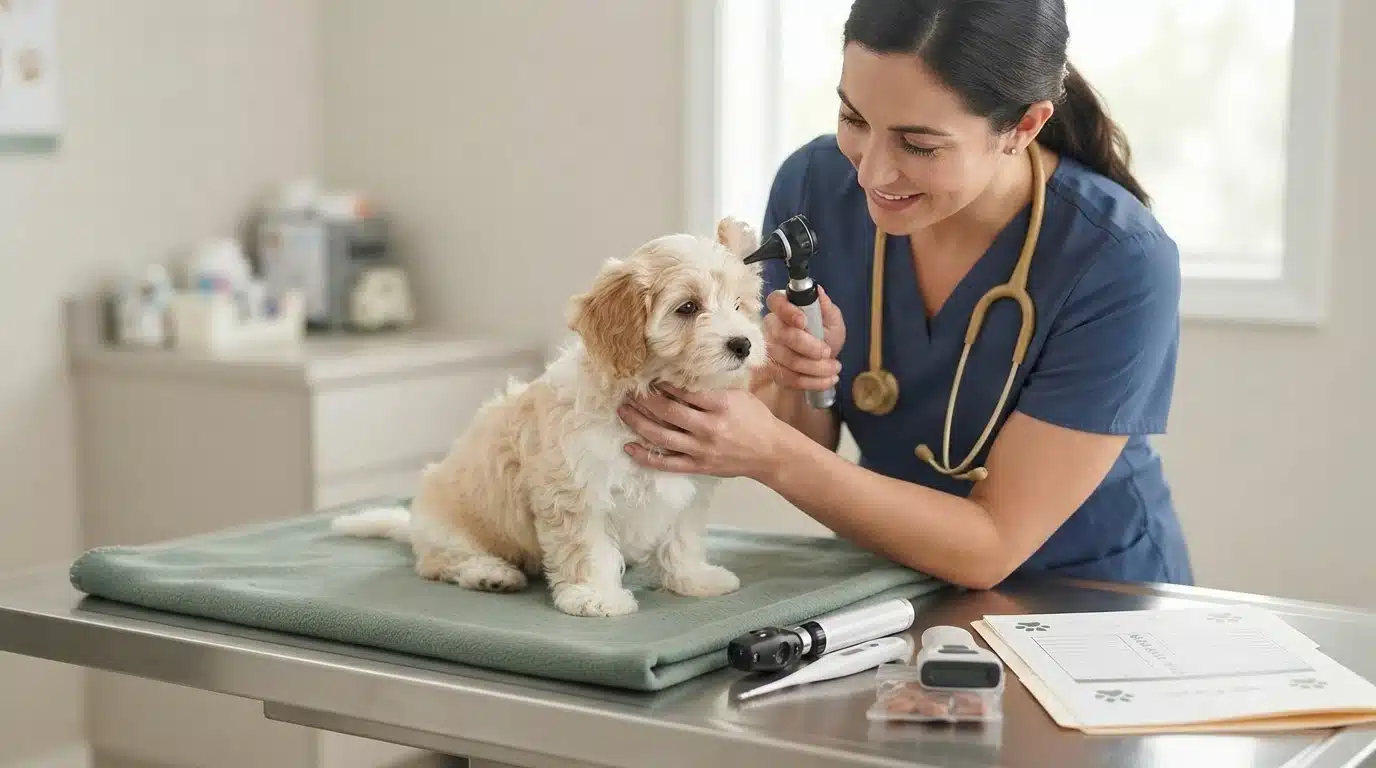
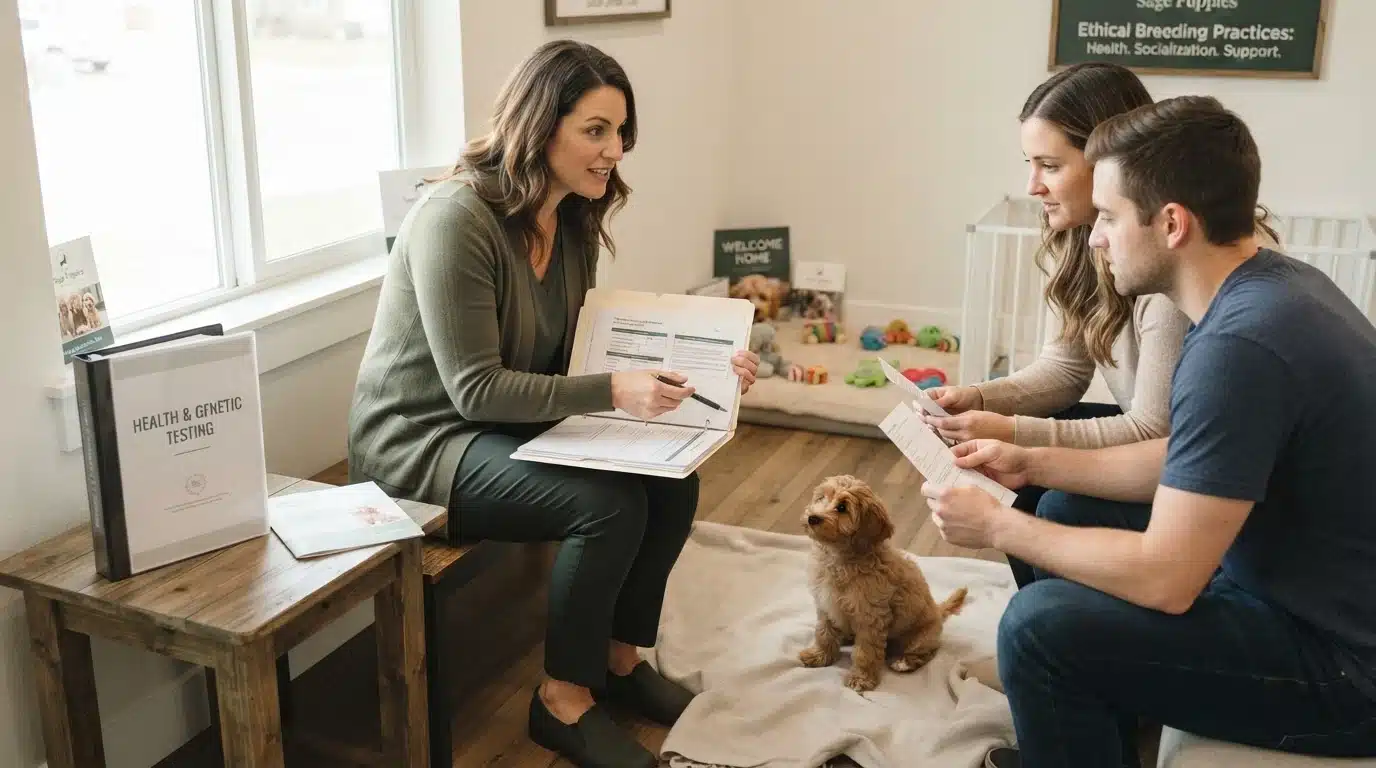
Ask for proof, not promises. Serious breeders test each parent dog for inherited problems and register results publicly. For Havanese and poodle mixes, that means eye exams by a veterinary ophthalmologist, patella (kneecap) evaluation, cardiac checks, and DNA panels for breed-specific conditions. The Orthopedic Foundation for Animals keeps a free public database, so you can look up a parent by its registered name in about 15 minutes. Ask for the OFA or CHIC numbers, then verify them yourself. A breeder who shares results openly is showing you how they work. One that stalls, or hands over “papers” that only prove registration, is telling you something too. You can see which records to request before you visit in this list of puppy health screening documents.
Red flags that should make you walk away
Some warning signs are loud. Others are polite deflections. Both mean the same thing: keep looking.
- No health testing, or testing “in progress” for years with nothing to show
- Puppies always available, several litters at once, or every breed on demand
- No visit allowed, or only meeting in a parking lot
- Pressure to pay a deposit today or vague, shifting pricing
- No questions back from the breeder about your home, yard, or schedule
- No contract, health guarantee, or offer to take the dog back later
One or two misses might be a new breeder finding their footing. A pattern is a choice.
Questions a good breeder will ask you
A responsible breeder interviews you. Expect questions about your work hours, kids, other pets, and experience with puppies. They want the right home, not the fastest buyer, and they will keep a waitlist rather than place a puppy anywhere. If the conversation feels one-sided, it is.
What a Puppy in Utah Actually Costs in 2026
Anyone buying puppies in Utah should budget well beyond the sticker price. Purchase price is only the start; food, vet visits and training add up fast in year one.
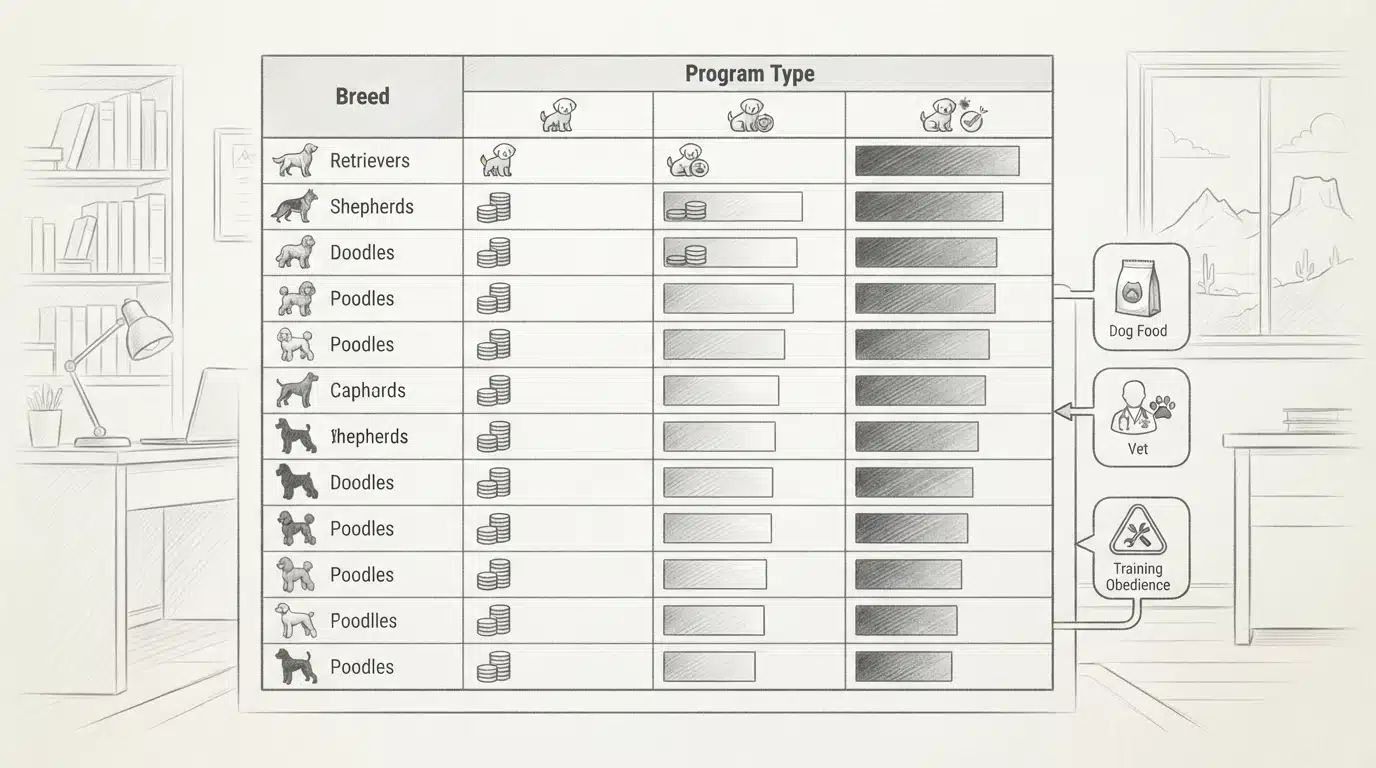
Purchase price ranges by breed and program type
Rescue and shelter puppies usually cost $300 to $900, which often covers early shots and spay or neuter. Well-bred purebreds and designer breeds from careful breeders run $1,500 to $3,500, and small companion breeds like Havanese, Havapoos and Cavapoos often land between $3,000 and $5,000. Breed demand, health testing and how much the breeder invests in each litter all move that number. If a price looks too good, ask why.
First-year costs Utah families should plan for
Plan on $1,500 to $5,000 in your puppy’s first year, on top of the purchase price. The big line items: vaccines and routine vet care, spay or neuter surgery, a crate, bedding, food, grooming and puppy classes. Estimates from AKC Pet Insurance put year one at roughly $740 to $1,325 before the purchase price, so treat that as your floor. Small doodle-type coats also need regular grooming, usually $60 to $100 per visit. Build in a cushion for the surprise things, too, like an ear infection or a chewed leash.
How Sage Puppies structures pricing and deposits
Our Havanese, Havapoo and Cavapoo puppies run $3,500 to $4,500, with a clear reservation deposit explained upfront on our pricing and reservation page. No hidden delivery fees, no surprise add-ons. Families nationwide can reserve after a simple application and match.
Choosing the Right Breed for Your Utah Home
Buying puppies in Utah works best when the breed fits your actual life: your yard, your stairs, your kids, and how much brushing you will really do. All three breeds below stay small, bond closely with people, and suit Utah homes from Salt Lake apartments to suburban houses in South Jordan.

The Havanese: the classic small companion
The Havanese is Cuba’s national dog, a sturdy little companion built for people rather than work. Adults usually stay under 15 pounds, which makes them easy to travel with and gentle around children. The coat is silky but low-shedding, so many families with mild allergies do well with them. They thrive on company, so plan for a household where someone is home most of the day.
The Havapoo: Havanese plus toy poodle
Cross a Havanese with a toy poodle and you get a soft, wavy-coated companion that often sheds even less than either parent. Havapoos tend to be playful and quick to learn, which helps first-time owners during house training. Expect a small dog, usually 8 to 15 pounds, with a coat that needs regular brushing and grooming. Families who want a low-shedding dog with a sunny, people-first personality often land here.
The Cavapoo: Cavalier plus toy poodle
The Cavapoo pairs the Cavalier King Charles Spaniel’s famously gentle, affectionate nature with the poodle’s low-shedding coat. Cavapoos are typically calm and adaptable, which suits families with young kids or quieter homes. Most adults weigh 9 to 18 pounds. Like all doodle-type coats, they need routine grooming, so build that into your budget early.
The Application and Reservation Process, Step by Step
Buying puppies in Utah should feel clear from the first click to the day you bring your puppy home. A good program asks questions up front, and that screening protects both you and the puppy.
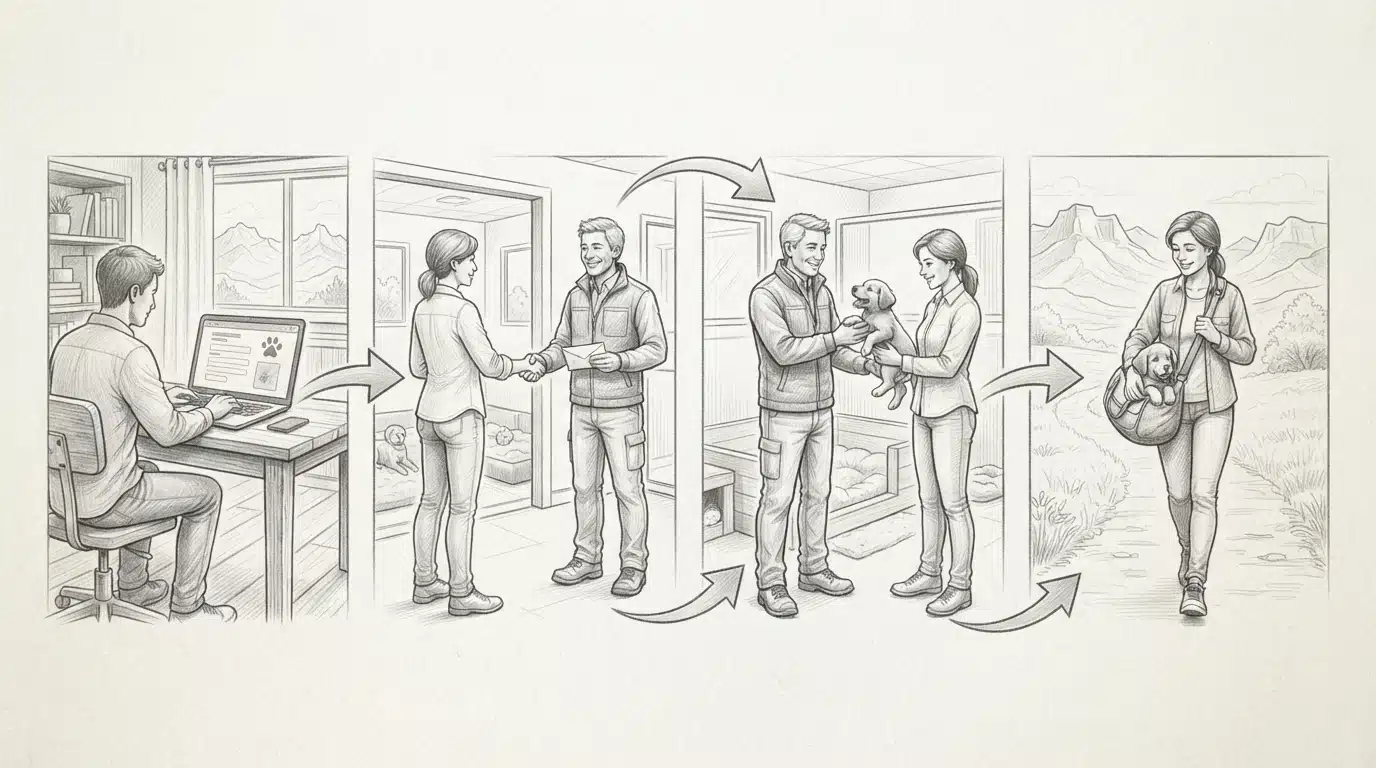
What the application screen is really checking
The application is not a test. Breeders use it to match homes to puppies, not to judge you. Expect questions about your household, work schedule, kids, other pets and where the puppy will sleep. At Sage Puppies, Cassie reviews each application herself, so honest answers get honest help.
From approved application to matched puppy
Once approved, the breeder matches temperament, coat type and energy level to your home rather than letting first in line pick blind. Ask how matches happen, what photos and updates you get, and when you can visit or video call. Sage Puppies keeps this owner-managed so no puppy ships without a person who knows both sides.
Deposits, contracts and what they protect
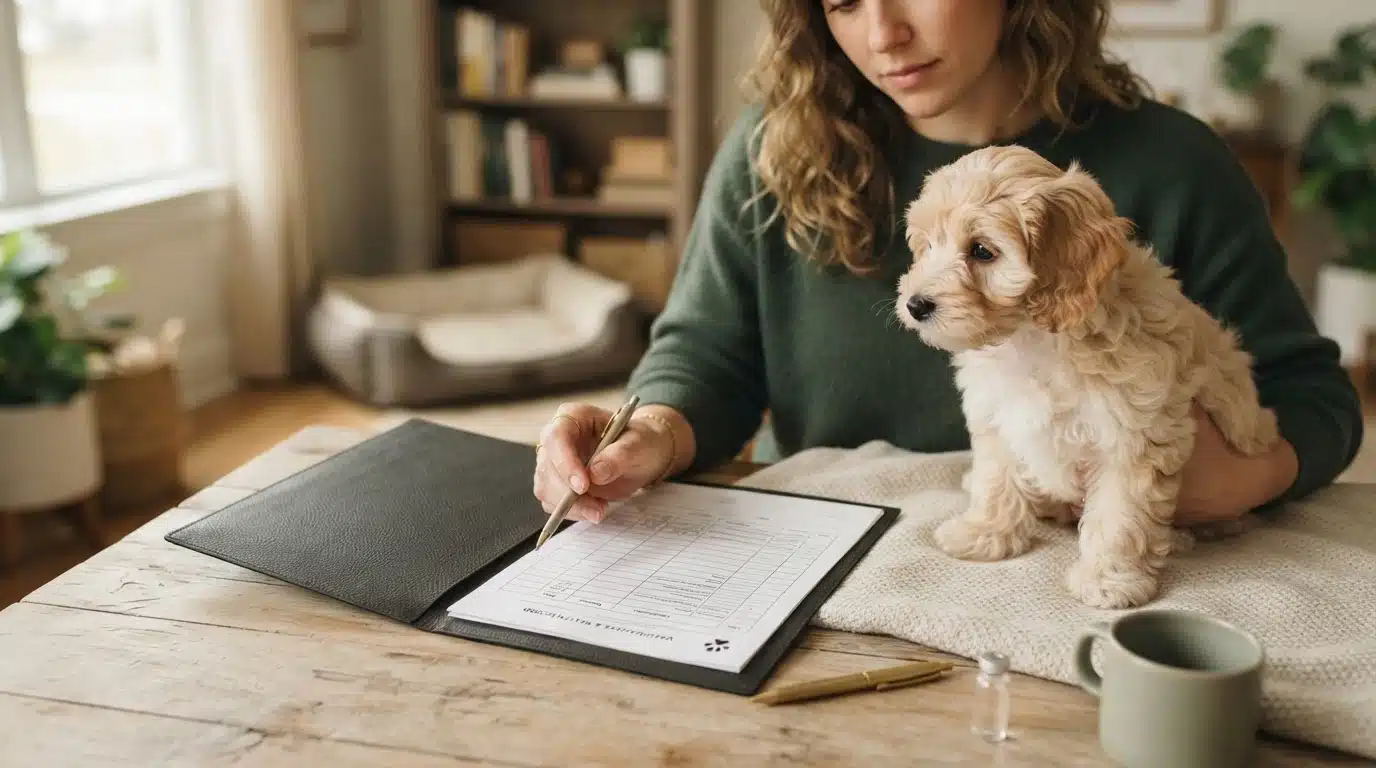
A deposit holds your spot and should be receipted in writing. The contract should cover health guarantees, return terms and spay or neuter expectations. Read both before you pay, and keep copies. Strong breeders welcome those questions, because a clear paper trail is how responsible programs earn trust.
Pickup, Delivery and Bringing Your Puppy Home
Most Utah breeders offer three ways to get your puppy home: local pickup, driving in yourself, or a nanny-delivered flight. If you’re buying puppies in Utah from out of state, ask which options your breeder offers before you reserve, because transport affects both cost and timing.
Local pickup at the breeder’s home base
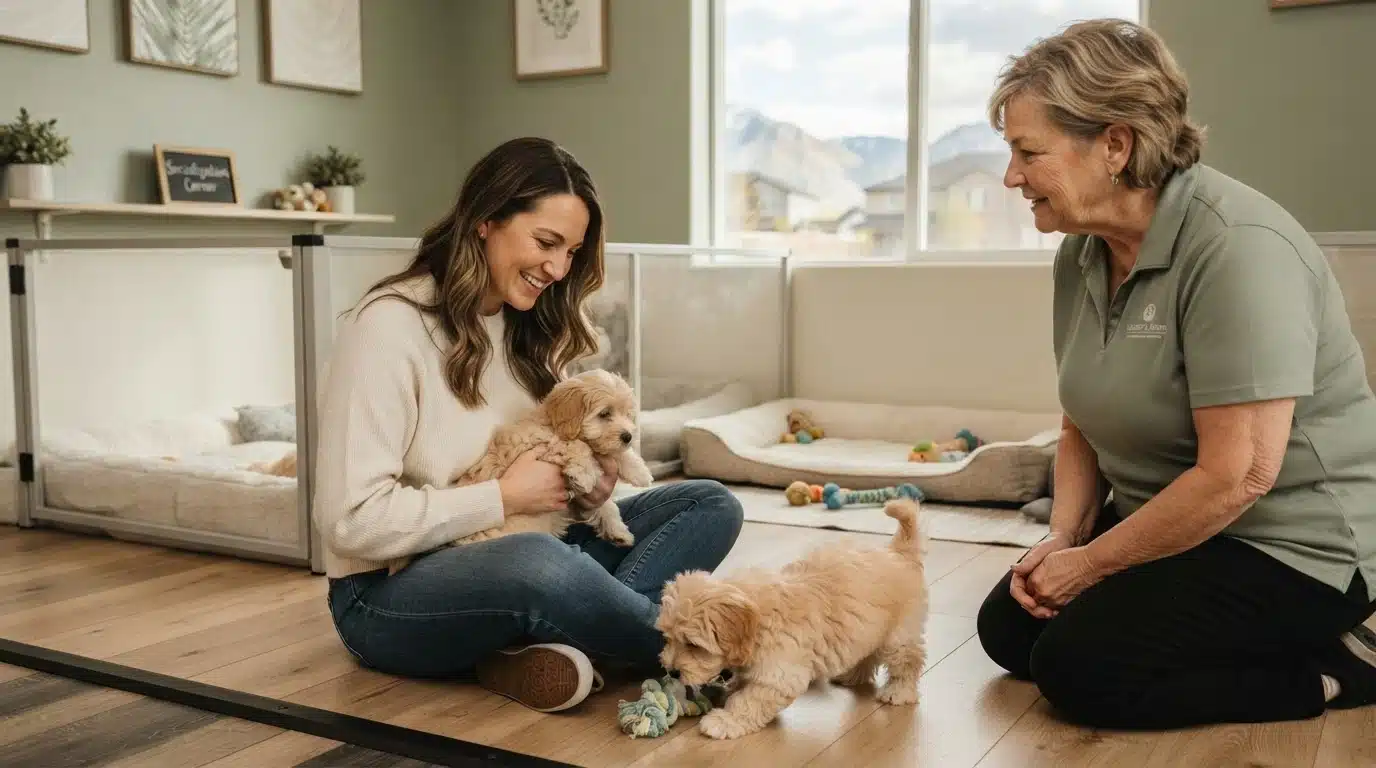
Pickup in person is the simplest choice if you live along the Wasatch Front. You meet the breeder, see where your puppy was raised, and ask last-minute questions face to face. Bring a small crate or a lap blanket, since the ride home is usually a puppy’s first car trip. Keep it short and calm.
Driving in from out of state
Many families fly into Salt Lake City, rent a car, and drive home over a day or two. Plan stops every two to three hours for water and a quick potty break. Pack puppy pads, paper towels, and a small crate secured in the back seat. Skip dog parks on the way; your puppy isn’t fully vaccinated yet.
Flight nanny and ground transport options
A flight nanny carries your puppy in the cabin and hands it to you at your airport, often for $550 to $1,000 depending on distance, according to this 2026 pet transport pricing guide. Ground transport runs slower but costs less. Sage Puppies arranges both for families nationwide, so ask about delivery during your application.
Common Mistakes Utah Puppy Buyers Make (and How to Avoid Them)
Most problems when buying puppies in Utah trace back to three shortcuts: chasing the lowest price, underestimating daily care, and rushing the paperwork. Here’s how to sidestep each one.
Price shopping without comparing what’s behind the price
A $900 puppy and a $3,500 puppy are rarely the same deal. The cheaper one often skips health testing, early socialization, or a written health guarantee, and vet bills can erase the savings fast. Compare what’s included, not just the number.
Underestimating grooming and training time
Doodle coats mat within days of missed brushing, and grooming visits run $60 to $100 each. Puppies also need daily training sessions for months. Be honest about your schedule before you commit.
Skipping the contract or vet timeline
Read the contract before you pay, including health guarantees and return terms. Then book a vet visit within the first few days home, since many guarantees require it. Breeders like Sage Puppies put these terms in writing upfront, so a breeder who won’t should concern you.
Your Next Step: Decide Whether Sage Puppies Fits Your Family
What working with Sage Puppies looks like
Buying puppies in Utah should feel clear from the first message. With Sage Puppies, you start with a short application, then Cassie Milar personally matches you with a Havanese, Havapoo or Cavapoo raised in her South Jordan home. No kennels, no middlemen, no surprise fees. Prices run $3,500 to $4,500, and local families pick up in person while out-of-state families can arrange cabin delivery with a flight nanny.
Where to go from here
See who’s ready now on the available puppies page, then review deposits and total costs on the pricing and reservation page. If the fit feels right, the application takes only a few minutes. Your puppy should match your family, not just your budget.

If buying puppies in Utah feels more confusing than exciting, you’re not alone, and you don’t have to figure it out by yourself. Sage Puppies walks you through every step with honest pricing, health-tested parents, and matching built around your family. Visit Sage Puppies, then start the short application when you’re ready.
Frequently Asked Questions
Q1: How do I buy a puppy in Utah from a reputable breeder?
Ask for health testing records, read the contract before paying, and expect the breeder to interview you too. Then reserve with a written deposit.
Q2: What is the average cost of a puppy in Utah?
Well-bred small companion breeds typically run $3,000 to $5,000. Rescues cost $300 to $900, and most purebreds fall between $1,500 and $3,500.
Q3: How do I find ethical puppy breeders in Utah?
Verify OFA health results, request a visit or video call, and walk away from any breeder with always-available litters or no contract.
Q4: Can I get a Utah puppy delivered out of state?
Yes. A flight nanny carries your puppy in the cabin, usually costing $550 to $1,000 depending on distance.
Q5: When should I take my puppy to the vet?
Within the first few days. Many health guarantees require it, and early visits catch problems while treatment is simplest.
Q6: How long is the wait for a well-bred puppy?
Often several weeks to months. Good breeders keep waitlists rather than place puppies quickly, so plan ahead when buying puppies Utah-bred.
Conclusion
Buying puppies in Utah comes down to three checks: verified health testing, honest pricing with a written contract, and a breeder who interviews you as carefully as you interview them. Budget $3,000 to $5,000 for a well-bred small companion breed, plus $1,500 to $5,000 for that first year. Compare what’s behind the price, not just the number, and plan for a waitlist instead of a same-week pickup. Whether you choose a Utah hobby breeder or a boutique program, the framework in this guide works the same. The right puppy matches your home, your schedule, and your long-term plans, so take the time to verify every claim before you pay a deposit.