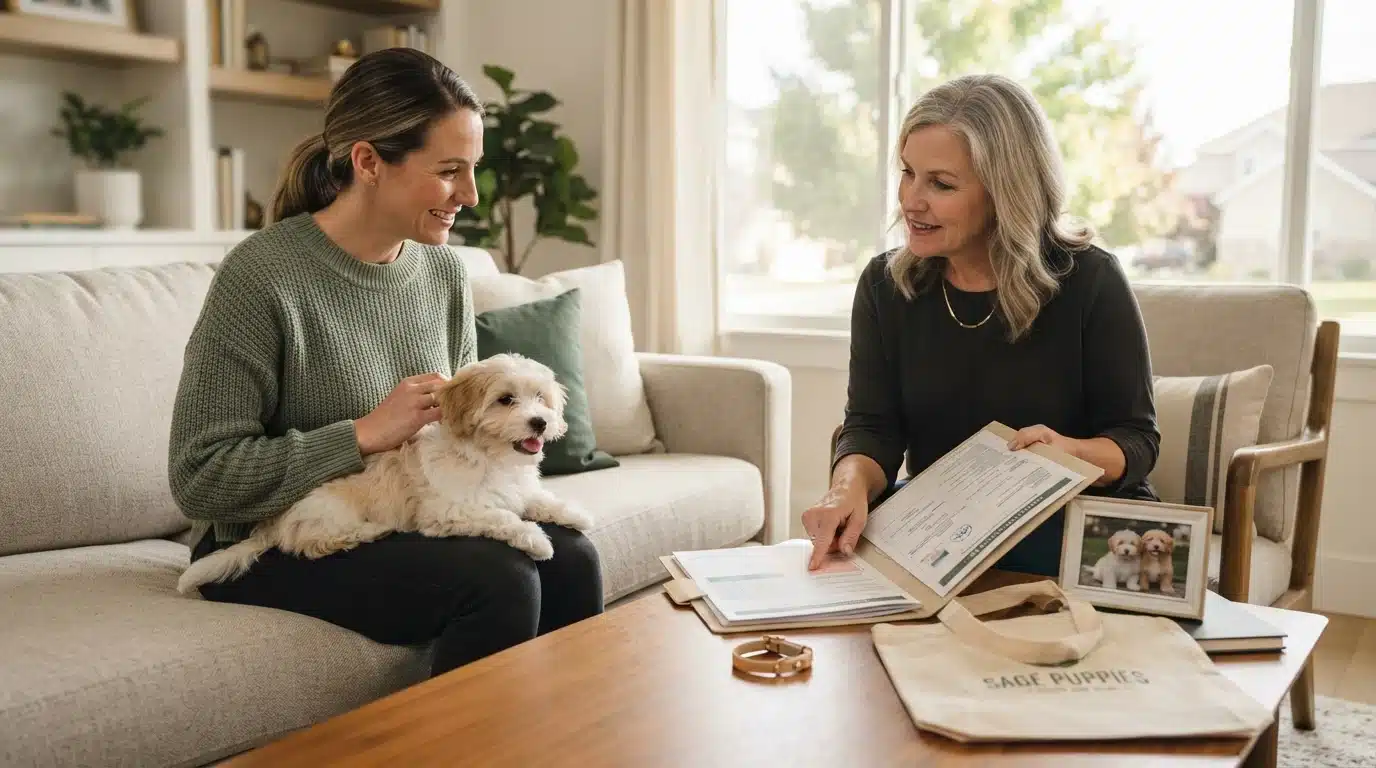
Quick Summary: A Utah hobby breeder is usually easier to trust than a puppy mill because buyers can visit the home, meet the dam, and verify the parents’ health records before paying. Look for consistent pricing, written contracts, clear deposit and refund terms, buyer screening, and proof that the puppy was raised in a home, not merely stock photos or a parking-lot handoff. Sage Puppies follows this model with one South Jordan household, limited breeds, published health and pricing details, and applications before deposits.
Two Utah listings can show the same Havapoo puppy, the same price band and the same guarantee wording, yet one still be mill-bred. The difference is not the photos. It is whether you can name the breeder, meet the dam, read the parents’ health results and visit a real Utah address before you pay. That is the core of puppy mill vs hobby breeder, and sellers never label themselves. Polished websites make mills look legit, while a hobby breeder in Utah may have modest paperwork and a small online footprint. So buyers guess from stock photos instead of records. This guide breaks the hobby breeder vs puppy mill question into six testable dimensions, shows how to verify each one locally, lists red flags, and ends with the questions to ask before any deposit leaves your account.
Puppy Mill vs Hobby Breeder in Utah: At a Glance
| Puppy mill and dealer model | Hobby breeder model | Sage Puppies | |
|---|---|---|---|
| Breeding model and scale | High-volume production or wholesale resale; may be USDA-licensed when five or more breeding females are sold wholesale | Owner-managed, limited litters per year, focused on one to three breeds; no wholesale license | Boutique program founded in 2025 in South Jordan, Utah; breeds Havanese, Havapoo and Cavapoo only |
| Where puppies are raised | Outdoor kennels, cages or facility housing; puppies are often moved between locations before sale | In the breeder’s home or a dedicated small indoor space, raised underfoot around people | Home-raised in a single Utah household, not a multi-dog kennel facility |
| Parent dogs and litter planning | Parent dogs usually off-site and unseen; litters produced continuously rather than planned | Dam lives on-site and can be met; litters are planned around the household and family schedule | Owns and houses its breeding dogs; litters planned rather than produced continuously |
| Health testing and records | Limited or generic records; third-party vet checks and DNA panels are often substituted for parent OFA/CHIC results | Parent clinical screenings (for example OFA hips, patellas and annual eye exams for Havanese) plus written puppy exam records | Publishes a health-testing page covering parent clinical screening and puppy exam records |
| Price and payment structure | Discounts and fast checkout; deposit terms and refund conditions often unclear | Consistent published pricing with written deposit, refund and delivery terms | Published purchase range of $3,500 to $4,500, with deposits and reservation terms stated on the pricing page |
| Buyer screening and contract | Minimal screening, no interview, thin or transaction-style paperwork, limited follow-up | Application and interview before deposit; written contract with spay/neuter and return clauses | Owner-managed application process before deposit, with written purchase contract terms |
How a Puppy Mill and a Hobby Breeder Actually Differ
Puppy mill and dealer model
A high-volume breeding or resale operation built around output, not individual litters. Puppies may come from USDA-licensed kennels and are often moved between locations before sale, with parent dogs unseen. Buyer screening is minimal and paperwork tends to be transaction-style.
Hobby breeder model
A small, owner-managed program that plans a few litters a year and raises puppies in the home. You can meet the dam, review parent health screenings like OFA results, and go through an application before any deposit. Written contracts cover pricing, spay/neuter and return terms.
Sage Puppies
Sage Puppies is a boutique, owner-managed program founded in 2025 in South Jordan, Utah, breeding Havanese, Havapoo and Cavapoo only. Litters are planned and raised in one household, with published pricing of $3,500 to $4,500 and an application before deposit.
Key strengths
- Owns and houses all breeding dogs on-site
- Published health-testing and pricing pages
- Owner-managed screening before any deposit
How to Tell a Puppy Mill from a Hobby Breeder in Utah
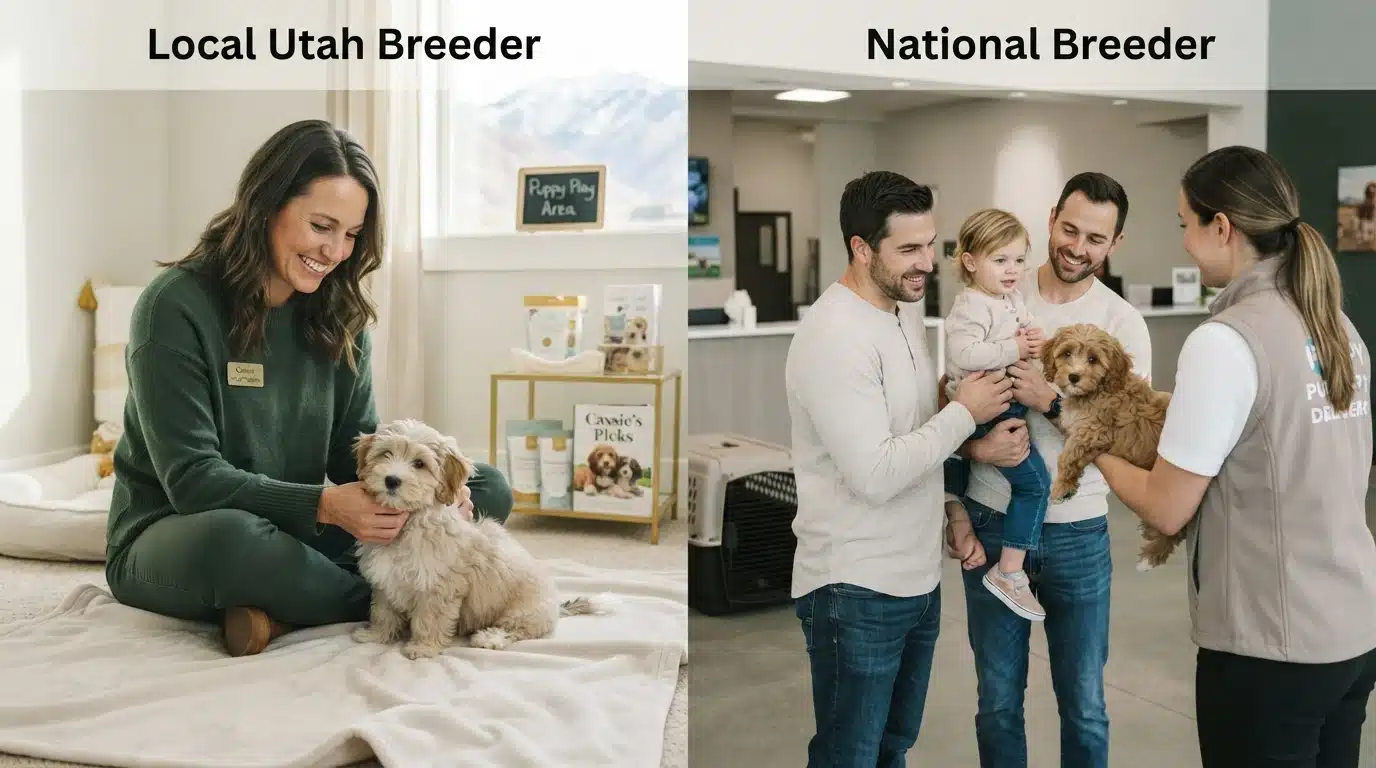
Ask one question first: can you see where the puppy was born and raised? A hobby breeder says yes, invites you in, and lets you meet the mother. A puppy mill or reseller hides behind photos, drop-offs and excuses. That single difference answers most of it. Then work through four checks in order:
- Ask for an in-person or video visit to the home.
- Confirm Utah has no state license, so verify locally instead.
- Check health records, parent testing and a written contract.
- Compare pricing structure, not just the sticker number.
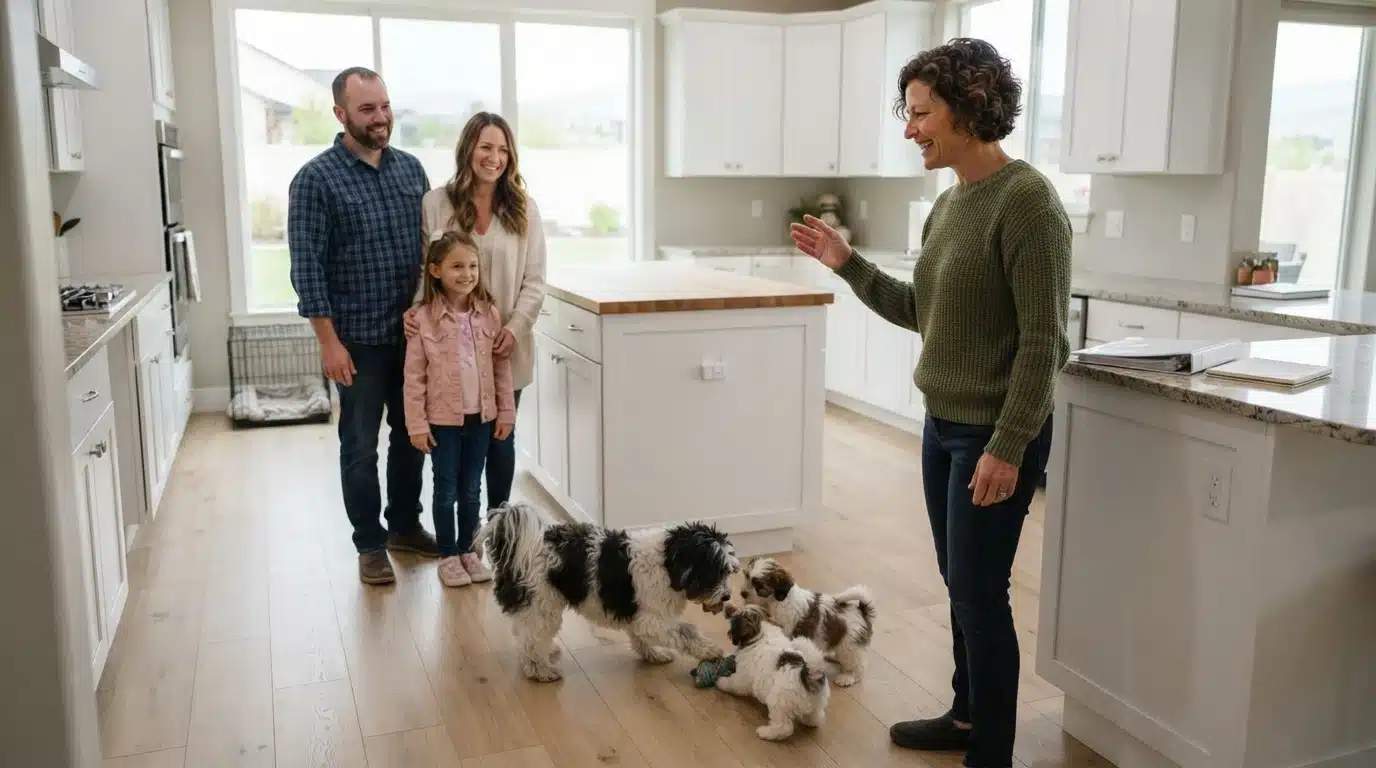
The one question that separates them: can you see the operation?
Honest breeders raise litters inside their own homes and expect visitors. They want you to meet the dam, see the space, and ask questions face to face. Sellers who refuse video calls, offer parking-lot handoffs, or always have “one left” are moving dogs they did not raise. No visit, no purchase.
Why Utah has no breeder license to check
There is no state puppy breeder license in Utah, so a “licensed” claim often refers to something else. Large commercial breeders may hold a federal USDA license, but the threshold is high and most hobby litters fall far below it. Real oversight comes from city animal services rules, local business licenses and how openly the breeder operates, which is why Utah buyers must verify the person rather than a document.
The four labels buyers confuse most
| Label | What it actually means | Red flag or fine? |
|---|---|---|
| Hobby breeder | Raises one or two breeds at home, keeps and cares for the mother | Usually fine |
| Backyard breeder | Casual, unplanned litters with little health testing | Caution |
| Broker or reseller | Sells puppies from others, never shows the source | Red flag |
| USDA licensed breeder | Federal license for large commercial kennels, not a quality seal | Depends on scale |
A small program like Sage Puppies, with a South Jordan home base and published pricing, fits the hobby breeder pattern: one household, one or two breeds, nothing hidden.
Red Flags That Point to a Mill Rather Than a Breeder
A Utah puppy seller is likely running a mill or broker operation, not a hobby breeder, when the price signals, listings and paperwork all push you toward a fast sale. Watch for these grouped signs.
- Price: discounts, rush fees and vague deposit terms
- Listing: always-available litters, stock photos, no dam
- Shipping: delivery-first, no pickup, thin paperwork
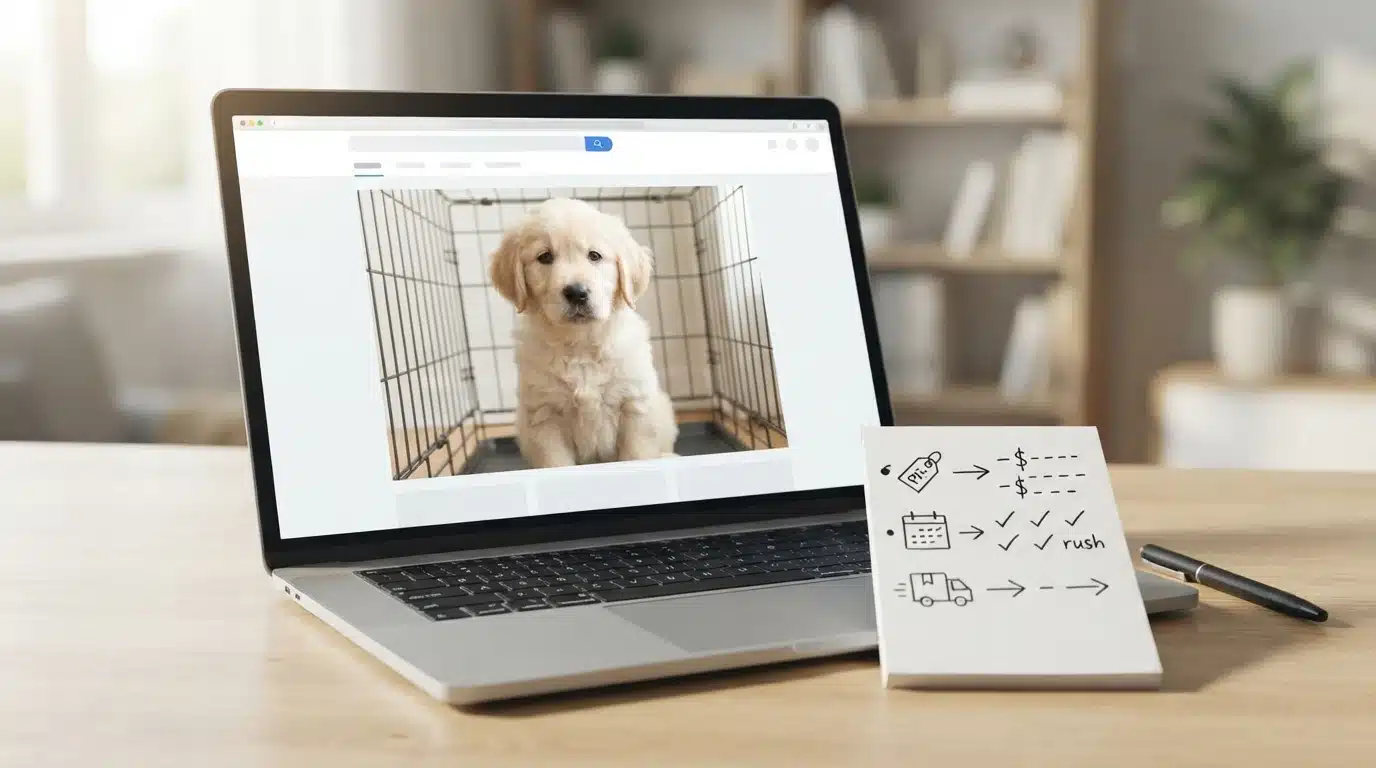
Price and payment signals
Mills sell on speed. Be wary of discounted litters, “priced to move” phrasing, urgent deposit demands, or payment terms that only appear after you commit. A hobby breeder Utah families trust publishes consistent pricing and explains how deposits and refunds work before any money moves. If totals shift mid-conversation, walk away.
Listing, photography and availability signals
Mill listings look like storefronts: multiple breeds, new litters every week, and photos that appear on other sites. Ask to meet the dam. A breeder who cannot show the mother, in person or on video, has a reason. Stock imagery and instant availability are two more puppy mill red flags worth pausing on.
Shipping, pickup and paperwork signals
Delivery-only sellers hide the raising environment. Insist on a visit or a live video walkthrough. Then check paperwork: a written puppy contract and health guarantee, vaccination dates, and vet contact. Missing records or refusal to answer questions should end the conversation. Responsible programs, Sage Puppies included, match families through an application before any deposit.
What a Utah Hobby Breeder Should Show You
Parent dogs, homes and the visit
A good hobby breeder Utah families trust will invite you to meet the dam, the mother, in person. You should see where the puppies sleep, eat and play. The home should be clean, not a row of stacked cages. If a seller refuses a visit or only offers a parking-lot handoff, treat that as a puppy mill red flag and keep looking.
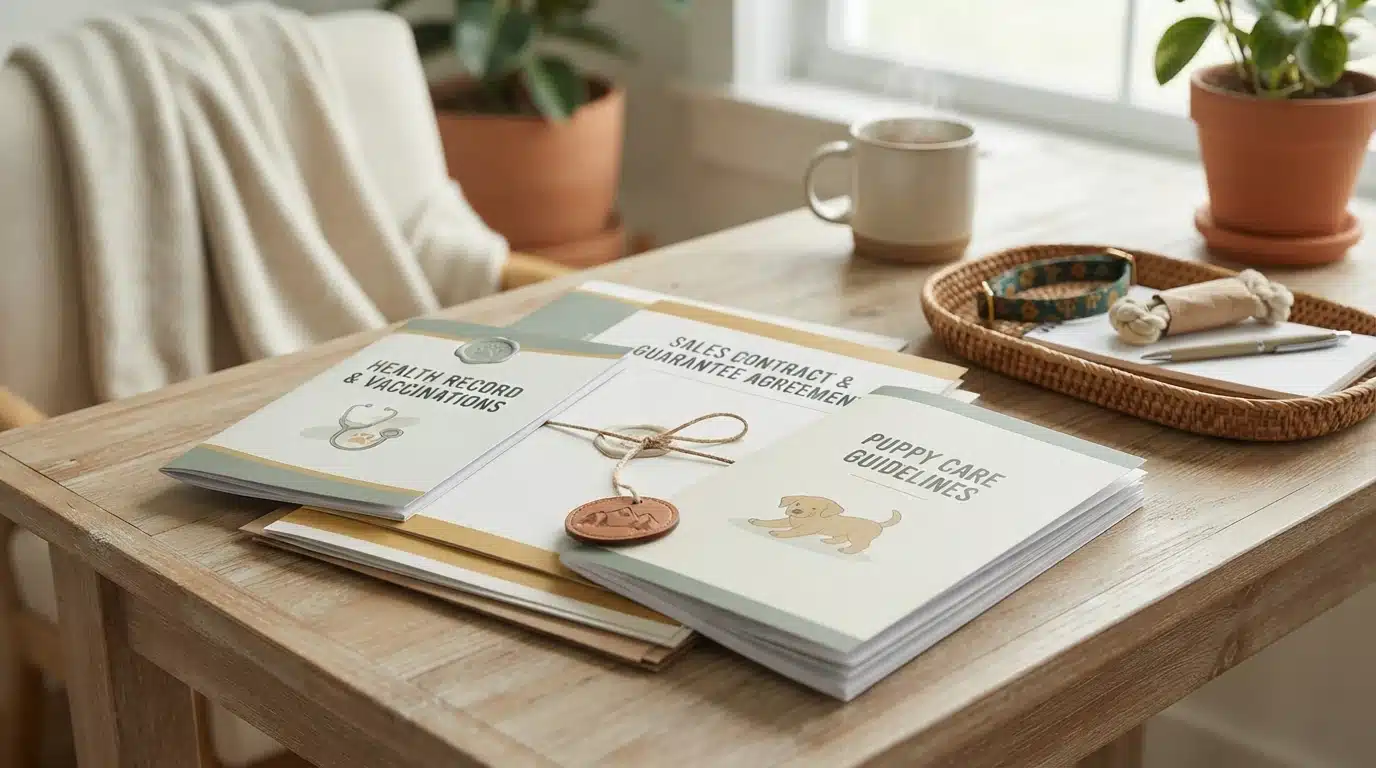
Documents a breeder should hand over without being asked twice
Ask for paperwork before you fall in love with a puppy. A hobby breeder keeps it simple but complete:
- Vet exam record dated within days of your pickup
- Vaccination and deworming log with dates and products used
- Health testing results for the parents, such as OFA or CHIC listings for Havanese lines
- Written contract covering the health guarantee and return terms
When records are vague, delayed or photo-only, walk away. Honest breeders expect the question.
Screening, contracts and life after pickup
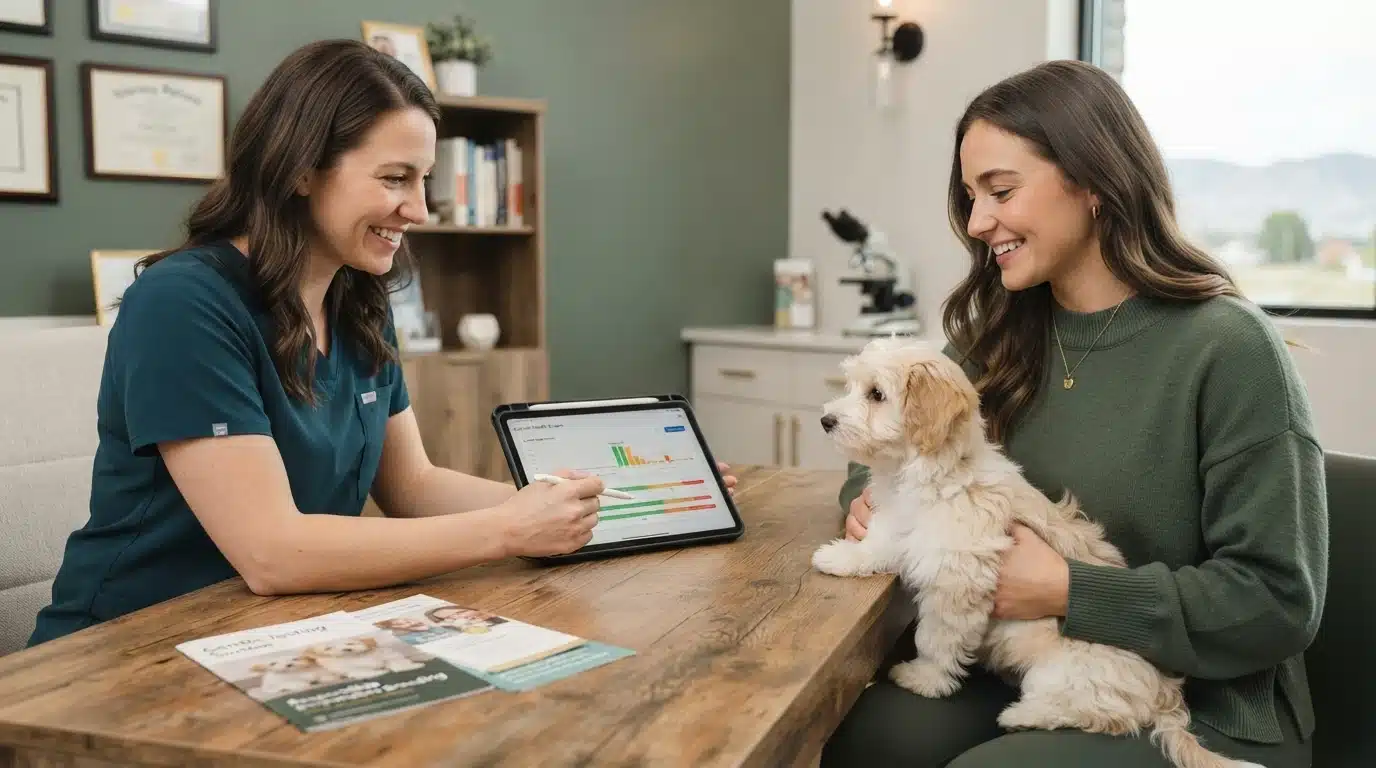
Serious breeders screen you, too. Expect an application, questions about your home, and a clause requiring the dog back to them if things fail. They should also ask how you plan to handle training and time alone. A breeder who never interviews you is selling volume, not placing puppies. Ask each Utah seller to walk you through their puppy waitlist and support after pickup, then compare answers side by side.
Price, Litter Size and Availability Compared
What drives the price gap
Puppy mills sell cheap because they cut every corner: minimal vet care, no genetic testing, and litters raised in kennels rather than homes. Hobby breeders in Utah charge more because health testing, vaccines and early socialization cost real money. Boutique programs like Sage Puppies’ published pricing sit in the $3,500 to $4,500 range, which reflects that full-care approach rather than volume.
Litter size, waitlists and the availability question
Mills and brokers keep litters small-looking on websites but move dozens of puppies a year, so “available now” is their sales pitch. A hobby breeder plans one or two litters a year per dam, so you join a puppy waitlist and wait weeks or months. That wait is a feature. It means the breeder matched you, not just sold to you.
Totaling the real cost before you pay
The sticker price is only the start. Add the vet exam, initial food and gear, training classes, and possible treatment for inherited problems a mill puppy carries. A $800 mill puppy with $3,000 in vet bills costs more than a well-bred one. Ask each seller what the price includes before you pay a deposit.
Health Testing and Records Compared
A puppy mill shows you paperwork that looks official but proves very little. A hobby breeder shows you records tied to the specific parents of your puppy, and you can verify each one in a public database. Learning to tell the two apart takes about ten minutes.

Three record types that are not interchangeable
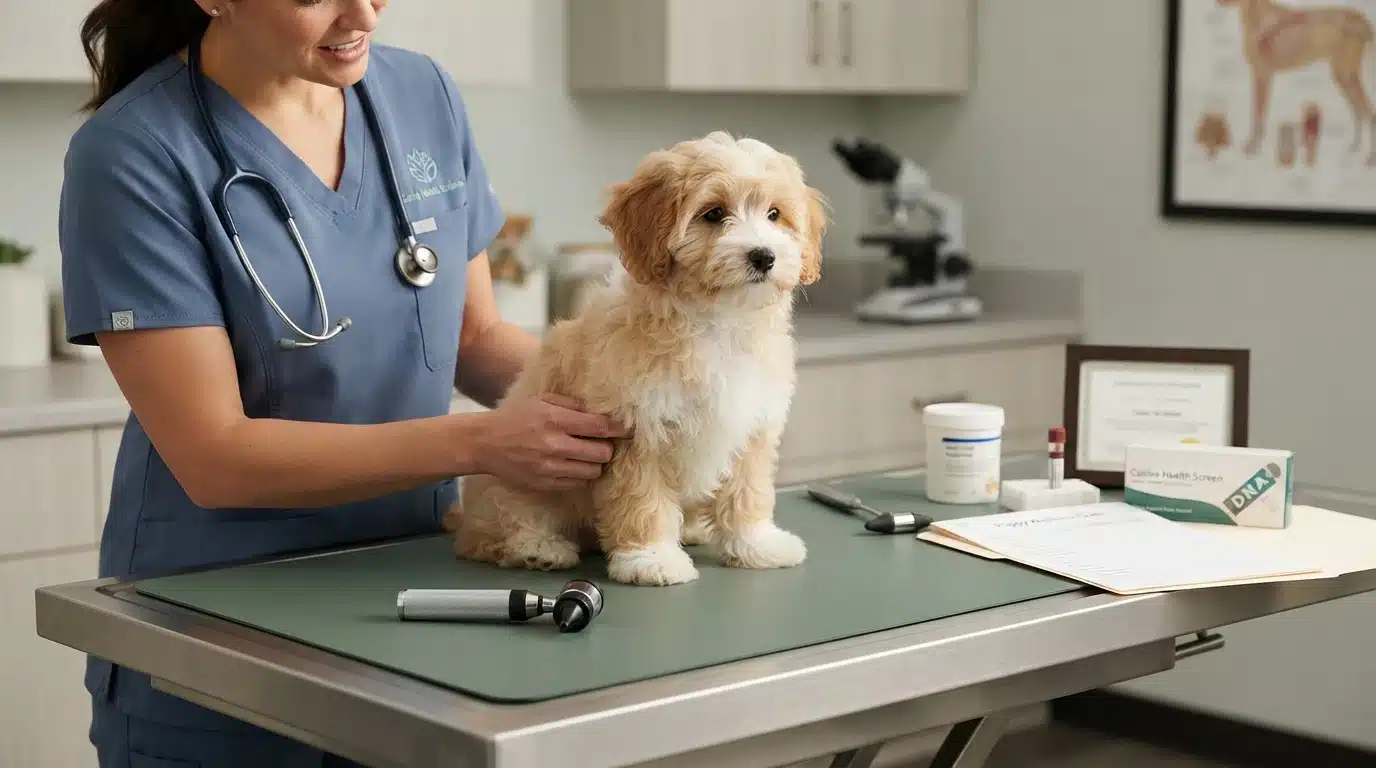
Buyers often mix up three things. A vet exam record says one puppy looked healthy on one day. A vaccination and deworming log shows routine care, not inherited health. Parent health testing, such as OFA evaluations, screens the breeding dogs for problems they could pass on. Only the third type predicts anything about your puppy’s future. Ask for the parents’ registered names so you can confirm results yourself on OFA’s public database.
Havanese, Havapoo and Cavapoo standards to compare against
For Havanese, a CHIC number requires an OFA hip evaluation, a patellar luxation exam and an eye clearance, detailed in the Havanese Club of America testing guide. Because Havapoos and Cavapoos are crosses, both parents need testing: the Havanese or Cavalier side per breed standard, plus the poodle side. We explain exactly which tests to request in our Havanese health tests overview.
What a health guarantee actually tells you
A guarantee is a contract, not a health certificate. Mills use them as marketing; the fine print often demands a vet visit within 48 to 72 hours or the coverage voids. Read what is covered, for how long, and what proof it requires before you sign anything.
Questions to Ask Before You Pay a Utah Seller
Questions that reveal the model of the operation
Ask where the puppy was born and raised, and whether you can meet the dam. Ask how many litters the household breeds each year and how many breeds they keep. A hobby breeder Utah family will invite you in, name the parents, and talk about one or two breeds. A seller who dodges, offers only a parking-lot handoff, or lists many breeds at once is showing you a puppy mill red flag.
Questions that must be answered in writing
Ask for the puppy contract and health guarantee, the deposit and refund terms, and the parents’ health testing records, such as OFA or CHIC numbers for Havanese lines. Ask which vaccines and dewormings are done and request copies. Get answers by email, not a phone call. Written terms protect you; vague promises about “full health” and no paperwork do not. Our Sage Puppies program puts pricing, deposit and refund conditions in writing before any payment.
Questions about life after the puppy arrives
Ask what support the breeder gives once the puppy is home. Who do you call at 10 p.m. if your Havanese refuses dinner? Ask whether the breeder will take the dog back at any age, which every serious hobby breeder should offer. Also ask how socialization was handled, what food the puppy eats, and whether delivery by flight nanny or ground transport includes written care instructions.
How Sage Puppies Compares on These Standards
The choices Sage makes that fit the hobby breeder column
Sage Puppies runs one household in South Jordan with three breeds, not ten. You complete an application before any deposit, see the dam, and get written pricing of $3,500 to $4,500 with clear deposit terms. That structure matches the hobby breeder column: one location, limited litters, questions asked of you, and a contract rather than a checkout button. The owner stays involved from birth to pickup, which is what small programs do well.
Where a small program has honest limits
A boutique program still has constraints a buyer should weigh. Waitlists can run longer than mill listings, so patience matters. Litters are small, which means fewer same-day choices and sometimes no puppy available this season. And no small program can match a dealer’s volume, delivery speed, or constant inventory. If you need a puppy this weekend, an honest breeder will tell you to wait, and that answer protects you.
Which Utah Seller Should You Trust: A Hobby Breeder or a Mill?
Is a hobby breeder better than a puppy mill? Usually yes, but not always, and the honest answer depends on what you need. A hobby breeder raises a few litters a year in their home and knows every puppy. A mill-style seller moves volume, so health and socialization suffer.
When a hobby breeder is the right choice
Choose a hobby breeder if you want a puppy raised in a home, parents you can meet, and honest answers about temperament. You will likely join a puppy waitlist, because good litters are planned, not stocked. If you want a Havanese or Cavapoo screened for inherited problems, this is the path. Smaller Utah programs work this way too.
When a mill-style seller is still the practical option
If you need a puppy this week and no Utah litter is available, a large seller or broker can fill the gap. But you must verify everything yourself: ask for the USDA license number if they claim one, read the health guarantee fine print, and budget for a vet visit.
Your decision checklist in five minutes
- Ask to meet the dam.
- Request health testing records, ideally OFA CHIC for Havanese.
- Read the puppy contract before paying.
- Check how many breeds they sell.
- Trust written terms over promises.

Ready to meet a breeder who raises every Havanese, Havapoo and Cavapoo in one home? Start with the application at Sage Puppies. You will see honest pricing, clear deposit terms and Cassie’s matching process before you commit.
Frequently Asked Questions
Q1: How do I tell a puppy mill from a hobby breeder in Utah?
Ask to visit or video-call the home and meet the dam. Utah has no state breeder license, so check the person: parent OFA records, a written contract and consistent pricing matter more than any “licensed” claim.
Q2: What red flags show a Utah puppy seller is a mill, not a breeder?
Discounted litters, instant availability, stock photos, parking-lot handoffs and vague deposit terms. A seller who cannot show the mother or refuses a live walkthrough is usually moving puppies they did not raise.
Q3: Is a hobby breeder better than a puppy mill?
Usually, yes. A hobby breeder plans a few litters a year, health-tests parents and screens buyers. The waitlist is longer, but you get documented care instead of volume sales with hidden risks.
Q4: How much should a well-bred Havanese or Cavapoo puppy cost in Utah?
Expect roughly $3,500 to $4,500 from a small program covering health testing, vaccines and early socialization. Add first-year vet visits, gear and training when you budget.
Q5: Can I trust a seller who ships by flight nanny or ground transport?
Delivery is fine, but it must come with a visit or live video walkthrough first, written care instructions and a signed puppy contract and health guarantee before any payment.
Q6: What health records should I get before paying a deposit?
A recent vet exam record, a dated vaccination and deworming log, and parent health testing such as OFA or CHIC listings. Confirm the parents’ registered names yourself in OFA’s public database.
Conclusion
Telling a puppy mill from a hobby breeder comes down to proof, not polish. Meet the dam, see where the puppies were raised, and ask for parent health testing, a written puppy contract and health guarantee before any deposit. In Utah, no state license exists to check, so verify the person: consistent pricing, a real home address and honest limits on litter numbers. A hobby breeder Utah families trust screens buyers and plans litters, so expect a waitlist rather than instant availability. Sellers who hide behind photos and drop-offs are showing you exactly who they are.