Quick Summary: Check three separate health layers: each parent’s clinical screenings, DNA results, and the puppy’s own exam, vaccination, and deworming records. A CHIC number only confirms that recommended tests were published, so read the actual results and verify them through OFA and the breeder’s DNA reports. Sage Puppies supports this approach by providing documented parent testing for Havanese, Havapoo, and Cavapoo puppies, but buyers should still confirm records and review the contract and health guarantee themselves.
A breeder can hand you a full folder and still leave gaps. A CHIC number proves the parents were listed, an OFA entry proves a specific joint or eye check happened, and a DNA report proves only what the parents carry. Each document answers one narrow question, so none of them alone tells you a puppy is healthy.
That is the problem most buyers run into. You want Cavapoo health questions answered with proof, not promises, and the paperwork looks convincing either way.
This guide shows you what to ask and how to check it yourself. You will learn the difference between a parent’s clinical screening, a DNA panel result and the puppy’s own vet exam. Then you can verify each claim in public OFA and Embark records in minutes.
We raise Havanese, Havapoo and Cavapoo puppies in South Jordan, Utah, and these are the Cavapoo health questions we answer for every family, with records attached.
Step 1: Work Out Which Tests Actually Apply to Each Parent
Breeders sometimes hand you a thick stack of records and call it health testing. Not every test matters for every breed, so start by matching each parent to the right list. A mixed breed like a Havapoo needs the checks of both parent breeds, which is exactly where vague answers fall apart.
Havanese Parents: What Current CHIC Guidance Asks For
For purebred Havanese, use the current OFA CHIC program requirements rather than an old test list from a forum. The Havanese Club of America requires OFA hip evaluations, OFA patella (kneecap) certification, and an annual eye exam by a veterinary ophthalmologist for a CHIC number. Ask each Havanese parent for all three, and check whether the eye exam is recent.
Havapoo and Cavapoo Parents: Two Breeds, Two Requirement Sets
A Havapoo or Cavapoo inherits risk from two sides, so each parent should meet the standard for its own breed. The Havanese side brings the hip, patella and eye requirements above. The Poodle or Cavalier side carries its own concerns, including different eye disease and, for Cavaliers, heart screening. This is where smart Cavapoo health questions earn their keep: ask what each individual parent was tested for, not what “the breed” gets.
Three Document Types to Keep Separate
Breeders often hand over papers that look alike but prove very different things. Keep them apart when you review records, and it becomes much easier to spot a gap.
- Clinical screening: OFA hip radiographs, patella and eye exams performed by vets.
- DNA results: a health panel showing clear, carrier or at-risk status for specific gene variants.
- The puppy’s own exam: the litter’s vet check, vaccinations and deworming records.
Our article on what genetic results to ask for walks through the DNA side in detail.
What CHIC Does and Does Not Mean
CHIC certification means a dog was screened for every test its breed club recommends and the results are posted publicly. It does not mean the dog passed everything. Here is the distinction in plain terms:
- What it does: confirms each required test was done and published in the OFA database.
- What it does not: guarantee healthy hips, clear eyes or normal knees.
- What you should do: read the actual results, not just the number.
A CHIC number with a failed hip result still tells you something. Just read it before you celebrate it.
Step 2: Ask for Each Parent’s Clinical Screening Records
DNA results only tell part of the story. Clinical screening catches what genes cannot: loose hips, cataracts, a murmuring heart. A serious breeder keeps these records on file and emails them without hesitation. A hesitant answer is your first warning.
The Question to Send by Email
Copy this into your message:
“Could you send copies of each parent’s health screening results? I’d like to see the OFA hip and patella evaluations, the most recent eye exam, and any cardiac evaluation. Registration numbers or links to public listings work too.”
A confident breeder replies within a day. If you get photos of certificates, even better, because you can match the dog’s registered name to the record later.
What to Check on a Hip Report
OFA grades hips in seven categories: excellent, good, fair, borderline, mild, moderate or severe. Only the first three pass and receive an OFA number. Ask which grade each parent earned, and expect good or better in a small breed like a Havanese. A borderline result is not a pass, so ask why. Some breeders use PennHIP instead, which scores hip looseness on a different scale; both are legitimate, but the report should exist either way.
What to Check on Eye and Patella Records
An OFA eye exam is done by a board-certified veterinary ophthalmologist, not a regular vet visit. The form should be dated within the past year, because eye problems develop with age. Look for a normal result with no inherited findings noted. For patellas, the vet grades each kneecap from normal down through grades one to four of luxation. Both parents should be rated normal, since small breeds carry real risk of slipping kneecaps.
Heart Testing and Cardiac Evaluations
Cardiac screening uses a stethoscope exam, sometimes with an echocardiogram for a closer look. The OFA records a congenital cardiac result as normal or abnormal, with a cardiologist’s signature for advanced evaluations. Ask whether the exam was a basic screening or a specialist one, and note the date. Any murmur in either parent deserves a written explanation, not a shrug.
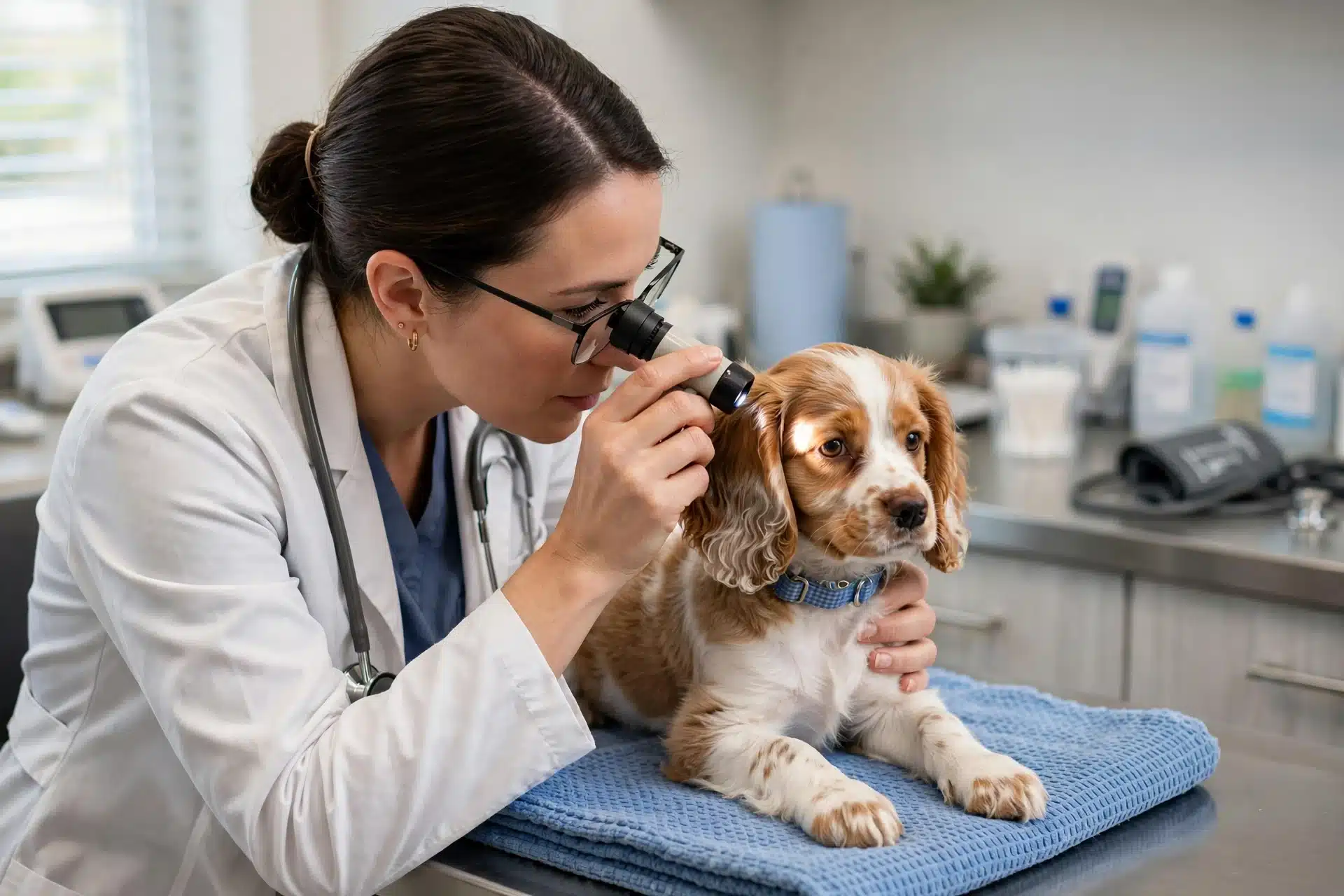
Once you have these records in hand, check that the names and dates line up with what the breeder told you. Records gathered at reservation and pricing stages are only as good as the dog they belong to, so matching details matters more than the paperwork itself.
Step 3: Ask for the DNA Results and Read Them Correctly
A good breeder tests the parents before breeding, not the litter after it arrives. Ask for a DNA health panel report for both the dam and the sire, with the registered names visible so you can match them to the pedigree. A full report beats a screenshot of one line.

What to Request From the Breeder
Request three things: the complete health results page for each parent, the test provider’s name, and an explanation of how the pair was matched. A serious breeder pairs dogs so no puppy can inherit two copies of the same harmful variant. If one parent carries a recessive gene, the other should test clear for it. Ask directly: “Are either of the parents carriers, and what does that mean for this litter?” Vague answers like “they’re all health tested” are a reason to keep looking. Our program shares parent DNA results during the matching process, because claims are only as good as the paperwork behind them.
Clear, Carrier and At-Risk Explained
DNA results sort into three outcomes:
- Clear: the dog has no copies of the variant and cannot pass it on.
- Carrier: the dog has one copy. Carriers are healthy themselves, but can pass the variant to about half their puppies.
- At-risk: the dog has two copies of a recessive variant (or one dominant copy) and may develop the condition. Note that at-risk is a risk indicator, not a diagnosis, as Embark’s help center explains.
A carrier is only a problem when bred to another carrier of the same variant. So a carrier parent paired with a clear parent should produce no affected puppies.
What a DNA Panel Cannot Tell You
A panel screens for known variants only. It cannot rule out hip dysplasia, luxating patellas or eye disease, which is why exams in Step 2 still matter. It also cannot predict temperament or guarantee a puppy stays healthy for life. Treat DNA as one layer of screening, never the whole picture.
Step 4: Verify the Results Yourself in Public Registries
Good breeders expect you to check their work. You can confirm most claims in about ten minutes without paying for anything or logging in. Here is the direct answer to “How do I check a breeder’s test results on OFA and Embark myself?”:
- Get each parent’s registered name and the breeder’s kennel name in writing.
- Search those names on the OFA advanced search page and open each dog’s record.
- Compare the tests listed there against the current CHIC requirements for the breed.
- Ask the breeder for the parent’s DNA report and check the puppy’s own panel by report number.
Searching OFA by Breeder and by Dog
Go to the OFA advanced search and enter the kennel name. You should see the sire and dam listed under that kennel, with the right breed. Then search each dog’s full registered name. Open the record and note which tests exist, the dates, and the results. The OFA site is free to use and needs no account.

Reading a Result Page Without Jumping to Conclusions
A record can look impressive and still be incomplete. Check three things: breed (make sure it matches your puppy), date (eye exams should be recent, since they expire yearly), and coverage (a hip result alone is not a full panel). A partial record is not automatically a red flag, but it should match what the breeder told you. If the story and the record disagree, ask why before you go further.
Asking to See the DNA Report Directly
DNA claims deserve the same treatment. Ask for a screenshot or PDF of each parent’s DNA health panel, with the dog’s name and report number visible. Then check whether the report lists “clear,” “carrier,” or “at-risk” for each variant. For pairs bred together, you want parents who cannot both pass on the same condition, such as progressive retinal atrophy.
When a Record Is Missing
Missing records happen for honest reasons. A young dam may not have reached the recommended age for hip radiographs yet, and mixed breeds like Havapoos and Cavapoos sometimes carry partial records. Ask for a timeline in writing. A breeder who explains the gap calmly is a far better sign than one who gets defensive or promises paperwork that never arrives.
Step 5: Check the Puppy’s Own Records, Contract and Support Terms
The Puppy’s Own Exam and Care Records
Parent testing tells you about risk. The puppy’s paperwork tells you about this puppy. Ask for a vet exam record dated within days of pickup, a shot record showing which puppy vaccinations were given and when, and a deworming log with dates and products. The exam should note heart, eyes, hips, knees and weight. Take these records to your own vet within the first few days at home.
What to Look for in the Contract
A good puppy purchase contract is specific, not vague. It should name the buyer and seller, state the price, and list what the health guarantee covers. Look for three more items: a spay or neuter requirement or pet clause, a return clause that says the breeder takes the dog back at any age, and the remedy if a covered condition appears, such as a refund or replacement puppy. Ask for a copy before you pay anything.
Reading a Health Guarantee Honestly
Most guarantees have conditions, so read them before you sign. Common ones: a required vet exam within 48 to 72 hours of pickup, proof of follow-up care, and a short claim window, often one to two years for serious genetic disease. Some guarantees require you to return the puppy for a refund, which few families do. A long guarantee means little if the conditions make it unusable. The breeder’s parent testing matters more, and you can verify those records yourself in the earlier steps.
Total Cost Beyond the Deposit
Budget past the purchase price. A Sage Puppies Havanese or doodle runs $3,500 to $4,500 before you add the first-year costs: a new-puppy vet visit, remaining shots, spay or neuter, food, a crate, grooming every four to six weeks, and training classes. Add those up, label the total as your estimate, and make sure the monthly cost fits your budget comfortably.

A breeder who welcomes your health questions is showing you how they’ll treat you after pickup day. At Sage Puppies, every Havanese, Havapoo and Cavapoo comes with documented parent testing and an owner-managed matching process, so you know exactly what you’re bringing home. Ready to meet the next litter? Start your application and ask us anything.
Frequently Asked Questions
Q1: What health tests should I ask a breeder to see before buying a puppy?
Ask for each parent’s OFA hip and patella results, a recent eye exam by a specialist, cardiac screening, a full DNA health panel, and the puppy’s own vet exam, vaccination and deworming records. Registered names let you verify every claim yourself.
Q2: Which genetic tests are recommended for Havanese and Havapoo parents?
Both parents need the checks of their own breeds. Havanese sides carry risks like progressive retinal atrophy and chondrodysplasia. Poodle sides carry other variants, so pair a carrier with a clear parent to avoid affected puppies.
Q3: How do I check a breeder’s test results on OFA and Embark databases myself?
Search the kennel name and each parent’s registered name in OFA’s advanced search. Compare results against current CHIC requirements. Then match DNA report numbers to the Embark records the breeder shares.
Q4: What does a CHIC number actually guarantee?
Only that every required test was done and published. Read the actual results, because a CHIC number can exist alongside failed hips.
Q5: How old should parent eye exams be?
Eye exams should be dated within the past year, since inherited eye disease develops with age.
Q6: Are carrier parents a dealbreaker?
No. A carrier paired with a clear partner cannot produce affected puppies. Ask how the pair was matched.
Conclusion
Health screening comes down to three separate layers. Parent clinical screening covers hips, knees, eyes and heart. A DNA health panel shows clear, carrier or at-risk status for specific variants. The puppy’s own exam, vaccinations and deworming records tell you about the dog in front of you. No single document covers all three, so ask for each one by name.
Then verify. Public OFA records and shared DNA reports let you confirm every claim in minutes, and current CHIC requirements beat any old test list. Read actual results, not just certificates, and keep an eye exam within the past year.
The breeder’s response tells you as much as the paperwork. Someone who welcomes your Cavapoo health questions and sends records without hesitation is showing you how they’ll answer questions after pickup day. A confident breeder has nothing to hide, and neither should the records.