Bath time can be a simple part of puppy care—or a slippery, stressful event that everyone would rather avoid. The difference is usually preparation, gentle handling, and knowing that a puppy does not need to be shampooed every time a paw gets dirty.
This puppy bath time guide explains when to introduce a bath, what products are safest, how often most puppies need bathing, and how to make the experience calm from the beginning. It is especially useful for families bringing home a Havanese, Havapoo, or Cavapoo, since their soft, longer, or wavy coats benefit from consistent grooming habits.
When should you start bathing a puppy?
There is no single birthday that makes every puppy ready for a full bath. Age matters, but so do health, size, coat, room temperature, and how quickly the puppy can be dried. For many families, the best first “bath” is simply standing in an empty sink or tub, receiving treats, hearing a little running water, and stepping out before the puppy becomes worried.
| Puppy stage | Best approach | Main priority |
|---|---|---|
| Very young puppies | Use a warm, damp cloth for small messes unless a veterinarian or experienced breeder directs otherwise. | Avoid chilling and unnecessary stress. |
| Around 8–12 weeks | Begin brief, positive introductions with a non-slip surface, lukewarm water, treats, and immediate drying. | Build comfort without overwhelming the puppy. |
| About 3 months and older | When a full wash is needed, introduce a mild, dog-specific shampoo and conditioner suited to the puppy’s coat. | Use the right product and rinse completely. |
If your puppy has just come home, it is usually fine to let them settle before scheduling a bath unless they are truly dirty. The first few days already include new people, sounds, smells, sleeping arrangements, and routines. Our first week with a new puppy guide can help you decide what deserves priority during that transition.
How often should you bathe a puppy?
For many healthy puppies, a full bath about every three to four weeks is a practical starting point. That is not a rule. Coat type, outdoor activity, grooming schedule, skin health, and the products being used all affect the right frequency.
Spot clean
Use a damp cloth or fragrance-free, dog-safe grooming wipe for muddy paws, a dirty chin, or a small potty-training mess.
Every 3–4 weeks
This is a useful baseline for many puppies when the coat and skin look comfortable and a gentle product is used.
Individual plan
Active puppies, longer coats, allergies, or skin treatment may require a different schedule from a groomer or veterinarian.
Havanese, Havapoo, and Cavapoo coats often do well with a consistent bathing and brushing rhythm, commonly somewhere in the two-to-four-week range once the puppy is old enough for regular grooming. A coat kept longer may need more frequent maintenance than a short puppy trim. The goal is a clean, comfortable coat—not bathing simply because the calendar says it is time.
Give a bath sooner when your puppy:
- Rolls in mud, waste, or something with a strong odor.
- Has dirt throughout the coat that cannot be brushed or wiped away.
- Gets urine or stool on the skin or coat.
- Needs a medicated bath on a veterinarian’s prescribed schedule.
Wait or adjust the routine when:
- The skin looks red, raw, unusually flaky, or painful.
- Your puppy is sick, chilled, exhausted, or highly stressed.
- A recent topical flea or tick product has bathing restrictions on its label.
- Your veterinarian has provided different instructions for a wound, procedure, allergy, or skin condition.
What should you use to bathe a puppy?
Choose a shampoo labeled for dogs or puppies, not a product made for people. A puppy-safe, pH-balanced formula is designed for canine skin and is less likely to cause dryness or irritation. If your puppy has sensitive skin, ask your veterinarian or groomer for a fragrance-free or hypoallergenic recommendation.
Puppy shampoo
Look for a mild, dog-specific cleanser that is easy to rinse. “Tearless” does not mean it should be allowed in the eyes.
Dog conditioner
A light conditioner can add moisture and make a soft, long, or wavy coat easier to comb. Rinse it as carefully as the shampoo.
Detangling spray
A dog-safe leave-in detangler can help during drying and brushing, but only use it according to the label.
Veterinary products
Use medicated, flea-and-tick, antibacterial, or antifungal shampoos only when appropriate for your puppy and directed by a veterinarian.
Read the entire label before bath time. Some concentrated shampoos should be diluted, some products need a specific contact time, and others have minimum-age requirements. Never guess at dilution or leave-on time.
Puppy bath-time supply checklist
Once your puppy is wet, you should be able to keep one hand on them. Set up everything before bringing the puppy into the bathing area:
- Non-slip rubber mat or textured sink mat
- Puppy-safe shampoo and, if appropriate, dog conditioner
- Cup, pitcher, or gentle handheld sprayer
- Soft washcloth for the face
- Two or more absorbent towels
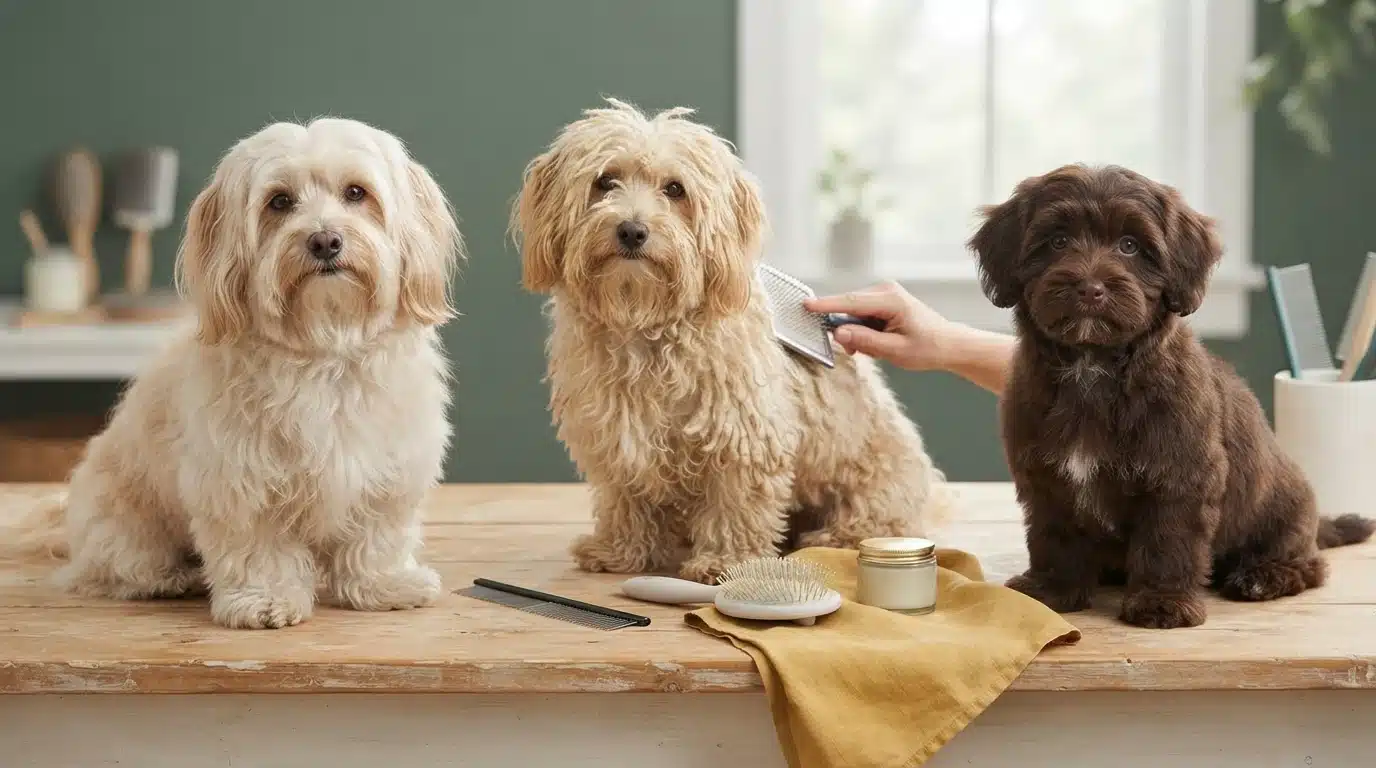
- Brush and metal comb suited to the coat
- Small, high-value treats
- Dog dryer or human dryer with a cool or low-heat setting, if the puppy tolerates it
How to bathe a puppy step by step
Use a little movement first
A short potty break and a few minutes of gentle play can take the edge off extra energy. Avoid an exhausting workout; you want a relaxed puppy who can still take treats.
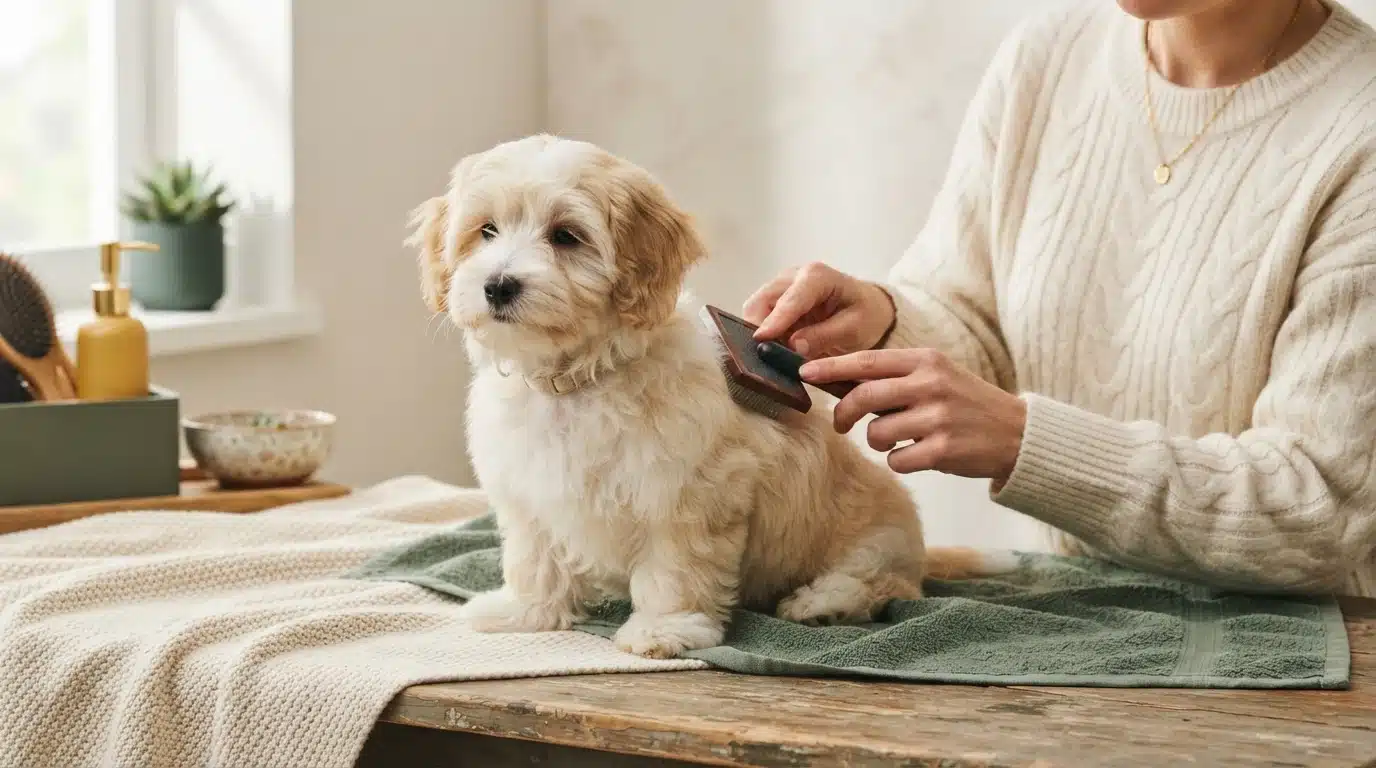
Brush and comb before the bath
Remove loose debris and gently work out tangles before they get wet. Water can tighten existing knots, especially behind the ears, under the front legs, around the collar area, and on the legs. Do not pull through a painful mat; ask a groomer for help.
Check the water and footing
Use lukewarm water—comfortable on the inside of your wrist, never hot. Place the puppy on a secure, non-slip mat. Keep the water shallow and the stream soft.
Wet the body slowly
Begin at the paws or shoulders rather than spraying the face. Wet the coat down to the skin using a cup or low-pressure sprayer. Speak calmly and reward stillness.
Apply shampoo gently
Follow the product label. Work in the direction the hair grows and massage rather than scrub. Pay attention to the feet, belly, chest, and rear while keeping shampoo away from the eyes, nose, mouth, and inner ears.
Clean the face with a cloth
Use a clean, damp washcloth around the muzzle and face. Do not pour or spray water over the puppy’s head. Keeping the ears and face comfortable is one of the easiest ways to preserve trust.
Rinse longer than you think
Rinse until the water runs clear and the coat no longer feels slippery. Product left against the skin can contribute to itching and irritation. If you apply conditioner, follow its label and rinse just as thoroughly.
Blot, dry, and reward
Squeeze water gently from the coat, then blot with towels instead of rubbing briskly. Move to a warm, draft-free area, finish drying the coat, and reward your puppy before they become tired of the process.
How to dry a puppy safely after a bath
Drying matters just as much as washing. A damp puppy can become chilled, and a long or curly coat that air-dries in clumps can develop tangles close to the skin.
- Blot first. Wrap the puppy in a dry towel and press gently to absorb water. Avoid vigorous rubbing, which encourages tangles.
- Keep the room warm. Close exterior doors and avoid direct air-conditioning or cold drafts.
- Introduce sound gradually. Let the puppy hear the dryer from a distance, pair the sound with treats, and move closer only while they remain comfortable.
- Use cool or low heat. Keep the airflow moving and never hold a hot dryer close to the skin. Check the temperature continually with your hand.
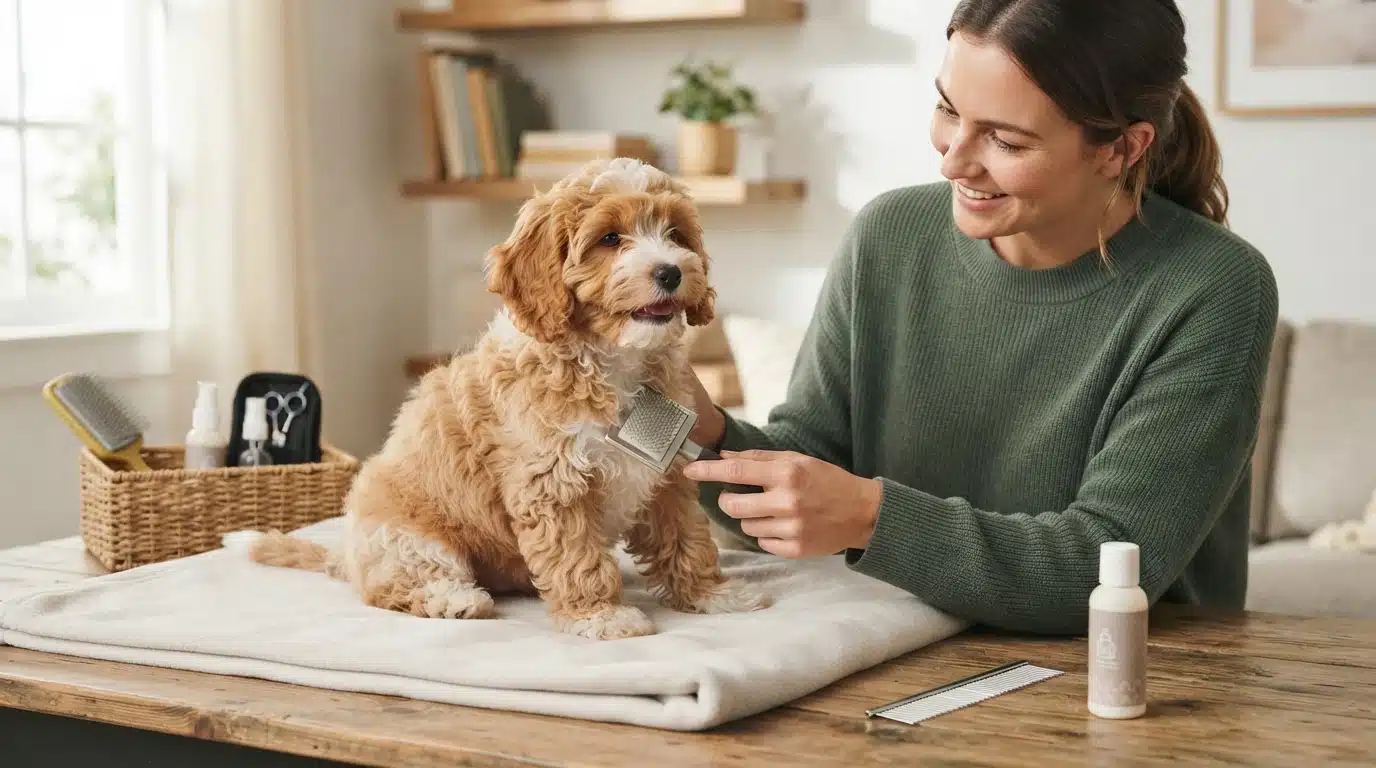
- Brush in sections. For a longer Havanese, Havapoo, or Cavapoo coat, gently brush and comb small sections as they dry. Support the hair near the skin so you are not pulling.
- Confirm the hidden areas are dry. Check the underside, armpits, legs, paws, neck, and behind the ears.
If the dryer frightens your puppy, do not force a full session at maximum power. Use towels, a warm room, and very short dryer introductions. A professional groomer can also show you a safer drying and brushing technique for your puppy’s specific coat.
What if your puppy is afraid of bath time?
Fear rarely improves by holding a puppy down and finishing as fast as possible. If your puppy freezes, scrambles, vocalizes, refuses treats, or repeatedly tries to escape, reduce the difficulty.
- Practice in an empty, dry tub for a few seconds.
- Feed treats on the bath mat without turning on water.
- Introduce the washcloth, sprayer, and dryer on separate days.
- Keep sessions short enough that the puppy can still succeed.
- Use calm praise and steady handling rather than excited reassurance.
- End after a small win, then repeat another day.
These handling exercises fit naturally into broader puppy preparation. Families can also review our puppy prep guide and bringing your puppy home information before go-home day.
When should you call your veterinarian?
A bath can remove ordinary dirt. It cannot diagnose or treat the cause of ongoing skin or ear symptoms. Contact your veterinarian if your puppy has:
- Persistent itching, chewing, licking, or rubbing
- Redness, swelling, sores, scabs, hives, or hair loss
- A strong or unusual skin or ear odor
- Greasy skin, heavy flaking, discharge, or painful areas
- Repeated head shaking or sensitivity around the ears
- Symptoms that begin or worsen after a grooming product
Frequently asked questions
Can you bathe an eight-week-old puppy?
Many healthy eight-week-old puppies can have a brief bath-time introduction when necessary. Use lukewarm water, a non-slip surface, minimal product, and immediate, thorough drying. For a puppy who is only slightly dirty, a warm damp cloth may be enough. Follow any specific instructions from your breeder or veterinarian.
How often should a puppy be bathed?
For many puppies, every three to four weeks is a useful starting point, with spot cleaning between baths. Coat type, activity, skin health, and grooming style may make a two-to-four-week routine more appropriate. A veterinarian may prescribe a different schedule for a skin condition.
Can I use human shampoo or baby shampoo on my puppy?
A dog-specific, pH-balanced puppy shampoo is the better choice for routine bathing. Human products are formulated for human skin and may dry or irritate a puppy’s skin. If you do not have puppy shampoo, spot cleaning with lukewarm water is usually preferable until you can get an appropriate product.
Do puppies need conditioner?
Not every puppy needs conditioner, but a light dog-specific conditioner can help protect moisture and make a longer, soft, or wavy coat easier to comb. Use a product suited to your puppy’s coat and rinse it completely unless the label specifically identifies it as leave-in.
How do I keep water out of my puppy’s ears?
Do not spray or pour water over the head. Use a damp washcloth on the face and the outside of the ears, keep the water stream below the neck, and dry the outer ear gently. Do not insert cotton swabs or push material into the ear canal.
Should I bathe my puppy before a first grooming appointment?
Usually not unless the groomer asks you to. Groomers often prefer to bathe, dry, and prepare the coat as part of the service. Before the appointment, focus on gentle brushing, paw handling, standing on a secure surface, and positive exposure to common grooming sounds.
A clean puppy who still trusts the process
A successful puppy bath is not the one with the most bubbles or the strongest “clean” scent. It is a short, safe experience that leaves the skin comfortable, the coat fully rinsed and dried, and the puppy willing to try again. Start with small introductions, use products made for dogs, and adjust the schedule to the puppy in front of you.
If you are preparing for a new companion, explore our puppy care guides or learn about early development at Sage Puppies.
A simple puppy bath kit
Equipment research by Matt Milar. Reviewed October 16, 2026. These product options have not been documented as Sage hands-on tests.
We may earn a commission when you buy through product links in this section. As an Amazon Associate I earn from qualifying purchases.
A useful bath kit starts with supplies you can reach while staying beside your puppy. Before buying extras, gather a rinse cup, a soft cloth, towels and a stable bathing setup. A specialized towel is optional; ordinary clean bath towels may already do the job. Compare two hand-pocket drying towels by coverage, pocket fit and laundry instructions. No Sage drying-speed test establishes a winner, and a suitable towel you already own may be enough.
A simple kit to gather first
Rinse cup and cloth. Keep a cup or small pitcher ready for controlled rinsing and a separate soft cloth for the face. Follow the care instructions above and the directions on any grooming product.
Footing and reach. Choose a suitable non-slip surface, check that it stays in place and put supplies within reach. A towel purchase cannot replace continuous supervision beside water.
Drying and laundry. Keep more than one dry towel available. Have a place to put wet items and let everything dry before storage. Choose equipment that fits your actual sink or tub and can be cleaned easily.
Compare two optional drying towels
Soggy Doggy Super Shammy, Gray/Gray Trim, 31 x 14 inches

This researched microfiber-chenille towel has hand pockets. Its size and grip arrangement are the practical reasons to consider it; household towels may already meet your needs.
Pros: Chenille microfiber with two hand pockets and a 31 × 14-inch listed size.
Cons: Needs separate washing, no chlorine bleach or fabric softener, and low-temperature drying according to the maker. Keep it away from chewing; it is a drying tool, not a replacement for rinsing.
Choose if: Its pockets and coverage work for your hand and your puppy, and the care routine suits your laundry.
Dog Gone Smart Dirty Dog Shammy — Grey, 31 × 13 inches

The researched Grey Dirty Dog Shammy is a microfiber drying towel with two elastic hand pockets. Its listed 31 × 13-inch dimensions are close to the Soggy Doggy example.
Pros: Elastic pockets provide a different hand-holding arrangement in a machine-washable towel.
Cons: Pocket fit and usable coverage still need checking. Sage has no comparative absorbency or drying-time results; read the current label rather than assuming the same laundry settings as another brand.
Choose if: You prefer its elastic pockets and can follow its care instructions; skip a second towel if your existing one already works.
DGS towel sizes and construction. Researched; no documented Sage hands-on trial.
When to skip buying an extra towel
Keep using household towels if they fit your drying routine, remain comfortable to handle and are easy to wash. A dedicated towel makes sense mainly when you want its hand pockets or want to keep puppy laundry separate.
Check the current product label before washing. Do not leave a drying towel in the puppy area as unattended bedding or allow a puppy to pull at its fabric. Our bedding guide considers resting surfaces separately.
Equipment questions
Do I need a powered dryer or shower wand? This starter equipment section does not recommend either. Keep the routine simple and follow the care guidance above and individualized grooming advice.
Does every muddy walk require a bath? Light dirt may need only a damp cloth and drying. Our paw-cleanup guide helps distinguish a small mess from a fuller coat cleanup.