Puppy Grooming Guide
How to Prevent Mats and Tangles in Fluffy Small-Breed Puppies
Fluffy puppy coats can look smooth on top while small tangles are forming close to the skin. For Sage Puppies families in Utah and across the country bringing home a Havanese, Havapoo, or Cavapoo, the most reliable prevention plan is simple: use the right tools, brush in narrow sections, check friction-prone areas often, and keep every session short and comfortable.
The one-minute rule: after brushing a section, a steel comb should glide from near the skin to the ends without catching. When it stops, there is still a tangle to address.
View Available Puppies or review our Pricing & Reservation process.
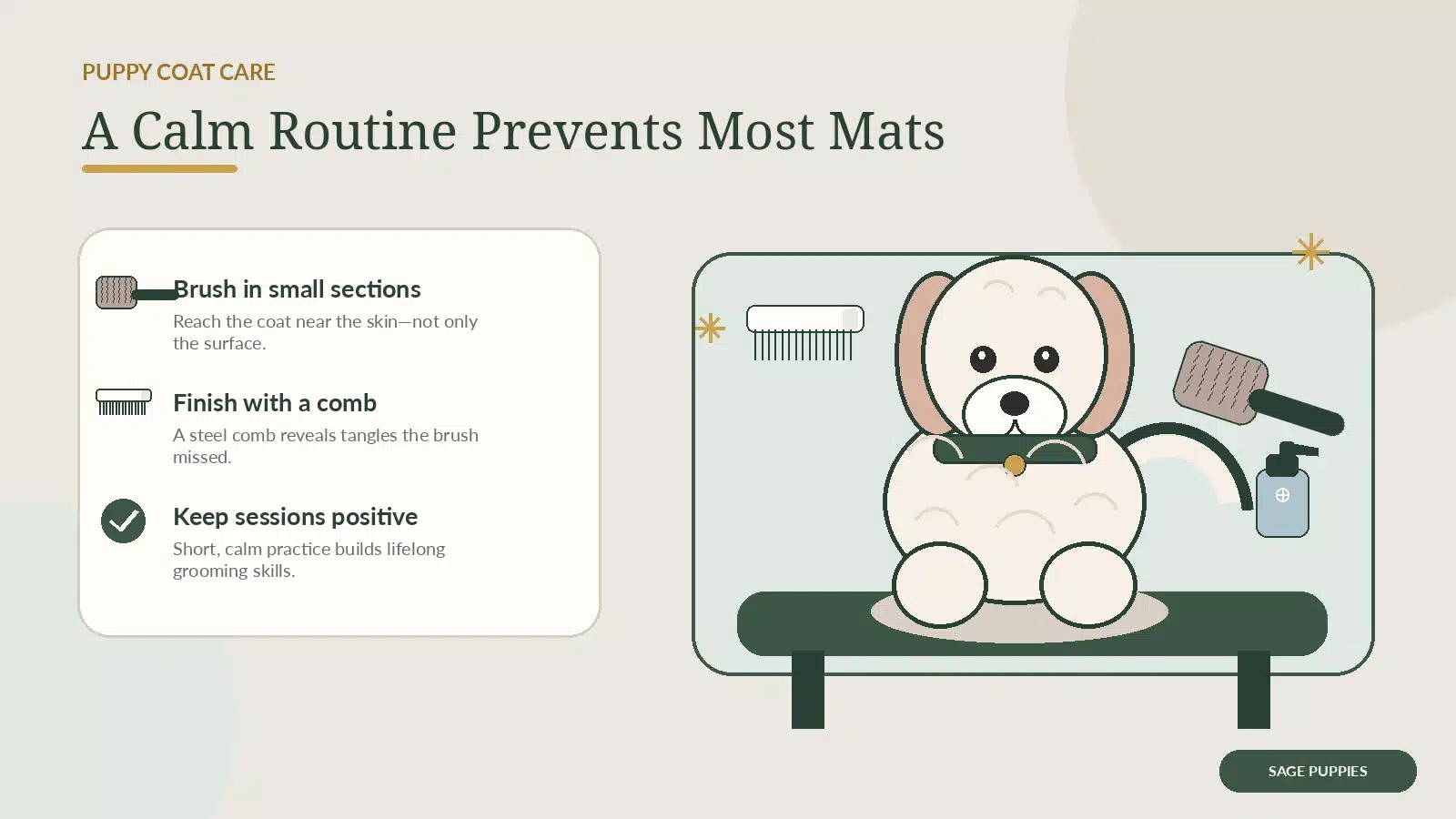
Why fluffy puppy coats mat so easily
A mat begins when loose hairs, shed coat, moisture, and friction interlock. Movement makes the tangle tighter, especially behind the ears, beneath a collar or harness, at the armpits, around the legs, and near the tail. A long or wavy coat can hide this process until the knot is close to the skin.
Havanese, Havapoo, and Cavapoo puppies can have different coat textures—even within the same breed or litter—so the ideal routine depends on coat density, curl, length, activity, and the puppy’s current coat transition. The goal is not to follow one rigid schedule. It is to catch small tangles while they are still easy and comfortable to remove.
Build a small, practical grooming kit
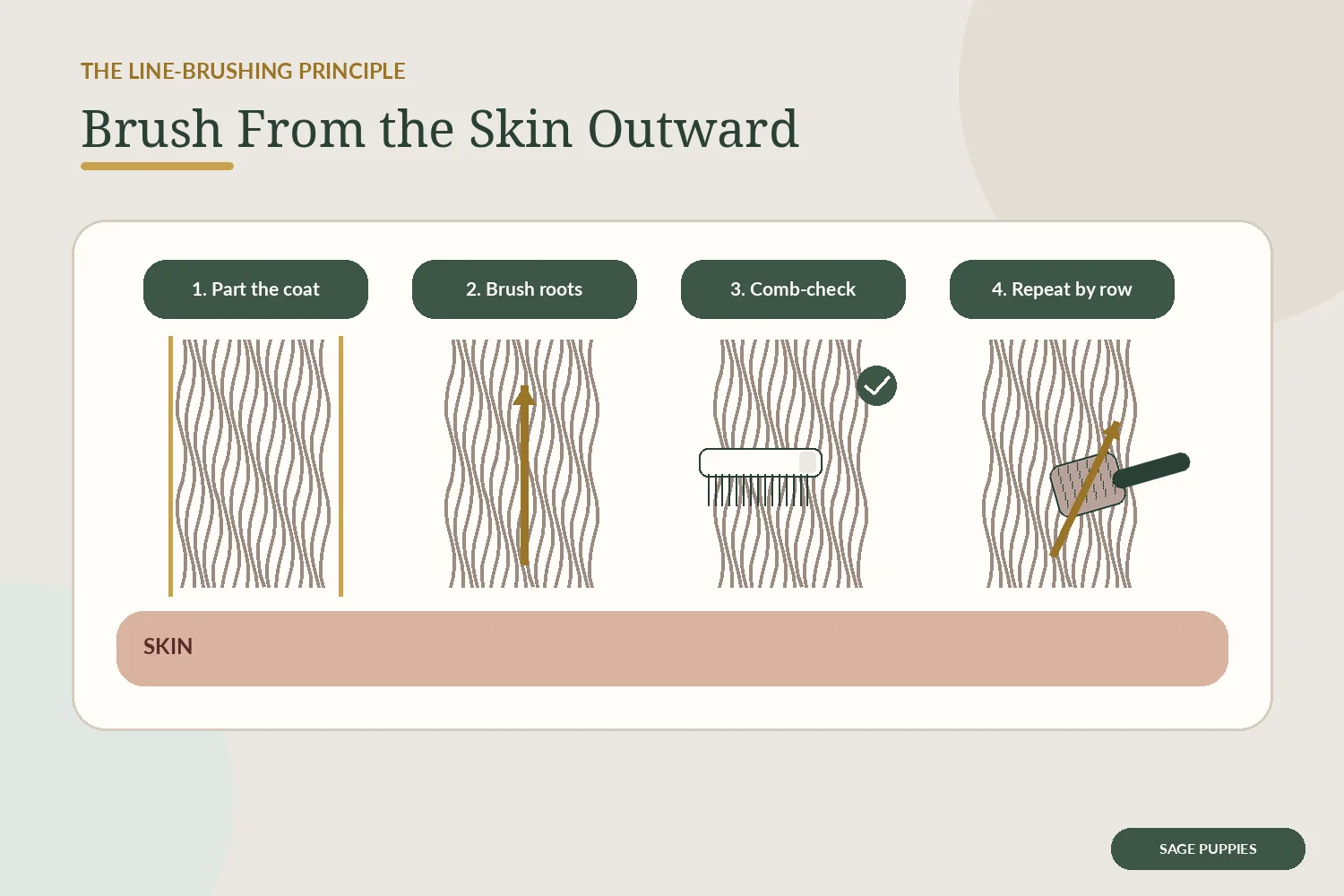
You do not need a drawer full of products. A few well-chosen tools are easier to use consistently:
- Pin brush: useful for gentle routine brushing and longer, flowing areas of coat.
- Soft slicker brush: helps lift loose hair and work through small, loose tangles. Choose an appropriate size and avoid pressing hard.
- Stainless-steel comb: the final test that confirms the coat is clear from near the skin to the ends.
- Dog-safe detangling spray: adds slip and reduces dry pulling. Follow the product label and keep spray away from the eyes, nose, and mouth.
- Non-slip grooming surface: gives the puppy secure footing and helps you work calmly.
Ask your groomer to show you the correct brush pressure for your puppy’s coat. Brushing should move hair—not scrape skin.
Use the line-brushing method
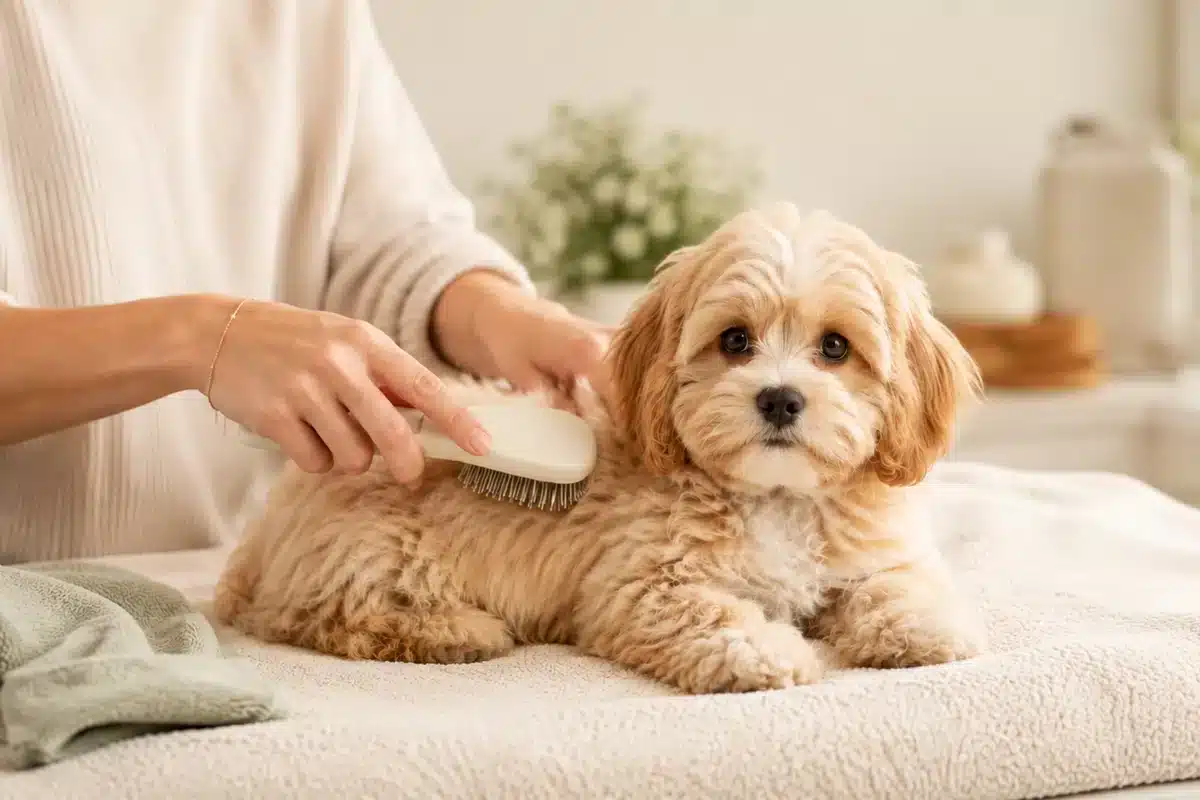
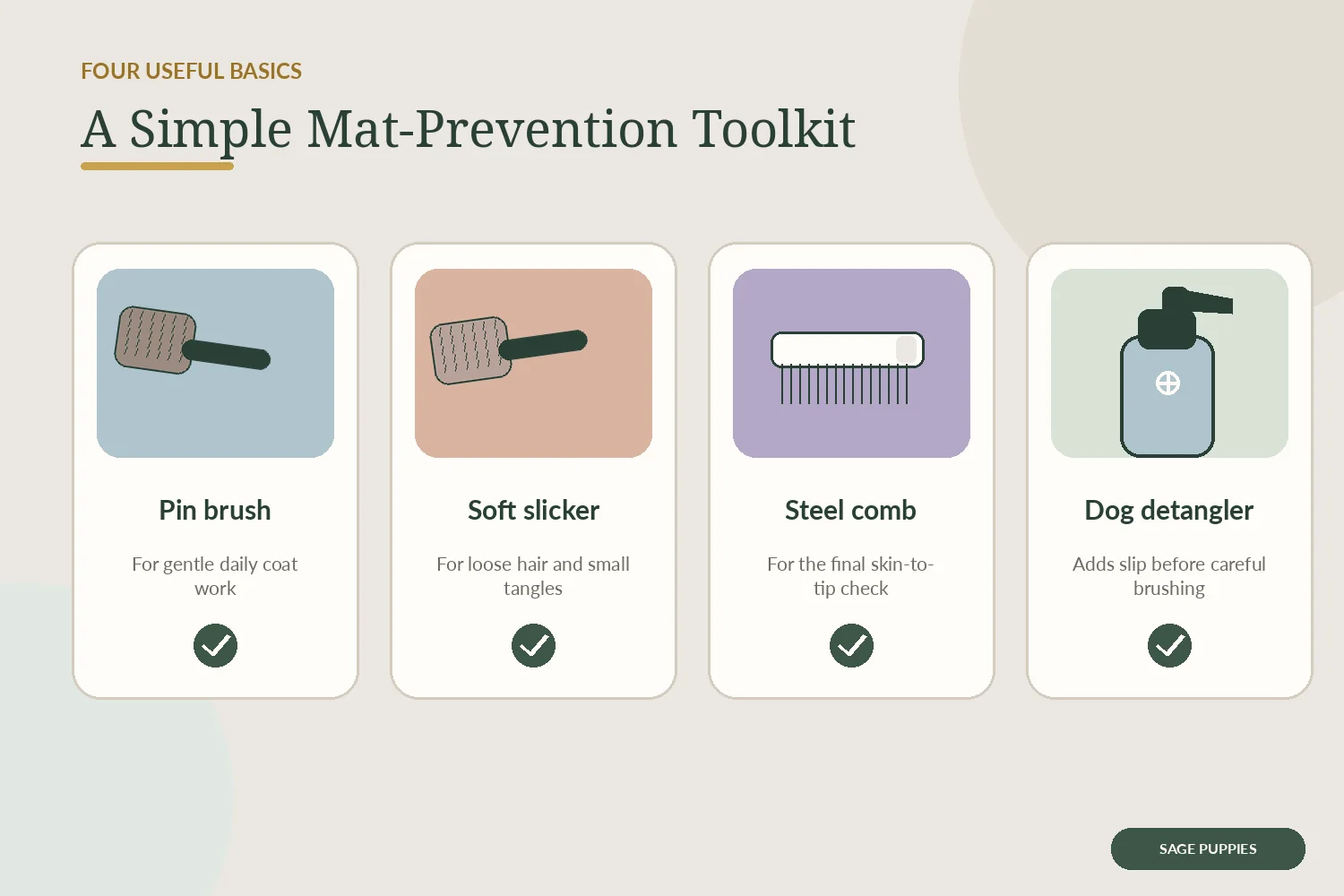
Line brushing means working through one narrow row of coat at a time. It is more thorough—and usually more comfortable—than repeatedly brushing across the top.
- Settle your puppy. Use a non-slip surface, a calm voice, and tiny treats. Begin when your puppy is relaxed rather than full of energy.
- Lightly mist the section. The coat should be barely damp with detangler, not wet.
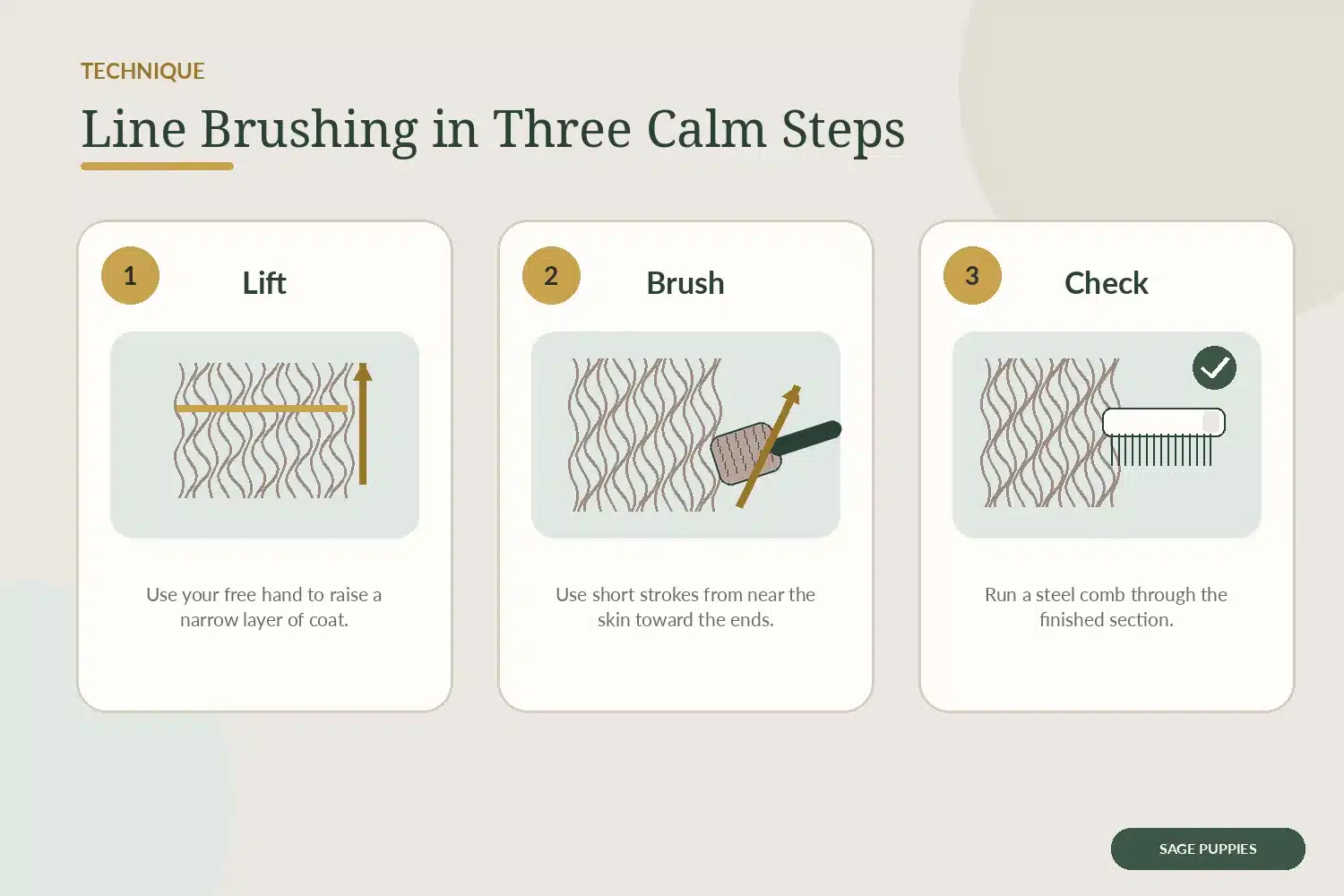
- Lift a narrow layer of hair. Use your free hand to expose the coat beneath it.
- Brush the exposed row. Start near the skin without scraping it, then move toward the ends with short, gentle strokes.
- Release another small row. Repeat until the area is complete.
- Comb-check the section. The comb should pass through without snagging. Never force it through resistance.
For a young puppy, one leg or one side of the body may be enough for a session. It is better to stop after a successful two-minute practice than to continue until the puppy becomes frustrated.
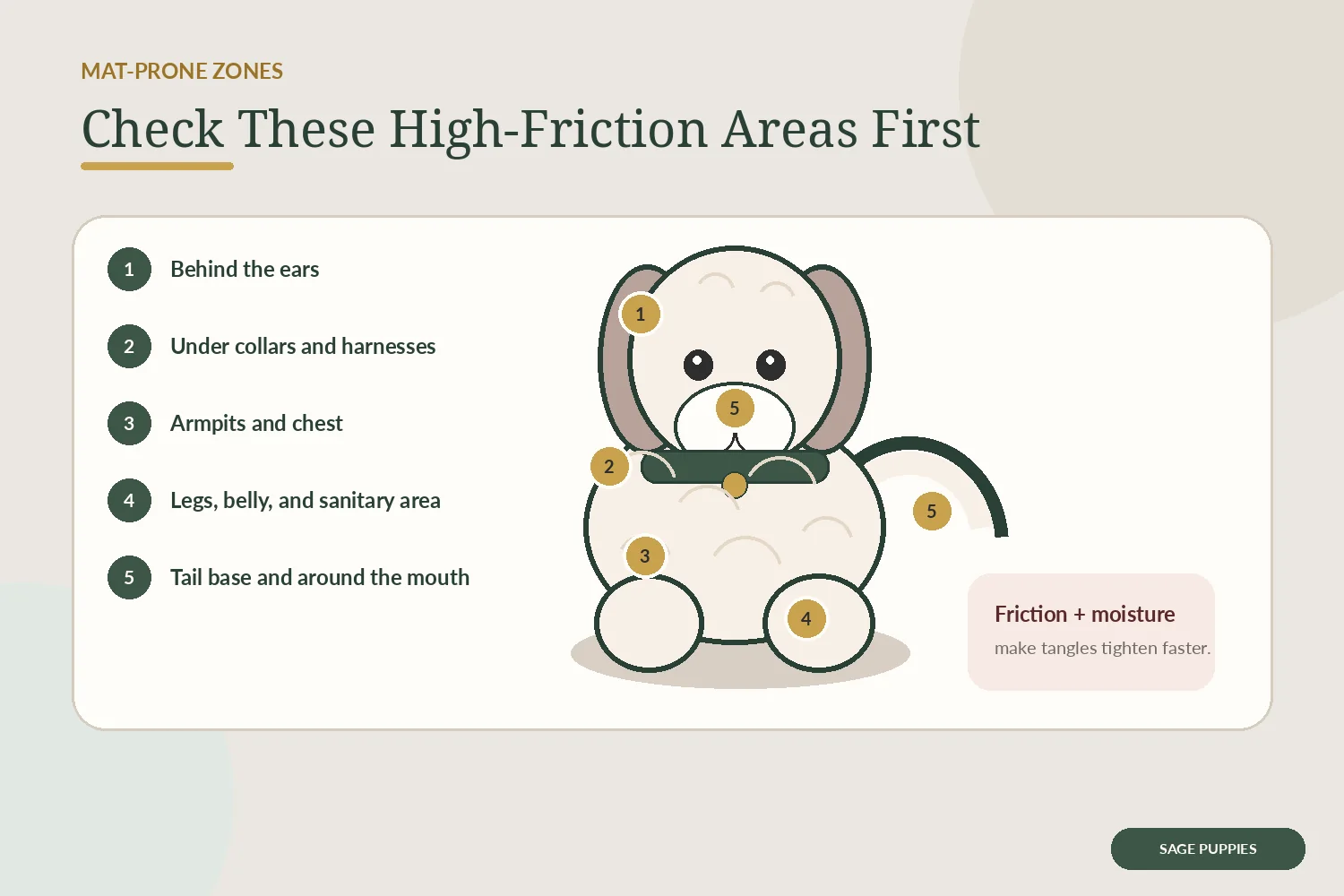
Check the highest-risk areas every day
A full-body brushing session may not be necessary every day, but a quick finger-and-comb check of high-friction areas can prevent a small knot from becoming a tight mat.
Behind the ears
Soft hair moves against the ear leather and can tangle quickly. Separate the coat gently with your fingers and comb in small sections.
Under the collar or harness
Remove equipment before brushing. Check every point where straps rub, including the chest and shoulder area. Make sure the collar or harness fits correctly and is not staying damp.
Armpits, belly, and legs
These areas combine friction, movement, and fine coat. Lift each leg only as far as the puppy is comfortable, support the body, and work slowly.
Around the mouth, feet, and sanitary area
Food, water, saliva, damp grass, and urine can make coat clump. Keep these areas clean and dry, and ask your groomer about a practical maintenance trim when needed.
How to loosen a small tangle safely
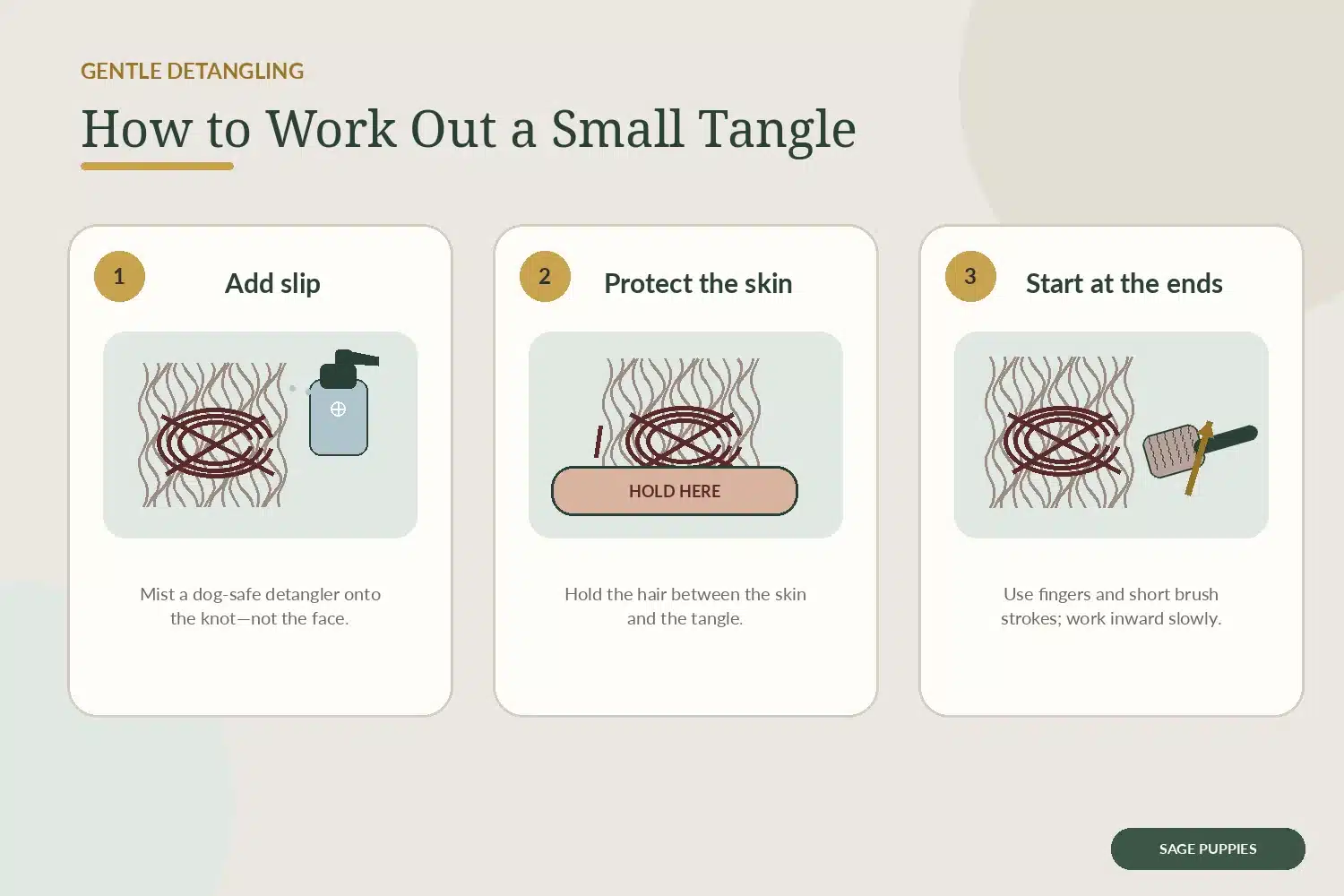
Only work on a tangle at home when it is small, loose, easy to see, and not tight against the skin.
- Add slip. Apply a small amount of dog-safe detangling spray to the knot.
- Protect the skin. Hold the hair between the puppy’s skin and the tangle so your hand absorbs most of the pulling.
- Separate with your fingers. Gently open the outer edges of the knot rather than pulling it apart from the center.
- Work from the ends inward. Use the end pins of the brush or comb in tiny strokes, progressing toward the base only as the tangle loosens.
- Stop early if needed. When the puppy pulls away, the skin moves with the knot, or the tangle will not loosen easily, let a professional groomer handle it.
Prevent tangles during baths and drying
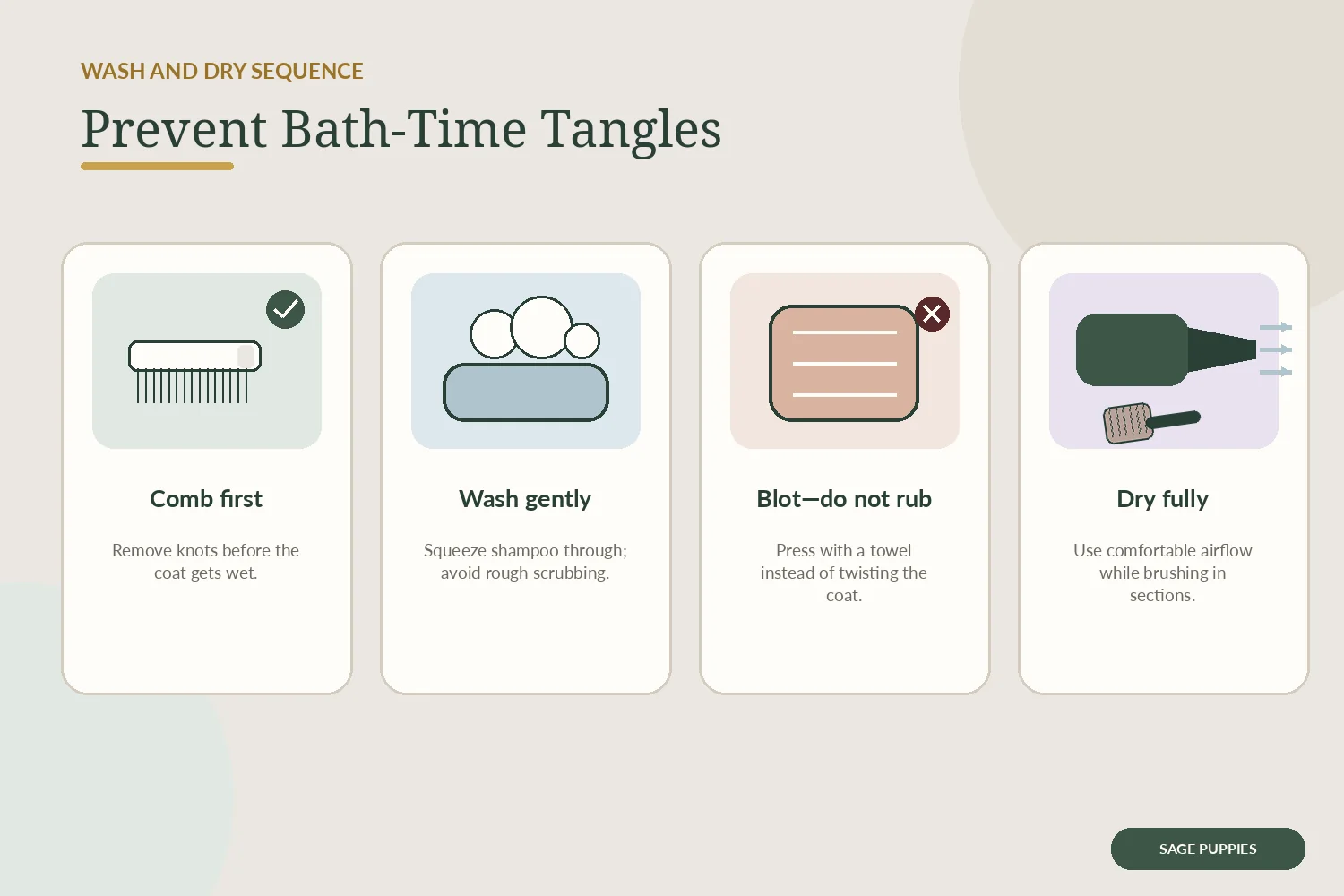
Water does not create every mat, but it can tighten tangles that are already present. A careful wash-and-dry routine makes a major difference.
- Comb before bathing. Remove all small tangles first. Do not bathe over a known mat.
- Wash with gentle squeezing motions. Avoid scrubbing the coat back and forth or piling it into circles.
- Rinse thoroughly. Residue can leave the coat sticky or uncomfortable.
- Blot with a towel. Press water out instead of rubbing, twisting, or wrapping the coat tightly.
- Dry the coat completely. Use comfortable—not hot—airflow and brush in sections as you dry. Damp coat under a harness, collar, or bedtime blanket can tangle quickly.
Keep the dryer far enough away to remain comfortable, protect the puppy’s ears, and stop if the puppy appears overheated or distressed. A groomer can demonstrate safe dryer handling.
Create a schedule you can actually maintain
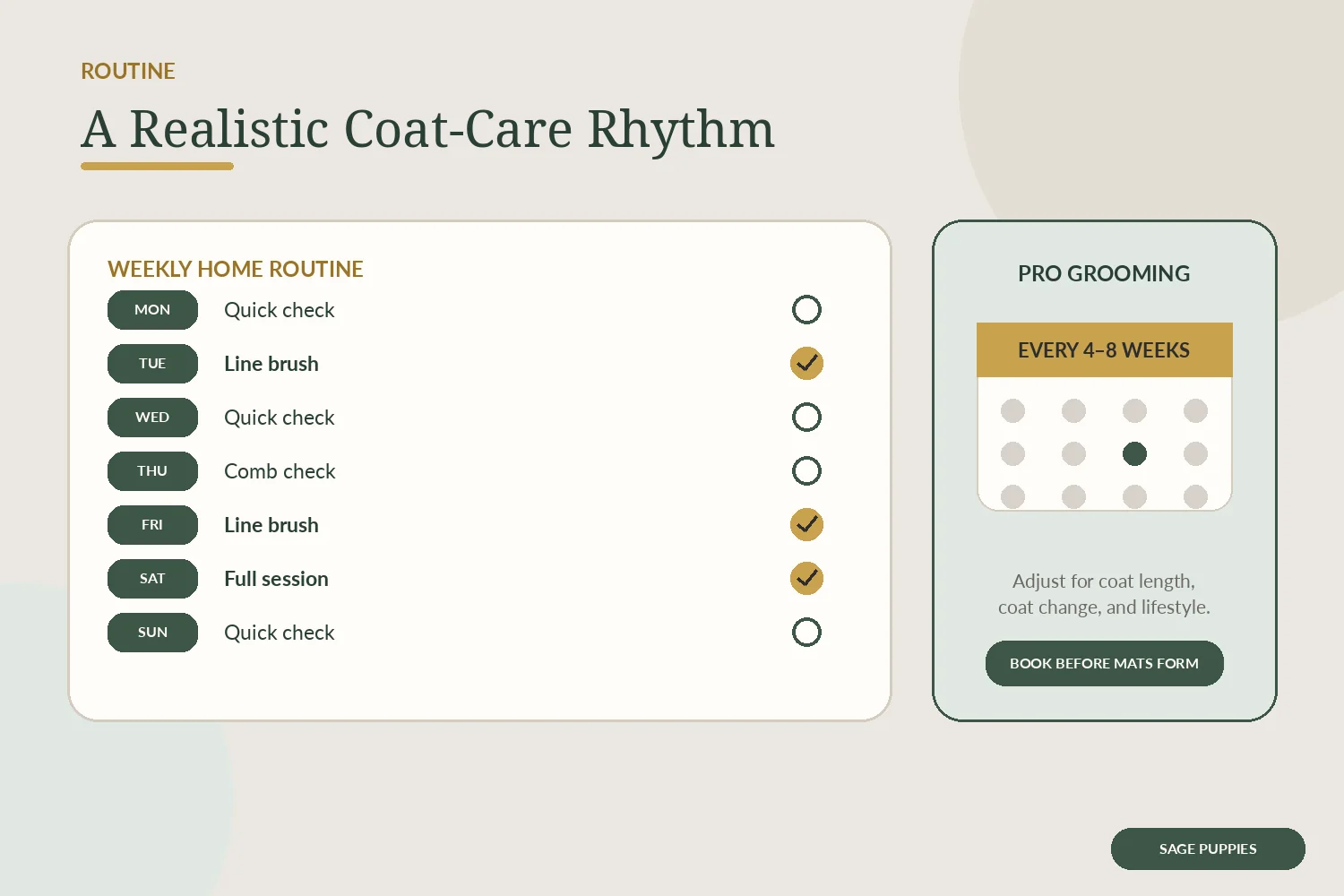
Coat length and texture matter more than a universal calendar. A puppy in a short maintenance trim may need less home brushing than a puppy in a long coat, but both still need routine handling and comb checks.
| Frequency | What to do | Approximate time |
|---|---|---|
| Daily | Finger-check behind ears, armpits, collar or harness areas, feet, and tail base. | 1–3 minutes |
| Several times per week | Line brush and comb-check the coat in manageable sections. | 5–15 minutes |
| After wet or messy play | Remove equipment, clean the coat as needed, and dry it fully. | As needed |
| Professional grooming | Many fluffy small-breed puppies benefit from appointments about every 4–8 weeks, adjusted for coat length, texture, and home care. | Plan ahead |
During coat transitions, after wearing winter clothing, or when keeping a longer style, your puppy may need more frequent brushing. Ask your groomer to recommend an interval based on the coat they see—not only the breed name.
Teach grooming as a life skill
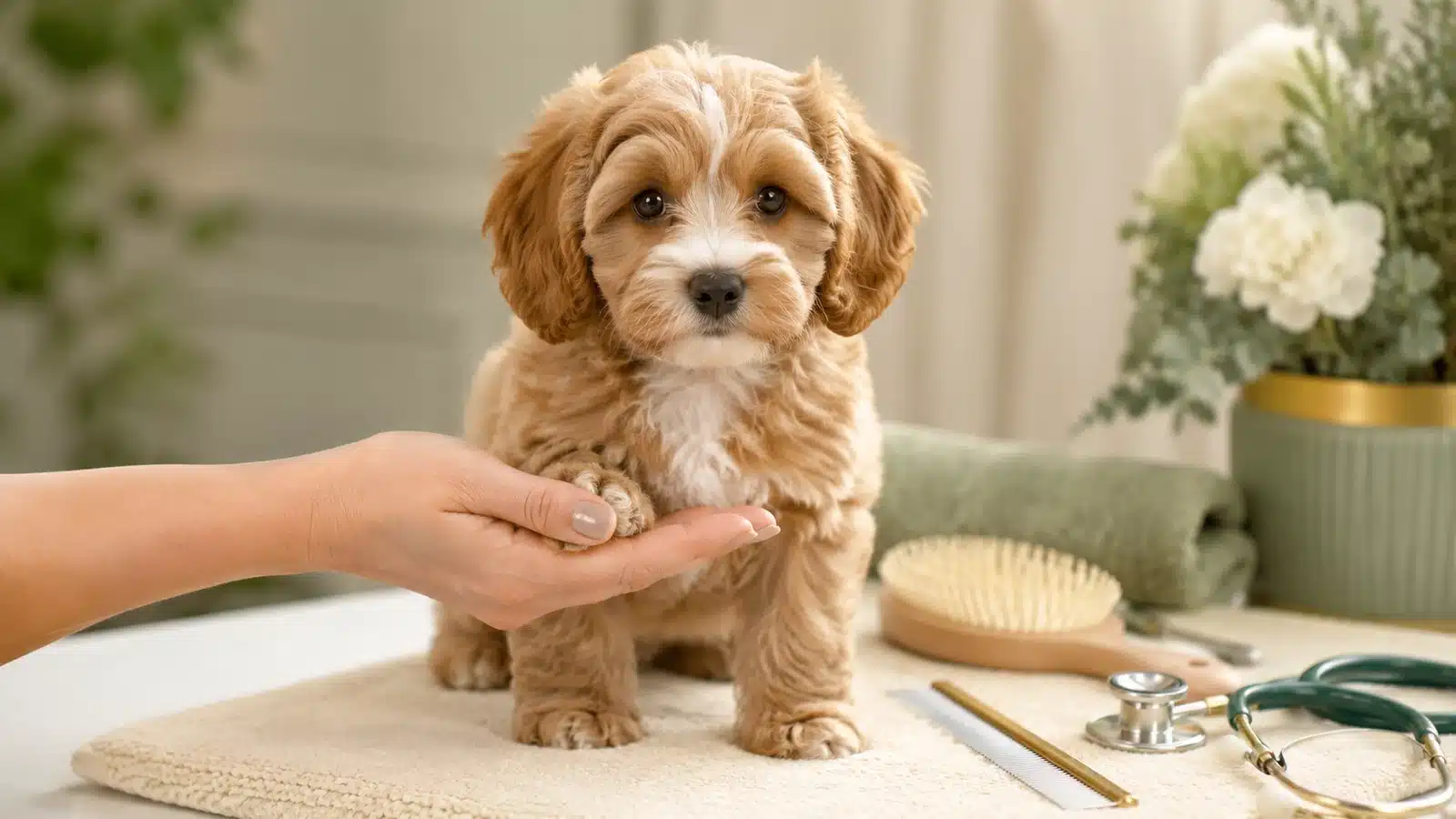
Mat prevention is easier when a puppy is comfortable with touch. Practice handling paws, ears, chin, tail, legs, and collar areas outside formal grooming sessions. Pair each touch with a small reward, release the body part before the puppy struggles, and keep the exercise brief.
Introduce the brush in stages: let the puppy investigate it, reward calm behavior, touch the coat with the back of the brush, make one gentle stroke, and stop. Build duration gradually. This cooperative approach supports future brushing, nail care, veterinary exams, and professional grooming.
For more preparation guidance, visit our Puppy Prep resources and learn about the thoughtful routines behind our early development approach.
When a groomer—or veterinarian—should take over
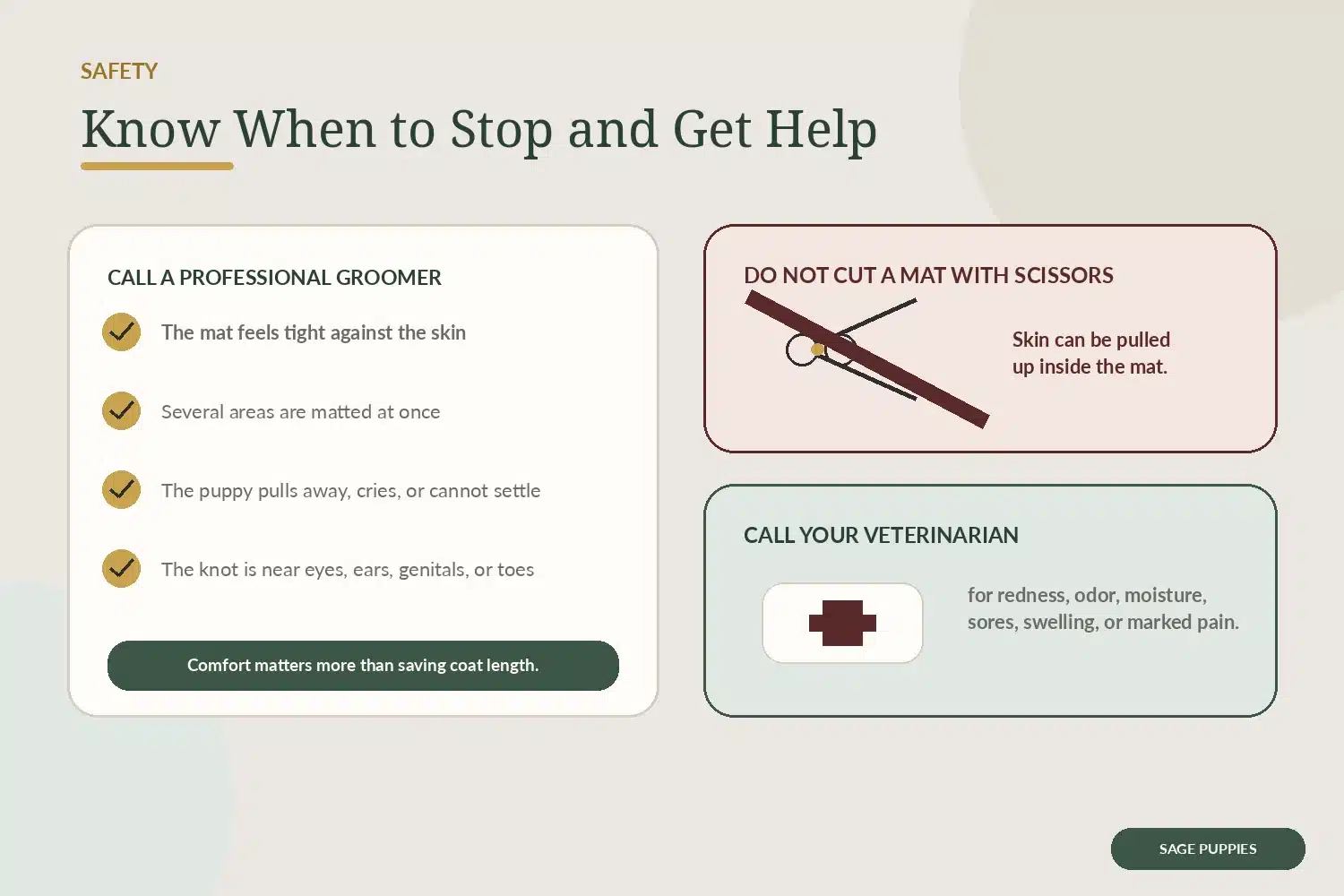
Contact a professional groomer when a mat is tight against the skin, widespread, close to a sensitive area, or painful to touch. Humane removal may require clipping the coat shorter. Saving coat length is never more important than protecting the puppy’s skin and comfort.
Contact your veterinarian when you notice redness, swelling, moisture trapped beneath a mat, odor, sores, discharge, marked pain, or a sudden change in behavior. Skin hidden under matting may need medical assessment after the coat is safely removed.
A simple mat-prevention checklist
- Brush in narrow rows so you reach the coat close to the skin.
- Use a steel comb after brushing; do not force it through a snag.
- Check behind the ears, under equipment, at the armpits, around the legs, and near the tail every day.
- Remove tangles before bathing and dry the coat completely.
- Keep sessions short, positive, and appropriate for the puppy’s age and attention span.
- Maintain a professional grooming schedule that matches coat length and texture.
- Never cut a mat with scissors or pull through a painful knot.
Frequently asked questions
How often should I brush a Havanese, Havapoo, or Cavapoo puppy?
Check high-friction areas daily and complete a thorough line-brushing and comb-check routine several times per week. Longer, denser, or curlier coats may need daily full brushing, while a shorter maintenance trim may need less. Your groomer can tailor the schedule to the individual coat.
Why does my puppy still get mats after I brush?
The brush may be moving across the outer coat without reaching the hair near the skin. Work in narrow rows and finish every section with a steel comb. Equipment friction, moisture, coat transitions, and too much time between professional grooms can also contribute.
Can I brush a puppy coat when it is dry?
A light mist of dog-safe detangling spray can add slip and reduce static and pulling. Avoid soaking the coat, follow the product instructions, and keep spray away from the puppy’s face.
Should I bathe a puppy that has mats?
No. Water can make existing tangles tighter and harder to remove. Have small, loose tangles addressed before bathing, and ask a professional groomer to handle tight or extensive matting.
Is it better to brush out a tight mat or clip it?
For a tight or painful mat, humane clipping by a professional groomer is often safer and more comfortable than prolonged brushing. Coat grows back; irritated or injured skin takes priority.
Care note: This article provides general grooming education and does not replace individualized guidance from a professional groomer or veterinarian.