Quick Summary: A local breeder usually gives families more verifiable information and support than a pet store, including parent health testing, veterinary records, a written contract, and a chance to meet the mother. Pet stores offer same-day availability and rotating stock, but often leave the puppy’s origin, upbringing, and health history unclear. Sage Puppies illustrates the breeder approach through a planned-litter process in South Jordan, Utah, offering Havanese, Havapoo, and Cavapoo puppies with documented records and terms.
Picture two versions of the same Saturday. In one, you stand at a pet store glass pen, watching a tearful small dog, while a clerk swears the puppy came from a “local family breeder.” In the other, you sit at a kitchen table in South Jordan, Utah, with a printed health record, notes from a call about the dam’s eye exams, and a signed puppy contract. Both scenes end with a puppy. Only one ends with paperwork you can actually read.
That is the core of the local breeder vs pet store question. Pet stores offer speed and familiar retail comfort, but a puppy’s origin often stays hidden. A local breeder offers records and accountability, though it asks for research, waiting and hard questions. This comparison walks both paths side by side, from cost and health records to contracts and red flags, then gives you a clear decision rule and a verification checklist for either seller.
Local Breeder vs Pet Store: At a Glance
| Sage Puppies | Pet store puppy source | |
|---|---|---|
| Purchase price and total cost | $3,500 to $4,500 for Havanese, Havapoo and Cavapoo puppies, with deposit, delivery and guardian terms set out in writing | Frequently several thousand dollars per puppy, marked up from the commercial breeder’s price to cover middlemen, transport and retail margin |
| Health testing and records | Parent clinical screening, puppy exam records and DNA variant results kept distinct and available on request, alongside Havanese Club of America CHIC testing such as annual eyes, hip x-ray and patella | Varies widely; a USDA license confirms only that a facility is a licensed commercial seller, not the puppy’s health or the conditions it was raised in |
| Where you meet the puppy | Through an application and reservation conversation, with pickup in South Jordan, Utah or transport arranged for families who live elsewhere | In the store, typically in a display pen during a short visit, with no access to the breeder or the mother of the litter |
| Support and written terms | Written puppy purchase contract with health guarantee and return policy terms published on the site, plus listed links to available puppies, pricing and the application form | Store paperwork with limited recourse, and health guarantees that vary in length, coverage and exclusions between chains |
| Availability and breed fit | Havanese, Havapoo and Cavapoo only, with availability and waitlist expectations confirmed in current published terms | Wide but rotating stock; small companion and designer breeds such as Havanese and Cavapoo are rarely stocked in most locations |
How a Local Breeder and a Pet Store Puppy Source Compare
Sage Puppies
Sage Puppies is a boutique, owner-managed program in South Jordan, Utah, run by Cassie Milar since 2025. It breeds Havanese, Havapoo and Cavapoo puppies only, matched through a documented application and reservation process for local pickup or arranged transport.
Key strengths
- Written puppy purchase contract with health guarantee and return policy terms published on the site
- Parent health screening, puppy exam records and DNA results available on request
- Three breeds only, with clear waitlist expectations
Pet store puppy source
Pet stores resell puppies from commercial breeding operations at a markup, and buyers rarely learn who bred the litter. This route suits shoppers who want to walk in, see a puppy the same day, and accept rotating stock. USDA licensing confirms a facility is a licensed commercial seller, not how a puppy was raised.
Key strengths
- Immediate availability during a store visit
- Broad, rotating breed selection in some locations
What You Actually Pay From Each Source
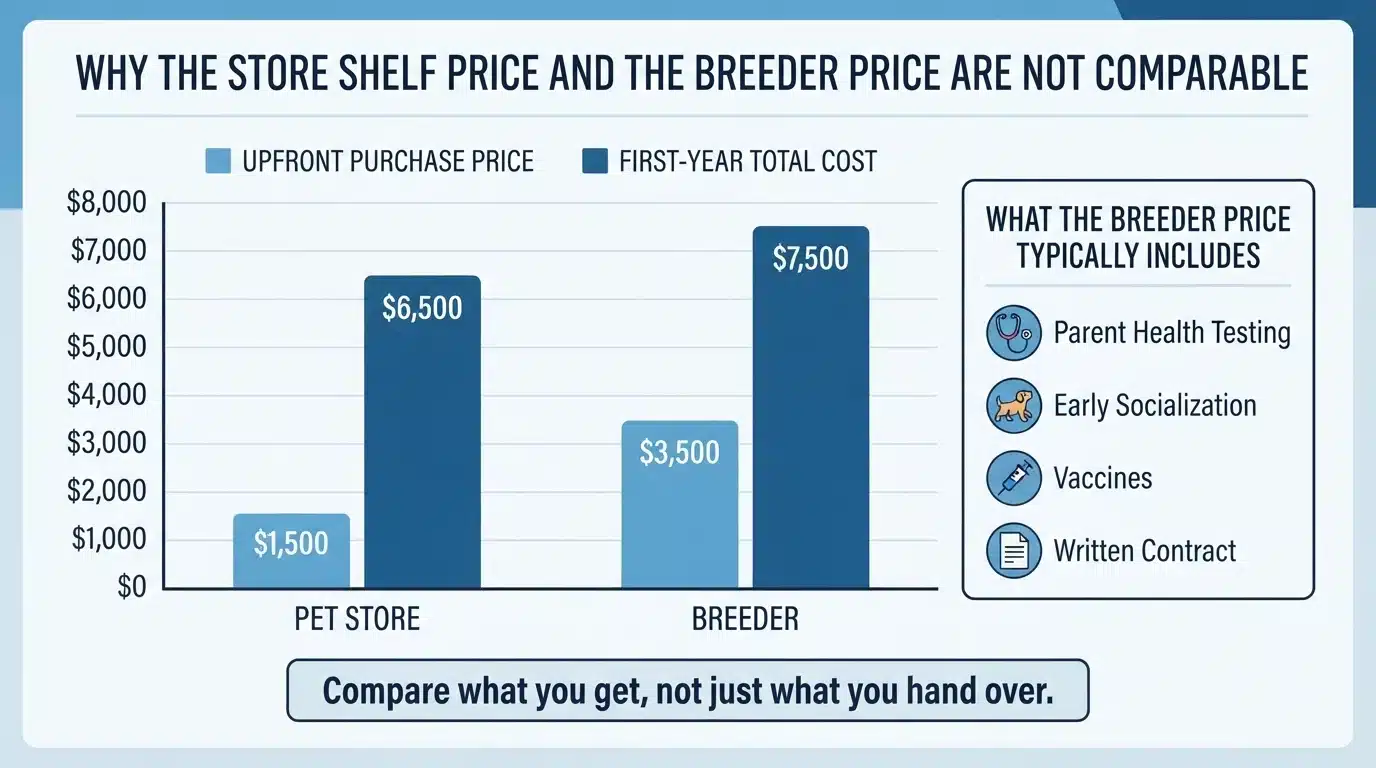
Why the Store Shelf Price and the Breeder Price Are Not Comparable
The sticker price feels like the whole story, but it is not. A store price usually covers only the sale. A breeder price typically includes parent health testing, early socialization, vaccines and a written contract. So compare what you get, not just what you hand over.
The Costs That Show Up After the Purchase
The bigger costs arrive later, and they hit both sources. Budget for the first vet visit, vaccines your puppy still needs, food, a crate, a harness and training classes. If a cheap puppy came with no health records, one treatable issue can cost more than the price gap. That is why price alone misleads.
A Simple Planning Example to Adapt to Your Own Numbers
Label this a budget example, not a quote. Say the store puppy costs $1,200 and the breeder puppy $3,500. Add $500 in first-year supplies, $400 in vet care and $300 in training to each. Then subtract what the breeder already covered. Run your own totals before you decide.
Health Records: The Part You Can Actually Verify
Talk and marketing photos tell you nothing you can check. Paper does. Good breeders hand over records without being pushed; pet stores usually hand you a folder with gaps in it. Ask for three kinds of evidence:
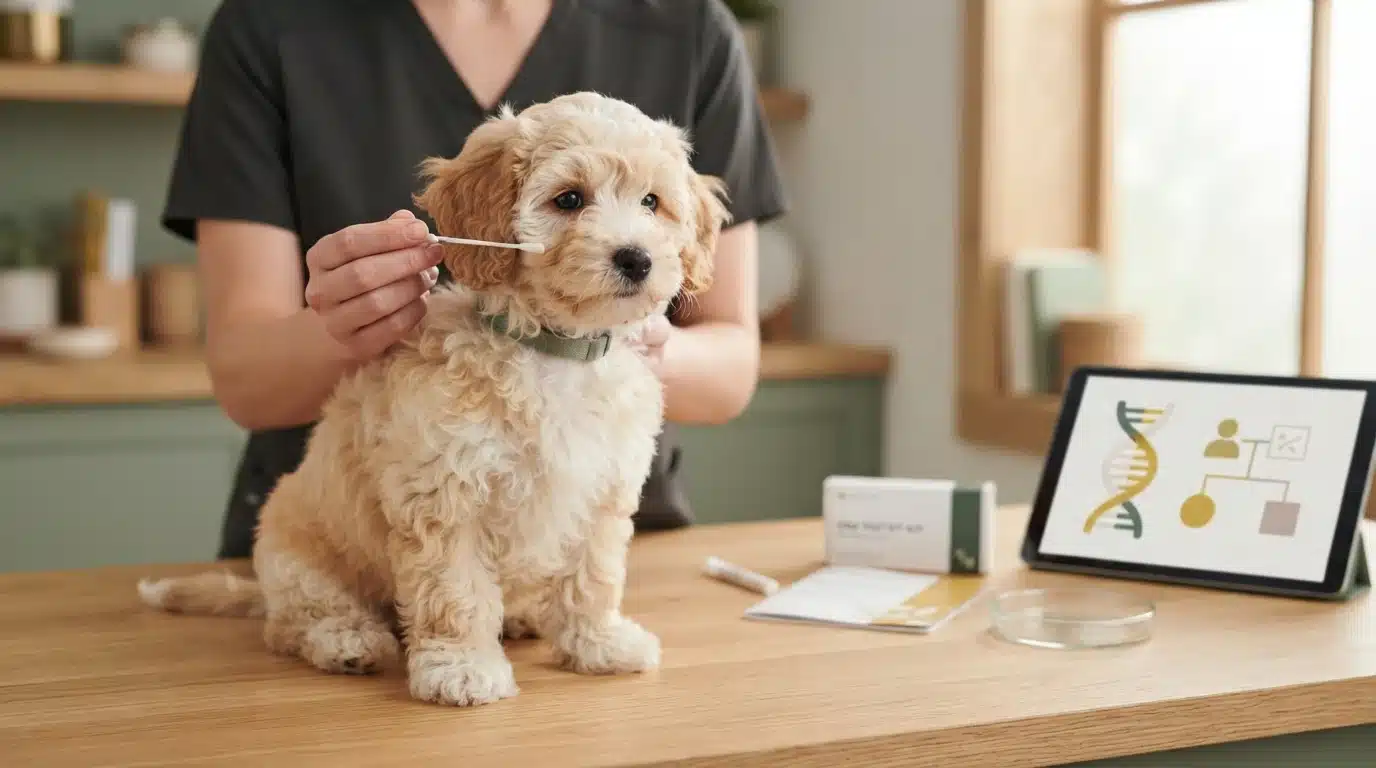
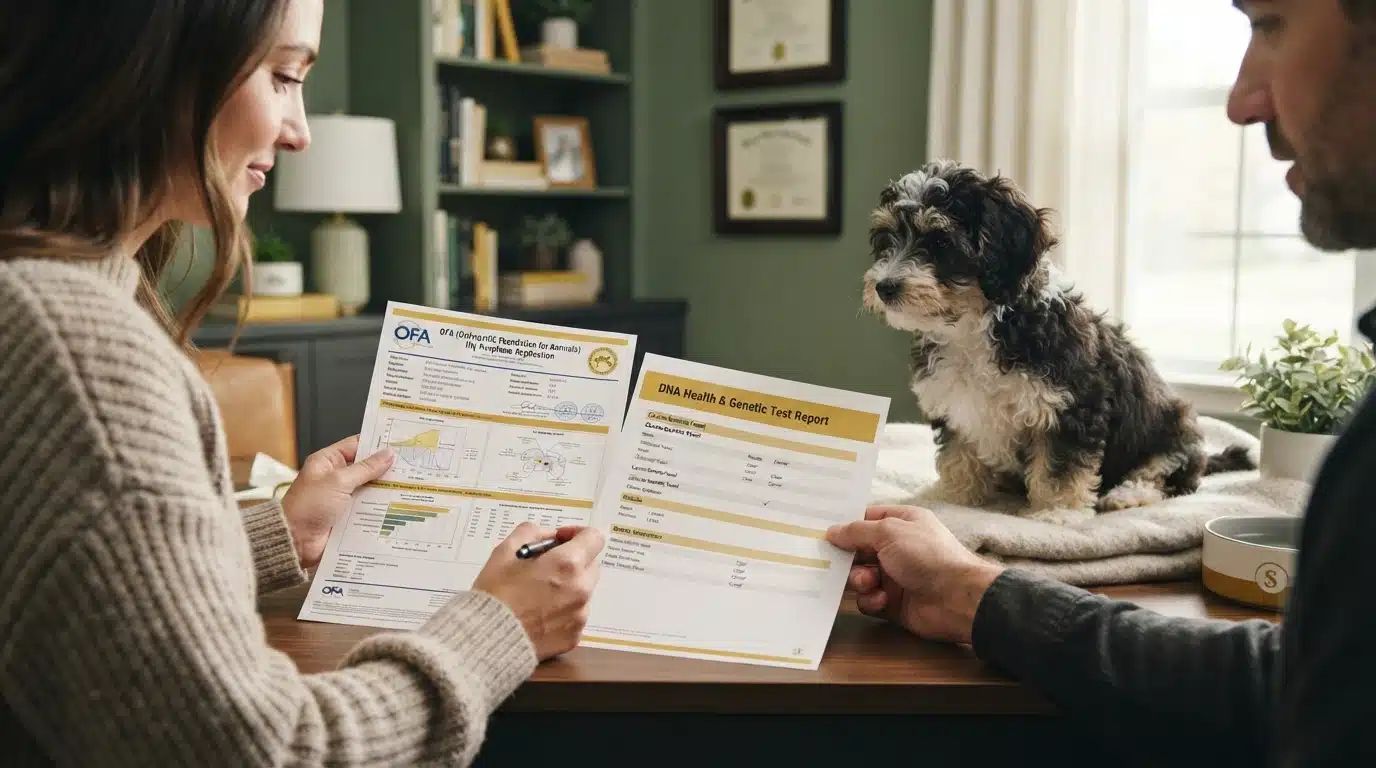
- Parent health testing, such as OFA or CHIC results for the dam and sire
- Puppy veterinary exam records with dates, findings and vaccine lots
- Written paperwork: a contract, receipt and care instructions
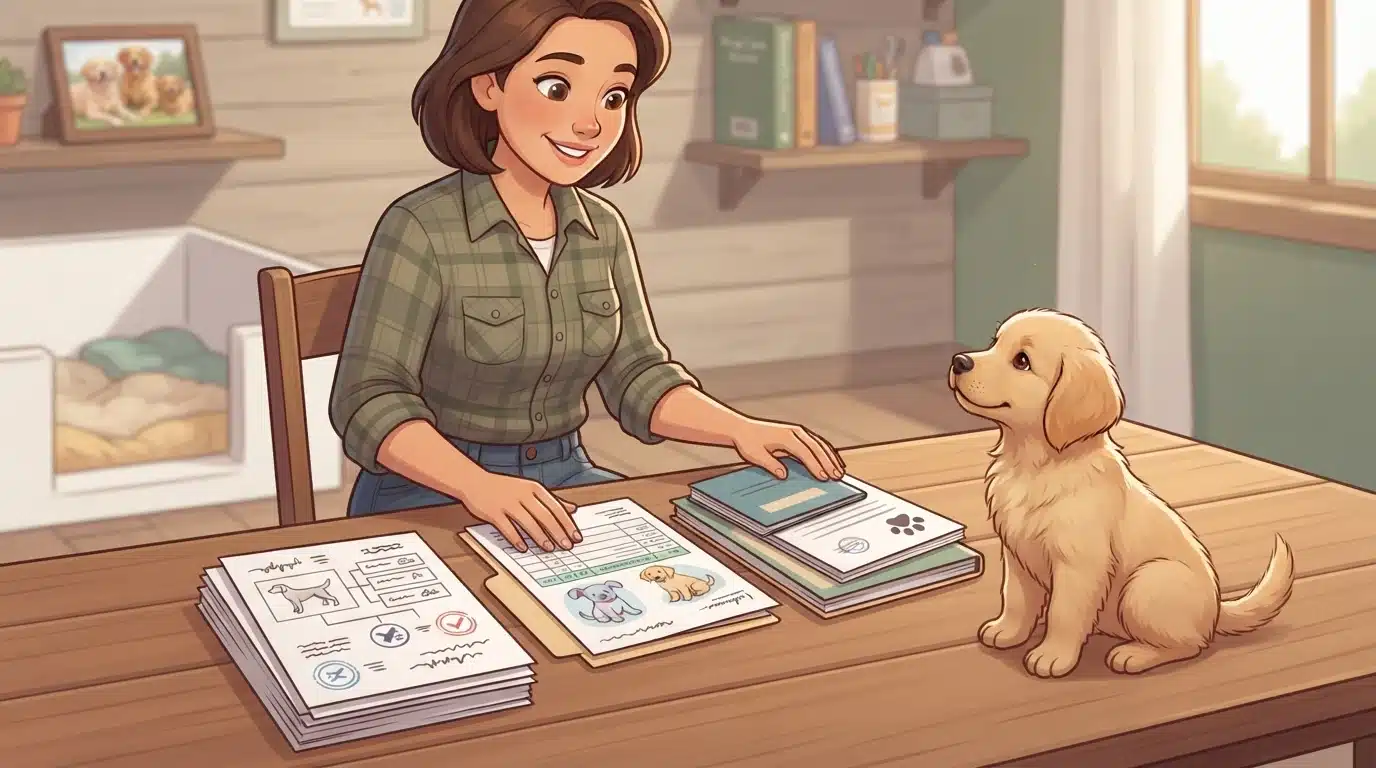
What a Written Health Record Should Actually Contain
A real record is specific. Look for the puppy’s exam date, weight, a vet’s name and clinic, each vaccine given with the maker and lot number, and deworming dates with the drug used. It should also note any treatment or concern, however small. Vague notes like “healthy, all shots done” are not records. If a seller will not show these, walk away; that is one of the clearest signs of an unreliable puppy breeder.
Why a USDA License Is Not a Health Promise
A USDA license is a federal permit for commercial-scale breeding, mostly for sellers who ship or supply pet stores. It sets minimum housing and care rules. It says nothing about genetic testing, socialization or how a litter was raised. Some small home breeders are exempt from it entirely, so a missing license alone proves little either way.
Where You Meet the Puppy: Kitchen Table or Display Pen
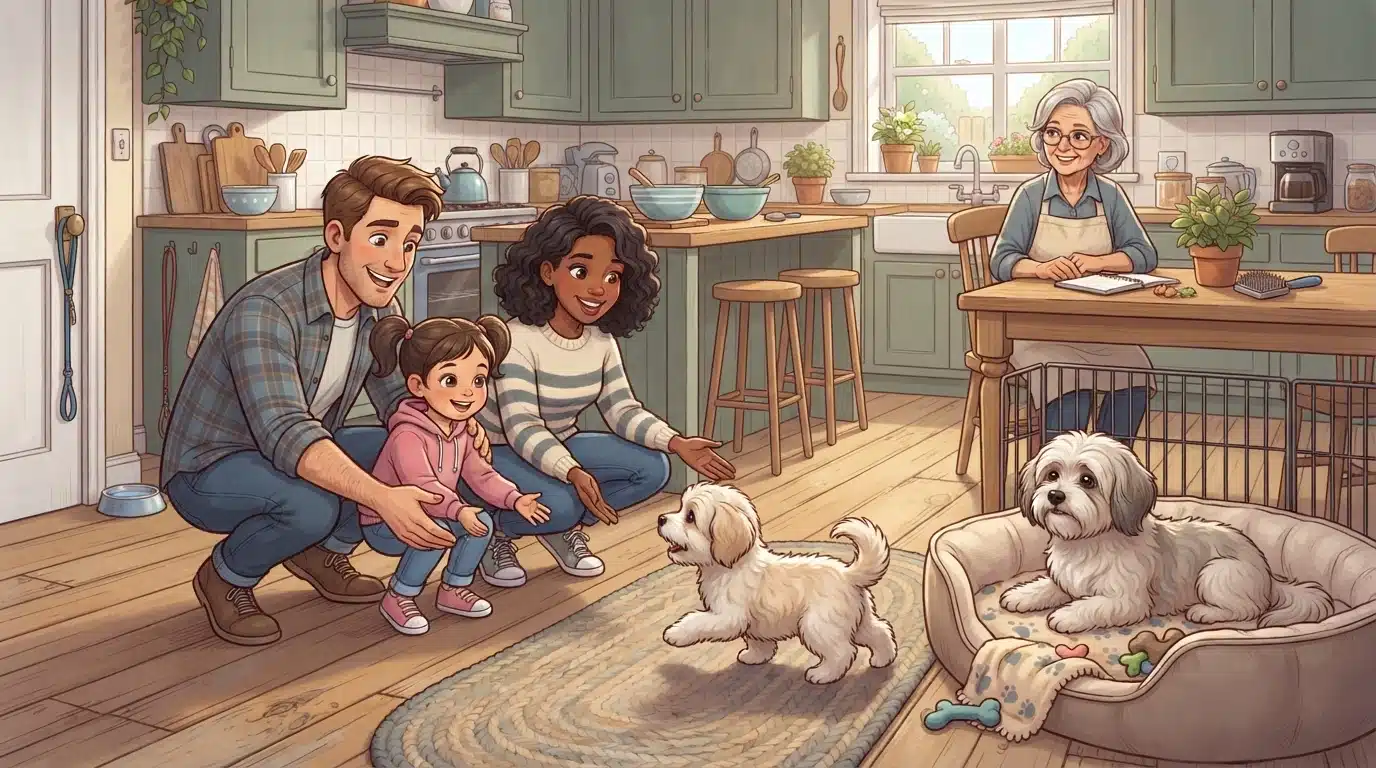
What You Learn in a Home Breeder’s Setup
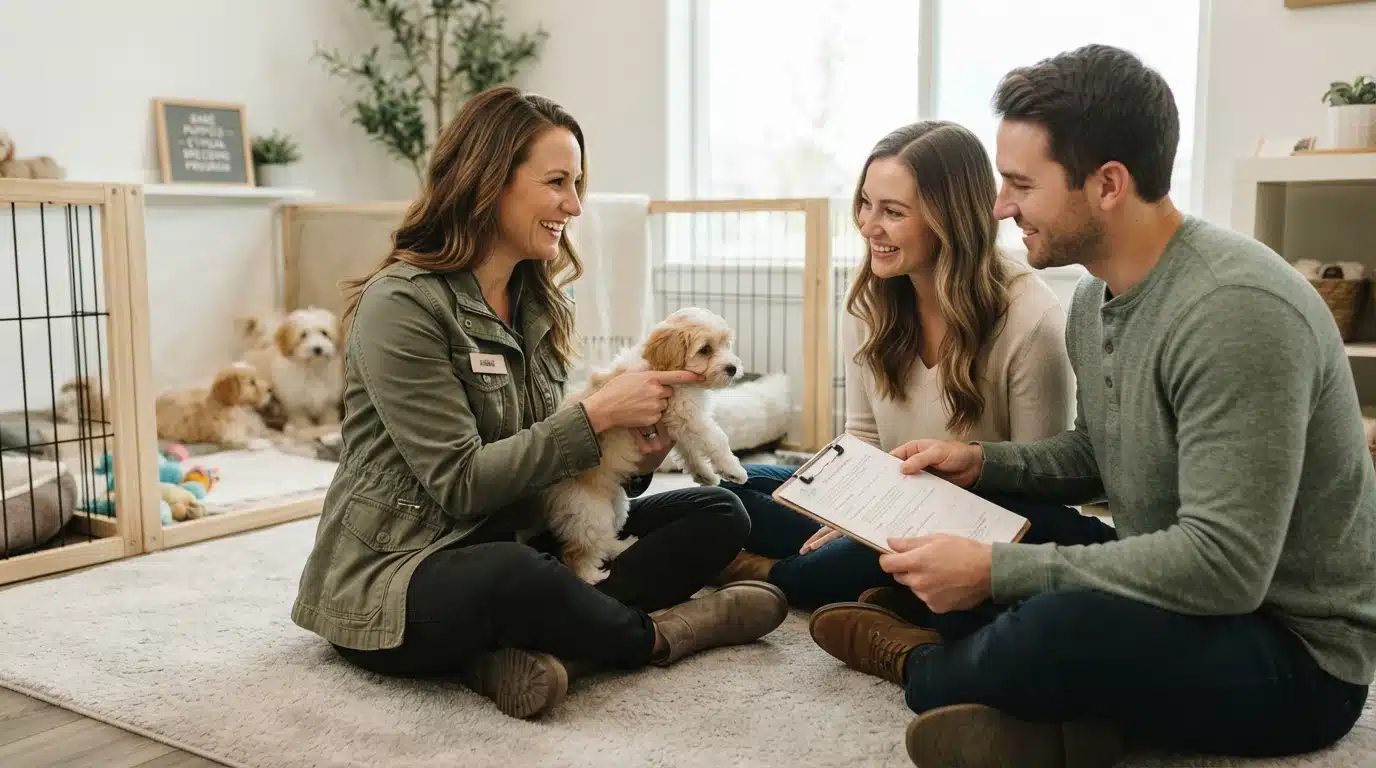
A breeder’s home shows you the whole story. You see where the puppy sleeps, meets the mother, and watches littermates play. Temperament shows up in context, not behind glass. Ask questions on the spot, and note anything vague, because that’s where red flags of an unreliable puppy breeder usually start to show.
What a Store Visit Is and Is Not
A store visit puts you in front of cute puppies, often from brokers or distant breeders. You rarely meet the parents or see where the puppy spent its first eight weeks. Staff can be kind and helpful, but they usually know what the paperwork says, not how the puppy was raised day to day.
Why the Legal Landscape Is Shifting Under Store Sales
Which states ban pet store puppy sales? Ten states now restrict retail puppy sales, with about 530 localities adding their own rules, and more join regularly. A new state law takes effect January 1, 2028, according to recent coverage. Local breeders sit outside this shifting map entirely.
After the Sale: Contracts, Guarantees and Scam Risk
A handshake doesn’t protect anyone here. Get every promise in writing before money changes hands.
The Questions to Put in Writing Before Any Deposit
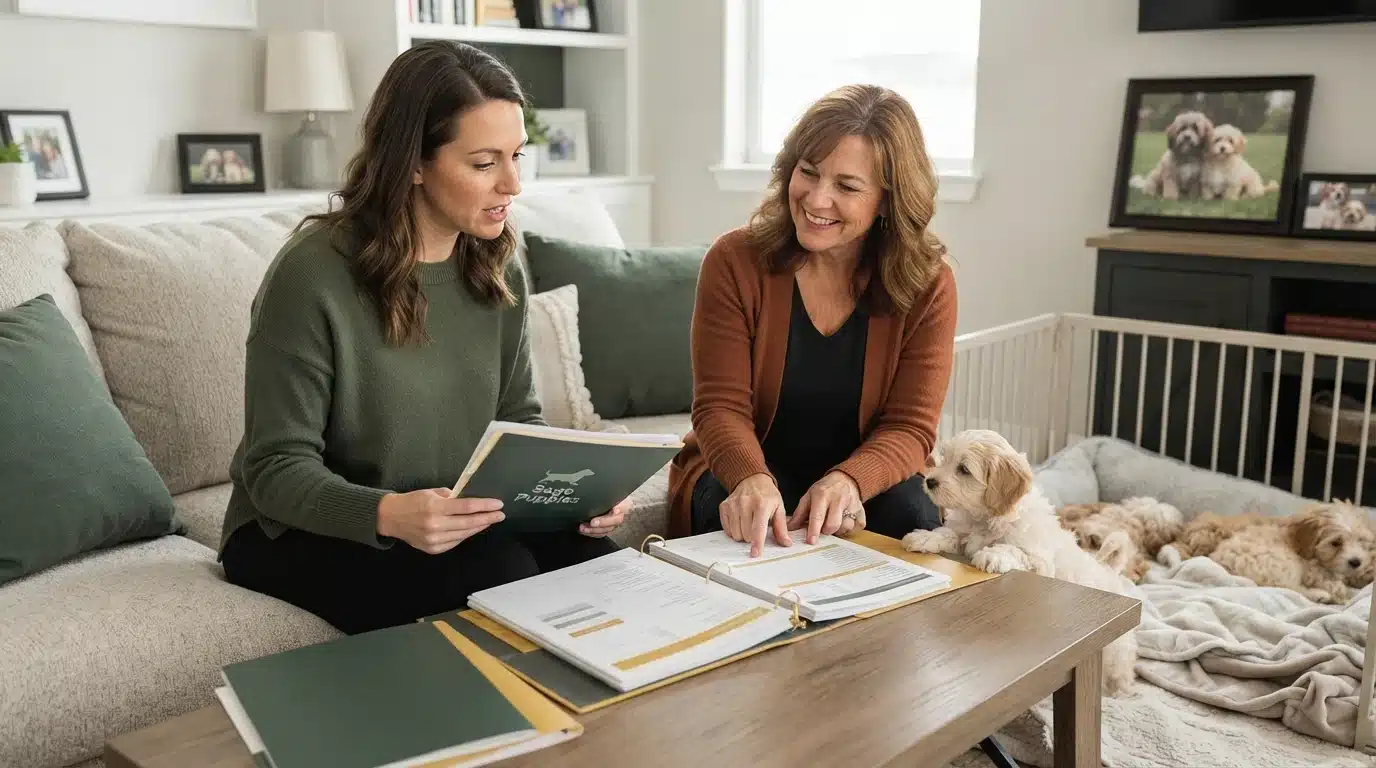
Ask for the puppy contract terms spelled out: deposit amount, whether it’s refundable, and what happens if the litter changes or your plans do. Confirm the return policy, the health guarantee window, and who pays vet bills if a genetic issue appears. A serious breeder answers without hesitation.
How Store Guarantees Differ
Pet stores often lean on a written puppy lemon law guarantee or a short replacement policy, which sounds strong but can mean paperwork deadlines you didn’t expect. Many now partner directly with breeders after states banning pet store puppy sales took hold, so ask who actually stands behind the dog.
Scam Warning Signs in Both Channels
Puppy scam patterns look similar everywhere. Watch for sellers who push wire transfers or gift cards, refuse a video call, dodge requests to meet the mother, or offer prices far below every listing around them. Payment only through traceable methods, and photos that reverse-image search to other sites, are your two fastest filters before you send anything.
Availability, Breed Fit and the Waiting You Did Not Expect
Why Some Breeds Are Simply Not in the Store
Most pet stores stock whatever breeds their suppliers deliver. That often means popular mixes, not specialty lines like Havanese, Havapoo or Cavapoo, so families fixated on one breed may come home empty-handed. Boutique programs work differently because they breed only what they know well. A small program offering Havanese, Havapoo and Cavapoo puppies can plan each litter rather than take whatever ships in.
Waitlists, Selection and Setting Honest Expectations
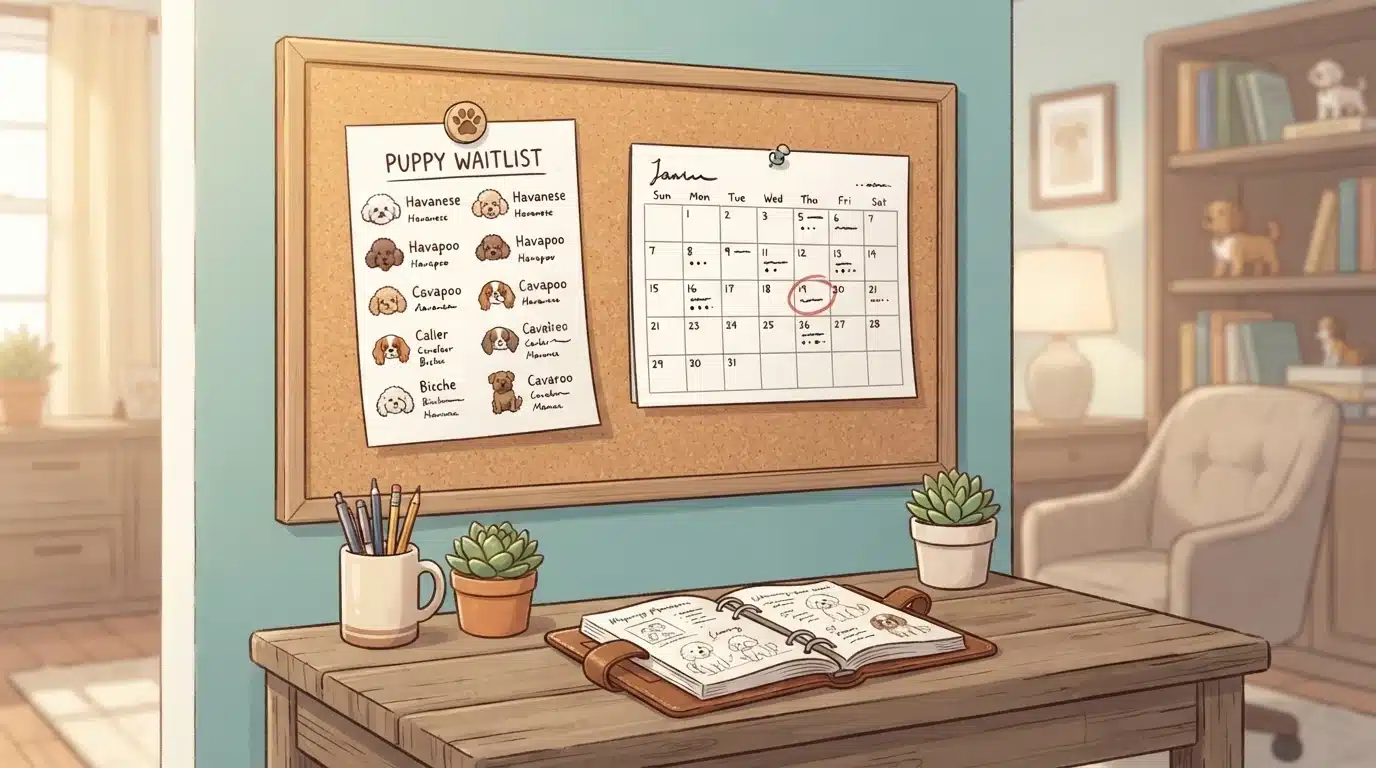
Good breeders rarely have a puppy sitting in a tank waiting for you. You join a waitlist, apply, and pick from planned litters, sometimes weeks or months out. That delay frustrates buyers who expected same-day pickup. The trade-off is worth it: you meet the parents, learn temperament early, and get matched rather than grabbing whoever is available. Pet stores offer speed; breeders offer fit.
Is a Local Breeder Better Than a Pet Store Puppy?
The Short Answer and the Reasoning Behind It
For most families, yes. A local breeder lets you meet the puppy’s parents, see where it was raised and ask about health testing before you commit. Pet stores usually source from large-scale breeders or brokers, so you rarely see those details. A reputable breeder near me search will also surface breeders who stay in touch after go-home day, which matters when questions come up. If you want to see how written pricing and terms work in practice, Sage Puppies publishes its deposit and delivery terms on its pricing and reservation page. That transparency is the norm for good breeders, not the exception.
When a Pet Store Is Still a Reasonable Choice
A pet store can make sense in a few situations:
- You need a puppy immediately and no nearby breeder has a litter ready.
- The store is fully licensed and can show USDA paperwork and the puppy’s origin on request.
- Your state still permits retail puppy sales, since ten states now restrict them.
- You accept the higher price and thinner health history that store channels often carry.
Ask for records either way.
How to Vet Whichever Source You Choose
The Nine Questions Worth Asking Any Seller
To verify a puppy breeder, run through these nine questions:
- May I visit and meet the puppy’s mother?
- Where was the puppy born and raised?
- What parent health testing has been done?
- Can I see vet exam and vaccine records?
- What does the puppy contract cover?
- What is your deposit, refund and return policy?
- How have the puppies been socialized?
- Do you hold a USDA license or a state license? Verify it in the USDA APHIS public search tool.
- How do you support buyers after go-home day?
A good seller answers each one plainly. Vague or evasive answers are a signal to walk away.
State Rules Vary, So Check Yours
Licensing rules differ by state, and ten states now ban retail puppy sales, with about 530 localities adding their own rules. Before you buy, check your state’s breeder licensing and humane pet sales laws, then confirm the seller follows them. If a puppy ships across state lines, ask how transport is handled and who holds the health certificate.
Which Should You Choose: Local Breeder or Pet Store?
For most families, a local breeder wins. You meet the puppy’s parents, see where it was raised, and get health records plus support after go-home day. Pet stores hide that history from you, and ten states now restrict retail puppy sales for a reason.
Choose a Local Breeder If
You want to see where your puppy came from. Breeders let you meet the parents, review parent health testing, and ask questions face to face. You get a written puppy contract, health records, and a person who answers the phone six months later. Many breeders also offer ground transport or flight nanny delivery, so distance matters less than people assume.
Choose a Pet Store If
You need a puppy today. Walk in, pick one, go home. Stores sometimes bundle starter supplies or offer financing, which appeals to buyers without a plan. But ask yourself: can the staff tell you who bred the puppy, what the parents were tested for, or how it spent its first eight weeks? Usually they cannot, and that gap becomes your problem later.
Where Sage Puppies Fits Into This Decision
A boutique program sits on the breeder side of this choice. You apply, match with a planned litter, and stay in contact from deposit to go-home day. Sage Puppies, for example, works this way: Havanese, Havapoo, and Cavapoo puppies raised in South Jordan, Utah, with owner-managed matching rather than a retail counter. That model trades instant availability for a documented history.
The question underneath is simple. Do you want convenience now, or confidence for the next 15 years?

If you’ve decided a breeder gives you more confidence than a store shelf, Sage Puppies is ready. Browse available Sage Puppies litters, review the application, and start matching with Havanese, Havapoo or Cavapoo puppies bred wisely and loved beautifully.
Frequently Asked Questions
Q1: Is a local breeder better than a pet store puppy?
For most families, yes. You meet the parents, review health records and get support after go-home day. A pet store offers speed, but the puppy’s origin usually stays hidden.
Q2: Why do breeder puppies cost more than pet store puppies?
The price covers parent health testing, early socialization, vaccines and a written contract. Store prices include middlemen and retail markup, so they aren’t comparable to a breeder’s.
Q3: What health records should I get with my puppy?
Ask for parent health testing like OFA or CHIC results, a vet exam record with vaccine maker and lot numbers, and deworming dates. Vague notes are not records.
Q4: Does a USDA license mean the puppy is healthy?
No. It’s a federal permit for commercial-scale breeding that sets minimum care rules. It says nothing about genetic testing or how the litter was raised.
Q5: Why do good breeders have waitlists?
Planned litters mean you pick from a known pairing rather than whoever ships in. The wait buys you temperament insight and a better match.
Q6: How do I spot a puppy scam?
Refuse wire transfers or gift cards, demand a video call, and reverse-image search photos. Prices far below every nearby listing are another red flag.
Conclusion
The local breeder vs pet store question comes down to what you can verify. A local breeder shows you the parents, the puppy exam records and a written contract, then stays reachable after go-home day. A pet store offers speed, but the puppy’s history usually stays behind glass.
Ten states now restrict retail puppy sales, and that map keeps growing. So check your state’s rules, ask the nine questions, and get every promise in writing before any deposit changes hands.
If your priority is fit over immediacy, the breeder path asks for patience and rewards it. Ask for records either way, and let the paperwork, not the display pen, make the final call for you.