Quick Summary: Vetting a family-raised puppy breeder comes down to verifying before you get attached, using a six-step order: judge the actual setup (home, guardian home, or partner household with daily human contact), read puppy behavior and household sounds as the strongest cue, screen the person with nine questions demanding specifics, then check health records in three layers (the puppy’s own exam and vaccine record, both parents’ OFA CHIC and eye screening, and DNA panel reports, each verifiable in public databases). Next come the contract and true total cost, including deposit terms, delivery, food, and grooming as a monthly line, and the walk-away triggers: no proof of parent testing, refused visits, always puppies available, deposit pressure, or no written contract and return policy. Sage Puppies, which limits itself to Havanese, Havapoo and Cavapoo litters it manages directly, is presented as a program built to answer these checks openly, starting with an application before any talk of a specific puppy.
You walk through the front door expecting to meet a litter and instead find a garage. Two whelping panels line one wall, a stack of unopened kibble bags sits in the corner, and the puppies bolt away the second they hear a door close. The family raised breeders you thought you were visiting sell a story the puppies did not live.
That gap is the problem this guide solves. Most buyers get a red-flag list, but red flags only help after trust has already formed. What you need is an ordered way to verify before you feel attached.
This article walks through a six-step breeder vetting process: reading the home itself, checking health records in layers, asking the right questions, and knowing exactly when to walk away. It is written for first-time buyers and experienced families alike, including those comparing Havanese, Havapoo and Cavapoo programs in Utah and nationwide.
Step 1: Know What Family-Raised Actually Means
“Family-raised” is not a rule. Anyone can print the phrase, so before you judge a puppy, you need a working definition of what a legitimate family raised breeder actually does. Three setups earn the label honestly.
The three legitimate ways a litter can be family-raised
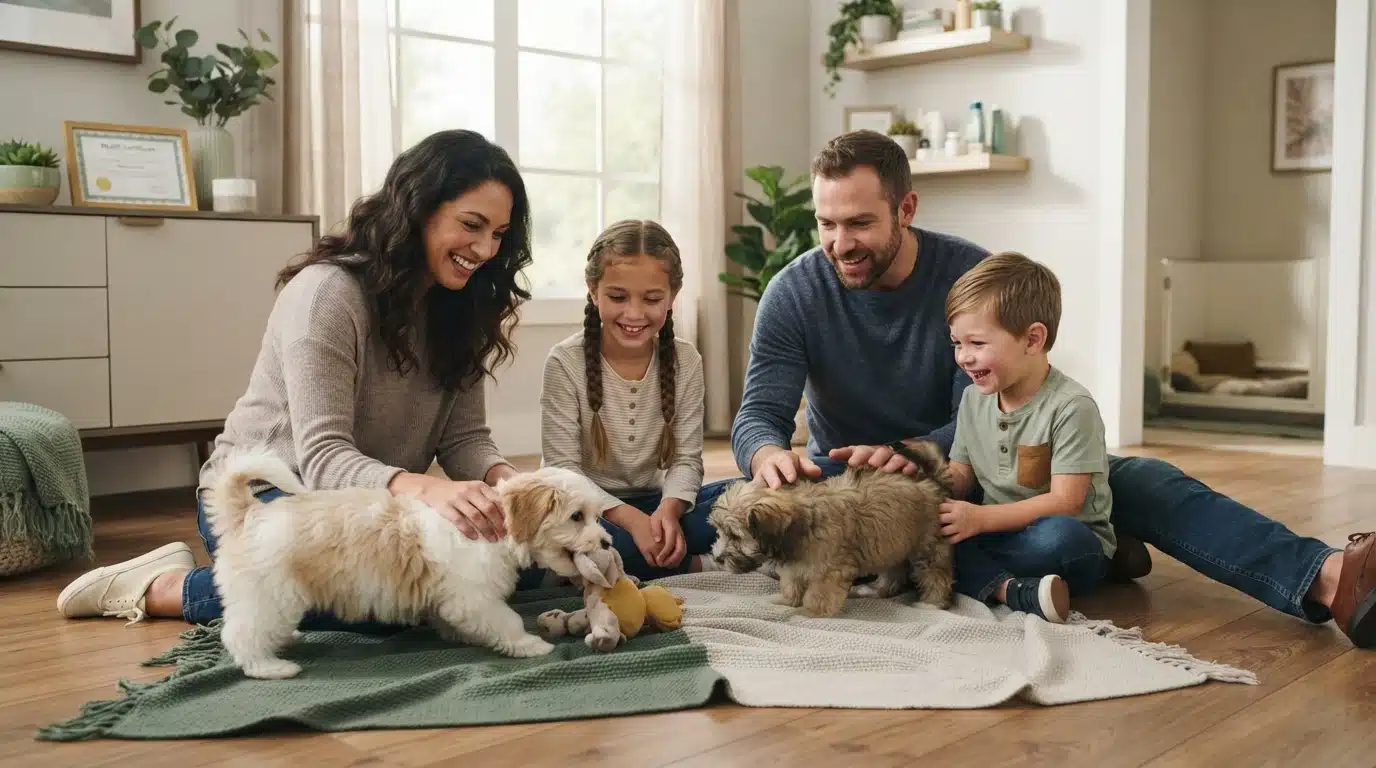
The litter can be born and raised in the breeder’s own home, with the whelping box in a kitchen or living area rather than a shed. It can live in a guardian home, where a family raises a breeding dog as their pet and the breeder manages health testing and breeding decisions; guardian programs work this way by design. Or puppies can stay with a partner household under the breeder’s direct oversight. All three count. What matters is daily household contact, not the address.
Three questions that test any family-raised claim
Ask these before you fall for photos. First: “Where exactly does the litter sleep, eat, and play?” Vague answers end the conversation. Second: “Which household sounds does the litter hear daily?” Vacuum, dishwasher, and TV exposure signals real puppy socialization and habituation. Third: “May I visit and see where the dam lives?” or, for delivered puppies, “Can you video call me from that room, live?” Screen for details, not enthusiasm.
Why the label alone tells you nothing
Puppy mills use “family-raised” on their websites too, and resellers of dogs raised elsewhere borrow it freely. This is why family breeder screening starts with structure, not wording: verify the setup, then verify records, then decide. Sage Puppies, for example, limits its program to Havanese, Havapoo, and Cavapoo litters it manages directly, and our guide to verifying a responsible breeder walks through that process in depth.
Step 2: Spot the Difference Between a Home-Raised and Kennel-Raised Puppy
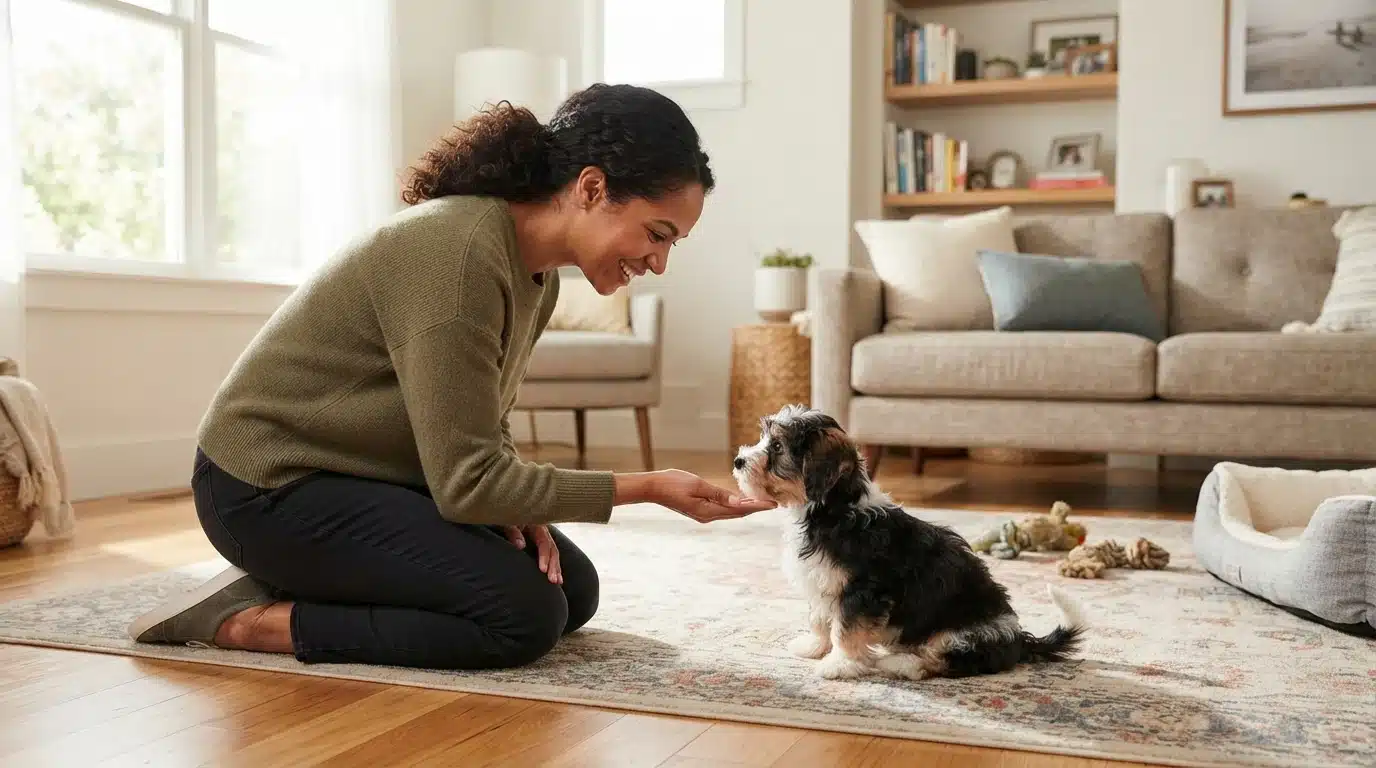
So how do you tell if a puppy was raised in a home versus a kennel? Watch three things: the space itself, how the litter reacts to you, and the small traces a normal household leaves behind. Honest family raised breeders welcome this inspection, because their setup shows it.
What the space reveals
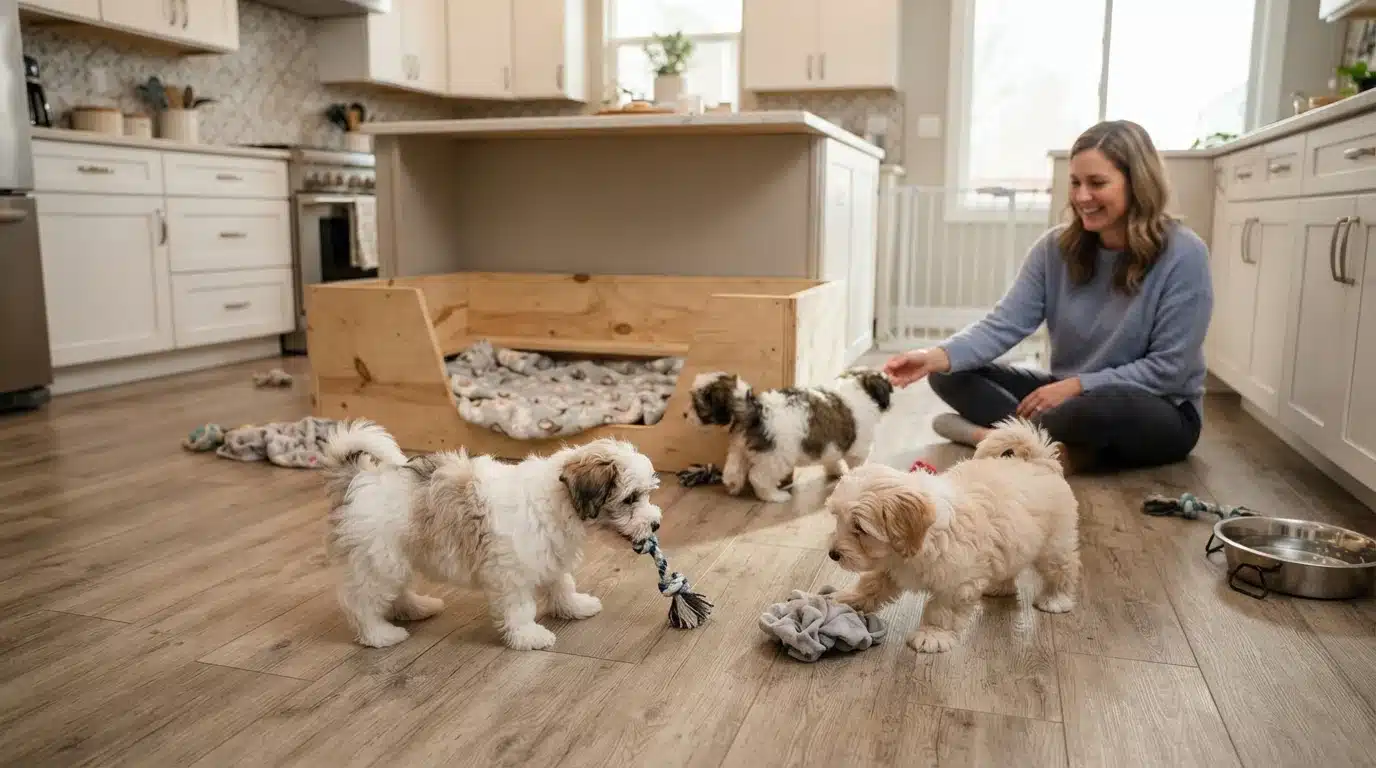
Ask to see exactly where the litter sleeps, eats and plays. A home-raised litter lives in a kitchen or family room, near people, vacuum cleaners and dropped dishes. Look for a clean whelping box, age-safe toys and potty-training pads already in use. A kennel setup looks different: rows of runs, wire flooring, little daylight and no sign of daily household life. If the breeder offers only photos or a video call instead of a visit, treat that as a reason to ask more questions.
How the puppies behave when you arrive
Behavior is the strongest cue. Puppies raised with people walk toward you, sniff your shoes and tolerate being picked up. They startle at a door slam, then recover fast. Kennel-raised pups often freeze, hide, or scatter. Research backs this up: studies summarized in a socialization review link early human contact to calmer, more confident dogs. Also notice whether the mother is present and relaxed, since her comfort around visitors reflects her daily handling.
What a home environment leaves behind
Small details confirm the big picture. A litter box in the house means potty habituation has started. Household sounds, like a TV or a doorbell, should not send the litter into panic, which shows their habituation is underway. If you want a deeper checklist, the brand’s page on verifying family-raised breeders walks through the same inspection point by point.
Where a kennel-raised puppy is still a fine choice
Kennel-raised is not automatically bad. Some legitimate programs use spotless, staffed facilities with structured socialization plans, and studies reviewed by VCA Animal Hospitals note that the quality of handling matters most. Judge the care, then judge the records.
Step 3: Screen the Person, Not Just the Website
A polished site tells you nothing about the person on the other end. Family breeder screening happens in conversation, so before you talk about puppy deposits or pickup dates, ask these questions and listen for answers backed by detail.
Nine questions to ask, and what a good answer sounds like
- How many litters do you raise per year? A good answer: one or two, with months and household details.
- Where do the puppies live? They should describe a room in the house, not a shed or kennel building.
- What sounds have the puppies heard? Expect vacuums, doorbells, kids, TV.
- When did each puppy first see a vet? Get dates, not vague reassurance.
- Which health tests did the parents have? Good breeders name OFA results, eye exams, or DNA panels without prompting.
- Can I meet the mother? Yes should come easily.
- What happens if I cannot keep the dog? A strong breeder takes the dog back, always.
- What does your contract cover? Look for health guarantee terms and a return clause in writing.
- How do you match puppies to families? Good answers involve questions about your home and routine.

Read how they answer, not just what they say
Notice the pace and the specifics. A trustworthy breeder answers slowly, adds context, and asks about you. Someone rushing to close a sale will give short replies, dodge the mother question, or get defensive about testing. Silence on vet dates is a red flag. So is a breeder who never asks why you want this breed.
If every answer sounds rehearsed and every photo could be stock, ask for a live video walkthrough of the whelping area. Honest breeders say yes without hesitation.
A first call, done well
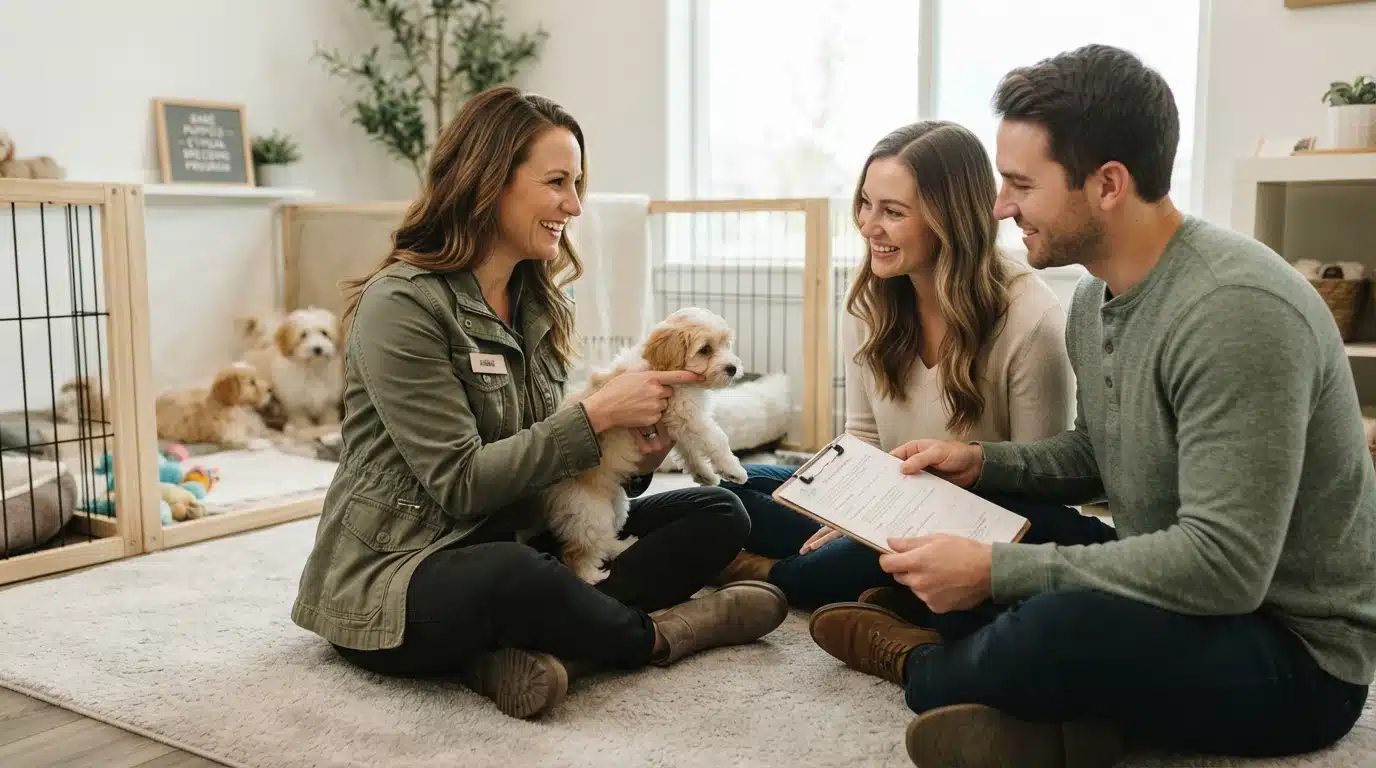
Plan the call for twenty minutes and keep your questions open. At Sage Puppies, the matching process starts with an application before any conversation about a puppy, because the fit runs both ways. Take notes during the call, then compare them against the breeder’s website. Gaps between the two tell you more than either one alone, and small programs expect that scrutiny.
Step 4: Verify the Health and Vet Records Yourself
Check a breeder’s health and vet records in three layers: the puppy’s own exam and care record, each named parent’s clinical screening, and DNA variant results. Any breeder unwilling to share all three is asking you to trust instead of check.
Layer one: the puppy’s own exam and care record
Ask for the litter’s vet record: exam dates, the vaccination record with vaccine types, deworming dates, and the microchip paperwork. A licensed vet should have examined each puppy within days of pickup. Read the entries yourself rather than accepting a photo of a summary sheet.

Layer two: each named parent’s clinical screening
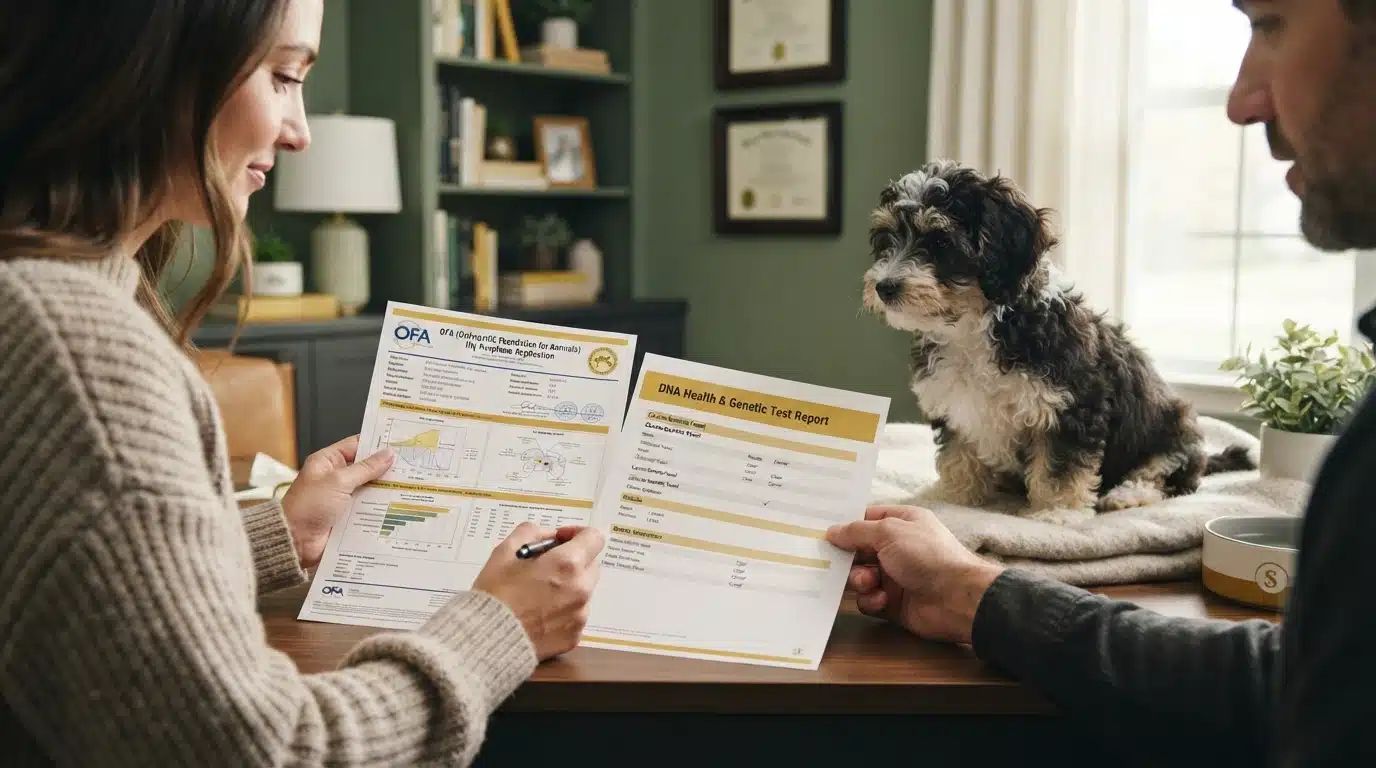
Then confirm both parents’ screening. For Havanese, the breed’s recommended testing includes eye exams, hearing checks, heart evaluation, and patellar luxation screening, tracked through the OFA CHIC database where results are public. Search each parent by registered name yourself and match the results to the dog you are shown. A breeder running a family raised program should know both parents’ status from memory. At Sage Puppies, parent health documentation is part of the standard sharing process with matched families.
Layer three: DNA variant results and their limits
DNA panel results catch inherited risk tied to known gene variants, but they do not guarantee a puppy will never develop a condition. Variant results describe the tested genes only, so treat them as one layer, not the whole picture. Good breeders share both parents’ panel reports and explain what a carrier result means for a pairing. Bad ones wave a single “DNA tested” claim at everything.
The document questions that make records verifiable
Close the gap between claims and proof with four questions. Who performed the exam, and can I contact that clinic? Can you send the actual documents before I place a deposit? Are the parent results listed under their registered names in a public database? What does the health guarantee cover, and what does it exclude? Any hesitation on these is a walk-away signal.
Step 5: Read the Contract and Work Out the Total Cost
Ask any breeder “how much does a puppy cost?” and you will get the purchase price. The real answer is longer. Before you commit, total these lines: purchase price, transport or delivery, first vet visit, food, grooming, and toys or a crate. For a small breed like a Havanese, grooming alone runs on a steady schedule, so count it as a monthly line, not a one-off.
What the deposit does and does not reserve
A deposit holds your spot in line or on a specific litter. It usually does not lock a particular puppy until matching happens later. Ask three things: is it refundable, under what conditions, and does it apply to the final price? A clear breeder answers all three in writing before you pay. Vague answers here predict vague terms later.
Add up the real total before you commit
Prices vary by breeder, coat, and what the program includes, so compare line by line rather than headline by headline. At Sage Puppies, current pricing and reservation steps are listed on the pricing and reservation page, which makes that comparison easier.
Terms that protect both sides
A good puppy contract spells out the health guarantee window, what it covers, and what voids it. It should also state the return policy if the match fails, microchip transfer, and spay or neuter expectations. Read every clause before the deposit moves. Contracts that protect only one side are a red flag, and walking away is always allowed.
Step 6: Know the Red Flags and the Walk-Away Moments
Serious breeder vetting ends the same way it starts: with what you will not accept. The fastest answer to “what are the red flags?” is a short list of deal-breakers, each paired with the response it deserves.
Deal-breakers that end the conversation
- No proof of parent health testing. Ask for OFA CHIC numbers, DNA panel results and eye exam records. If the breeder deflects, walk away.
- Refusal to let you visit or see where puppies live. A video tour counts. Secrecy means a kennel or broker, not a home.
- Multiple litters, many breeds, always puppies available. That is a puppy mill pattern. Leave.
- Pressure to pay a puppy deposit before you see records. End the call.
- No written puppy contract or return policy. Keep shopping.
What to do when something does not add up
Not every problem is a deal-breaker. If a vet record looks odd, ask for the clinic’s name and call to confirm the vaccination record. If a date shifts, note it and ask why. Honest small breeders miss calls and reschedule visits; scammers push you to send money fast. One soft answer deserves a follow-up question. Two deserves a written request for documents. Three means you stop asking and start leaving. Any reputable program, including one like Sage Puppies, will answer document requests without complaint, so silence tells you something too.
The rescue trap
Scammers reuse photos from real litters and rescue listings, then demand wire transfers or gift cards for “delivery fees.” Search the puppy’s photo, ask for a live video call with the puppy moving in frame, and refuse any payment method you cannot reverse. If the seller will not appear on camera with the animal, the listing is fiction.

You now have a six-step checklist, so use it before you commit to any breeder. If you want a program that already answers these questions openly, see Sage Puppies. Browse the available Havanese, Havapoo and Cavapoo puppies, then start the application when you’re ready.
Frequently Asked Questions
Q1: How can I tell if a puppy was raised in a home versus a kennel?
Visit where the litter sleeps and eats. Home-raised puppies approach you, recover fast from startles, and ignore household sounds like vacuums. Kennel-raised pups hide, freeze, or scatter.
Q2: How do I check a family-raised puppy breeder’s health and vet records?
Request three layers: the puppy’s exam, vaccination record and deworming dates; both parents’ OFA CHIC and eye screening results; and DNA panel reports. Verify each in public databases yourself.
Q3: What are red flags when choosing a family-raised puppy near me?
Walk away from breeders who refuse visits, dodge parent health testing, always have puppies available, pressure deposits before sharing records, or skip written contracts.
Q4: Can I trust a breeder who only offers video calls?
Yes, if the call is live and unedited, showing the whelping area and mother moving in frame. Recorded tours and stock photos deserve suspicion.
Q5: Should a puppy deposit be refundable?
Ask directly, and get the answer in writing. Deposits usually hold your place on a litter, not a specific puppy, so clarify refund conditions before paying anything.
Conclusion
Vetting a breeder comes down to one idea: verify before you feel attached. Start with the space the litter actually lives in, because home-raised puppies behave differently around people and household sounds than kennel-raised ones. Then screen the person, not the website, with questions that demand specifics. Check health records in three layers yourself: the puppy’s vet record, the parents’ OFA CHIC and eye results, and the DNA panel. Read the contract and total the real cost, deposit included. Finally, hold your walk-away moments firm. Missing parent testing, refused visits, or pressure to pay early are not negotiable flaws. Breeders who raise litters in their own homes welcome every one of these checks, so a breeder’s reaction to your questions tells you as much as the answers do.