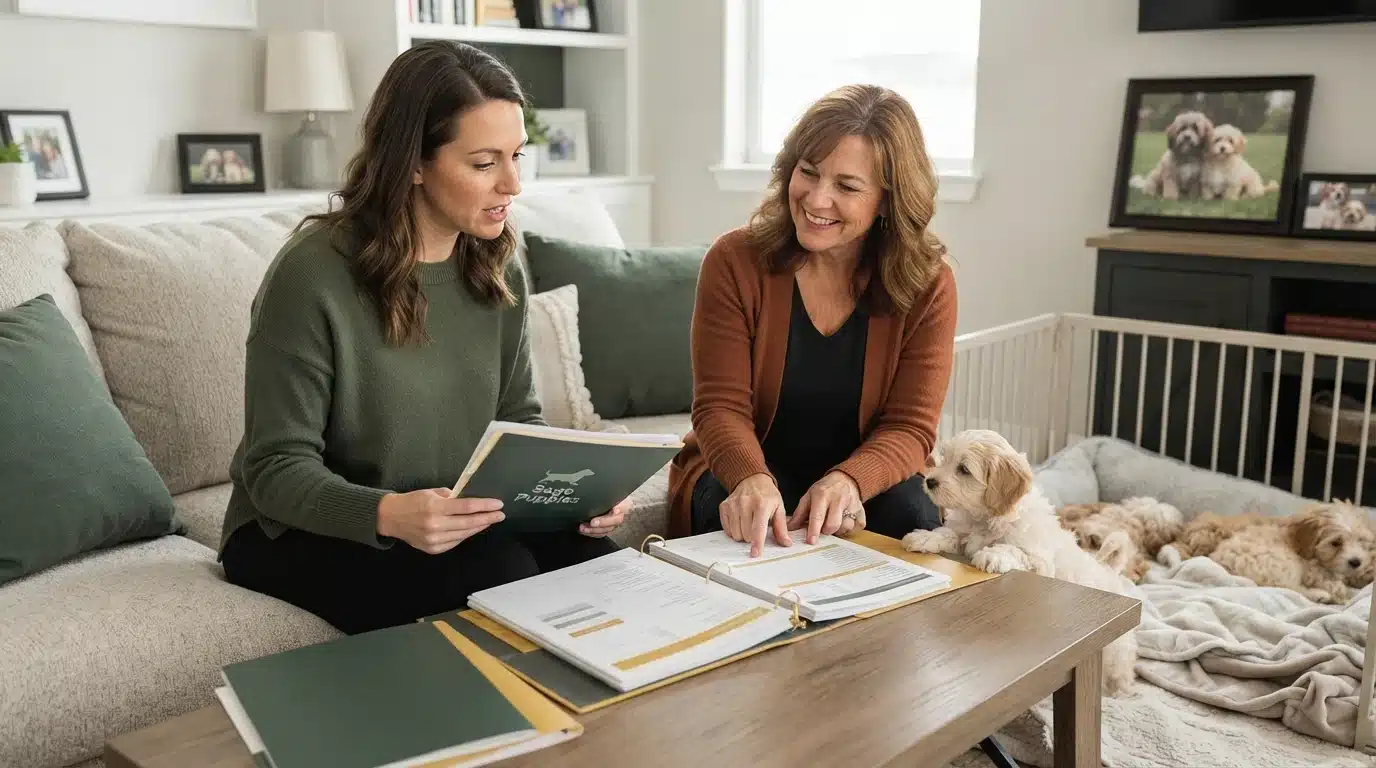
Quick Summary: Verify a family-raised puppy seller before paying by collecting five key proofs: a live home video, parent health records, a veterinary record confirmed with the clinic, a signed contract, and a return policy. Meet the mother and litter in person or by live video, verify the business and references, and treat hesitation as a warning sign. Sage Puppies is presented as an example of a transparent South Jordan program that documents its Havanese, Havapoo, and Cavapoo litters.
Two listings can both promise “raised in a family home,” and only one can show you the kitchen the puppies sleep in, the vet records that came with them, and the mom who raised them. That gap between marketing words and proof is the real challenge when you search for family-raised puppies near me.
This guide gives you a family raised verification system instead of a warning list. Each step names a specific artifact to collect: health testing records, a video walkthrough of the home, a signed contract, and a license lookup you can run yourself. Ask for these before you pay a deposit, and claims get sorted from facts fast.
You’ll also see a worked example from Sage Puppies, a small Utah program raising Havanese, Havapoo and Cavapoo litters, where each claim comes with documentation you can check.
Step 1: Confirm the Puppies Actually Live Inside a Home
“Family-raised” is the most used phrase in puppy advertising, and it is also the easiest to fake. You verify a family-raised puppy seller by asking for proof the puppies live indoors with people: a video walkthrough of the actual whelping space, current photos, and names of the household members who handle the litter daily. No proof means you move on.
What “Raised in a Family Home” Should Actually Mean
Real home-raising means puppies are born and grow up inside the breeder’s living space. They hear dishwashers, vacuum cleaners, kids, and doorbells. Someone handles them every day from birth, so house training and socialization start weeks before you meet them. A kitchen or family room whelping setup fits this. A detached barn, shed, or outdoor run does not, no matter what the listing says.
Five Questions That Expose the Claim
Ask these and judge the answers, not the warmth behind them:
- Which room were these puppies born in, and can you show it?
- Will you send a live video walkthrough of that room today?
- Who lives in the home, and who handles the puppies daily?
- How many litters are on site right now?
- Can I visit the home, or see the room where puppies sleep?
A genuine breeder answers without hesitation and sends video the same day. Vague answers, scheduling delays, or “we only meet in parking lots” should end the conversation.

What Commercial Operations Look Like From the Outside
Commercial breeders hide behind brokers and delivery-only listings. Watch for sites with many litters listed at once, stock photos reused across puppies, no named household, and refusal to show the whelping space. Some operations that market themselves with phrases like “home raised” actually house dozens of breeding dogs elsewhere. The fix is the same either way: demand the room, the video, and the visit before money moves. Programs like Sage Puppies in South Jordan build the walkthrough and daily handling into their process, which is the standard you should expect anywhere.
Step 2: Verify Health Testing and Veterinary Records
Any breeder can say their dogs are “health tested.” A responsible one can show you the paperwork. Before you pay a deposit, ask for four specific documents, and treat hesitation to provide them as an answer in itself.
The Four Documents to Ask For
Request these before any money changes hands:
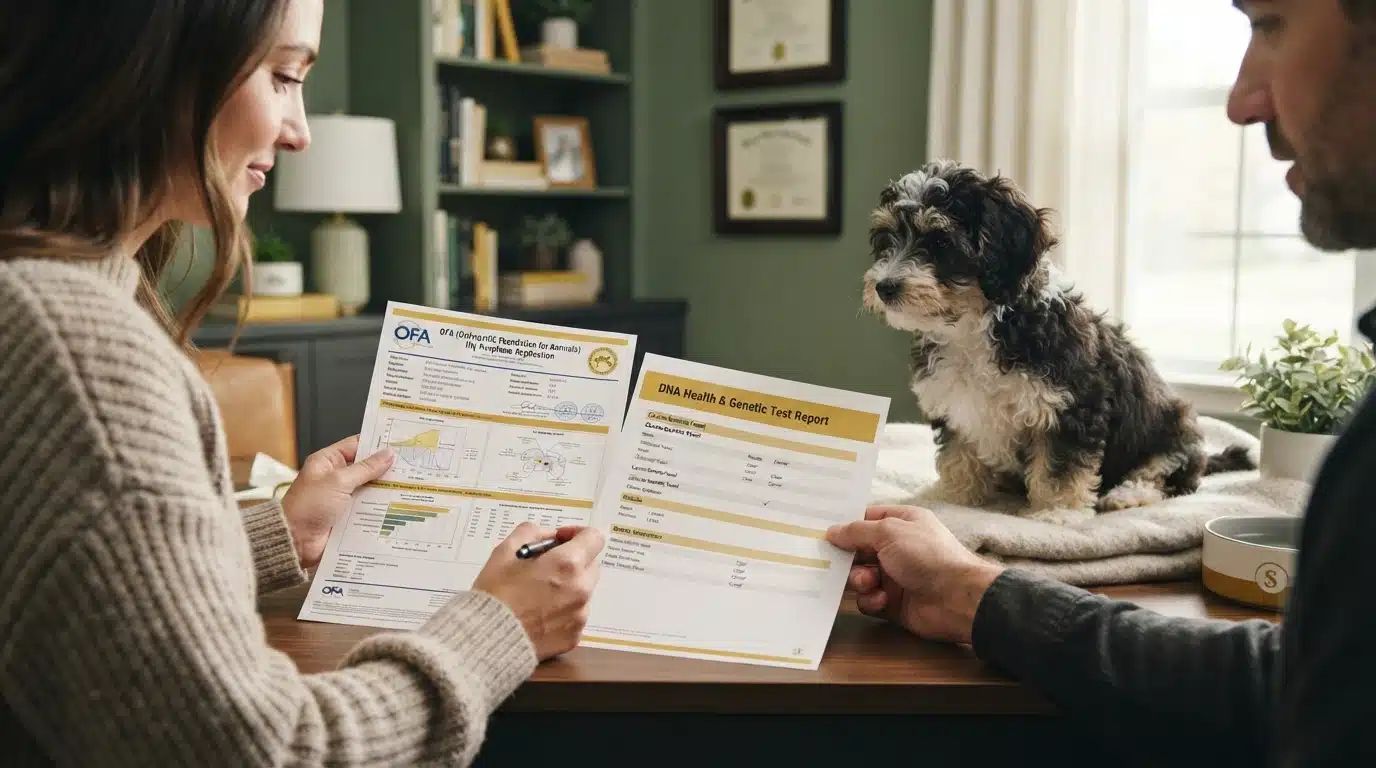
- Parent DNA panel results from a named lab, showing the sire and dam were screened
- OFA or CHIC records for both parents, searchable by registered name
- A vet exam record for the puppy, dated within a few days of pickup or delivery
- A vaccination and deworming log listing dates, products and the administering clinic
Together these are the backbone of any serious family raised verification effort. A breeder who keeps this paperwork current usually keeps it ready, so asking costs you nothing but reveals a lot.
Reading Test Results Without Getting Lost
The Orthopedic Foundation for Animals (OFA) runs the system most breeders use, and its CHIC program lists required tests by breed. For Havanese, the parent club requires results for three distinct tests before a dog earns a CHIC number, according to the Havanese Club of America. Type each parent’s registered name into the OFA database yourself. You want normal results for patellas, eyes and hips where applicable, and clear DNA for conditions the breed carries. This overview of OFA and CHIC explains how the pieces fit.
Confirming Records With the Veterinary Practice
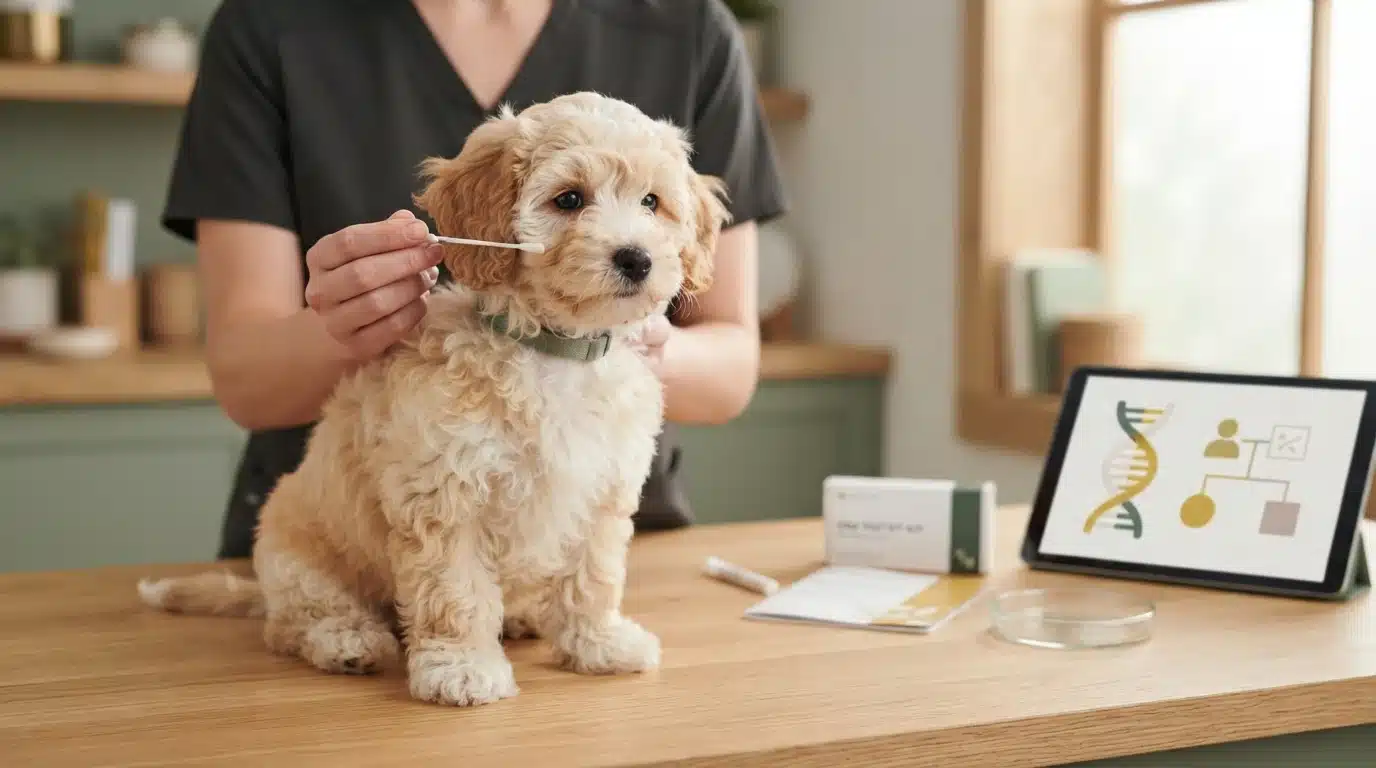
A paper record can be typed by anyone, so verify it. Call the clinic listed on the puppy’s exam and ask two questions: did this puppy visit on this date, and were vaccines given as listed? Most practices will confirm basic facts with the client’s permission. For a deeper walkthrough of what each record should contain, we keep a fuller guide on checking a breeder’s health testing records. Happytails Puppies and similar programs vary widely here, which is why verifying with the actual clinic beats reading any website’s claims.
Step 3: Meet the Mother and the Litter Yourself
Why Meeting the Mother Matters
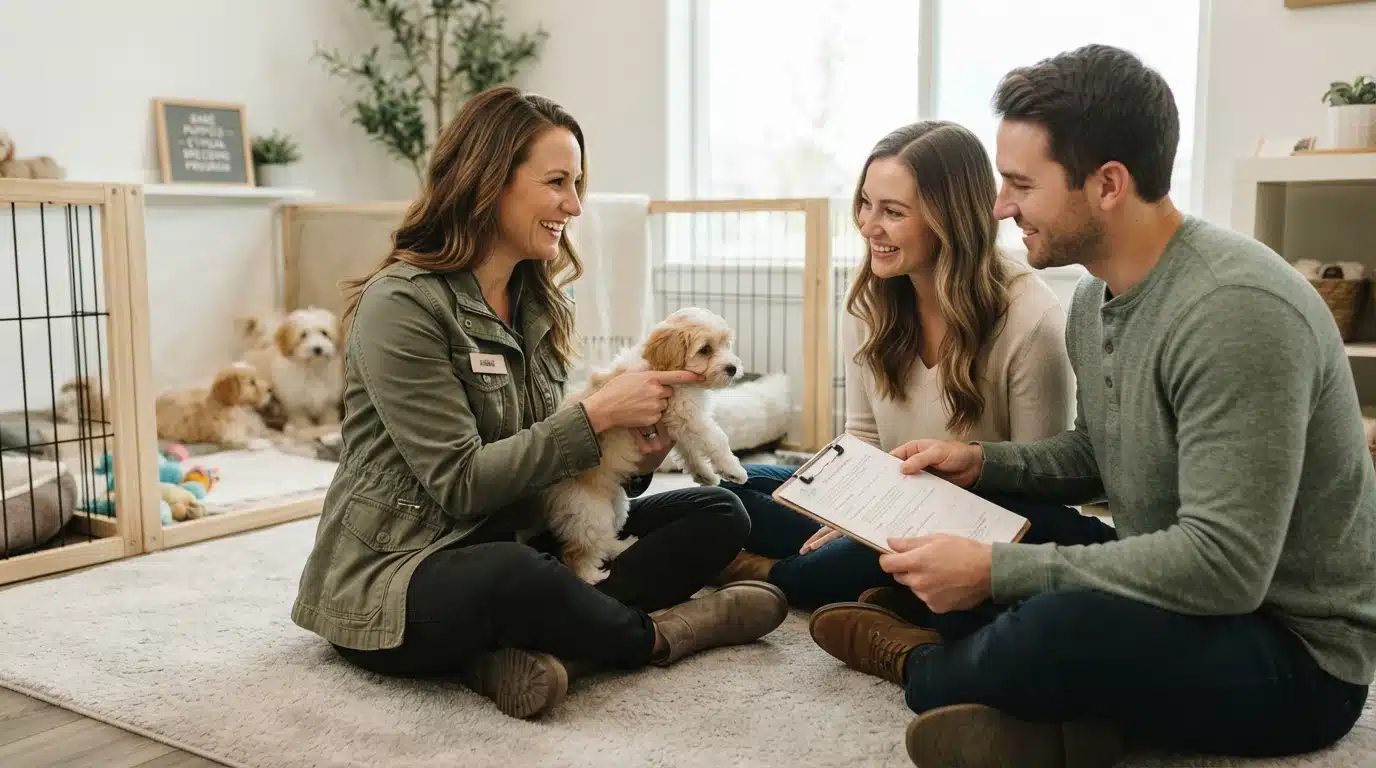
The dam tells you more than any ad. Her body condition, coat, and comfort around people show how the dogs actually live. The AKC advises buyers to focus on the environment and the dogs themselves when they visit, including whether the space looks clean and the puppies seem healthy. A mother hidden behind “she’s at the groomer’s” deserves a second look, because a breeder who raises dogs at home can show her in five minutes.
What to Watch For in the Litter
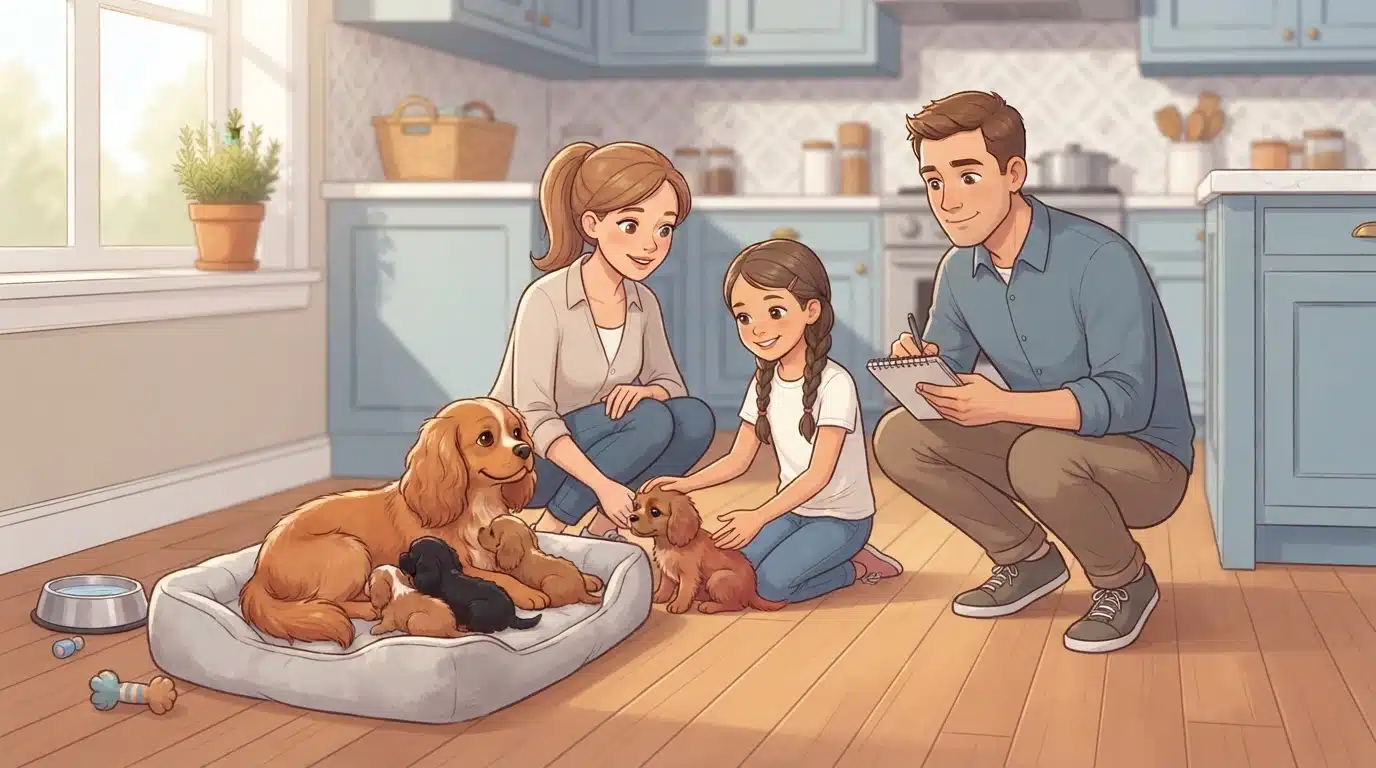
Arrive unannounced if the breeder allows it, then spend twenty quiet minutes watching. Use this checklist:
- Clean coats and clear eyes, no crusted discharge or coughing
- Curious behavior toward you, not fear or listlessness
- Even body condition, no ribs showing or bloated bellies
- One consistent whelping area, not a rotating cast of rooms
- The mother nearby, relaxed and letting puppies nurse
Bring your notes and compare them against the breeder’s claims, including temperament descriptions and how the litter family raised verification stories match what you see. Any mismatch is a data point, not a deal-breaker yet, but patterns matter.
If You Cannot Visit In Person
Ask for a live video walkthrough instead of recorded clips, and request it on a call so you control the camera. Watch the breeder walk from the front door to the puppy area in one continuous shot, show the mother eating, and hold each puppy up close. A recorded tour with edits can hide anything, so treat hesitation about a live call as a warning sign.
If a breeder refuses a live video, that tells you what an in-person visit would have shown.
Skip that breeder and keep looking, because a transparent program has nothing to stage. Local Utah families can also compare litters in a meet-and-greet before committing.
Step 4: Verify the Seller, the Business and the References
A responsible breeder checks out on paper before you check out the puppy. This step covers three checks: the business itself, the families who bought before you, and how the seller behaves when you ask.
Check the Business and Any Required Licensing
Ask for the seller’s legal business name, then verify it yourself. Search your state’s business registry, and look up USDA licensing if the seller ships puppies commercially, since the USDA’s license lookup shows who holds an active license. Many small home programs operate legally without a USDA license, but anyone dodging the question is a red flag. One seller told a buyer “we’re licensed” and could not produce a number.
Warning: A seller who refuses to confirm their registered business name is telling you exactly who they are.
Call References Yourself
Ask for two or three families who bought puppies in the last year, not testimonials the seller picked as quotes. Call them and ask what the seller did not mention: Did the puppy match its records? Did the seller answer questions after the sale? Would they buy again?
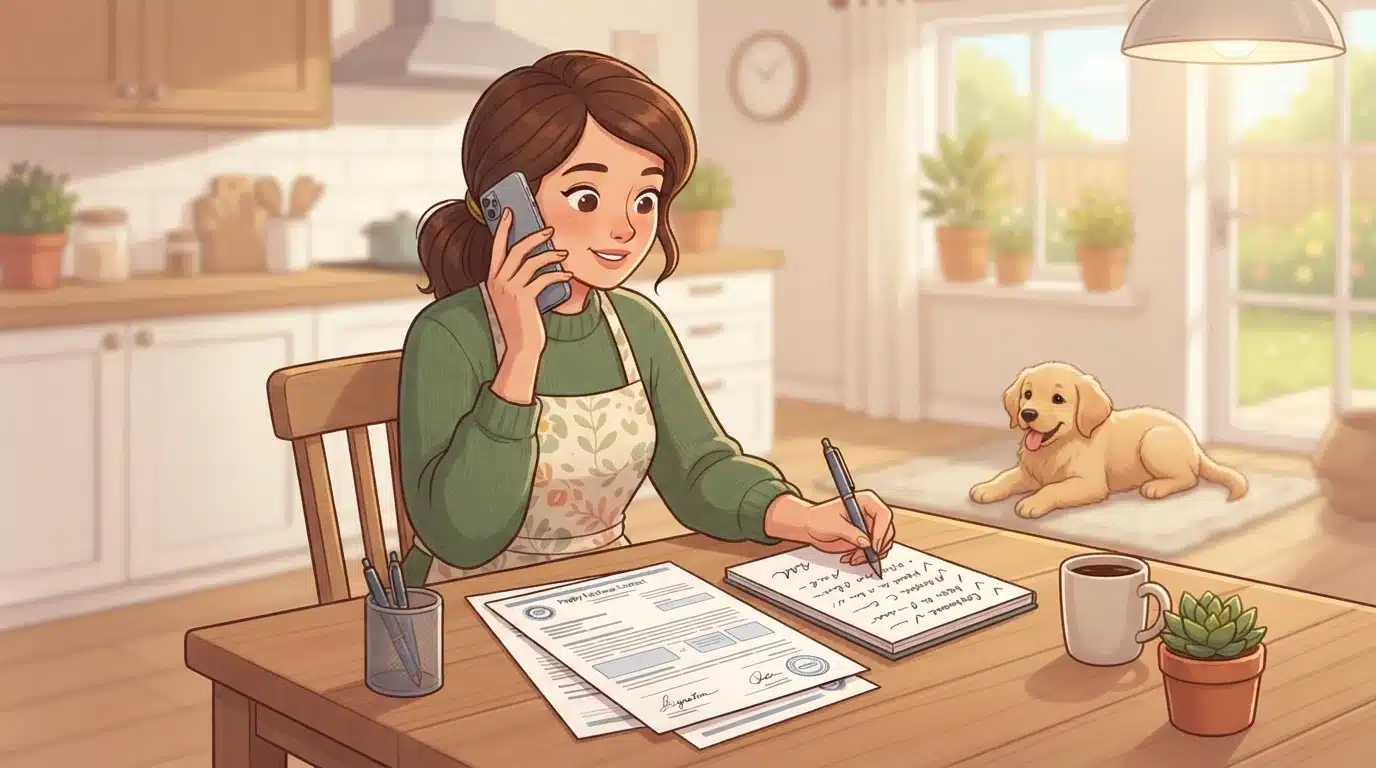
If the seller stalls on references, ask why. A transparent program can produce them quickly.
How the Seller Handles Your Questions
Your questions are a test, and the answers matter as much as the records. Send a specific list and watch what comes back: direct answers, partial answers, or pushback. Sellers who welcome questions like “what health testing did the parents have?” tend to run open operations, and Utah programs selling small breed puppies for sale in Utah often invite buyers to visit before they commit. Sellers who deflect, get defensive, or rush your decision are screening you, not the other way around. Slow the process down and see what happens.
Step 5: Read the Contract, Health Guarantee and Return Policy
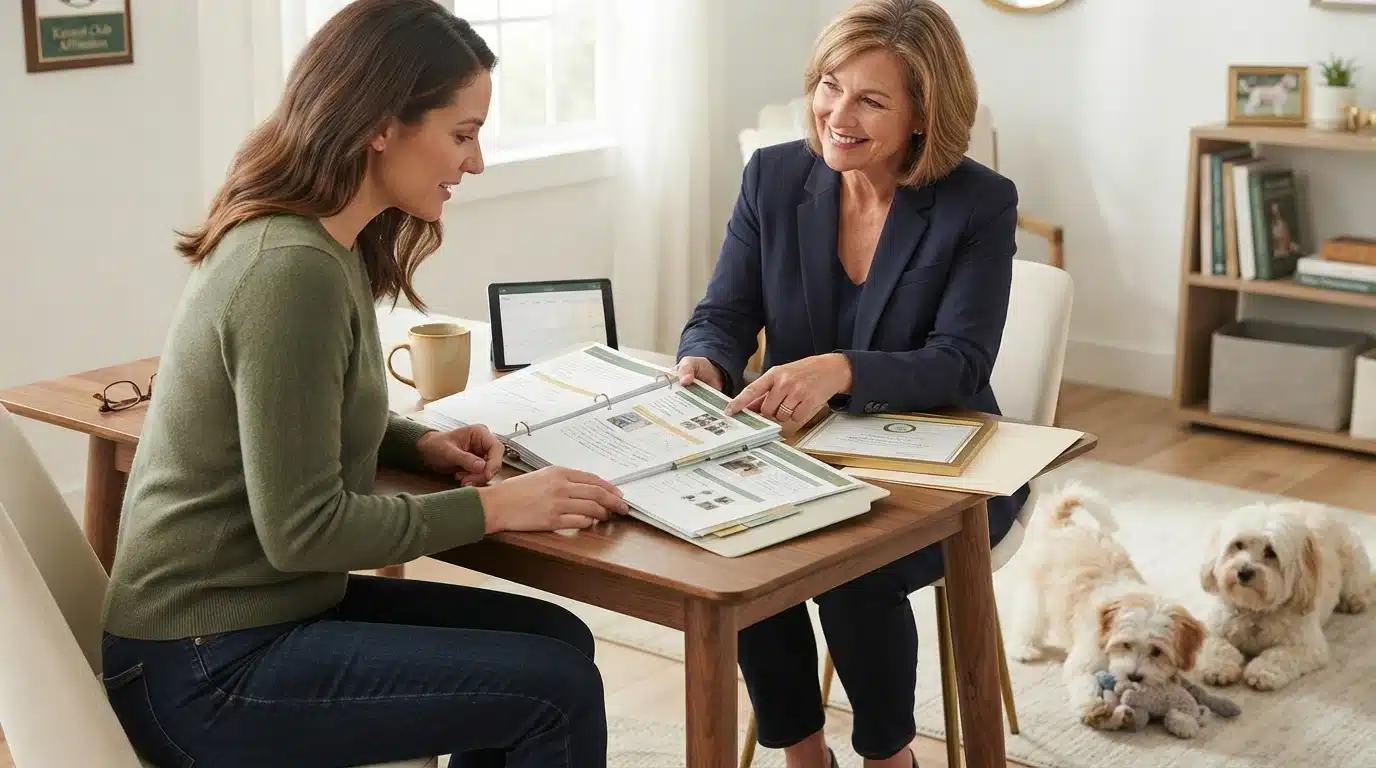
A written contract protects you and the puppy. A breeder who dodges paperwork is telling you something, so ask to see it before you send a deposit.
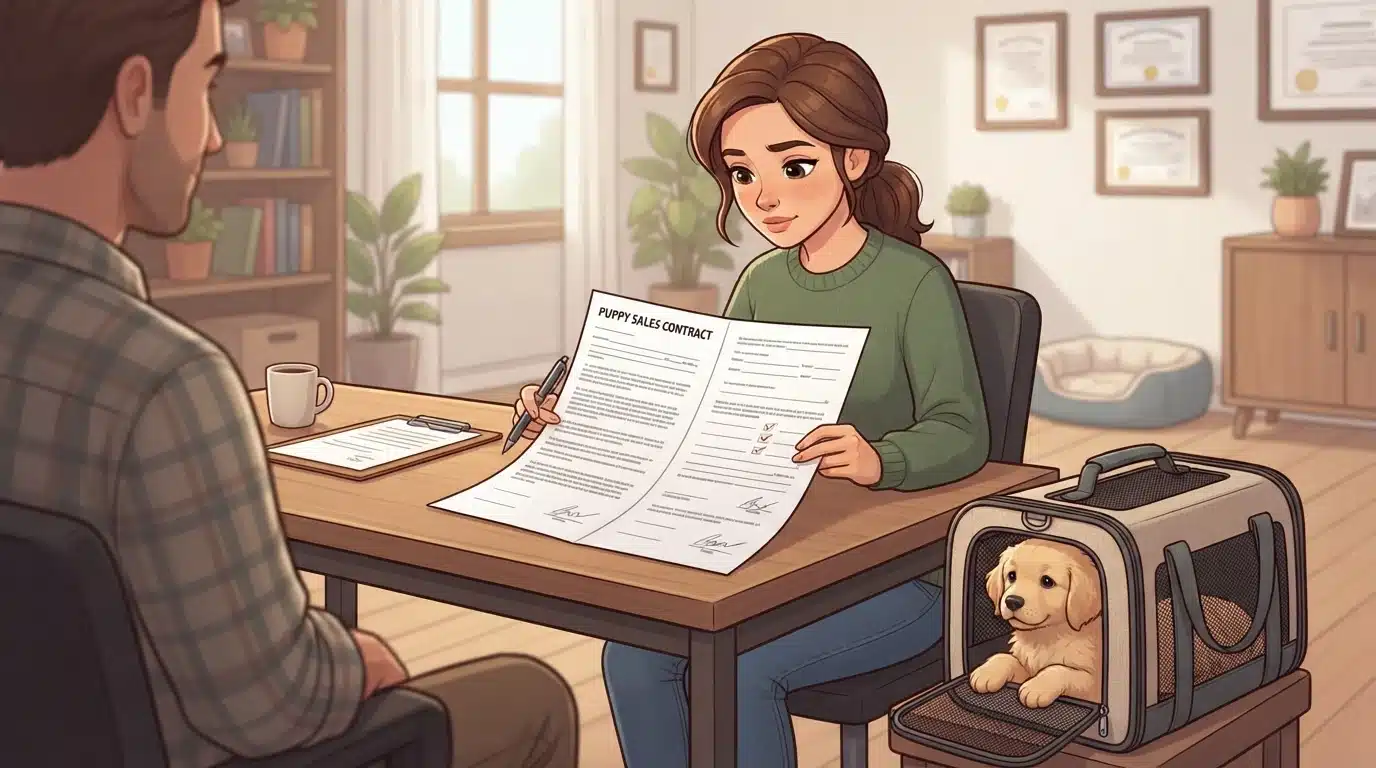
A solid puppy sales contract should include:
- Full names and addresses of buyer and seller
- The puppy’s breed, birth date, sex and microchip number
- A current health record from a licensed veterinarian
- Payment terms: deposit amount, balance due and refund rules
- Spay or neuter requirements, if any
- A return or rehome clause and both parties’ signatures
What the Contract Should Clearly State
Every promise made by email or phone should appear in the document. Look for the puppy’s identifying details, the price, the deposit terms, and what happens if plans fall through. Verbal promises about temperament or training mean little later. Get each one in writing, and keep a signed copy for your own records.
Reading the Health Guarantee Critically
Read the guarantee the way a vet would. Check how long it lasts, which conditions it covers, and which ones it excludes. Many guarantees cover serious genetic defects but require a vet exam within a set window, so calendar that deadline the day you bring your puppy home. Ask for parent health test results too, since a guarantee is only as strong as the testing behind it.
The Return Policy Question to Ask
Ask one direct question: “If I cannot keep this dog at any age, what happens?” A responsible breeder will take the dog back for life, no questions and no refund games. Breeders who care about their puppies never want one in a shelter. Ask for that policy in writing before you pay.
Step 6: Confirm the Pickup or Delivery Plan
The Handover Itself
A responsible breeder schedules the handover with you directly, never through a parking lot meeting or a third-party shipper. Ask who hands you the puppy, what documents come with it, and how the pup has spent its last days. Plan for local pickup when you can, since meeting the home is your final check. Utah families can prepare for that visit with these local pickup tips before the big day arrives.
Traveling Safely With a Young Puppy
Puppies under 12 weeks handle short car rides better than long ones. Keep the trip under four hours if possible, plan a potty stop every hour or two, and use a crate secured in the back seat. Skip improvised restraints; a loose puppy in a cabin is a real hazard.
For longer distances, ask how a flight nanny works. A trained adult carries the puppy in-cabin, never as cargo, which is the only air option worth considering for an eight-week-old. Confirm who supplies the crate, water, and food during transit, and get the itinerary in writing before you pay any travel fee.
The First Week at Home
Agree on the breeder’s support window before pickup day. Good programs stay reachable for questions and expect updates. Keep the routine quiet for the first week: same food, short play sessions, and a vet visit within a few days so your records start on solid footing.
Common Mistakes to Avoid
Most bad outcomes trace back to skipping a few checks, not bad luck. Fix these and you avoid most of the grief.
Mistakes That Cost Buyers the Most
Paying before you verify anything tops the list. A deposit should come after you have seen the mother, reviewed health testing records, and read the contract, not before. The next costly slip is skipping the pre-purchase veterinary exam because a breeder seems nice. Friendliness is not evidence. Also avoid assuming that kennel club paperwork proves quality: registration confirms lineage, not care. A puppy mill can hold papers. Buyers who visit in person catch what photos hide, so treat a home visit as required, not optional.
Traps That Sound Reasonable
“We only ship, no visits” is the most common excuse. Video calls can substitute for an in-person look, but a refusal to show the home at all is a red flag. “The vet checked the litter” without a written record is another; ask for the actual document with the puppy’s name on it. Watch for deposits pushed through payment apps with no contract. If you want to see what a documented process looks like, what to ask before you pay a deposit is a useful reference point.

Ready to see those checks in action? Visit Sage Puppies to review health records, parent testing and our application. Utah families can meet puppies in South Jordan, and we arrange delivery nationwide. Ask us anything before you commit.
Frequently Asked Questions
Q1: How can I verify a family-raised puppy seller?
Ask for four artifacts before paying: a live video walkthrough of the whelping room, parent DNA and OFA records, a vet exam record you confirm with the clinic, and a signed contract. A breeder who hesitates has answered you.
Q2: Should I visit the breeder’s home or accept delivery?
Visit if you can, since meeting the mother is your final check. If distance rules that out, request a live video call where you control the camera.
Q3: When should I pay a deposit?
After reviewing health records, contract and return policy, and references. Never before.
Q4: What if a breeder only ships puppies?
A flight nanny carrying the puppy in-cabin is acceptable. A flat refusal to show the home is not.
Q5: How long should a health guarantee last?
Long enough to cover genetic defects, with the vet-exam deadline clearly stated. Get the lifetime return policy in writing too.
Conclusion
Verifying a family-raised puppy seller comes down to five artifacts: a live video of the whelping room, parent health testing records you check in the OFA database, a vet record you confirm with the clinic, a signed contract with a lifetime return policy, and a business name you look up yourself. Each one turns a marketing claim into evidence.
The same rule applies everywhere. Ask before you pay, and treat hesitation as your answer.
That standard is what this guide set out to make normal. Sage Puppies in South Jordan, Utah, raises Havanese, Havapoo and Cavapoo litters against it, and any breeder who welcomes the same checks has earned your trust the honest way.