Quick Summary: Finding a reputable puppy breeder requires evidence, not polished photos or fast replies. Check independent registries and business records, run reverse image searches, visit the breeder and mother dog in person or by live video, verify health records, and review the contract before paying by a traceable method. Breeders that welcome these checks, such as Sage Puppies in South Jordan, Utah, have published locations and provide health-tested Havanese, Havapoo, and Cavapoo puppies with records for prospective families.
A breeder you cannot find, cannot visit, and cannot reach by phone is not a local breeder, no matter how many photos of Havapoo or Cavapoo puppies appear in the listing. Listings like that are how families lose deposits to puppy scams. The real challenge is that fake breeders copy real websites, borrow photos, and answer every question quickly until money changes hands. This guide gives you one clear workflow to avoid puppy scams: check an independent registry, verify the business, confirm the photos are real, ask for a visit so you can meet the breeder, and review the contract before you pay anything. Sage Puppies raises Havanese, Havapoo, and Cavapoo puppies in South Jordan, Utah, and we walk families through these same checks before a single dollar moves.
Before You Start: Build Your Verification Checklist
Write Down Your Non-Negotiables Before You Contact Anyone
Decide what you require from a breeder before you fall in love with a photo. Health testing of both parents, a written contract, the right to visit, and proof the puppy was raised in the home all belong on your list. Clear standards help you avoid puppy scams, because scammers count on buyers deciding after they have paid. A reputable program, like any responsible breeder, will answer each item without hesitation. If a breeder dodges even one, walk away. This short exercise is your first step to avoid becoming a puppy breeder scam statistic.
Step 1: Search for Local Breeders in Places You Can Verify
Where to Look: Registries, Referral-Based Breeders, and Local Contacts
Start with sources that identify their breeders, not just list puppies. AKC’s marketplace lets breeders list litters alongside their kennel records, so you can cross-check a name against the registry’s own breeder search. Vet-referred programs and breed-club breeder directories add another layer, since clubs usually know their members personally. Small Utah programs like Sage Puppies publish their South Jordan location and invite visits, which is exactly the kind of transparency you want from any breeder you contact.

How to Check a Breeder’s Business and License Records
Before you fall in love with a photo, confirm the business exists. Search your state’s USDA license database for breeders who ship puppies across state lines, since federal law requires a license. Then look up the breeder as a business: Utah’s Division of Corporations, or your state’s equivalent, shows whether an LLC or sole proprietorship is actually registered. A breeder who dodges a simple “what’s your business name?” question is telling you something.
Run a Reverse Image Search Before You Reply
Stolen photos are the most common scam sign, so this step alone helps you avoid puppy scams. Right-click a puppy photo, run it through Google Images or TinEye, and see where else it appears. If the same litter shows up on three sites under three different names, stop and walk away.
For a fuller walkthrough of red flags and phone questions, our guide on how to verify a breeder’s reputation before you visit covers the next steps in detail.
Step 2: Screen Every Contact for Puppy Scam Red Flags
Before you fall in love with a face online, check how the seller behaves. BBB researchers keep finding the same warning signs in thousands of reports, and most show up in the first few messages. Spot them early and you never lose money at all.

Payment Requests That End the Conversation
How someone asks for money tells you more than any photo. The FTC warns that scammers push untraceable methods: wire transfers, gift cards, payment apps, or cryptocurrency. Legitimate breeders take checks, cards, or bank transfers and give a receipt. A second surprise fee for a crate, insurance, or a “vaccination certificate” before shipping is another classic move. When payment style feels off, walk away. Reputable programs, including small operations like Sage Puppies, put pricing and deposit terms in writing before you owe anything.
Pressure Tactics, Urgency, and Moving the Meeting Location
Scammers need you to decide fast. Watch for claims that three other families want your puppy today, or a price that drops if you commit in the next hour. The AKC also flags sellers who refuse video calls or in-person visits, or who suddenly insist on meeting in a parking lot instead of their home. A real breeder answers questions about the parents’ health and welcomes you to see where puppies live. Refusal is an answer in itself.
What to Do When Something Does Not Add Up
Trust that uneasy feeling. Ask for a live video call, request the puppy’s vet records, and run a reverse image search on the photos. Then compare answers against the seller’s website and reviews. If anything still feels wrong, stop the conversation and report the listing to BBB Scam Tracker so the next family gets a warning too.
Step 3: Meet the Breeder and the Puppy’s Mother in Person
Pictures and reviews only tell part of the story. A visit shows you how the puppies live, how the mother looks and behaves, and whether the breeder’s answers match what you see. This step is where a good breeder separates from a good salesperson.
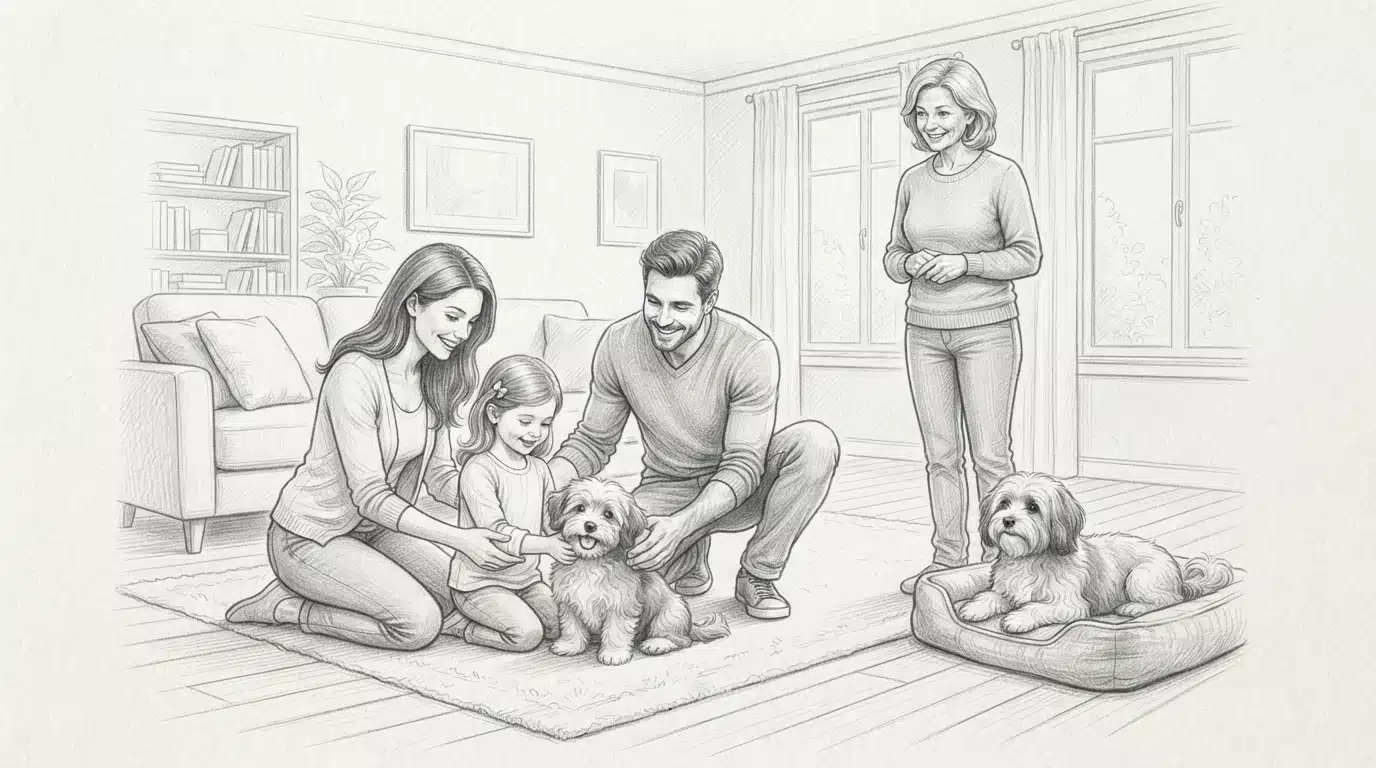
What You Should See in the Home or Kennel
A healthy setup looks and smells clean, with fresh water, dry bedding, and room for puppies to move and play. The mother should be friendly, alert, and comfortable with you, not cowering or behind a locked room. Ask to see where the puppies sleep, eat, and go outside. Well-kept dogs have clear eyes, clean ears, and coats without bald patches. If the breeder wants to meet you in a parking lot or offers only photos, treat that as a serious warning sign.
Questions to Ask When Meeting the Breeder
Come with a short list, and expect the breeder to have questions for you too. Good ones ask about:
- Health testing: What tests did the mother and father pass, and can you see the certificates?
- Daily care: What do the puppies eat, and what is their vaccination and deworming schedule?
- Socialization: Which sounds, people, and surfaces have the puppies already met?
- Support: Will the breeder answer questions after pickup, and what does the contract cover?
You can also ask which household routines and supplies the family already prepared for the puppy’s first week.
If You Cannot Travel: A Live Video Visit That Counts
Out-of-state families can still do this step properly. Ask for a live video call, not a pre-recorded clip, and request a full walk through the space where the puppies and mother actually live. Ask the breeder to move the camera, show the puppy’s gait, and hold the puppy up close. A confident breeder will schedule this willingly and answer in real time. For buyers who plan ahead, some programs include visit options or delivery details in their application process, so you know exactly how pickup or transport works before you commit.
Step 4: Verify Health Testing and Veterinary Records
A friendly breeder with cute photos is not enough. Before you commit, ask for proof: health test results on the parents and a real veterinary file for the puppy. Reputable breeders expect these questions and answer them without hesitation.
Ask for Parent-Specific Results, Not Litter Promises
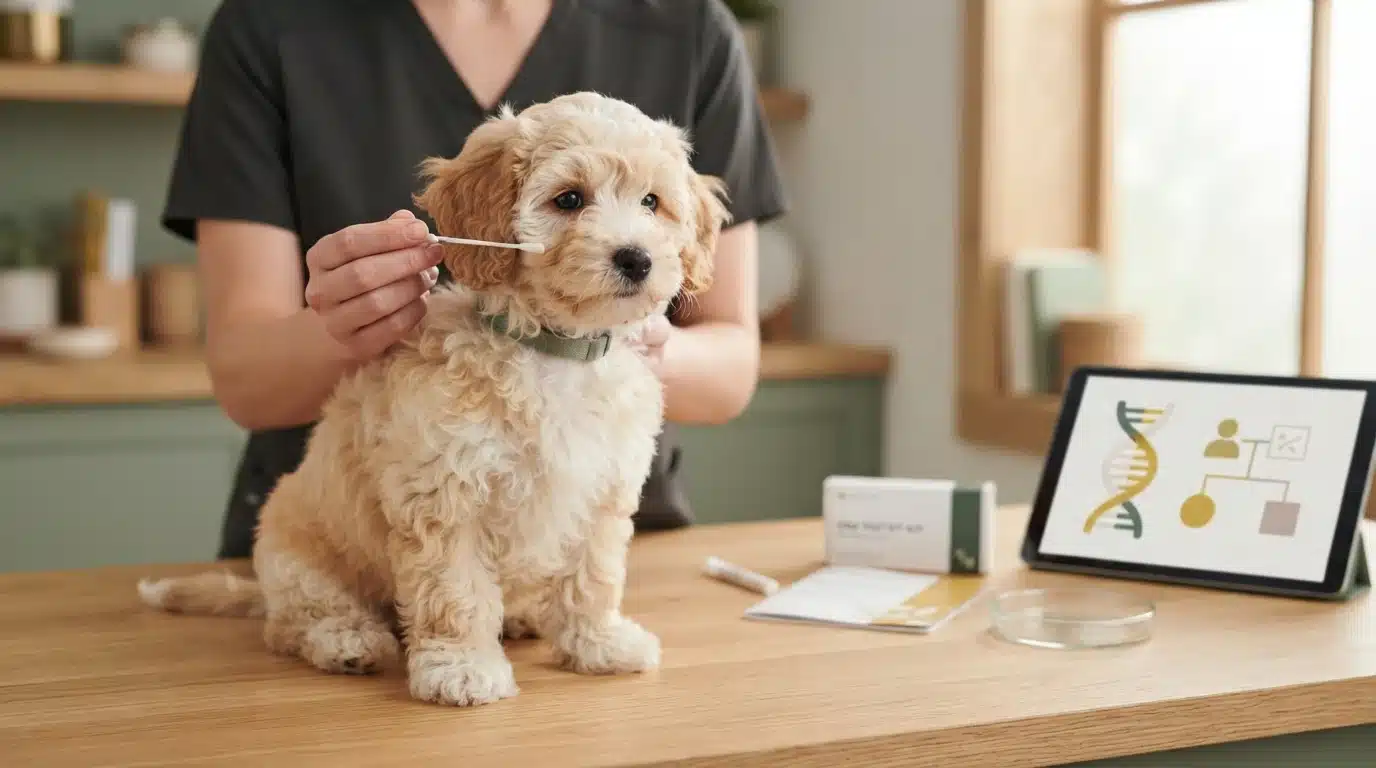
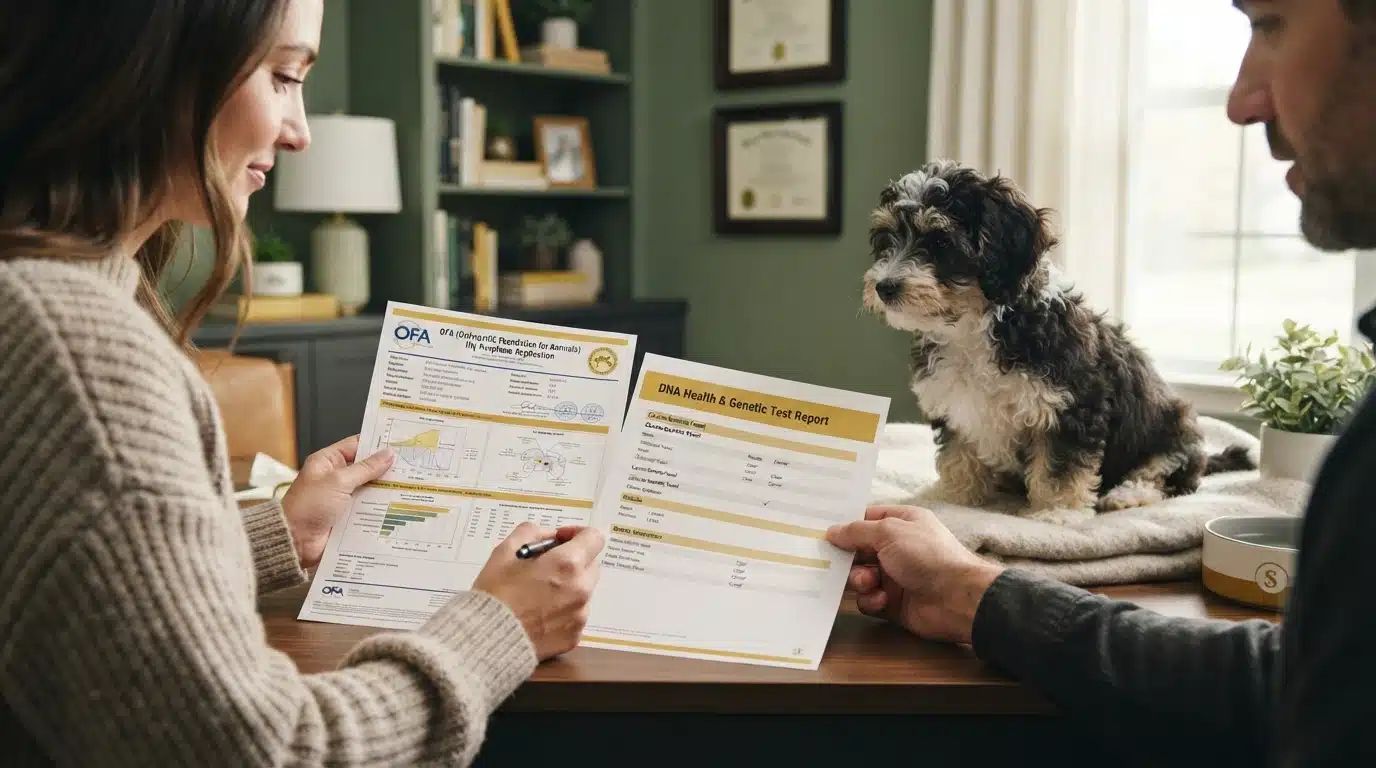
Breed-specific screening catches inherited problems before they spread. For Havanese and poodle mixes, ask which parent dogs were tested and for what. Useful checks include hips, eyes, heart, and patellas, and DNA panels for conditions common to the breed. Generic claims like “healthy lines” mean little. Ask for the actual results, then match each parent’s registered name to the paperwork. If a breeder shares certificates only for “the sire’s side” or cites a test done on a grandparent, treat that as a gap and ask more.

What the Puppy’s Own Veterinary File Should Contain
A young puppy should already have a paper trail. The vet file should list the puppy’s exam date, weight at each visit, deworming dates and products, and at least the first round of vaccinations. Ask which vaccine the puppy received, because brands and protocols vary. For breeds prone to heart issues, an early vet exam note matters. Sage Puppies, for example, shares each puppy’s records with families before pickup, which is the standard you should expect anywhere.
Verify the Records Yourself, Then Ask Your Own Vet
Do not just accept a PDF. Call the clinic named on the vaccination record and confirm the visits happened. Check that the vaccine stickers match the dates listed. Some registries let you search health test results by a dog’s registered name, so look the parents up when that option exists. Then book a puppy exam with your own vet within a few days of bringing your puppy home, and bring every record you received. Your vet can spot inconsistencies and set a vaccine schedule from there.
Step 5: Review the Contract, Deposit, and Payment Terms
A good breeder puts everything in writing before money changes hands. Read that document before you pay anything, not after.
The Seven Clauses to Read Line by Line
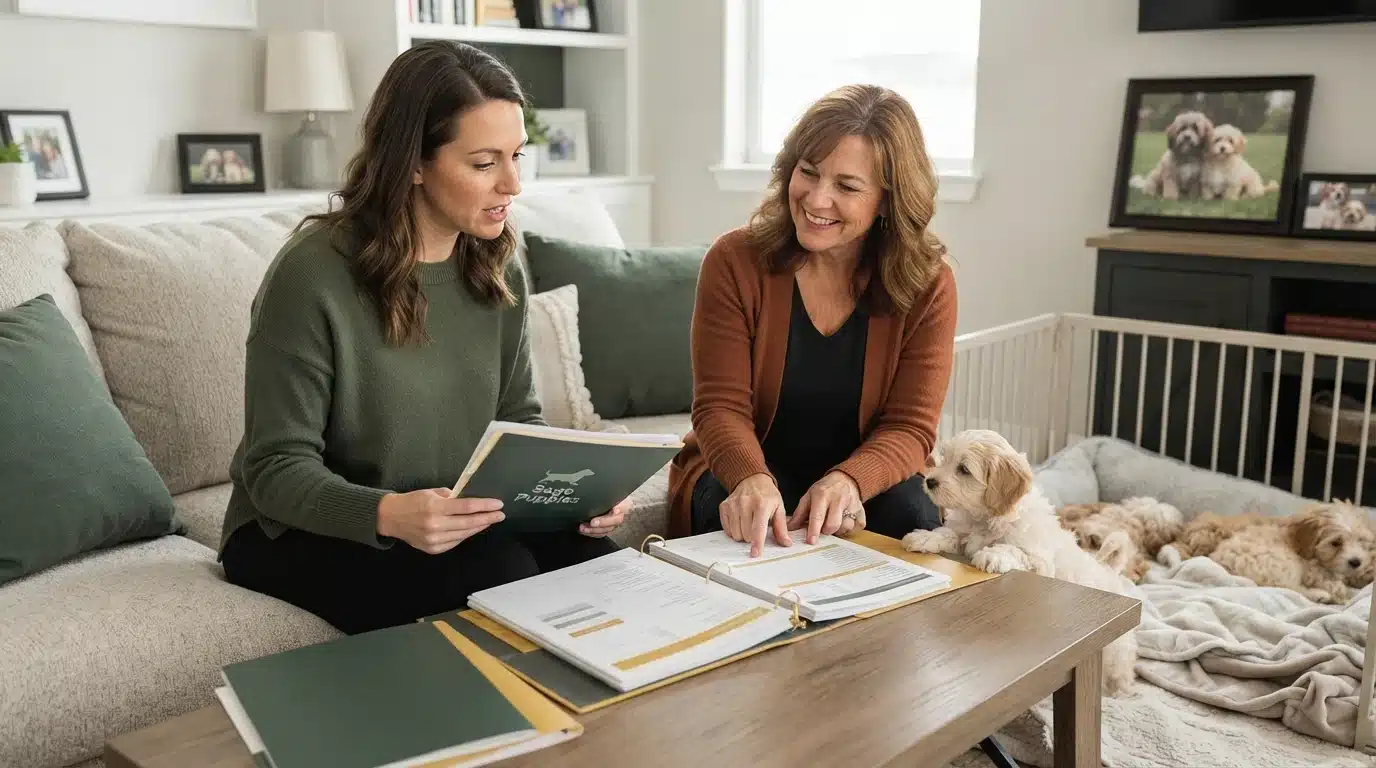
Go through the contract slowly and check seven things:
- Price and what it covers, including shots, microchip, and deworming.
- Deposit terms: how much, when it’s due, and whether it’s refundable or transfers to a future litter.
- Health guarantee window and exactly what conditions it covers.
- Your remedy if a genetic problem appears: refund, replacement, or return.
- Spay or neuter requirements, plus any deadline and proof needed.
- Return clause: whether the breeder must take the dog back at any age.
- Registration paperwork, when you get it, and any limits.
A law school review of puppy contracts notes these documents bind both sides, so vague promises help no one. If terms change after your deposit clears, walk away; that’s a widely flagged contract red flag.
How to Pay Without Losing Recourse
Never pay with wire transfers, gift cards, crypto, or payment apps like Zelle. Those methods leave no trail and no dispute option. Use a credit card or a platform with buyer protection, and pay the final balance only when you have the puppy in hand. Get a signed copy of the contract and a receipt for every payment. If a breeder pressures you to pay fast through an unusual channel, treat that as a serious warning sign.
What a Reasonable Refund and Health Policy Looks Like
Reasonable policies are specific, not sweeping. A solid one states a health exam window (often 72 hours for your vet visit), covers inherited conditions for a defined period, and spells out the remedy. Watch for contracts that waive every breeder responsibility or demand you return the dog at your cost to claim anything. Before you send a deposit, review the breeder’s written terms carefully, including our deposit refund policy, so nothing surprises you later.
Step 6: Make the Decision and Close the Loop After Pickup
A Decision Rule You Can Apply in Ten Minutes
Score three things before you commit: health paperwork, contract terms, and your gut feel. If the breeder shows genetic test results, offers the 72-hour vet exam window, and answers follow-up questions without dodging, that is a yes. If any one area is missing or rushed, walk away. A trustworthy breeder will never pressure you to decide on the spot.
First Week After Pickup: Records, Registration, and the First Vet Visit
Book the vet within 72 hours, while the health exam window from your contract is still open. Bring the vaccination and deworming records, and ask your vet to date-stamp the exam for your file. Send your puppy’s registration paperwork in the first week too, while details are fresh. Then keep feeding the same food the breeder used for a gradual switch, since sudden changes often upset a young stomach.
Local Pickup and Out-of-State Delivery, Compared Safely
Local pickup lets you see the home environment and meet the parents. Delivery works well for distant families, but you should confirm the puppy travels with health records, food, and a comfort item. Either way, ask who handles the transport and how the puppy is crated. A responsible program, like a small owner-run one, keeps direct contact open through delivery day and beyond.
Common Mistakes to Avoid
Mistakes That Cost Buyers the Most
The costliest mistakes happen before you pay. Many families send a deposit to a seller who avoids phone calls, refuses a live video call, or asks for gift cards and wire transfers, all known warning signs of a puppy scam. Others skip the contract, skip the vet visit inside the 72-hour window, or choose a puppy on cute photos alone instead of health testing and temperament. A breeder who pressures you to decide today should lose your trust the same day.
Two Misconceptions Worth Retiring
First, a clean website does not prove a trustworthy breeder. Scammers copy stock photos and borrow polished pages, so the evidence you gather from registries, reviews, and a real conversation matters far more than the design. Second, seeing a puppy in person is not optional paperwork; it is your chance to check the mother, the living conditions, and how the litter acts. Small-breed programs like Sage Puppies follow a written application and matching process, which shows what steady, documented breeding actually looks like.

Ready to meet a puppy raised with this checklist in mind? Sage Puppies matches families with health-tested Havanese, Havapoo and Cavapoo puppies through a clear application and honest answers. Start yours today, or use the checklist above to vet any breeder you visit.
Frequently Asked Questions
Q1: Which local puppy breeders near me are trustworthy and worth contacting?
Start with breeders listed on AKC’s marketplace, breed-club directories, or vet-referred programs. Then verify each one: registered business name, published address, willingness to visit, and health testing on both parents. Breeders who pass all four checks are worth a call.
Q2: What questions should I ask when meeting a puppy breeder in person?
Ask what health tests each parent passed and see the certificates, what the puppies eat, their vaccine and deworming schedule, which sounds and surfaces they have met, and what the contract covers. A good breeder will also interview you.
Q3: How do I check a puppy breeder’s health testing and veterinary records?
Ask for parent-specific test results for hips, eyes, heart, and patellas, then match names to paperwork. Call the clinic on the puppy’s vet file to confirm visits, and have your own vet review everything within 72 hours.
Q4: Can I trust a breeder who only sells puppies online?
Yes, if they allow live video visits, verify by phone, and put terms in writing. Refusing video calls or meeting only in parking lots is a warning sign, not a delivery quirk.
Q5: Should I pay a deposit before seeing the puppy?
You can, but only after checking the contract, confirming the business exists, and reviewing written deposit terms. Use a credit card so you keep dispute rights, and never wire money or send gift cards.
Conclusion
Finding a reputable puppy breeder near you comes down to evidence, not charm. Check an independent registry, confirm the business is real, run a reverse image search, and screen every message for payment and pressure red flags. Meet the breeder and the mother in person, or insist on a live video visit. Verify parent health tests and the puppy’s vet file yourself, then read the contract before any money moves. Breeders who welcome these checks, including small programs that use a clear step-by-step application process, are the ones worth trusting. Take the checklist slow, and the right puppy follows.