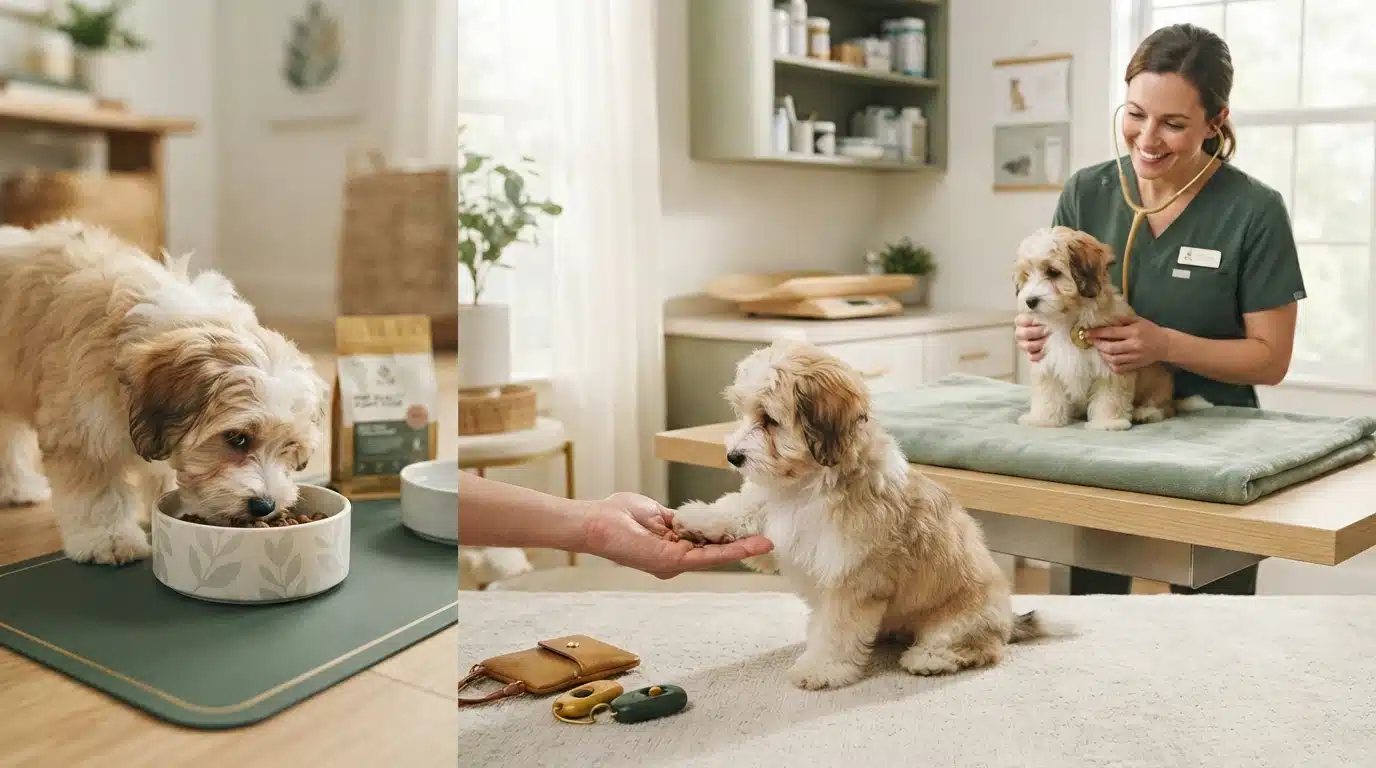
Quick Summary: Prepare your home at least a week or two early by puppy-proofing every room, setting up a 24-inch crate near family activity, creating a quiet feeding station, and establishing a safe grooming area. Keep the puppy’s current food for the first week or two, then transition over 7 to 10 days, and secure identification and safe travel arrangements. Confirm health records, feeding instructions, and vaccination details in writing with your breeder, such as Sage Puppies, and book a small-breed vet visit within 48 to 72 hours of pickup. Havapoos are companion dogs, so safe spaces, daily grooming habits, and plenty of company matter as much as the right supplies.
Six weeks before pickup, the toy box moves to the top shelf, the shoes go into a lidded bin, and a visitor’s entrance becomes a five-minute negotiation about where a puppy may stand. That scramble is what a good havapoo home setup looks like when it’s done early instead of the night before.
The real challenge is order. Most new owners buy supplies first and think about rooms last, so the crate lands wherever there’s space and the food bowl ends up beside a drafty door. This checklist flips that. It walks you through your home room by room, sets a week-by-week timeline, and separates the physical prep from the terms worth confirming with your breeder in writing.
At Sage Puppies in South Jordan, Utah, Cassie Milar has guided families through this preparation since 2025, for both local pickup and puppies arriving by delivery. Use what follows to make day one calm.
Step 1: Puppy-Proof Every Room Your Havapoo Will Enter
Puppy-proofing comes before anything else in your havapoo home setup. Work through it room by room, on your hands and knees if you can. You are looking at your house the way an eight-pound puppy will: everything at floor level is fair game.
Kitchen and Trash: Where Most Havapoo Puppies Get Into Trouble
Kitchens cause the most trouble, mostly through the trash. A Havapoo is small enough to climb inside an open bin, so get one with a secure lid or stash it in a closed cabinet. Move food, chocolate, grapes, onions and medications up high. A latching trash can and a cleared counter edge are your two biggest wins here.
Cords, Shoes and Small Objects
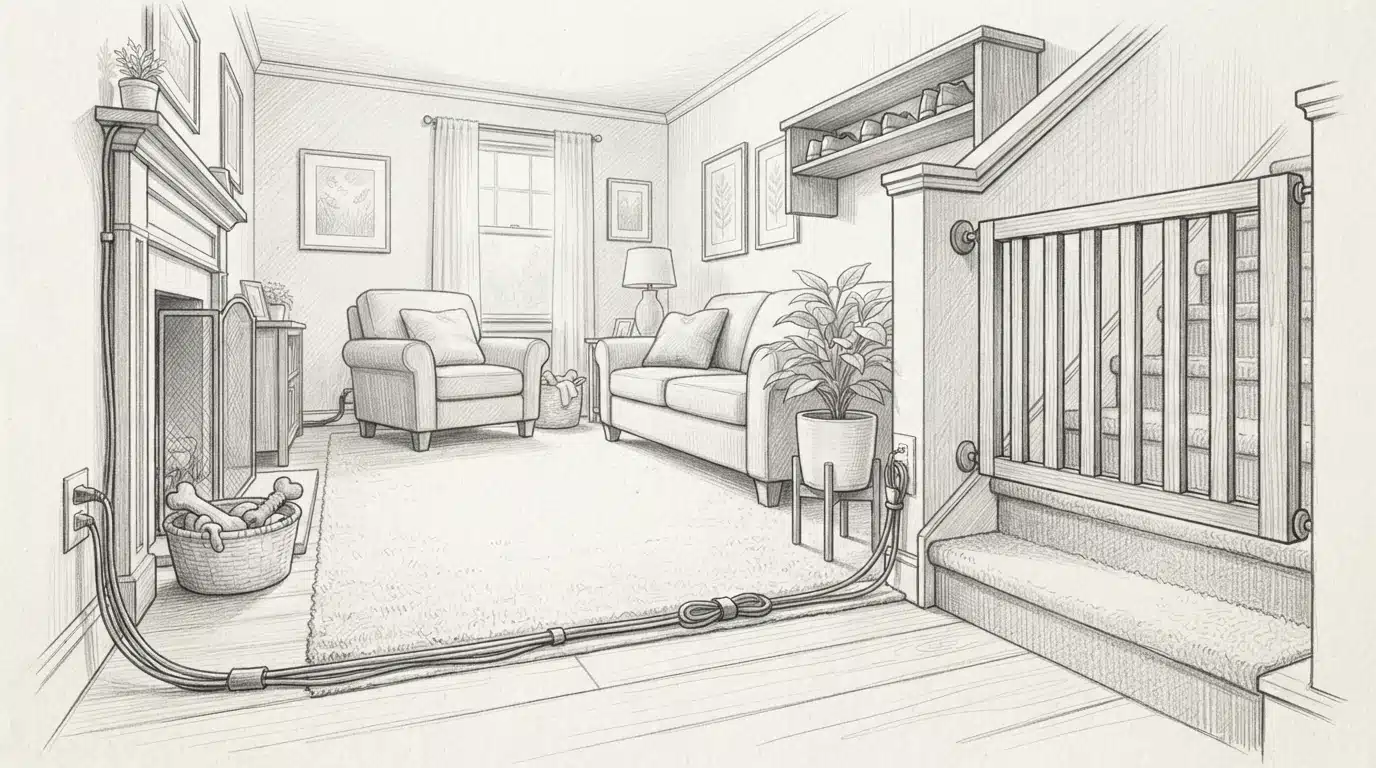
Puppies chew, and cords look like toys. Tuck charging cables behind furniture or run them through cord covers, and unplug what you don’t use daily. Sweep the floors for coins, hair ties, buttons and kids’ toys, since anything that fits in a puppy’s mouth can be swallowed. Put shoes and slippers on a rack or shelf, not the floor.
Doors, Stairs and Windows
A Havapoo puppy can slip through gaps you barely notice. Check every exterior door for gaps, and gate the top and bottom of any stairs, since small breeds hurt themselves falling more than climbing. Screen windows should latch shut. Inside the house, a couple of baby gates let you give your puppy one safe room while the rest of your puppy-proofing for a small breed puppy finishes up.
The Yard and Outdoor Space
Walk your fence line before day one. Look for gaps under gates, loose boards and holes a determined puppy can squeeze through. Move fertilizers, weed killers and cocoa mulch out of reach, and block pool or pond access. Once your vaccination schedule is underway, the yard becomes your main potty spot, so getting it secure now saves grief later. Your breeder should also confirm what your puppy has been used to outdoors; it’s one of the written details worth going over with a breeder like Sage Puppies before pickup.
Step 2: Build the Sleep Zone, Crate and Bed
Crate Size and Placement
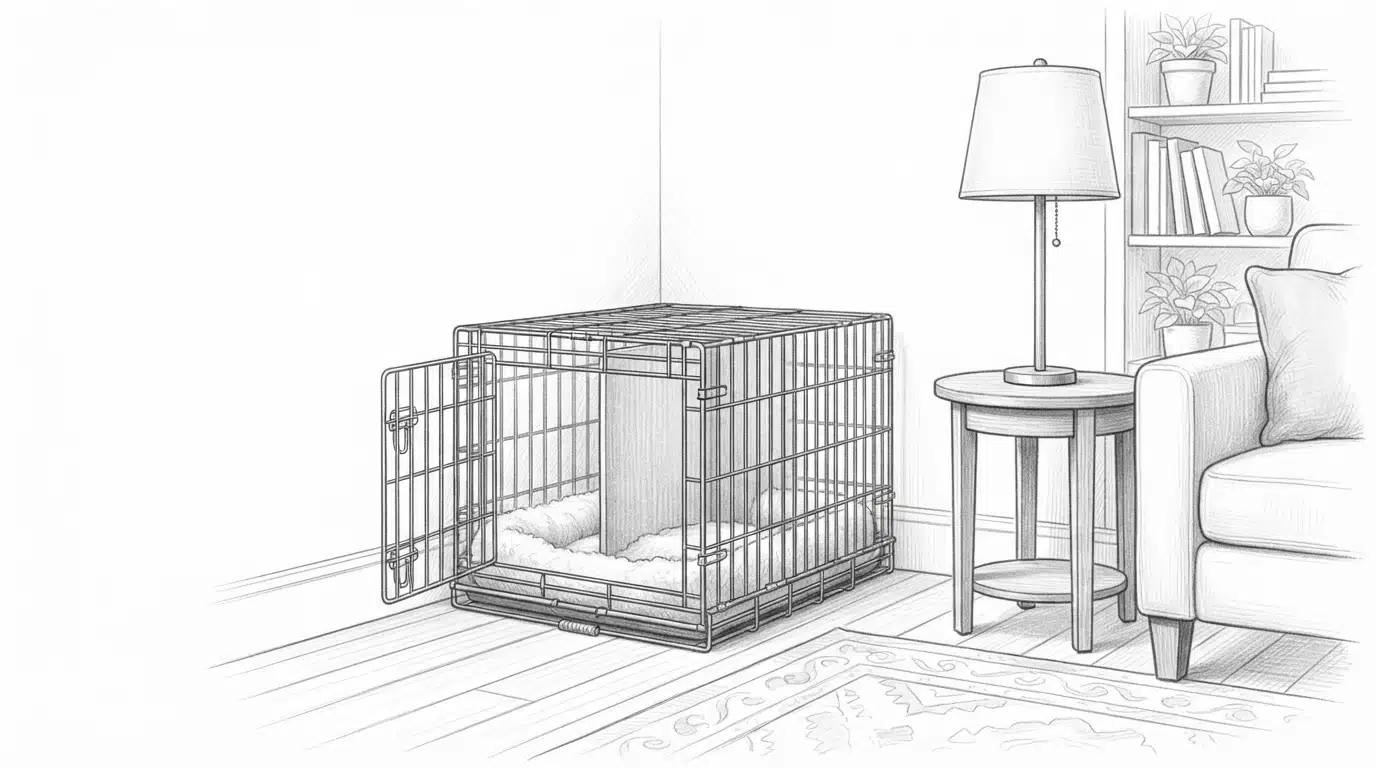
A Havapoo puppy needs a crate roughly 24 inches long, with a divider panel so the space grows with your dog. The rule is simple: enough room to stand, turn around, and lie down flat, but not so much that one corner becomes a bathroom. When your puppy sits, there should be at least 2 inches of clearance above the head, which is the standard PetMD recommends for crate sizing. Place the crate where your family actually spends evening hours, away from vents, direct sun, and loud appliances. A calm corner of the living room usually beats a lonely bedroom.
Bedding, Washability and Chewing
Buy two bed covers, not one. House training accidents happen, so washable covers and a spare make recovery a five-minute job instead of a laundry day. Skip fluffy, fringed bedding for now. A teething Havapoo can shred it and swallow the pieces. A flat mat or a tough, washable pad is safer for the first months. Keep the bed thin enough that it fits after the divider moves back.
Why Havapoos Do Best With Company
Havapoos are companion dogs, bred from breeds that want to be near their people. A puppy who can hear your voice settles faster than one isolated down the hall. That is why crate placement matters so much. In the early weeks, brief daytime crate sessions near you build comfort, and the routine continues into the first months of a Havapoo’s year. If your breeder sends a scent item home, tuck it inside the crate on night one.
Step 3: Set Up Feeding, Water and a Small-Breed Meal Station
A small breed puppy feeding station takes four items, placed in one quiet spot:
- Two stainless steel bowls, one for food and one for water
- A washable mat underneath to catch spills
- Sealed food storage within reach
- A measuring scoop that matches your portions
Pick a corner away from foot traffic but not so isolated that your puppy eats alone. Havapoos are companion dogs, and company at mealtime helps a nervous first-day puppy settle.
Bowls, Raised Feeders and the Measuring Scoop
Choose shallow, non-slip stainless bowls. A Havapoo puppy’s face is small, so deep bowls make eating awkward and can worsen tear staining around the eyes. Skip tall raised feeders for now; a low one works if your puppy must stretch to reach. The scoop matters more than people think, because guessed portions on a 10-pound dog add up fast.
Food Transition and Meal Rhythm
Ask your breeder exactly which food your puppy eats now, and keep feeding it for the first week or two. Then blend in the new food over 7 to 10 days, a little more each meal, to avoid stomach upset. Young puppies eat three to four small meals a day on a set rhythm. For portion sizes and timing by age, a Havapoo feeding schedule walks through the whole first year.
Keeping the Meal Area Clean and Safe
Wash bowls daily and mop the mat often. Wipe your puppy’s face after meals, since food residue feeds tear staining on light coats. Store kibble sealed and off the floor, and keep the water bowl fresh and full. A tidy station, as this puppy feeding station walkthrough notes, comes down to bowls, a mat, water and sealed storage. Nothing fancy required.
[WOW]
Step 4: Set Up a Grooming Station for a Double Coat
A Havapoo’s coat is a mix of the Havanese double coat and poodle texture, so it mats fast without routine brushing. Start grooming habits in week one, even if the puppy coat looks easy. Short sessions build trust before the adult coat arrives.
Where Grooming Happens
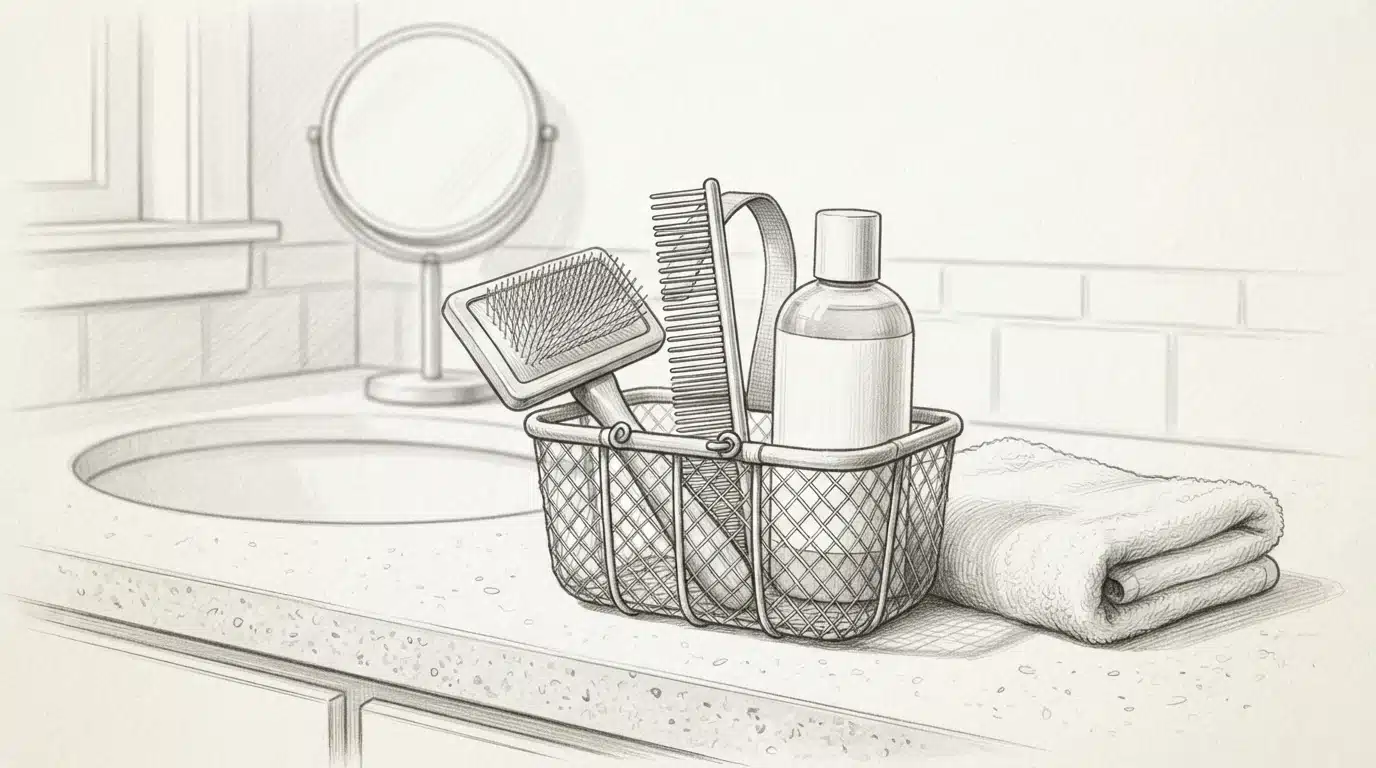
Pick one spot and stick with it. A bathroom counter, a non-slip mat on a table, or a towel on the washer all work. Good lighting helps you spot mats and check the skin. Keep the caddy within reach so sessions stay under five minutes at first. For a wider havapoo home setup, grooming fits best near the bathing area but away from food and sleep zones.
Tools Worth Having on Hand
So, what grooming tools do you need for a Havapoo puppy at home?
- Slicker brush for daily surface brushing through that fine topcoat
- Metal greyhound comb to find hidden mats at the ears and armpits
- Blunt-tipped grooming scissors for trimming around eyes and paws
- Puppy-safe shampoo and a soft towel
- Small nail clippers or a grinder made for tiny nails
Skip human combs and thick de-shedding rakes; they pull and discourage a young puppy.
Tear Stains, Teeth and Coat Care
Light coats show tear staining, so wipe under the eyes daily with a damp cloth and keep the face hair trimmed short. Lift the lips a few times a week to preview the teeth; small breeds crowd their molars, which makes early handling matter. Never bathe before 8 weeks without your vet’s go-ahead, and dry the coat fully. Warm baths plus brushing every few weeks keep the double coat from tangling close to the skin. First baths go smoother when the puppy is already used to your hands, something worth starting alongside the first-year care routine.
Step 5: Prepare for Identification, Travel and the First Ride Home
Collar, Harness and Identification
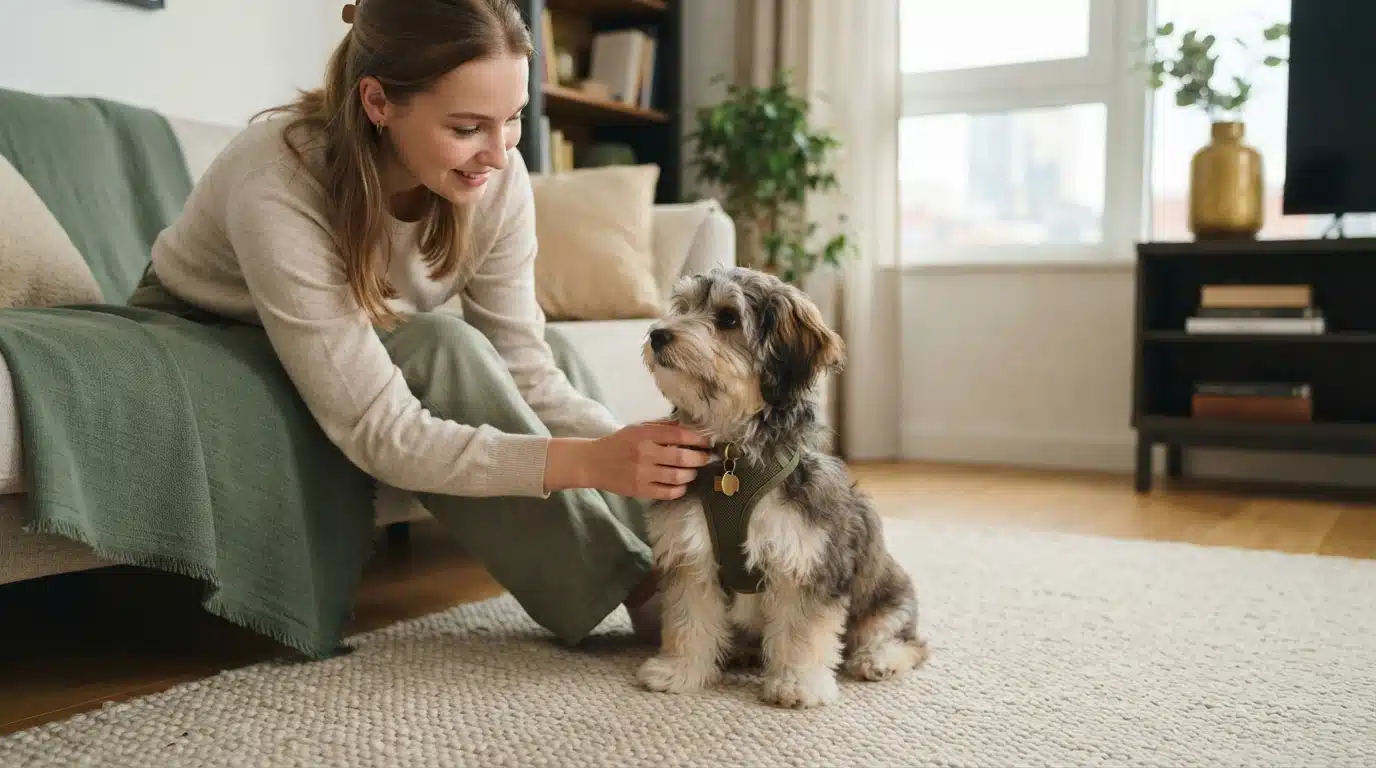
Buy a lightweight flat collar or soft harness sized for a 6 to 10 pound puppy, and check the fit weekly because small breeds grow in bursts. Attach an ID tag with your phone number right away, even before the microchip registration is finalized. A Havapoo’s double coat hides a thin collar, so run a finger under it to confirm it is snug but loose enough for two fingers.
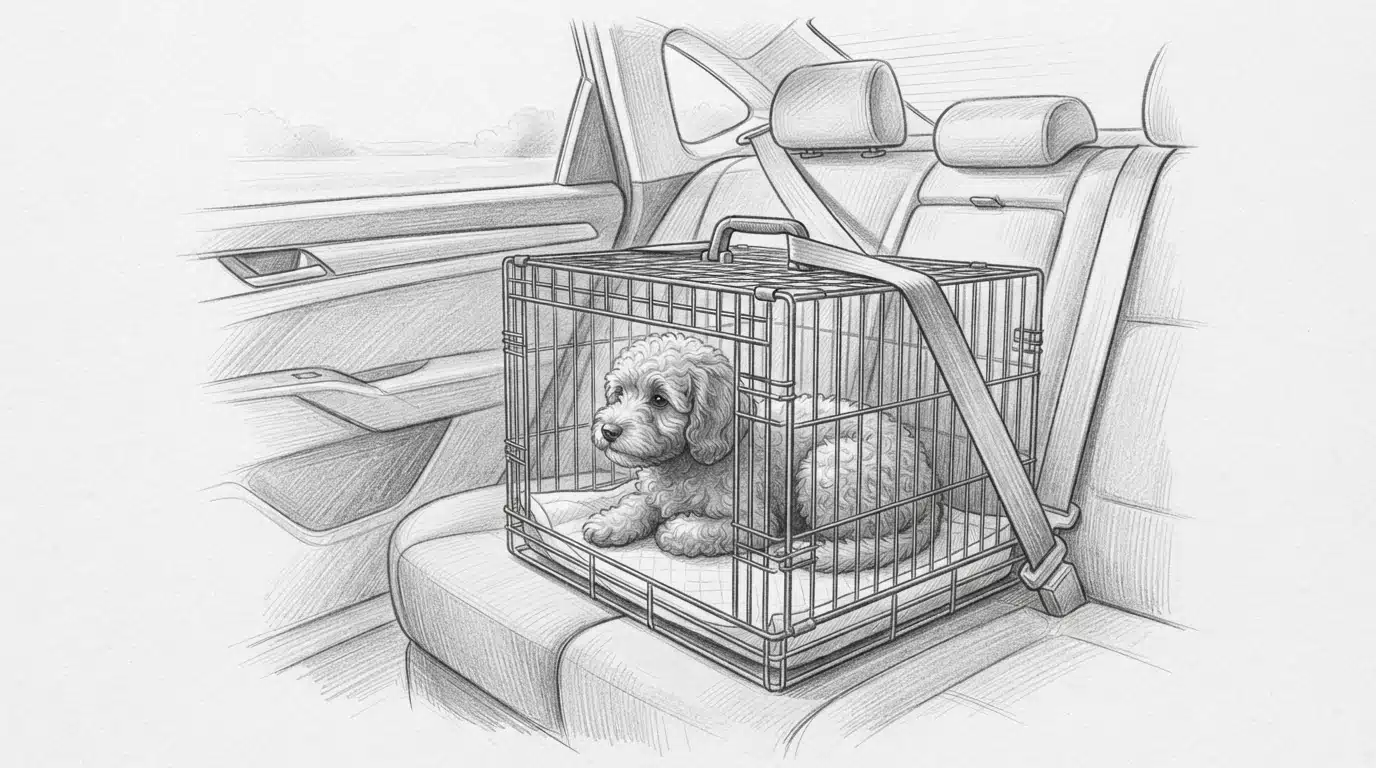
Car Safety and the Travel Crate
How should you transport a Havapoo puppy safely? Follow these rules in order:
- Secure the crate with a seatbelt or cargo strap so it cannot slide.
- Use the same 24 inch crate you set up at home; familiar smells calm the ride.
- Line it with an absorbent pad in case of an accident.
- Skip the front seat and never let the puppy ride loose on a lap.
- Plan a potty stop every two hours on longer drives.
Long-Distance Travel and Heat
Families flying a puppy home or arranging a long delivery should confirm the breeder’s travel terms in writing: who carries the puppy, what temperature limits apply, and what paperwork comes along. Heat matters, since brachycephalic-adjacent mixes like the Havapoo can struggle in warm cargo areas, so many breeders restrict summer travel. Ask about the puppy vaccination schedule and health certificate timing before the go-home day. Some Utah families plan their pickup around these details when working with a local breeder such as Sage Puppies in South Jordan.
Step 6: Line Up Care Logistics Before the Puppy Arrives
Physical setup gets the attention, but the paperwork and appointments matter just as much. Lock these in before go-home day so you are not scrambling later.
Book the First Vet Visit
When should the first vet visit happen after bringing a puppy home? Within the first 48 to 72 hours, even if your puppy arrived with a health record. That early exam confirms the weight, checks the heart, eyes, teeth and coat, and sets up the vaccination calendar. Puppies usually start shots at 6 to 8 weeks, then get boosters every few weeks until about 16 weeks, per AKC’s vaccine guide. Call the clinic now and claim a slot for a few days after pickup.
Training, Classes and a Realistic Timeline
A Havapoo wants to please, so basic training moves quickly, but only if you start on day one. Ask your vet when group classes are safe to join, since many wait until vaccine series finish around 16 weeks. Until then, short home sessions work: name recognition, sit, and gentle handling of paws and mouth for future dental care and grooming. Our step-by-step guide on how to train a small breed puppy lays out the first weeks in order. Settle on one method now, because mixed signals slow everyone down.
Records, Notes and the First-Week Debrief
Keep a simple folder, paper or digital, for vet records, the vaccination schedule, food brand and microchip number. Then jot quick notes during week one: how often your puppy eats, sleeps, potties and whines. Patterns show up fast, and real numbers help your vet or breeder answer questions precisely instead of guessing.
Call ahead for a vet who treats small breeds, and save the after-hours emergency number in your phone before day one.
Common Mistakes to Avoid Before Your Havapoo Comes Home
Buying Everything on the Last Day
Rushing the shopping trip leads to the wrong crate size, a collar that slips off, and food your puppy has never eaten. Order the big items at least a week ahead so you can return anything that fits poorly. A short run through a small breed puppy preparation checklist helps you catch what a store trip usually misses.
Assuming the Crate Will Teach by Itself
A crate is a safe space, not a training program. Left to figure it out alone, a puppy learns that the crate means being alone, and the whining gets worse. Plan short, happy sessions with treats inside during the first week, and keep the crate near where the family sits. Havapoos want company, so placement matters as much as size.
Skipping the Paperwork and the Vet Booking
Confirm the health record, vaccination dates, feeding instructions, and any health terms in writing before go-home day. Then book the first vet visit within the first 48 to 72 hours, even if your puppy arrived with records. Waiting a week means a vaccine or deworming step gets delayed, and small breed puppies run on tighter schedules than most new owners expect.

Your home is ready, so the next step is simple: find a Havapoo puppy matched to your family. Sage Puppies raises Havanese, Havapoo, and Cavapoo litters in South Jordan, Utah, with pickup or delivery options. Visit Sage Puppies, review the application process, and reserve your puppy today.
Frequently Asked Questions
Q1: What should I set up before a Havapoo puppy arrives?
Puppy-proof every room, then build four zones: a 24-inch crate near family activity, a quiet feeding station with shallow bowls, a grooming spot with a slicker brush and comb, and a secured yard or potty area. Confirm food, vaccination dates and vet booking before go-home day.
Q2: How big should a Havapoo puppy’s crate be?
About 24 inches long with a divider panel. Your puppy should stand, turn around, and lie flat with roughly 2 inches of head clearance, but not enough extra space for a bathroom corner.
Q3: When should I book the first vet visit?
Within 48 to 72 hours of bringing your puppy home, even if it arrived with health records. Call now, since small-breed vets fill up and vaccine boosters run on tight timing.
Q4: What food should I start with?
Feed whatever your breeder used for the first week or two, then transition over 7 to 10 days. Havapoo puppies eat three to four small measured meals daily.
Q5: Do Havapoos need company at night?
Yes. They are companion dogs and settle faster near family. Keep the crate in a lived-in room rather than a distant bedroom, especially the first weeks.
Q6: How do I puppy-proof for such a small breed?
Crawl the floors looking for coins, cords, hair ties and gaps. Latch the trash, gate stairs top and bottom, and check fence lines for holes an eight-pound puppy could squeeze through.
Conclusion
A ready home comes down to order, not spending. Puppy-proof each room, set a 24-inch crate near family life, build a simple feeding station, plan for grooming that double coat, and confirm food, vaccination dates and vet booking in writing before go-home day. Havapoos are companion dogs, so placement and company matter as much as supplies. Work through this havapoo home preparation checklist a week or two early instead of the night before, and day one becomes calm, quiet and predictable for both of you.