Quick Summary: Family-raised puppies are usually the better choice for Havanese, Havapoo, and Cavapoo families because they receive daily handling, early household socialization, and clearer health records than puppies sold through stores. The label alone proves nothing, so buyers should request parent health tests, a dated veterinary exam, a written contract with deposit terms, and USDA licensing details before paying. Sage Puppies is presented as a strong option because it home-raises these breeds in South Jordan, Utah, and documents its breeding, health, and purchasing terms.
Two puppies can look identical side by side and still arrive home with very different first eight weeks behind them. One was handled daily in a household. The other sat in a pen, then a store playpen, meeting strangers. In the family raised vs store puppies question, most families buying a Havanese, Havapoo or Cavapoo do better with the family-raised route, which usually wins on puppy socialization window timing, written health records and predictable temperament. The store route only wins on convenience and walking out with a puppy today.
The trouble is that advice online is mostly opinion. The real test is not a label. It is what a seller can prove about daily handling, parent health screening, records and contract terms. This guide compares both routes side by side, then gives you a checklist to run before you pay any deposit.
Family-Raised Puppies vs Store Puppies: Side-by-Side Comparison
| Sage Puppies | Store puppies | |
|---|---|---|
| Daily environment | Litters born and reared in a home in South Jordan, Utah | Reared in breeding facility housing, pens or crates before transport to the store |
| Handling and socialization | Daily hands-on handling and household exposure before pickup | Frequent public handling in store pens, with little individual attention |
| Health records | Parent screening, puppy exam records and DNA variant results available to buyers on request | Varies widely, from store-supplied paperwork to records you must request |
| Parentage transparency | Breed-limited to Havanese, Havapoo and Cavapoo with parent information shared | Parent identity and screening often unavailable to the buyer |
| Cost and contract terms | General range of $3,500 to $4,500 with deposit and delivery terms written out | Retail price with store warranty terms, often above the breeder’s own price |
| Best fit | Families wanting a small-breed companion raised around household life | Buyers who prioritize immediate availability and in-store convenience |
How Sage Puppies and Store Puppies Compare
Sage Puppies
Sage Puppies is a boutique, owner-managed program in South Jordan, Utah that breeds Havanese, Havapoo and Cavapoo puppies in a home setting. It suits families who want a small-breed companion raised around everyday household life. In the family raised vs store puppies decision, its angle is documented breeding, written terms and owner-managed matching.

Key strengths
- Daily hands-on handling and household exposure before pickup
- Parent screening, puppy exam records and DNA results available on request
- Written deposit, delivery and contract terms in a $3,500 to $4,500 range
Store puppies
Store puppies come through pet-shop retail channels, usually reared in a breeding facility and transported for sale. This route fits buyers who prioritize immediate availability and in-store convenience. Its angle in this comparison is convenience paired with limited paperwork and puzzle-piece origins.
Key strengths
- Immediate availability and walk-in convenience
- In-person viewing before purchase
- Store warranty terms spelled out at retail
Where Each Puppy Actually Spends Its First Eight Weeks
The first eight weeks shape more of a puppy’s temperament than any training you do later. Where a litter lives during that stretch is the real difference in the family raised vs store puppies question.
What a family-raised litter’s daily routine looks like
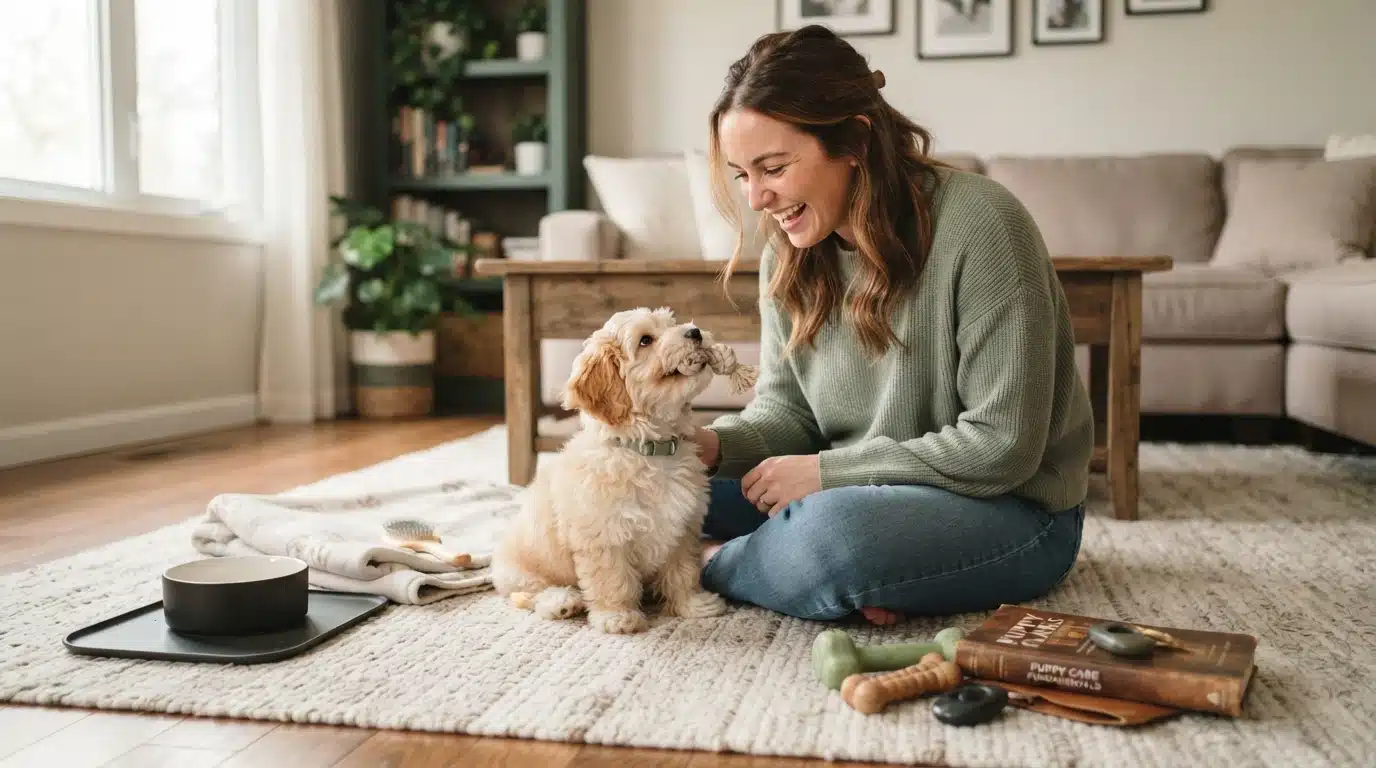
A home-raised litter wakes to household noise: vacuum cleaners, doorbells, kids on the stairs. Breeders handle puppies daily, expose them to new surfaces and sounds during the puppy socialization window, and start gentle house training routines. The mother stays present, which keeps early learning calm.

What happens to a puppy before it reaches a store window
Most store puppies come from large breeding operations, sometimes called puppy mills. Wholesalers transport litters, often sight unseen, to distributors and then to retail shelves. Weeks pass in kennels or crates rather than homes. The puppy meets its family stressed, under-socialized, and often just past the window where new experiences build confidence.
Why the labels themselves are not proof
Neither label is regulated. Anyone can print “family-raised” on a website. The real check is the USDA Animal Welfare Act licensing system: breeders with five or more breeding females who sell sight unseen need a license, and inspection records are public. Retail pet stores were exempted from AWA oversight, so stores answer to state law instead. Ask any breeder, including small programs, for visits, references, and health records. Proof is a paper trail, not a phrase.
Is a Family-Raised Puppy Better Than a Store Puppy?
Yes, for most families a family-raised puppy is the better choice. Puppies raised in a home get more handling, earlier socialization inside the critical window, steadier nerves, a head start on house training, and clearer health records than puppies stocked in a store. But the label itself is not regulated, so the advantage depends on what the breeder actually does, not on what the website claims.
What the research does and does not support
The evidence here is stronger than most buyers expect. A 2013 AVMA journal study found pet store dogs scored worse than breeder-raised dogs on 12 of 14 behavior measures, including aggression and fear. A 2022 review of canine socialization research links extra early socialization to lower anxiety and better separation behavior. What studies do not show is that every home-raised puppy turns out well. Care still matters more than the setting.
Where the family-raised advantage narrows
Some gaps close with good ownership. Daily handling, structured socialization, and consistent training in the first month home can compensate for a slower start. House training progress in store puppies usually catches up once the puppy has a predictable routine. And an excellent commercial breeder can outperform a careless hobby home, so inspect the program, not just the label.
How the comparison changes for small companion breeds
Small companion breeds like the Havanese, Havapoo, and Cavapoo are bred to live indoors with people, so early household exposure counts even more. These breeds follow breed-specific health screening recommendations, which a responsible family breeder documents and a store rarely can. With little dogs, the breeder’s daily habits shape temperament for life.
Health Records, Parent Screening, and What You Can Actually Verify
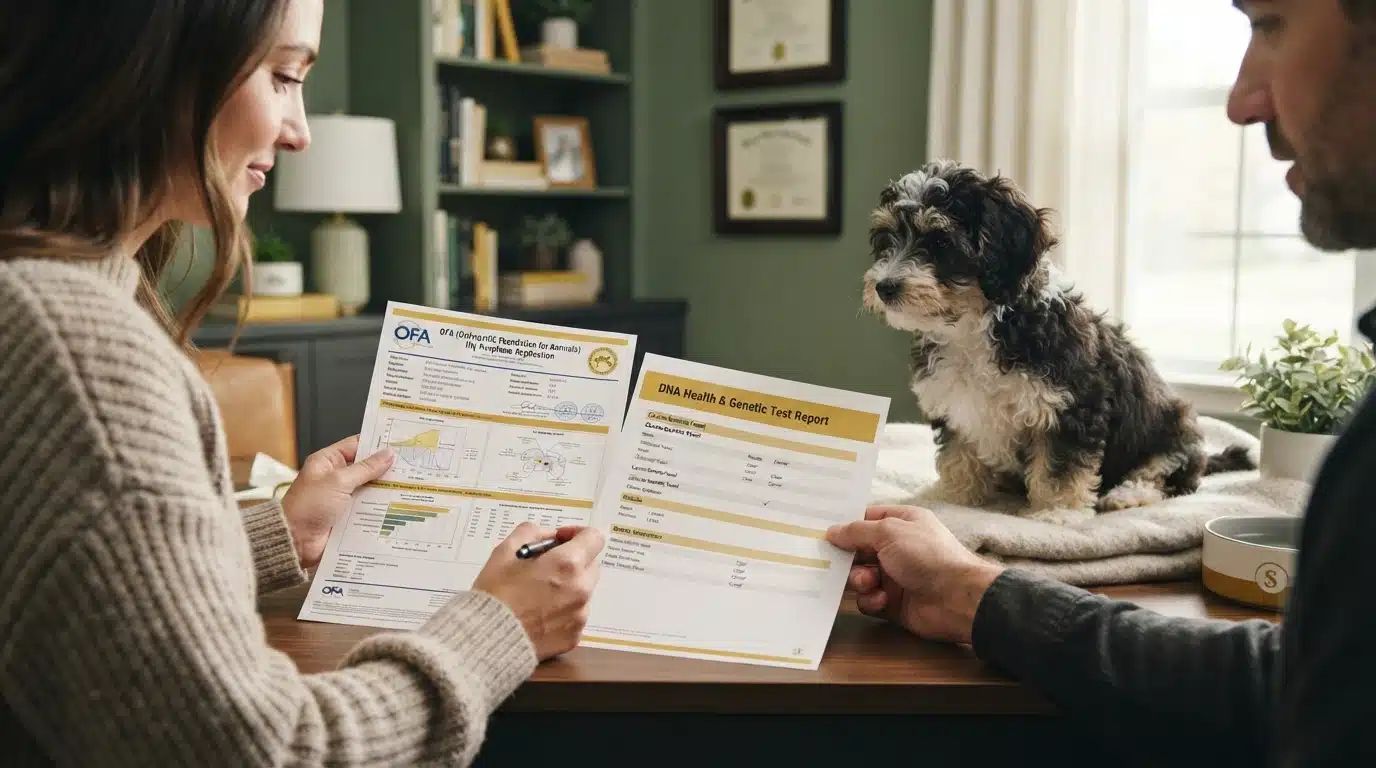
Parent screening, puppy exams, and DNA results are three different things. Screening means the parents were tested for inherited conditions the breed’s health panel covers, such as eye, knee, and heart checks in Havanese and related mixes. A puppy exam is a vet looking at that one puppy, usually recorded on a dated health certificate. DNA results show genetic risk. Ask for all three in writing, because any one alone tells you very little.
Using the USDA Animal Care Search tool
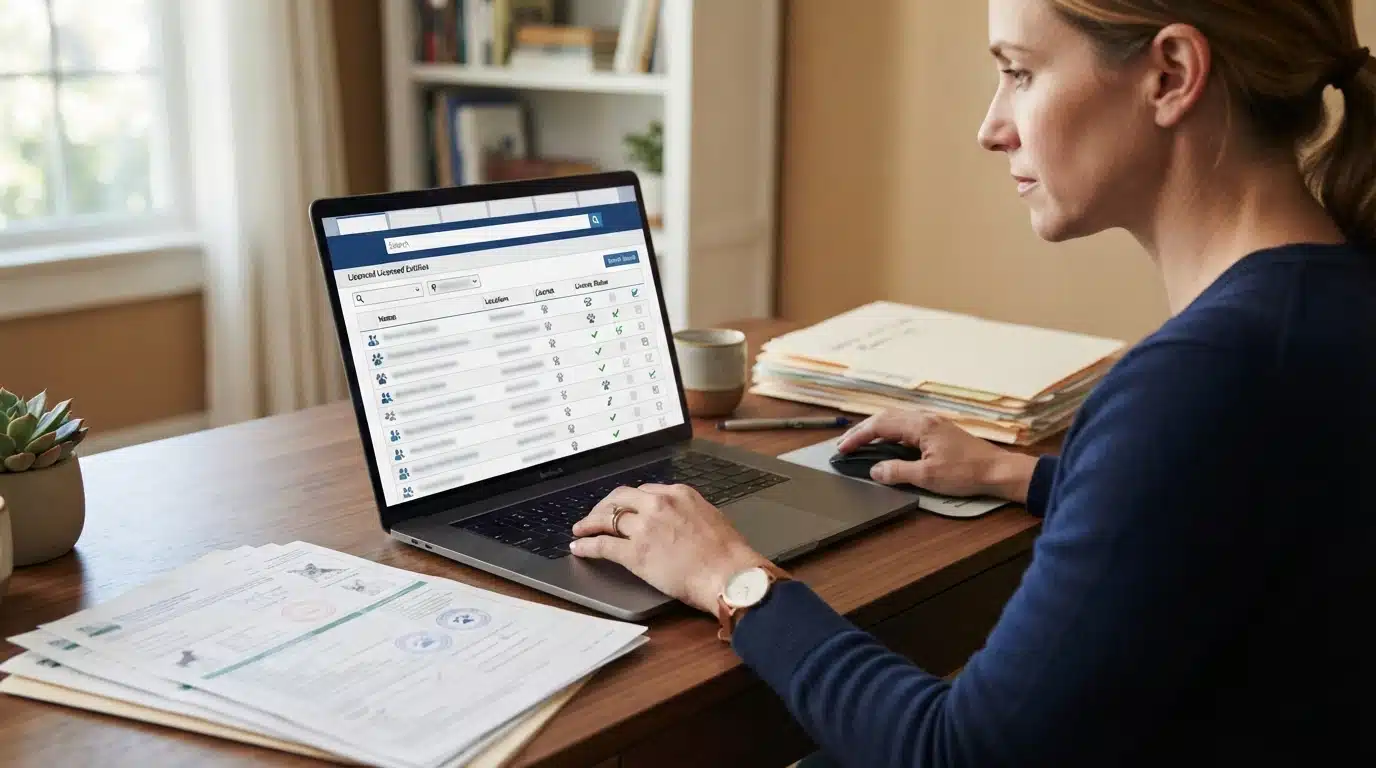
If a breeder is USDA licensed, anyone can verify it in minutes:
- Open the USDA Animal Care Public Search Tool.
- Search by the breeder’s name, city, or state.
- Open the license record and click “View Inspection Report” for each past visit.
- Look for repeat or direct Animal Welfare Act violations, not just paperwork notes.
No listing does not prove anything: breeders with three or fewer breeding females can be exempt, so ask.
Questions that settle the records question fast
Ask these five, and expect written answers without hesitation:
| Question | A good answer includes |
|---|---|
| Can you share the parents’ health test results? | Test names, dates, and the lab or vet who ran them |
| When was my puppy last seen by a vet? | A dated exam note and vaccine record |
| May I call your veterinarian? | A yes, with the clinic’s name |
| What do you guarantee in writing? | Contract terms spelled out, not verbal promises |
| Are you USDA licensed or exempt? | A license number or a clear exemption reason |
A small family program like Sage Puppies can usually produce these records quickly. Either way, the breeder’s reaction to the request tells you as much as the paperwork itself.
Price, Deposits, and Contract Terms
Reading the sticker price honestly
Family-raised puppies from responsible breeders typically cost $3,500 to $4,500 for small companion breeds. That number looks high until you add up what a store puppy can cost later: vet bills from poor early care, training help, and behavior support. Ask what the price includes. A good breeder itemizes vaccines, deworming, a vet exam, microchipping, and starter supplies. Store prices rarely break out these details, and “free” or cheap puppies often carry the biggest hidden bills. For a transparent example, Sage Puppies lists its pricing and reservation details publicly, so buyers know the total before they apply.

What contract terms do for you
A written contract protects both sides. Look for health guarantees with clear time frames, a return clause if the home fails, spay or neuter expectations, and proof the parents were health tested. Deposit terms matter just as much. Get the refund and transfer rules in writing before you pay anything, and watch for deposits labeled non-refundable with no conditions explained. Avoid any seller who resists putting terms on paper. Breeders who document everything usually breed the way they document. If deposit wording feels confusing, review the deposit refund policy basics before you commit, whatever breeder you choose.
The Rules Are Changing: Licensing, State Laws, and 2026 Enforcement
Federal rules on breeding dogs and socialization are still in the rulemaking stage, not final. The USDA published a request for information on standards for breeding females, exercise, and socialization on February 17, 2026, and APHIS extended the comment deadline to April 20, 2026. Any change would apply under the Animal Welfare Act, which mainly covers large commercial breeders, not small family programs.
The USDA rulemaking on breeding dogs and socialization
APHIS confirmed it is asking breeders, buyers, and rescues what updated care standards should require. The Federal Register notice is the official record. Because nothing is final, treat breeder claims about “new federal rules” as talk until a rule is published.
State restrictions and the shifting retail channel
States keep passing laws that cut retail stores off from high-volume puppy mill sourcing, and pet stores increasingly lean on partnerships instead of local litters. Check your state’s current pet sales law before you buy. The AVMA has also covered how the federal comment period affects veterinary and welfare groups. The pattern favors breeders who raise puppies at home and document it.
How to Tell a Family-Raised Program From a Store Pipeline
A store pipeline moves puppies through brokers and retail space. A family-raised program keeps each puppy home with the breeder through the critical puppy socialization window. The difference shows up in what you can see and what you can get in writing.
What to observe on a visit or video call
Ask to see where puppies sleep and play, not just a highlight clip. Look for a mother who is calm and present, a clean indoor space with varied surfaces, and puppies that approach people without freezing or cowering. On a video call, ask the breeder to walk through with the camera so you see house training progress, littermates playing, and the puppy’s real environment.
Documents to request before paying
Before you pay anything, get three records in writing. Request a written health record from the breeder, a veterinary exam documentation dated after birth, and the puppy purchase contract with deposit refund terms spelled out. For Havanese and Havapoo lines, ask which parents carry Havanese Club of America CHIC health recommendations. Cross-check USDA Animal Welfare Act licensing and inspection reports for any breeder who ships puppies across state lines.
Red flags worth walking away from
Trust the exit signs. A breeder who will not show the mother or the home, pushes a same-day deposit, or resists a video call is hiding something. Other warning signs include no contract, vague vaccine records, constant litters of many breeds, and requests for payment through gift apps. Good programs, including small ones like Sage Puppies in South Jordan, welcome these questions.
Which Should You Choose: Family-Raised Puppies or Store Puppies?
For most families, a family-raised puppy is the better pick. Home-raised litters get early socialization during the critical window before 14 weeks, calmer temperaments, and clearer health records, as the AVMA research on behavior scores shows. You also meet the person who knows your puppy best.
When a family-raised puppy is the right call
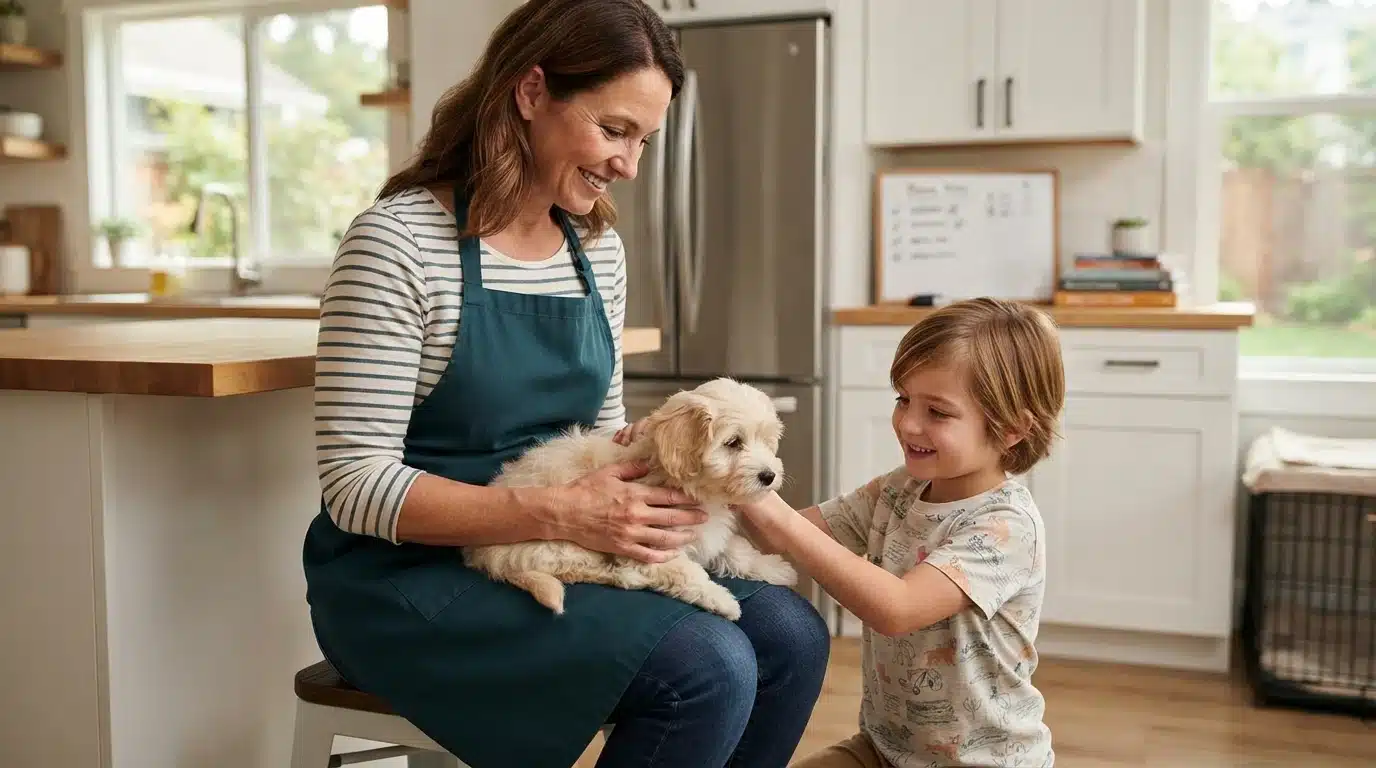
Choose a family-raised puppy if you want a companion with a stable start. This route suits households with kids, first-time owners, and anyone drawn to Havanese, Havapoo, or Cavapoo mixes, where early handling shapes temperament most. Ask for written health testing, a purchase contract with deposit terms, and photos or video of the puppy living indoors with the family. Responsible programs keep litters underfoot, not in kennel runs.
When a store puppy is defensible, and when to skip both
A store purchase is only defensible if the shop partners with USDA-licensed, inspected breeders and shows you their reports plus the puppy’s veterinary exam records. Verify the source before you pay; many states now restrict retail puppy sales precisely because of mill sourcing. Skip both if a breeder dodges questions or a store hides paperwork, and consider rescue instead. A thoughtful family breeder, such as one raising small companion breeds in Utah, gives you the cleanest starting point.

If you want a puppy raised in a home, not a warehouse, Sage Puppies can help. Cassie Milar matches families with Havanese, Havapoo, and Cavapoo puppies bred wisely and loved daily in South Jordan, Utah. Start the application today and ask your questions early, so your next step is clear and calm.
Frequently Asked Questions
Q1: Is a family-raised puppy better than a store puppy?
Yes, for most families. Home-raised puppies get more handling, earlier socialization, and clearer health records. The label itself is unregulated, though, so judge the breeder’s paper trail, not the wording on the website.
Q2: How much does a family-raised puppy cost?
Responsible breeders typically charge $3,500 to $4,500 for small companion breeds. Ask what the price includes: vaccines, deworming, a vet exam, and microchipping should be itemized.
Q3: What should I ask a breeder before paying a deposit?
Request parent health test results, a dated vet exam, a written contract, and USDA licensing status or exemption. A breeder who hesitates is telling you something.
Q4: Are pet store puppies always from puppy mills?
Often, but not always. Some stores partner with USDA-licensed breeders. Ask for inspection reports and the puppy’s veterinary exam records before you pay.
Q5: Can I verify a breeder’s license myself?
Yes. Use the USDA Animal Care Public Search Tool, search by name or state, and read past inspection reports for repeat violations.
Q6: Is rescue a good alternative?
If a breeder dodges questions or a store hides paperwork, walk away and consider rescue or shelter adoption instead.
Conclusion
The family raised vs store puppies question comes down to proof, not labels. For most families, a home-raised Havanese, Havapoo or Cavapoo wins on early socialization, temperament and written records, while the store route mainly offers convenience. Because “family-raised” is unregulated, verify before you pay: parent health tests, a dated vet exam, a written contract with deposit refund terms, and USDA licensing or a clear exemption. Watch for red flags like same-day deposit pressure, missing paperwork or hidden sourcing, and keep rescue in mind if any seller hesitates. A program that documents everything, as Sage Puppies does in South Jordan, Utah, makes that verification easy.