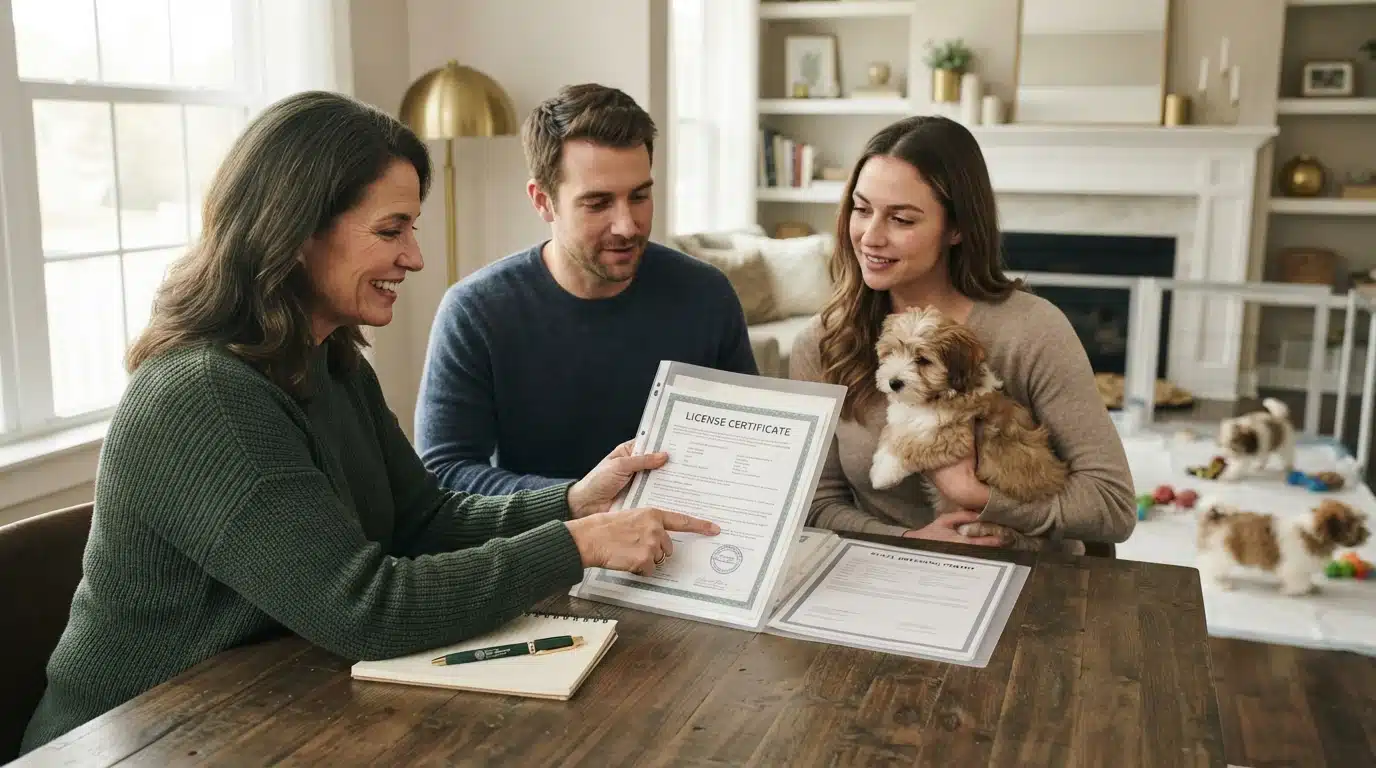
Quick Summary: Judge a puppy’s socialization by patterns, not one enthusiastic greeting: watch relaxed body language around children, quick recovery after surprises, tolerance of gentle handling, and specific answers from the breeder about daily exposures. Sage Puppies recommends a five-point scorecard, while noting that a shy puppy is not a failure but may need calm, supervised exposure to suit a family with children.
You walk into a breeder’s living room, and a small Havapoo puppy comes straight to your arms. Tail going, licking your fingers without being asked. It feels like proof. It is not proof. What you just watched is one moment, and puppies are very good at single moments.
So how to tell if puppy was socialized for real? You look for patterns, not greetings. This guide walks you through the body language that shows a puppy raised around kids and adults was handled often and kindly, the questions worth asking a breeder, and the honest limits of what any visit can confirm. We focus on Havanese, Havapoo, and Cavapoo puppies, drawing on AVSAB socialization guidance and our experience raising litters in a busy Utah family home.
Step 1: Read the Puppy’s Body Language Before You Hear a Single Claim
Watch first, listen second. Before any talk of how the puppy was raised, spend ten quiet minutes observing. A puppy that was genuinely socialized shows it in the body, and how to tell if puppy was socialized comes down to a short list of signs you can see without asking a single question.
What a Comfortable Puppy Looks Like in the First Five Minutes
| Look for | What it tells you |
|---|---|
| Loose, wiggly body and a soft tail | The puppy feels safe with new people |
| Curious sniffing and approach, then play | It has met strangers before and expects good things |
| Willingness to be touched along the back and sides | Someone handled this puppy often, from birth on |
The AVSAB socialization position statement urges breeders to handle puppies from birth and expose them to many different people. A puppy raised around kids often walks straight toward a child’s gentle hands.
The Stress Signals That Quietly Overrule a Good Impression
- Cowering, freezing, or pressing flat against a wall, even when no one is crowding the puppy
- Repeated lip licking, yawning, or a tucked tail while adults stand nearby talking
- Flinching when a hand reaches overhead, which often means rough or rushed handling
- Darting away and refusing to return, even after calm minutes on the floor
One nervous moment means little. A puppy that shows several of these across ten minutes, and never relaxes, was likely not socialized with enough positive exposure.
Recovery Is the Signal Most Buyers Miss
Every puppy startles. What matters is the comeback. A well-socialized puppy bolts at a dropped pan, then returns within seconds to sniff and rejoin the room. A puppy that stays hidden for the rest of your visit learned that new things are unsafe. Breeders who welcome visits and let puppies settle on their own schedule, as we do at Sage Puppies, give you the chance to see this for yourself. Judge recovery, not the first reaction.
Step 2: Watch How the Puppy Greets Adults and Children Differently
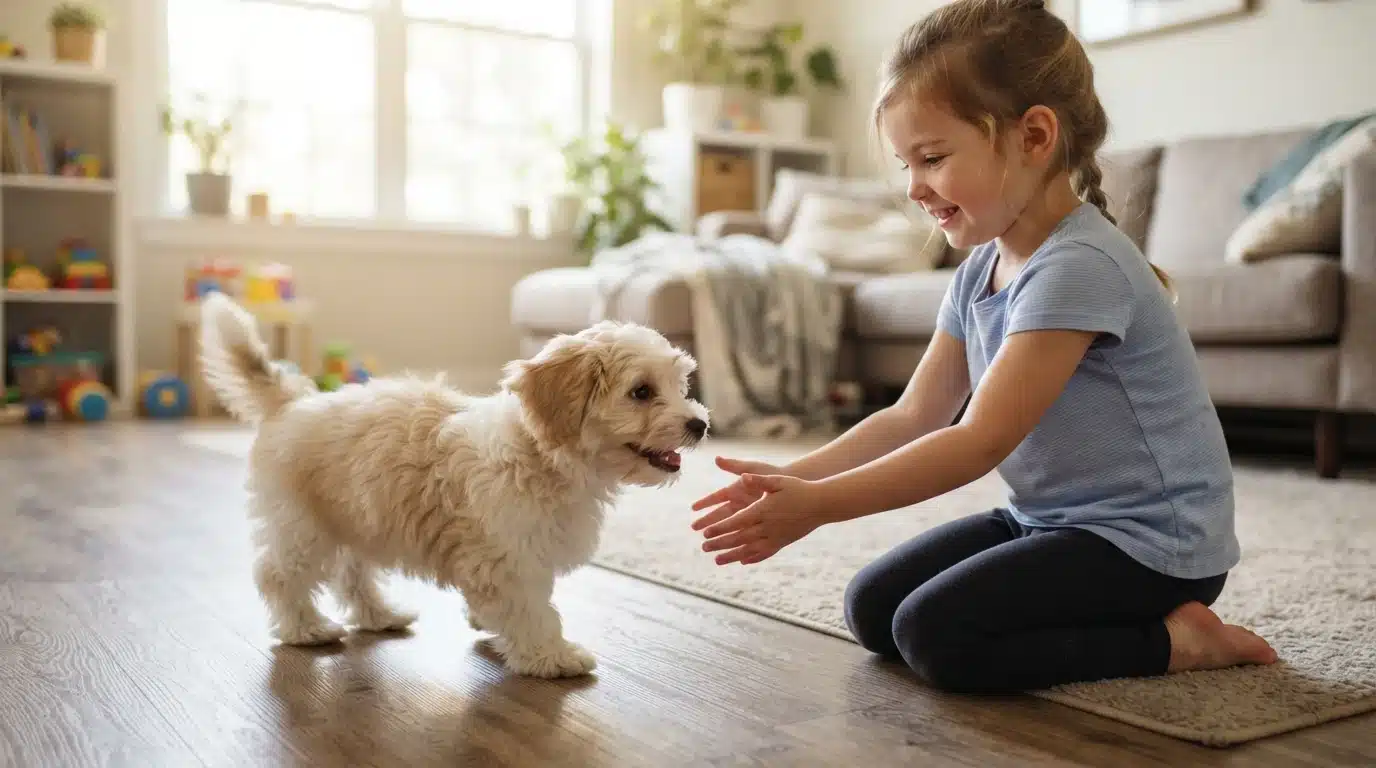
How can I tell if a puppy was socialized around children? Watch the greeting. A puppy raised with kids usually:
- Approaches a child loose and wiggly, tail level, ears soft
- Recovers fast when a small hand grabs or pats too hard
- Shows no flinch, stiff freeze, or tucked tail near giggling, fast-moving kids
- Chooses to stay near children instead of bolting to the adult
Puppies have a sensitive window before about three months when exposure to many kinds of people shapes lifelong behavior, which is why the AVSAB position statement urges early, positive contact with all ages.
How to Tell If a Puppy Was Raised Around Kids
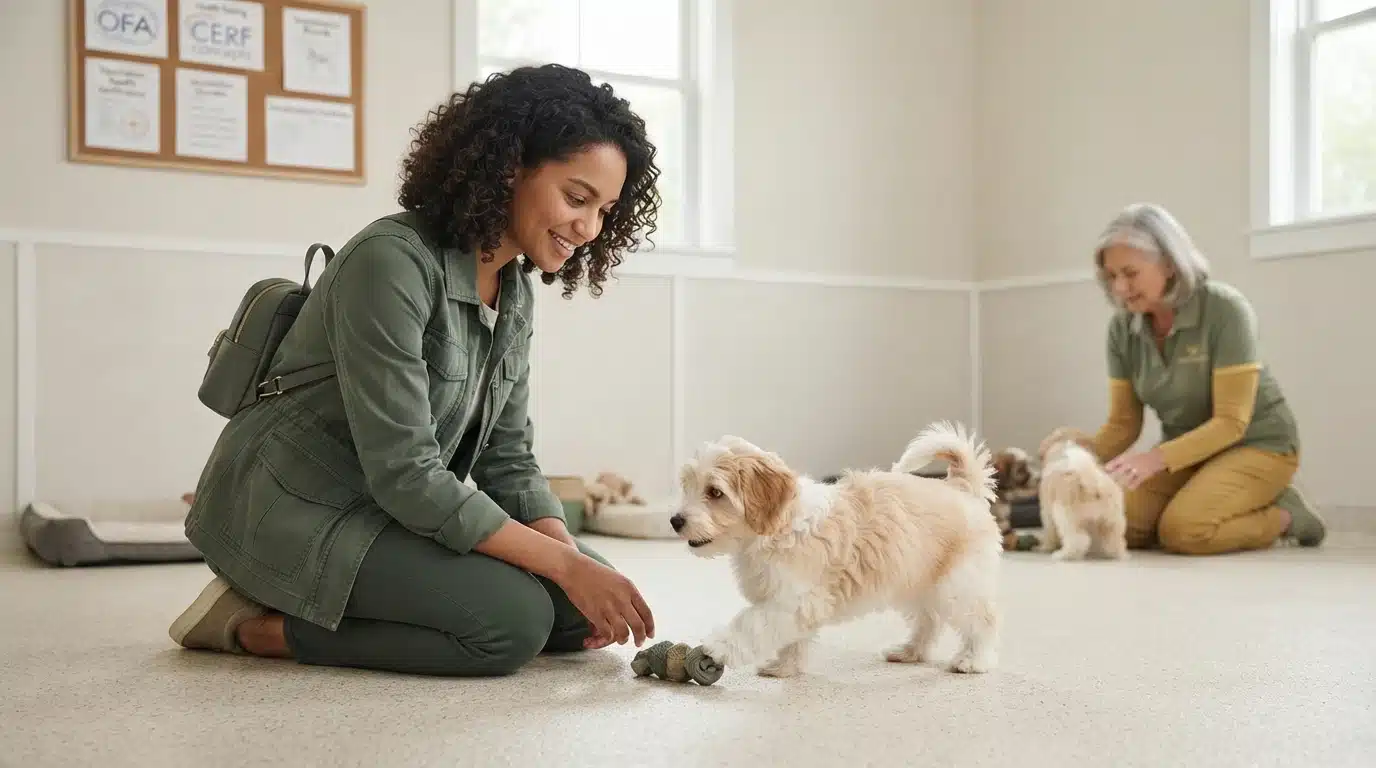
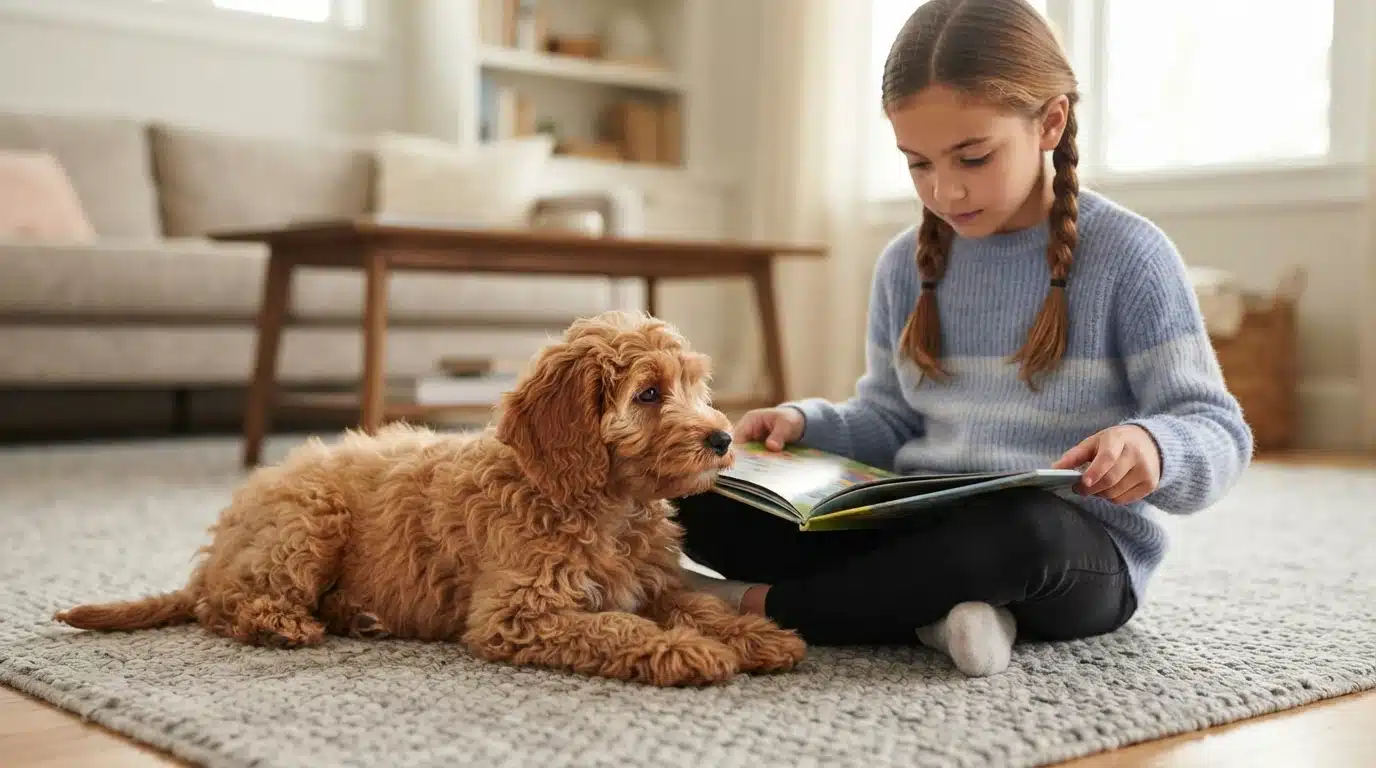
Ask the breeder to let a child greet the puppy while you watch from across the room. A kid-raised puppy leans in, sniffs, then settles. It might lick small hands or carry a toy over. The key is comfort without wildness: the puppy treats the child as normal, not exciting or scary. Havanese, Havapoo, and Cavapoo litters benefit when this happens daily. If the household has no children, watch for the opposite signals in the next part. Our guide to visiting a family-raised puppy walks through the same observations in person.
Signs the Puppy Has Met Adults but Not Children
Kids-inexperienced puppies treat adults like old friends but children like a puzzle. Watch for a stiff body, a wide white ring around the eyes, backing away, or barking when a child enters. Some jump hard at small faces or chase running kids as prey. A strong startle response to a dropped toy or high giggle is the clearest clue. None of these are deal-breakers alone, but they tell you socialization work is still ahead.
The Differences That Matter for Havanese, Havapoo, and Cavapoo Families
These three breeds usually read as soft, people-focused companions, so a shy first meeting with a child often fades with practice. Still, a Havapoo who flinches or a Havanese who barks at children needs gentle, supervised exposure before it joins your family. Cavapoos can be more reserved with strangers at first. Ask how many children visit the home weekly, then trust the body language you see over any answer you hear.
Step 3: Ask the Seller Questions That Force a Detailed Answer
Vague answers are a red flag on their own. Anyone can say a puppy “loves kids.” A seller who actually raised the litter in a busy household can tell you what happened last Tuesday. These questions are built so a short answer exposes itself.
Questions About the Puppy’s Actual Days
Ask exactly what a normal day looks like for the litter. Where does the whelping box sit? Which rooms do the puppies reach, and who walks through? Then get specific: “How many kids are in the home, and what ages?” Follow with, “Which puppy naps on a child’s lap?” A seller raising puppies daily answers without hesitation. One reading from a script stalls. This is the fastest way to learn how to tell if puppy was socialized at home.
Questions About Sound, Handling, and Routine
Next, ask what the puppies have already experienced. Try these:
- “What everyday sounds have they heard, like vacuums, doorbells, or crying babies?”
- “How do they react to being picked up suddenly?”
- “Have they walked on different surfaces, like tile, grass, and carpet?”
- “What happens when they hear a loud noise?”
You want details about the startle response in puppies. A quick recovery, a shake, then back to play is healthy. Days of hiding is not.
What a Good Answer Sounds Like, and What to Do With a Vague One
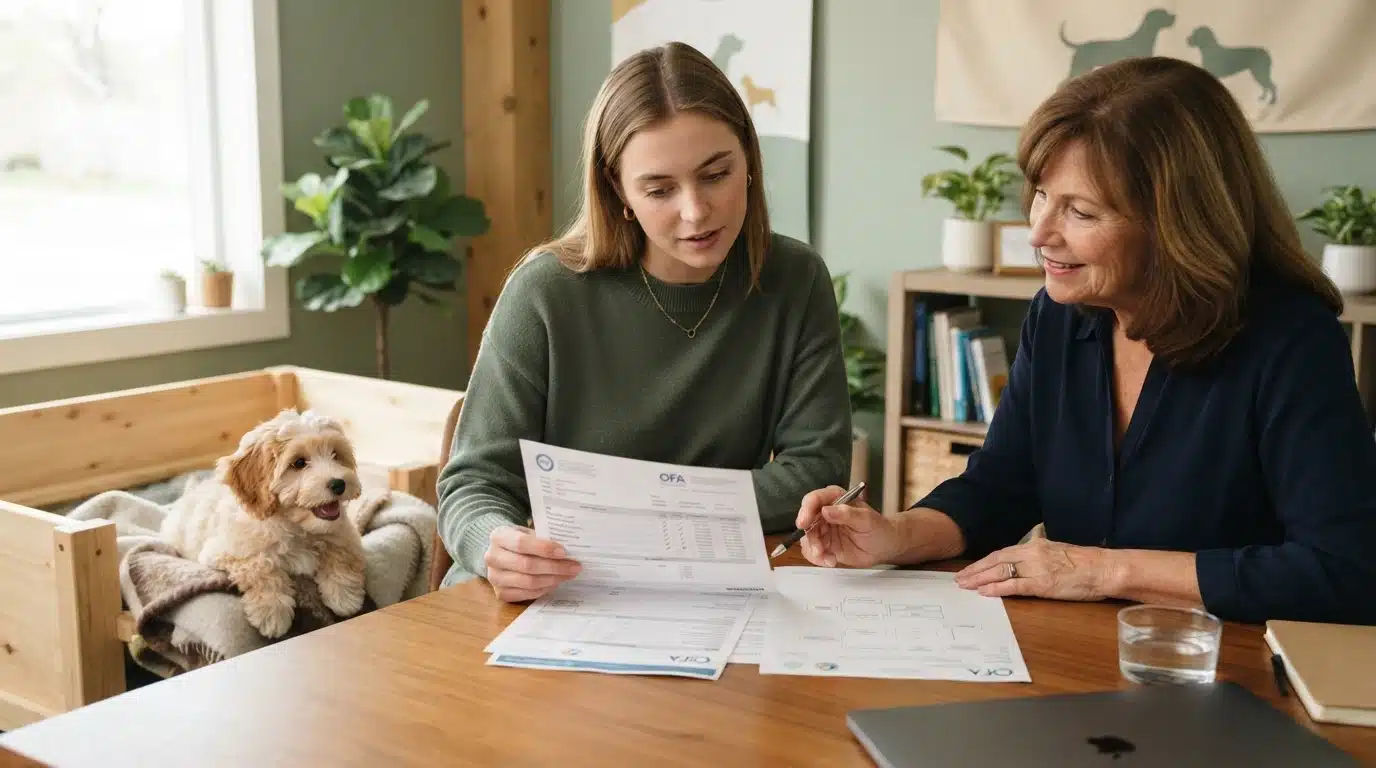
A strong answer names moments: “My seven-year-old carries treats around, so the pups follow her everywhere.” It includes a wrinkle, like a shy puppy who needed extra handling. If you get “they’re around kids all the time,” ask once for a story. Silence or a second vague reply tells you what you need to know. Anyone offering family-raised Havanese, Havapoo, or Cavapoo puppies should welcome these questions, and a good breeder application process usually asks about your household too, because socialization works both ways.
Step 4: Watch Handling, Restraint, and Recovery in Real Time
Words on a website tell you little. Watching someone pick up, hold, and set down the puppy tells you almost everything.
Ask to See the Puppy Held and Set Down
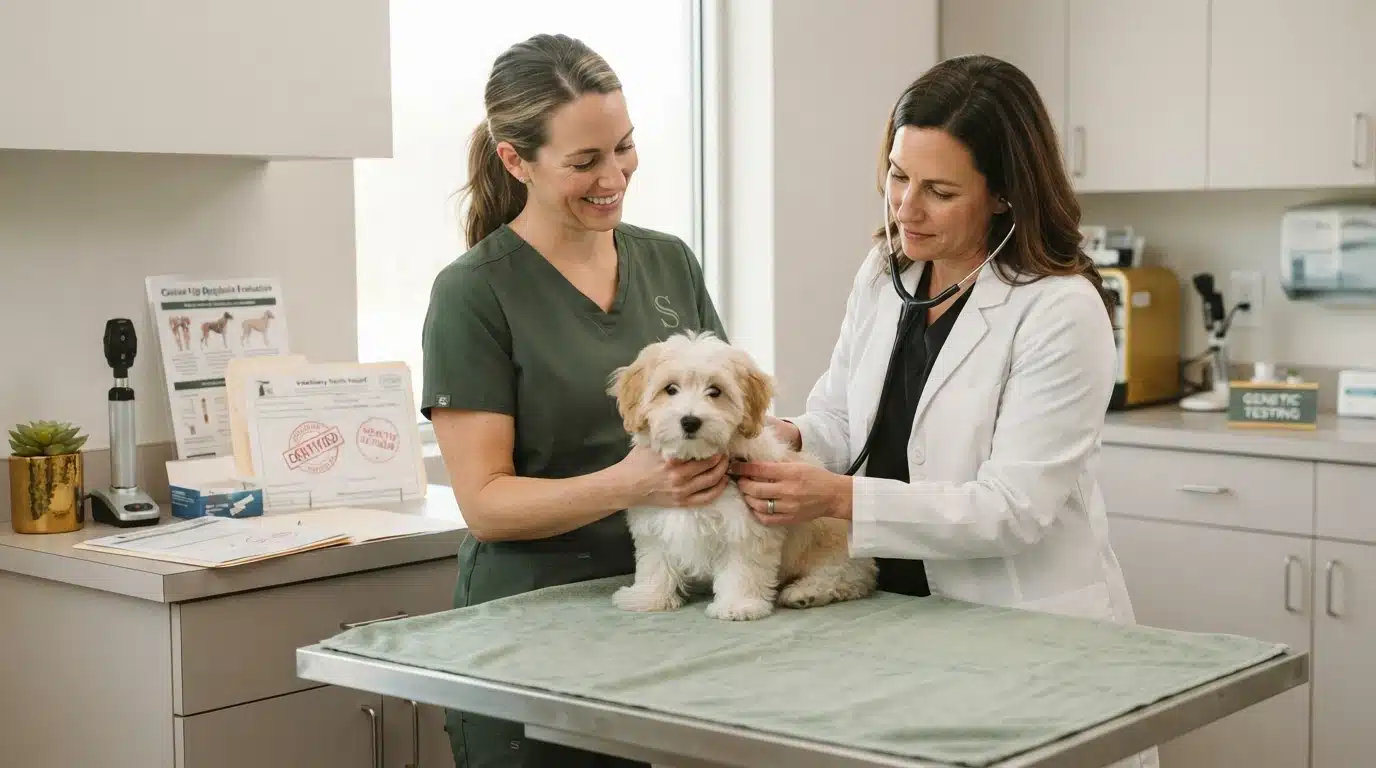
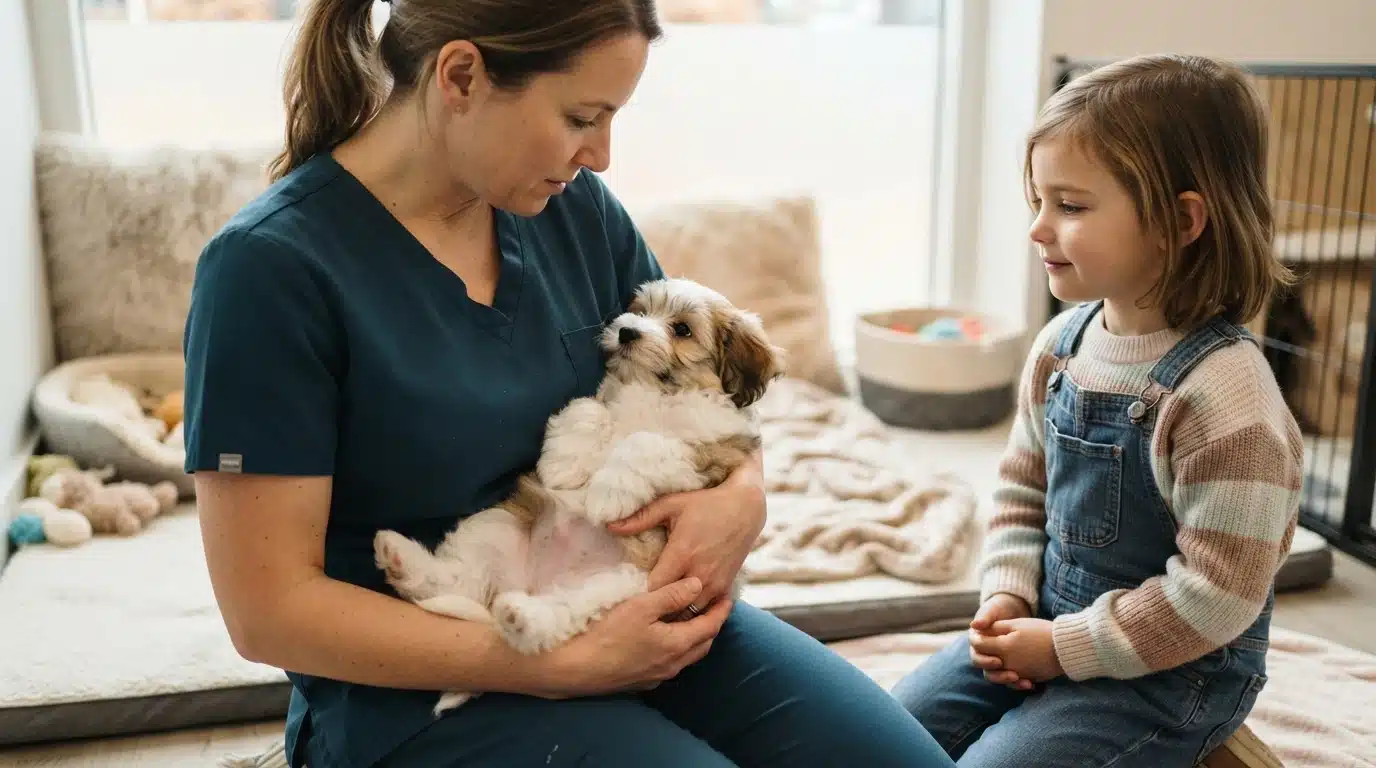
Say plainly: “Can you hold her the way you would at the vet?” Then watch the whole sequence. A well-socialized puppy may squirm briefly, but it should settle within seconds and look around calmly. When the breeder sets the puppy down, does it return to play, or does it hide behind a chair? Recovery matters more than the initial reaction. Any breeder confident in their puppies will agree to this on the spot, in person or on video.
Watching for the Startle Response
Every puppy startles at sudden noise or movement. What you want to see is what happens next. Drop a set of keys from knee height, then watch. A healthy response is a quick jump, a turn toward the sound, and a return to whatever the puppy was doing within a few seconds. Freezing, frantic bolting, or trembling that lingers suggests the puppy has not learned that new things are safe. The AVSAB position statement on puppy socialization explains why this window matters so much before sixteen weeks.
What a Cautious Puppy Is Telling You
A shy puppy is not a broken puppy, but it is information. Some Havanese, Havapoo, and Cavapoo puppies simply need an extra week of quiet handling before joining a busy house. Ask what the breeder does when a puppy shows hesitation. A thoughtful answer sounds like “we slow down and give her more positive handling,” not “she’ll grow out of it.” If the answer is vague, treat caution as the puppy’s real starting point and plan accordingly.
Step 5: Confirm What the Puppy Was Exposed To, Not Just Who Held It
The Exposure List That Actually Predicts Comfort at Home
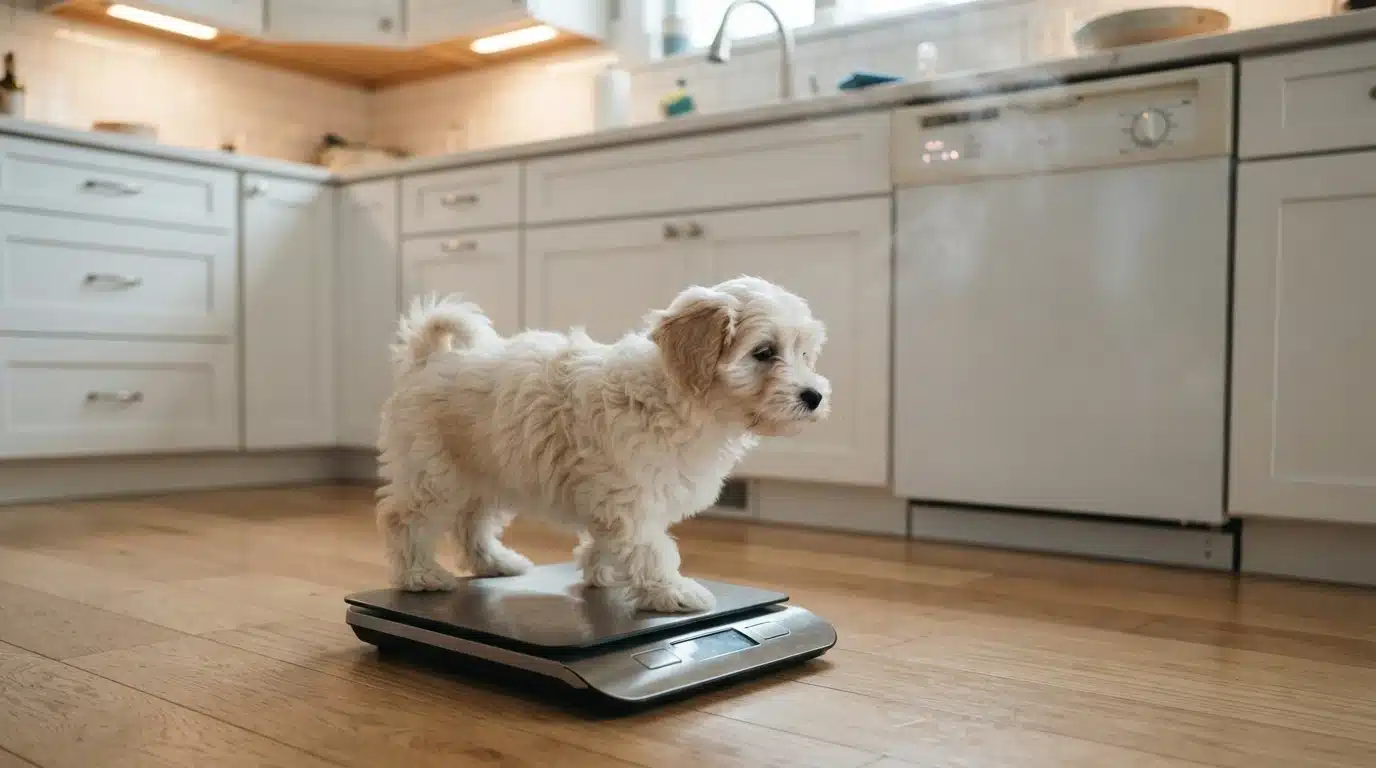
A puppy can meet plenty of people and still live a sheltered life. Held briefly, then returned to a quiet room, it never learns how households actually run. Ask the breeder exactly what the litter has experienced: vacuum noise, dropped pans, doorbells, car rides, stairs, other dogs, and different floor surfaces. Each item matters more than head count. A puppy that has heard a blender and recovered within seconds will settle into your kitchen far faster than one raised in silence.
Class Experience and Safe Conditions
Group puppy classes are one of the best exposures a breeder can offer, but timing and setup matter. The AVSAB position statement recommends socialization starting before vaccines are complete, in classes that require vaccination, deworming, and clean surfaces. Ask whether the litter attended or visited any group setting, and what safety rules were in place. Small breeds like a Havanese or Cavapoo gain real confidence from supervised play with calm, vaccinated adult dogs, so a breeder who arranges that deserves a point in your notes.
Ask What Continues After Pickup
Exposure only predicts comfort if it continues. Before you reserve, ask what the breeder sends home: a scent blanket with littermates, feeding schedule, and notes on the sounds the puppy already knows. Good programs, including ours, expect you to keep socializing through the first weeks. That means short car trips, gentle handling by each family member, and planned introductions to your children at home. The first three days set the pattern, so keep new experiences small and positive, and watch the puppy’s body language for soft, curious responses rather than freezing or hiding.
Step 6: Put the Answers Together Before You Decide
No single sign tells you a puppy is good with children. You decide from patterns: how the puppy responds to quick movement, how the breeder answers your questions, and what the home environment shows. Score what you saw, then act on the total.
A Simple Scorecard You Can Fill Out in Five Minutes
Rate each item 0 (never), 1 (sometimes), or 2 (consistently):
- Recovers fast after a startle, then returns to play
- Approaches people willingly instead of hiding or freezing
- Soft body language around children: loose tail, relaxed mouth, play bows
- Tolerates gentle handling of paws, ears, and tail without snapping
- Breeder gives specific answers about daily exposure to kids and adults
A total of 8 or higher points to a confident, well-socialized puppy. A score of 5 to 7 means you should ask follow-up questions or arrange another visit. Anything under 5 is a real risk for a busy family home, even if the puppy is adorable.
A low score is information, not a failure. Some shy puppies blossom in calm adult homes. The mismatch, not the puppy, is the problem.
How This Applies to Sage Puppies Specifically
Sage Puppies raises only Havanese, Havapoo, and Cavapoo puppies, three breeds known for sociable temperaments with kids. Ask which puppies in the litter have spent the most time around children, and request video of everyday handling if you are buying from out of state. The application and matching process exists so you can describe your household honestly, including children’s ages, before a puppy is assigned.
Preparing the Home If the Puppy Is New to Children
Some puppies meet kids first at your house. Set them up to succeed:
- Teach the rules before pickup: no chasing, no grabbing, no waking a sleeping puppy
- Use a gated safe zone so the puppy can retreat when tired
- Keep early sessions short, a few minutes of calm petting at a time
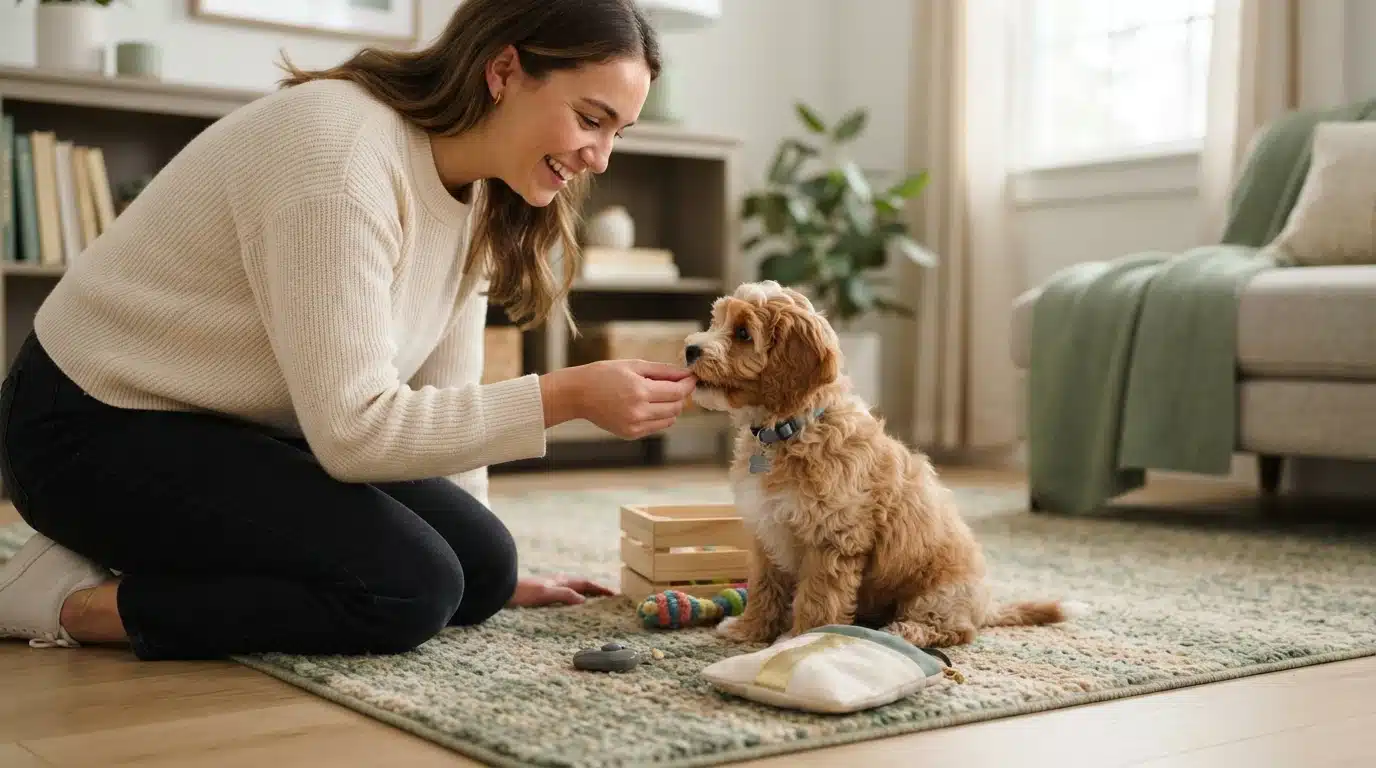
- Reward calm behavior with treats and praise so children become good news
Plan the first two weeks around quiet exposure. Confidence grows from repeated, gentle contact, not from a big greeting party on day one.
Common Mistakes to Avoid When Judging a Puppy’s Socialization
Treating One Enthusiastic Greeting as Proof
A puppy that bounces up to every visitor looks social, but overexcitement can hide nervousness. Watch a second meeting instead. Does the puppy settle after the hello, or does it stay frantic? Confident puppies calm down within a few minutes and return to play or rest. One wild greeting tells you about energy, not training.
Believing That a Treat Solves Everything
Food can mask fear. Some puppies take treats from strangers while showing tense body language, a tucked tail, or a stiff startle response. Check what happens without food in hand. If the puppy avoids children unless a snack appears, that is dependence, not comfort. Ask the breeder whether treats are used in everyday handling or only during visits.
Expecting Socialization to Guarantee Compatibility With Any Child
A puppy raised around kids is not automatically safe around your kids. Every child moves, sounds, and handles dogs differently. Ask how the puppy reacted to crawling babies, loud toddlers, and rough play separately. The AVSAB position statement stresses matching environments to each dog, so treat family-raised puppies as a strong start, not a promise.

If you’re weighing a litter right now, don’t settle for “the kids play with them.” Ask for a visit, watch the body language, and score it honestly. At Sage Puppies, every Havanese, Havapoo and Cavapoo puppy is matched to your family through a clear application and honest answers. Start yours today.
Frequently Asked Questions
Q1: How can I tell if a puppy was raised around children?
Watch patterns, not single greetings: loose body language near kids, fast recovery after startles, and comfort with gentle handling. Then ask the breeder which sounds and daily exposures the litter has had, how many children live in the home, and which puppy naps on a child’s lap.
Q2: What signs show a puppy was socialized with kids and adults?
A soft tail, curious approach, willingness to be touched, and quick comeback after a dropped pan. Several stress signals, like freezing or a tucked tail that never relaxes, outweigh one friendly hello.
Q3: How do I know if a puppy is good with children before buying?
Ask to watch a child greet the puppy. A kid-raised puppy leans in, settles quickly, and stays loose. Request a visit or video, and score recovery, handling tolerance, and the breeder’s specific answers.
Q4: Can a shy puppy still fit a family with kids?
Sometimes. Caution is information, not failure. Ask how the breeder responds to hesitation, and plan short, calm, rewarded sessions at home.
Q5: Do treats prove a puppy is comfortable with strangers?
No. Food can mask fear. Watch the puppy’s body language without treats, since true comfort shows in loose posture and voluntary return, not snack-seeking.
Conclusion
You now know how to tell if puppy was socialized for real: watch body language around children over ten minutes, ask for specific daily stories, and weigh the startle response in puppies more than any single greeting. Patterns beat promises. The five-point scorecard turns your visit into an honest total, and a breeder’s detailed answers count as much as the puppy’s behavior. Use the checklist, request video if you’re buying from out of state, and choose the puppy whose exposure list matches your household.