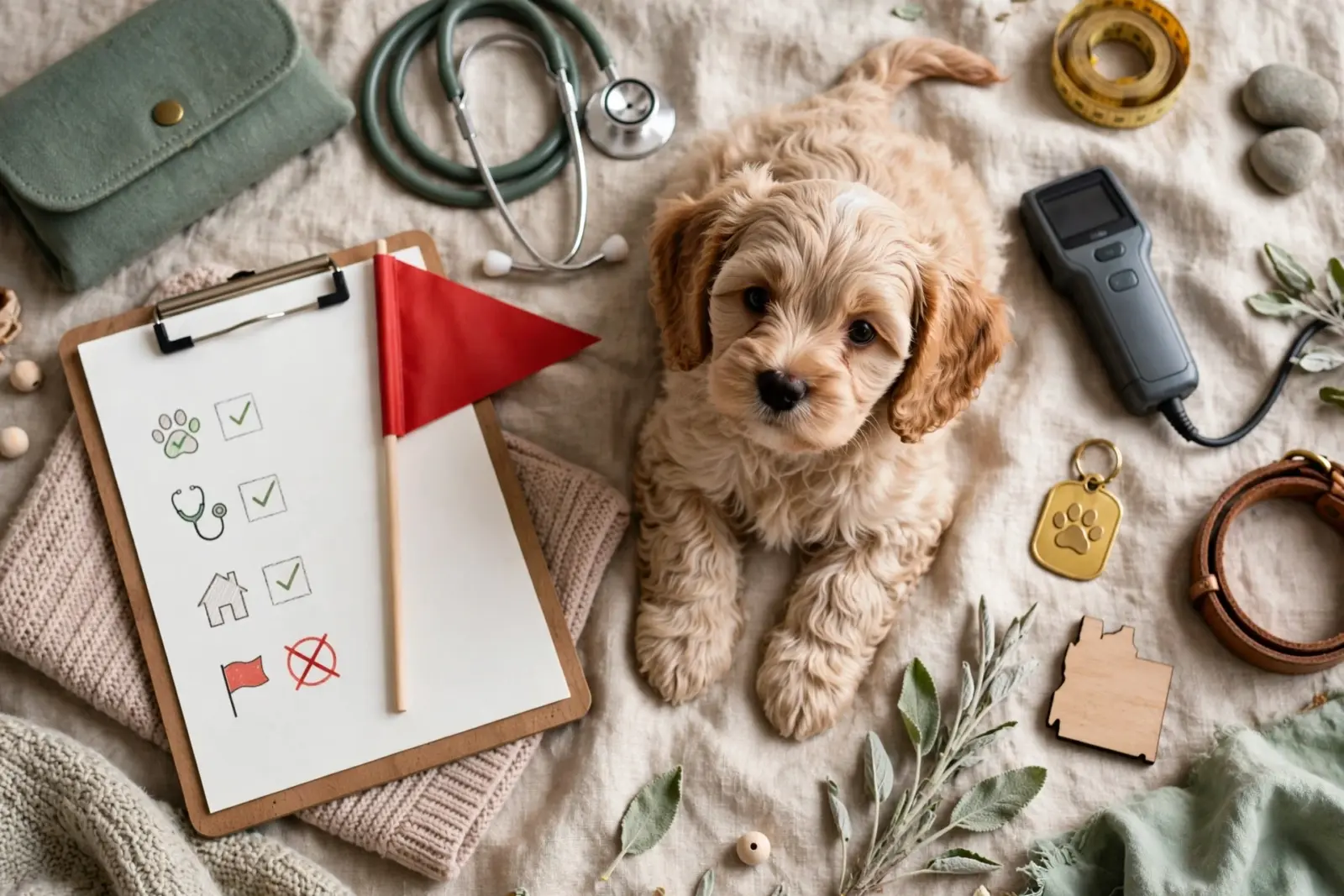
Quick Summary: Buying a Cavapoo online takes an hour of verification, not a leap of faith, because fake listings and puppy mills are widespread. Start with parent-dog health clearances verified through OFA, OFA numbers, and breeder references, then read the website skeptically, reverse-image-search the puppy photos, and demand a live video tour where you actually see the mother. Pay only by traceable methods like credit cards, get the contract before any deposit, and never use wire transfers or gift cards. A breeder who dodges video calls, refuses documentation, or pressures quick payment fails the test, while one like Sage Puppies, which publishes health records, offers references, and plans pickups in South Jordan, Utah, clears it.
In 2024 the Better Business Bureau logged thousands of puppy purchase complaints in the U.S., and Cavapoos were among the most-searched breeds targeted by fake listings. That’s the hard part of buying a Cavapoo breeder online today: polished websites can hide puppy mills, and one wire transfer funds the scam. This guide gives you a one-sitting verification protocol. You’ll check a Cavapoo breeder online against AKC and OFA primary sources, review health testing records, and run a short call script that separates legitimate Cavapoo breeders from copy-paste sellers. It draws on documented breeding experience with Havanese, Havapoo and Cavapoo programs, so every step is a concrete check, not another generic red-flag list. Follow it in order and you’ll know within an hour whether you’ve found a trustworthy Cavapoo breeder or a site worth closing.
Step 1: Confirm the Breeder Screens Parent Dogs for the Right Health Conditions
A good breeder proves health with paperwork, not promises. Because a Cavapoo blends a Cavalier King Charles Spaniel and a Poodle, each parent needs its own set of tests. Ask for results before you pay a deposit, and compare what you get against the lists below.
Cavalier-Side Health Tests That Should Appear in Writing
The Cavalier side matters most, because mitral valve disease (MVD) is the leading cause of death in the breed. A serious breeder has both Cavalier parents’ hearts checked by a board-certified cardiologist, and the breed club’s health testing guidelines spell out the recommended heart protocol. You should also see:
- Cardiac exam by a cardiologist, ideally repeated at age 5 or later
- Eye exam from a veterinary ophthalmologist
- Patella (kneecap) evaluation
The Cavalier King Charles Spaniel Club publishes the testing guidelines breeders should follow, so ask how each parent’s results measure up to them. No written heart clearance? Walk away.
Poodle-Side Health Tests to Look For in the Litter Record
Poodles bring different risks. For the Poodle parent, expect the same basics: an OFA eye exam to rule out progressive retinal atrophy, a patella check, and a cardiac clearance. Miniature and Toy Poodles also benefit from hip X-rays, since even small poodles can carry hip dysplasia. Genetic panels should cover PRA and other inherited eye conditions common to the breed.
How to Read an OFA, CHIC, or CERF Result the Breeder Sends You
These results come from the Orthopedic Foundation for Animals (OFA), which also runs the CHIC database, and eye exams feed into what used to be called CERF. A legitimate result includes the dog’s registered name or number. Type that number into the OFA’s public database. If the dog’s scores, ages, and test dates match what the breeder claimed, you have real proof. If the page shows nothing, the paperwork was fake. A breeder who resists this simple check is telling you something.
Remember that clear parents lower risk, but no puppy is risk-free. Honest breeders say so plainly. That honesty, along with documented testing, is what separates a reputable small program from a sales page.
Step 2: Read the Website and Listings With a Skeptic’s Eye
Before you call anyone, spend ten quiet minutes reading the website itself. Legitimate breeders rarely oversell. Scammers almost always do.

Signals of a Transparent Breeder Website
A trustworthy site tells you who is breeding the dogs. Look for real names, a location, and photos of the same dogs across many months, not a rotating cast. Health testing results, the parents’ ages, and how often litters arrive should all be stated plainly. The AKC’s scam guide also warns that up to 80 percent of sites advertising puppies online may be fake, so treat vague “about us” pages and prices that seem too good as reasons to dig deeper. At our own program, every listing names the dam and sire up front.
Copycat Photos, Stock Images, and Reused Listing Text
Stolen photos are the scammer’s favorite shortcut. The FTC recommends a reverse image search: save the puppy photo, then search it to see where else it appears. If the same litter shows up on three sites with three prices and three locations, walk away. Watch for listing text too. Scammers copy real breeders’ descriptions word for word, so paste a distinctive sentence into a search engine and see what comes back.
What the Breeder Should Be Asking You
Good breeders interview you. Expect questions about your home, work schedule, children, other pets, and how you plan to manage a puppy’s first weeks. A seller who never asks, and jumps straight to shipping and a discount for fast payment, is chasing a sale, not a home. Vague answers to your questions count against them just as much as no questions at all.
Step 3: Make First Contact and Test the Communication Style
Once your shortlist checks out, send a short email or fill out the contact form. Skip questions about price and puppy picks for now. Good breeders expect you to ask about their practices first, and the questions you choose tell them who you are. The AKC and OFA both publish question lists worth reading before you write. A serious breeder will interview you back, and that is a good sign, not a hurdle. Many small programs, ours included, start with an application for exactly this reason.

Questions That Reveal the Breeder’s Real Practices
Ask these and listen for specific answers:
- How long have you bred Cavapoos? Vague history is a warning.
- What health testing do both parents have? Ask for names and registry numbers, not just “vet checked.”
- How many litters per year? More than a few suggests volume breeding.
- Where do puppies live before they go home? You want inside the home, not a kennel or shed.
- Can I see the mother? On video is fine.
- What happens if I can’t keep the dog? Responsible breeders take dogs back for life.
A breeder who answers with documents, dates, and follow-up questions is doing the work. One who answers “what colors do you have?” without asking about your home probably is not.
Phone Calls, Video Tours, and What They Should Show You
After email, ask for a call or video tour. Request it on a set time so you can both prepare. During a live video walk-through, you should see the mother, the puppies in their real living space, and clean, safe conditions. Ask the breeder to pan the room rather than show one tidy corner. Refusal to video chat at all, or offers to send only photos, is one of the clearest red flags in online puppy sales, right next to the fake listings covered earlier.
How Fast and How Well Should a Breeder Respond?
Most small breeders answer within one to three days, since they work around puppies and day jobs. Speed matters less than substance. Watch for replies that answer what you asked, volunteer extra detail, and treat your questions as reasonable. Slow but thorough beats fast but thin every time.
Step 4: Verify the Health Guarantee, Contract, and Deposit Policy
Paper promises are easy to make online. The proof is in the document itself, so ask for a blank copy of the contract before you pay anything.

What a Cavapoo Health Guarantee Should Actually Say
A solid health guarantee covers hereditary or congenital conditions for a set period, typically one to two years, and states exactly what happens if a problem appears: refund, replacement, or shared vet costs. It should require your own vet exam within a few days of pickup, name the conditions covered, and never promise a puppy will never get sick. Guarantees against every illness are marketing, not medicine.
Contract Clauses Worth Reading Twice
The AKC’s breeder contract guide notes that reputable breeders usually require a signed agreement, and yours should spell out who pays for what after the puppy leaves. Watch for a spay or neuter clause with a deadline, a return-to-breeder requirement (a good sign, since it keeps dogs out of shelters), and any clause that voids the health guarantee if you miss a vaccine date or feed a specific food. Vague terms cut both ways, so ask for plain language.
Deposits, Payment Methods, and Pressure Tactics
Ask how much of your deposit is refundable and under what conditions, and get it in writing. Pay by credit card or another traceable method, never gift cards, wire transfers, or payment apps sent to strangers. Scammers push urgency: “three families are interested, decide today.” A trustworthy breeder accepts that you need a night to read the contract. Any refusal to send terms before payment is a walk-away signal.
Step 5: Confirm Pickup, Delivery, and Post-Pickup Support
A reputable breeder will talk logistics in detail before you pay. If the answers get vague once transport comes up, treat that as a warning sign.
Pickup, Flight Nanny, or Ground Transport: How to Compare Options
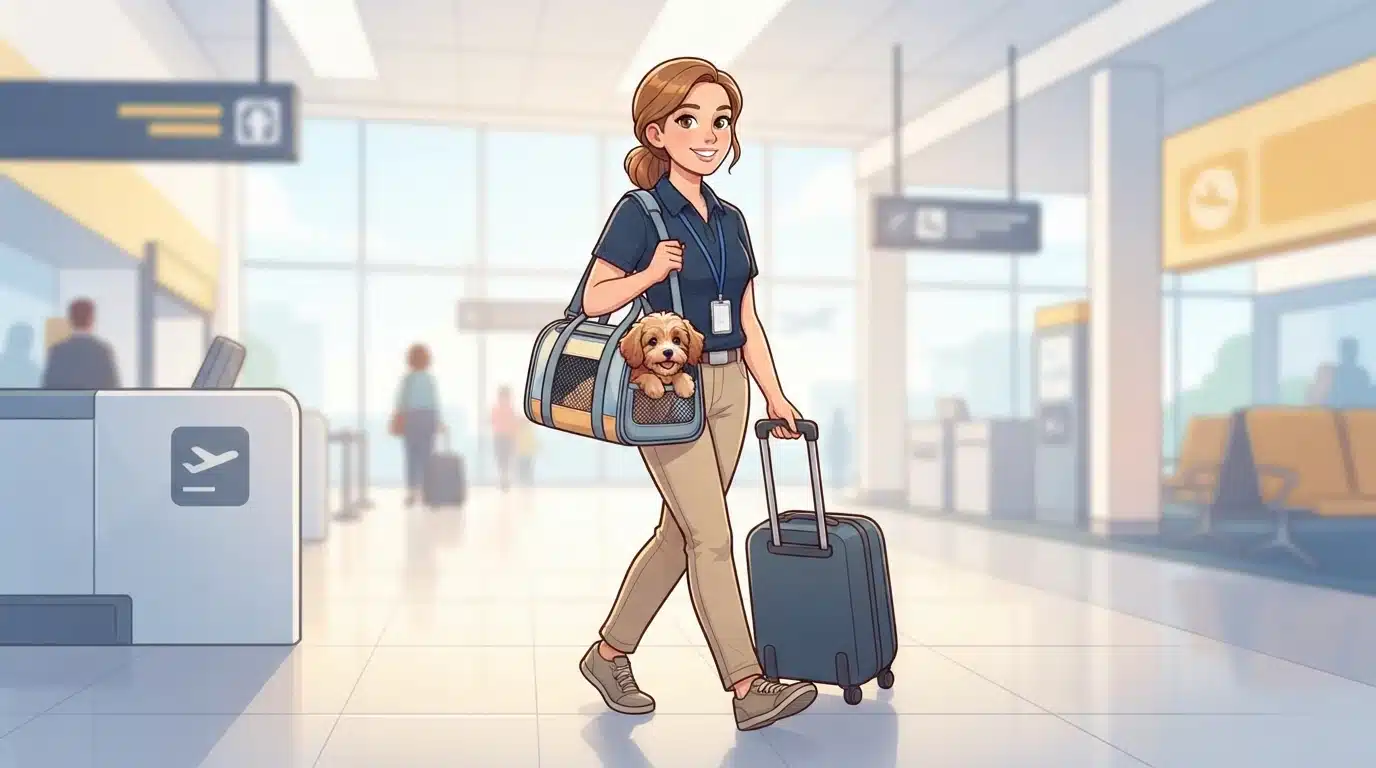
Pickup at the breeder’s home is best if you can manage it. You see the mother, the living conditions, and how your puppy acts in person. A flight nanny is the next safest choice: your puppy rides in the cabin with a person the whole flight, not in cargo. Ask any transporter to confirm they hold a current USDA registration for moving pets for hire. Ground transport works regionally, but ask for driver contact details and regular photo updates during the trip.
Paperwork, Vaccines, and Microchip Transfer
Before handoff, you should receive a signed contract, a health record showing the puppy’s shots and deworming dates, and a vet exam note. Get the microchip number in writing, then register it in your name right away, because an unregistered chip helps no one if a puppy slips out the door. Breeders who handle delivery, like the plan laid out on Sage Puppies’ delivery and Utah pickup page, will confirm which documents travel with the puppy and which arrive by email. Keep both.
After-Hours Support and First-Week Communication
Ask one direct question: “Can I text you if something worries me at night?” Good breeders say yes and mean it. Expect a check-in within the first week, plus guidance on food, sleep, and crate training. Breeder support should outlast the handoff.
Ask one direct question: “Can I text you if something worries me at night?” Good breeders say yes and mean it. Expect a check-in within the first week, plus guidance on food, sleep, and crate training. Breeder support should outlast the handoff, so weigh how each program describes their follow-up before you commit.
Step 6: Cross-Check Reviews, References, and Outside Sources
A breeder’s website only tells their side. Reviews and references fill in the rest, so check both before you send money.
Where to Look for Reviews and How to Read Them
Start with the Better Business Bureau’s pet scam resources, which also suggest a reverse image search of the puppy’s photos. If the same picture shows up on several sites, the listing is likely fake. Read Google and Facebook reviews too, and search the breeder’s name plus “scam” or “complaint.” Watch for patterns, not single grumbles. A few happy reviews posted the same week in similar wording is a warning sign, while detailed reviews spread over months carry more weight.
Asking the Breeder for References and Calling Them
Good breeders expect this request. Ask for two or three families who bought a puppy in the last year or two, then actually call them. Ask what surprised them, how the puppy’s health turned out, and whether the breeder stayed in touch after pickup. A legitimate breeder, including a small program like Sage Puppies, will offer references without hesitating. Refusal, delays, or references you can only reach by email deserve scrutiny.
Confirming the Breeder’s Location and Identity
Run the address through Google Maps street view. Does a home or small kennel exist there? Match the phone area code to the claimed city, and ask for a live video call so you can see the puppy and its mother together. The BBB’s pet scam guidance stresses meeting by video before paying anything. If the breeder dodges every call, walk away.
Common Mistakes to Avoid When Vetting a Cavapoo Breeder
Even careful buyers slip into predictable traps. Watch for these two groups.
Mistakes Around Money, Paperwork, and Promises
Don’t pay a deposit before you’ve seen proof of the parents’ health testing, and never accept “papers” that turn out to be nothing more than a registration form. Be wary of breeders who promise allergy-proof coats or perfect temperaments; no breeder can guarantee those. A written contract should spell out what happens if the puppy needs to be returned.
Mistakes Around Pressure, Emotion, and Time
A reputable breeder will want to interview you, not just collect payment. If someone pushes you to decide today, skips your questions, or always “has one puppy left,” slow down. Real breeders keep waiting lists and ask about your home, schedule, and experience. Anyone rushing that process is selling, not placing.
Want help spotting trustworthy options? Read our guide on questions to ask a breeder before you commit.

You now know how to verify a breeder in one sitting. If you’d rather skip the vetting and meet a program that already answers these questions, see Sage Puppies. Cassie’s owner-managed Cavapoo program in South Jordan, Utah, pairs clear health records with honest matching, so you can apply with confidence.
Frequently Asked Questions
Q1: What health tests should a reputable Cavapoo breeder perform on parent dogs?
Cavalier parents need board-certified cardiac exams, eye exams, and patella checks. Poodle parents need OFA eye, patella, cardiac clearances, and genetic panels covering PRA.
Q2: How can you tell if a Cavapoo breeder is a scam or puppy mill?
Watch for stolen photos, refusal to video chat, wire transfer demands, vague health claims, and no interview of you. Verify OFA numbers in the public database.
Q3: What questions should I ask a Cavapoo breeder before buying?
Ask about health testing with registry numbers, litters per year, where puppies live, whether you can see the mother, and the take-back policy.
Q4: How much should a Cavapoo puppy cost?
Expect $3,500-$4,500 from small documented programs; far lower prices usually mean volume breeding or fake listings.
Q5: Is paying a deposit online safe?
Only with traceable payment, written refund terms, and a signed contract sent first. Never use gift cards or wire transfers.
Conclusion
Vetting a Cavapoo breeder online comes down to a short list of checks, done in order. Confirm both parents’ health testing against OFA records, read the website for real names and real dogs, and ask questions that force specific answers. Get the contract before any deposit, pay only in traceable ways, and verify who will handle pickup or delivery. Then call references and run a reverse image search before money moves. A breeder who passes all six steps has done the work a puppy deserves. One who dodges even one check has told you enough, so keep your shortlist honest and trust what the evidence shows, not what the sales copy promises.