Quick Summary: Meet family-raised puppies in the home where they live, observe the space and their mother, and check each puppy’s behavior, health signs, and records before choosing one. Ask for parent health testing, veterinary exams, vaccination and deworming records, and written contract terms, and do not let sales pressure push you into paying a deposit. A careful visit, ideally lasting at least an hour, helps you judge the breeder’s honesty and match the right puppy to your household.
You walk through the door expecting a litter of puppies, and what you notice first is the sound: a low hum of tiny barks, then silence, then a dozen small faces at the edge of a playpen, watching you the way children watch a stranger. Meeting a litter of puppies in a family home feels very different from scrolling listings online, and most buyers have no idea what to look for. That gap leads to quick, emotional choices. This guide walks you through meeting a litter of puppies step by step: what healthy puppy signs to check, which questions to ask the breeder, and how to move from first visit to a sound decision. As a Havanese, Havapoo, and Cavapoo program in South Jordan, Utah, we see every visit as teaching. Meeting a litter of puppies well protects both of you.
Step 1: Schedule the Visit and Ask What You Will See
Contact the breeder, ask which puppies are still available, and set a date to meet the litter in the home where they were raised. A quick phone call covers it: who you will meet, where, and when the puppies are awake and playful.
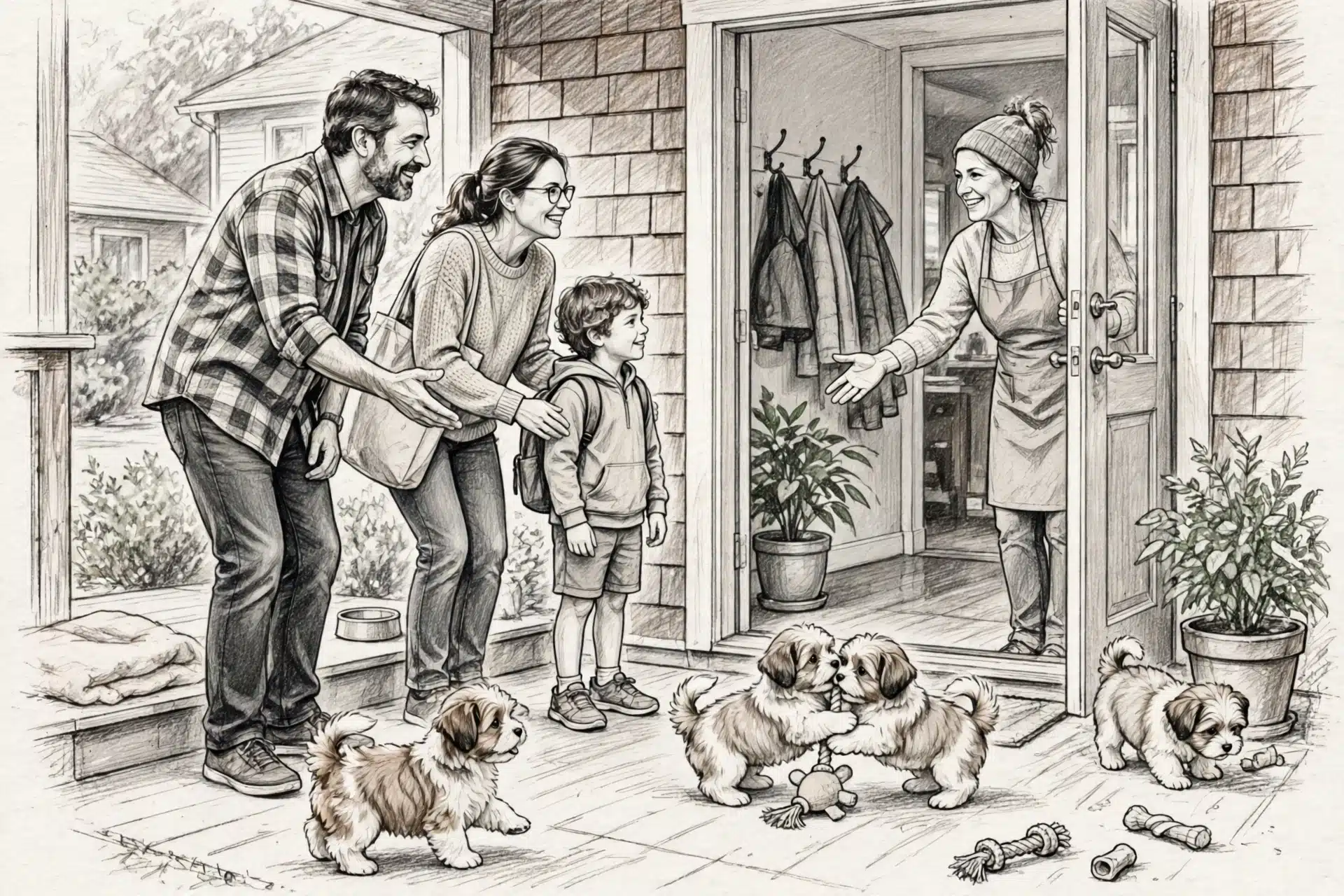
- Call or email and describe your home and experience.
- Ask how many puppies are in the litter and which are available.
- Confirm the visit happens where the puppies live, not a parking lot.
- Ask what records you will see during the visit.
What to Confirm Before You Arrive
Before you drive over, confirm three things. First, that you will see the puppies in their actual living space, because the environment is half of what you are evaluating. Second, that the mother will be present and available to meet. Third, which health records the breeder will show you, including vaccination and deworming dates. For Utah families, also confirm pickup details so the visit doubles as a plan for going home day.
How to Tell a Prepared Visit From a Sales Pitch
A prepared breeder welcomes your questions and answers them with specifics: dates, vet names, test results. A sales pitch rushes you toward a deposit, dodges the mother, or pushes urgency with lines like “someone else is coming at noon.” Time pressure is a red flag, not a reason to commit. The difference shows up in what gets documented, and a thoughtful program such as Sage Puppies uses a written application before a puppy is ever reserved.
Why the Sire May Not Be There
Do not worry if the father is absent. Many breeders use sires from other lines, so he often lives elsewhere. What matters is documentation: the sire’s health testing and pedigree should be available on request, even if you never meet him.
Step 2: Read the Room Before You Meet the Puppies
Before you touch a single puppy, sit still for a few minutes and just watch. When meeting a litter of family-raised puppies, the answers to most of your questions are already in front of you. Start with a quick sweep:

- Is the space clean, safe, and set up for puppies, not just staged for visitors?
- Do the puppies look bright, filled out, and steady on their feet?
- Do they bounce back quickly after noise or excitement?
- Does the breeder talk openly about health, parents, and daily care?
Now look closer at each area.
The Space Itself
A family-raised litter lives in a home, so expect some ordinary mess, but not dirt. Look for clean bedding, fresh water, safe toys, and a defined potty area. Puppies raised around a kitchen or living room handle normal household life far better than pups kept in kennels or barns. If you want the full picture of why this matters, our guide to family-raised vs kennel-raised puppies walks through the differences. Notice where the puppies sleep, eat, and play.
How the Puppies Look and Move
Healthy puppy signs show up in the body first. Eyes should be clear with no discharge, ears clean, coats soft, and bellies round but not swollen. Watch them walk and tumble: a steady gait is a good sign, while limping or wobbling deserves a question. Skin should be free of hot spots, fleas, or bare patches. Check that each puppy in the litter seems roughly even in size and energy.
Noise, Energy, and Recovery
Every litter gets loud. What matters is recovery. A door slams, a vacuum starts, a kid runs past, and the puppies should pause, maybe startle, then settle again within a minute. Puppies that stay frozen or frantic may need more socialization. In a good Havanese, Havapoo, or Cavapoo litter, curious pups often trot right over to inspect you instead.
Step 3: Watch the Dam With Her Litter
The dam, the puppies’ mother, tells you more about a litter than any listing photo. Watch how she lives with her puppies, because her comfort and temperament set the tone for the first eight weeks of each puppy’s life.
What a Comfortable Dam Looks Like
A well-bred dam in a family home is relaxed around her puppies and around people. She eats, sleeps, and plays near the litter without hovering anxiously or snapping at visitors. She should look healthy: bright eyes, a clean coat, a steady gait, and a healthy weight. In a home like Sage Puppies, where Havanese, Havapoo, and Cavapoo litters are raised in the middle of family life, the dam often greets guests herself. If she hides, trembles, or guards the puppies aggressively, ask why before you fall in love with a puppy.
Questions Only the Dam Can Answer
Ask the breeder about the dam directly. How old is she, how many litters has she had, and how does she act with children? What health testing has she had done, and can you see the results? A responsible breeder answers these easily and shows paperwork. Ask about her temperament in everyday life too, since a calm, friendly dam usually passes those traits on. These puppy visit questions separate family-raised programs from sellers who never let you meet the mother at all.
How Puppies Differ From Their Dam
Remember that the dam is only half the picture. The sire’s genes shape temperament, coat, and size too, so puppies in the same litter can vary in energy and confidence. Watch each puppy, not just the mother, and match the individual dog to your household. The differences between family-raised and kennel-raised puppies show up here most clearly.
Step 4: Ask About the Puppies’ Health and Records
Before you fall for one puppy, ask what paperwork backs the litter. A breeder with nothing to hide will show you records on the spot. Ask to see the dam and sire’s health test results, the litter’s vet exam summary, each puppy’s vaccination and deworming dates, and a written health guarantee. Also ask which vet sees the dogs and whether you can call that clinic to confirm care.
The Records to Ask to See
Bring a short checklist and work through it. Ask for:
- Parent health testing results, such as OFA or genetic panel reports
- A vet exam record for the litter, dated within the last few weeks
- Vaccination records showing which shots each puppy has had and when
- Deworming dates and the product used
- A microchip number, if the puppies are chipped
Cross-check the dates. Shots should follow a set schedule, and gaps or missing entries deserve a question. If the breeder raises these pups at home, as with the Havanese, Havapoo, and Cavapoo litters here in Utah, they can usually pull the folder during your visit.
How to Read a Health Certificate
A health certificate, also called a Certificate of Veterinary Inspection, is issued by a licensed vet after an exam, not by the breeder. Check that it lists the puppy’s age, breed, description or microchip number, and the vet’s name and contact details, and that the puppy matches the description. A recent exam date matters more than a fancy letterhead, and a certificate only states the dog looked healthy that day. It does not guarantee future health, so treat it as one document among several. The AVMA explains how attending vets document breeder dogs and the records they keep.
Records You Should Receive in Writing
Verbal answers fade. Get these in writing before you pay a deposit: the vaccination and deworming record, the vet exam summary, the microchip number, and a signed puppy contract with the health terms spelled out. Ask when the paperwork transfers to you at pickup. Breeders who breed health-tested parents, including any program you vet for your own litter, should also share the parents’ test results so you can verify them yourself rather than take the claim on faith.
Step 5: Let the Puppies Choose You Back
Sit on the floor and stay still for a few minutes. The litter will tell you plenty. Confident puppies wander over first, curious ones sniff your shoes, and the shy one watches from across the room before creeping closer. That range is normal in a family-raised litter, and watching it unfold is one of the best parts of a home visit.
How to Handle Puppies Without Overstimulating Them
Keep handling short and calm. Pick a puppy up with one hand under the chest and one under the rear, hold it for a minute, then set it down. Let each family member take a turn so the puppies meet everyone, but limit each session to a few minutes. Avoid loud voices, fast movements, and rough play, which can overwhelm young puppies. Watch how each one recovers: a puppy that settles quickly after a startle usually handles new homes well.
Matching Temperament to Your Household
Think about your daily life, not just which puppy is cutest. A bold, busy puppy suits an active family; a softer one often fits a quieter home with older kids. Note which puppy seeks you out, which plays hardest, and which prefers your lap. Breeders who know the litter can help match you, and a good application asks about your routine for exactly this reason. Programs like Sage Puppies’ matching process pair families with puppies based on what you share about your household.

Choosing the Breeder, Not Just the Puppy
The visit is really about the person raising the litter. Notice whether the puppies are clean, handled daily, and relaxed around people. Ask how she socializes them and what happens if a placement does not work out. A breeder who interviews you as carefully as you interview her is protecting the puppy, and that care matters more than picking the boldest pup in the room.
Step 6: Know the Next Steps Before You Leave
A great visit ends with a clear plan, not a spur-of-the-moment decision. Before you drive home, make sure you know exactly how the move from “we met the litter” to “we brought a puppy home” works.
Application, Deposit, and Contract
Most family-raised programs follow the same order: you submit an application, place a deposit once you’re matched, and sign a contract before pickup. Ask who holds the deposit, whether it transfers to a future litter, and what the contract covers. Breeders often spell out health checks, return terms, and spay or neuter expectations in writing. Sage Puppies lays out its process on its pricing and reservation page, so you can review the steps before you visit.
Budgeting for a Family-Raised Puppy
How much do family-raised puppies cost? Well-bred Havanese, Havapoo, and Cavapoo puppies from a small home program typically run $3,500 to $4,500. That price reflects health testing on the parents, early socialization, and hands-on care, not kennel volume. Budget beyond the purchase too: a vet visit, vaccines, food, a crate, and grooming for these coats.
Planning the First Days at Home
Decide who handles night potty breaks and where the puppy will sleep. Pick up before a weekend if you can, so someone is home for the first few days. Bring a towel that smells like the litter to ease the first night.
Common Mistakes to Avoid When Meeting a Litter
Rushing the Visit
Plan at least an hour. Puppies nap hard and wake suddenly, so a ten-minute look often shows you only sleepy pups. Stay long enough to watch a full wake cycle: who greets you first, who recovers fast after a startle, and how each one handles your voice and hands. Ask to see the puppies more than once if you can. A second visit, even a short one, tells you far more than a rushed first meeting.
Mistaking Marketing Language for Evidence
Words like “family-raised” appear on many websites, but the proof is in the home, not the phrasing. Ask to meet the mother and see where the puppies sleep and play. Request the health testing results for both parents and the puppies’ vaccination records in writing. A breeder proud of their program will hand these over without hesitation. Any reputable program, including a small one like Sage Puppies, should welcome your questions about breeding health testing, the puppy contract, and how the litter has been socialized. If answers stay vague, walk away.

You know what to look for now: a clean home, honest answers, and puppies raised in the middle of family life. See it for yourself. Browse current Sage Puppies litters, then start the application to visit and meet your puppy in person.
Frequently Asked Questions
Q1: family-raised puppies for sale near me | meeting the litter
When meeting a litter of puppies, visit the home where they were raised, watch the space, meet the dam, and review health records before you decide.
Q2: What should I bring to a puppy visit?
Bring your checklist, questions, and a towel for the litter’s scent. Plan to stay an hour so puppies wake and play.
Q3: How do I know a puppy is healthy?
Clear eyes, clean ears, a soft coat, steady walking, and quick recovery after startles are the main healthy puppy signs.
Q4: Should I put down a deposit during the first visit?
No. Submit the application, review the contract and health terms, and only place a deposit once you are matched.
Q5: What questions should I ask the breeder?
Ask about parent health testing, vaccination and deworming dates, vet exams, socialization, and what happens if a placement fails.
Conclusion
Meeting a litter of family-raised puppies well comes down to three things: visit the home, meet the dam, and get the records in writing. Watch how the puppies recover from noise, ask about parent health testing and puppy vaccination records, and never let urgency rush a deposit. For Havanese, Havapoo, and Cavapoo litters in Utah, the visit itself tells you whether a program is genuine. Take an hour, sit on the floor, and let the litter show you who they are. A sound choice starts there, and it protects your family and the puppy for years.