Quick Summary: Start by asking for verifiable parent health results, puppy vaccination and deworming records, and a written contract before paying a deposit. Meet the mother in person or on video, confirm the breeder’s identity and environment, and check OFA records independently. Walk away if answers are vague, visits are refused, or the breeder pressures you to pay by wire, gift card, or payment app. Sage Puppies is presented as a breeder that shares records openly, welcomes Utah visits, and offers scheduled video calls for out-of-state buyers.
A breeder who says “yes, of course I can send records” and then needs three days to find them has already told you something no puppy photo ever will. Most buyers know they should ask questions, but few walk into a puppy breeder interview with a real plan. They fall for cute faces and forget to check health testing, contracts, and how the puppies were raised. This guide gives you a weight-ordered set of questions to ask a dog breeder, from parent health clearances like OFA results to deposit terms and delivery logistics. It works whether you’re comparing Utah breeders or searching nationwide, and it covers the Havanese puppy questions first-time owners ask most. Bring a puppy buyer questionnaire, take notes, and trust what the breeder shows you over what they say.
Before You Start: Build Your Question List
Ask the Hard Questions Before You See the Puppies
A good puppy breeder interview happens on the phone, before you fall in love with a face. Ask about parent health testing, how the puppies are raised, and what happens if the match fails. Willing answers signal a careful breeder. Deflection is a puppy breeder red flag worth taking seriously.
Sort Your Questions Into Three Tiers
Build your puppy buyer questionnaire in tiers so you stay focused. Tier one covers health testing, such as OFA heart and patella results. Tier two covers socialization, vet care, and the contract. Tier three covers logistics like pickup or delivery timing. Ask tier one first, because weak answers there end the conversation.
Request Documents in Writing
Verbal promises are hard to enforce, so ask for records you can keep. That includes vaccination and deworming dates, a health check summary, and parent test results. A breeder who shares written records up front, the way the Sage Puppies application process does, makes verification simple. Anything less deserves a follow-up question.
How Do I Know If a Puppy Breeder Is Reputable?
A reputable breeder will pass five simple checks. During your puppy breeder interview, look for:
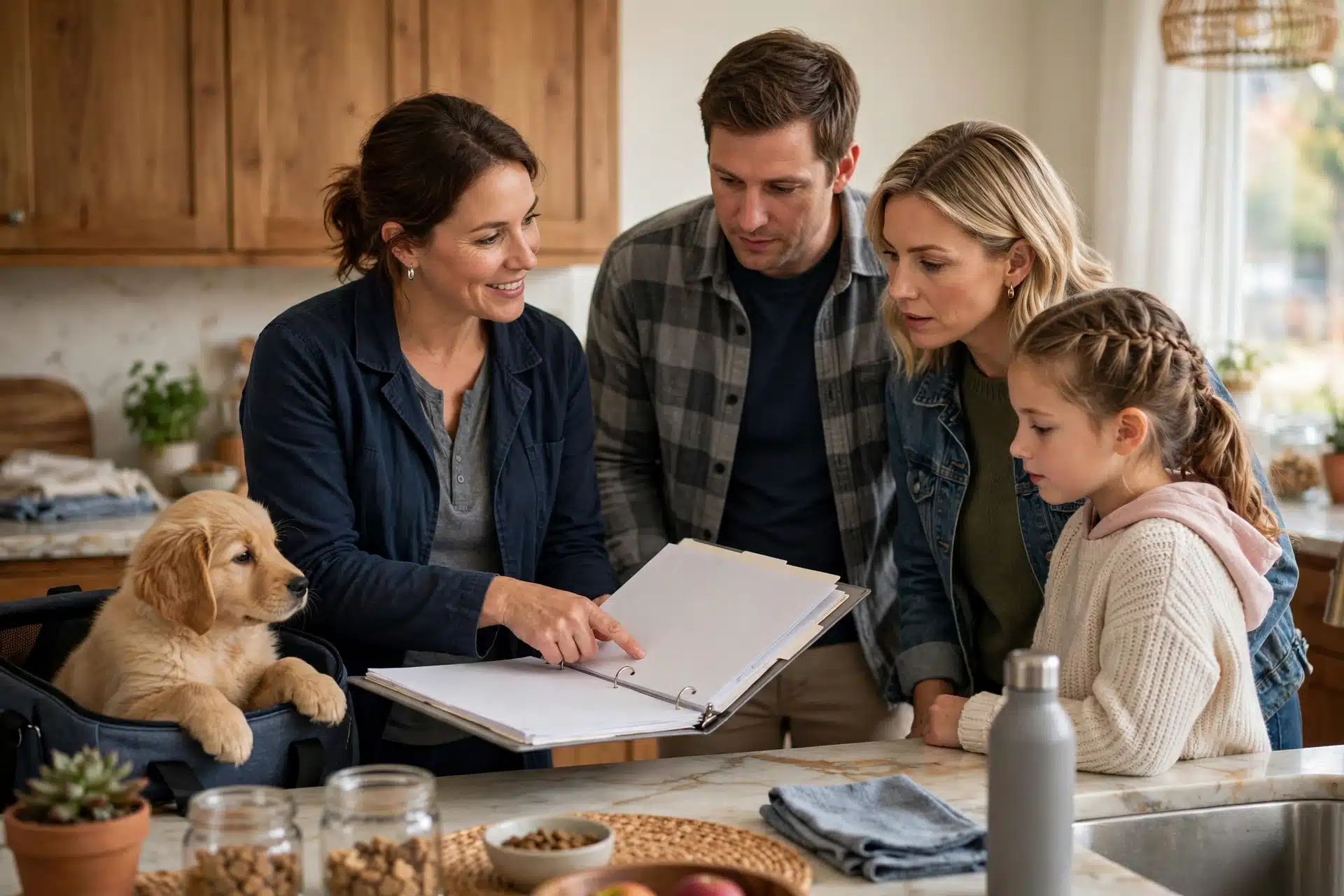
- A breeder who raises the puppies themselves, not a reseller or broker.
- A real business location and license you can verify.
- A named veterinarian and dated health records for each puppy.
- Parents on site that you can meet, ideally with health testing results.
- A written contract that covers deposits, returns and health terms.
Confirm You Are Talking to the Breeder, Not a Reseller
Ask directly: “Do you own the mother, and can I see where the puppies live?” A breeder says yes and invites you. A reseller hesitates, offers to “ship only,” or pushes a fast decision. Resellers source puppies from third parties, so they often can’t answer basic questions about the parents or early care.
Ask for Local Licensing and Business Records
Legitimate breeders can name their business, show a license where their city or state requires one, and provide a receipt. A published puppy listing with a real location is a good sign. Refusal to give any address, or payment only through gift cards and wire apps, is a scam pattern.
Look for a Real Veterinary Relationship
Ask which clinic examines the puppies and when. Reputable breeders share dated exam notes, vaccination and deworming records, and their vet’s name. You should be able to call that clinic to confirm care. A “vet checked” phrase on a website, with no records behind it, means nothing.
Health Testing Questions to Ask About the Parents
What health tests should a reputable breeder provide for the parents? A named, dated record for each parent covering the screenings that matter for that breed:
- Havanese: annual eye exam (CAER), hip x-ray, and patella certification, the three tests behind a CHIC number
- Cavalier side of a Cavapoo: cardiac clearance by a cardiologist, plus eye and joint screening
- Poodle side: eye exam, joint screening, and breed-relevant DNA tests
- Both parents of any Havapoo or Cavapoo litter: records for each line, not one generic panel
Ask your Havanese puppy questions test by test, and ask which parent took each one.
Which Tests Should Be on File for Both Parents
Get specifics, not a vague “all health checks done.” Ask for readable copies of the sire and dam’s results, and ask for the sire’s records even when he lives with another family. Each report should name the dog, the test, the date, and the result. Sage Puppies builds its pairings on documented screening for both lines, and a breeder anywhere should be able to do the same on request.

Read the Results, Not the Headline
A CHIC number only proves the recommended tests were done and made public. It says nothing about whether the results were normal. Read each result yourself, and ask how findings shaped the pairing. Eye and cardiac clearances expire, so check dates too.
Verify Records Independently and Ask Your Own Vet
Match each parent’s registered name against the breeder’s paperwork, then search the OFA’s public database yourself to confirm the same dog, tests, and results. Screenshots are easy to fake; a live registry listing is harder. Last, bring the records to your own vet before pickup. For a deeper question list, see our guide to asking about health-tested puppy parents.
Meeting the Mother and Father: Questions to Ask in Person
Can You Meet the Mother and Father Before Buying?
Yes, and you should ask to meet at least the mother in person before you commit. The dam’s temperament and condition tell you more than any photo or video. A responsible breeder welcomes this visit, so treat hesitation or a video-only offer as a warning sign. Sires are sometimes owned elsewhere, but the breeder should still share his history and test results.

What to Watch For in Parent Temperament
Watch how the mother acts with you and her puppies. A steady dam greets visitors calmly, lets you handle her, and settles quickly after checking you out. Nervous snapping, constant pacing, or hiding behind the breeder matters, because puppies inherit both genes and habits. Ask how she behaves around children and other dogs, since that predicts what your pup may grow into.
Questions About Parent Age and Litter History
Bring a short list to the visit. Ask each breeder these questions:
- How old is the mother, and how many litters has she had?
- How far apart are her litters? Good programs rest a dam between them.
- Was the father health tested, and can you see his results?
- How many puppies were in past litters, and did any have health issues?
Small programs like Sage Puppies limit their dams to a few litters, which protects both mother and pups.
Socialization, Handling, and Day-to-Day Care Questions
How Was the Litter Socialized and Handled?
Ask where the puppies were raised and who handled them each day. Good answers describe puppies raised inside a home, touched daily, and exposed to normal household sounds like vacuums, doorbells, and children. Ask whether the puppies met new people, walked on different surfaces, and had short car rides. Puppies handled this way settle into new homes faster and handle stress better. Ask what a typical day looks like for the litter, and trust a breeder who answers with detail.
House Training, Feeding, and Sleep Routines
Next, ask what daily habits the puppies already know. A good breeder explains the food brand, feeding times, and any planned switch. Ask how potty training has started, whether puppies use a pad or a yard spot, and how crate training is going. Also ask about sleep setups. The answers show you what the first week at home will require. Our guide to a puppy’s first 30 days walks through what to expect house by house.
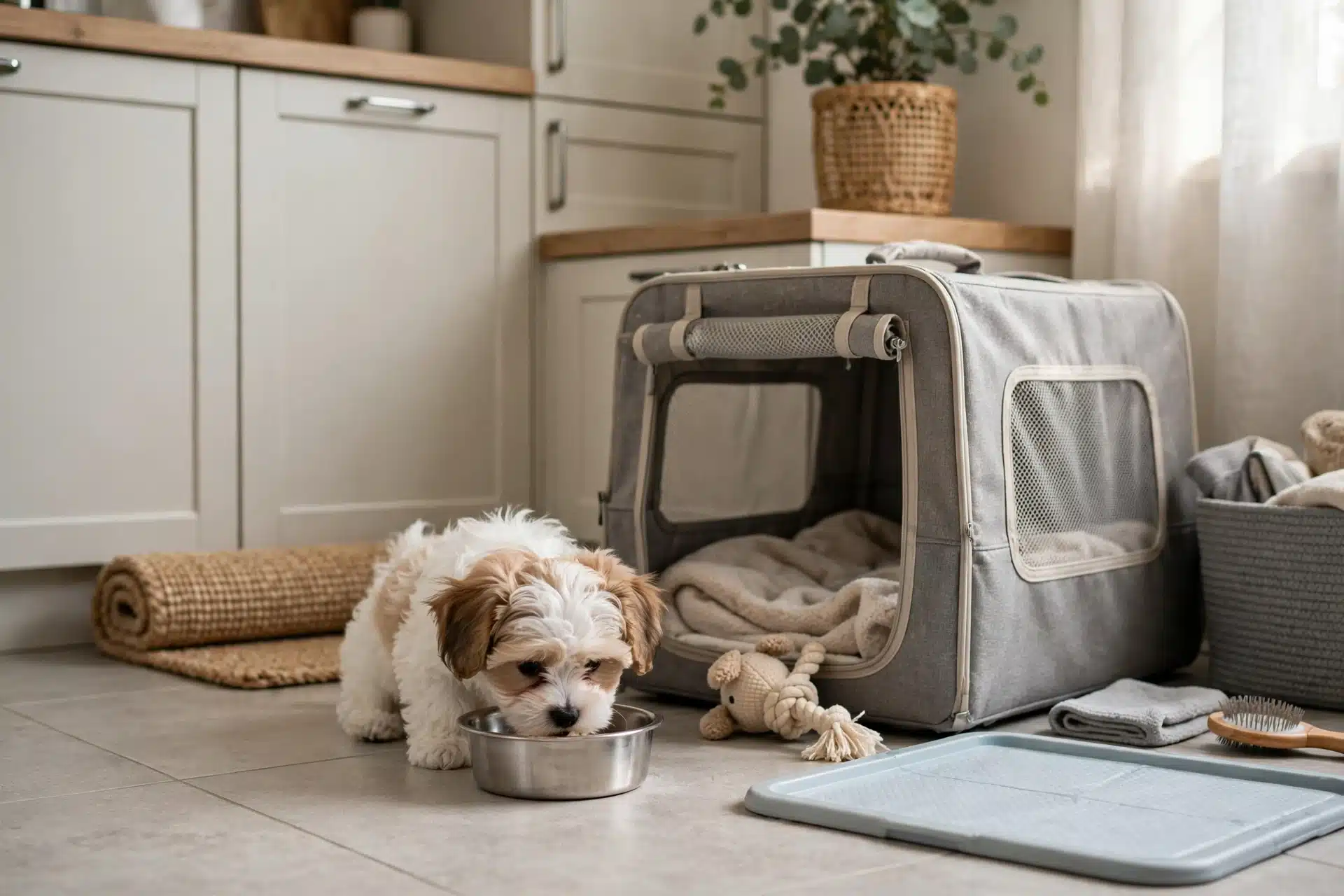
Questions Specific to Small-Breed Homes
Small breeds like Havanese, Havapoo, and Cavapoo puppies bring a few extra questions. Ask how the breeder protects tiny puppies from falls, stairs, and rough play, and how early grooming prep starts. Havanese puppy questions should also cover coat care and tear staining. Ask about safe alone-time limits, since small puppies cannot hold their bladder long.
Records, Vaccinations, and Veterinary Paperwork
What Records Should Come With the Puppy
Ask exactly which papers arrive on pickup day. A serious breeder hands over vaccination records with dates and vaccine type, deworming dates and products used, and a note on any health issues. Puppies leave too young for rabies shots in most states, so an incomplete series is normal. Missing or vague paperwork is not.
Has a Veterinarian Examined the Puppy?
Ask whether a licensed vet examined the puppy and when. A good answer includes a written exam date, the clinic’s name, and what the vet checked: heart, eyes, ears, teeth, and joints. Request a copy of that exam certificate. At eight weeks, core puppy vaccines should have started on schedule, since AAHA vaccination guidelines recommend beginning the series early and repeating it until at least 16 weeks.
Questions About Deworming and Preventive Care
Intestinal worms are common in puppies, so ask what dewormer was given and when. Then ask about heartworm and flea prevention, which typically starts in the first weeks. Add a microchip question too: is one placed, and how do you transfer the registration? For what visits and shots look like after you bring a puppy home, see the section covering a Havanese puppy’s vet visits and shots schedule.
Contracts, Deposits, Pricing, and Delivery Questions
What Should the Contract of Sale Include?
Ask for everything in writing before money changes hands. A solid puppy purchase contract lists the breeder and buyer names, the puppy’s identifying details, the total price, what the deposit covers, a health guarantee with its exact terms, and the return policy if the home does not work out. Ask whether health testing results for the parents come with it, and read every page before you sign.
How Do Deposits, Refunds, and Pricing Work?
Ask four things directly: is the deposit refundable, under what conditions, what the total price includes, and when the balance is due. Some breeders apply deposits toward the price; others treat them as non-refundable waitlist fees. Sage Puppies lays out its own terms, so you know what your reservation protects. Never wire money or pay in gift cards; scammers use both. Ask which payment methods they accept and get a receipt.
Pickup or Delivery: The Questions That Prevent Problems
Ask where the puppy will be when you meet it, who travels with it, and how it is fed and watered en route. For Utah families, pickup at the breeder’s home lets you meet the dam firsthand. For out-of-state buyers, ask whether a ground transporter or flight nanny carries the puppy in-cabin, never as checked cargo. Confirm the pickup age, usually around eight weeks, and what paperwork travels with the puppy. Compare the options on our page about puppy delivery versus pickup before you commit.
Red Flags: Answers That Mean Walk Away
What are red flags when buying a puppy? Watch for three groups:
- Payment pressure: wire transfers, gift cards, “pay today or lose the puppy”
- Health evasion: no vet records, no parent testing, changing stories
- Hidden conditions: no visits, no video calls, excuses about where puppies live
A good answer never rushes you. According to the BBB’s puppy scam study, most scammers add surprise charges after the deposit or vanish once money moves.
Pressure and Payment Tactics
Walk away if a breeder demands payment by wire transfer, gift card, or payment app. Scammers favor untraceable methods, so the AKC recommends paying by credit card when buying sight unseen. Urgency is another warning sign. “Three other families want this puppy today” is a sales tactic, not information. A real breeder screens you, and a written deposit policy always comes before money changes hands.
Vague or Contradictory Answers About Health
If a breeder cannot produce vaccination records, deworming dates, or parent test results, stop. Watch for answers that shift, too: “the parents are vet checked” but no paperwork exists, or test claims that never match the documents. Honest breeders hand over records without being chased and explain what each result means.
Refusing a Visit or Hiding the Environment
Reputable breeders welcome you, in person or by video call, so you can see where the puppies live and meet the mother. Refusals, stock photos, or “we only ship” answers deserve suspicion. One out-of-state question settles a lot: ask them to walk the space on camera. Sage Puppies, for example, invites Utah families to visit and offers scheduled video calls for everyone else. A breeder with nothing to hide has nothing to block.

A few good questions can save you years of regret, so put this list to work. If you want a breeder who answers them openly, Sage Puppies welcomes it. Check current availability, then start the application when you feel ready. Wisely Bred. Beautifully Loved.
Frequently Asked Questions
Q1: How do I know if a puppy breeder is reputable?
Run five checks: the breeder raises the puppies themselves, has a verifiable location, names a vet with dated records, lets you meet the mother, and offers a written contract.
Q2: What health tests should a reputable breeder provide for the parents?
Named, dated results for each parent: OFA hips and patellas, annual eye exams, cardiac clearance where the breed requires it, and breed-relevant DNA tests. Verify results in the OFA database.
Q3: Can I meet the puppy’s mother and father before buying?
Yes. Ask to meet the dam in person; sires often live elsewhere, but his test records and history should still be shared.
Q4: What should I ask about a puppy deposit and contract?
Confirm whether the deposit is refundable, what the price includes, when the balance is due, and the return policy. Get everything in writing.
Q5: Should out-of-state buyers trust puppy delivery?
Ask how the puppy travels. In-cabin flight nannies or ground transport are safe; checked cargo is not. Confirm paperwork travels with the puppy.
Conclusion
A good puppy breeder interview comes down to paperwork you can verify. Ask tier-one questions about parent health testing first, confirm results in the OFA database, and meet the mother in person or on camera. Insist on written vaccination records, a clear purchase contract, and deposit terms before any money moves. When answers get vague or payments get pressured, walk away, no matter how cute the puppy looks. Run the interview end to end with your notes in hand and compare breeders on evidence, not charm. Breeders who invite your questions and hand over documents without being asked, like Sage Puppies, make that comparison easy. Wisely Bred. Beautifully Loved.