
Quick Summary: Choosing a puppy for a Colorado apartment means matching temperament and energy to your building’s real rules and routine, not just picking a small breed. Confirm your lease’s written pet terms and outdoor access first, then focus on a puppy that settles quickly and handles noise well. Havanese, Havapoo, and Cavapoo breeds fit well, but ask the breeder about individual puppy temperament and health testing. A calm, adaptable puppy from a home-raised program like Sage Puppies will settle into shared building life faster.
A puppy can look perfect for a Denver condo at a meet-and-greet, then feel like a different dog at 5 a.m. That’s when a housetraining trip means the elevator, the lobby, and a snowy patch of grass before sunrise. Puppy apartment living is not just about picking a small breed. It’s about matching a puppy’s temperament, energy, and care needs to the real rhythm of your building and your days.
This guide walks you through the whole decision, from lease rules and HOA pet policies to realistic daily routines, breeder questions, and which small companion breeds tend to thrive as the best condo dogs. We’ve spent years raising Havanese, Havapoo, and Cavapoo puppies in a home setting, pairing them with families nationwide, so we know how Colorado apartment pets succeed long after the first adorable weekend. Here’s how to choose wisely, calmly, and with your specific apartment in mind.
Step 1: Confirm Your Colorado Building Can Welcome the Puppy
Before you fall in love with a puppy photo, confirm your building will actually accept one. Pet rules in Colorado apartments and condos vary more than most renters expect. Some communities cap weight at 25 pounds. Others limit the number of pets, charge monthly rent per animal, or restrict certain breeds even when those breeds are small and gentle. A quick check now saves heartbreak later.
Ask About Written Pet Terms, Not Just a Listing Badge
A “pet friendly” badge on a listing means very little. It might only mean cats are welcome, or that pets are allowed on a case-by-case basis. Get the real terms in writing before you apply for a puppy.
Call or email the leasing office and ask:
- Is there a weight or size limit, and where does a full-grown Havanese or Cavapoo fall under it?
- What are the monthly pet rent and one-time fees?
- Are there breed restrictions for mixed breeds like a Havapoo?
- How many pets are allowed per unit?
Then ask for the pet addendum in writing. Verbal promises from a leasing agent rarely survive a management change. If you own a condo, check your HOA’s covenants too, since board rules can be stricter than city law. Once you have signed pet terms, puppy apartment living gets much simpler, because you already know your building’s exact rules.

Check Practical Access to the Outdoors
Paperwork is only half of it. A puppy needs quick, easy access to a grassy spot, especially during the first months of house training. Look at your building with a puppy’s short legs in mind.
Ask yourself:
- How far is the nearest grass patch or dog run, in steps, not blocks?
- Is there a covered route for snowy or rainy days?
- Does the building have an elevator, and is it busy at your potty-break times?
- Is there a safe relief area away from car traffic?
A top-floor unit with no elevator and a busy street outside makes every potty break a project. Ground-floor units or buildings with an on-site dog park make puppy apartment living far easier.
For more Colorado-specific planning help, see our guide to finding puppies for sale in Colorado.
Step 2: Match a Puppy’s Needs to Your Actual Apartment Routine
A breed chart can’t see your life. Your calendar can. Before you fall for a face, map how a puppy would fit into a normal Tuesday: when you leave, when you come home, how quiet your walls are, and who’s around at 6 a.m. The right match shows up here, not on a “best apartment dogs” list.
Evaluate Energy, Settling, and Sound Responses
Small size alone doesn’t make a dog apartment-ready. What matters is how a puppy handles three things: energy, settling, and noise.
Watch for these traits when you meet a litter or talk to a breeder:
- Energy level. You want a puppy that plays hard in short bursts, then naps. Constant pacing or frantic play can mean long evenings of restless whining in a small space.
- Settling ability. A good apartment puppy recovers fast. After play, it should relax on its own within a few minutes. Ask breeders which puppies calm down quickly after excitement.
- Sound response. Colorado apartments mean hallway voices, elevator dings, snowplows, and shared walls. Puppies raised in a busy home usually startle, check, and move on. Puppies raised in quiet kennels often spiral.
Ask the breeder to describe a normal day for the litter. At Sage Puppies, puppies grow up inside the house with family noise, so they arrive already used to everyday sounds.
Plan for Company, Exercise, and Enrichment
Every puppy needs more than a cute bed in the corner. Build a realistic daily plan before you commit.
- Company time. Puppies under six months shouldn’t spend a full workday alone. Plan potty breaks every few hours, or line up a dog walker or neighbor.
- Exercise. Two or three short walks a day plus a play session covers most small companion breeds. In winter, hallway fetch and indoor sniffing games fill the gap.
- Enrichment. A stuffed Kong, a snuffle mat, or a short training session tires a puppy’s brain as much as a walk. Ten minutes of training beats an hour of bored pacing.
If you want a deeper look at what daily care involves, our Colorado puppy guide walks through routines month by month.
Step 3: Compare Havanese, Havapoo, and Cavapoo for Your Home
All three breeds share traits that suit apartment life: small size, gentle temperaments, and a strong need to be near their people. The real differences show up in coat care and energy level, so compare them on fit rather than popularity.
Companion Fit and Grooming Commitment
The Havanese is the “velvet” companion of the group. It is small, sturdy, famously friendly, and usually quiet. It loves short play sessions and couch time, which matches a work-from-home or family routine well. The trade-off is coat care: a full Havanese coat needs brushing several times a week and regular trims to prevent mats.
The Cavapoo blends the Cavalier’s soft, people-focused nature with the Poodle’s lower-shedding coat. It is calm indoors but happy for a walk around your apartment complex or a nearby park. Coat type varies by puppy, so brushing a few times a week is the safe baseline.
The Havapoo often brings the Havanese personality in a curlier, lower-shedding coat. Many owners find grooming slightly easier than a straight-coated Havanese, though no wavy coat is maintenance free.

| Breed | Indoor Energy | Coat Care |
|---|---|---|
| Havanese | Gentle, playful in bursts | Brush often; regular trims |
| Cavapoo | Calm, easygoing | Brush weekly or more |
| Havapoo | Gentle, a bit bouncy | Curl varies; brush weekly |
Havapoo and Cavapoo: Ask About the Individual Puppy
Poodle mixes are not a fixed formula. Every Havapoo and Cavapoo puppy gets its coat, size, and energy from its specific parents, so the breeder’s answers matter more than the breed label. Ask which parent is the Poodle, since a smaller or curlier parent usually means a smaller, curlier puppy. Ask how each puppy behaved at handling, noise, and play checks, and whether the breeder can describe its temperament in plain words.
A responsible breeder will happily talk through all of this. If a program only quotes “hypoallergenic” and gives no puppy-level detail, keep looking.
You can see how we raise and describe our Havapoo puppies before you choose. The right match often comes down to one puppy’s personality, not the breed name.
Step 4: Ask the Breeder Questions That Clarify Fit and Health
A good breeder wants your questions. In fact, how a breeder answers tells you as much as the answers themselves. Clear, patient replies point to a program you can trust. Vague or defensive answers are a reason to keep looking.
Request Clear Health and Parent Information
Start with the parents. Ask to see health testing results for both the mother and father, not just a verbal promise that “they’re healthy.” Responsible programs test for the conditions common to their breed, and they share the paperwork.
Then ask about the parents themselves. How much do they weigh? What is their temperament like in daily life? A puppy’s adult size and personality follow the parents closely, and both matter in an apartment. A calm 12-pound parent line predicts an easier city dog than an anxious, vocal one.
Also ask what the breeder guarantees. A written health guarantee, a clear vaccination and deworming record, and a stated policy if serious health issues appear are all reasonable requests. At Sage Puppies, every parent is health tested, and families receive full records before pickup or delivery.
Tip: Ask for documentation in writing. A breeder who hesitates to share test results or records is telling you something.

Discuss Early Experiences and Apartment Concerns
Next, ask how the puppies are raised. Puppies handled daily in a home, exposed to normal household sounds, and started on crate and potty routines adjust to apartment life far faster than kennel-raised pups.
Be direct about your situation. Say, “I live in a third-floor Denver apartment with a shared hallway. What should I ask for?” A breeder who knows their lines will match you with the quieter, more adaptable puppy in the litter instead of the boldest one.
Good questions to bring:
- Which puppy in the litter is most calm and people-focused?
- Have the puppies heard elevators, traffic, or hallway noise?
- What potty and crate routines have you already started?
- How do you support families after pickup day?
The right breeder answers all four without hesitation. If you want a head start, our available Havanese and doodle puppies page shows current litters and their early training notes.
Step 5: Prepare for Puppy Life in a Shared Building
Your puppy arrives before your routine does. Set both up at once and the first weeks get much easier.
Set Up a Safe, Manageable Home Routine
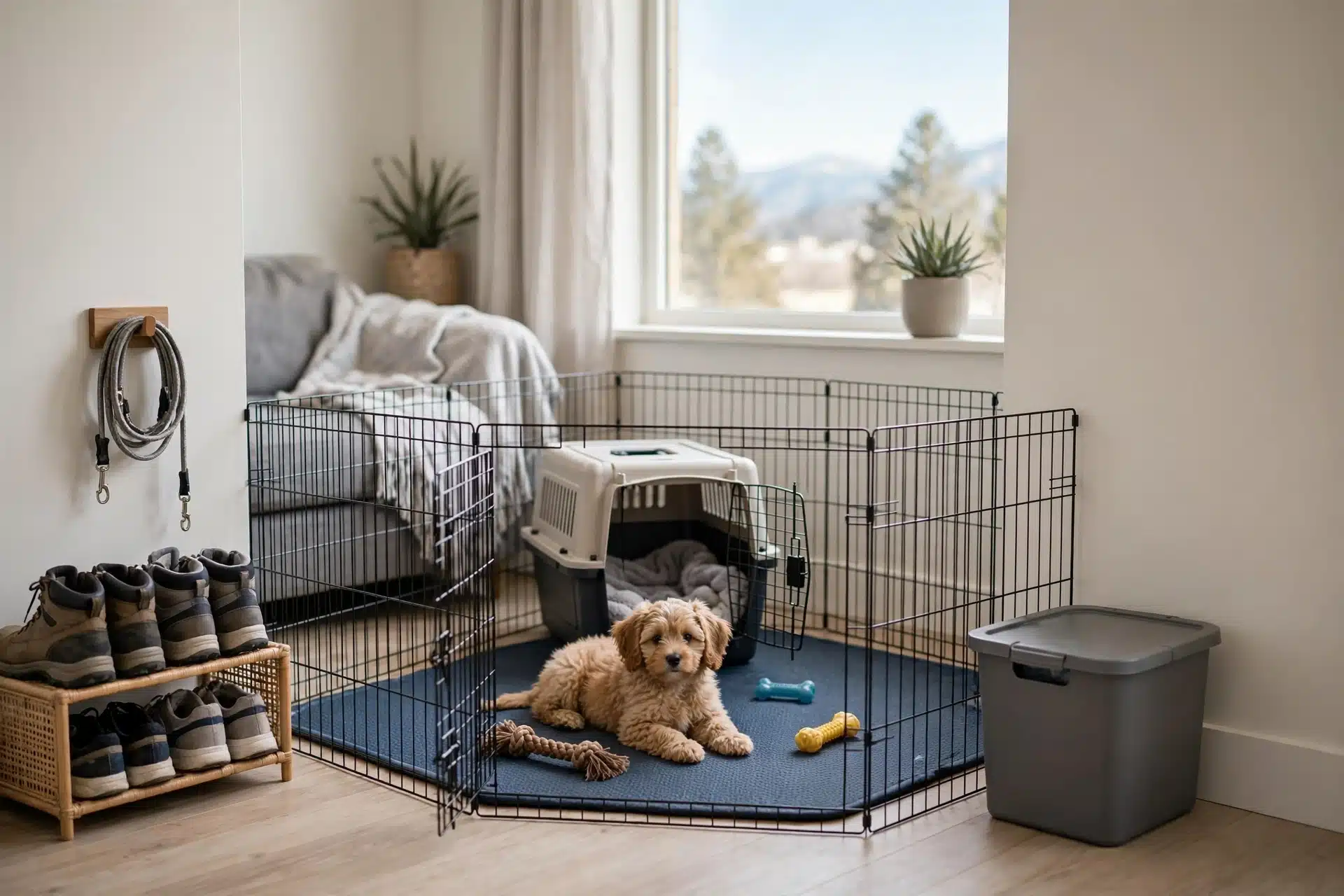
Start with one small room as your puppy’s home base. A pen, crate, and non-slip mat give a small breed a secure spot in a busy apartment. Baby gates block balconies and stair landings, and they cost less than one emergency vet visit.
Puppies live on a schedule. Plan potty trips when your puppy wakes up, after meals, and after play. A young puppy may need to go out every couple of hours, so know your fastest route to a grassy patch.
Pick up loose cords, shoes, and trash bins before pickup day. Small breeds find everything first.
Tip: Ask your breeder for a blanket that smells like the litter. A familiar scent eases those first few nights in a new, quiet apartment.
Plan for Shared Spaces and Neighbor Consideration
Elevators, hallways, and lobbies are training zones, not shortcuts. Keep your puppy leashed in every shared space. Let strangers greet your puppy only when all four paws are calm on the floor.
Noise is the number one apartment complaint, so work on it early. Short absences, a stuffed chew, and steady departures teach your puppy that alone time is safe. Practice while you shower or take out the trash, then build up slowly.
Introduce yourself to close neighbors during week one. A quick “my puppy is learning, thank you for your patience” buys goodwill before a single whimper happens. Know your building’s pet rules too, including leash laws and designated relief areas.
A calm, well-started puppy from a home-raised program like our Havanese and Cavapoo puppies settles into building life faster, because the socialization already started before move-in day.
Step 6: Make a Confident, Unpressured Choice
You have done the research. You know your building’s rules, your budget, and your daily routine. Now trust that work.
A good breeder will never rush you. If a program pressures you to place a deposit the same day, treat that as a warning sign, not excitement. Responsible breeders ask you questions too, because they want the right home as much as you want the right puppy.
Before you commit, run through one last checklist:
- Temperament: Have you met or seen video of the puppy? Does the energy match your lifestyle?
- Health: Are both parents health tested, with records you can review?
- Logistics: Do you know your pickup or delivery plan, and your building’s approval steps?
- Realism: Can you handle the first six months of potty breaks, training, and alone-time limits?
For Havanese, Havapoo, and Cavapoo families, Sage Puppies keeps the process unhurried and transparent from first message to bringing your puppy home.
Confidence comes from preparation, not pressure. When every box is checked, say yes and enjoy it.

Ready to find the right small-breed puppy for your Colorado apartment? Explore the well-started Havanese, Havapoo, and Cavapoo puppies at Sage Puppies. Review available puppies, ask questions, and choose pickup in South Jordan or nationwide delivery. Your calm, confident companion starts with one simple step.
Frequently Asked Questions
Q1: What should I look for when choosing a puppy for a Colorado apartment?
Focus on temperament first: calm, adaptable puppies adjust to shared walls better. Then confirm your lease allows the breed or size, and plan for potty trips, exercise, and noise training.
Q2: Which dog breeds are best for apartment living in Colorado?
Small, quiet breeds do well, especially Havanese, Havapoos, and Cavapoos. They stay under 20 pounds, bark less than many watch dogs, and meet their exercise needs indoors plus short walks.
Q3: Are Havanese, Havapoo, or Cavapoo puppies good for apartment life?
Yes. All three are affectionate, people-focused, and adaptable. Their low-shedding coats help with carpeted units, and daily walks plus play sessions keep them content in smaller spaces.
Q4: How do I get my apartment to approve a puppy?
Check your lease, pay any pet fee, and provide breeder paperwork, vaccination records, and sometimes a temperament note or pet resume.
Q5: Can I get a puppy delivered to Colorado?
Yes. Sage Puppies offers local pickup in South Jordan, Utah or nationwide delivery, so Colorado families can bring home a well-started puppy without a long drive.
Conclusion
Choosing a puppy for a Colorado apartment comes down to a few clear things. Confirm your lease allows dogs and know the fees. Pick a small, calm breed like a Havanese, Havapoo, or Cavapoo, then look past the breed to the individual puppy’s temperament. Plan for potty breaks, snow days, and quiet-time training, and ask any breeder real questions about health testing and how puppies are raised.
A puppy that fits your space and your routine will settle in faster and cause fewer problems later. If you want a home-raised start, our Havanese, Havapoo, and Cavapoo puppies are bred and socialized with apartment life in mind.





