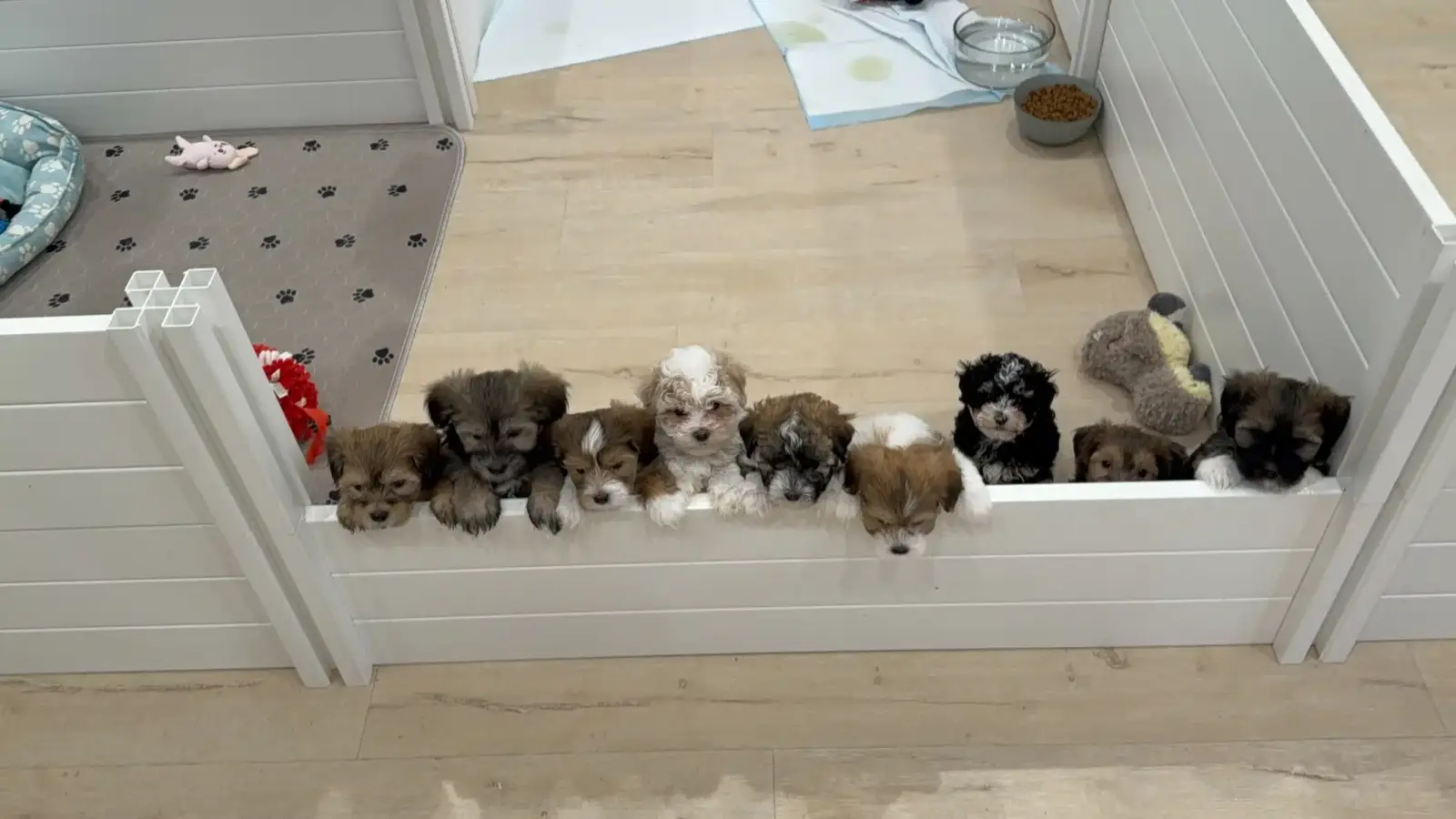
Quick Summary: Prepare your Indiana home days before puppy pickup by setting up one gated, puppy-proofed zone with a crate, matching the breeder’s food, and packing a travel kit for a calm car ride. Agree on household rules and a first-day routine, then book a vet visit within the first few days. The guide, from Sage Puppies, stresses that consistency and a quiet arrival beat excitement for a smooth transition.
Your Indiana puppy pickup might be a ten-minute drive across Indianapolis or four hours on I-70. Either way, good puppy preparation starts days before you ever leave the house. The problem most first-time owners hit is simple: the puppy arrives before the home is ready, and the first night turns stressful for everyone.
This guide fixes that. You’ll get a clear puppy prep checklist for your home, a plan for the ride, and a calm routine for the first 24 hours.
We know both sides well. As a home-raised breeder of Havanese, Havapoo, and Cavapoo puppies at Sage Puppies, we help families prepare for pickup week every single time, and preparing for puppy arrival the right way makes those first days smoother. Start here, then work through each step in order.
Step 1: Set Up One Safe, Supervised Puppy Zone
Your puppy doesn’t need the whole house on day one. A small, safe zone helps a young puppy settle in without getting hurt or overwhelmed. Small breeds like Havanese, Havapoo, and Cavapoo puppies are tiny, curious, and quick. Good puppy preparation starts here.
Choose the First Rooms and Set Boundaries
Pick one room your family uses often. A kitchen, family room, or corner of the living room works well. Your puppy can see you, which builds early trust, and you can watch every move.
Set clear boundaries with baby gates or a playpen. Block stairways right away – stairs are a top spot for puppy falls. Skip the full-house tour for now. Too much space too soon invites potty accidents and chewing.
| Zone Item | Why It Matters | Quick Tip |
|---|---|---|
| Playpen or gate | Keeps puppy where you can see | Choose one tall enough to contain a leaping puppy |
| Crate | A safe nap spot | Place in the zone, never isolated |
| Food and water | Routine starts day one | Use non-tip bowls |
| Pee pads or potty area | Fewer accidents | Stay consistent on location |
Do a Puppy-Height Safety Sweep
Now get down on the floor and look at your room from a puppy’s view. Anything low, dangling, or chewable is fair game in a puppy’s mind.
Go through this checklist:
- Tuck away cords and chargers, or cover them with cord protectors.
- Move houseplants up high. Common ones like pothos and peace lilies can sicken a puppy if chewed, per the ASPCA’s toxic plant list.
- Secure trash cans with locking lids and pull them out of the zone.
- Pick up coins, socks, kids’ toys, and anything small enough to swallow.
- Store cleaners and medications on high shelves or behind closed doors.
The ASPCA Poison Control Center is worth saving to your phone before pickup day. If your puppy eats something odd, call fast.
Puppies from a home-raised program like Sage Puppies arrive already used to family sights and sounds, so your job is simple: keep the zone safe and stay close for the first day or two.
Also Read: How Much Exercise Do Family Puppies Need in Indiana?
Step 2: Buy the Essentials Before Pickup, Not Every Puppy Product
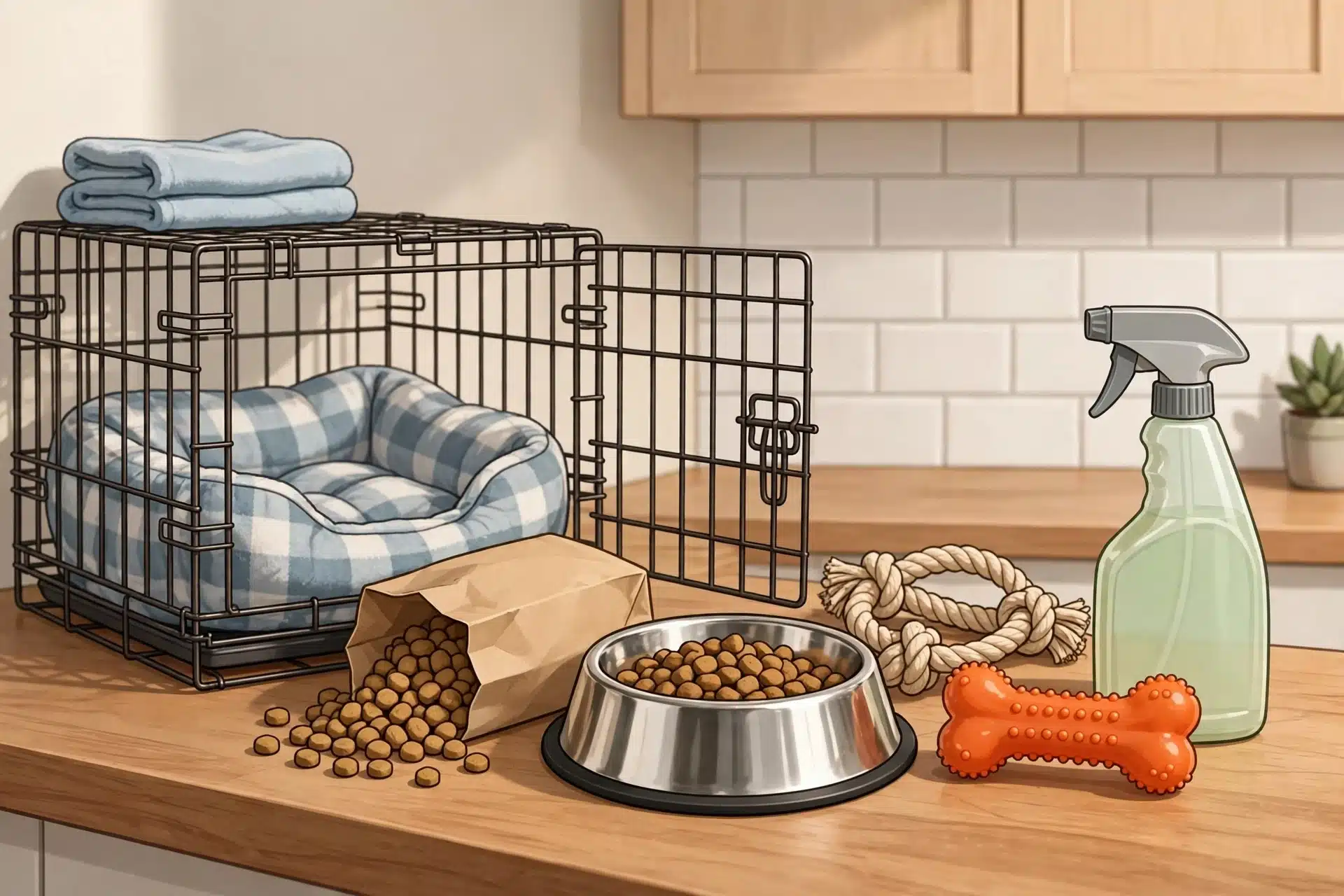
Good puppy preparation means having the basics ready before pickup day, not a shopping cart full of extras. Vets and trainers agree on a short list: food, bowls, cleanup supplies, safe chews, a crate, and a bed. Everything else can wait until you learn your puppy’s habits.
Have Food, Bowls, Cleanup Supplies, and Safe Chews Ready
Ask your breeder what food your puppy is eating now and buy the same kind. A sudden diet change can upset a young stomach. For a Havanese, Havapoo, or Cavapoo from Sage Puppies, we’ll tell you exactly what your puppy has been eating and send you home with a plan for keeping it consistent.
| Essential | Why It Matters | Quick Tip |
|---|---|---|
| Puppy food | Avoids stomach upset from diet changes | Match the breeder’s current food |
| Food and water bowls | Shallow bowls fit small faces | Stainless steel is easy to clean |
| Enzymatic cleaner | Removes accident odors that draw repeat messes | Stock it before the first accident |
| Potty pads and poop bags | Covers the potty-training phase | Keep them near the door |
| Safe chew toys | Teething puppies will chew anything | Skip soft toys that shred |
The ASPCA’s supply checklist keeps it simple: food, bowls, safe chew toys, a collar, a leash, a crate, and bedding. That’s the whole core list. Hard rubber toys and rope toys hold up well; supervise anything soft, since a determined puppy can tear off and swallow pieces.
Prepare a Resting Place and Safe Movement Gear
Your puppy needs a warm, quiet resting spot away from drafts, with a washable blanket inside. A crate should be big enough to stand and turn around, but no bigger. Too much space invites bathroom accidents in the corner.
For the ride home and early vet trips, plan safe movement gear before pickup:
- A small crate or travel carrier sized for a small-breed puppy.
- A soft, breakaway collar and a short 4-6 foot leash.
- An ID tag with your phone number on it.
The AKC’s puppy preparation guidance recommends a crate as both a sleeping spot and a safe space for brief alone time. Put it where your puppy can see family, and let the crate earn trust instead of forcing it. If you’re driving to pickup, a loose puppy in the car is a real hazard. Restrained travel keeps everyone calm.
Also Read: Guides – Sage Puppies
Step 3: Plan the Indiana Pickup Trip and Arrival
Confirm Details and Pack a Small Pickup Kit
A smooth pickup starts with a quick check-in a few days ahead. Confirm the exact time, address, and who is coming. If another breeder or shuttle is handling transport, ask what paperwork to bring. Many interstate moves require a Certificate of Veterinary Inspection, so keep any health papers in a folder where you can reach them easily. The AVMA recommends keeping copies of vaccination records and ID details with you during any trip with a pet.
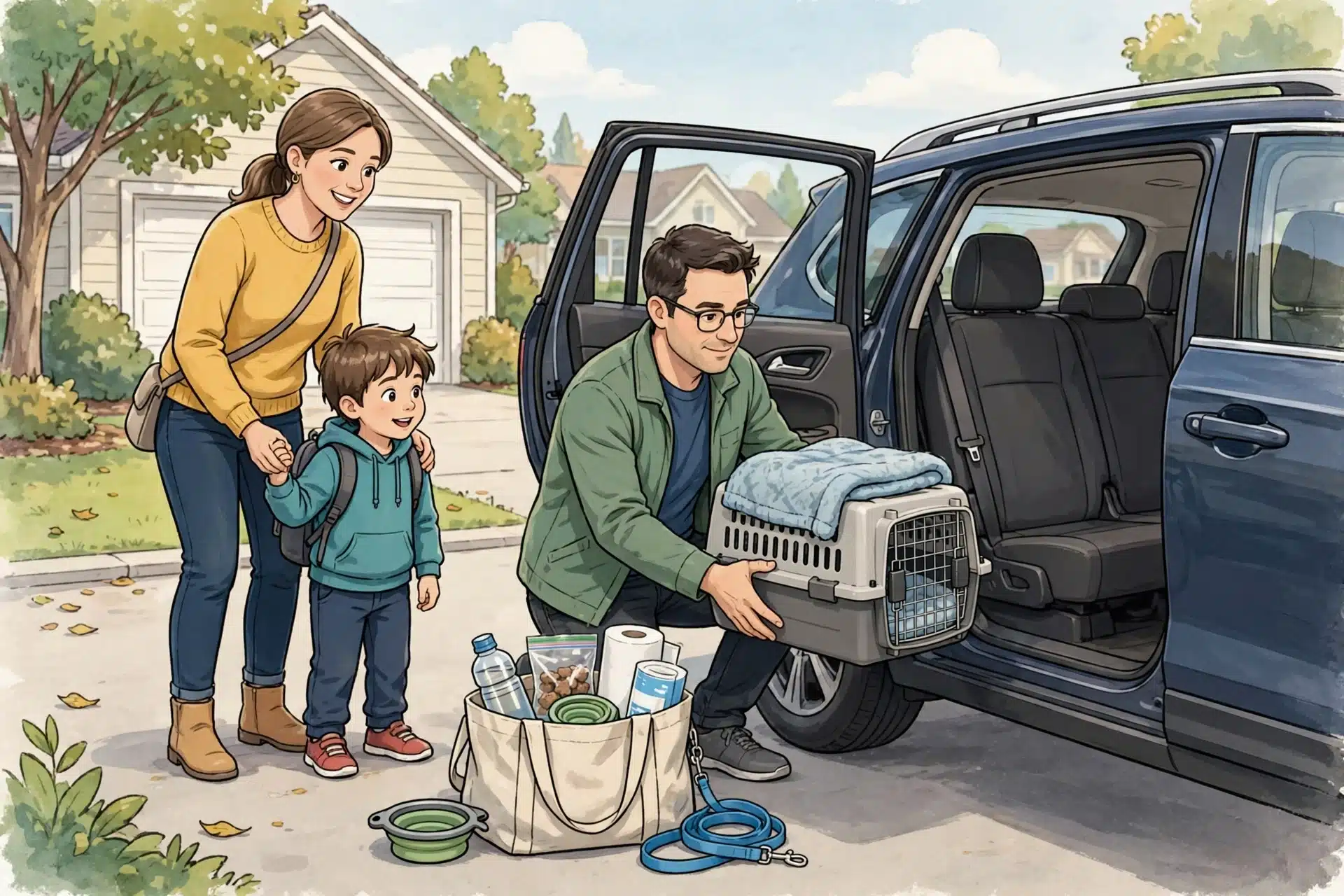
Then pack a small kit for the ride. You need less than you think:
- A soft, secure carrier or travel crate with a washable pad
- A snug collar and a short leash
- Water, a collapsible bowl, and a few small treats
- Paper towels and waste bags for a possible accident
- A lightweight blanket with a familiar scent
A crate also gives your puppy a safe, stable spot during travel. Vets advise proper restraint in the car for your puppy’s safety and yours.
Keep the Ride Home Calm and Supervised
Puppies feel safer when they can see you. Place the crate on the back seat or floor, secured with a seatbelt, and cover one side with a light sheet to reduce motion and visual stress. If a passenger sits beside the crate, they can reach through and offer a quiet finger or soft voice. That small contact calms most pups fast.
Keep the drive simple. Skip long food stops before the trip and offer water at breaks instead. A light meal a few hours before travel also lowers the risk of car sickness, according to VCA Animal Hospitals. Never leave your puppy alone in the parked car, even briefly. Indiana heat and cold both build fast inside a vehicle.
Keep windows up and drive gently. Smooth turns and steady speeds help a first-time rider settle and maybe even nap. When you arrive, carry the puppy inside on a leash, give one calm potty break in your chosen yard spot, and let the quiet begin. Families picking up a Sage Puppies puppy get clear pickup instructions ahead of time, so the plan is already set before travel day.
Step 4: Agree on Household Rules and a First-Day Routine
Set Family Expectations Before the Puppy Arrives
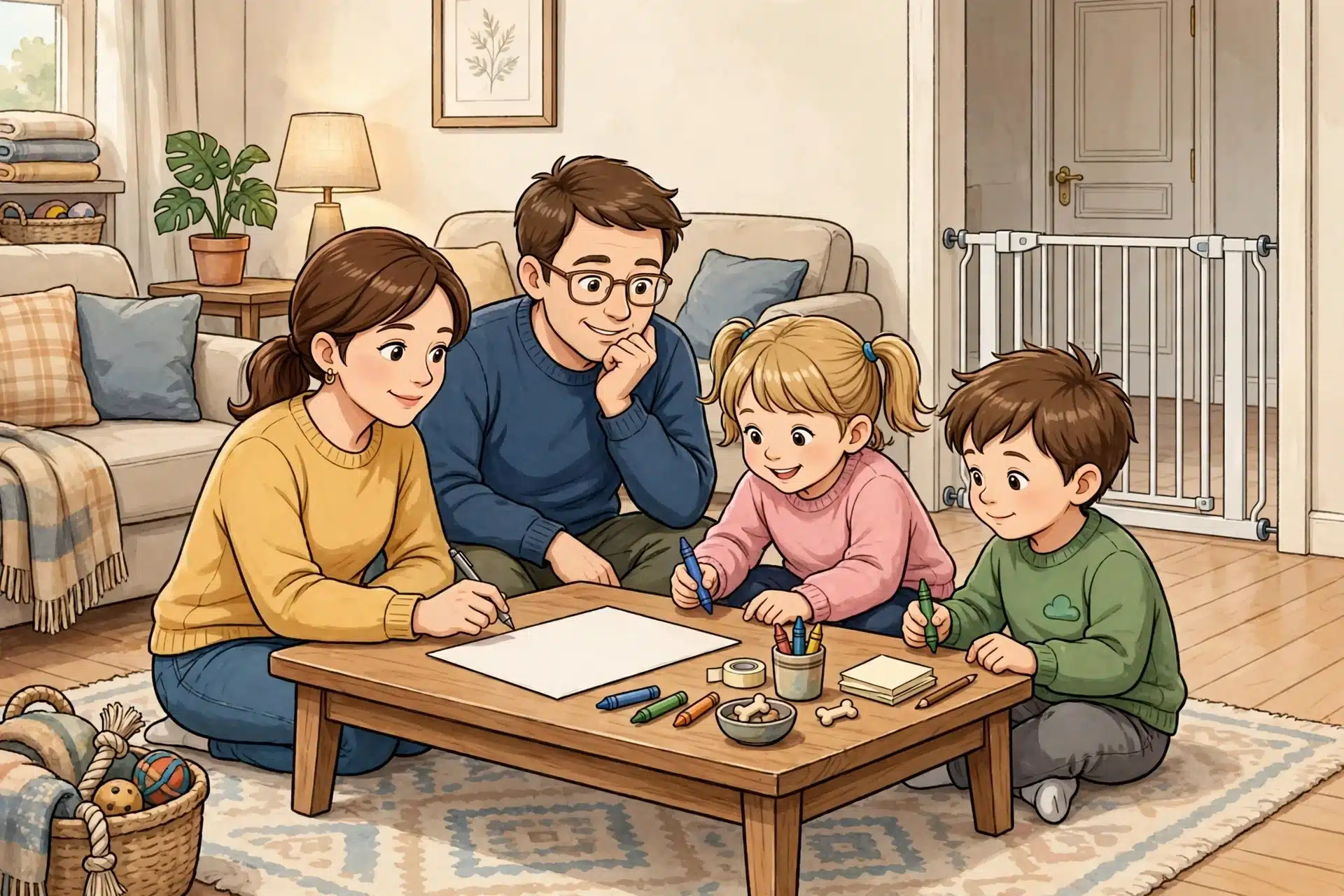
Puppies settle fastest when every person in the house plays by the same rules. Sit down together before pickup day and decide the basics. Who handles feeding, who takes the first potty trips, and which rooms are off limits?
Consistency matters more than the specific rules you pick. Veterinary behavior guidance stresses that clear, predictable routines reduce stress and speed up house training, especially in the first weeks. The ASPCA’s puppy care guide recommends keeping early handling calm and structured so your puppy learns what to expect from day one.
Write your rules down. A short list beats a long debate later:
- Feeding: same person, same spot, same times each day.
- Sleeping: crate or puppy zone stays in one quiet place.
- Handling: everyone uses calm hands. No rough play, no chasing.
- Potty trips: same door, same phrase, every time.
- Off-limits rooms: baby gates or closed doors, not exceptions.
Kids need their own version of the rules. Teach young children to sit on the floor and let the puppy come to them. That single habit prevents most first-week nipping incidents and builds the confident, gentle companion you’re hoping for.
Use a Simple Arrival Sequence
The first hour sets the tone for the first week. Plan it before your puppy walks in, not after.
A workable sequence looks like this:
- One potty trip first. Carry the puppy to the same yard spot you’ll always use. Wait a few minutes.
- Short tour, calm voices. Show the puppy its crate, water, and food area. Skip the grand tour of every room.
- Settle time. Let the puppy rest in its crate or puppy zone for an hour or two. Naps beat marathons.
- Gentle introductions. Each family member offers a calm, low greeting. No parties, no passing the puppy around.
- Another potty trip, then a small meal if your breeder’s feeding instructions allow it.
If you’re picking up from Sage Puppies, ask us what your puppy’s current routine looks like at home. Matching the existing schedule for food, naps, and potty trips keeps the transition nearly seamless. Delivery families can use the same sequence; just start it the moment your puppy arrives.
End the day quietly. A tired puppy on a predictable bedtime routine sleeps through, learns faster, and wakes up ready to be your dog.
Also Read: Indiana Puppy Reservation Deposits: A Complete First-Time Buyer Guide
Step 5: Arrange Follow-Up Care and Preserve the Puppy’s Records
Before pickup day, line up the care your puppy will need after they arrive. Good follow-up care starts with paperwork, not guesswork.
Organize Records and Questions
Put every document in one folder the week before pickup. Include vaccination dates, deworming history, microchip details, and the feeding schedule your breeder sends home. If your puppy arrives by delivery, ask for digital copies in advance so nothing gets lost in transit.
Then build a short question list for your first vet visit. Keep it simple:
- What food is my puppy eating now, and when should I switch?
- When is the next vaccine due?
- Which parasite preventive do you recommend for Indiana?
- Is my puppy on track for growth and weight?
Bring the folder to every appointment. A vet who sees the full history can spot patterns faster than one starting from zero.
Make a Veterinary Plan Without Guessing
Book your puppy’s first exam within the first few days at home. Most puppies need vet visits every 3 to 4 weeks until about 4 to 5 months old, according to guidance from AAHA. Ask your breeder what shots are already done, and let your vet plan the rest instead of copying a neighbor’s schedule.
Core vaccines like distemper, parvovirus, and rabies follow a series timed to your puppy’s age, as VCA Animal Hospitals explains. Indiana has its own rabies rules, so ask your local clinic.
Call at least two clinics before pickup day. Some Indiana vet offices book new puppies out two weeks or more, and emergency-only clinics cost far more for routine visits.
Breeders like Sage Puppies send a health record and care sheet home with each puppy, which makes your first visit faster and your vet’s plan more accurate.
Also Read: 10 Signs a California Puppy Listing Is a Scam – Sage Puppies
Step 6: Check Your Home and Plan Before Pickup Day
Use the 24-Hour Readiness Check
The day before pickup, walk your home at puppy level. Get on your knees and look for anything small enough to swallow: coins, hair ties, kids’ toys, stray batteries. The ASPCA’s prep checklist recommends this exact trick because puppies explore with their mouths.
Work through this list:
- Tuck or cover electrical cords and blind strings.
- Move medications, cleaners, and trash cans behind closed doors or up high.
- Remove or relocate toxic houseplants like pothos and philodendron.
- Set up one gated “puppy zone” with a crate, bed, water bowl, and a few toys.
- Check your fence for gaps and gate latches if you have a yard.
- Agree on house rules with the whole family so everyone responds the same way.
Then confirm the plan itself. Know your pickup time, what to bring, and who’s riding along. If you’re picking up from Sage Puppies in South Jordan, plan for a calm arrival – no crowded greeting party on day one.
Print the checklist and check items off with the whole family the night before. A ready home means your Havanese or Cavapoo starts life with you feeling safe, not overwhelmed.

When pickup day comes, you want a puppy who’s already well-started – handled daily, socialized early, and raised by a family who did the groundwork for you. That’s exactly how Sage Puppies prepares every Havanese, Havapoo, and Cavapoo. Browse our Available Puppies or start your application today, and we’ll walk you through pickup or delivery to Indiana step by step.
Frequently Asked Questions
Q1: What should I buy before bringing home a puppy in Indiana?
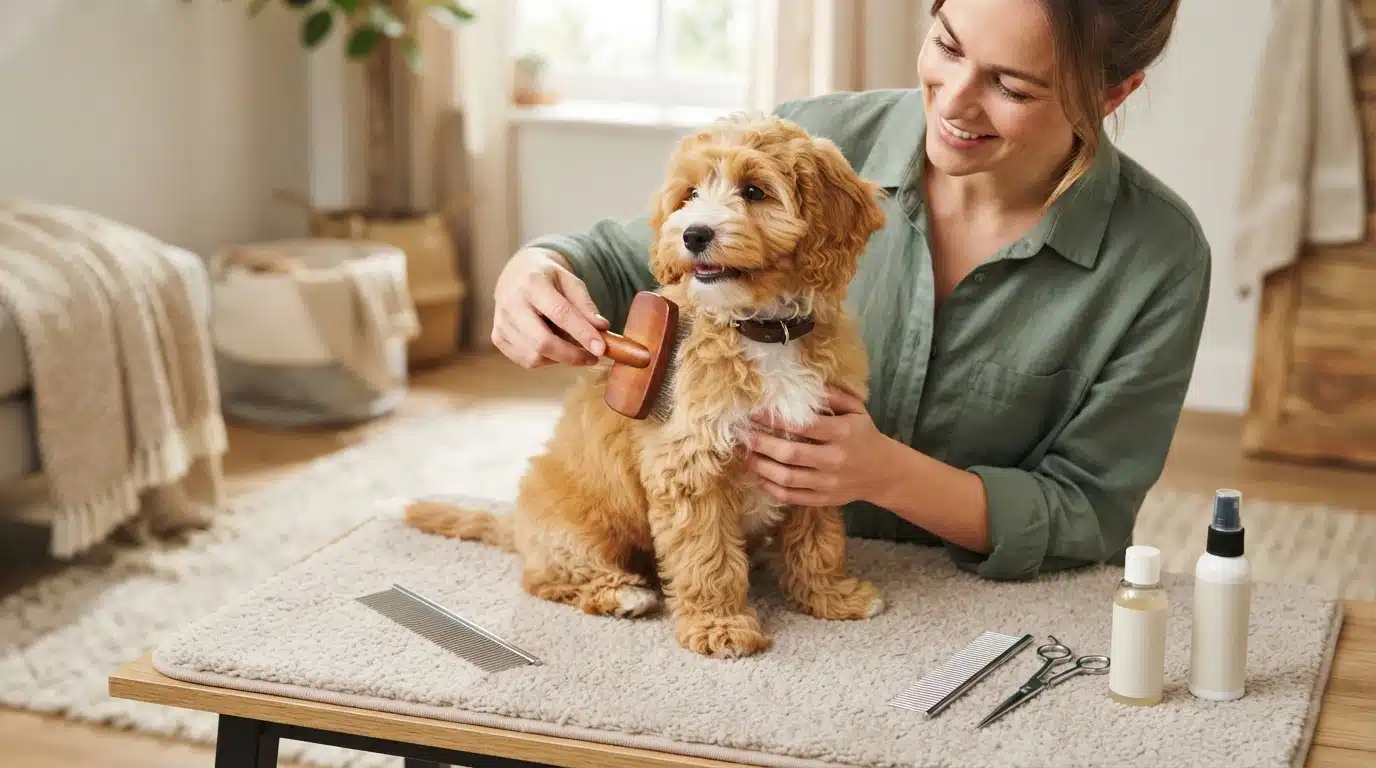
Keep it simple: a crate, food and water bowls, quality puppy food, a collar and leash, chew toys, grooming basics, and an enzyme cleaner. Sage Puppies also recommends having a vet visit booked within the first few days home.
Q2: How do I puppy-proof my home before pickup?
Get low and crawl through your main rooms. Remove cords, small objects, toxic plants, and loose rugs. Block stairs with gates, secure trash cans, and set up one calm, gated space where your puppy can settle safely.
Q3: What is the best way to prepare for a new puppy’s first day?
Plan a short, quiet ride home. Once inside, offer water, a potty break, then rest. Skip visitors and playtime. Calm routines build confidence faster than excitement on day one.
Q4: Should I use a crate the first night?
Yes. A crate with soft bedding helps your puppy feel secure and speeds up potty training. Expect some whining the first few nights and keep the crate near where you sleep.
Q5: Can I schedule a vet visit before pickup day?
You can, and it helps. Call your vet early to book a first checkup within a few days of pickup, since good clinics in Indiana often book out two or three weeks.
Q6: How do I introduce the puppy to my kids and other pets?
Do it slowly. Let kids sit calmly and offer treats. For pets, keep them leashed or separated at first, and supervise every meeting until everyone relaxes together.
A Calm Start Begins Before Pickup
Preparation is the whole game. Puppy-proof one or two rooms, set up a crate with a blanket that smells like home, and agree on house rules as a family before the big day. Keep the drive home quiet, the first days calm, and the routine predictable. AAHA’s puppy preparation guidance stresses that consistency and empathy in those early weeks shape the dog your puppy becomes. None of it requires perfection, just a plan. Families who prepare a safe space, gather supplies, and slow everything down in week one give their Havanese, Havapoo, or Cavapoo the steady start every well-bred puppy deserves.