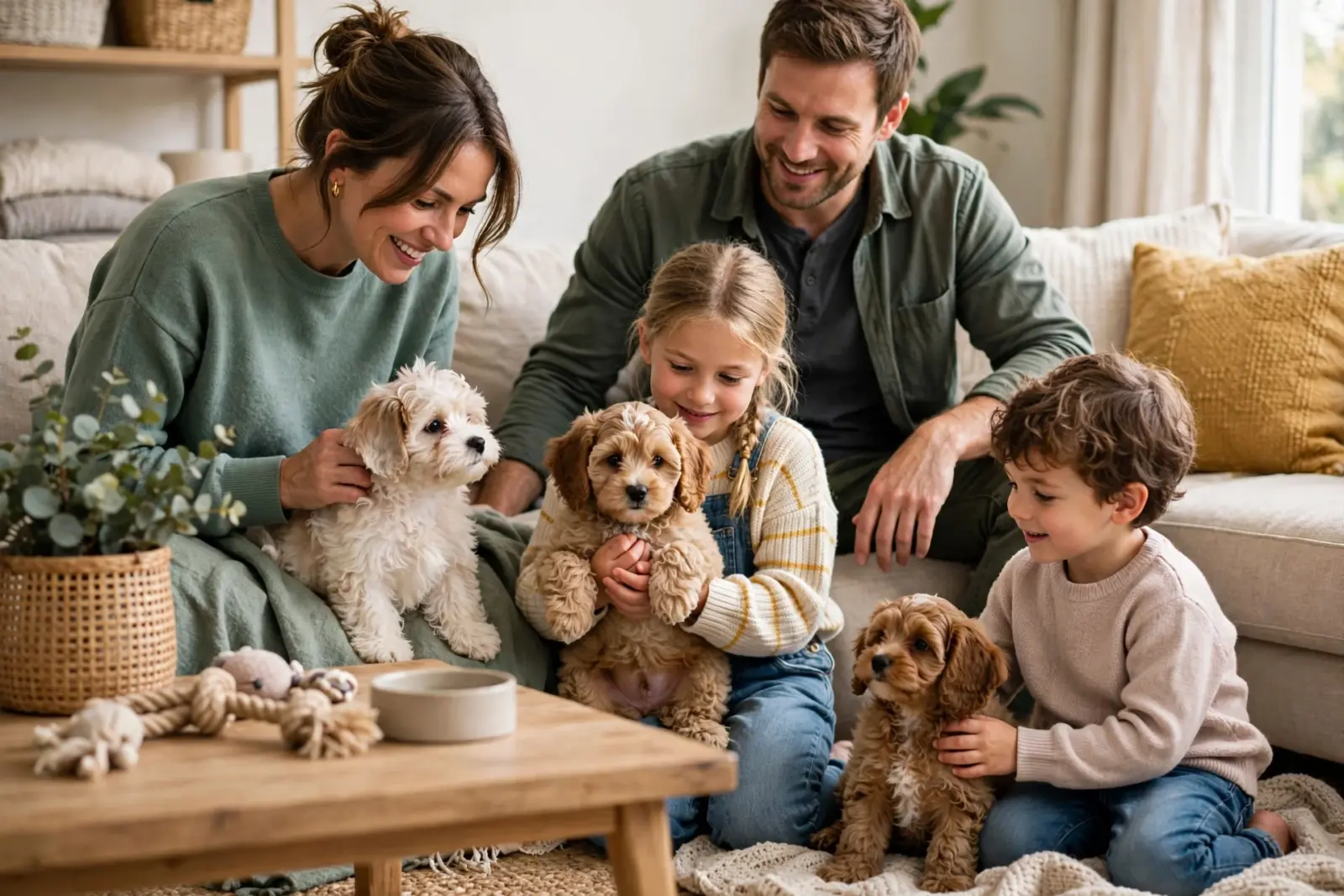
Quick Summary: Home-raised or kennel-raised labels predict temperament less than breeders claim. Broad, positive exposure during the first three months, careful handling, and each puppy’s own recovery from stress matter more than housing, and indoor kennel puppies have even scored as more self-confident in published research. Choose a breeder based on daily routines, health records, and regular observation rather than the setting, then watch how the puppy approaches new things and returns to play after a startle.
Searching for family raised puppies for sale near me usually turns into a debate about housing labels. Here is the honest answer on home-raised vs kennel-raised temperament: studies of indoor kennel puppies found them more self-confident, while studies of breeder history and early litter separation found more fear and separation problems. The label predicts less than sellers imply.
Yet buyers pay deposits on those two unregulated words, while the thing that matters, how a puppy settles into a busy household, never gets defined.
This guide separates research from sales claims, compares the two rearing models on five adjustment traits, and gives you a visit-day checklist. We raise Havanese, Havapoo, and Cavapoo puppies in South Jordan, Utah, so every suggestion here is one you can actually observe in a litter before you commit. In home-raised vs kennel-raised temperament, planned socialization and the individual puppy win every time.
Home-Raised vs Kennel-Raised: Temperament and Adjustment at a Glance
| Home-raised puppies | Kennel-raised puppies | |
|---|---|---|
| Early socialization exposure | Household sounds, floors, appliances, visitors, and family pets as incidental daily experience | Scheduled and protocol-driven exposure to people, surfaces, and sounds |
| Daily handling routine | Frequent hands-on handling by residents, often several people in one day | Set handling and feeding routines carried out by staff or volunteers |
| Confidence and fear responses | Often more habituated to household novelty; outcomes vary by individual and plan | Indoor kennel puppies have scored as more self-confident in published housing research |
| Adjustment to a new home | More familiar with household routine and confined indoor spaces | Routines can be more structured; transition depends on the program’s habituation plan |
| House training readiness | Often accustomed to indoor surfaces and household cleaning routines | Some kennels use pads or runs, so surface preference can need re-teaching |
| Best fit for the household | Apartment and family homes wanting a puppy already comfortable with daily indoor life | Buyers who want documented protocols and observation-based rearing records |
How Home-raised puppies and Kennel-raised puppies Compare
Home-raised puppies
Home-raised puppies are whelped and raised inside a household living space, so house sounds, floors, appliances, visitors, and family pets become part of daily life. The home-raised vs kennel-raised temperament question often starts here, because frequent handling by several residents shapes early puppy confidence and fear-related behavior. This approach fits apartment and family homes that want a puppy already used to indoor routine.
Key strengths
- Familiar with household novelty and confined indoor spaces
- Often more ready for house training on indoor surfaces
- Frequent hands-on handling from day one
Kennel-raised puppies
Kennel-raised puppies grow up in a dedicated whelping room, indoor kennel, or run, with planned, staff-led socialization on a set schedule. Published housing research has found indoor kennel puppies score as more self-confident, so this method deserves a fair look in any home-raised vs kennel-raised temperament discussion. It suits buyers who want documented protocols and observation-based rearing records.
Key strengths
- Protocol-driven exposure to people, surfaces, and sounds
- Structured feeding and handling routines
- Confidence gains noted in published research
What the Research Actually Shows About Puppy Housing
So do home-raised puppies really turn out calmer? The research says: sometimes yes, but housing alone never decides it. Studies find mixed results, so breeders’ handling habits matter as much as the floor the puppies sleep on.
Indoor kennel puppies scored as more self-confident
A well-known finding cuts against the common assumption. In a 2020 study on puppy housing, puppies kept in indoor kennels scored as more self-confident and showed no more aggressive tendencies than house-raised littermates, and they coped better with later life among people, according to the published housing study. The key detail is “indoor”: those puppies still lived amid household sights, sounds, and smells.
Breeder source and early separation matter as much as housing
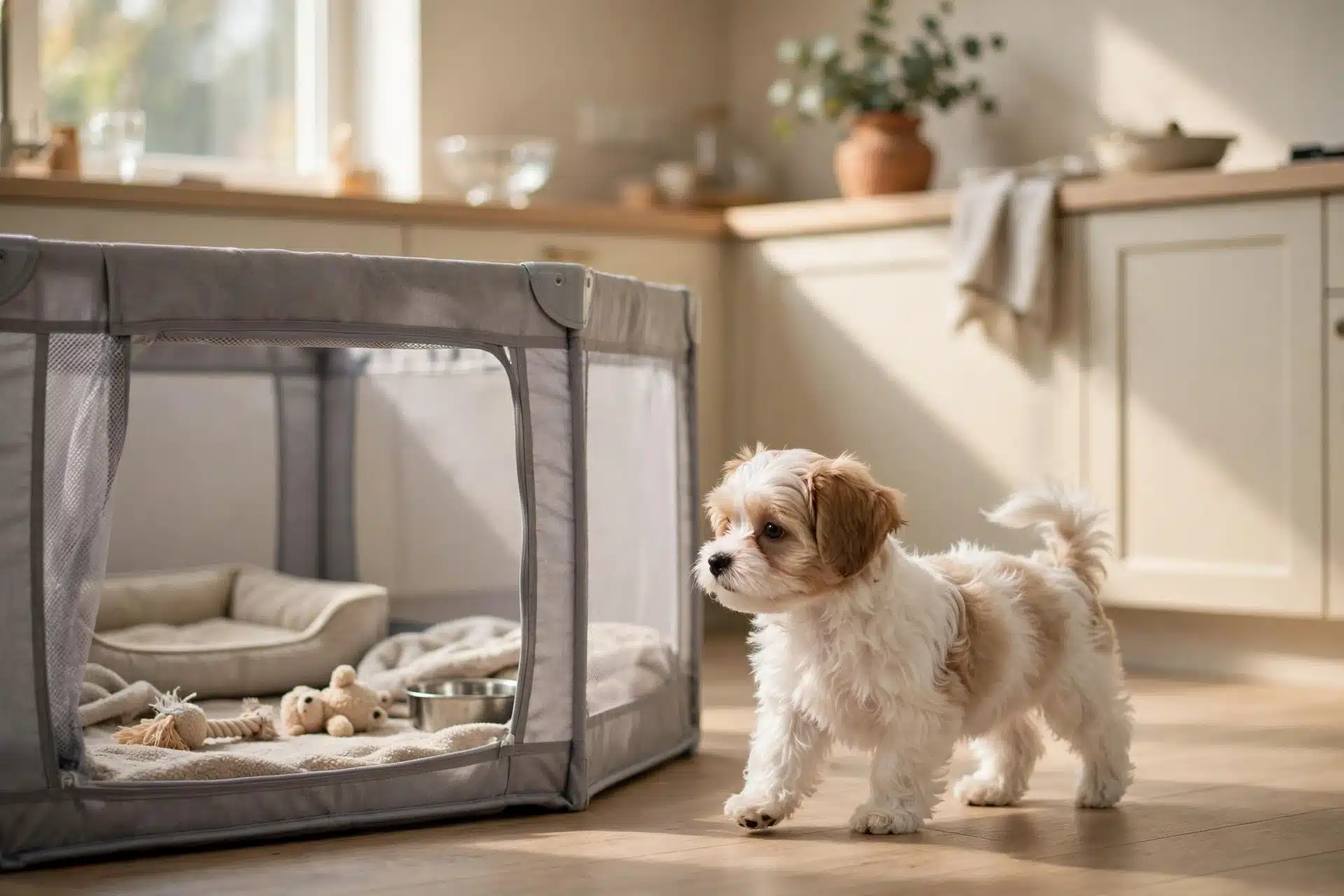
Other research points the same direction. As trainer and researcher Patricia McConnell summarized, pups raised in the home were more confident and showed less fear-related aggression, but the deciding factor was how breeders raised them, not where, per her article “It’s Not Where Pups are Raised, It’s How”. Litter separation timing and how a puppy is reared after weaning also shape temperament.
What the evidence cannot tell you
No study can grade one individual puppy. Temperament varies within litters, and a well-socialized kennel puppy can out-adjust a neglected home-raised one. That’s why questions to ask a breeder should focus on daily handling and exposure, not just location.
How the socialization window shapes all of this
Everything above sits inside the puppy socialization period of roughly the first three months. Positive exposure during that window builds confidence; missed exposure builds fear. Ask breeders what puppies experienced each week, then keep that habituation going at home.
Where the Two Rearing Models Actually Differ Day to Day
Both models can produce steady, confident puppies. The real differences show up in what a puppy experiences between birth and eight weeks, not in the breeder’s label.
Incidental socialization versus scheduled socialization
A home-raised puppy lives inside daily life. Doorbells, vacuums, kids, and car rides just happen, so exposure builds up without a plan. A kennel program has to schedule that input on purpose: handling sessions, new objects, and short outings. The AVSAB position statement says the first three months matter most for socialization, so what counts is the total variety a puppy meets, not the building it lives in.
Handlers, observation, and record-keeping
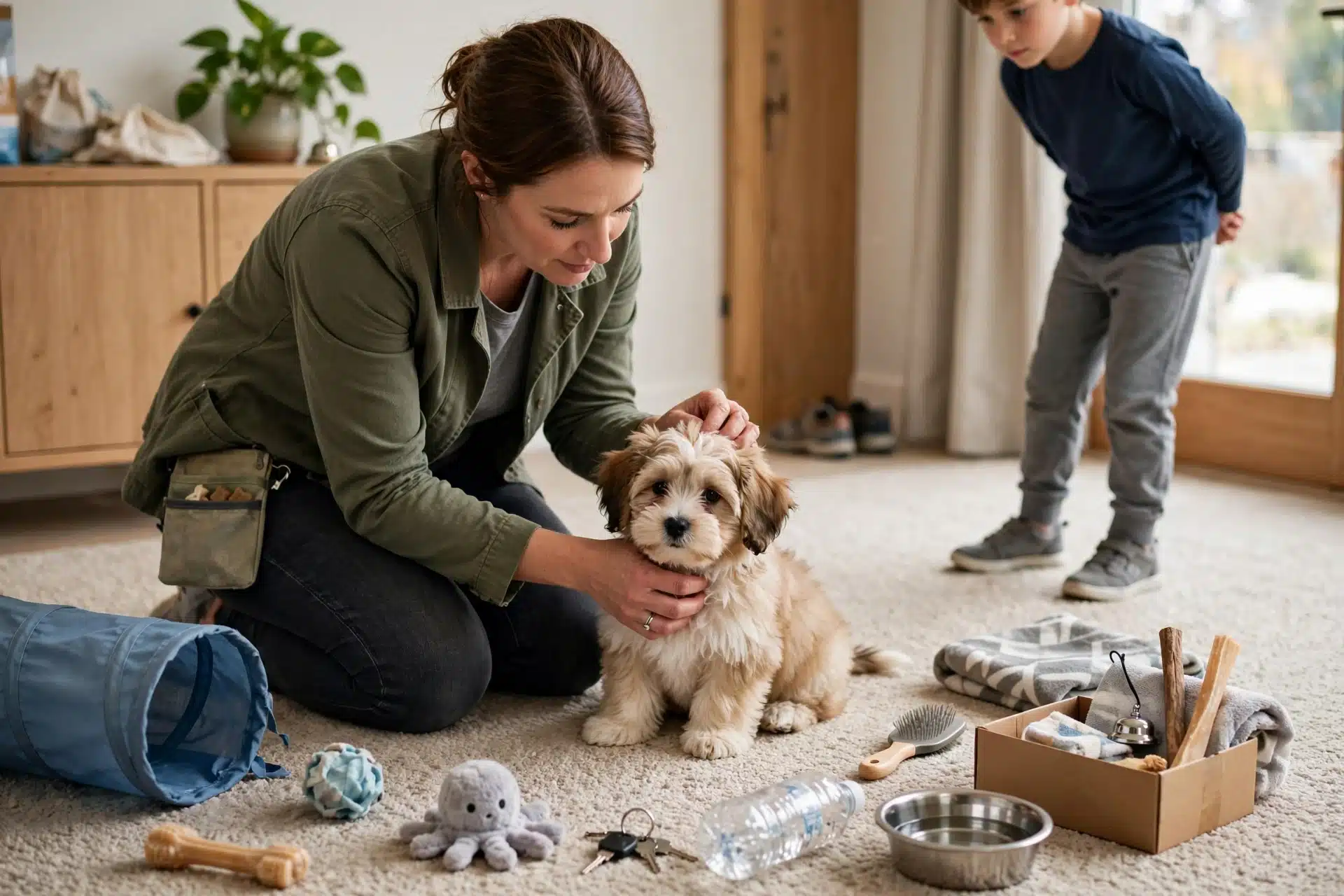
Here the two models can reverse. A small kennel often has fewer handlers but tighter routines, so each puppy gets weighed, handled, and noted the same way every day. Home-raised litters see more people, but notes may live in the breeder’s head. Ask either program what they track: weights, stool, temperament notes, and how each puppy reacted to new things. Good records exist in both settings; vague answers are the red flag, not the kennel itself.
Noise, surfaces, and the household environment
Kitchens, tile, carpet, stairs, and TV sounds shape a puppy’s early map of the world. A puppy raised on one surface in a quiet room meets more of that map later, which is why good kennel breeders add surfaces and sounds deliberately. Ask what your puppy has already walked on, heard, and been carried past.
Confidence, Fear Responses, and How a Puppy Recovers From Stress
A puppy’s first three months shape confidence more than any later fix, because sociability outweighs fear during that window, according to the AVSAB position statement. So no puppy is guaranteed calm by its upbringing alone.
Confidence is easier to observe than to predict
Confidence is behavior you can watch, not a label on a litter. In a breeder’s home, watch how a puppy approaches a new object, a visitor, or a slippery floor. A bold puppy investigates within seconds; a worried one hangs back or hides. Both can turn into steady adult dogs, but what you see at eight weeks is your best real evidence. Research summaries of housing studies do not agree that home raising always wins, so watch the puppy itself.
Fear-related behavior and recovery speed
What matters more than a startle is how fast a puppy bounces back. Drop a metal bowl from a few feet away. A resilient puppy may jump, then return to sniff and play within a minute. One that stays frozen or retreats for good needs gentler socialization work after it comes home. Recovery speed predicts adjustment better than the initial flinch, and it is easy to compare between littermates.

Mouthiness, barking, and separation cues
Watch how puppies cope when a littermate leaves the room. Brief whining that settles is normal. Constant wailing, nonstop barking, or frantic chewing on hands signals weaker frustration tolerance. Mild mouthiness is typical for Havanese, Havapoo, and Cavapoo puppies and fades with reward-based training, so weigh it against how quickly each puppy calms.
Adjustment to a New Home After the First Eight Weeks
The first week in an unfamiliar home
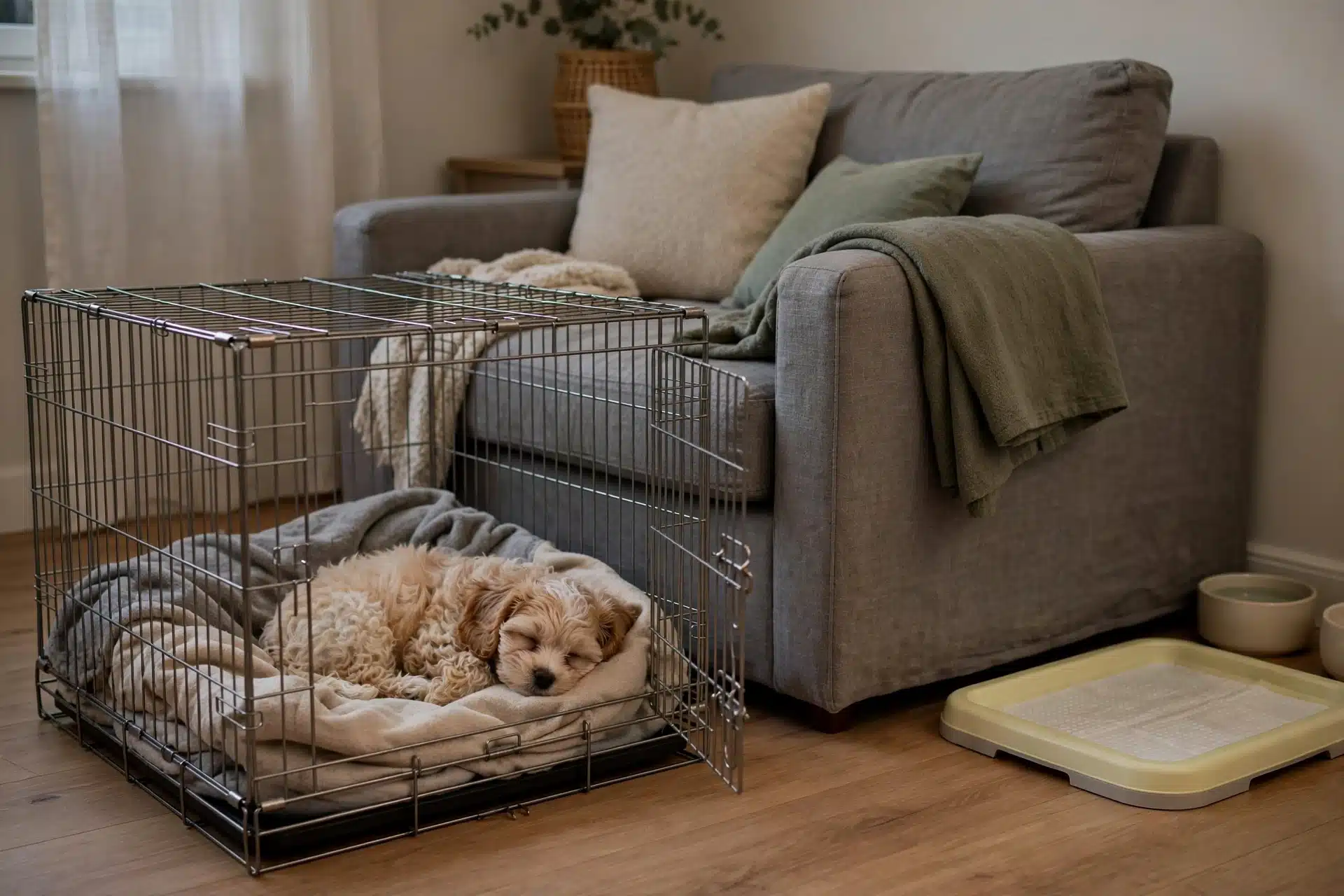
Week one is mostly about settling into a new home, not training. Expect a puppy that sleeps more, eats less, and wakes at night. Keep the world small: one room, one bed, one potty spot. A puppy raised amid household noise usually recovers faster, but every puppy needs a few quiet days. Short naps in a crate help, too.
Rooms, surfaces, and confinement tolerance
New homes present floors a puppy has never felt. Tile, hardwood, and stairs can worry a dog that only knew carpet or grass. Introduce one surface at a time and let the puppy choose to step on it. The same goes for confinement. Feed meals near the crate, then inside it, so the crate predicts good things instead of isolation.
Transferring routines across environments
Puppies bred in busy homes already live inside a routine: meals at set times, potty after waking, play after eating. Your job is to copy that pattern, not invent a new one. Ask the breeder for the exact schedule and feeding brand, then shift it gradually. Predictable timing turns an unfamiliar house into a known one within about two weeks.
House Training and Toilet Routines Across Two Settings
Neither setting is clearly easier to house train. A home-raised puppy usually arrives already used to going outside, while a kennel-raised puppy may prefer a specific surface:
- Home-raised: often starts on grass, so yard trips click faster.
- Kennel-raised: may start on pads or bedding, so retraining takes a few extra weeks.
Surface preference and the cue that goes with it
Puppies learn where to go early. A pup raised in a whelping box with bedding often avoids soiling its sleeping area but may seek soft surfaces like rugs at first. Ask the breeder what the litter used, then keep that surface consistent for a week before switching. Changing a substrate preference takes planning, not force, as veterinary behaviorists note. Small companion breeds such as the Havanese, Havapoo, and Cavapoo also have tiny bladders, so short, frequent trips matter more than the setting. Crate comfort helps because dogs rarely soil where they sleep. For breed-specific routines, a house training guide for Havanese puppies walks through the first month.
Cleanliness, odor, and the practical middle ground
Kennel puppies may smell faintly of bedding and urine at pickup, so plan a bath and a full wash of your car or carrier. Home-raised pups are usually cleaner but can be less used to confinement. Either way, odor fades once a steady routine starts.
Questions and Observations That Actually Predict Temperament
Questions that reveal the daily routine
Ask open questions, because yes-or-no answers hide the truth. Try: “Walk me through a normal weekday here.” “Where do the puppies sleep, and who cleans up?” “How many people handle them each day, and how old are those people?” A breeder who answers in specific detail, mentioning messes and routine noise, is describing real life inside the home. Vague answers deserve a follow-up.
Records worth seeing before you pay
Before you pay a deposit, ask to see a few things. Start with this numbered list:
- Vaccination and deworming records dated and matched to your puppy.
- A written health check from a licensed vet, ideally in the last two weeks.
- Photos or video of puppies inside the home, not just on a porch.
- The dam’s location: ask where she lives and whether you can meet her.
A breeder who supplies these readily is showing you evidence, not promises.
Observing a litter without testing it
Skip formal temperament tests; puppies change day to day. Instead, watch. Confident pups recover quickly after a startle and return to play. Fearful ones stay frozen or hide. Look for a puppy that approaches new people on its own, tolerates brief handling, and settles after excitement. Those habits, seen twice in one visit, predict adjustment better than any single test. This is the same matching approach we use when placing a puppy with a family.
Which Should You Choose: Home-Raised or Kennel-Raised?
Neither label predicts temperament on its own. The research in this guide shows housing matters less than how a breeder uses the socialization period in a puppy’s first three months. Pick the breeder, not the building, and use the right conditions below.
Choose home-raised when
| Your situation | Why home-raised fits |
|---|---|
| You want early household exposure | Puppies hear vacuums, doors, and daily family noise before they leave |
| You have young children | Litters raised indoors meet kids, under supervision, during the fear window |
| You value one-to-one handling | Small programs handle each puppy daily and track individual progress |
| You want breeder contact after pickup | Small programs stay closely involved through the adjustment weeks |
Choose kennel-raised when
| Your situation | Why it can still work |
|---|---|
| The kennel is indoors and busy | Indoor kennel puppies can score more self-confident in studies |
| The breeder runs structured socialization | Deliberate handling beats accidental exposure every time |
| You can visit and verify | Ask to see where litters sleep, play, and meet new people |
When the label should not decide anything
Skip the label entirely if a breeder cannot show you records. Litter separation timing, vaccination dates, and vet checks matter more than whether puppies sleep in a kitchen or a kennel run. Ask what each puppy experienced in week seven and week eight. A confident, well-handled kennel puppy outperforms a neglected home-raised one. This is why we verify every placement at Sage Puppies with documented handling notes rather than a housing label.

If temperament and a smooth adjustment matter most to you, the next step is choosing a breeder who raises puppies the right way and shows you how. Visit Sage Puppies to apply, meet Cassie, and bring home a Havanese, Havapoo, or Cavapoo raised with care.
Frequently Asked Questions
Q1: What temperament differences exist between home and kennel raised puppies?
Housing labels predict little. Indoor kennel puppies have scored more self-confident in studies, while breeder handling habits and litter separation timing shape puppy confidence and fear-related behavior most.
Q2: How do I verify a breeder’s puppies are actually home-raised?
- Request photos or video of puppies inside the home.
- Ask where the dam lives and meet her.
- Ask who handles the puppies daily and how often.
- Compare answers across two separate conversations.
Q3: Do home-raised puppies house train faster?
Often yes, because most arrive used to grass. Kennel puppies may prefer pads first, so expect a few extra weeks of retraining.
Q4: Are kennel-raised puppies less affectionate?
No. Affection depends on daily handling, not housing. A kennel with structured, warm handling can produce very bonded, people-focused puppies.
Q5: Which puppies adjust best to a busy family home?
The one with broad early exposure and fast stress recovery. Watch a puppy startle, then see how quickly it returns to play.
Conclusion
The housing label predicts far less than breeders claim. Research found indoor kennel puppies scoring more self-confident, while breeder handling habits and litter separation timing shaped puppy confidence and fear-related behavior far more than location. What decides adjustment is the total exposure a puppy gets during the first three months, plus the individual puppy you meet. So pick the breeder, not the building: ask for daily handling details, weekly records, and a written vet check, then watch how a puppy startles and recovers. A well-raised puppy from either setting can settle beautifully into your home.