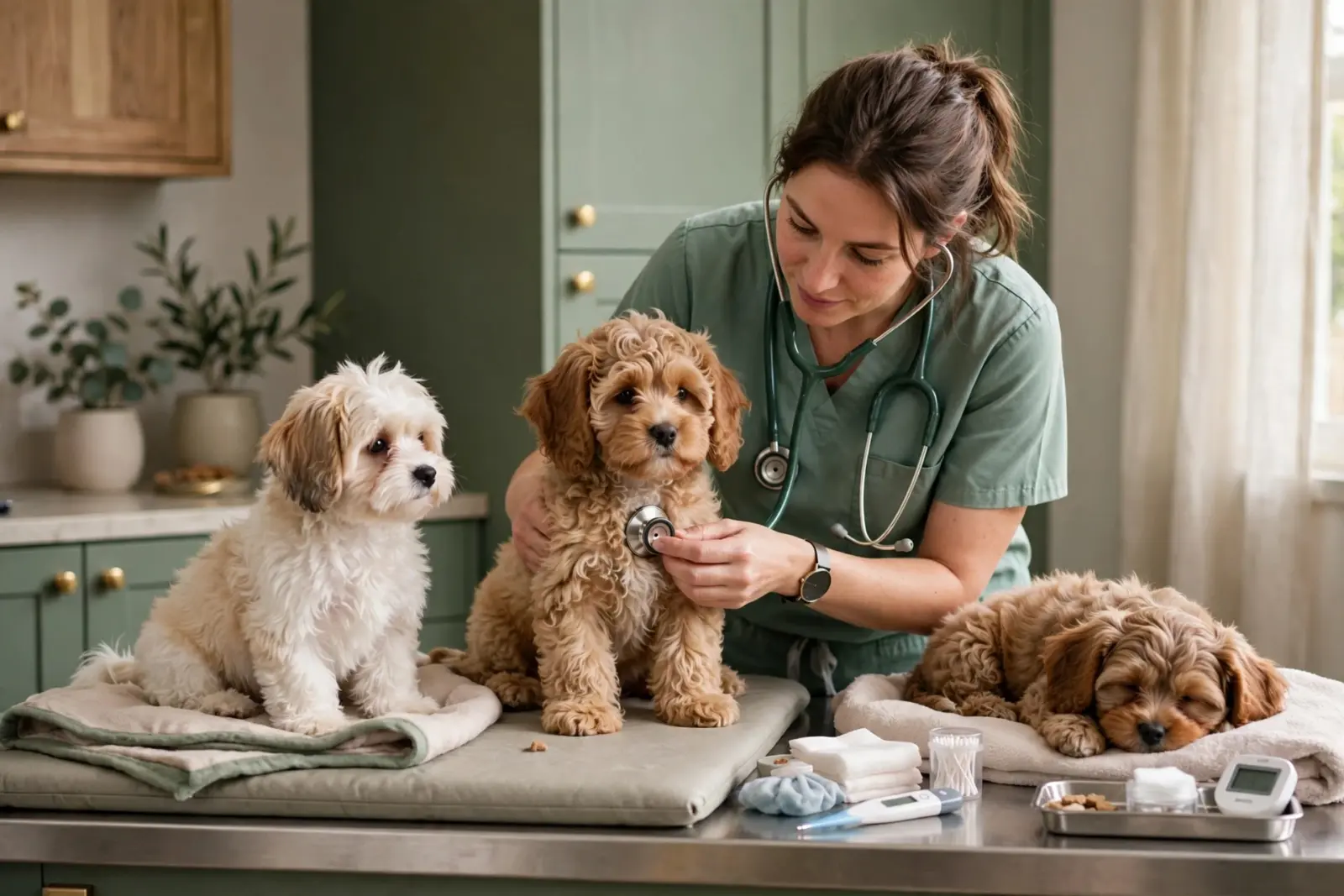
Quick Summary: Havapoo puppies generally need 10 to 45 minutes of structured activity daily, depending on age, plus 15 to 30 minutes of mental work such as sniff walks, training games, and puzzle feeders. The five-minute rule is only a starting point for walks, so watch your puppy’s behavior rather than treating the formula as a strict limit. Keep sessions short and varied, avoid forced runs, stairs, and furniture jumps, and contact your vet if you notice limping, collapse, or panting that does not settle.
A Havapoo puppy that poops out halfway around the block is not lazy, and it is not badly trained. These pups carry two energy profiles at once: a Havanese-style moderate body and a Poodle-sharp mind that always wants a job. That mix is exactly what makes Havapoo puppy exercise needs tricky to judge, because too little activity leaves you with a bouncing, mouthy puppy, while too much strains growing joints. This guide gives you age-banded daily totals, an honest look at the five-minute rule and where it falls short, plus simple checklists for spotting over-tired and under-exercised puppies. You will also get a sample weekly routine you can start on day one. At Sage Puppies in South Jordan, Utah, Cassie Milar and her team raise Havanese, Havapoo and Cavapoo puppies and coach new families through these exact questions.
What a Havapoo Puppy’s Exercise Needs Look Like Day to Day
A Havapoo puppy’s exercise needs add up to roughly 20 to 45 minutes of structured activity per day, split into short sessions and adjusted by age. The rest of the day belongs to naps, snacks, and calm play. The exact total depends on age, and that is where most new owners need a starting point.
Physical Activity and Mental Activity Are Not the Same Budget
Walks tire the body. Sniffing, training games, and puzzle feeders tire the brain, and puppies need both. A ten-minute sniff walk often settles a Havapoo more than a brisk trot around the block. When planning daily exercise, count mental work as a real line item, not a bonus, because a mentally tired puppy naps instead of nipping.
Age Bands: 8 to 12 Weeks, 3 to 4 Months, 5 to 6 Months, and 7 to 12 Months
A common vet guideline is five minutes per month of age, up to twice a day, as Purina explains.
| Age | Structured Exercise Per Day |
|---|---|
| 8 to 12 weeks | 10 to 15 minutes, mostly play and short walks |
| 3 to 4 months | 15 to 20 minutes, split into two sessions |
| 5 to 6 months | 20 to 30 minutes, plus training games |
| 7 to 12 months | 30 to 45 minutes, still avoiding long forced runs |
The temperament page on Havapoo puppies’ care basics covers how their Havanese and Poodle sides shape this energy.
How to Tell If Your Particular Puppy Sits High or Low on That Range
Watch your puppy, not the chart. High-drive pups stay settled after a full session and beg for more. Low-drive ones flop halfway through, so cut sessions shorter. Growth, weather, and a pending nap all shift the daily number, and small swings are normal.
The Five-Minute Rule and Where It Does and Does Not Apply
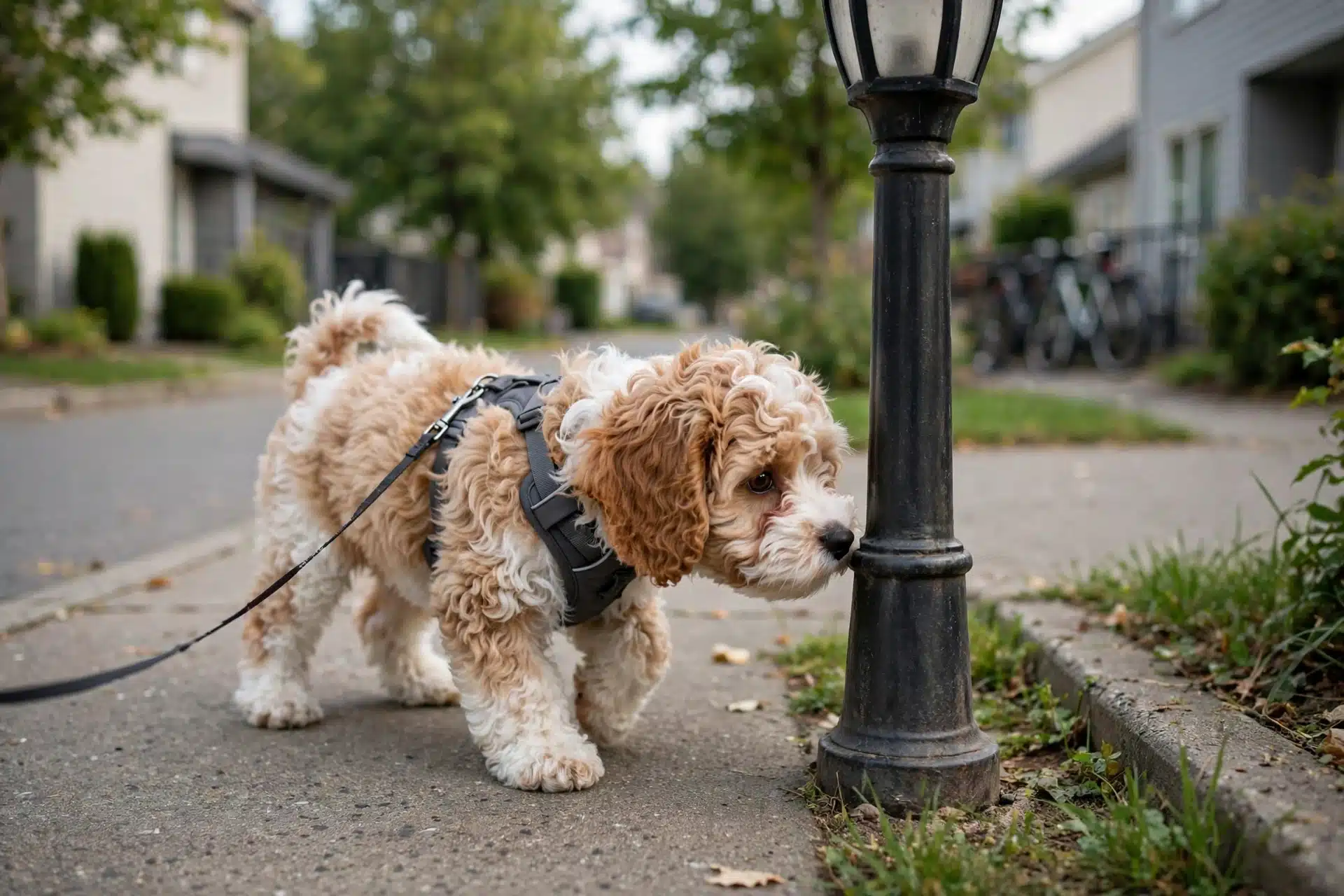
The five-minute rule says a puppy can walk five minutes per month of age, once or twice a day. Is it accurate? Partly. It is a rough starting point for structured walks, not a proven limit. In fact, PDSA notes there is no scientific evidence behind the formula, so treat it as a guide for Havapoo puppy exercise needs rather than a hard number.
Common misapplications look like this:
- Treating the total as a daily ceiling on all movement
- Counting free play, training, and sniffing toward the same total
- Applying it identically to every breed and every puppy
What the Guideline Actually Says
The usual version is five minutes of formal walking per month of age. A three-month-old gets about 15 minutes on a leash. The rule only covers structured walks. Play in the kitchen, a game of tug, or a short training session sit outside that math, and a puppy who stops and self-regulates is doing exactly what the rule hoped to prevent.
Why It Is a Guideline and Not a Ceiling
Your job is watching your puppy, not a stopwatch. A confident six-month-old on a flat sidewalk can handle more than the formula suggests, while a tired or teething pup may need less. Our month-by-month exercise plan shows how totals shift as your puppy grows.
When the Rule Should Not Apply
Skip the rule for forced exercise entirely. No jogging, stair repeats, or long hikes before growth plates close, since small breeds can be prone to patellar luxation and joint strain. It also does not govern free play, where puppies rest on their own, and it never replaces your vet’s advice for a puppy recovering from injury or surgery.
Warning Signs Your Havapoo Puppy Is Getting Too Much Exercise
Puppies rarely admit they’re tired. Your Havapoo will chase, tumble, and play well past the point of safety, so you have to read the signals for them.
Behavioral and Physical Signs to Check For
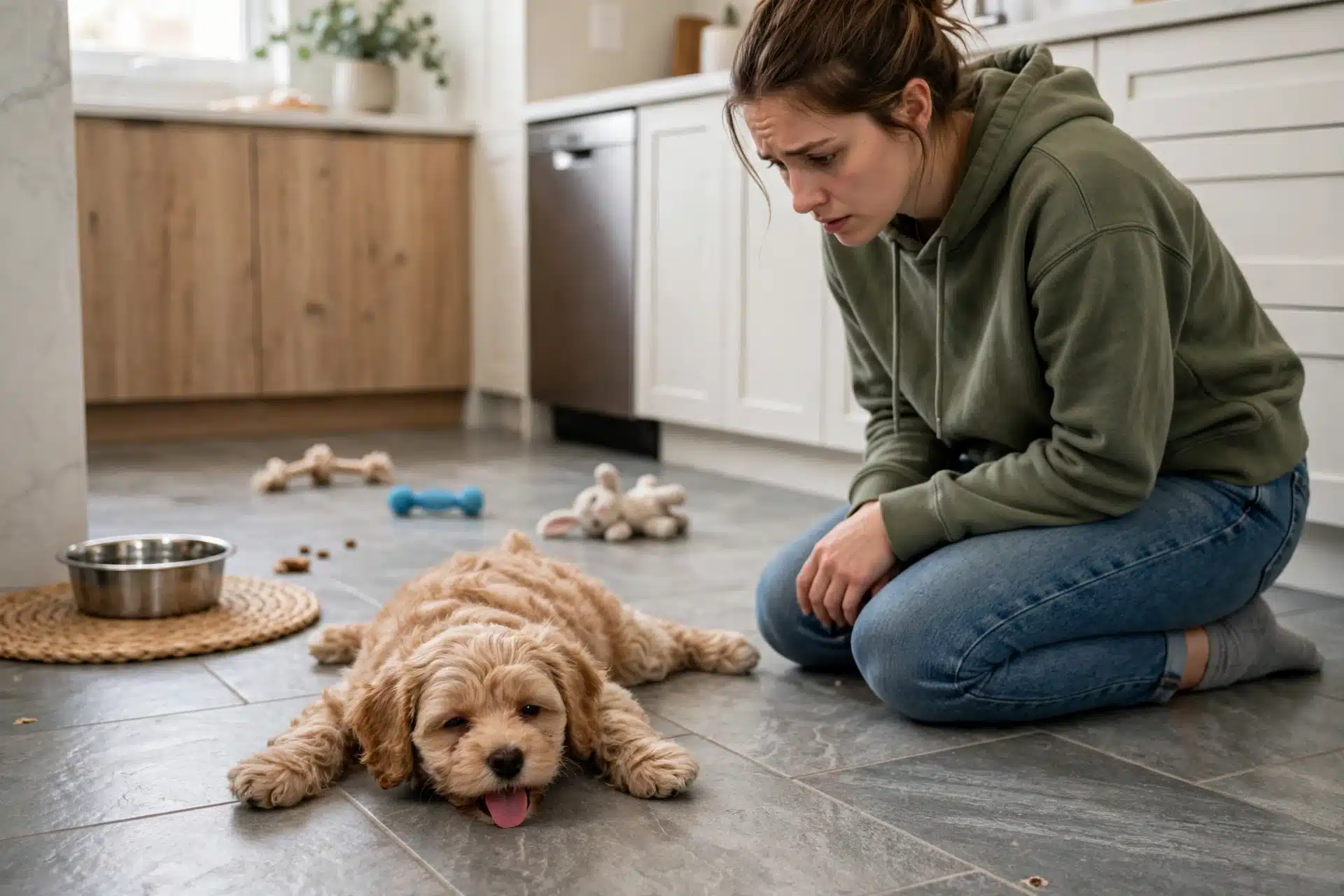
Watch for these during and after play, according to PetMD’s overview:
- Heavy panting that doesn’t settle within a few minutes of rest
- Soreness: stiff steps, a slow rise, or reluctance to climb stairs
- Worn or rough paw pads from hard surfaces
- Unusual grumpiness, hiding, or refusing a favorite game
- Falling behind or flopping down mid-walk
One tired evening is fine. Two or three sluggish days in a row means you’re cutting sessions back.
Joint Risks Specific to Small Breed Havapoos
Havapoos inherit small, fine-boned joints from both the Havanese and the Poodle side, and those joints are still forming until roughly a year of age. Repetitive impact from stairs, jumping off furniture, or long forced walks stresses the knees, where small breeds are prone to patellar luxation, a kneecap that slips out of place. Keep activity short and varied instead of long and repetitive.
When to Stop Activity and Call the Vet
Stop immediately and call your vet if you see limping, vomiting, collapse, bright red gums, or panting that won’t slow down after 15 minutes of rest in a cool room. Those signs suggest heat stress or injury, not ordinary tiredness. When in doubt, cut the session short and ask.
Warning Signs Your Havapoo Puppy Is Not Getting Enough
Why Calm Puppies Hide the Problem
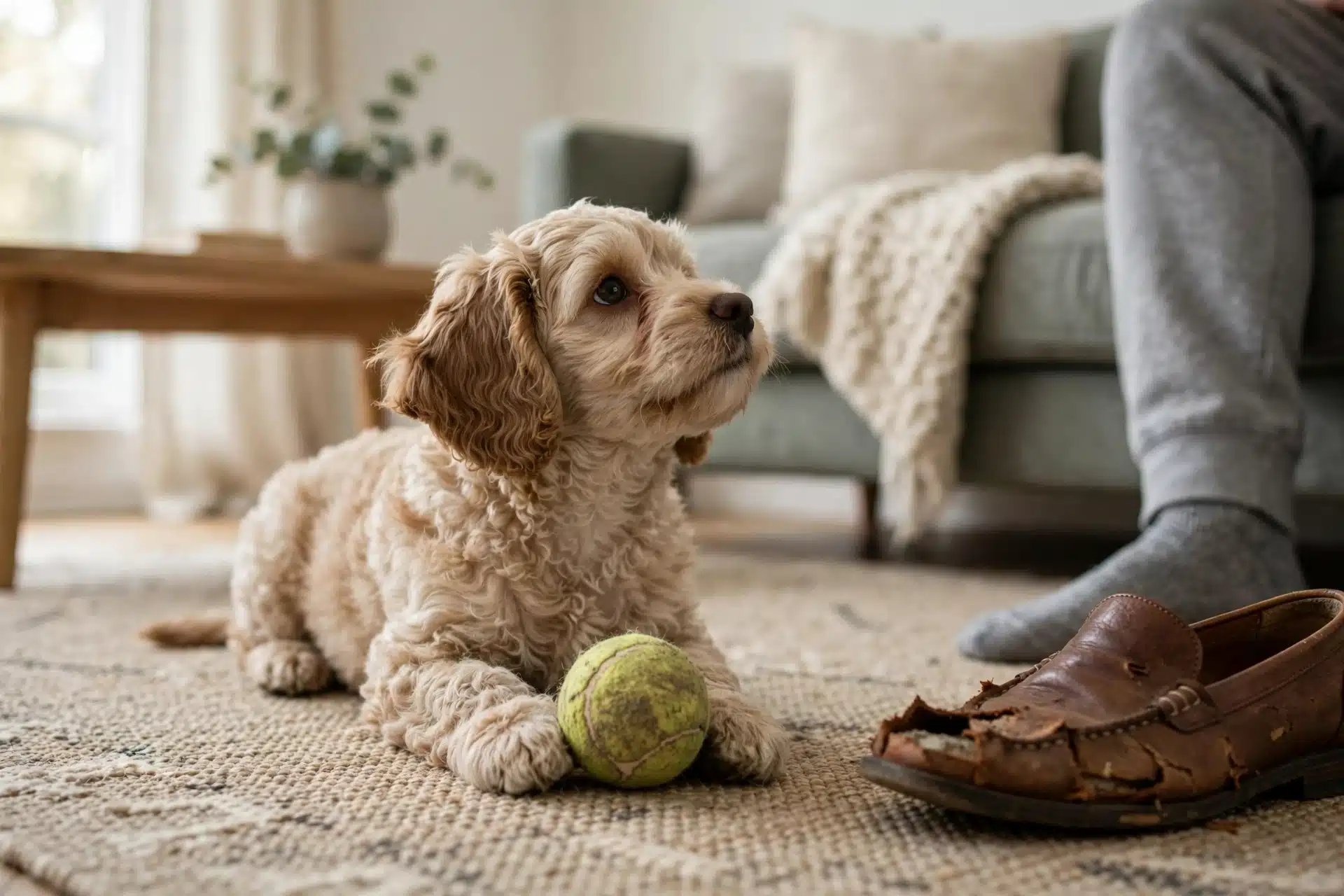
Most Havapoos settle easily indoors, so a quiet puppy can look content when it is actually bored. Instead of bouncing off walls like some breeds, an under-exercised pup may nap excessively, beg for attention, or chew shoes. Because the signals are subtle, families often miss the pattern for weeks and assume their puppy is simply low-key by nature.
The Five Behaviors Owners Notice First
Watch for these patterns, especially in the evening:
- Destructive chewing on furniture, baseboards, or hands
- Restless pacing or whining after meal times
- Attention-seeking nipping that ignores redirection
- Excessive barking at small sounds or movement
- Overnight wake-ups from unused daytime energy
One symptom alone means little. Two or three appearing together usually point to activity needs, not a behavior problem.
Low-Impact Fixes for Under-Exercise
Add activity without straining growing joints. Split the daily total into two or three short sessions, and swap one walk for a sniff walk where your puppy sets the pace. Food puzzles and short training games count as mental work, too. Small, consistent changes usually settle these behaviors within a week or two.
Mental Work Counts as Part of Your Puppy’s Exercise
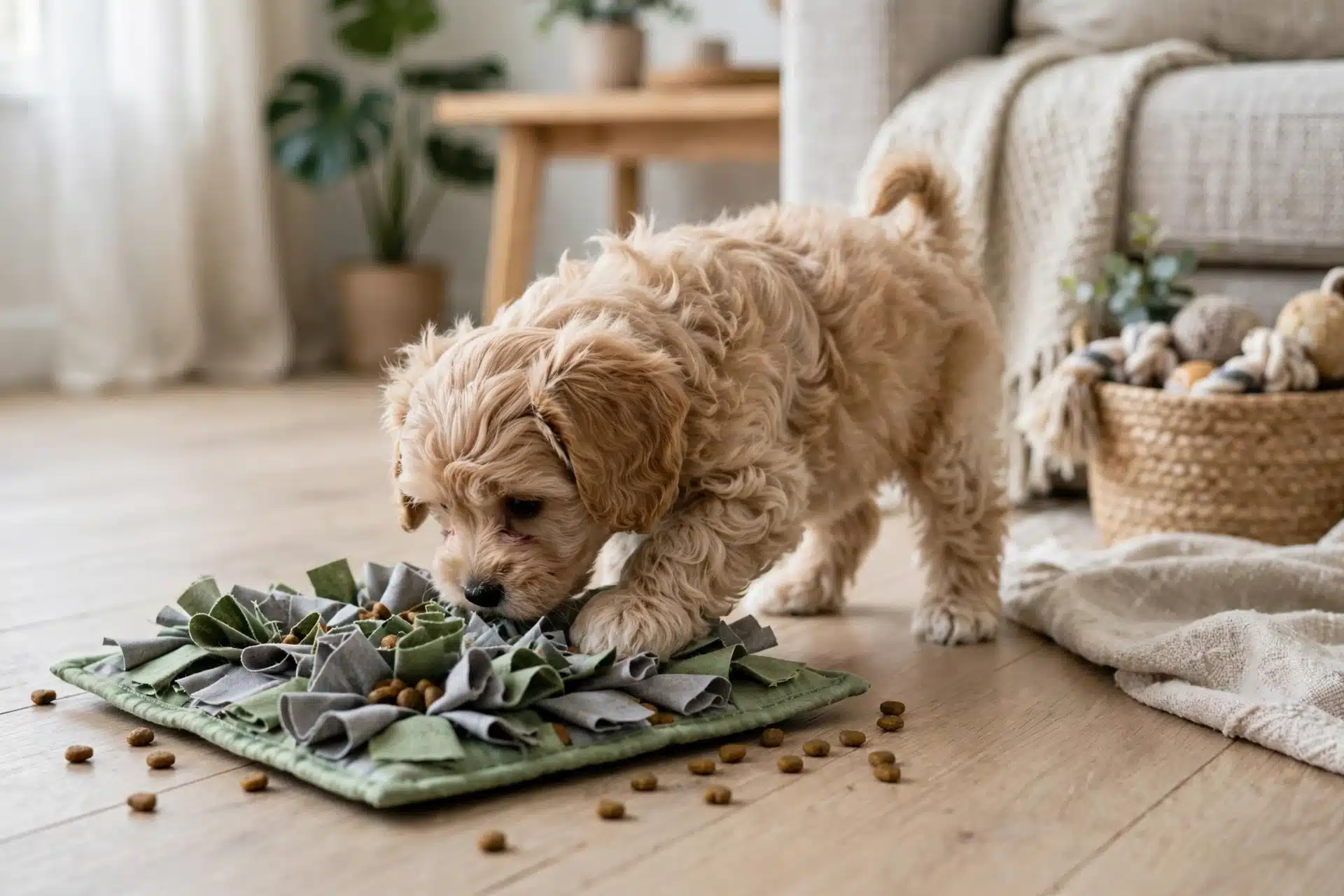
A Havapoo puppy needs about 15 to 30 minutes of mental exercise per day, split into short sessions. Brain work tires a puppy faster than walking, so it counts toward the daily total instead of stacking on top of it.
| Activity | Minutes Per Session |
|---|---|
| Snuffle mat or scatter feeding | 5 to 10 |
| Puzzle feeder at mealtime | 10 to 15 |
| Short training games | 5 to 10 |
| Sniff walk on a varied route | 10 to 15 |
Why Mental Fatigue Satisfies a Poodle-Line Puppy
The Poodle side brings a working mind, and the Havanese side adds a strong desire to be part of the action. A bored Havapoo invents jobs, and you will not like the ones it picks. Solving a puzzle or holding a “stay” uses real focus, and that focus settles a busy puppy.
Enrichment Activities That Double as Training
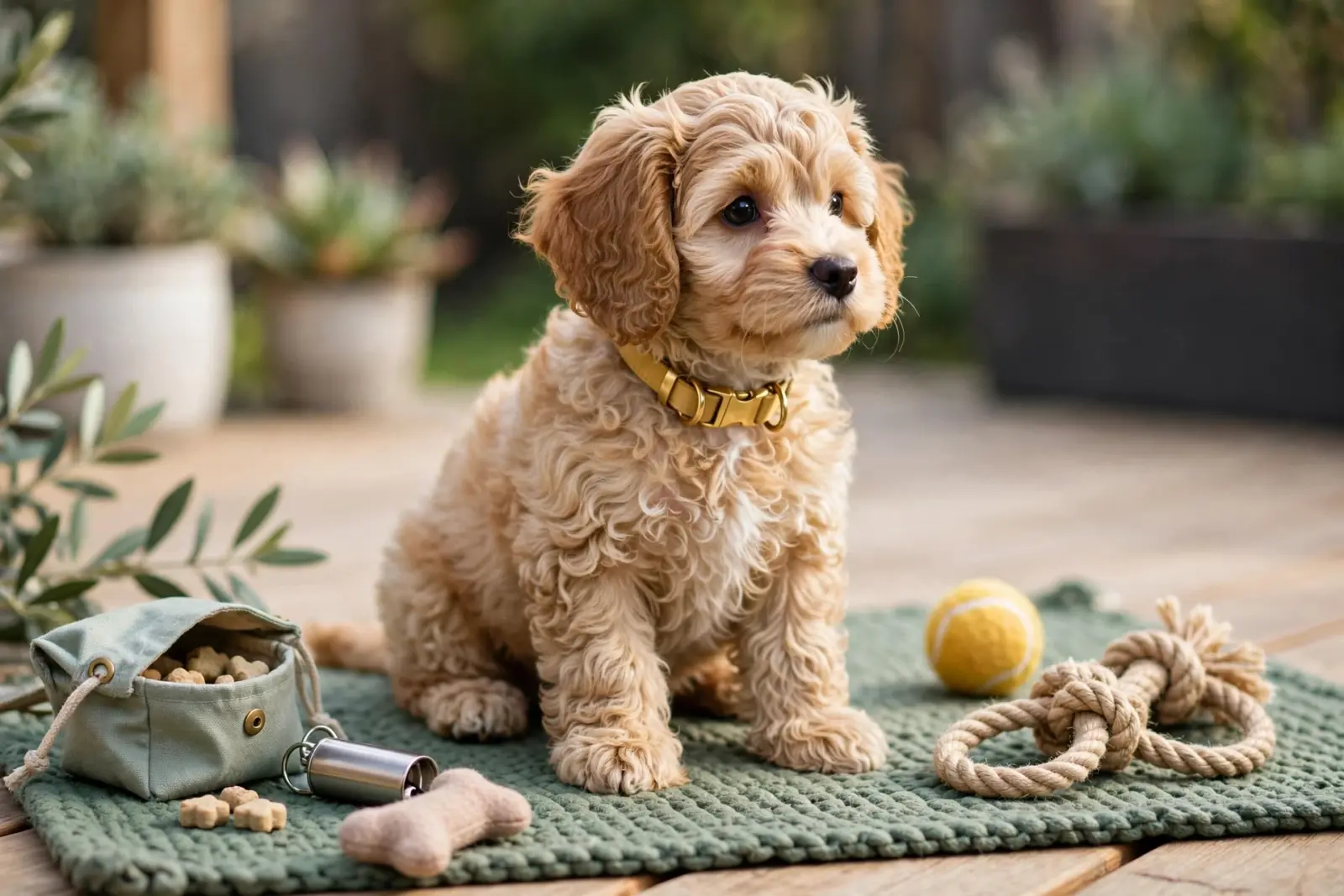
Hide treats around a room and cue “find it.” Practice sit, down, and name recall in two-minute bursts. Feed one meal a day through a puzzle feeder. Many of these games reinforce the basics covered in Havapoo puppy training for first-time owners, so you train and tire your puppy at once.
Treats and Calories During Training
Brain games usually run on food, and the calories add up. Use part of your puppy’s daily kibble ration as training treats, and keep soft pea-sized rewards for new skills. If your puppy gains weight, swap some treats for kibble and praise.
Safe Surfaces, Jumps, Stairs, and Daily Conditions
Traction and Flooring at Home
Hardwood and tile get slippery, and a small puppy sliding across them can strain joints before you notice anything. The VCA notes that growth plates stay soft and easily injured, so give your puppy grip where it plays. Lay runners or yoga mats along main paths, trim paw hair between pads, and skip slick surfaces for zoomies.
Jumps, Stairs, and Off-Limit Furniture
Set rules early. No jumping off the couch or bed, since a bad landing can hurt knees or injure growth plates and play a role in patellar luxation in small breed puppies. Use a ramp or lift small pups up and down. Short carpeted stairs are fine for slow practice, but avoid long flights and repeated stair sprints until your vet clears them.
Weather and Time of Day
Puppies overheat faster than adult dogs, so walk early or late in summer and test the pavement with your hand: if it burns you, it burns paws. In winter, watch for salt and ice balls between toes. Keep sessions short on extreme days, swap in indoor puzzle play, and use the five-minute rule as your ceiling when conditions add stress.
A Sample Week You Can Adjust as Your Puppy Grows
A Day in the Life of a 12-Week-Old Havapoo
A 12-week-old puppy needs short bursts, not long outings. Aim for two 10-minute sessions a day: a short leash walk in the morning and gentle fetch or tug in the evening. Add 10 to 15 minutes of mental work, like a snuffle mat or a puzzle feeder at mealtime. The rest of the day, let naps happen. Growth happens during sleep.
Scaling the Plan Every Few Weeks
Review the plan every two to three weeks as your puppy grows. A 4-month-old can handle two 10-to-15-minute sessions; by 6 months, stretch toward 20 to 30 minutes total. Keep single walks under 20 minutes and skip forced runs on pavement. Watch your puppy, not just the calendar. If a session ends with heavy panting or a limp, scale back that week.
Adjusting for Your Puppy’s Temperament
Some Havapoos inherit the Havanese love of games; others lean toward the Poodle side and want more brain work. A busy puppy may need extra training games instead of longer walks. A mellow one may meet goals with a sniff walk and a short play session. Match the activity to your dog, then adjust the total as each month passes.
Common Mistakes to Avoid
Treating Any Formula as a Rule
The five-minute rule is a starting point, not a law. Some 12-week-old Havapoos tire at eight minutes; others still bounce after 20. Watch your puppy instead of the clock. If a session ends with heavy panting or a puppy who flops down mid-walk, cut back. Age bands are guides, and your individual puppy always outranks any chart.
Letting the Puppy Set the Pace
Puppies are terrible at self-regulation. A Havapoo will chase a ball, or a toddler, long past the point of good sense, then crash hard. Your job is to stop play before the zoomies turn frantic and end sessions while your puppy still wants more. Keep single walks under 20 minutes and skip forced runs on pavement. Stairs, jumping off furniture and long fetch games on hard floors also stress growing joints.
Watch the knees. Small breeds are prone to patellar luxation, a kneecap that slips out of place and a leading cause of hindlimb lameness. According to NIH-published research, it is extremely common in small dogs, so avoid repetitive jumping while the joints mature.
Skipping the Vet Check and the Log
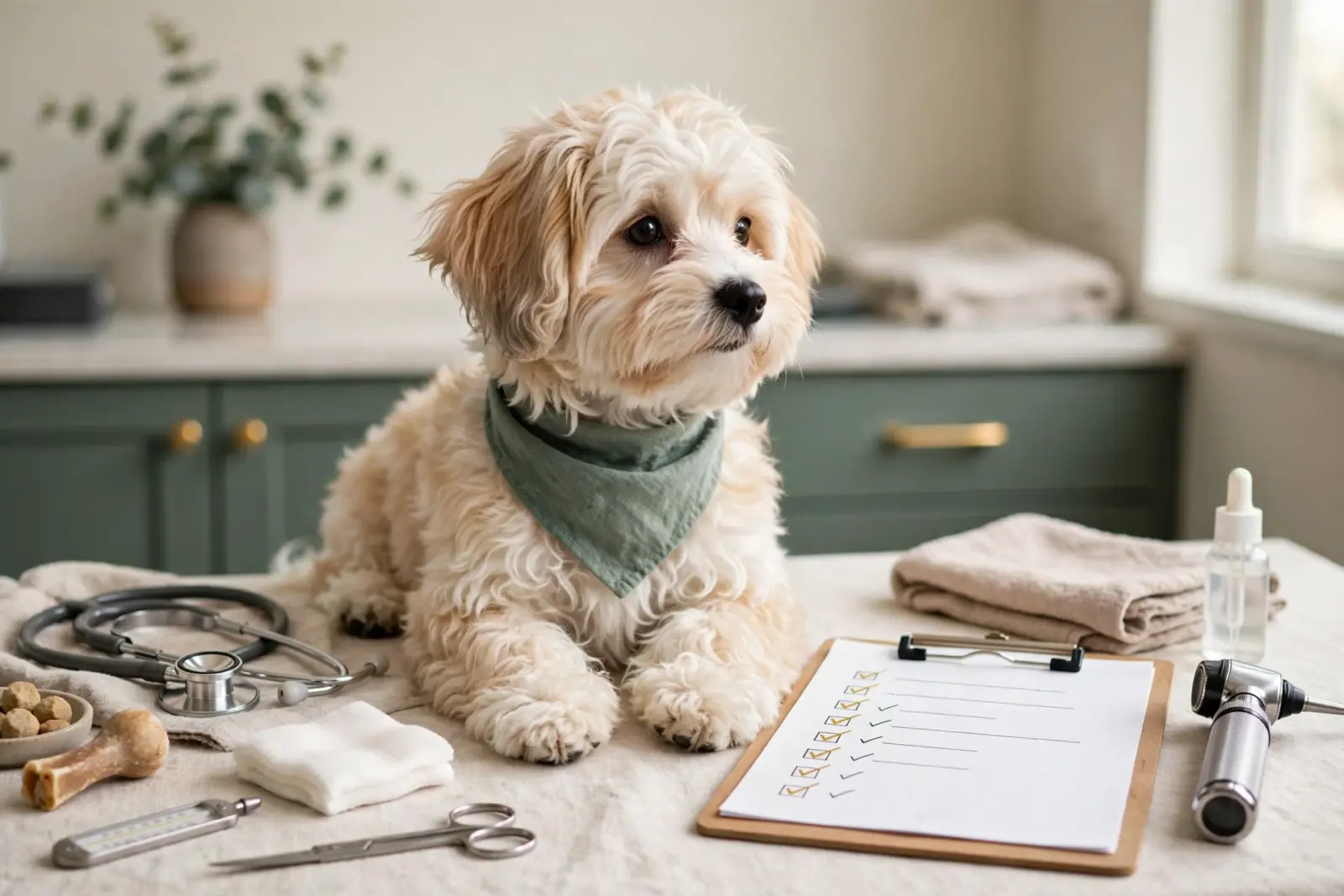
Your vet clears your puppy for activity and spots issues like luxating patellas early, so book a check before starting anything beyond gentle play. Then keep notes: minutes walked, energy afterward, any limping or next-day stiffness. Patterns show up fast on paper, and VCA explains that growth plates are easily injured by strenuous exercise. Bring your log to each visit and adjust together.

A well-matched puppy makes daily exercise feel easy, not like a math problem. If a Havapoo fits your routine, the team at Sage Puppies will match you with a puppy suited to your pace and schedule. Start your application today and bring home a companion built for your family’s rhythm.
Frequently Asked Questions
Q1: How much exercise does a Havanese and Havanese puppy need?
Adult Havanese do well with 30 to 45 minutes daily, split into walks and play. Havanese puppies follow the same age bands as Havapoos: about 10 to 15 minutes at 8 to 12 weeks, built up gradually with short sessions and plenty of mental games.
Q2: Can I walk my 12-week-old Havapoo once a day instead of twice?
Yes, but keep it to about 10 to 15 minutes total. Two shorter sessions usually settle a puppy better than one long outing.
Q3: Does playing in the yard count toward exercise?
Yes. Free play counts, though it is self-paced. Puppies rest on their own, so yard time does not need the five-minute rule.
Q4: When can my Havapoo start jogging with me?
Wait until growth plates close, usually around 12 months, and get your vet’s clearance first. Forced running on pavement risks joint strain before then.
Q5: How much mental exercise does a Havapoo puppy need?
About 15 to 30 minutes daily. Snuffle mats, puzzle feeders, and two-minute training games count, and they tire a puppy faster than walking.
Q6: What should I do if my puppy limps after play?
Stop activity, let your puppy rest, and call your vet if the limp lasts more than a few hours or repeats. Keep a short log of sessions to share.
Conclusion
Havapoo puppy exercise needs come down to short, varied sessions matched to age: 10 to 15 minutes for an 8-to-12-week-old, building to 30 to 45 minutes by the first birthday, plus 15 to 30 minutes of mental work like sniff walks and puzzle feeders. The five-minute rule is a starting point, not a ceiling, and your puppy’s behavior matters more than any chart. Watch for heavy panting, limping, or frantic play as signs to cut back, and for chewing and pacing as signs to add activity. Protect growing joints by skipping forced runs, stairs, and furniture jumps until your vet clears them. Get the balance right, and a tired Havapoo is a happy, settled one.