Quick Summary: The Havapoo is usually easier for first-time owners because it needs brushing only two or three times a week and tends to learn and house-train faster. The Havanese is a calmer, more devoted companion, but a full coat requires 5 to 10 minutes of brushing every day, and either breed can struggle with long periods alone. Both need professional grooming every 4 to 6 weeks, moderate daily exercise, and breeders should provide documented eye, patella, cardiac, and relevant hip testing for both parents.
If you have never owned a dog before, the Havapoo is usually the easier pick on grooming time and mental stimulation, while the Havanese is the calmer, steadier companion. The real deciding factor for most beginners is not temperament. It is whether you can brush a long coat every single day. Most breeder pages stack up superlatives, so you cannot tell what coat care, training, and health risk actually cost in your own week. This comparison breaks both beginner friendly breeds into the five things you manage: grooming, training, exercise, health, and cost, plus where each one tends to struggle. That is how you choose wisely among dogs for beginners.
Havapoo vs Havanese: What Changes for a First-Time Owner
| Havapoo | Havanese | |
|---|---|---|
| Grooming time | Daily brushing to prevent matting; shorter cuts reduce the load | Daily brushing required; coat mats easily without it |
| Training and trainability | Highly trainable, Poodle-influenced, needs consistency | Eager to please, occasionally sensitive and stubborn |
| Exercise and mental needs | Moderate exercise plus high mental stimulation needs | Moderate daily exercise, less demanding than a Poodle cross |
| Health risks to plan for | PRA, patellar luxation, Legg-Calve-Perthes, dental disease | PRA, patellar luxation, hip and joint issues, dental disease, heart and liver conditions |
| Typical cost of ownership | Professional grooming every 4-6 weeks plus routine vet and dental care | Professional grooming every 4-6 weeks plus routine vet and dental care |
| Best for | Active beginners who want a trainable, low-shedding companion | Beginners wanting a calm, devoted lap dog with moderate energy |
How Havapoo and Havanese Compare
Havapoo
The Havapoo crosses a Havanese with a Miniature or Toy Poodle, giving you a fluffy, low-shedding coat and a bright, people-focused personality. It suits active beginners who want one of the most trainable, beginner friendly dogs in the small-breed world, though the Poodle side brings high mental stimulation needs.
Key strengths
- Highly trainable with Poodle-influenced intelligence
- Low-shedding coat
- Moderate exercise needs paired with playful energy
Havanese
The Havanese is Cuba’s only native breed, an affectionate companion with a long silky coat and a moderate, people-centered temperament. It fits beginners wanting a calm, devoted lap dog with less demanding energy than a Poodle cross. Both breeds count among the most beginner friendly dogs, so the real choice comes down to energy and training style.
Key strengths
- Eager to please and devoted
- Calm, lap-dog temperament
- Moderate daily exercise needs
The Biggest Daily Difference Between the Two Breeds
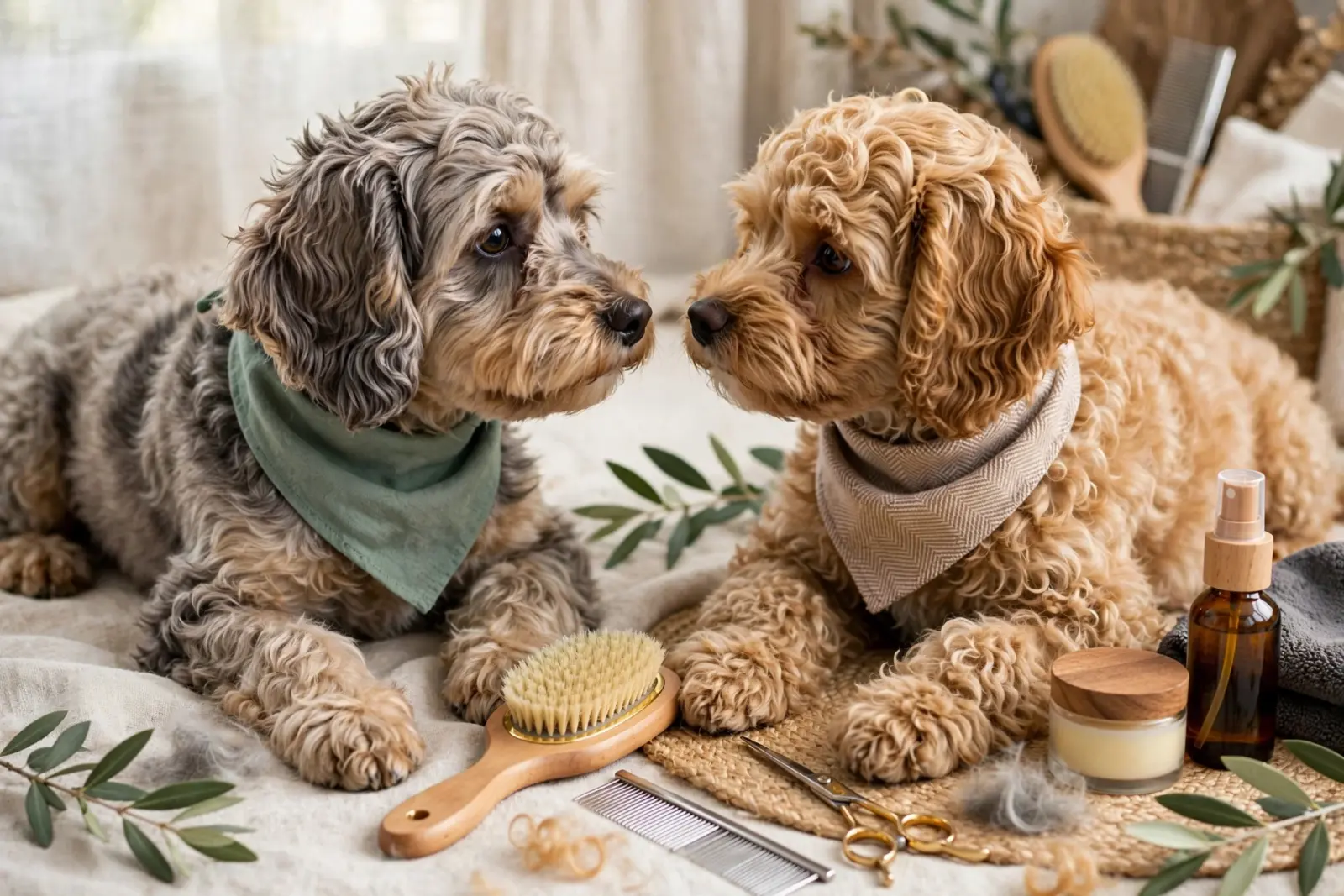
The Havanese coat is the daily difference. A Havapoo usually needs a few brush-outs a week; a full-coated Havanese needs near-daily work. Both are beginner friendly dogs once you match the routine to the coat you choose. Here is the short answer most first-time owners want: the Havapoo is easier to care for, because its wavy, often low-shedding coat mats more slowly. The Havanese wins on predictability instead: a silky double coat with no curl to surprise you.
What daily brushing actually means in minutes
| Havanese (full coat) | Havapoo (wavy or curly) | |
|---|---|---|
| Brushing | Daily, 5-10 minutes | 2-3 times weekly, 5 minutes |
| Pro grooming | Every 4-6 weeks | Every 4-6 weeks |
| Mat risk | High in armpits and behind ears | Moderate, tightest curls highest |
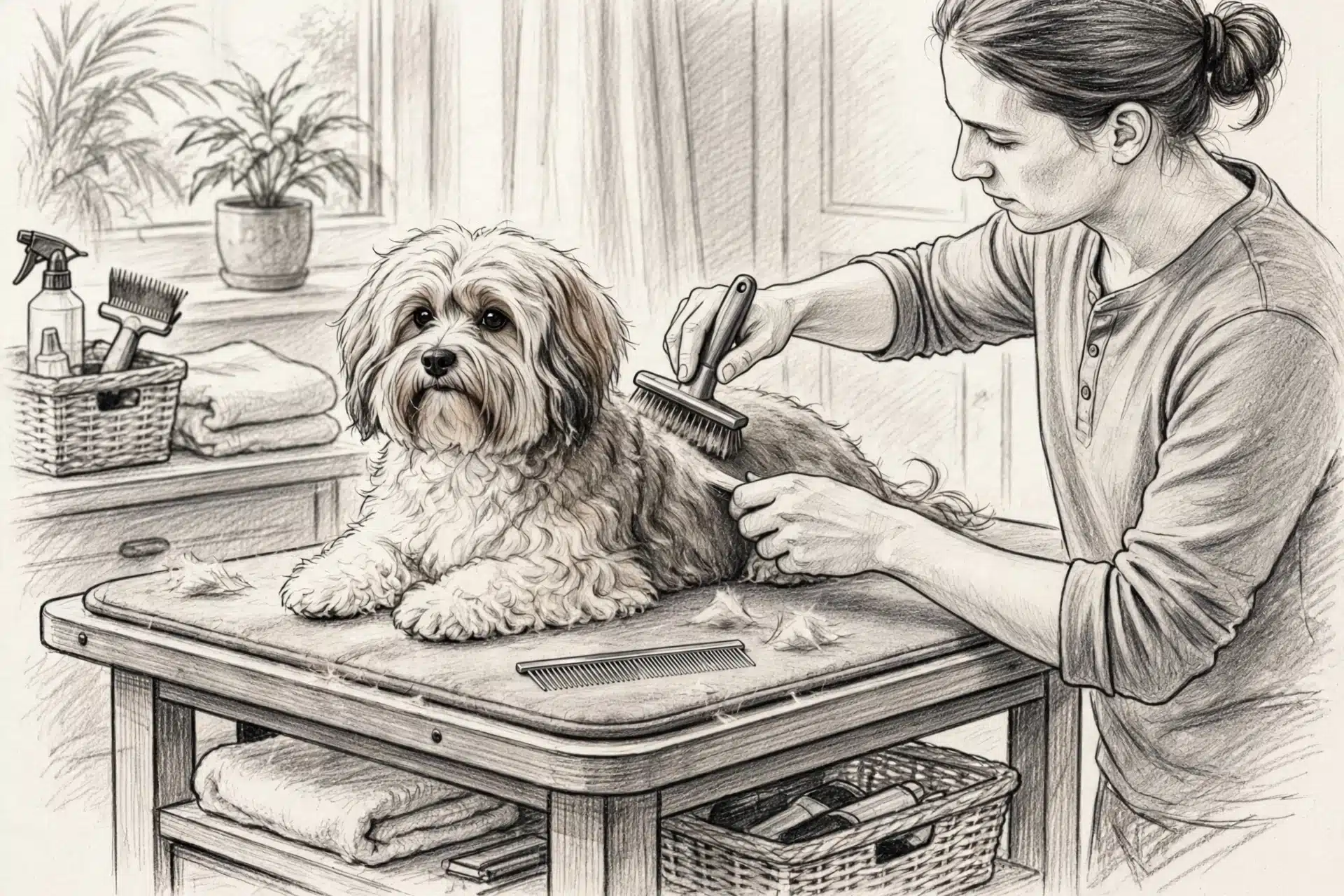
The Havanese Club of America notes full-coated adults need the most attention, while shorter trims cut that down. Ten minutes with a slicker brush and a comb is the whole job.
Coat texture and why it changes the risk of mats
A Havanese coat is soft, long and straight to slightly wavy. Hairs tangle where they rub: armpits, collar line, behind the ears. A Havapoo inherits Poodle curl, so the coat is denser and shorter on most pet trims. Loose hair gets trapped rather than shed, which is good for your floors but means tangles hide at the skin. Groomers call the fix line brushing: part the hair and work section by section.
The puppy cut and trimming your own workload
Both breeds can wear a short puppy cut. It keeps the face sweet, drops brushing to a few short sessions a week, and stretches the schedule between salon visits. If you want the show-length Havanese coat, budget the daily minutes; if not, ask your groomer for a low-maintenance trim at the first appointment. Coats matter when comparing small breed temperaments, since brushing time is where most of the daily care lives.
Training Load: Which Breed Cooperates More With a Novice
Rewards-based training and how consistent you must be
Both breeds learn fast with treats and praise, but they differ in focus. A Havanese is bright and eager yet easily distracted, so short five-minute sessions work best. The Havapoo, thanks to its Poodle parent, often picks up commands with fewer repeats. Either way, every family member must use the same cues. Confusion, not stubbornness, causes most training setbacks. Positive, rewards-based methods suit both dogs, as breed trainers note.
House training and the small-breed advantage
House training is the real workload difference for a first-time owner. Small breeds in general need more trips outside because their bladders are tiny, so plan on frequent outings. The Havapoo usually gets there faster and with fewer accidents. The Havanese can take longer, sometimes months, and needs a strict schedule and a consistent potty spot. Neither breed responds well to punishment. Patience and a routine matter more than any clever trick.
Being alone: the question most beginners forget to ask
Here is where the Havanese demands more from you. Bred to be a companion, it often struggles when left for long stretches, and some dogs develop separation anxiety, as PetMD explains. The Havapoo inherits some of that but tolerates short absences a bit better, especially with early practice. Build alone-time gradually from day one with a crate and calm departures. If your household is empty eight hours daily, think hard about either dog.
A structured start helps more than breed choice. Our guide to Havapoo puppy training basics walks through the first commands step by step.
Energy, Exercise and Mental Work
Both breeds are small companion dogs, so daily activity stays light. Plan on two short walks plus a few minutes of play. A Havanese is happy with about 30 minutes spread across the day. A Havapoo often has a bit more energy from the poodle side, so 30-45 minutes works better. Neither needs a yard, which is why both suit apartments and first-time homes.
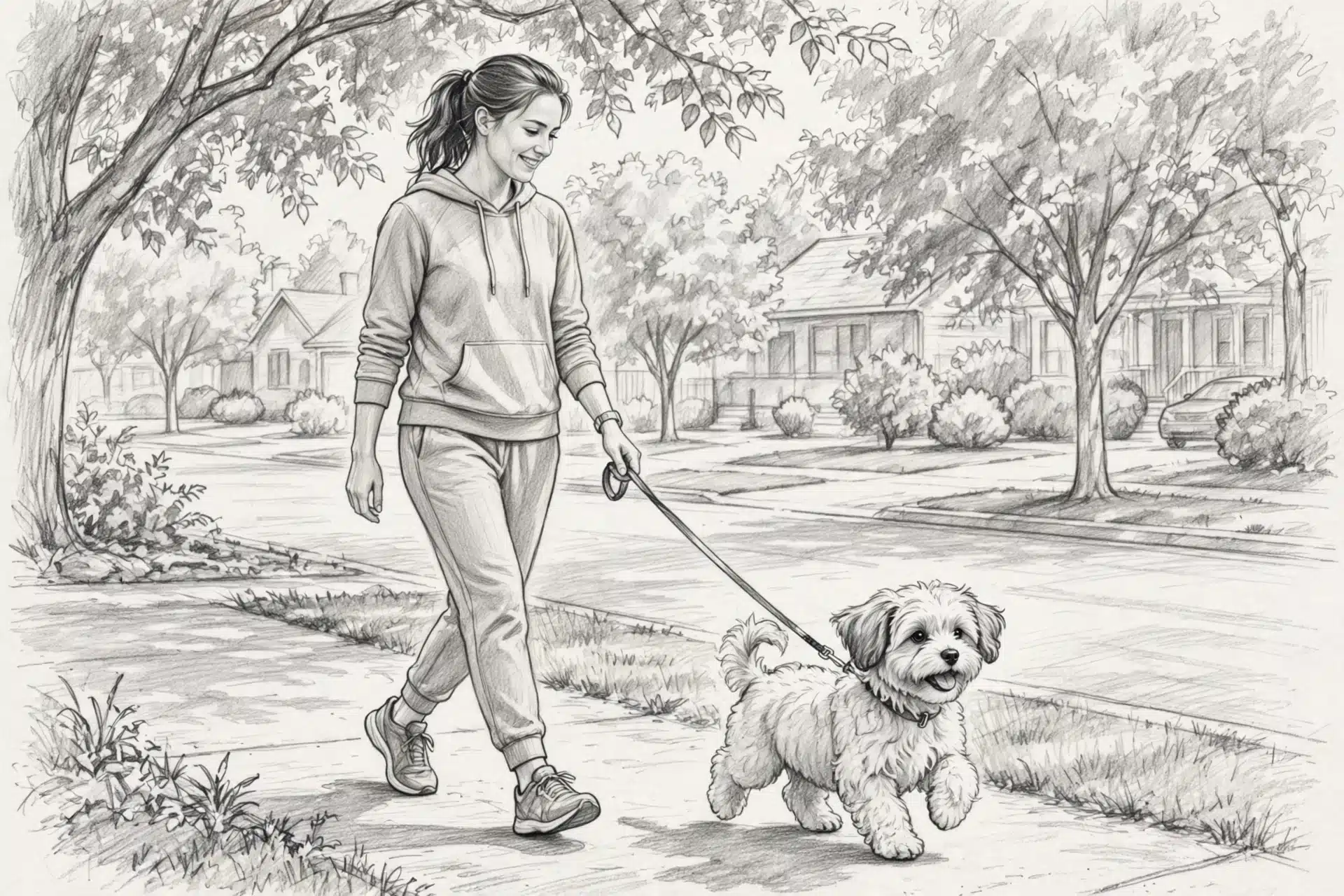
Daily activity for each breed
Split exercise into small chunks instead of one long outing. Morning and evening walks of 10-15 minutes each, plus a game of fetch in the hall, cover it. A quick puzzle feeder or short training session counts too, and it works the brain as hard as the legs. Puppies need less distance than adults because growing joints are still forming.
How boredom shows up in a small dog
Underworked Havanese and Havapoos get creative. Watch for shredding paper, barking at every sound, digging at couch cushions or nipping at ankles. Some chew shoes; others stare and whine. Rotating two or three toys and adding five minutes of trick training most days prevents most of it. If your puppy still struggles, our guide to Havapoo puppy training basics covers calm-down routines that help.
Health Screening and Conditions to Ask About
Both breeds are small companion dogs with similar risk profiles. The conditions below come up most often, so ask each breeder about them by name.
Conditions shared by both breeds:
- Patellar luxation: the kneecap slips out of its groove; you may see a sudden skip or hop
- Progressive retinal atrophy (PRA): an inherited eye disease that slowly causes blindness
- Heart murmurs: often found at a puppy wellness exam
- Small breed dental disease: crowded teeth build tartar fast
| Condition | Warning Sign You’ll Notice | Screening to Ask About |
|---|---|---|
| Patellar luxation | Skipping gait, holding up a back leg | OFA patella exam on both parents |
| PRA | Night blindness in young adults | DNA eye test on parents |
| Heart murmur | Low energy, poor growth | Cardiac exam by a vet |
| Dental disease | Bad breath by age two | Nothing inherited; plan cleanings |

What a Havanese adds to the risk list
The Havanese Club of America’s testing guide lists patella, eye, hearing (BAER), and heart exams as the core breeder screenings. Legg-Calvé-Perthes disease, a hip joint problem in small dogs, also appears in the breed. Ask for the parents’ OFA records rather than a verbal “they’re healthy.”
What a Havapoo adds to the risk list
A Havapoo inherits risks from both sides. Beyond the shared list, ask whether the poodle parent was screened for hip and eye issues, since poodles carry genes for PRA and hip dysplasia. Mixed breeding does not cancel inherited disease, so documented parent testing still matters. At Sage Puppies, every parent dog has health testing on file, and you can ask to see it. For a deeper breakdown, our Havanese health risks comparison covers what testing can and cannot promise.
What Each Breed Costs to Keep After the Purchase
Both breeds cost about the same to keep once you get them home, and the grooming bill dominates. Here is what to expect.
Professional grooming: the largest recurring line item
Havanese and Havapoo coats both need a professional groom every 4-6 weeks, and both need daily or near-daily brushing between visits. Full grooms for a small long-coated dog usually run $70-$90, with a wider $30-$150+ range across regions and services, according to a 2026 grooming price guide. At eight visits a year, that is roughly $560-$720. A shorter puppy trim costs less and keeps visits predictable.
Budget tip: book a standing appointment. Groomers fill fast, and matted coats cost extra.

Vet, dental and everyday expenses
Beyond the coat, costs are close to identical for both breeds. Plan for puppy vaccines, spay or neuter, flea and heartworm prevention, and quality small-breed food. Small companion breeds are prone to dental disease, so routine cleanings matter; toy breed owners often budget a few hundred dollars a year for dental care, and owners commonly discuss the actual costs of keeping a Havanese in breed forums before committing. Set aside an emergency fund too. Toy breeds can need surgery for patellar luxation, and that is not a small invoice.
Comparing total spend against purchase price
Expect roughly $1,500-$2,500 in the first year once grooming, food, vet visits and supplies are added. After that, figure $1,200-$2,000 annually, with grooming the biggest slice for both breeds.
That changes how you read the purchase price. A well-bred puppy costs $3,500-$4,500 at Sage Puppies, but over a 14-year life, the upfront price is a fraction of total spend. Paying more for health-tested parents is often the cheaper long-term choice.
| Cost item | Havanese | Havapoo |
|---|---|---|
| Full groom (per visit) | $70-$90 | $70-$90 |
| Grooming per year | $560-$720 | $560-$720 |
| Food, vet, dental, supplies | $600-$1,200 | $600-$1,200 |
| Typical yearly total | $1,200-$2,000 | $1,200-$2,000 |
Fitting Your Household: Kids, Pets and Schedule
Children and other pets
Both breeds are gentle with kids, but no tiny dog should live with unsupervised toddlers. Havanese and Havapoos weigh under 15 pounds, so a fall or rough grab can hurt them. Teach children to sit on the floor and let the puppy come over. With other dogs and cats, both breeds usually settle in within a few weeks if you introduce them slowly and give the older pet its own space. These are social dogs either way, so they fit busy family homes as well as quieter ones.
Who in the house will do the grooming
This is the question first-time owners skip. Both coats need brushing between grooms: a Havanese daily for 5-10 minutes, a Havapoo two or three times a week. Someone has to own that job, and it should not always be the kids. Before you choose, decide honestly who will brush, who books the groomer, and who handles the vet visits. A small breed puppy becomes easy once the routine is shared.
A quick chat with your breeder about your household can settle which coat fits your week.
Which Should You Choose: Havapoo or Havanese?
Both breeds suit a first-time owner: both are small, affectionate and easy to train. Pick the Havapoo if you want slightly less brushing and a bit more bounce. Pick the Havanese if you want a sturdier pedigree and a coat you can keep on a daily routine.
Choose a Havapoo if
- You want a wavy, low-shed coat that needs brushing only two or three times a week.
- You can offer 30-45 minutes of play and walks each day.
- Someone is home most of the day, because the poodle side can bring clinginess.
- You like the hybrid blend of two companion breeds.
Choose a Havanese if
- You want a native Cuban breed with a long record as a family companion.
- You can commit to a short daily brushing habit, 5-10 minutes.
- Your household is calmer, with about 30 minutes of activity spread out.
- You prefer a breed with a clear family tree you can trace through health-tested parents.
Both cost the same to keep, with professional grooming every 4-6 weeks for either one.
Where to Begin If You Are Ready to Move Forward
What a responsible breeder should show you
A good breeder answers your questions before you ask them. The AKC’s breeder checklist points to health testing as the first sign, so ask to see eye, patella and cardiac results for both parents. You should also meet or see the mother, get references from past puppy families, and receive a written contract. A breeder who interviews you just as closely is a good sign, not a gatekeeping problem.
Sage Puppies’ approach
Sage Puppies keeps this process open and simple. Cassie Milar runs the program herself from South Jordan, Utah, working only with Havanese, Havapoo and Cavapoo lines, so no family gets passed between facilities. Expect a clear application, honest answers about coat care and cost, and owner-managed matching rather than a first-come warehouse list. Puppies are priced at $3,500-$4,500, and you can review current litters and next steps on the available puppies page before you commit.

Whichever breed wins for you, the right puppy matters as much as the right breed. Sage Puppies matches first-time owners with well-bred Havanese and Havapoo puppies. Start the application today and get honest guidance every step of the way.
Frequently Asked Questions
Q1: Is a Havapoo or Havanese better for a first-time dog owner?
Both work, but the Havapoo is usually easier for beginners because its wavy coat needs brushing only two or three times a week. The Havanese suits beginners who can commit to a short daily brushing habit.
Q2: Which is easier to care for: Havapoo or Havanese?
The Havapoo. Its denser, low-shedding coat mats more slowly, so weekly care takes less time. A full-coated Havanese needs daily brushing, though a puppy cut cuts that workload significantly.
Q3: How much grooming does a Havanese need compared to a Havapoo?
A full-coated Havanese needs 5-10 minutes daily; a Havapoo needs two or three short sessions weekly. Both need professional grooming every 4-6 weeks, usually $70-$90 per visit.
Q4: How much exercise do these breeds need each day?
A Havanese does well with about 30 minutes spread across the day. A Havapoo typically needs 30-45 minutes. Two short walks plus play cover it, and neither breed requires a yard.
Q5: Can either breed be left alone during a workday?
Neither handles long days easily. The Havanese especially struggles and may develop separation anxiety. If your household is empty eight hours daily, plan crate training and gradual alone-time practice, or reconsider timing.
Q6: Are Havapoos and Havanese good with children?
Yes, both are gentle, but their small size makes them fragile. Never leave a toddler unsupervised with either breed, and teach kids to sit on the floor and let the puppy approach them.
Q7: What health questions should I ask a breeder?
Ask for OFA patella exams, DNA eye tests for PRA, and cardiac results on both parents. Also ask whether the poodle parent was hip screened. Documented testing matters more than verbal reassurance.
Conclusion
Both breeds work well for a first-time owner, so the choice comes down to routine. Pick the Havapoo if you want less brushing and a bit more energy. Pick the Havanese if you can keep a short daily grooming habit and prefer a calmer lap dog. Either way, ask breeders for documented health testing on both parents before you commit. Match the coat, training load and daily care to your actual week, and you will choose the right beginner friendly dog.