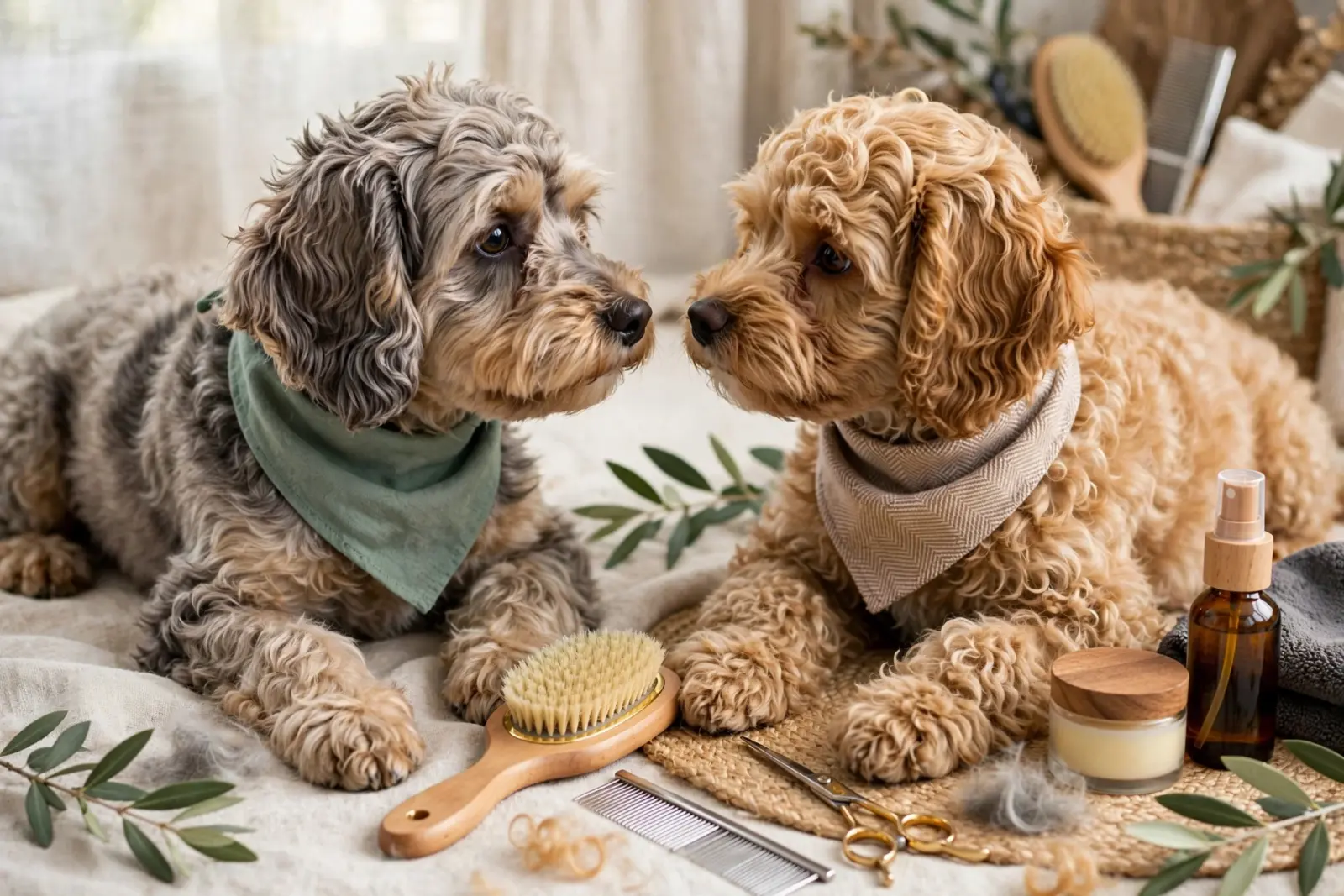
Quick Summary: A Havanese usually needs less grooming, especially in a short puppy cut that needs professional trimming every 6 to 8 weeks, compared with the Bichon Frise’s roughly 4-week salon cycle. Both breeds shed very little, but a Havanese offers lower annual salon costs of about $400 to $600, versus roughly $780 for a Bichon. The main challenge is the Havanese coat change at 8 to 15 months, when daily brushing and shorter grooming intervals are important.
If salon bills worry you, here is the short answer: Havanese grooming needs are lower once you commit to a short cut, while a Bichon Frise haircut every four to six weeks is the only way its coat stays easy. These two silky, low-shedding breeds look almost identical in photos. The real difference shows up in your brush, your bathtub, and your yearly budget. Most guides rank them by size and shedding, not by minutes per week. This comparison looks at Havanese grooming needs and Bichon Frise shedding, brushing time, bathing, and puppy-cut upkeep, so you can match the coat to the schedule you actually live with.
Havanese vs Bichon Frise: Grooming Needs at a Glance
| Havanese | Bichon Frise | |
|---|---|---|
| Home brushing | Daily for a full coat; every few days to weekly in a short cut | Weekly between grooms, daily once the adult double coat sets in |
| Professional grooming | Roughly every 4 to 8 weeks depending on cut | Full bath and haircut about every 4 weeks |
| Shedding | Minimal; loose hair stays in the coat | Very light; shed hair is retained in the coat |
| Bathing and stain care | Bath every 2 to 3 weeks; light eye and face upkeep | Bath every 1 to 2 weeks; daily eye and face stain wiping |
| Coat-cut maintenance | Short cut regrows even and forgiving; face trim optional | Round head and foot shaping needs upkeep every few weeks |
| Best for | Owners who will brush often and want flexible trim length | Owners with a reliable salon schedule and budget for monthly visits |
How Havanese and Bichon Frise Compare
Havanese
Cuba’s national dog, the Havanese carries a long, silky double coat that grows instead of shedding. Havanese grooming needs depend on length: daily brushing in a full coat, or every few days to weekly in a short puppy cut, with salon visits every 4 to 8 weeks. Best for owners who will brush often and want flexible trim length.
Key strengths
- Minimal shedding; loose hair stays in the coat
- Short cut regrows even and forgiving
Bichon Frise
The Bichon Frise is a small, curly-coated companion with a bright white double coat that needs professional shaping to look right. Plan on weekly brushing between grooms, daily wiping for eye stains, and a full bath and haircut about every 4 weeks. Best for owners with a reliable salon schedule and budget for monthly visits.
Key strengths
- Very light shedding; shed hair stays in the coat
- Classic round head and foot shaping with regular upkeep
Which Breed Needs Less Grooming Time at Home?
At home, the Bichon Frise usually wins. Its curly coat holds tangles less than the Havanese’s long, silky hair, so a Bichon owner can often get by with three or four brushing sessions a week. A Havanese in a full coat needs daily attention, and missing a few days invites mats behind the ears and under the legs. But the Bichon’s advantage has a catch: it fades as the puppy coat changes.
The Daily Brushing Reality of a Long Havanese Coat
A Havanese puppy is the easy version. The soft puppy coat brushes out in five minutes and rarely tangles. That changes between roughly 8 and 15 months, when the Havanese coat change replaces it with a longer, silkier adult coat. During those weeks, loose puppy hair weaves into the new hair, and mats form fast if you skip sessions.
Once the adult coat is in, plan on daily brushing in a full coat. Most owners spend 10 to 15 minutes per session with a slicker brush and a metal comb, working line by line down to the skin. Keep it short with a puppy cut and you can stretch to every few days, but even then, ear bases and armpits need regular checking. Havanese hair catches debris and burrs the way straight hair does, so a quick post-walk once-over helps in a full coat. Families considering the breed can see the full routine in our Havanese care guide.
Why Bichon Brushing Looks Easy Until the Adult Coat Arrives
The Bichon Frise puppy coat is plush and forgiving. Brush twice a week, run a comb through the feathering, and you’re done. That’s the stage most people meet first, which is why the breed gets labeled low maintenance.
The adult coat tells a different story. Around 9 to 18 months, the soft puppy fluff gives way to a denser double coat, with a wiry guard-hair layer over soft undercoat. That combination holds dead hair instead of dropping it, so neglected undercoat packs into felt-like clumps, especially where a harness or collar rubs.
The fix is routine, not struggle. Brush every other day in a grown coat, use a comb to check behind the ears and tail, and de-mat before it sets. A Bichon kept on a shorter trim is genuinely easier than a Havanese in a full coat. At equal coat length, the two demand similar daily time.
Professional Grooming Intervals and What They Cost
Both breeds need a professional groomer, but on different clocks. A Bichon Frise needs a full bath and haircut about every 4 weeks; a Havanese in a shorter puppy cut can often stretch to every 6 or 8 weeks. That single difference shapes your year.
| Breed | Salon interval | Typical cost per visit | Visits per year |
|---|---|---|---|
| Bichon Frise | Every 4 weeks | $50 to $80 | 12 to 13 |
| Havanese | Every 6 to 8 weeks | $50 to $80 | 6 to 9 |
The Four-Week Bichon Schedule and Why It Is Not Optional
A Bichon’s dense, curly coat grows fast and mats behind the ears, under the collar, and in the armpits within weeks. Most groomers book Bichons on a strict 4-week cycle, and skipping a visit usually means a shave-down instead of a tidy haircut. Costs for small dogs generally run $50 to $80 per full groom, though city salons can charge more; one cost guide puts full grooms at roughly $40 to $100 depending on size and location (QC Pet Studies). At $65 a visit, four-week grooming runs near $780 a year before tips. That is the real price of the scissored round head trim, and the 4 to 6 week interval is the breed standard (Pawradise).
Stretching the Havanese Visit to Every Six or Eight Weeks
A Havanese buys you flexibility. In a short puppy cut, salon visits every 6 to 8 weeks work fine as long as you brush at home between grooms, so annual grooming drops to roughly 6 to 9 visits, or $400 to $600 at typical small-dog rates.
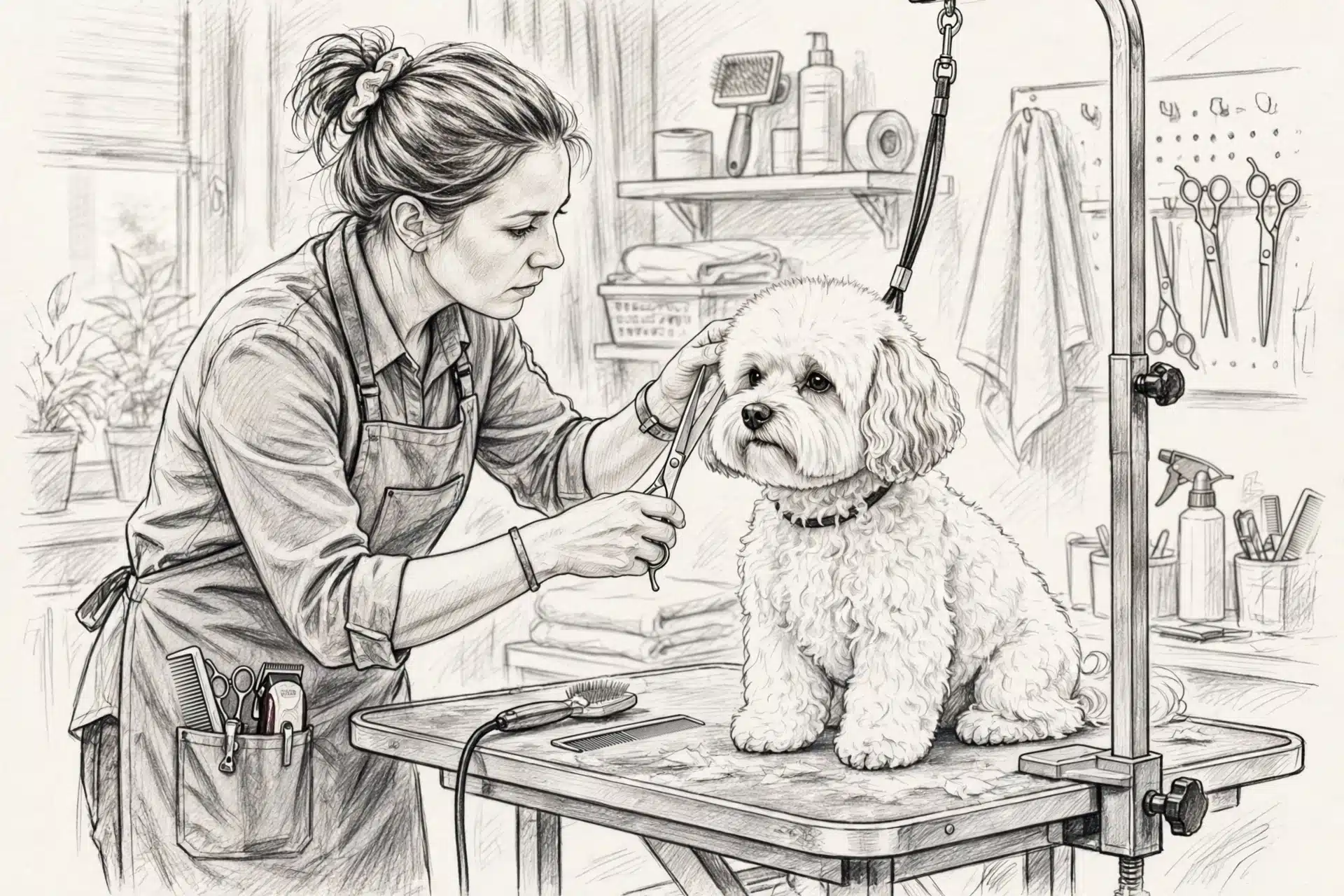
One caveat: during the Havanese coat change, around 8 to 15 months, that soft puppy fluff tangles easily and shorter intervals help. If you are budgeting for a first puppy, our Havanese puppy care guide walks through the full first-year grooming routine.
The verdict on salon cost is simple. The Bichon needs about twice as many paid visits each year, which makes it the more expensive breed to keep looking like a Bichon.
Shedding, Hair Loss, and What Reaches Your Sofa
Do Havanese or Bichon Frise dogs shed more? Neither sheds much. Both breeds lose very little hair, and loose strands tend to get caught in the outer coat instead of landing on your floor. The Havanese is often described as shedding rarely, with trapped hairs staying in the coat until you brush them out, while the Bichon’s curly coat holds loose hair the same way. If your goal is a clean sofa, either breed works. The real difference is where the hair goes: into your brush, or into a mat.
Why Hair Shows Up in the Coat Instead of on the Floor
Both breeds have hair that grows in cycles instead of falling out on a schedule. When a strand dies, the surrounding coat holds it in place. So instead of finding tufts on the carpet, you find them during brushing, which is one reason both breeds appear on lists of dogs that don’t shed much.
That trapped hair is also the source of mats. Skip a few brushing sessions and the dead strands weave into the living coat, tightest behind the ears, in the armpits, and under the harness. Brushing removes the shed hair so it can’t knot up. The ASPCA notes that Havanese rarely shed precisely because loose hair stays caught in the outer coat until brushing releases it.
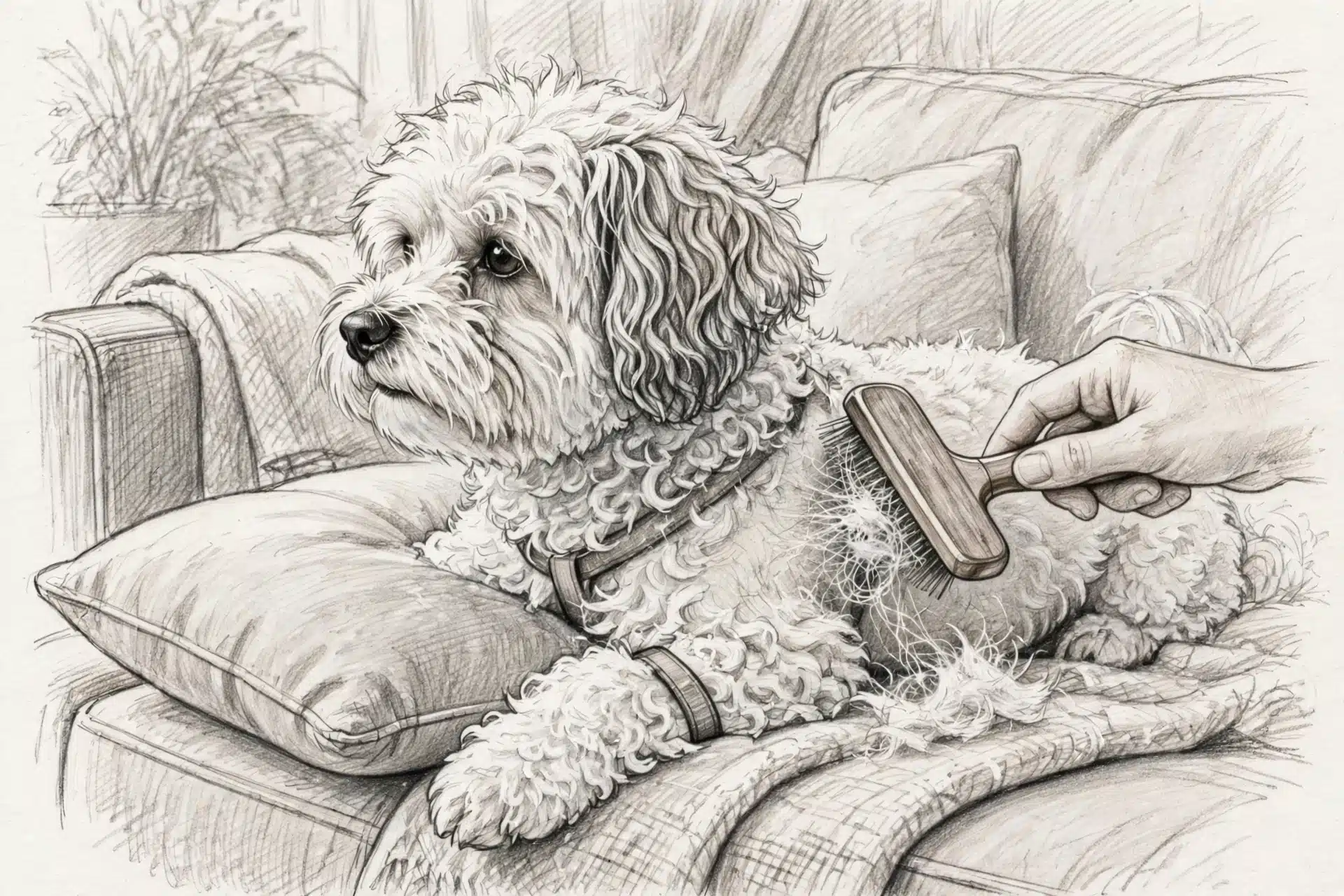
Expect a seasonal bump for each breed. During the Havanese coat change, roughly 8 to 15 months, the soft puppy fluff lets go freely and tangles fast, so you may see more hair in the brush even though the floor stays clean.
| | Havanese | Bichon Frise |
| | — | — | — |
| Daily shedding you see | Almost none | Almost none |
| Where loose hair collects | Outer coat; needs brushing out | Curly coat; needs brushing out |
| Peak hair loss | Puppy coat change, 8 to 15 months | Light seasonal shedding |
Our guide to whether Havanese puppies shed covers the allergy questions this raises in more depth.
Bathing, Tear Stains, and White-Coat Upkeep
Both breeds carry white or near-white coats that show stains fast, but the Bichon Frise tear stains question comes up more because the breed’s tight round face holds moisture. The fix is boring and daily: keep the hair under the eyes dry.
The Daily Wipe That Keeps a Bichon’s Face White
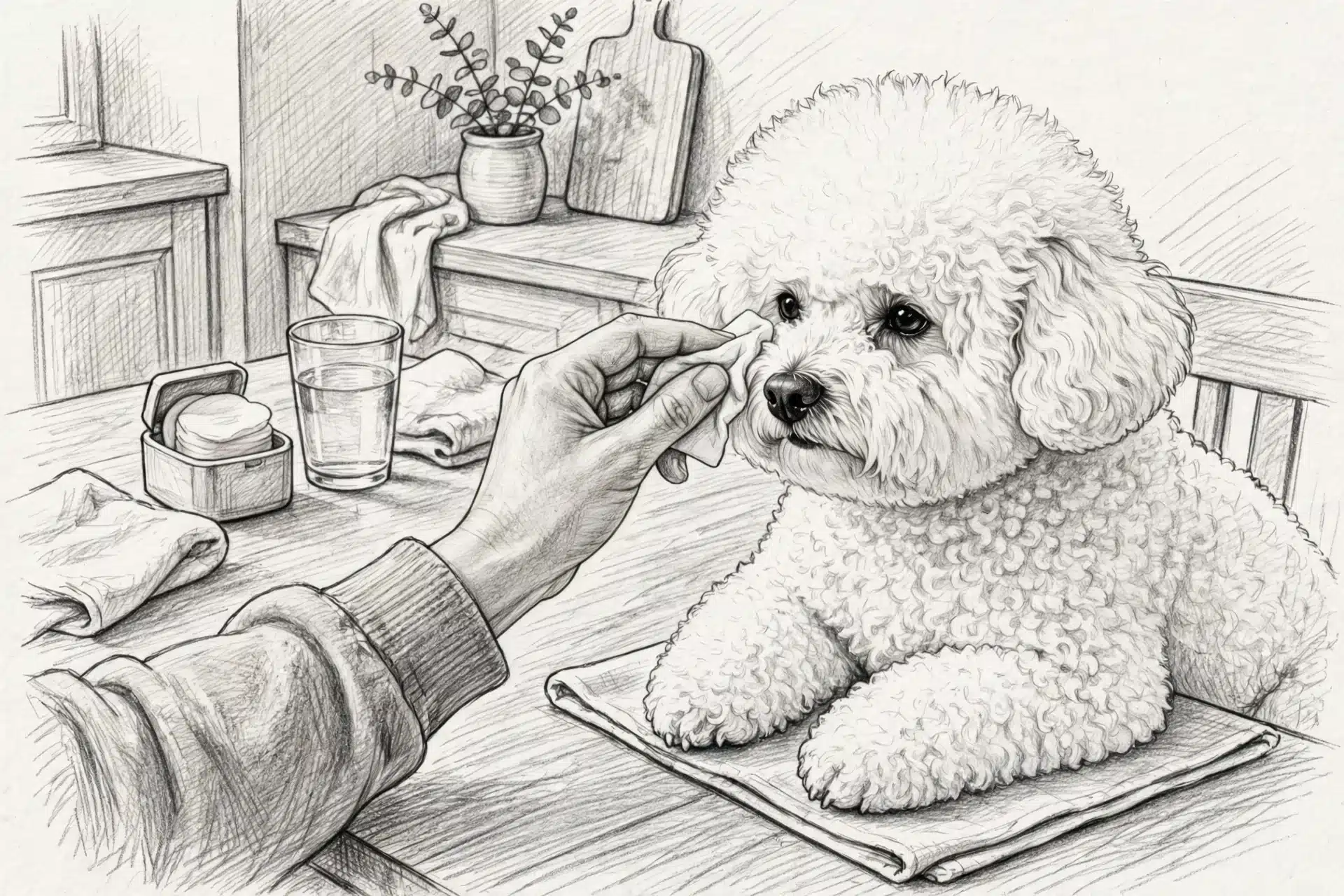
Tear staining comes from porphyrins in tears and saliva. Left damp, they turn the hair rusty brown, and the white face hides nothing. The AKC recommends wiping the area daily with a damp cloth or pad and keeping the face hair trimmed short so tears drain instead of pooling, which we follow with our own Havanese and Havapoo puppies as well.
The routine takes about 90 seconds:
- Wipe under each eye every morning with a damp pad, working outward.
- Dry the hair afterward so moisture never sits.
- Trim or ask your groomer to shorten the hair at the inner eye corner.
- Skip home bleaching mixes; some online remedies, like hydrogen peroxide solutions, irritate skin and belong nowhere near the eyes.
A Havanese benefits from the same wiping but can often go a day or two between cleanups because the breed’s longer muzzle lets tears drain away from the coat.
Bathing and Drying Without Wrecking the Coat
Bathe a Bichon every 1 to 2 weeks and a Havanese every 2 to 3 weeks, matching the intervals from our grooming table above. Use a gentle whitening or mild dog shampoo, work it down to the skin, and rinse twice. Leftover soap dulls a white coat and itches.
Drying matters more than the bath. Towel blot first, then blow-dry on low while brushing the coat straight. Air drying lets curls tighten into mats, especially behind the ears and under the legs, and a matted coat traps stains and dirt. A clean, fully dried coat is what makes the scissored Bichon trim hold its shape.
Puppy Cuts, Coat Changes, and the First Year of Maintenance
What Changes Between Eight Months and One Year
The short answer to the puppy-cut question: yes, a Havanese puppy cut is easier to maintain than a scissored Bichon Frise haircut, mostly because the Havanese can stretch salon visits to 6 or 8 weeks while a Bichon stays on a 4-week cycle.
The twist is the coat change. Between about 8 and 15 months, a Havanese sheds its soft puppy fluff and grows a longer, silkier adult coat. As the baby hair lets go, it tangles fast against the new growth, so mats appear quickly, especially behind the ears and in the armpits. The change can run 2 to 6 months, according to the Havanese coat change guide.
A Bichon Frise changes coats too, but its adult double coat arrives more gradually, so the shift is milder. Your 4-week grooming interval stays steady through the teenage months.
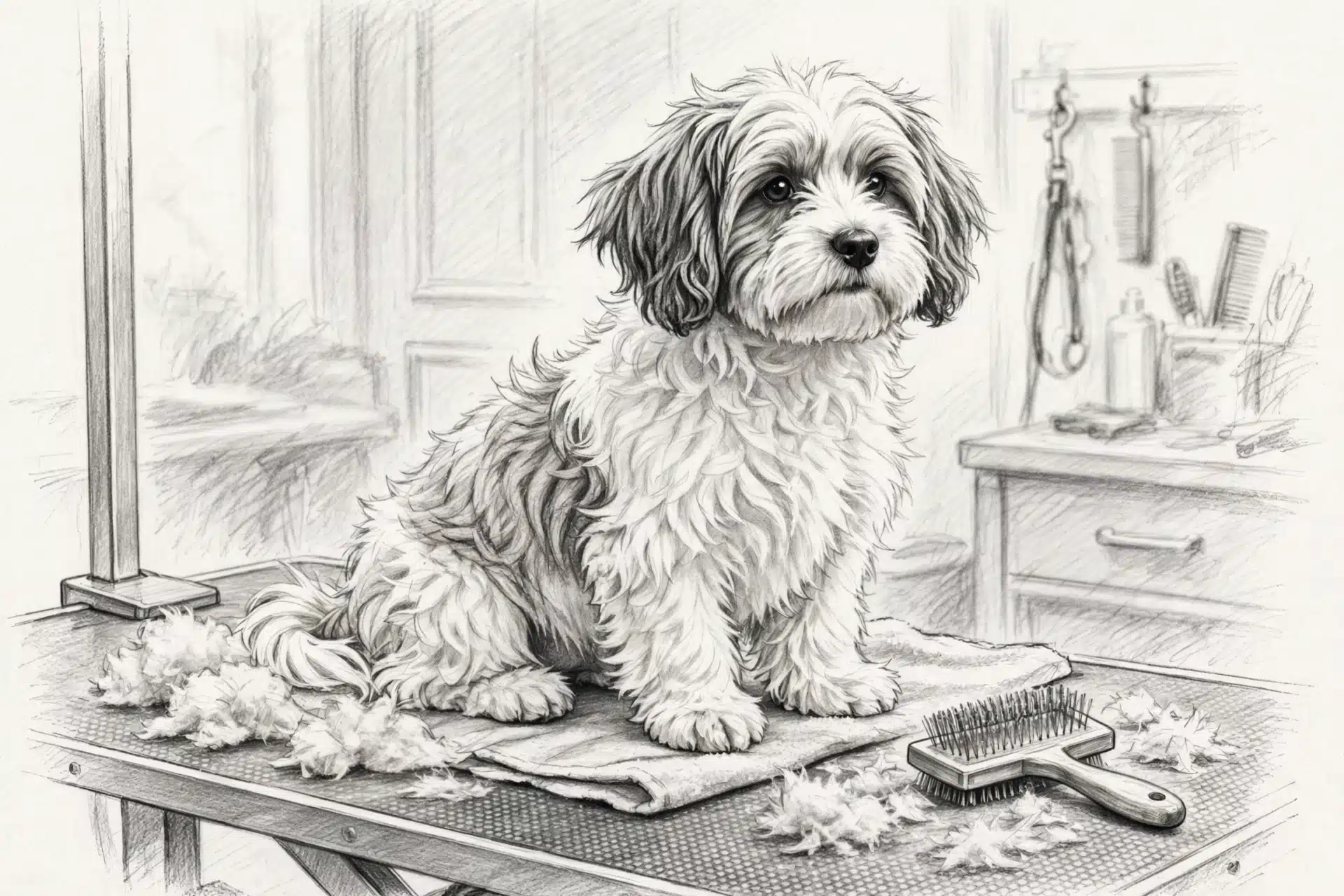
Setting Up a Grooming Routine That Survives the Teenage Months
Build the habit before month eight, when brushing is easy and mats are rare. Short sessions with a slicker brush and metal comb, working line by line to the skin, teach your dog to stand still for it.
During the change, move to daily brushing and shorten your salon interval from 6 to 8 weeks down to 4 to 6. Use a conditioning spray on any tangle and work it out from tip to root.
If a mat sits close to the skin, stop. Hand-stripping it hurts; a groomer can split or clip it safely.
Consistency through those few months keeps the puppy cut an option past year one.
Which Should You Choose: Havanese or Bichon Frise?
The Havanese usually needs less grooming. In a short puppy cut, a Havanese can stretch salon visits to every 6 or 8 weeks, while a Bichon Frise stays on a strict 4-week cycle. Both breeds shed very little, so the real difference is salon time, not hair on your floor.
- Pick the Havanese if you want fewer groomer trips and a flexible coat.
- Pick the Bichon Frise if you want the classic round head trim and do not mind monthly appointments.
When the Havanese Is the Easier Dog
The Havanese wins when you value flexibility. A shorter cut means brushing a few times a week instead of daily, and salon visits every 6 to 8 weeks cost less over a year, roughly $400 to $600 at $65 per visit. Owners who clip their Havanese find grooming much simpler than the full show coat. The coat also comes in many colors, so light tear staining shows up less than it does on a white Bichon. One caveat: during the coat change at 8 to 15 months, that soft puppy fluff tangles fast, so plan on extra brushing for a few months.
When the Bichon Frise Still Wins
The Bichon makes sense if you love the tightly scissored, cloud-like look. Only a groomer can build that round head trim, and the breed holds the shape well between visits. Its dense double coat with guard hairs resists tangles better than a silky coat, so a missed brushing is more forgiving. The tradeoff is cost, about $780 a year on the 4-week cycle, and skipping a visit often means a shave-down instead of a tidy haircut. As one owner discussion puts it, the Bichon is simply more intensive grooming-wise.

If the grooming numbers tip you toward a Havanese, we can help. Sage Puppies raises Havanese, Havapoo and Cavapoo puppies in South Jordan, Utah, with owner-managed matching for local and nationwide families. Apply today and we’ll match you with a puppy whose coat fits your routine.
Frequently Asked Questions
Q1: Which breed needs less grooming, Havanese or Bichon Frise?
The Havanese. In a short puppy cut it needs salon visits every 6 to 8 weeks, while a Bichon Frise haircut is required about every 4 weeks.
Q2: How often do Havanese and Bichon Frise need professional grooming?
Bichons need a full groom every 4 weeks; Havanese in short cuts stretch to every 6 or 8 weeks. At $65 per visit, that means roughly $780 versus $400 to $600 a year.
Q3: Is a Havanese puppy cut easier to maintain than a Bichon Frise trim?
Yes. The puppy cut is forgiving, regrows evenly, and needs home brushing only every few days. A scissored Bichon trim needs a groomer to hold its round shape.
Q4: Does either breed shed much?
Very little. Both coats trap loose hair until brushing removes it, so a Bichon Frise shedding day rarely touches your sofa.
Q5: When is grooming hardest in the first year?
During the Havanese coat change, about 8 to 15 months. Puppy fluff tangles against new growth, so brush daily and shorten the professional grooming interval.
Conclusion
The grooming gap comes down to salon time, not shedding. Both breeds barely shed, and both need real brushing at home. But a Havanese in a short puppy cut can stretch professional visits to every 6 or 8 weeks, while a Bichon Frise stays locked on a 4-week cycle that costs about $780 a year. Watch the coat change window, too: between 8 and 15 months, both breeds need extra brushing, with the Havanese coat change the sharper spike. Choose the Havanese for flexibility and lower salon bills, or the Bichon for that classic scissored round head if monthly appointments fit your life.