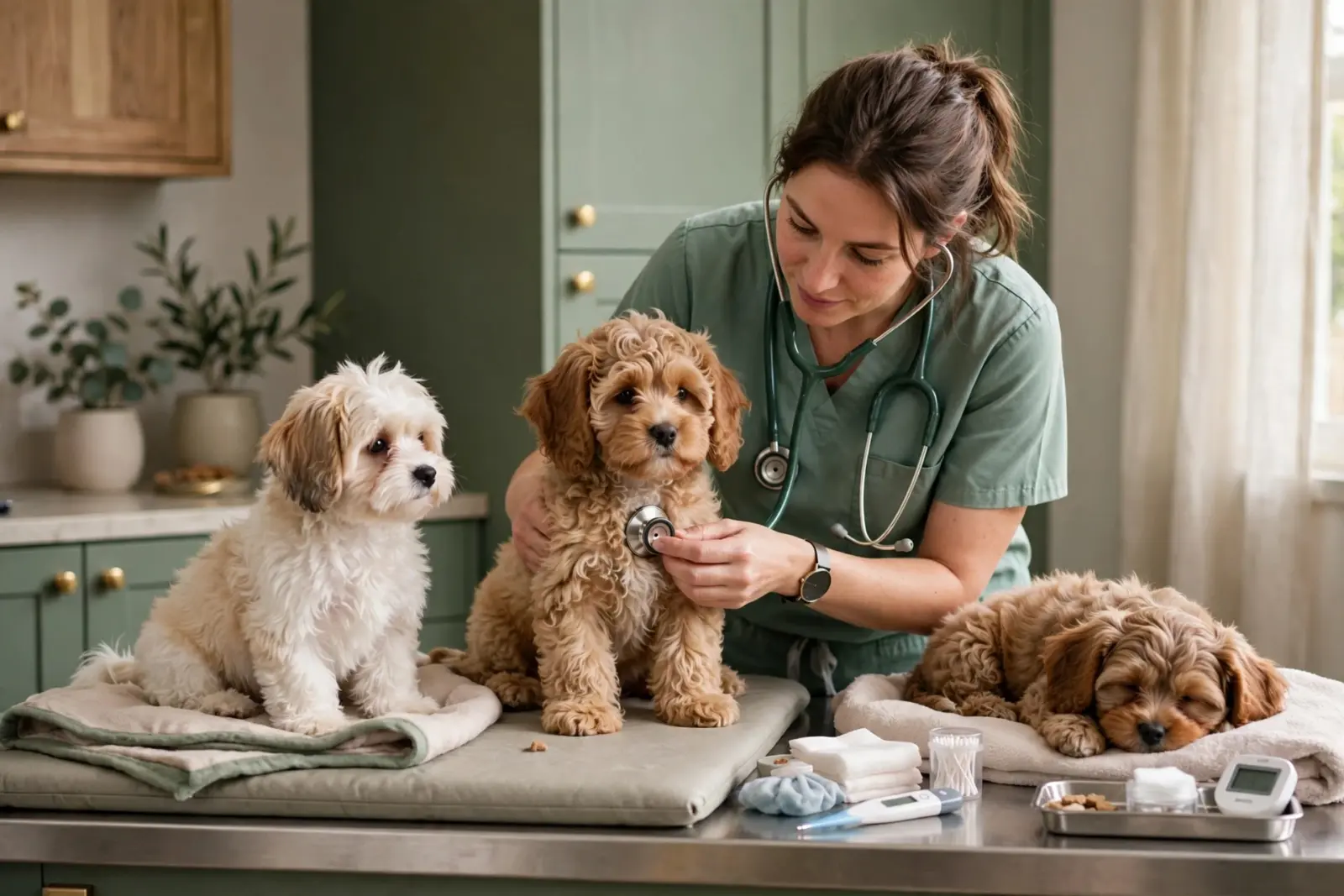
Quick Summary: A healthy Havapoo purchase requires three layers of proof: the puppy’s dated vaccination, deworming, and exam records; both parents’ clinical screenings; and DNA panel results interpreted by the breeder. Verify OFA records yourself, meet the puppy in person, and arrange an independent vet exam within 72 hours of pickup to catch problems before the health guarantee expires. Walk away from breeders who rely on vague claims, missing records, or pressure to pay without documentation.
Two Havapoo litters can look equally healthy at eight weeks. Yet one seller hands you a folder with vaccine dates, deworming records, a weight log, and OFA numbers for both parents, while the other offers the phrase “our puppies are vet checked” and nothing else. That gap is the whole problem, and you can close it before you pay anyone.
How do you know if a Havapoo puppy is healthy before buying? Check three layers of evidence: the puppy’s own exam and vaccine records, clinical screening of both parents, and DNA panel results for inherited conditions. This buyer’s vet guide walks through each layer of Havapoo health checks step by step, with the exact documents, public databases, and puppy health questions to bring to your first vet visit. The standards come from breed screening programs and from Cassie Milar’s documented breeding experience in South Jordan, Utah.
Before You Start: Gather the Records You Need
Three Layers of Evidence Buyers Confuse
Most breeders hand over three different kinds of paperwork, and buyers mix them up. The first is the puppy’s own exam record: the vet check, vaccinations, and deworming dates for that pup. The second is parent health testing, like OFA checks and CAER eye exams done on the mother and father. The third is DNA panel results showing whether parents carry genes for conditions such as progressive retinal atrophy. A clean puppy exam says nothing about inherited risk, so ask for all three layers. Real havapoo health checks cover each one.
What to Have Open Before You Contact a Breeder
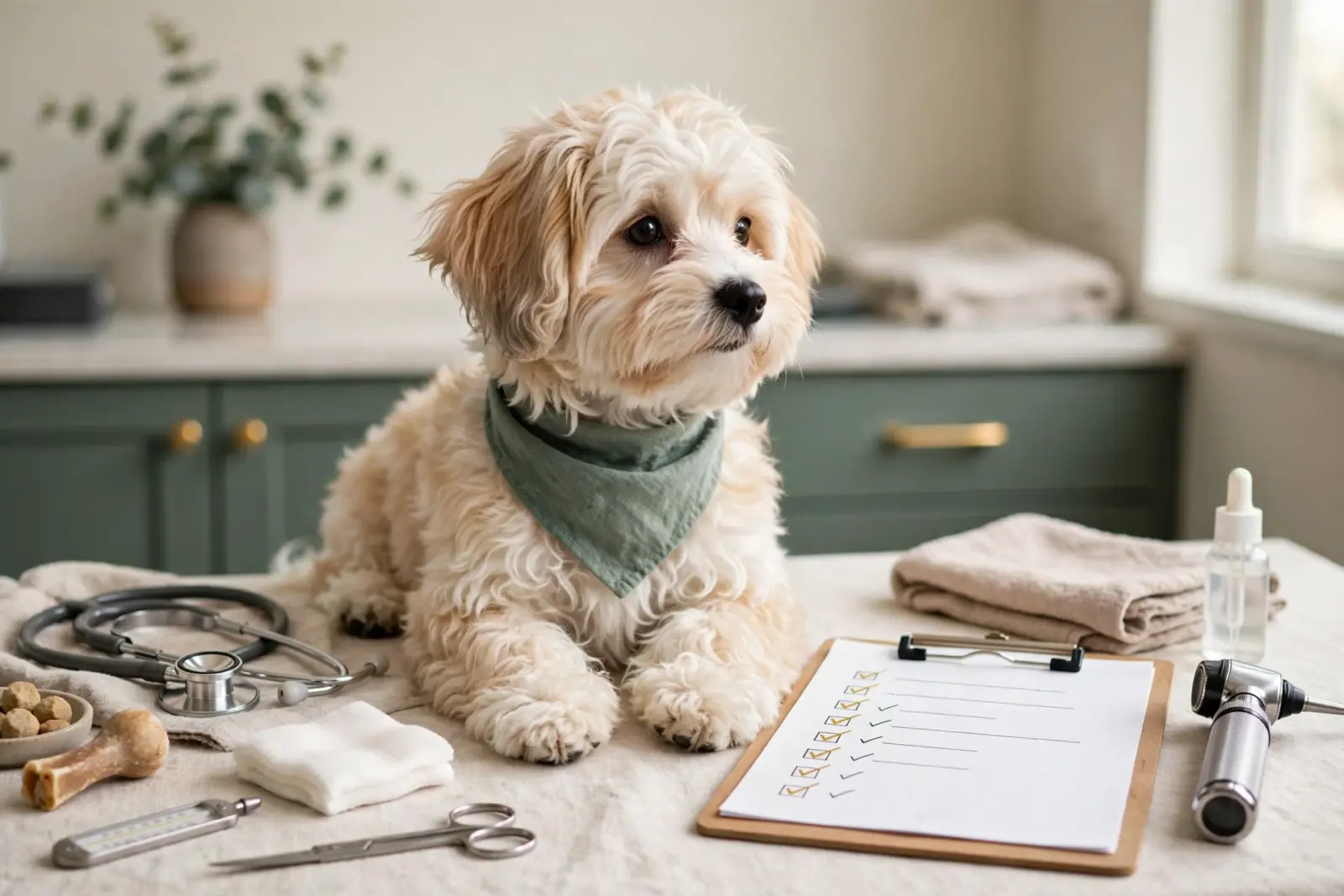
Set up a simple folder before you call anyone. Keep a checklist of questions, room for scanned records, and a notes column for answers. Ask which tests were done, on which parent, and when. If you’re still comparing programs, a page like Sage Puppies’ guide to havapoo puppies shows the kind of health detail a program should share up front.
Step 1: Read the Puppy’s Own Health File
A healthy Havapoo puppy shows up with three layers of evidence in hand. The first is the puppy’s own file, which should include dated vaccination records, a written vet exam summary, and growth notes from the breeder. Read it before you fall in love.

Vaccination and Deworming Dates
Ask for records with dates, vaccine names, and lot numbers, not a vague “shots are done” claim. Puppies start core vaccines, usually DHPP, at 6 to 8 weeks, with boosters every 3 to 4 weeks after that, so an 8-week-old puppy should show one or two entries, not a finished series. Regular deworming dates should appear too, starting as early as two weeks of age.
The Vet Exam Summary in Writing
Insist on a signed summary from a licensed veterinarian who examined the puppy, not the breeder’s word that the puppy “looks great.” It should list heart and lung sounds, eyes, ears, knees, and weight. Any heart murmur or undescended testicle must be written down, and a clean sheet dated within a few days of pickup gives your own vet a baseline. This is a core piece of real havapoo health checks.
Growth and Feeding Notes
Ask which food the puppy eats, how much, and on what schedule. Sudden food changes upset small stomachs, so a written feeding note lets you keep the same routine for the first weeks. Weight records week by week matter too, because steady gains signal a thriving puppy while a flat or dropping curve is a red flag your vet should see first. A clear Havapoo health checklist folds all three documents into one page you can bring to pickup.
Step 2: Verify Parent Health Testing in OFA and CHIC
A breeder can say “health tested parents” without proving anything. Real proof lives in a public database, and you can check it in about ten minutes. Here’s how to verify OFA and CHIC health records for Havapoo parents: get each parent’s registered name, search it on OFA’s site, open the dog’s record, and read each listed result. Then confirm a CHIC number and match the results to any DNA panel the breeder shares.

Ask for Registered Names, Not Descriptions
Descriptions like “both parents are cleared” prove nothing. Ask for each parent’s registered name and, if available, their OFA number. Any breeder doing real testing can produce these in minutes. A breeder who delays, offers photos instead, or says the results are “private” is showing you a red flag. Write the names down exactly as given, including kennel prefixes.
How to Read an OFA Record Result by Result
Search the registered name at ofa.org. For a Havapoo’s parents, you want these entries:
| Test | What a normal result looks like |
|---|---|
| Hip radiograph | OFA Normal, Good, or Excellent |
| Patellar luxation | Normal |
| CAER eye exam | Normal or unaffected, dated within the past year |
| Cardiac exam | Normal |
| DNA panel | Listed variants, checked case by case |
Missing entries matter as much as failing ones. An absent test is not a pass.
What CHIC Does and Does Not Tell You
A CHIC number means the dog completed every test its breed’s protocol requires, with results posted publicly. It does not mean the results were normal. As the Silky Terrier Club explains, a CHIC number confirms testing happened, nothing more. Read the individual results.
Reading DNA Variant Results Carefully
DNA results need context. Some conditions, like progressive retinal atrophy, are only a concern when a puppy inherits two copies of a variant. Ask how each parent’s results were used in breeding decisions. Any Havapoo breeder matching dogs responsibly can explain that reasoning.
Step 3: Ask the Puppy Health Questions That Reveal Everything
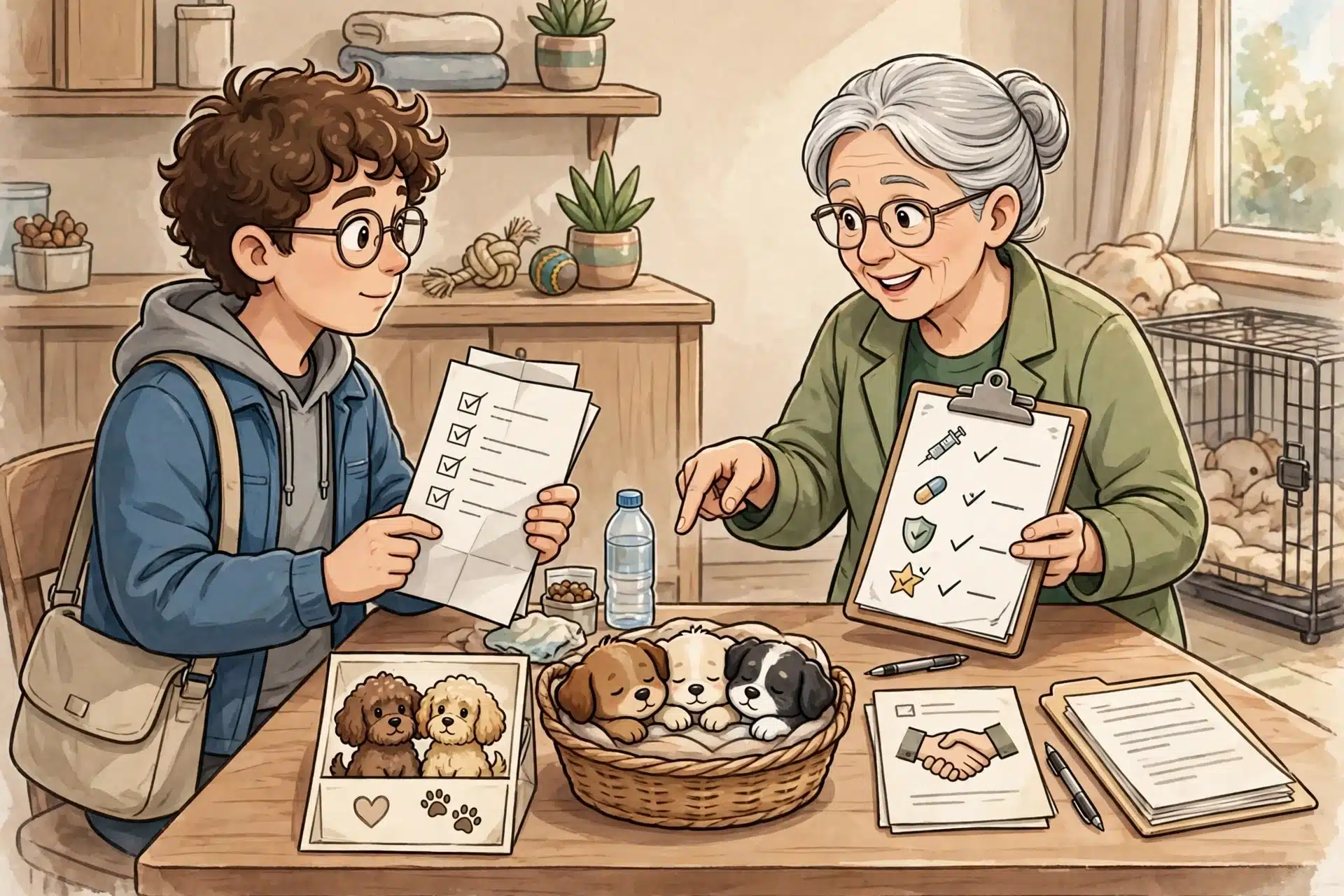
A good breeder answers health questions with paperwork, not adjectives. Bring this list and group your questions three ways: the parents, the litter, and the contract. That structure alone tells you who has done the work.
Questions About the Parents
Ask for both parents’ OFA health testing results, including a patellar luxation evaluation, a CAER eye exam, and any hip radiograph on file. Request DNA panel results showing the sire and dam are clear of progressive retinal atrophy. If either parent is a Havanese, ask for a Havanese Club of America health statement. Then verify each claim yourself in the public database rather than trusting screenshots.
Questions About the Litter and the Puppies
Ask when the puppies had their first vet exam and whether any puppy failed it. Request the puppy vaccination and deworming records with dates and product names, and confirm the deworming schedule started around two to three weeks of age. Ask which puppy was the smallest, the boldest, and the slowest to eat. Honest breeders know their litter.
How to Read a Vague Answer
Watch for three red flags: “the vet handles that,” “we don’t test because the breed is healthy,” and photos instead of registry numbers. A real answer sounds like, “Both parents passed the CAER exam in March; here are the OFA numbers.” If a breeder deflects twice on the same question, treat it as a no. Good breeders expect the questions and answer them gladly.
Questions About the Contract and the Guarantee
Ask what the puppy health guarantee covers, how long it lasts, and exactly what voids it. A fair contract should let you take your puppy to your own vet within a few days of pickup, usually 72 hours. Ask who pays if a genetic condition appears later, and whether you must return the dog to claim anything. Get every promise in writing before you pay.
Step 4: Look at the Puppy Yourself
Photos and paperwork tell you a lot, but they cannot replace ten minutes with the puppy. Watch how it moves, breathes, and responds to you before any money changes hands.
What Healthy Looks Like in a Young Havapoo
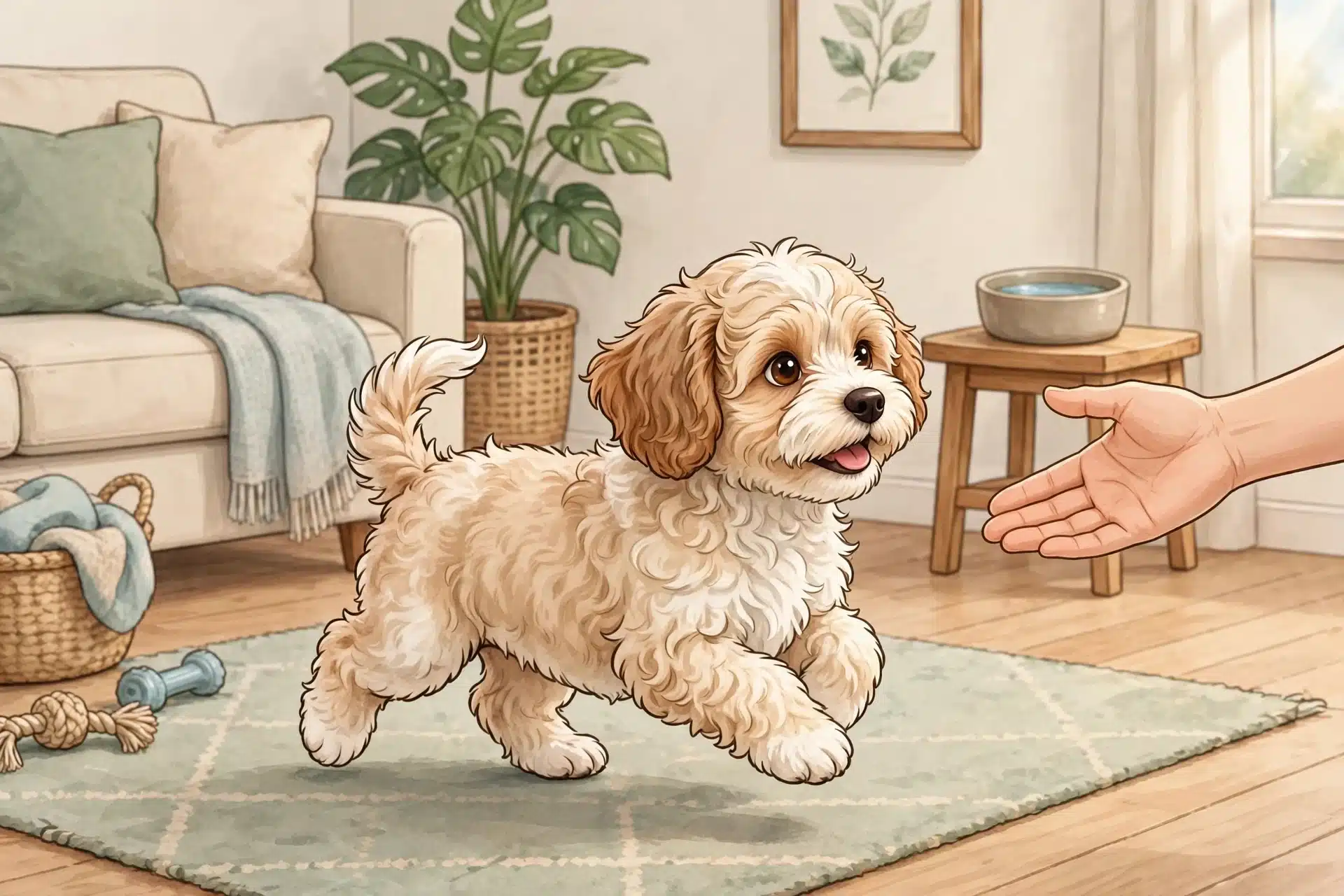
A healthy 8-week-old Havapoo is curious, wiggly, and quick to engage. Eyes should be clear with no discharge, ears clean and odor-free, and the coat soft without bare patches. Gait matters most: the puppy should run and turn without limping, bunny-hopping, or a skipping step in a back leg. The belly should look round but not swollen, and breathing quiet at rest.
Red Flags That Show Up in Person
Walk in ready to say no. The in-person red flags that should stop a purchase:
- Nasal or eye discharge, coughing, or labored breathing
- A swollen belly with visible ribs and dull coat
- Limping, leg skipping, or reluctance to stand
- Lethargy or fear so strong the puppy shuts down
- Diarrhea, or a littermate with it
- Visible skin sores, flaking, or constant scratching
One symptom might mean nothing. Several together mean walk away.
Red Flags That Show Up in the Conversation
The breeder red flags are just as telling as the physical ones. Watch for:
- Refusing a visit or live video call before pickup
- No vet records, or records you cannot keep copies of
- Pressure to pay a deposit same-day
- Vague answers about the parents’ health testing
- No written puppy health guarantee or return terms
A confident breeder welcomes questions and hands over documentation without being asked twice.
Meeting the Parents
Ask to see the mother, at minimum, and watch how she greets you. Temperament is heavily inherited, so a fearful or snappish dam matters even when her test results are clean. Confirm her OFA health testing covers patellar luxation and a current CAER eye exam, and ask which health conditions the sire was screened for. If the parents live elsewhere, request their records in writing.
Meet the litter in person when you can, and reserve a Havapoo puppy only after you have seen it yourself.
Step 5: Book an Independent Vet Check Before You Commit
Why a Second Set of Eyes Matters
A breeder’s records tell you what was done. Your own vet confirms how the puppy is actually doing. An independent exam catches heart murmurs, hernias, and early signs of patellar luxation that a quick pickup-day look can miss. A fair puppy health guarantee usually gives you about 72 hours for this check, so use them. At Sage Puppies, every puppy visit happens with owner-managed records you can hand straight to your vet.
Scheduling the First Home Visit
When should the first vet visit happen after picking up a Havapoo puppy? Book it within the first 2 to 3 days home, while your health guarantee window is still open. Call before pickup day and ask for a “new puppy exam,” not a sick visit. Bring your puppy vaccination and deworming records plus any DNA panel results so the vet can plan future boosters instead of repeating them.
If Something Is Concerning
Ask the vet to explain the finding in plain terms and put it in writing. Then contact the breeder the same day. A good breeder will discuss treatment, replace paperwork, or work with you under the contract. Pressure to skip the exam or vague answers about a murmur are breeder red flags. If the problem is serious and the contract allows it, you can return the puppy and get your money back.
Common Mistakes to Avoid
Mistakes That Cost Buyers Their Leverage
Paying a deposit before seeing written records is the biggest one. Without proof, you lose your bargaining position if a problem shows up. Skipping the contract’s 72-hour vet window does the same: if you wait past it, a health guarantee may no longer cover what your vet finds. Also avoid accepting DNA panel results as a substitute for the parents’ clinical screenings, since patellar luxation and hip issues only show on an exam.
Mistakes That Harm the Puppy
Rushing pickup around vaccination timing is a common error. Core shots like DHPP start at 6 to 8 weeks, so a puppy sent home too early misses protection it still needs. Another mistake is skipping the first vet visit within the first few days, which delays deworming checks and early catches of eye or heart problems. And never ignore a breeder red flag just because the puppy is cute. At Sage Puppies, Cassie sends records with every puppy, but any good program should do the same.

You now know exactly which records to ask for and what to check in the first 72 hours. If you want a Havapoo raised with that same level of care and documentation, start with Sage Puppies. Visit Sage Puppies to review available puppies and begin your application today.
Frequently Asked Questions
Q1: How do I know if a Havapoo puppy is healthy before buying?
Check three layers of evidence: dated puppy vaccination and deworming records, a signed vet exam summary, and parent health testing plus DNA panel results. Then confirm everything yourself and book your own vet check within 72 hours.
Q2: How do I verify OFA and CHIC health records for Havapoo parents?
Get each parent’s registered name, search it at ofa.org, and read every listed result, including patellar luxation and CAER eye exams. A CHIC number proves testing happened, not that results were normal.
Q3: Which red flags show up when buying a Havapoo puppy?
Vague answers about testing, photos instead of registry numbers, no written puppy health guarantee, same-day deposit pressure, and physical signs like discharge, limping, or a swollen belly.
Q4: What should I ask a Havapoo breeder about health?
Ask about parents: OFA results, CAER eye exams, DNA panels. Ask about the litter: vaccine and deworming dates, first vet exam. Ask about the contract: guarantee length, what voids it, return terms.
Q5: When should my Havapoo puppy see a vet after pickup?
Book a new puppy exam within the first 2 to 3 days home, while the health guarantee window is still open. Bring all records so boosters continue on schedule.
Conclusion
A healthy Havapoo purchase comes down to three layers of proof: the puppy’s own vaccination, deworming, and vet exam records; clinical screenings on both parents, including OFA health testing, patellar luxation, and a current CAER eye exam; and DNA panel results read in context. Verify everything yourself in the OFA database, ask for registered names instead of reassurances, and walk away from breeder red flags like vague answers or missing paperwork. Meet the puppy in person, check movement, eyes, and breathing, then book your own vet within the 72-hour puppy health guarantee window. Sellers who welcome each step are showing you how they work, and that tells you more than any ad.