Quick Summary: Feed a Havanese puppy four equal meals about four hours apart through the first eight weeks, using the food label’s daily amount for expected adult weight and dividing it by four. Weigh the puppy weekly, check body condition, keep treats under 10% of daily calories, and delay food changes until week three before blending foods gradually over 7 to 10 days. A single missed meal with normal energy is usually minor, but refusal with wobbliness, weakness, vomiting, diarrhea, or listlessness requires same-day veterinary care because toy breeds can develop low blood sugar quickly.
At 8 weeks old, a Havanese puppy’s stomach is roughly the size of a walnut. That one fact explains the call we get most often in week two: she ate three Havanese meals and skipped the fourth, and now her family is panicking. Small breeds eat little, often, and not always on cue. The real challenge in those first eight weeks at home is keeping calories steady without overfeeding, while watching weight and refusing to panic over normal quirks. This guide gives you a week-by-week puppy meal schedule, simple calorie math, weigh-in habits, and fixes for common refusals. It draws on current veterinary nutrition guidance plus Cassie’s documented experience raising Havanese, Havapoo, and Cavapoo litters here in South Jordan, Utah. We wrote it for first-time toy breed owners, and it pairs with our full Havanese feeding chart rather than repeating it. Your 8 week feeding routine starts on solid ground here.
Step 1: Settle Your Havanese Into a Four-Meal Rhythm in Weeks 1 and 2
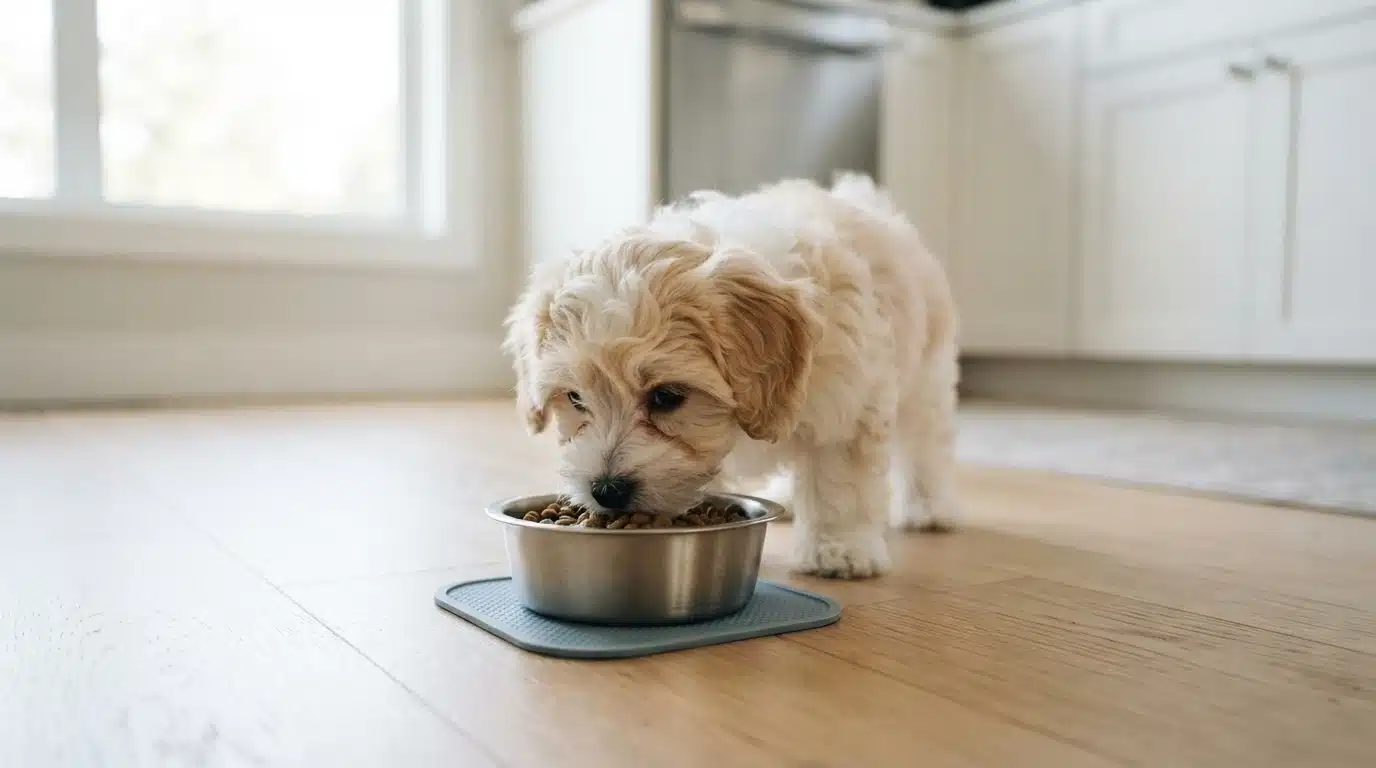
At 8 weeks old, feed your Havanese four meals a day, spaced about four hours apart. Toy breeds need this rhythm longer than larger puppies because small bodies burn through energy fast. Chewy’s feeding guide notes toy breeds should eat four to five times daily to lower the risk of low blood sugar, and small breeds can hold that pace until four months.
Why Four Meals and Not Three
Three meals work for many puppies, but a two- or three-pound Havanese has almost no reserves. Each meal keeps blood sugar steady, which matters because low blood sugar in small breed puppies can show up as wobbliness, weakness, or sleepiness. Blue Cross recommends four meals a day from 8 weeks until four months. Four smaller Havanese meals also fit that walnut-sized stomach far better than three bigger ones.
A Sample Day One Schedule You Can Copy
| Time | Meal | Notes |
|---|---|---|
| 7:00 a.m. | Breakfast | Right after the first potty trip |
| 11:00 a.m. | Second meal | Then outside again |
| 3:00 p.m. | Third meal | Keep portions equal |
| 7:00 p.m. | Last meal | Finish by 7:30, water up to bedtime |
Feed at the same times daily. The last meal sits early enough for a potty break before bed, which helps overnight house training.
Keep the Food Familiar in the First Two Weeks
Ask which food your breeder used and keep feeding it. Sage Puppies sends puppies home with feeding notes, so follow what your puppy already knows. Sudden switches upset toy-breed stomachs, so hold any puppy food transition schedule until at least week three, then blend foods over seven days. A steady first month also makes your first-year health checklist easier to track at well visits.
Step 2: Lock In Portion Size in Weeks 3 and 4
Weeks 3 and 4 at home are when you move from “roughly a quarter cup, more or less” to a real daily number. Most Havanese puppies weigh 3 to 5 pounds here, so small measurement errors add up fast. Getting the daily total right now keeps growth steady and protects against tummy upset.
Turn the Bag Label Into a Per-Meal Number
Find the daily amount on your puppy food label for your puppy’s expected adult weight, not current weight. Toy breeds need four or more meals a day under four months, so divide that daily total by four. If the label says three-quarters of a cup per day, each meal gets a touch over three tablespoons. Our Havanese feeding chart by age and weight already does this math for you, matched to this breed’s small portions.
The Weekly Weigh-In and Body Condition Check
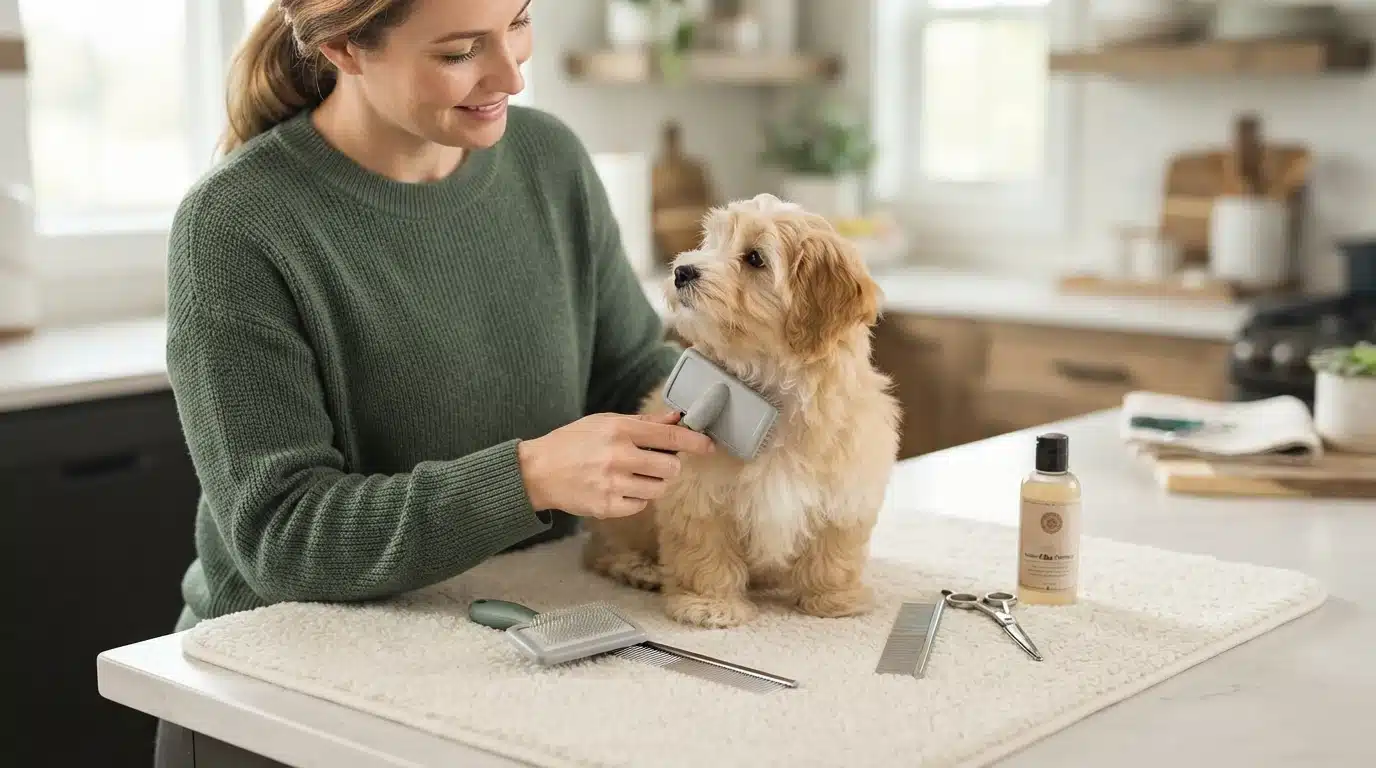
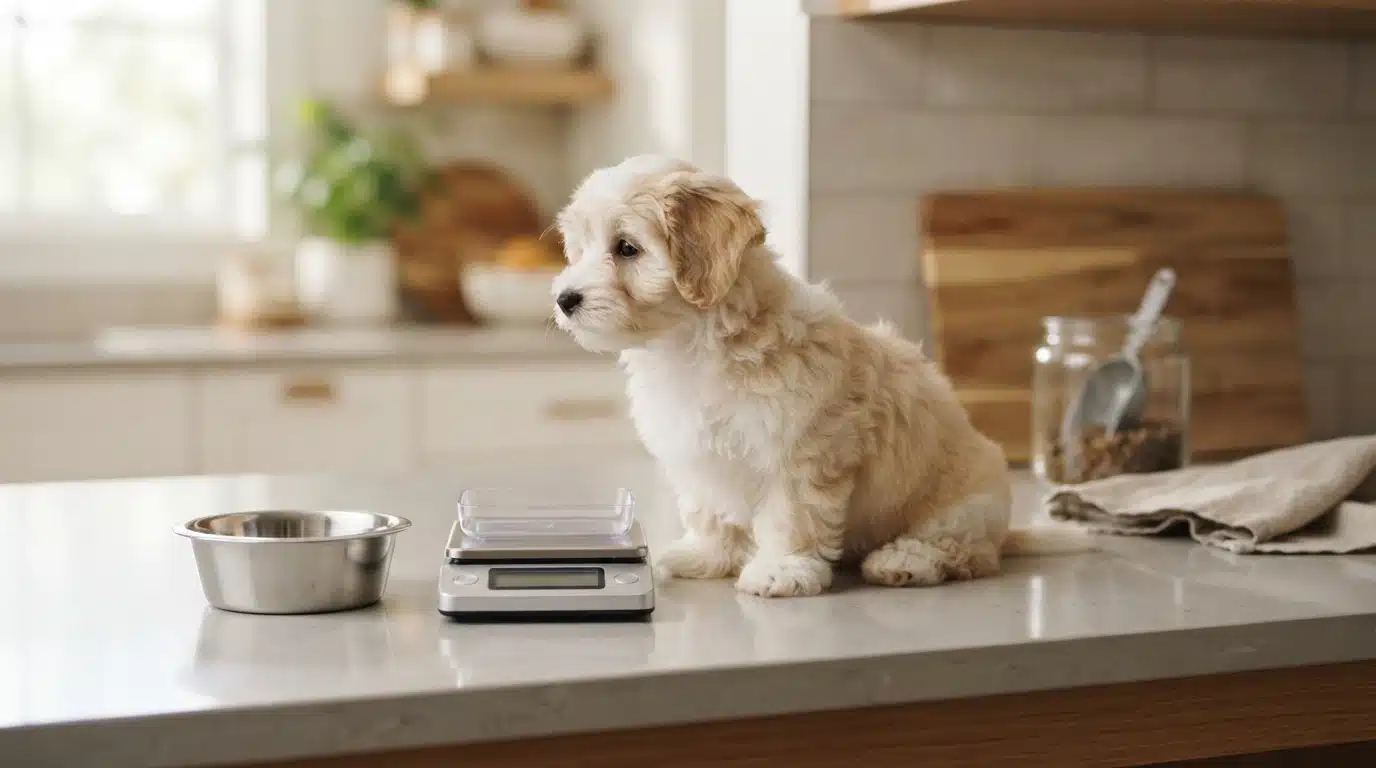
Weigh your puppy every week on the same kitchen scale and jot the number down. Then run your hands along the ribs: you should feel them with light pressure, but not see them. Ribs you cannot feel mean cut the portions slightly. A visible rib line or a missed weight gain means add a little. Small tweaks of a teaspoon per meal work better than sudden changes.
Budgeting Treats and Training Rewards
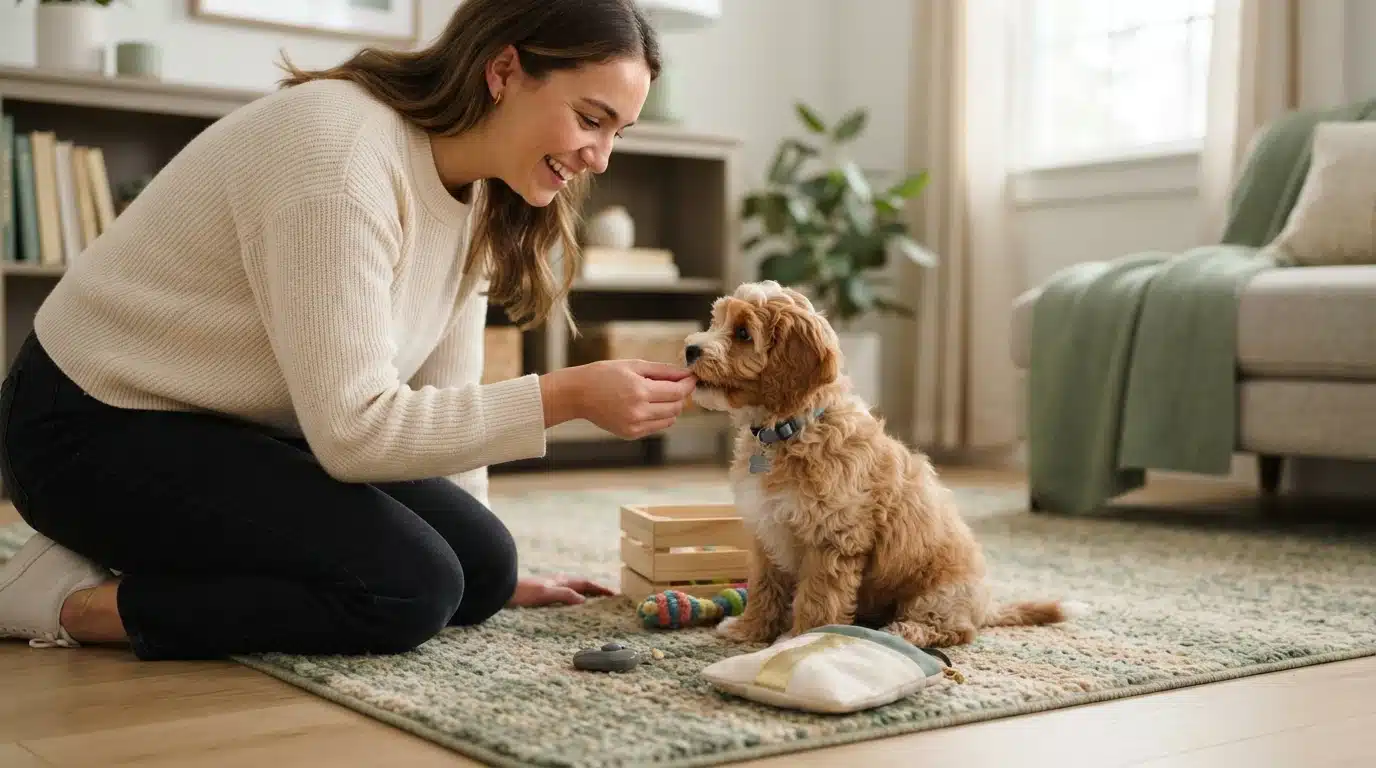
Keep every treat and training reward inside ten percent of daily calories, the ceiling most vets suggest, and subtract it from the daily kibble total. Small pieces of the regular kibble work fine as rewards, so meals stay balanced.
Read the feeding chart on the bag, divide by four, weigh weekly, and keep treats light.
Step 3: Hold the Line Through Weeks 5 and 6
Weeks 5 and 6 are when your Havanese feeding schedule faces its first real tests: growth spurts, a vaccine visit, and your workday. Keep the four-meal structure and the same food. Your job now is consistency, not change.
When Appetite Spikes for a Few Days
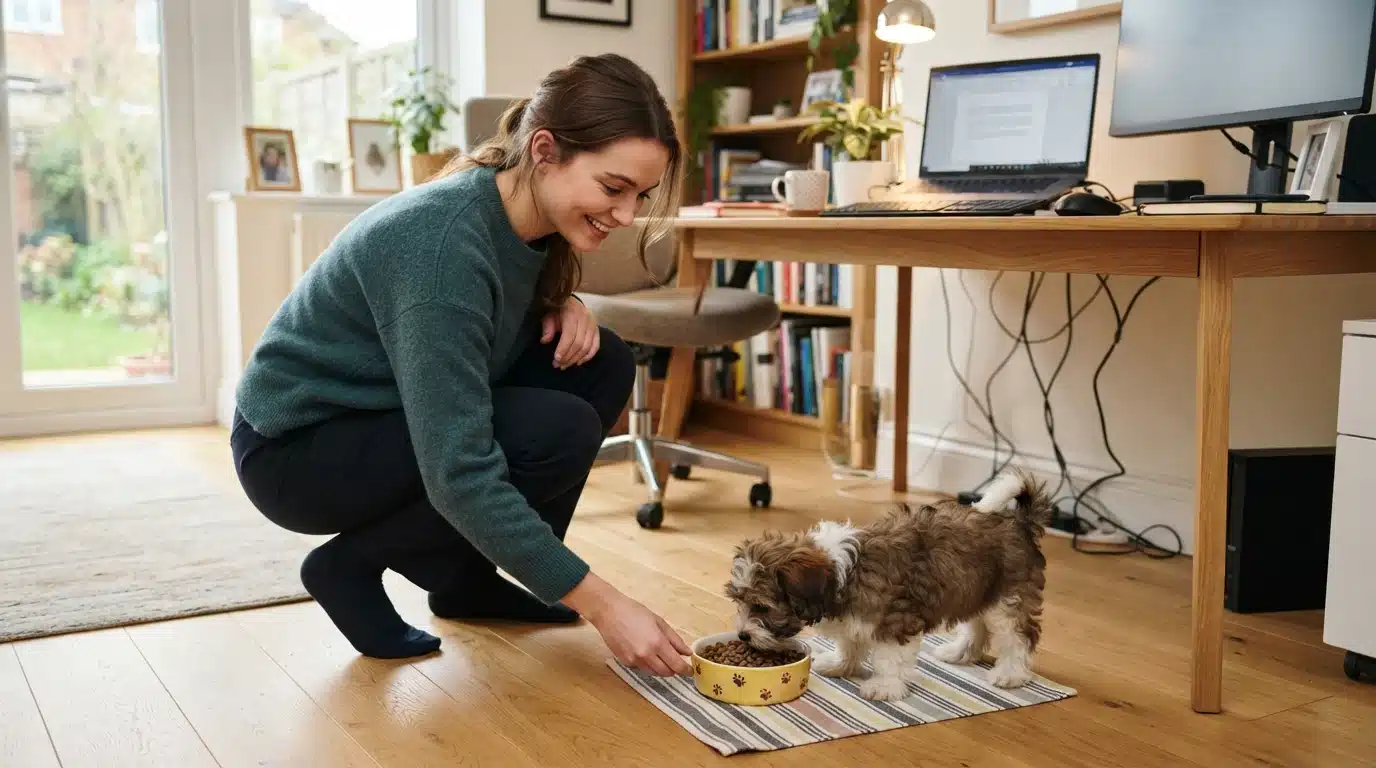
Growth spurts often bring two or three ravenous days. Feed the same portion at each meal, then let hunger settle before adding anything. If your puppy finishes everything and still seems hungry, a small increase of a teaspoon per meal is enough. Watch her body condition, not the bowl. If meals are polished off for a week and ribs stay easy to feel, hold there.
Meals Around Vaccination and Vet Visits
Some puppies eat less for a day or so after shots. Vets consider a mild, short dip in appetite normal after vaccination, so offer the usual meals and fresh water without adding extras. If she skips more than two meals, or acts sluggish along with refusing food, call your vet. Feed a light meal an hour or two before the appointment, not right before the car ride.
Making Four Meals Work for Working Households
Four meals a day is hard with a 9-to-5. Two workable fixes:
- An automatic feeder for the 11:00 a.m. and 3:00 p.m. meals, set the night before
- A neighbor, family member or dog-sitter who stops in midday
If you bring your puppy home from a program like ours, ask what schedule the litter was on and keep those meal times at first. Toy breed puppies also need steady fuel to avoid low blood sugar, so gaps of more than six hours are the real risk, not the clock itself.
Step 4: Finish the Schedule Strong in Weeks 7 and 8
What a Healthy Two-Month Feeding Routine Looks Like
By weeks 7 and 8, your Havanese puppy meal schedule should feel settled. Four equal meals, weighed portions, and steady weight gain are the markers of a routine that works. A Havanese feeding schedule in the first eight weeks at home ends with a confident puppy who eats eagerly and grows on track.
Previewing the Move Toward Three Meals
Around four months, most puppies drop to three meals a day. You can start preparing now by stretching the gap between meals by 15 minutes each week. Watch for fussiness or hunger cues, and slow down if your puppy seems rattled. Small breeds need gradual changes, not overnight ones.
Planning the Move to Adult Food
When do Havanese puppies switch to adult food? Most toy breeds move to adult food between 9 and 12 months, and the switch itself takes 7 to 10 days. Blend a little adult food into the puppy food, then increase the new food daily. A slow puppy food transition schedule protects the stomach and prevents refusal. Your vet can confirm the right month based on your puppy’s growth curve.
How Often Should You Feed a Havanese Puppy at 8 Weeks Old?
The Short Answer
Four meals a day, spread about four hours apart, is the rule at 8 weeks. AKC feeding fundamentals backs this up: most puppies eat four meals daily from 6 to 12 weeks. A sample day looks like:
- 7:00 to 8:00 a.m. – breakfast
- 11:00 a.m. to noon – second meal
- 3:00 to 4:00 p.m. – third meal
- 6:30 to 7:30 p.m. – last meal, finished before bedtime
Keep each meal the same size. Small stomachs do better with steady portions than big swings.
How Much per Meal at 8 Weeks
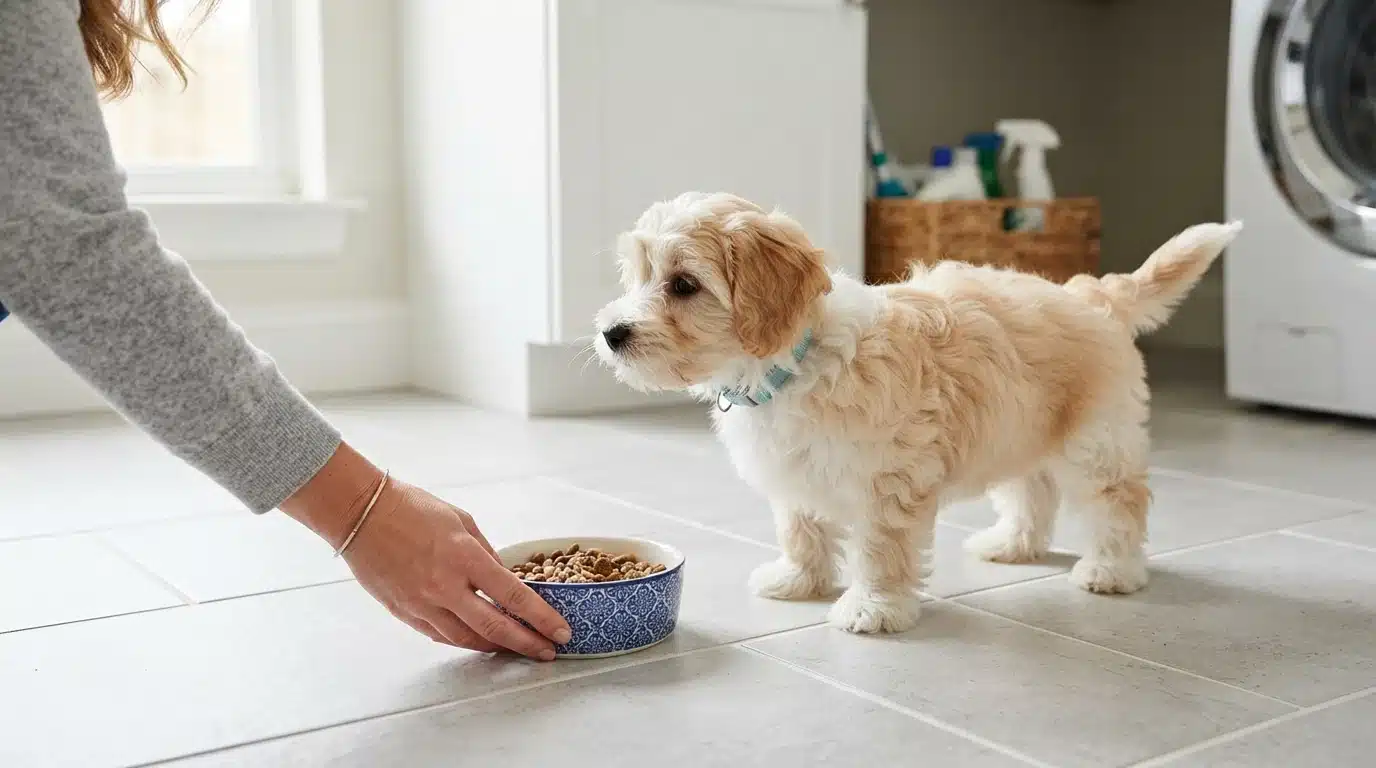
Start with the feeding guide printed on your puppy food bag for the weight the chart predicts at adulthood, not the current weight. Then divide that daily amount by four. A puppy eating one cup per day gets a quarter cup per meal, roughly two tablespoons. Measure with an actual measuring cup or a kitchen scale. Eyeballing portions is how toy breed puppies quietly gain or lose too much. Watch the body, not just the bowl: ribs you can feel but not see mean the portions are working.
When the Schedule Starts to Change
Around four months, drop to three meals a day. At six months, most puppies settle into two. Change one meal at a time and give each step a week or two. Toy breeds are prone to low blood sugar, so never stretch a young puppy’s gap between meals past five or six hours, and keep treats under ten percent of daily calories so they don’t spoil the schedule.
Handle Refusals, Upsets and Food Safety in the First 8 Weeks
When Your Havanese Skips a Meal
A missed meal at 8 weeks is common during the first few days home. Triage it this way:
- One skipped meal, normal energy: remove the bowl after 15 minutes, offer the next scheduled meal, and move on.
- Two meals skipped, still playful: tempt with a spoon of warm food and watch closely.
- Any refusal plus vomiting, diarrhea, listlessness or wobbliness: call your vet the same day.
Toy breeds can drop into low blood sugar fast, and a listless, uncoordinated puppy is an emergency, not a quirk. Veterinary Partner’s guide to toy breed hypoglycemia explains the warning signs in detail.
Safe Food Handling and What to Keep Out of Reach
Wash bowls daily with hot, soapy water and keep opened kibble in a sealed container. Before every new bag, check the lot code against current recall lists; puppies handle contamination far worse than adults.
Puppy-proof the floor line too. Chocolate, grapes, xylitol sweetener, onions, raisins and human medications all belong on high shelves, because a 4-pound Havanese will find whatever you leave out.
What to Bring to the First Vet Visit
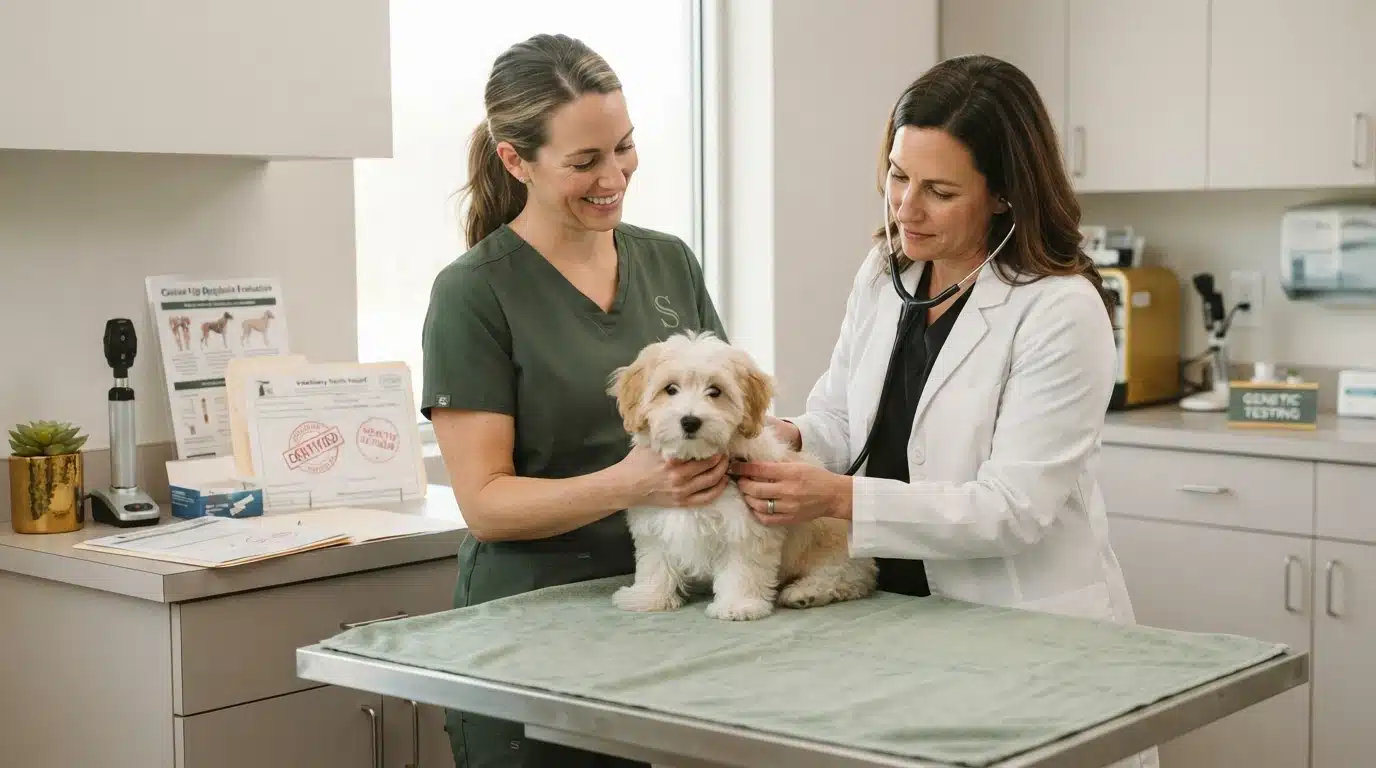
Pack a stool sample, the food bag or label, any vaccination and deworming records you received, and a list of what and how much your puppy has eaten. Showing the actual label lets your vet confirm the calorie count against the portions in your Havanese feeding schedule at a glance.
A Simple Feeding Schedule You Can Keep for Months
The best Havanese puppy feeding schedule is the one you can repeat without thinking. Four meals a day until four months, then three, keeps the rhythm steady while your puppy grows.
The Weekly Routine
Pick meal times and hold them, even on weekends. Feed at 7:00 a.m., 11:00 a.m., 3:00 p.m., and 7:00 p.m. so the last meal lands well before bedtime. Weigh your puppy once a week on a kitchen scale, same day, same time of day. Then compare portions to weight: gaining too fast means trim a tablespoon per meal; lean and ribs easy to feel means you’re on track.
What to Write Down Each Week
Keep a one-page log on the fridge. Note these four things every week:
| What | Why It Matters |
|---|---|
| Weight | Shows growth trend, not one-day noise |
| Daily portion | Tracks the number you actually scoop |
| Eaten it all? | Flags refusal patterns early |
| Stool quality | Soft stool often means too much food |
Patterns show up faster on paper than in memory, so jot it down before dinner dishes.
Where to Go When You Have Questions
Your veterinarian answers growth and portion questions, so bring the log to vaccine visits. Breeders who raised the litter also know your puppy’s habits well. Cassie’s buyer support at Sage Puppies covers exactly this kind of first-month detail, and the Havanese feeding chart pairs with this routine. When something looks off, trust the log and call.
Common Mistakes to Avoid in the First 8 Weeks
The biggest feeding problems at this age are simple ones: too much food, the wrong food, and a rushed switch. Here’s what to watch for.
Extra Meals and Topped-Up Bowls
Treats and table scraps sneak in fast with a 3-pound puppy. If treats exceed ten percent of daily calories, they crowd out balanced meals and unbalance the portions you weighed. Leftovers from well-meaning kids count too. Keep treats small, count them, and subtract nothing from meals, but hold the line on extras.
Copying Another Puppy’s Number
Your friend’s Lab eats two cups a day. Your Havanese does not. Portions depend on weight, body condition, and the calorie density printed on your bag, so another puppy’s serving is useless to you. Weigh weekly on a kitchen scale and adjust from your puppy’s own trend, not from a comparison.
If your puppy skips a meal but acts bright and playful, wait for the next one. A toy breed that refuses two meals or seems shaky needs a vet, because low blood sugar moves fast in small puppies.
Switching Foods Overnight
An abrupt brand swap often causes vomiting and diarrhea, which the AKC notes. Follow a puppy food transition schedule instead: blend the new food in gradually over 7 to 10 days, starting at about a quarter new. If loose stool appears, slow down rather than stopping.

A steady routine beats guesswork, and your puppy can thrive on it from the first meal home. Want help choosing food, bowls, and a feeder that fits this plan? Browse Cassie’s Picks, then meet our Havanese, Havapoo, and Cavapoo puppies at Sage Puppies and start your application.
Frequently Asked Questions
Q1: How often should I feed my Havanese puppy at 8 weeks old?
Four meals a day, spaced about four hours apart, keeps blood sugar steady in a toy breed this small. Hold that rhythm until four months.
Q2: What is the best feeding schedule for a Havanese puppy in the first 8 weeks?
Feed at 7:00 a.m., 11:00 a.m., 3:00 p.m., and 7:00 p.m. daily, with the last meal finished before bedtime so a potty trip fits in.
Q3: How much food should a Havanese puppy eat per day?
Use the bag’s daily amount for your puppy’s expected adult weight, then divide by four into equal meals. Weigh weekly to confirm it’s working.
Q4: What should I do if my Havanese puppy skips a meal?
If she acts bright and playful, remove the bowl after 15 minutes and offer the next meal. Refusing two meals, or any wobbliness, needs a vet the same day.
Q5: When should my Havanese puppy move from four meals to three?
Around four months, stretch the gaps by 15 minutes a week first. Never let a young puppy go more than five or six hours without food.
Conclusion
Feeding a Havanese puppy through her first eight weeks at home comes down to a few steady habits: four equal meals a day spaced four hours apart, portions measured from the bag’s daily total for her expected adult weight, and a weekly kitchen scale puppy weigh-in to confirm she’s growing on track. Keep treats within ten percent of daily calories, hold the same food until week three, and switch foods slowly over 7 to 10 days when the time comes. Most refusals pass on their own, but any refusal paired with wobbliness or listlessness needs a vet the same day, because low blood sugar moves fast in small breed puppies. Follow this Havanese feeding schedule, log your puppy’s weight and portions each week, and the routine will carry you both confidently toward the three-meal schedule at four months.