Quick Summary: Small puppies need three to four evenly spaced meals each day to maintain blood sugar, support digestion, and build housetraining habits. Portion sizes should follow the food bag’s daily chart for expected adult weight, then be adjusted about 10% based on body condition, with treats limited to under 10% of daily calories. Change foods gradually over 7 to 10 days, and never leave a puppy under four months without a mid-day meal. Seek same-day veterinary care for bloody stool, repeated vomiting, refusal to eat or drink, or low energy with diarrhea.
A Havapoo can finish breakfast looking bright and healthy, then wobble by late morning because low blood sugar hits small dogs fast. A seven-pound puppy holds so little reserve between meals that timing matters as much as the food itself.
That’s the problem this guide solves. First-time owners get vague advice, and the bag’s feeding chart doesn’t match a toy breed’s real needs. We’ll walk through age-by-age meal counts, how to turn that chart into an actual portion, a safe food transition plan, treat calories, and what to do on work and travel days.
A steady puppy mealtime routine keeps blood sugar even and sets up house training at the same time. These puppy nutrition basics draw on FDA and AAFCO guidance, plus the daily experience of raising Havanese, Havapoo and Cavapoo puppies here in Utah. Pairing them with the best puppy food your vet approves gives small breeds a solid start.
How Many Meals a Small Breed Puppy Needs Each Day
Small breed puppies need small meals, given often. Their stomachs hold only a few tablespoons at a time, so three to four meals a day is the norm while they grow. Here is how the count changes by age, based on AKC feeding guidance.
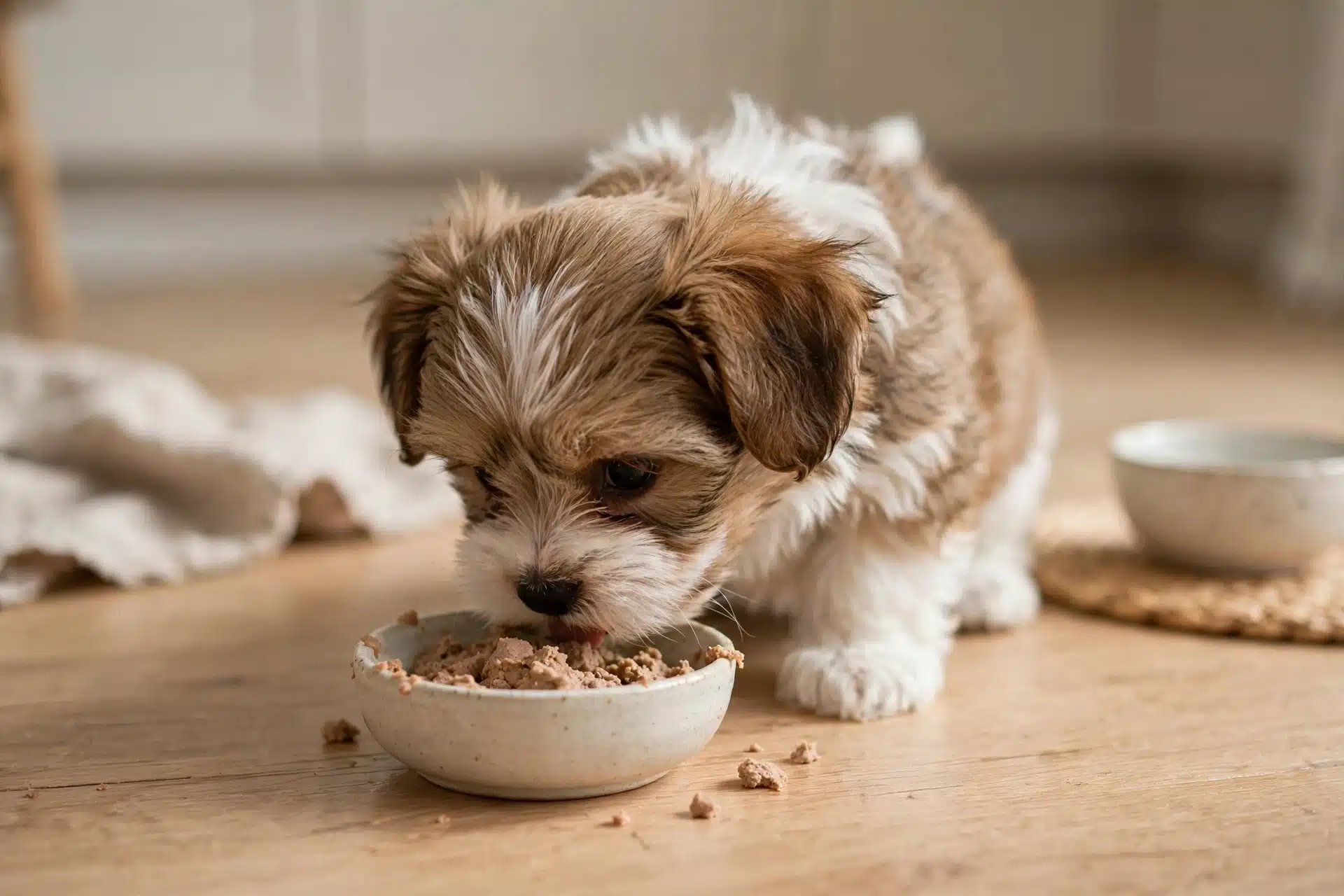
Under 8 Weeks: Tiny Stomachs, Tiny Portions
Puppies this young are usually still with their mother or breeder. Once weaned, most eat four softened meals a day, and some breeders split food even more often. If your puppy comes home this early, ask what schedule it was on and copy it at first. A steady puppy mealtime routine matters more than the exact clock times.
8 Weeks to 3 Months: The Four Meal Stretch
Plan on four meals a day, spaced roughly four hours apart. Morning, midday, late afternoon and early evening works well. Small breeds burn through calories fast, so skipping a meal can lead to low blood sugar, which is genuinely risky for toy dogs. If your workday makes the midday meal hard, a pet sitter or a quick lunchtime stop home covers it. Purina’s feeding guide recommends sticking with set feedings rather than leaving food out all day.
3 Months to a Year: Settling Into Two or Three Meals
Around the three to four month mark, drop to three meals. Most small breeds can move to two meals somewhere between six and twelve months. Watch your puppy rather than the calendar: steady weight, good energy and normal stools mean the schedule is working. Keep both meals evenly spaced, roughly 10 to 12 hours apart, so digestion stays predictable as your puppy matures.
How Much Food to Serve at Each Meal
Portion size comes down to your puppy’s expected adult weight and the calorie density of the food you bought. The bag already does most of the math for you.
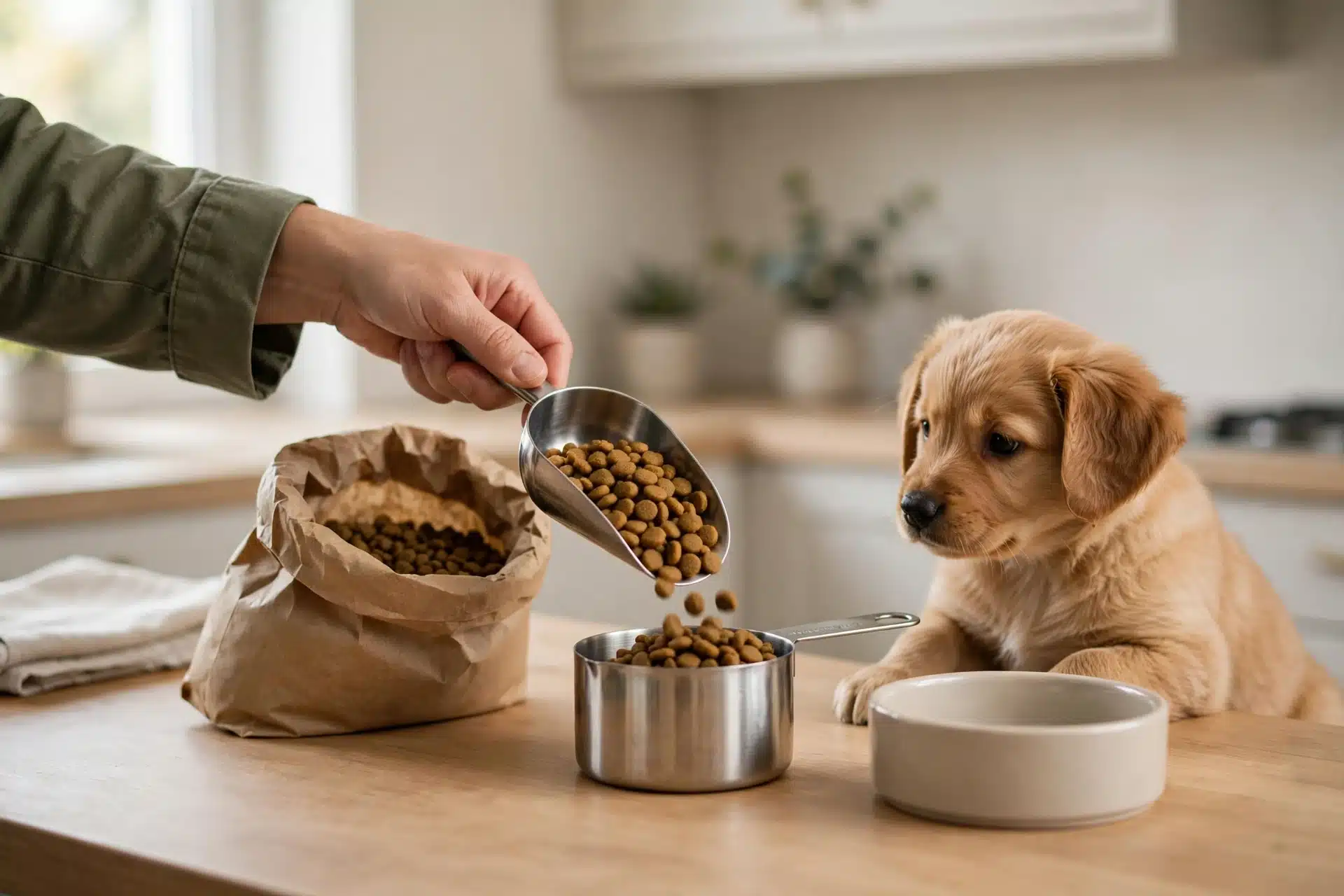
Reading the Feeding Guide on the Bag
Every bag prints a table that matches daily amounts to weight ranges. Find your puppy’s expected adult weight, then divide the listed daily total by the number of meals you serve. So a chart calling for one cup per day across four meals means a quarter cup each. Use a real measuring cup, not a coffee mug, because small-breed portions are too tiny to eyeball. The AAFCO label guide also explains the feeding directions and calorie statement printed near the chart.
Worked Portion Examples for Toy and Small Breeds
Here are labeled examples, not averages:
| Adult weight | Daily total | Per meal (4 meals) | Per meal (3 meals) |
|---|---|---|---|
| 7 lb Havanese | 3/4 cup | 3 tbsp | 1/4 cup |
| 12 lb Cavapoo | 1 cup | 1/4 cup | 1/3 cup |
| 16 lb Havapoo | 1 1/4 cups | 5 tbsp | 1/3 cup + 1 tbsp |
Calorie-dense foods need smaller scoops, so always start from your bag’s chart.
Body Condition as the Real Check
Charts are estimates, so your puppy’s body is the final judge. You should feel ribs with light pressure and see a waist from above. Adjust portions by about 10 percent if ribs disappear under fat or ribs and hip bones stand out sharply. Vets use the same hands-on check, and pet weight guidance ties it directly to label portions. If growth seems off track, your care routine, including the feeding and vet schedule you follow, is worth a quick review with your veterinarian.
Choosing a Puppy Food: What to Look for on the Bag
Before you compare brands, flip the bag over and read the fine print. The label tells you more than the front ever will.
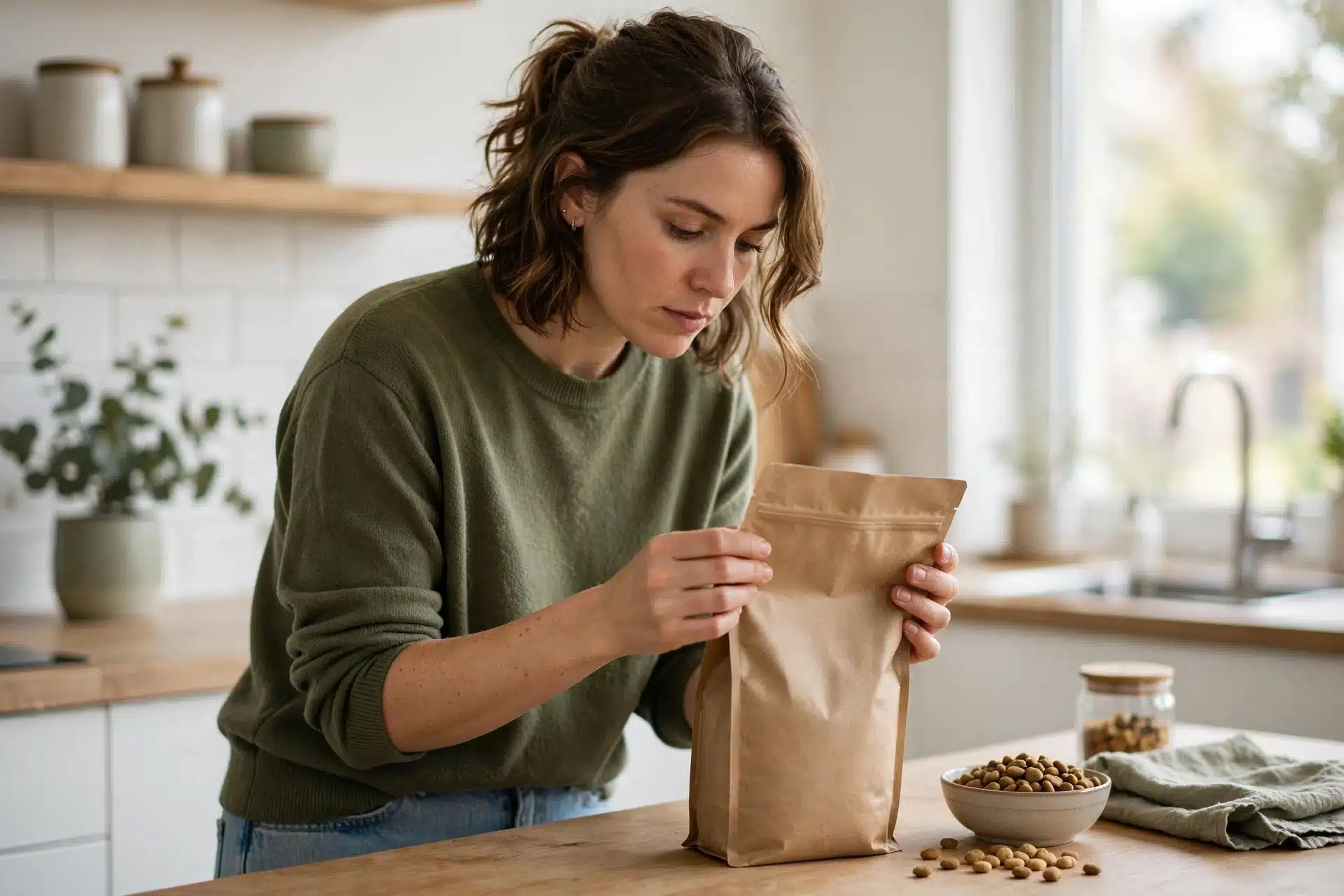
What Complete and Balanced Actually Means
Look for the nutritional adequacy statement, usually in small print on the back. “Complete” means the food contains every nutrient a puppy needs; “balanced” means those nutrients sit in the right ratios, according to the FDA. For a young puppy, the statement should say it’s formulated for growth or all life stages. A food made only for adult maintenance won’t cut it for a Havanese or Cavapoo under a year old.
Kibble, Wet Food, Fresh Food and Toppers Compared
All four formats can work if they carry that growth statement. Kibble is cheap, stores well, and helps with portion control. Wet food smells better and adds moisture, but costs more per calorie and spoils fast. Fresh food is gently cooked and highly palatable, though priciest. Toppers add variety but many aren’t complete, so treat them as a bonus, not a base. If you use a topper, keep it under about 10 percent of daily calories so the main food stays the backbone of the diet.
Reading Ingredient Lists and Marketing Language
Ingredients are listed by weight before cooking, so fresh chicken can outrank a dry protein despite holding lots of water. Ignore buzzwords like “premium” and “human grade”; AAFCO doesn’t define them as quality claims, as its label guide explains. Watch for named meats and a stated calorie count instead.
Switching Foods Without Upsetting a Small Stomach
A small puppy’s gut needs time to adjust, so change food slowly over 7 to 10 days. A sudden swap often causes loose stool or vomiting. Most breeders and vets recommend mixing increasing amounts of the new food into the old over a gradual 7 to 10 day transition.
A Seven to Ten Day Transition Plan
Start with 75% old food and 25% new food for days 1 and 2. Move to a 50/50 mix for days 3 and 4, then 25% old and 75% new for days 5 and 6. Days 7 to 10 are all new food. Keep meal times the same as before, since predictable timing helps digestion as much as the mix itself.
If Stool Softens Mid-Transition
Soft stool is a sign to slow down, not to panic. Step back to the previous ratio and hold it for two or three extra days before advancing again. One or two soft stools in the first 48 hours is common and usually settles on its own, but diarrhea that lasts more than 24 hours, contains blood, or comes with vomiting or low energy needs a vet call.
Transitioning Home From the Breeder’s Food
Ask your breeder for a few days’ worth of the food your puppy eats now. At Sage Puppies, that sample goes home with every puppy, so you can start the switch on your schedule rather than the pickup day. Then run the same transition plan above, ideally during a calm first week at home with your new puppy’s setup already in place.
Treats, Chews and the 10 Percent Rule
How Many Calories Treats Should Be
Treats should stay under 10 percent of your puppy’s daily calories. Vets at UC Davis set the same limit for extras, including table scraps and chews. On 400 calories a day, that is 40 treat calories. That is less than one medium biscuit, so break treats into pea-sized pieces.
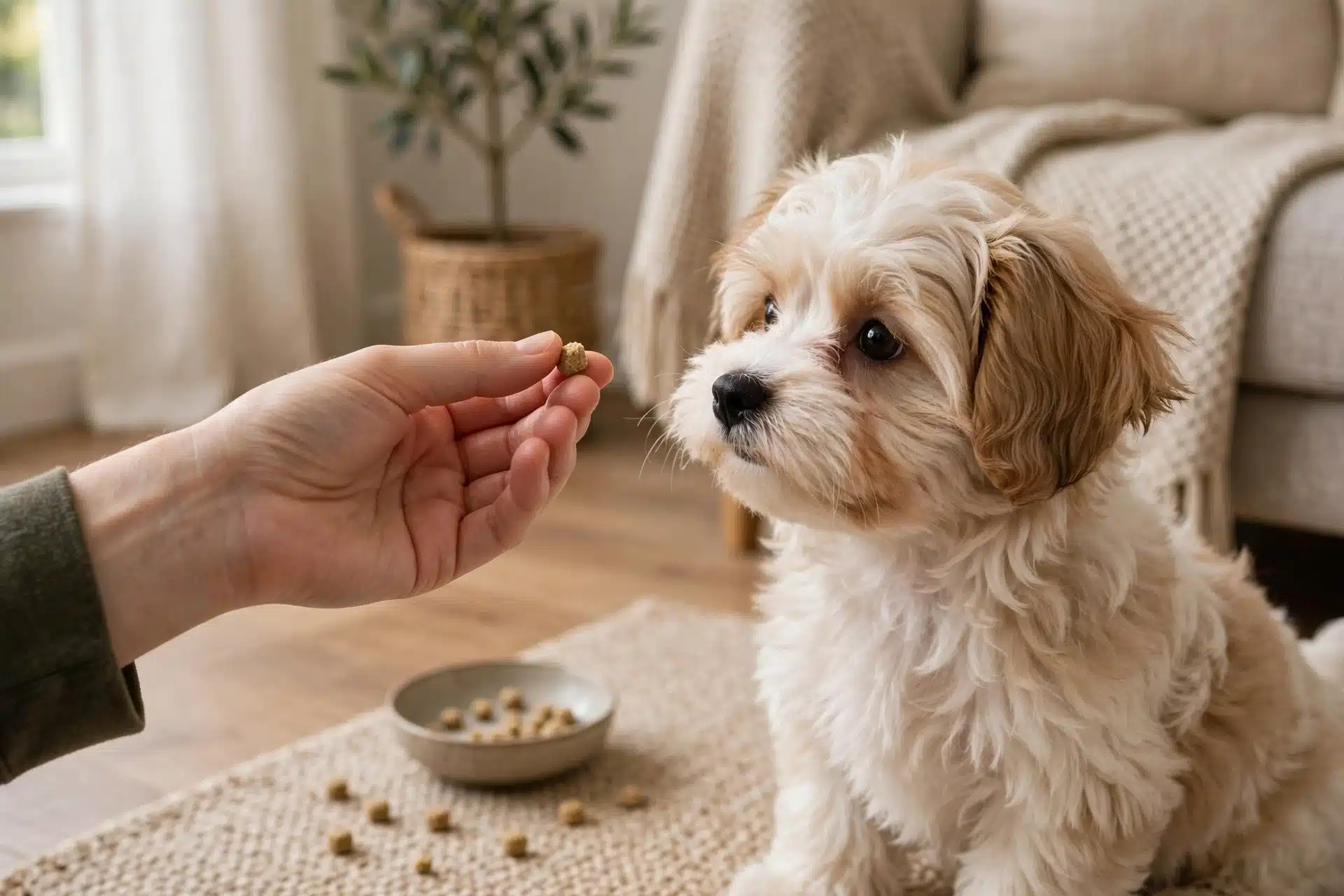
Treats That Work Well With Training
For training, small and soft wins. Tiny pieces of plain cooked chicken, bits of the puppy’s own kibble, or soft training treats all work, because you will hand out many repeats in a short session. A puppy on 400 calories a day can earn roughly a dozen pea-sized rewards within the 10 percent limit. Treat rewards pair naturally with the early skills in small breed puppy training, and the same pieces work for crate and potty routines. UC Davis treats guidelines also suggest counting chews toward the same daily total.
Foods to Keep Out of Reach
Some human foods are dangerous even in small amounts: chocolate, grapes and raisins, onions and garlic, anything sweetened with xylitol, macadamia nuts, and alcohol. Small puppies reach counters and floors fast, so feed table food only from your hand, never dropped from the plate.
Building a Puppy Mealtime Routine That Works
Small puppies thrive on rhythm. Feed at the same times each day, in the same quiet spot, and potty breaks, naps and training all fall into place around it.
A Sample Daily Mealtime Routine
Anchor meals to your own day so the schedule survives real life:
| Time | Meal or event |
|---|---|
| 7:00 am | Breakfast, then potty break |
| 12:00 pm | Lunch, short play session |
| 5:30 pm | Dinner, then a calm walk |
| 8:00 pm | Small fourth meal before settling down |
Shift times to fit your household. Keep the gaps even so your puppy’s digestion and bathroom habits stay predictable.
Water Access, Bowl Setup and Mealtime Safety
Fresh water should be available all day. Many owners lift the bowl an hour or two before bed to help with overnight housetraining, then offer a drink first thing in the morning. Use shallow, non-slip bowls sized for small faces, and wash them daily. Feed separately from other pets so a tiny puppy never feels rushed or guarded at the bowl. For a first-week walk-through, our small breed puppy feeding schedule for week one breaks this down day by day.
Meals as a Learning Moment
A food-motivated puppy learns fast, so use part of each portion as training rewards. Ask for a simple sit before the bowl goes down. This builds manners and teaches your puppy that calm behavior, not jumping, makes meals happen.
Feeding on Work Days, Travel Days and Busy Weeks
Life does not pause for a feeding schedule, and young puppies cannot skip meals the way adult dogs can. A little planning keeps small tummies on track.
Meals When the Workday Runs Long
A toy breed puppy under four months usually needs three to four meals a day, so an eight-hour gap is too long. Feed breakfast right before you leave, and use a lunchtime break, a dog walker, or a neighbor to cover the midday meal. Automatic feeders work for kibble, but a person should still check on water and potty needs. Shift the evening meal earlier rather than skipping it.
Travel Days and Pickup
On pickup or delivery day, keep things simple: feed a light meal two to three hours before travel so the stomach is not full if the car causes queasiness. Pack the current food in a labeled bag, because a sudden switch mid-trip invites diarrhea. Skip food while the vehicle is moving, and offer water at stops. If your puppy flies home with a courier, ask the courier to hold feeding until arrival, then offer a small meal once your puppy has settled and gone potty. Sage Puppies sends each puppy home with a feeding card that lists exact portions and times.
If Meals Get Missed or Refused
One missed meal is not an emergency for a healthy puppy over twelve weeks. Offer the next meal on schedule and watch energy and stools. A missed meal is more serious in a tiny eight-week-old, where low blood sugar is a real risk; offer food, and call your vet if your puppy seems wobbly, very sleepy, or refuses two meals in a row. Never force-feed, and never chase refusals with extra treats, because that teaches picky habits fast.
Feeding Problems and When to Call the Veterinarian
Most feeding hiccups in small puppies fix themselves with a slower food change and steadier meal times. The exceptions matter more, because a toy breed puppy can go downhill fast when fluids or calories drop.
Loose Stool and Picky Eating
One or two soft stools are common during the first 48 hours of a food switch. Keep the transition plan on track, skip extra treats, and offer meals on a set schedule. A puppy that skips one meal but plays normally is usually fine. If loose stool lasts past 24 hours, or picky eating stretches past two meals, call your vet and describe what you are feeding.
Weight Changes That Concern You
Weigh your puppy weekly at home. Ribs should be easy to feel but not sharp to the eye, and steady gain beats any single number on the scale. If weight stalls for two weeks, or your puppy suddenly looks thin or bloated, adjust portions only after your vet rules out worms and other causes. Rapid gain deserves a look too, since extra weight strains small joints.
Signs That Need Same-Day Care
Call the vet the same day for bloody stool, repeated vomiting, refusal to eat or drink, or low energy alongside diarrhea. Because puppies dehydrate quickly, veterinary clinics advise calling within 12 to 24 hours rather than waiting the two days an adult dog might ride out. If your puppy cannot keep water down, go in now. Pair this list with a simple feeding and vet schedule so you know who to call before you need them.

A good feeding plan starts before your puppy comes home. At Sage Puppies, every Havanese, Havapoo and Cavapoo family gets guidance on the food each puppy already knows, so the transition stays gentle and portions stay right from day one. Visit sagepuppies.com to see available puppies and start your application.
Frequently Asked Questions
Q1: How many times a day should I feed a small breed puppy?
Most small breed puppies eat four meals a day from 8 weeks to 3 months, three meals until about 6 months, then two or three meals until their first birthday.
Q2: How much food should a small breed puppy eat per meal?
Start with the bag’s feeding chart for your puppy’s expected adult weight, divide the daily total by meal count, then adjust about 10 percent based on body condition.
Q3: What is the best puppy food for small breeds like Havanese and Cavapoo?
Any food labeled complete and balanced for growth or all life stages, with a named meat and a stated calorie count, works. Ask your vet to confirm your pick.
Q4: Can I free-feed my small breed puppy instead of set meals?
No. Set meals keep blood sugar steady, support housetraining, and make appetite changes easy to spot.
Q5: How long does it take to switch puppy foods safely?
Plan on 7 to 10 days. Mix new food in gradually, and step back a few days if stools soften.
Q6: How many treats can a puppy have per day?
Keep all treats under 10 percent of daily calories. On a 400-calorie day, that is 40 treat calories, so use pea-sized pieces.
Conclusion
Feeding a small puppy comes down to a few habits done consistently. Serve three to four meals a day while your puppy is young, measure portions from the bag’s chart, and adjust by feel: ribs easy to touch, a visible waist, steady weekly weight. Change foods slowly over 7 to 10 days, keep treats under 10 percent of daily calories, and anchor meals to set times so blood sugar, housetraining and appetite all stay predictable. Watch for the warning signs that need a same-day vet call, because tiny puppies lose ground fast. Your breeder and your veterinarian are your best partners here, and a simple routine, repeated daily, does more for your puppy than any single brand or supplement ever will.