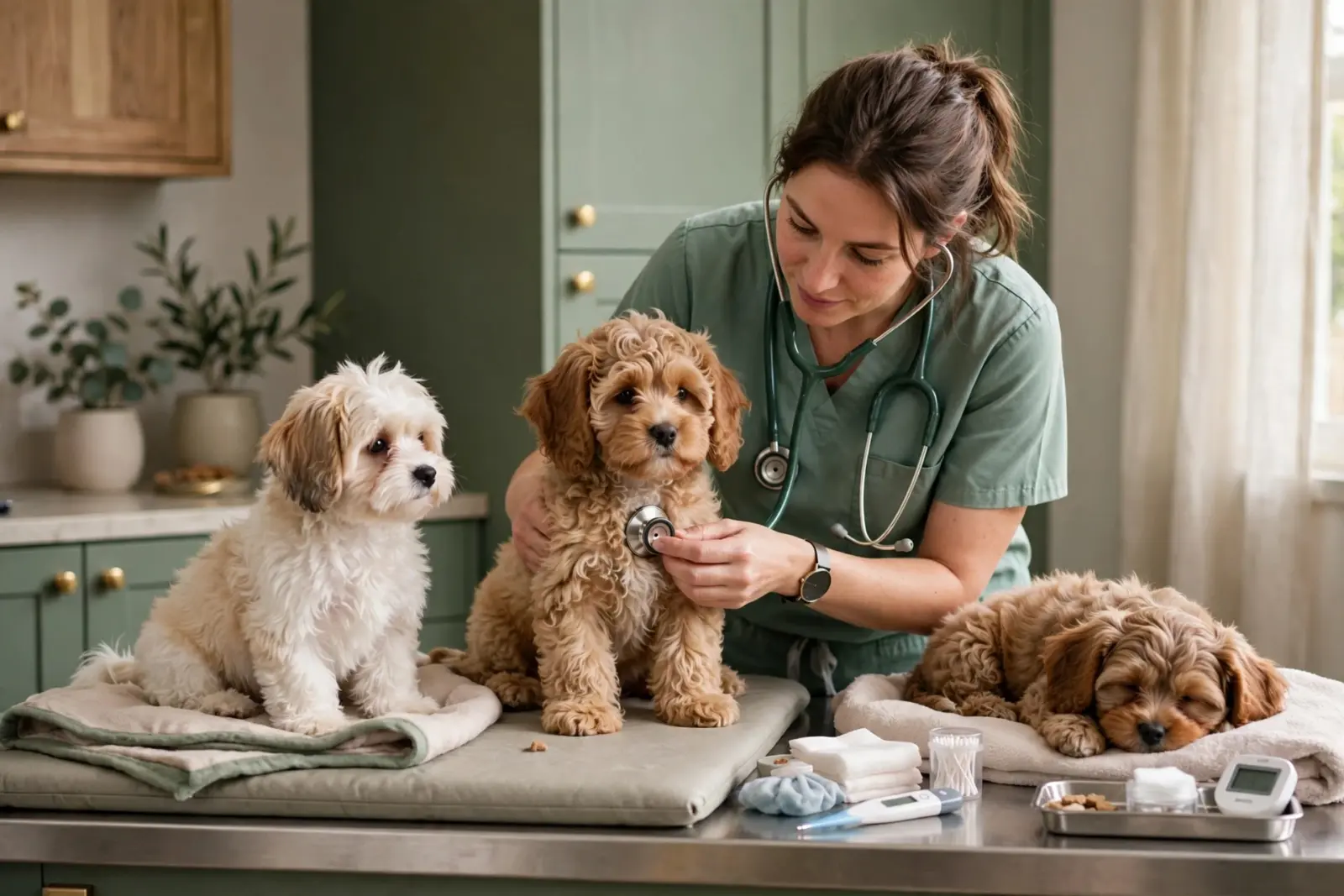
Quick Summary: DNA tests and veterinary health panels complement each other rather than competing: DNA identifies known inherited variants, while vet exams and radiographs assess current joints, eyes, heart, and overall health. A responsible breeder should provide both parents’ DNA results, dated clinical screenings, registration details, and the puppy’s wellness records for independent verification through the OFA database, since a clean DNA report or CHIC number alone does not prove full health. Sage Puppies states that its Havanese, Havapoo, and Cavapoo litters include both DNA results and clinical screening on file.
A breeder can hand over a DNA report with fifteen clean results and still not know whether a puppy’s knees will fail a radiograph. A vet can sign a wellness exam without spotting a single inherited variant. So in the debate over DNA tests vs vet health panels, the honest answer is that the question sets up a false choice. Each screening type answers a different question, and a buyer who understands both can tell a meaningful record from a marketing line.
That matters for anyone comparing Havanese, Havapoo, or Cavapoo litters right now. You get one list of genetic test results and one list of veterinary exams, both sold as proof of health. This comparison breaks down what each type actually measures, where each falls short, how timing and breed rules shift the weight, and what a clean report really guarantees. It ends with guidance on which screening matters most for your situation, plus how to request and verify both sets of paperwork before you commit.
DNA Tests vs Vet Health Panels: At a Glance
| canine DNA health panel | veterinary health panel | |
|---|---|---|
| What it measures | Presence of known disease-associated genetic variants | Current physical status, joint and hip conformation, eyes, heart, and weight |
| Structural and orthopedic screening | None; no radiographs or physical exam | Yes, radiographs and orthopedic examination are central |
| Timing and age | Often usable once a sample can be taken; many labs recommend waiting for a set of deciduous teeth to be replaced | Hip radiographs typically wait until 12 to 18 months; eye screening is typically annual |
| Cost and turnaround | Usually a one-time fee per dog; digital results in roughly one to three weeks | Usually billed per visit or per imaging study, with results reported after the appointment |
| Limits and false confidence | Detects only variants already identified; results indicate predisposition, not disease | A normal exam cannot rule out inherited variants or future disease |
How canine DNA health panel and veterinary health panel Compare
canine DNA health panel
A lab test run on a cheek swab or blood sample that checks for known genetic variants tied to inherited conditions. It suits breeders and buyers who want to know whether a puppy carries genes for problems such as progressive retinal atrophy or degenerative myelopathy. Results usually arrive within one to three weeks for a one-time fee, but they show predisposition only.
Key strengths
- Detects specific disease-associated variants early
- One-time cost per dog
- No clinic visit needed to collect a sample
veterinary health panel
A hands-on evaluation where a veterinarian examines your puppy’s body, joints, eyes, heart, and weight. Breeders and owners use it to confirm structural health, since hip and patellar radiographs and orthopedic checks are central to it. Hip films typically wait until 12 to 18 months, and a normal exam still cannot rule out inherited variants.
Key strengths
- Screens current joint, eye, and heart status
- Includes orthopedic imaging and physical exam
- Builds a real wellness record over time
What Each Screening Type Actually Measures
A canine DNA panel reads your puppy’s genes. A vet health panel checks the puppy’s body today. One predicts inherited risk; the other records current health. You need both to see the full picture.
How a canine DNA panel works
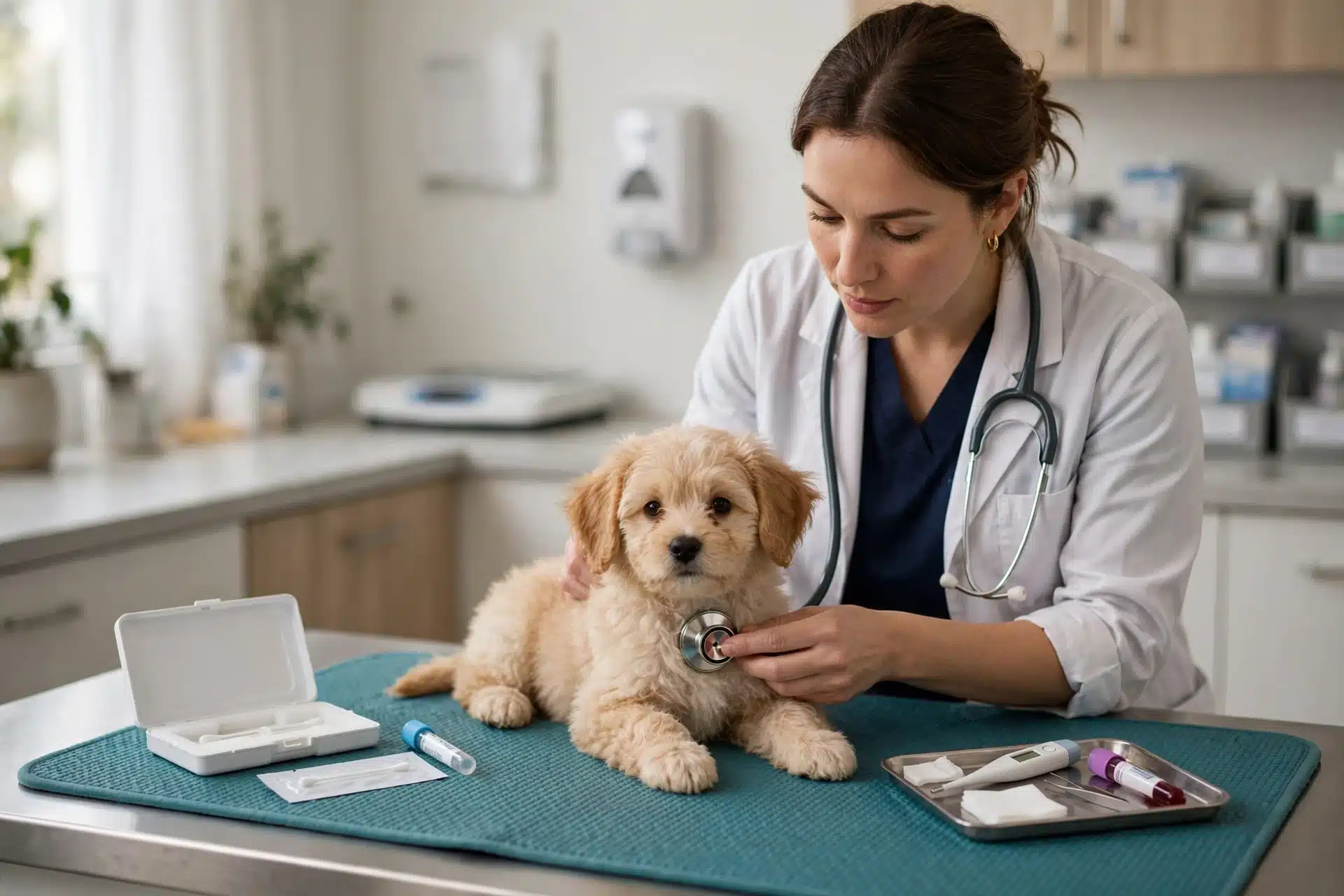
A DNA panel uses a cheek swab or blood sample to look for known gene variants. Labs screen for inherited conditions such as progressive retinal atrophy and degenerative myelopathy, and each result reads clear, carrier, or affected. The test measures what your puppy was born with, not how it feels. Good breeders also test the parents, so you can ask for those results before you commit. Our breeding program shares parent DNA results with every buyer, and you can learn which questions to ask a breeder about health testing before you visit.
What a veterinary health panel includes
A vet health panel examines the puppy’s actual body. A typical wellness exam covers weight, heart and lung sounds, eyes, ears, teeth, skin, and a stool check. As the puppy matures, orthopedic screening such as patellar luxation evaluation and hip dysplasia radiographs can be added. These checks find current problems, but a clean exam cannot rule out hidden gene variants. Together, the two records give you evidence rather than a promise.
Which Conditions Each Test Can and Cannot Catch
Where DNA panels are genuinely stronger
DNA panels win where a condition is caused by a known gene variant. Tests for progressive retinal atrophy, degenerative myelopathy, and heart muscle disease can tell you if a puppy carries one copy, two copies, or none at all. A cheek swab works at any age, so breeders can test before a litter is even born. This matters most for Havanese lines, where carriers of inherited eye and heart variants can look perfectly healthy. A DNA result cannot be fooled by diet, weight, or a good day. It reads the code the puppy was born with, and that code never changes.
Where clinical panels are genuinely stronger
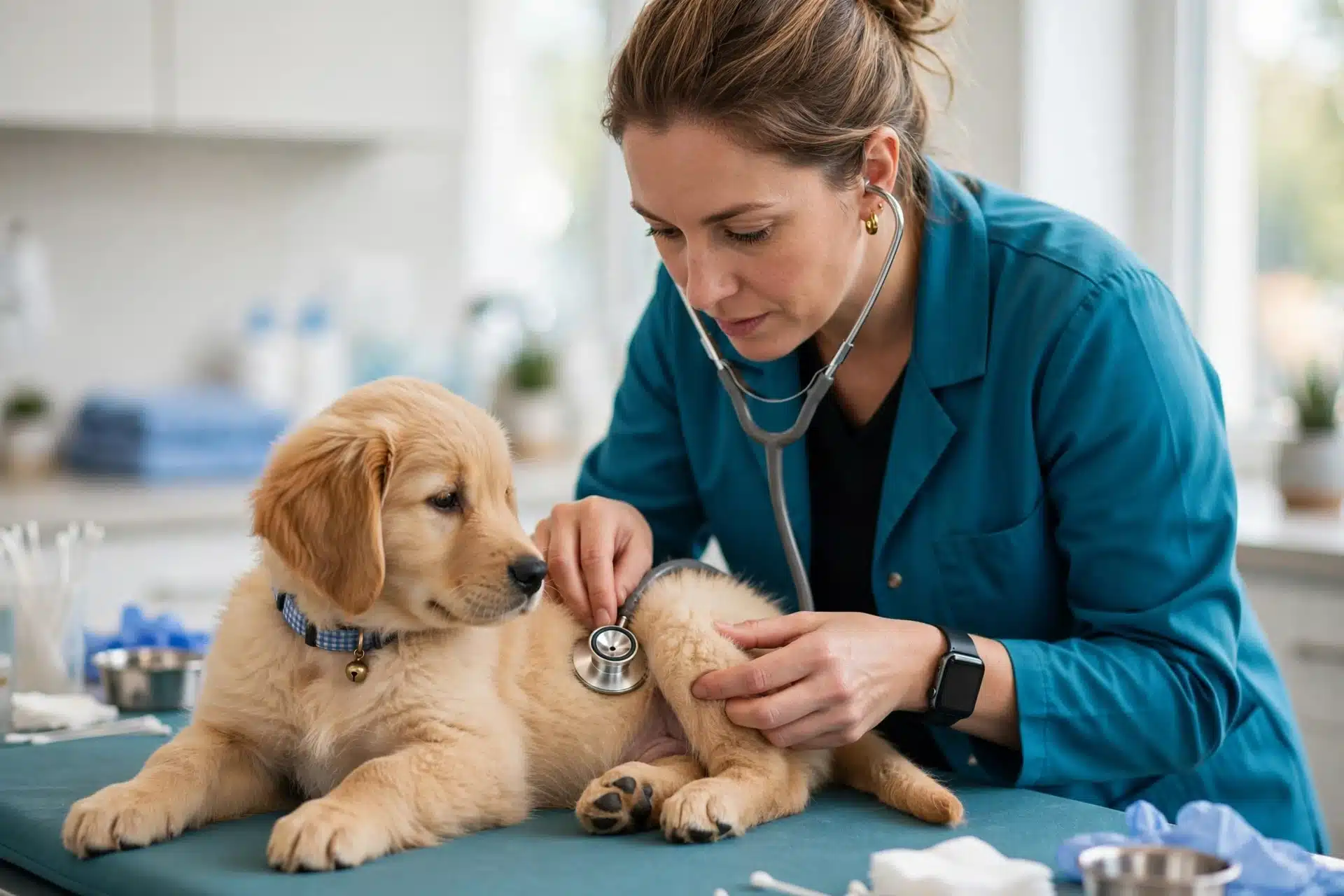
Clinical exams catch what genes cannot predict. A vet checks the knees for loose kneecaps, listens to the heart for murmurs, and looks deep into the eyes for problems no variant panel covers. Patellar luxation and many eye conditions do not come from a single known gene, so no DNA test can screen for them yet. Exam findings also reflect the puppy in front of you, not a probability. Structure, heart sounds, and eye health are things only a trained hands-on check can confirm. The two tests answer different questions, and families comparing breeders should ask about both types of health testing.
Timing and Age: When Each Screening Becomes Meaningful
Age windows for DNA sampling
A DNA health panel works on almost any puppy because genes never change. A cheek swab taken at 8 weeks gives the same variant results as one taken at 8 years, so breeders can test before a litter even goes home. Some labs ask you to wait until a puppy is weaned and eating solid food, since milk residue can thin out a sample. Others suggest waiting until adult teeth come in to confirm the sample came from the right pup.
Age windows for clinical screening
Clinical screening runs on the dog’s clock, not the lab’s. A wellness exam makes sense at every vet visit, starting with the first puppy check around 6 to 8 weeks. But the deeper tests need growth to finish. Hip and patellar radiographs usually wait until 12 to 18 months, when the joints are done developing, and eye certifications work best once the eye structures are mature. That is why a breeder’s parent clinical records often tell you more than anything you can run on a young puppy today.
When you compare litters, ask when each parent’s screening was done and review the breeder’s health testing records as a set rather than one result at a time.
Reading the Results Without Overreading Them
Does a clean DNA test mean my puppy is healthy? No. It means the puppy did not inherit the specific variants the lab screened for. A clean report does not rule out:
- Joint problems like patellar luxation or hip dysplasia, which show up on imaging, not in DNA
- Heart murmurs, eye disease without a known marker, and infections
- Anything a single wellness exam could miss
- Variants the panel simply did not include
So treat a clear DNA panel as one strong piece of evidence, not a whole health verdict. The same caution applies when reading a breeder’s paperwork, which is why it helps to know how to read puppy health records before choosing a litter.

What a clean DNA report does and does not mean
A clean report confirms the tested dogs lack the screened variants, such as those for progressive retinal atrophy or degenerative myelopathy. It says nothing about structure, temperament, or conditions with no genetic marker yet. Carrier results are not defects either. Two carriers can produce affected puppies, so ask which parent pairs were matched to avoid that.
What public registries confirm and what they do not
A CHIC number proves the required breed-specific tests were performed and results were made public. It does not mean those results were normal. Check the actual clearances on the OFA’s CHIC database, not just the number.
Breed Requirements Change the Balance
Havanese requirements as of the current health statement
Purebred Havanese give you a fixed checklist to verify, because the breed’s parent club publishes it. The current CHIC requirements for Havanese are:
- Annual eye exam through OFA’s CAER program, reported by a board-certified ophthalmologist
- Hip radiograph evaluated by OFA, done once the dog is old enough for a valid read
- Patella certification, which checks the kneecaps for luxation
- BAER hearing testing, once a required test and still strongly encouraged
Each parent should show a result on file for these before you commit. The breed club’s own health and testing guide confirms OFA hip certification sits at the center of the CHIC number, so ask for the registration or CHIC ID and look it up yourself. Our Havanese health testing overview walks through what each parent result covers for a new litter.

Havapoo and Cavapoo screening logic
Mixed litters have no single CHIC checklist, so the logic shifts to matching each parent to its parent breeds. A Cavapoo sire, for example, should carry Cavalier King Charles Spaniel and Poodle testing: heart clearance and eye exams on the Cavalier side, plus DNA variant panels for both lines.
The practical rule is simple. Ask which parent-breed conditions the testing rules out, and which DNA results each parent carries. If a breeder cannot map that out per dog, the paperwork is not ready.
How to Verify a Breeder’s Records Before You Pay
Anyone shopping for health-tested puppies for sale near them should verify puppy breeder health testing before a deposit moves. Good breeders expect this, so asking is not rude. It is standard practice.
The four records to request
- Parent DNA panel results for both sire and dam, showing variant status for conditions such as progressive retinal atrophy and degenerative myelopathy.
- Clinical screening results for each parent, such as patellar luxation or hip and eye exams, with exam dates.
- Registration and identification details, including registered names and numbers, so records match the dogs you met.
- The puppy’s own vet records, including the wellness exam date, vaccine history and any deworming given.
Request these as copies, not verbal summaries. Then check the parent claims yourself in the OFA’s public database, which holds health records on millions of individual dogs. A CHIC listing shows a breeder completed the tests recommended for that breed, whatever the results were.
Red flags and reasonable answers
| Question | Reasonable answer | Red flag |
|---|---|---|
| Can I see the OFA records? | Sends registered names or numbers | Only screenshots, or “results pending” on an older dog |
| Why no hip films? | Dog is under 12 to 18 months, or the breed program uses DNA plus eye exams instead | No plan or excuse that shifts year to year |
| Can I call your vet? | Gives the clinic name and visit dates | Refuses, or offers a new vet you cannot reach |
Trust a breeder who welcomes checks and answers quickly.
Which Should You Choose: DNA Tests or Vet Health Panels?
Neither one wins alone, because they answer different questions. A DNA panel predicts which inherited variants a puppy carries, while a clinical panel checks the body itself: heart, knees, eyes, hips. The strongest breeder programs run both on the parents, so use this simple baseline when you judge any litter:
- DNA variant results for both parents, shared openly
- Eye and patellar screening appropriate to the breed
- A puppy wellness exam before go-home day
- Records you can verify, not just claims in an ad
When DNA testing should lead your questions
Start with DNA when inherited disease is the main risk. For Havanese, Havapoo, and Cavapoo lines, ask about progressive retinal atrophy testing, degenerative myelopathy carrier testing, and cardiac variant results. A cheek swab works at any age, so parents can be tested well before breeding. Because these results are fixed for life, they tell you what a puppy can pass on even though the puppy itself looks healthy. A good breeder explains carrier status plainly instead of hiding it. DNA cannot see joint structure or a heart murmur, so treat a variant report as one layer, never the whole picture.
When clinical panels should lead your questions
Lead with clinical screening when the risk shows up in the body, not the genes. Patellar luxation and hip dysplasia radiographs usually wait until 12 to 18 months, so a young parent dog may not have final films yet. Eye examination certification catches problems DNA panels miss, and a stethoscope hears murmurs no swab can find. Ask for dated OFA records; the OFA CHIC program lists breed-specific required tests and gives a verifiable number once a dog completes them. If a breeder offers neither DNA results nor clinical certifications, keep shopping.

Want a puppy from a program that already did this homework? Every Sage Puppies litter comes from parents with DNA results and clinical screening on file, so you can verify the records yourself. Start the application today and bring home a Havanese, Havapoo, or Cavapoo raised with documented care.
Frequently Asked Questions
Q1: Which health screening is better for puppies?
Neither one alone. DNA panels reveal inherited variants like progressive retinal atrophy, while vet panels check knees, hips, eyes, and heart. Strong breeder programs run both on the parents, so you should expect both sets of records.
Q2: Can a DNA test replace a vet exam?
No. A clean panel cannot detect patellar luxation, murmurs, or joint problems that only imaging and hands-on checks reveal.
Q3: What ages do each type require?
DNA works at any age. Hip and patellar radiographs usually wait until 12 to 18 months.
Q4: What does a CHIC number actually prove?
It confirms breed-specific tests were completed and made public, not that results were normal. Check actual clearances on the OFA database.
Q5: Which records should I request before paying a deposit?
Parent DNA results, dated clinical screening for each parent, registration numbers, and the puppy’s own vet records, as copies you can verify.
Conclusion
DNA tests and vet health panels answer different questions, so a strong puppy program needs both. Parent DNA results reveal inherited variants like progressive retinal atrophy, while clinical screening catches patellar luxation, hip dysplasia, heart murmurs, and eye disease that genes cannot predict. Verify the paperwork yourself: parent DNA reports, dated orthopedic and eye certifications, registration numbers, and your puppy’s own wellness exam. Check the OFA database rather than trusting screenshots. A breeder who runs both screenings on every parent and shares verifiable records has done the homework a health-tested puppy purchase deserves.