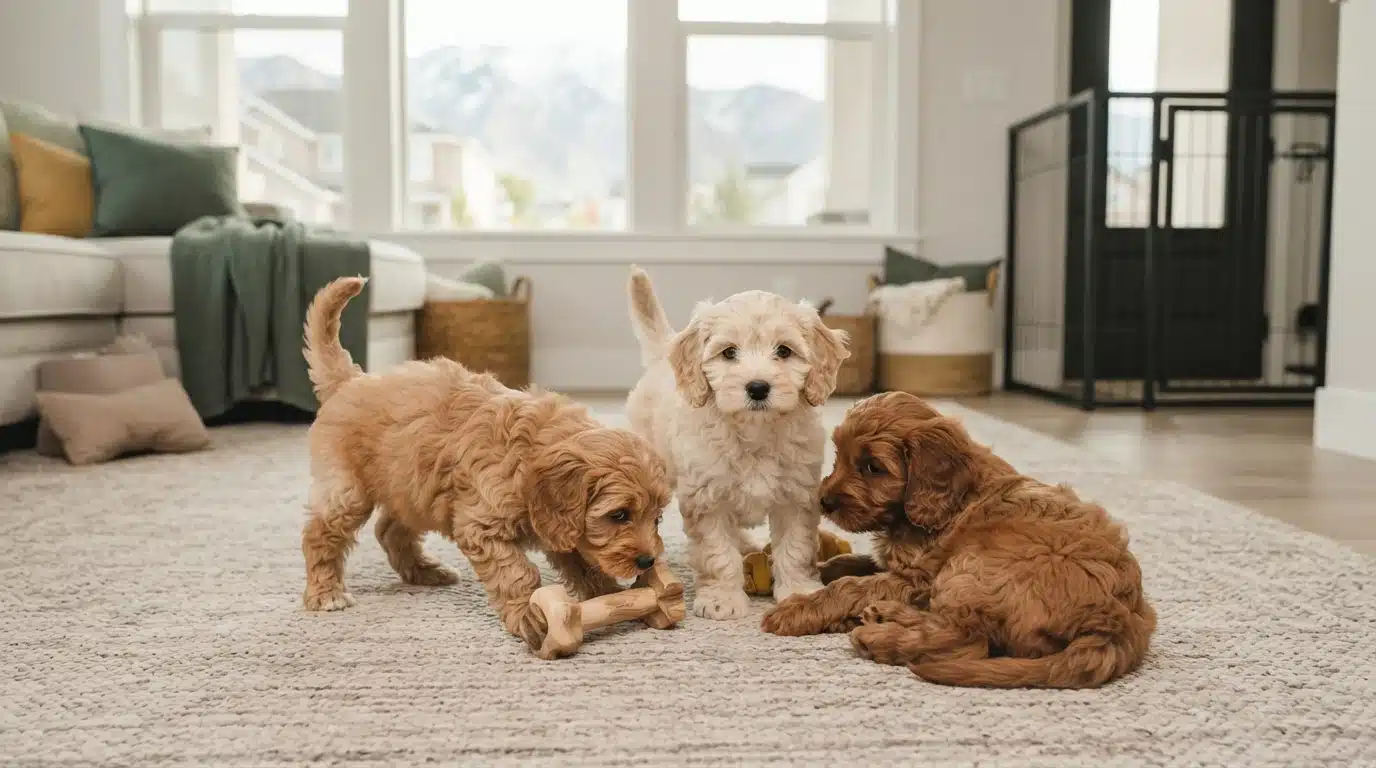
Quick Summary: Choose a Cavapoo for brighter, people-driven play and a longer adolescent phase, while a Havapoo usually offers steadier energy and settles by 9 to 12 months. Both adult crosses need about 30 to 60 minutes of mixed daily activity, with play style, mental stimulation, and individual temperament mattering more than a fixed label.
If you have narrowed your search to a Cavapoo or a Havapoo, the energy question usually comes next. The short answer: the Cavapoo vs Havapoo energy comparison comes down to the non-Poodle parent. Havapoos tend to be the slightly steadier, lower-output playmate, while Cavapoos bring a brighter, more people-driven engine, with real variation in individual puppies.
That sounds simple, but first-time owners and busy families often cannot picture how each puppy will shape a Tuesday. Younger kids, apartments, and unpredictable work schedules all change the math.
This guide unpacks the parent-breed influence behind the Cavapoo vs Havapoo energy difference, gives planning ranges for daily movement and play, separates physical from mental exercise, walks through each age stage from 8 weeks to adulthood, and maps it all to common household types.
At Sage Puppies, Cassie Milar raises both crosses in South Jordan, Utah, so this comparison draws on documented day-to-day experience with Havanese, Havapoo, and Cavapoo lines.
Cavapoo vs Havapoo: Energy and Activity at a Glance
| Cavapoo puppy | Havapoo puppy | |
|---|---|---|
| Typical energy level | Moderate; noticeably brighter and people-driven | Moderate; often described as slightly steadier or lower-output than a Cavapoo |
| Daily activity range | About 40 to 60 minutes of mixed activity for adults, with shorter, age-appropriate sessions for puppies | Often 30 to 60 minutes of mixed activity for adults, with shorter, age-appropriate sessions for puppies |
| Play style | Interactive and social; leans toward people-led games, fetch, and short zoomie bursts | Attentive and people-oriented; gentler play, brisk indoor games, and short outings |
| Mental stimulation need | Moderate to high; puzzle toys, scent games, and short training reps help channel the social engine | Moderate; scent games, learning tricks, and short training sessions are usually enough |
| Settle-down between play | Slower to settle than average small breed; often wants one more round before nap | Quicker to nap and cuddle; tends to recharge near family |
| Best household fit | Active families who want a dog that engages and a routine that includes daily interactive play | Calmer households, apartments, first-time owners, and anyone wanting a close companion rather than a play-driven dog |
| Age to adult-like rhythm | Often adolescent-style energy until past 12 months; full settling typically takes 18 months or more | Often shows a calmer pace by 9 to 12 months, with individual variation by lineage |
How Cavapoo puppy and Havapoo puppy Compare
Cavapoo puppy
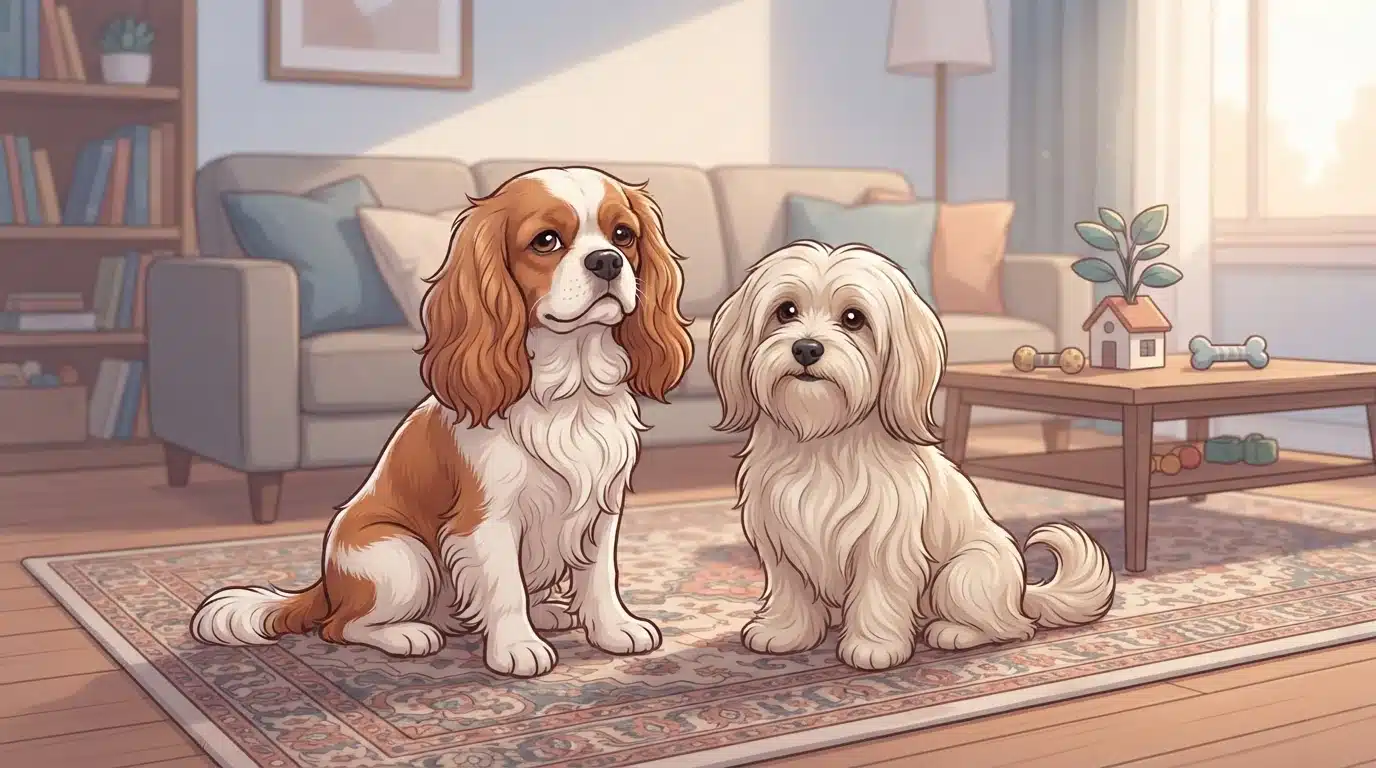
A Cavalier King Charles Spaniel crossed with a Poodle, the Cavapoo brings bright, people-driven energy and a playful, social streak. It suits active families who want a dog that engages in fetch, games, and daily interactive play. Its Cavalier-influenced engine is the bigger half of the Cavapoo vs Havapoo energy story.
Key strengths
- Social, people-led play style with short zoomie bursts
- Thrives in homes with a routine of daily interactive play
Havapoo puppy
The Havanese and Poodle pairing produces a puppy with steadier, slightly lower-output energy and a cuddly, attentive nature. It fits calmer households, apartments, and first-time owners who want a close companion more than a play-driven dog. That gentler pace is the other half of the Cavapoo vs Havapoo energy question.
Key strengths
- Quicker to settle, nap, and recharge near family
- Moderate mental stimulation needs met with tricks and scent games
Because each cross inherits half its temperament from a non-Poodle parent, the energy gap starts there. Cavaliers were bred as lap and foot warmers; Havanese as lively Cuban companions and circus performers, which shapes the everyday pace of each mix.
Where the Energy Difference Actually Starts: The Non-Poodle Parent
Most buyers assume the Poodle decides everything. It doesn’t. Each pup inherits half its temperament from the other parent, and that parent sets the default pace you’ll live with.
Cavalier Influence on the Cavapoo Engine
The Cavalier King Charles Spaniel was bred for one job: companionship. Centuries of selection favored dogs content to ride in carriages and curl up in laps, so most Cavaliers today are gentle, soft-eyed homebodies. They enjoy a walk and a game of fetch, but they settle quickly and rarely demand more. That heritage gives the Cavapoo a built-in brake. You still see puppy zoomies and adolescent silliness, but the underlying engine idles low. This is why Cavapoos often read as calm family dogs even in busy households. Health matters here too, since heart conditions in the breed can limit stamina; our Havapoo vs Cavapoo health overview covers what to screen for.
Havanese Influence on the Havapoo Pace
The Havanese tells a different story. Developed in Cuba as a house dog and performer, the breed earned its keep with agility, tricks, and constant engagement with people. Havanese are extroverts. They bounce, spin, and follow you from room to room, and they don’t fully tire from a walk alone; they want interaction. That heritage gives the Havapoo a playful, attention-seeking motor that runs on mental stimulation as much as exercise. A Havapoo may match a Cavapoo minute for minute outdoors, then keep asking for games at home.
Where the Poodle Side Complicates Simple Labels
The Poodle parent adds real range. Toy and Miniature Poodles are athletic and quick to learn, and that drive can show up strongly in either cross. One Cavapoo litter may produce a particularly sporty pup; one Havapoo litter may include a laid-back snuggler. Think of the non-Poodle parent as the tendency, not a guarantee, and meet the individual puppy before deciding.
Daily Activity in Real Terms: Minutes, Walks, Play, and Rest
Both crosses live in the same small-dog range, so the daily math looks similar on paper. What changes by age is how that time gets delivered. Puppies need short, repeated bursts; adolescents need more output and a longer runway to settle; adults settle into a steady 30 to 60 minutes.
Puppy Stage (8 to 16 Weeks): Short Sessions, Frequent Reset
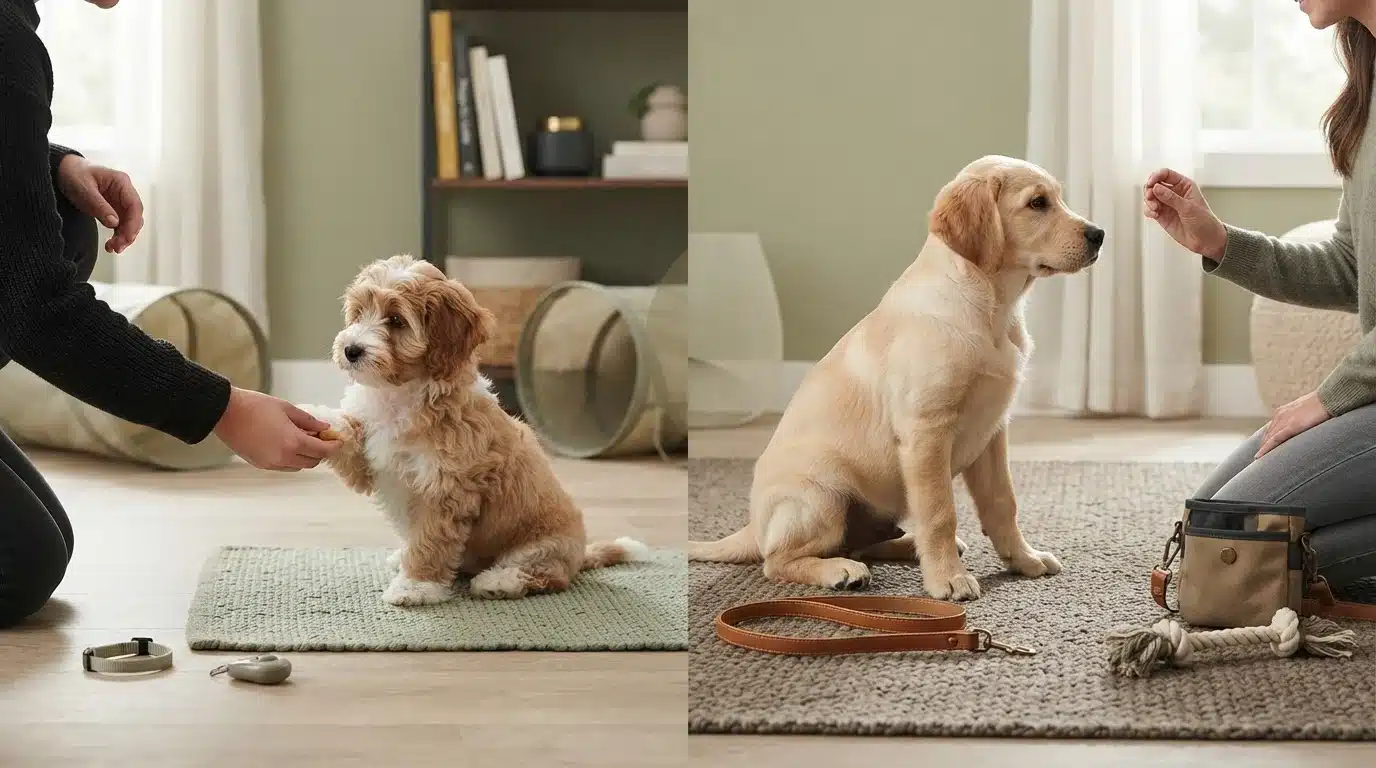
A common guideline is five minutes of exercise per month of age, up to twice a day, because growth plates are still open. At ten weeks, that means two 12-minute outings, not a long neighborhood loop. Sniffing, short training games, and gentle play tire a puppy faster than distance does.
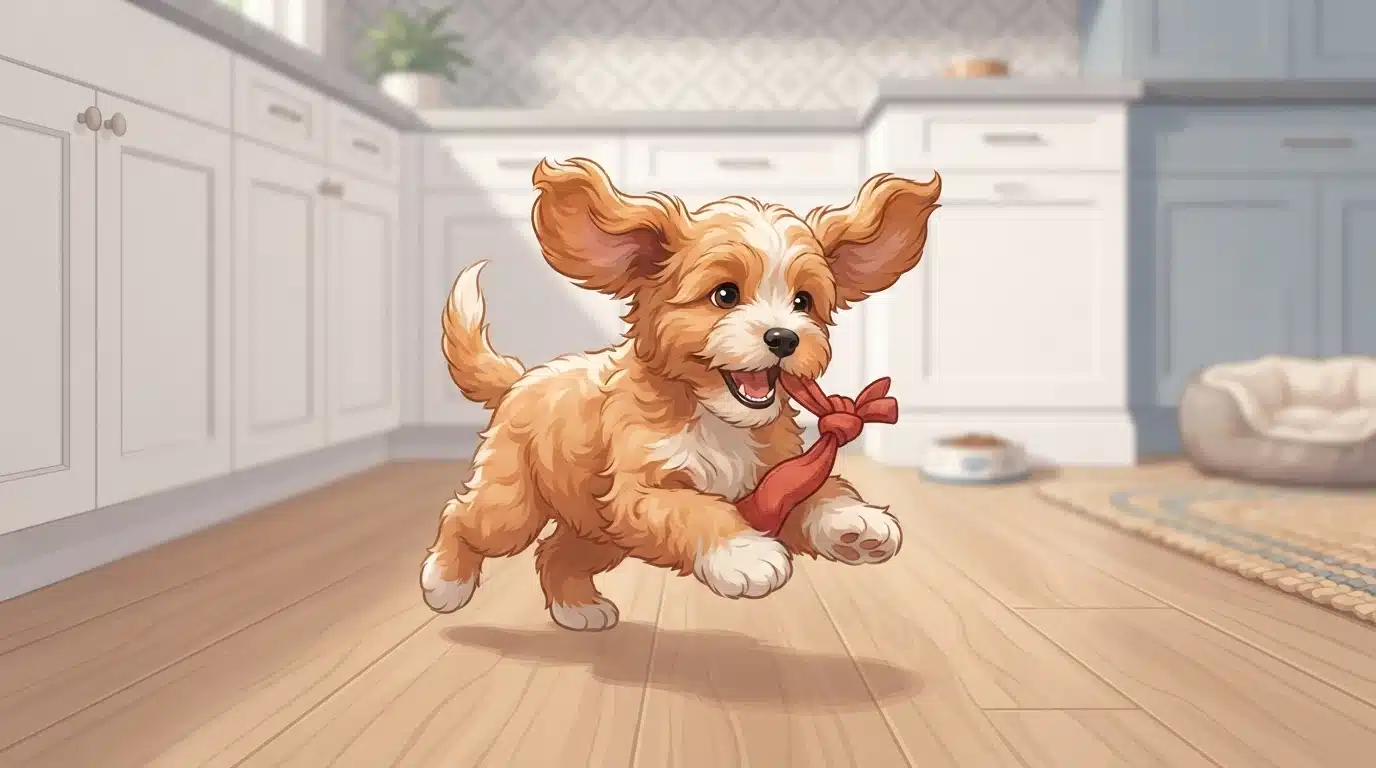
Expect a zoom-and-crash pattern: bursts of silliness followed by deep naps. Both Cavapoo and Havapoo puppies do this, though Havanese heritage often shows up as extra spark in the bursts. Protect the naps. An overtired puppy nips more and settles less.
Keep play sessions under 15 minutes and always end them before your puppy is winding down on their own.
Adolescent Stretch (4 to 12 Months): Higher Output, Slower Settle
This is the hardest stretch for first-time owners. A six-month-old Havapoo can look fully grown while still acting like a toddler, and both crosses push their total daily time toward the adult range, roughly 40 to 60 minutes for Cavapoos and 30 to 60 for Havapoos.
Split it: a morning walk, an evening play session, and short brain work like food puzzles or trick practice. A teenage Havapoo often needs the mental half more than the physical one. Cavapoos typically mellow sooner, but neither cross is done settling before its first birthday.
Adult Routine (12 Months and Beyond): Settling Into a Weekly Rhythm
Adults of both crosses thrive on routine: two walks a day, a play session, and real downtime. Expect your Havapoo to stay playful into the evening; your Cavapoo to claim the couch first. Vary the pace on weekends, then let weekdays stay simple.
Play Style and Mental Stimulation: Where the Two Puppies Really Diverge
Energy numbers tell you how long a puppy can go. Play style tells you what that time actually looks like in your living room, and this is where the non-Poodle parents shape things most.
Social, People-Led Play vs Attentive, Lap-Adjacent Play
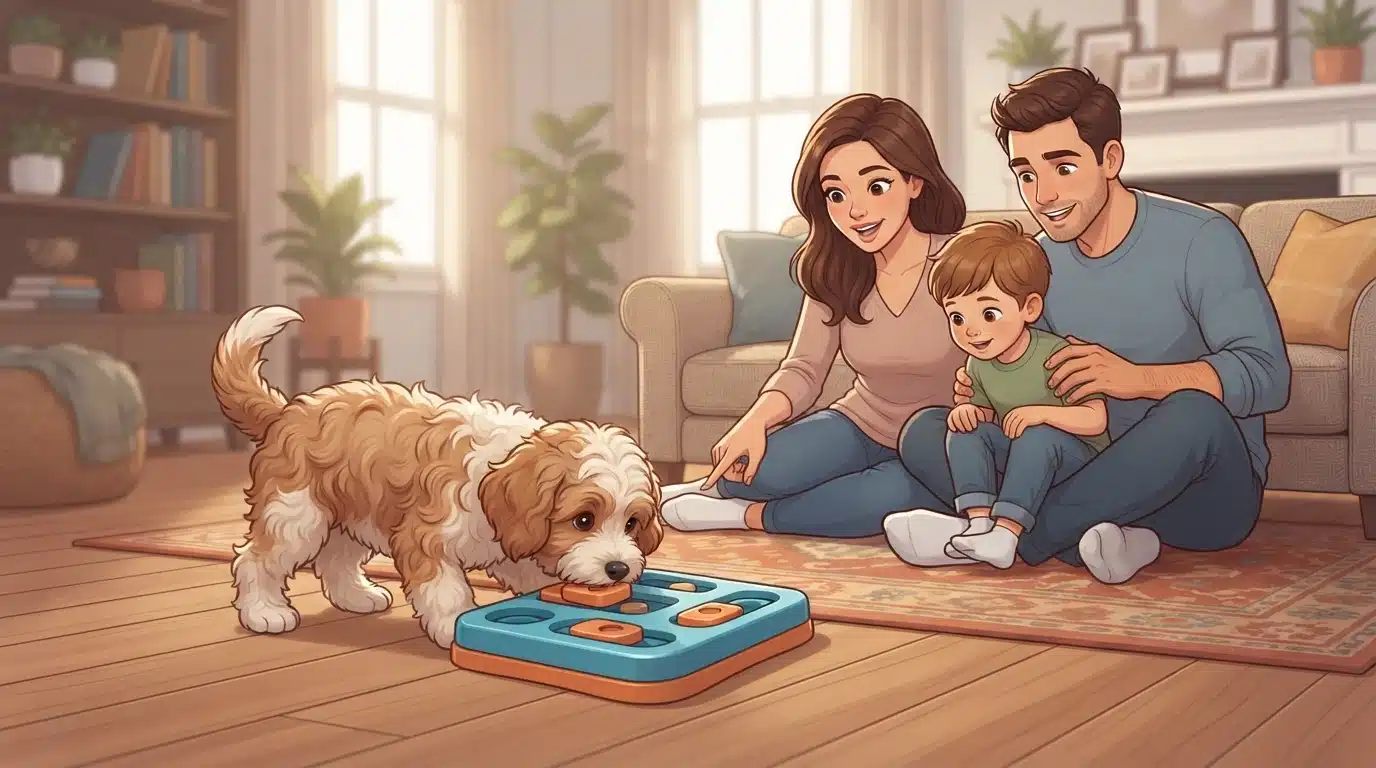
Cavapoos usually play like their Cavalier side: with you, facing you. Fetch, tug, and chase games come naturally because the breed was built to work closely with people. Havapoos lean toward the Havanese pattern instead. They watch you, follow you, and play in short bursts near your feet or your lap. Both crosses want company. The Cavapoo tends to start the game, while the Havapoo often waits for an invitation and then matches your pace.
Mental Work: Scent, Tricks, and Problem Solving
Mental stimulation matters more than raw minutes for both puppies, and it is where the Havapoo often surprises people. The Havanese parent was a circus and trick performer historically, so Havapoos tend to pick up tricks fast and enjoy shaping games. Cavapoos take well to scent work and gentle problem-solving toys too, since Cavaliers were bred to notice and report. A snuffle mat, a stuffed KONG, or three five-minute training sessions will tire either puppy more than a long walk. Rotate puzzles weekly so the challenge stays fresh.
Zoomies, Bitey Face, and the Witching Hour
Both crosses get the evening zoomies, usually between 6 and 8 p.m. Expect “bitey face” wrestling, sprint laps, and sudden collapse. Cavapoo episodes often center on you and end with a toys-at-your-feet request. Havapoo laps tend to be shorter and sharper. Plan a calm-down routine before bed: a short chew, then a settle spot. Puppies who skip that wind-down often restart the party at midnight.
Age, Health, and Energy: How the Profile Changes Over Time
From Bouncy Puppy to Steady Adult
Puppies of both crosses run on short bursts, not long outings. A ten-week-old does better with two short play sessions than one big walk, and play should end before the puppy winds down alone. Cavapoos often keep adolescent energy past 12 months, while Havapoos tend to settle by 9 to 12 months. Both land at a steady 30 to 60 minutes of mixed activity in adulthood.
Health-Informed Activity Adjustments
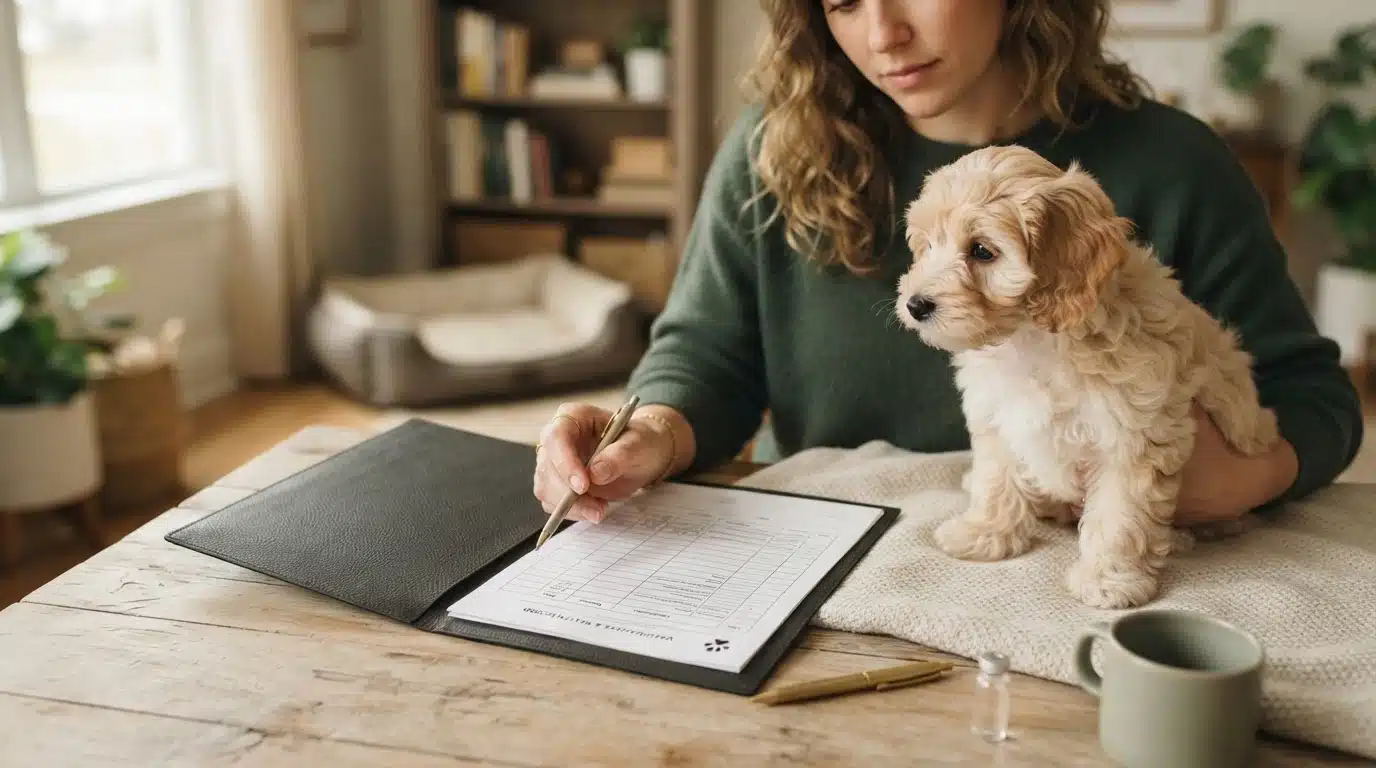
The non-Poodle parent shapes what you watch for as your dog ages. Cavaliers carry a known risk of heart disease, so a Cavapoo who slows down, coughs, or tires quickly on familiar walks deserves a vet visit before you assume laziness. Havanese bring sturdy little bodies but can face knee and eye issues, so watch for skipped steps or a hesitance on stairs and swap jumping games for sniffing walks. Because these conditions differ by line, it helps to read up on Cavapoo and Havapoo health issues before you choose, and again before you set expectations for an adult dog’s activity. Pain and illness often look like “calm” at first glance.
The Senior Years: Slower Walks, Longer Naps
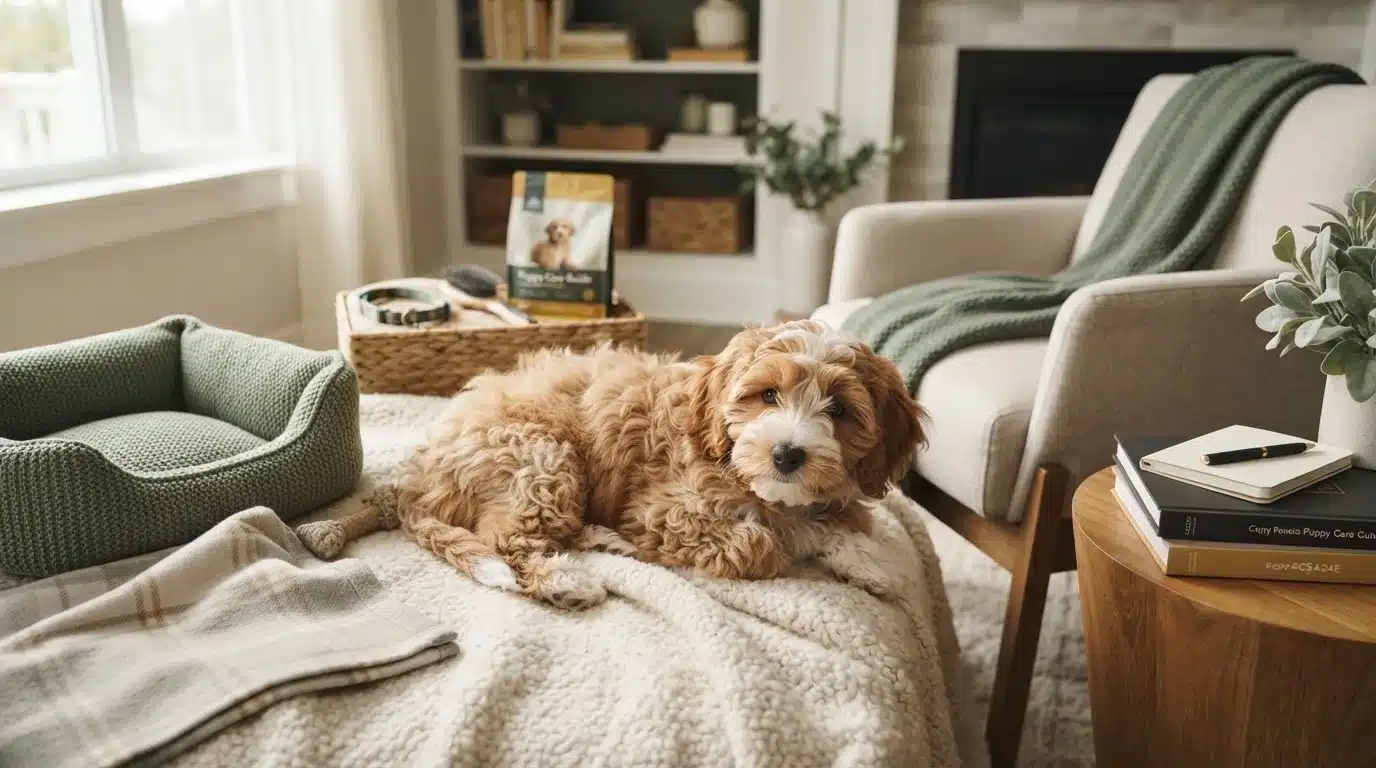
Older dogs keep the routine but lower the intensity. Trade fetch for two gentle walks, add a soft bed, and let naps run long. A senior Havapoo still wants to be where you are; a senior Cavapoo still wants your lap. The need for company never really retires.
Matching Energy to Your Household: Real-World Fit Questions
Both crosses want the same thing from you: company, short play sessions and a steady routine. The real question is which non-Poodle parent fits your walls, your kids and your weekends.

Apartments and Smaller Homes
Small spaces work well for both, because neither needs a yard. A Cavapoo is often described as an ideal apartment dog, since it stays quiet and compact. The catch is the Cavapoo’s longer adolescent phase, so expect indoor play to carry more of the load through that first year. Ask yourself who handles the midday energy dump when you work away from home.
Families With Kids or Other Pets
The Cavalier side gives Cavapoos a soft, patient streak that usually suits gentle children. Havapoos inherit the Havanese’s playful, people-first charm and often match a busy household’s noise well. The honest variable is not the breed, it’s the individual puppy. Ask your breeder which puppy in the litter runs bolder, then match that temperament to your kids’ ages and your current pets’ tolerance.
Active Outdoors Households and First-Time Owners
If weekend hikes and backyard fetch are the norm, either dog can join, within reason: both adults settle into that steady 30 to 60 minutes. Havapoos sometimes resist long sessions alone outdoors and dislike being left, so plan their daily exercise in company. First-time owners often do better with the Havapoo’s earlier settling pace, roughly 9 to 12 months instead of the Cavapoo’s 18.
Which Should You Choose: Cavapoo or Havapoo on Energy Alone?
Both crosses need the same steady 30 to 60 minutes as adults, so the real question is how you feel about the years between puppyhood and that calm adult rhythm. Energy alone rarely decides it, but when it does, here is the honest breakdown.
Choose a Cavapoo When You Want a Brighter, More Social Engine
Pick the Cavapoo if your household thrives on a busier, more playful dog. The Cavalier side brings a sociable, upbeat streak that often keeps adolescent energy running past 12 months. That suits families with kids who want a willing play partner for backyard games, or owners who enjoy daily outings and don’t mind the longer settling runway. Just be sure the schedule can actually deliver it.
Choose a Havapoo When You Want a Steadier, Closer Companion
Pick the Havapoo if a calmer pace fits your life better. The Havanese side leans toward a close, velcro-style bond with an earlier settle, often showing an adult-like rhythm by 9 to 12 months. First-time owners and quieter households usually find that easier to live with. You still get playfulness, just in shorter, gentler bursts that wind down on schedule.
If Neither Feels Right on Energy, Consider These Honest Options
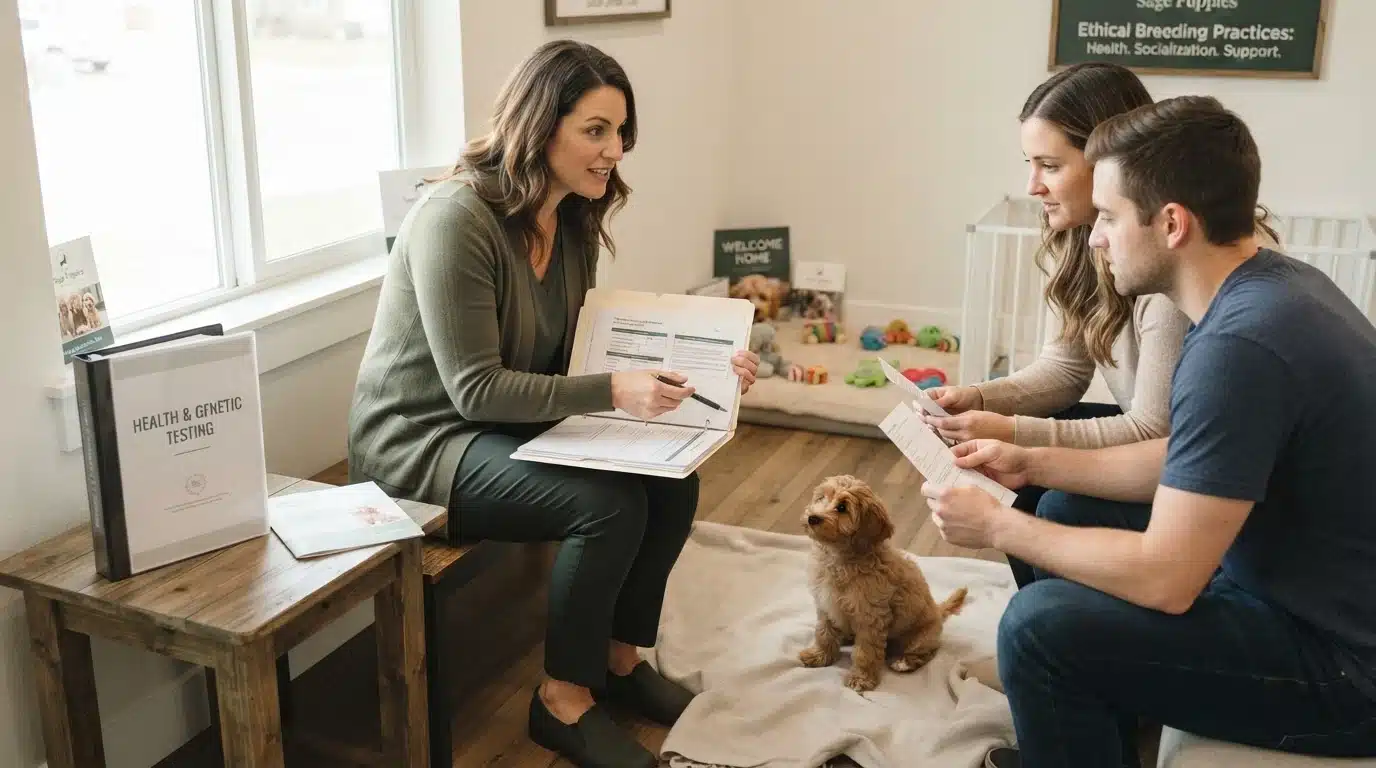
If the Cavapoo sounds too persistent and the Havapoo too clingy, look sideways instead of settling. A Havanese gives you the parent-breed temperament without the Poodle spark, and some families prefer it. You could also wait a season and revisit the decision with a clearer picture of your real weekly schedule. The right match matters more than the timeline, and a breeder’s owner-managed matching process, like the one at Sage Puppies, exists precisely to sort that out.

Ready to match your household to the right cross? Sage Puppies raises Havanese, Havapoo and Cavapoo puppies with honest guidance on each pup’s energy and settling pace. Tell us about your family’s rhythm through our application, and we’ll help you find the puppy whose activity level fits your life. Wisely Bred. Beautifully Loved.
Frequently Asked Questions
Q1: How do Cavapoo and Havapoo puppies differ in energy and activity?
Cavapoos run a brighter, people-driven engine from their Cavalier side, wanting games started with you. Havapoos stay steadier, with gentler bursts and quicker settling. Adults of both need roughly 30 to 60 minutes of mixed daily activity.
Q2: Which puppy settles down faster at night?
Havapoos usually settle quicker, showing an adult-like rhythm by 9 to 12 months. Cavapoos often keep adolescent energy past a year.
Q3: Are either of these breeds good apartment dogs?
Yes. Neither needs a yard. Just plan indoor play and short walks to cover the daily minutes.
Q4: How much exercise does an 8-week-old puppy need?
Follow the five-minutes-per-month guideline: two short outings a day, ending before your puppy winds down alone.
Q5: Which mix suits first-time owners better?
The Havapoo’s earlier settling pace and gentler play usually make life simpler in that first year.
Q6: Does mental stimulation really tire them out?
Yes. Snuffle mats, trick training, and puzzle toys often tire either puppy faster than a long walk.
Conclusion
The Cavapoo vs Havapoo energy comparison starts with the non-Poodle parent. Cavaliers were bred for calm companionship, so Cavapoos bring a brighter, people-driven engine that often keeps running past 12 months. Havanese were performers, so Havapoos stay playful but settle earlier, usually by 9 to 12 months.
In practice, both adults land at a steady 30 to 60 minutes of mixed daily activity. What differs is play style, settling speed, and mental stimulation needs. Match the puppy to your household: active families with time for daily games often suit the Cavapoo, while quieter homes and first-time owners usually find the Havapoo’s steadier pace easier to live with.