Quick Summary: A Cavapoo puppy’s first year depends on steady routines: keep vaccinations on schedule, give measured meals, track weight every two weeks, prevent parasites monthly, and brush the coat often. Understand that the breeder’s exam record, parent screenings, and DNA results are only a starting point, since annual checkups are still needed for heart murmurs, slipping kneecaps, eye disease, and ear infections. Call your vet promptly for warning signs such as not eating for more than a day, diarrhea lasting over 48 hours, coughing, labored breathing, or eye and nose discharge. Sage Puppies provides full deworming and vaccine histories with every puppy so your vet can begin with reliable records.
The folder you get at pickup holds the first chapter of your Cavapoo puppy’s health story, not the whole book. Most families read it once, file it away, and assume the hard part is done. It isn’t.
The real work happens in the first year: vaccine boosters, weight checks, grooming routines, and knowing which records matter at which visit. Many first-time owners also puzzle over the difference between a parent’s clinical screening and a DNA variant result, and that confusion can lead to skipped tests or needless worry.
This guide walks through months 2 to 12 in practical terms, with daily routines and clear explanations of your puppy’s paperwork. It builds on the 8-week exam your breeder completed, so you can step into your veterinarian’s office knowing what each document means for your Cavapoo puppy health plan ahead.
Health Essentials for Cavapoo Puppies: The Full First-Year Picture
Your Cavapoo puppy health plan starts before you bring the puppy home. Three documents tell you what you actually have: the vet exam record from the 8-week checkup, the parent health screening results, and the DNA panel for inherited conditions. Each one answers a different question.
The Three Health Documents Every Cavapoo Owner Should Request
The puppy record shows what your vet will build on: vaccines given, deworming dates, and anything the exam flagged. Parent screening covers the clinical tests breeders run on the mother and father, like heart and eye exams. The DNA report lists variant results for conditions such as progressive retinal atrophy. Ask for all three in writing. A breeder who hands over clear paperwork is showing you how they work, so read everything before pickup day and file it with your own vet records.
Your First 30 Days: What Healthy Progress Actually Looks Like
Week one is adjustment. Expect some loose stool from the stress of a new home, plus normal puppy naps that run four to five hours. Steady weight gain follows, roughly a few ounces a week for a small breed. By week two, appetite and energy should level out. Watch for the warning signs instead of a fixed schedule: refusal to eat for more than a day, diarrhea lasting past 48 hours, coughing, or discharge from the eyes or nose. Any of those means a vet call, not a wait-and-see approach.
Months 2 to 12: Keeping the Routine Without Losing the Plot
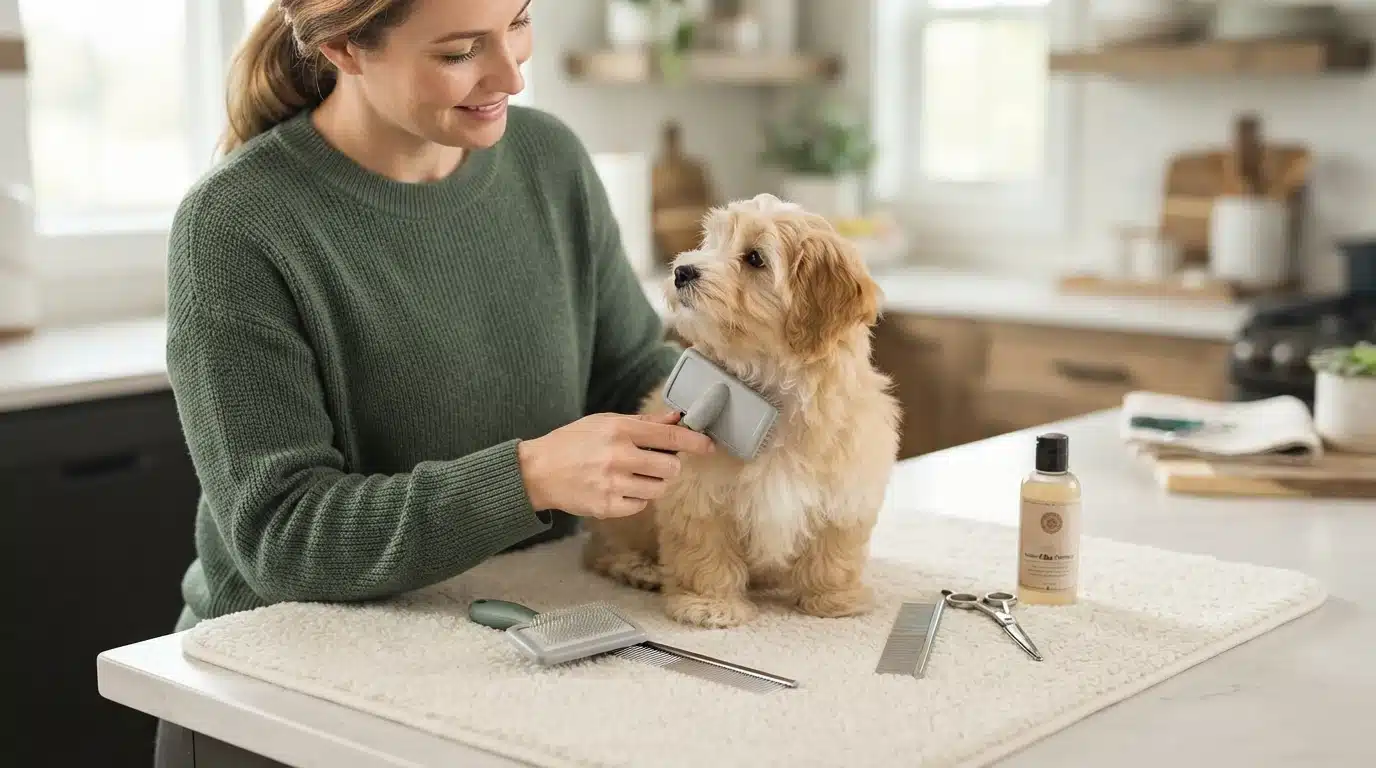
The middle months are where routines carry the load. Core vaccines land at set intervals, so book those visits in advance. Monthly flea and heartworm prevention starts once your vet confirms weight, and dental brushing becomes a daily habit rather than an occasional one. Growth slows near the one-year mark, which is when most small breeds transition off puppy food. Coat care stays weekly too, and knowing how to groom a Cavapoo at home keeps mats from hiding skin problems during routine checks.
Keep every receipt, test result, and vaccine date in one folder. Twelve months from now, that folder is the baseline your adult dog’s care hangs on.
Vet Visits, Vaccines and Parasite Prevention on a Schedule
Your Cavapoo’s first year runs on a fairly predictable vet calendar. Learn the rhythm now and each visit becomes a quick check-in rather than a scramble.
How the Core Vaccine Series Actually Works
Core vaccines protect against the diseases every dog faces: distemper, adenovirus, parainfluenza and parvovirus, combined in one shot called DHPP. The series usually starts at 6 to 8 weeks and repeats every 2 to 4 weeks until at least 16 weeks of age, per the AAHA canine guidelines. That final dose matters most, because maternal antibodies interfere with early shots.
Rabies comes separately, typically at 12 to 16 weeks, and is required by law in nearly every state. A booster follows one year later. Non-core shots like bordetella or lepto depend on your dog’s lifestyle, so ask rather than assume. Until the series finishes, keep your puppy away from unknown dogs, but safe socialization at home and puppy class with vaccinated peers is fine.
Deworming, Fecal Testing and Year-Round Prevention
Most breeders deworm puppies at 2, 4, 6 and 8 weeks, so your first vet visit usually includes another dose and a fecal test to confirm nothing survived. Bring the breeder’s records to that appointment; we hand over a full deworming and vaccine history with every Sage puppy so your vet starts from real data.
After that, parasites are a year-round job. Heartworm prevention, which also covers intestinal worms, runs monthly in every state because mosquitoes ignore winter. Flea and tick protection continues on the same monthly schedule. Your vet can prescribe a single chewable that handles all three.
Questions to Ask at Every Visit
Walk in with a short list and jot the answers down:
- What’s next on the vaccine schedule, and when?
- Is my puppy’s weight and growth on track for this breed size?
- Which parasite product do you recommend here in my area?
- What changes in stool, appetite or energy should trigger a call?
The health records you gathered before choosing pair naturally with this list, keeping every visit documented.
Nutrition, Growth and Keeping a Small-Breed Puppy on Track
Cavapoos grow fast in their first year, and small dogs have less room for error. A missed meal matters more at 8 pounds than it would at 80. Steady food, steady portions and a simple weight record do more for your puppy than any fancy supplement.
Meals, Portions and Why Consistency Beats Cleverness
Small-breed puppies burn energy quickly and can’t store much, so they need several small meals a day. Most do well on three to four meals until around six months, then two or three after that, as laid out in Chewy’s puppy feeding guide. Feed the amount on the bag for your puppy’s expected adult weight, then adjust by feel. You should feel ribs under a thin fat layer, but not see them.
Pick one quality puppy formula and stay with it. Constant changes cause more stomach trouble than any single food. Ask what your puppy ate before pickup and keep that food for the first weeks.
Use a measuring cup, not a scoop from the bag. Eyeballed portions in small breeds can drift 20 percent or more within a week.
Switching Foods Without Upsetting a Small Stomach
You will eventually switch foods, whether by vet advice, budget or availability. Do it over seven to ten days. A common plan mixes 75 percent old food with 25 percent new for a few days, then moves to 50-50, then 25-75, following the transition steps in Hill’s Pet nutrition guidance. Watch the stool the whole time. Loose stool means slow down and hold the current mix for a few extra days. Skip the switch entirely during travel, vaccine weeks or any stressful stretch. For full portions and timing by age, see the Cavapoo feeding schedule and portion guide on our site.
Water, Growth and the Weight Log
Fresh water should be available all day, except for a short window before bedtime while housetraining. Dehydration shows up fast in small puppies, so check that the bowl actually gets emptied.
Weigh your puppy every two weeks on a kitchen scale and write the number down. Steady gain means portions are right. A sudden stall, a jump or a loss is worth a call to your vet, and the log makes that call far more useful.
Breed-Specific Watch Points: Heart, Joints, Eyes and Ears
Cavapoos inherit a mix of traits from both parent breeds, and a few of those traits carry health risks. Knowing what to watch for helps you catch problems while they are still small and treatable. Mitral valve disease is a leading cause of death for the Cavalier King Charles Spaniel, while patellar luxation and certain eye conditions can pass down from either side.
Heart Health and Why Murmur Follow-Ups Matter
Mitral valve disease affects the valve between two chambers of the heart, so blood flows the wrong way. Your puppy’s 8-week exam included a listen to the heart, and some puppies show a soft murmur that later disappears. If your vet heard one, keep every follow-up appointment. A murmur that persists or grows louder needs tracking with regular checks, because early-stage heart disease often shows no other signs. Watch for reduced energy, a lingering cough, or labored breathing during easy play, and report them right away. Parent screening results in your puppy’s paperwork give the background, but the annual auscultation is what catches changes early.
Knees, Patellas and the Value of Early Checks
Patellar luxation means the kneecap slips out of its groove. Small breeds carry the highest risk, and Cavaliers and Poodles both pass down a tendency toward it. You might see a skip, a hitch in the stride, or a moment where your puppy holds a back leg off the floor, then walks normally again. Ask your vet to check both knees at each wellness visit. The exam takes seconds and costs nothing extra. Between visits, keep your puppy lean, because extra weight stresses small joints. Stairs and hard landings off furniture are worth limiting while growth plates are still closing.
Eyes, Tear Staining and Floppy Ears
Two eye conditions to know: progressive retinal atrophy, which slowly reduces night vision, and cataracts. A DNA panel should confirm your puppy did not inherit the PRA variant, so read that line on your paperwork carefully. Mild tear staining under the eyes is common and mostly cosmetic, but sudden thick discharge, squinting, or a cloudy look needs a vet visit.
Floppy ears trap moisture. Dry them after baths and swimming, check weekly for redness or odor, and you will avoid most ear infections.
Daily Wellness: Teething, Grooming, Sleep, Exercise and Socialization
Teething and Chewing Without Mishaps
Baby teeth fall out between about 4 and 6 months as adult teeth come in, so expect heavy chewing through much of your first year. Your job is not to stop the chewing. It is to give it a safe target. Keep two or three approved chews in rotation so they stay interesting, and swap in frozen options on rough days. Cold soothes sore gums.
Puppy-proof one room completely rather than trying to watch every corner. If it fits in a puppy’s mouth, it will eventually end up there.
If you catch your Cavapoo gnawing a shoe, trade it for a chew without scolding. Teeth also need care early: rub a soft finger brush on the gums a few times a week so tooth brushing feels normal before the adult set arrives.
Coat, Nails and Ears on a Realistic Schedule
A Cavapoo coat grows long and soft, so brushing every day or two prevents mats behind the ears, under the legs and along the harness line. Ten minutes with a slicker brush beats an hour of detangling later. Trim nails every two to three weeks; if you hear clicking on hard floors, you are past due. Floppy ears trap moisture, so check weekly and clean only when they look dirty. Start every routine gently at 8 weeks so grooming stays calm for life.
Sleep, Exercise, Socialization and Car Safety
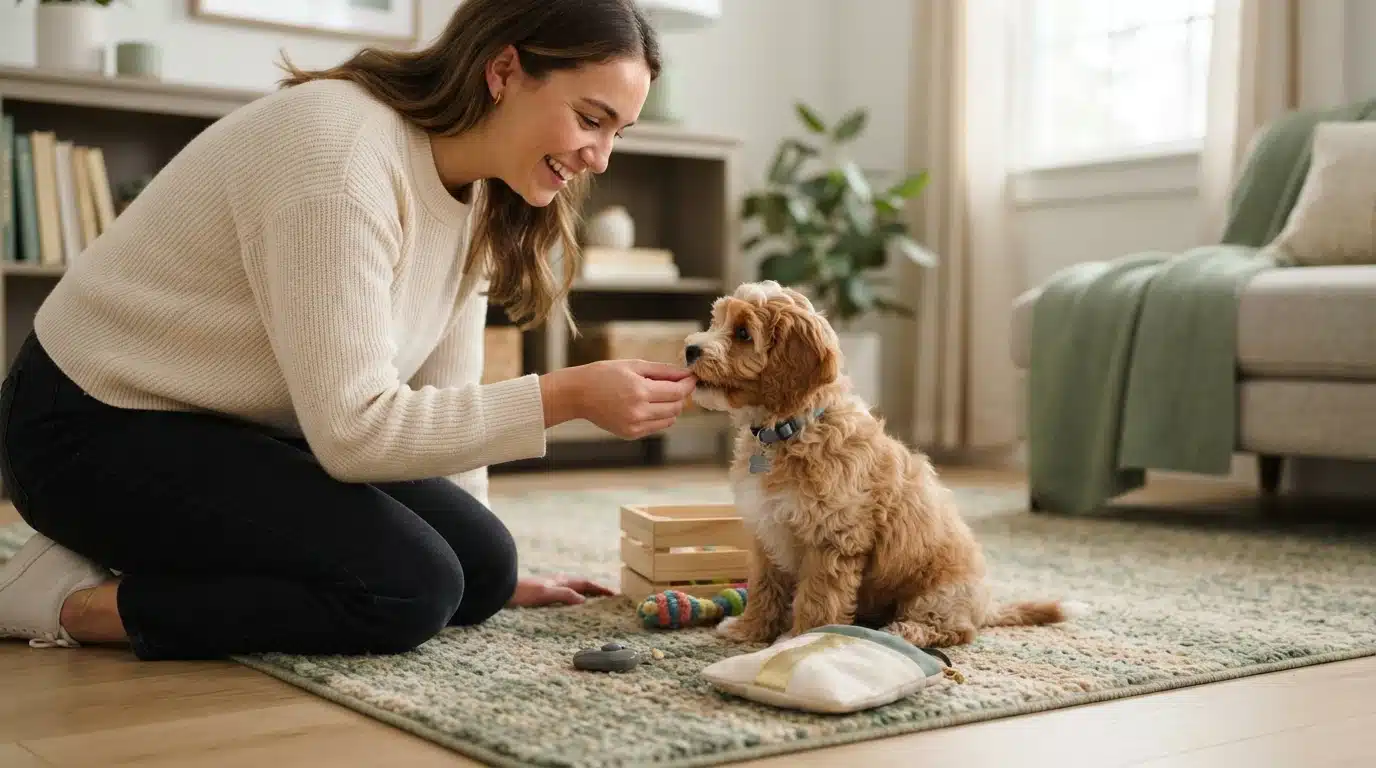
Puppies sleep 18 to 20 hours a day, and naps are not optional. An overtired puppy nips more and learns less. Keep sessions short: a few five-minute play blocks and brief walks suit a small breed far better than one long trek. Socialization matters most now, because the window when puppies accept new experiences runs roughly 5 to 16 weeks, as the AKC notes. Pair new people and sounds with treats. In the car, use a crash-tested crate or harness restraint so an abrupt stop does not turn your lap dog into a projectile.
Common Mistakes to Avoid in Your Cavapoo’s First Year
Assuming Screening Is a Promise
Parent health checks and DNA panels lower risk. They do not erase it. A cleared genetic panel says your puppy does not carry specific tested variants, and parent screenings show the parents were healthy at the time of testing. Neither one rules out heart murmurs, luxating patellas, or eye problems that show up later. Read your puppy’s three documents as a starting point, then keep up annual vet exams so any issue gets caught early.
Self-Treating and Second-Guessing the Vet
Small breeds give you less margin for guesswork. A missed meal matters more at 8 pounds than it would at 80, and home remedies can mask symptoms your vet needs to see. Two habits cause most trouble here:
- Waiting too long. Call your vet when warning signs appear, such as refusal to eat for more than a day or diarrhea lasting past 48 hours. Delaying the visit is one of the most common and costly puppy-owner mistakes, according to Onion River Animal Hospital.
- Dosing on your own. Never give human pain relievers or leftover antibiotics. Many are toxic to dogs.
When your vet recommends a test or follow-up, it usually costs less than treating a problem that grew quietly for weeks.

Your Cavapoo’s first year goes smoothly when you know what the paperwork says and what to watch for at home. If you’re still choosing a breeder, Sage Puppies matches families with wisely bred Cavapoo puppies and walks you through every health record before pickup day.
Frequently Asked Questions
Q1: What are the health essentials for Cavapoo puppies?
The basics are three documents (vet exam record, parent screenings, DNA panel), a full DHPP vaccine series through 16 weeks, rabies at 12 to 16 weeks, monthly parasite prevention, and a written weight log through month twelve.
Q2: When should my Cavapoo puppy finish vaccinations?
The DHPP series repeats every 2 to 4 weeks until at least 16 weeks old. The final dose matters most because maternal antibodies can block early shots. Rabies follows at 12 to 16 weeks.
Q3: How often should I feed a Cavapoo puppy?
Offer three to four measured meals daily until about six months, then two or three. Keep the same food, measure portions, and weigh your puppy every two weeks.
Q4: What health problems are Cavapoos prone to?
Watch for mitral valve disease, patellar luxation, progressive retinal atrophy, cataracts, and ear infections. DNA results and parent screenings lower risk, but annual exams still catch what paperwork cannot.
Q5: How much do Cavapoo puppies sleep?
Most need 18 to 20 hours daily. Protect naps; overtired puppies nip more and learn less during training and socialization sessions.
Q6: Which warning signs mean an immediate vet call?
Refusal to eat for more than a day, diarrhea lasting past 48 hours, coughing, labored breathing, or eye or nose discharge. Call rather than wait it out.
Conclusion
Your Cavapoo’s first year rests on a few steady habits: keep the vaccine series on schedule, feed measured portions, log weight every two weeks, and brush daily. The three documents from your breeder are a starting point, not a promise, so annual exams still matter. Know the breed watch points, especially heart murmurs and knees, and call your vet when warning signs appear instead of waiting. Do that, and the paperwork in your folder becomes the baseline for a healthy adult dog.