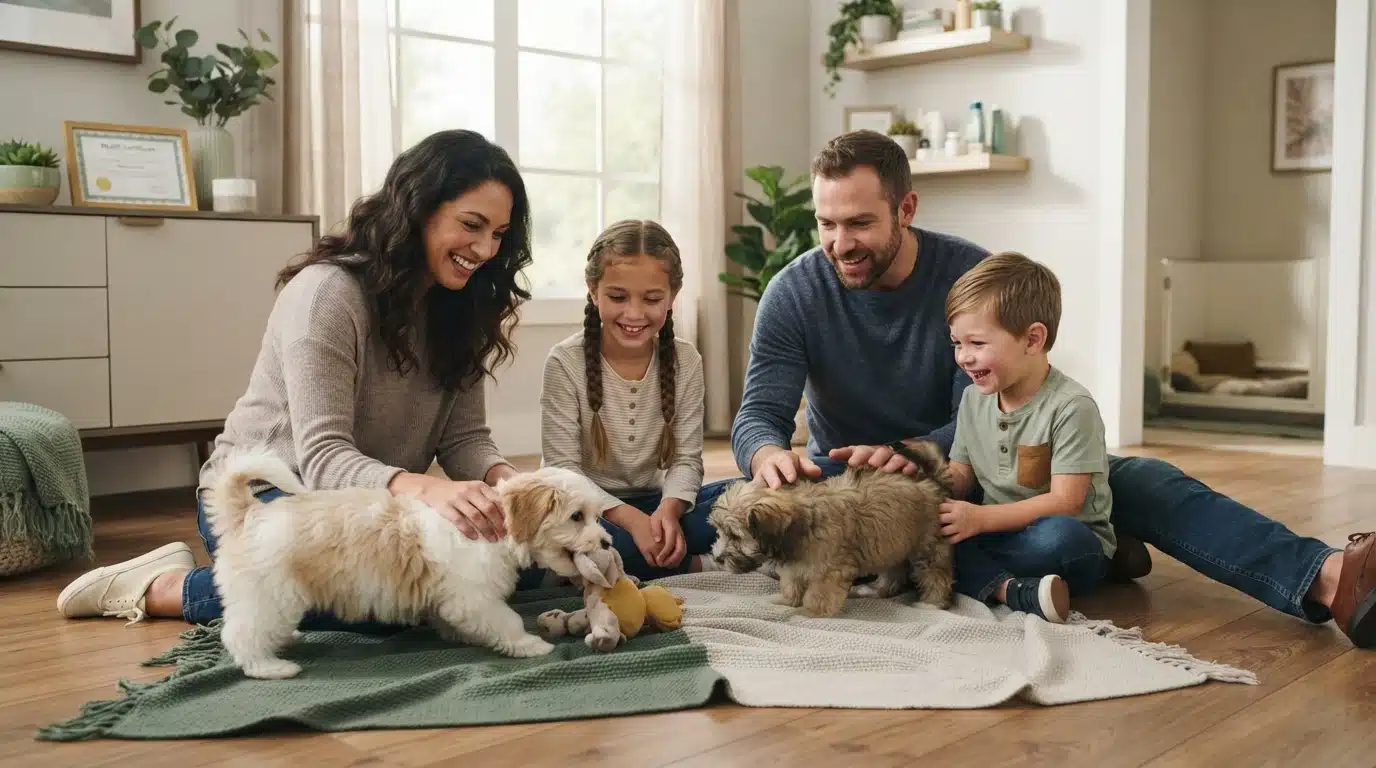
Quick Summary: A trustworthy Cavapoo breeder proves health claims with documents, not sales pitches, so buyers should demand three stacks of proof: the puppy’s own records (vaccinations, deworming log, vet exam note, microchip), dated parent clinical screenings for heart, eyes and patellas, and DNA carrier results. Press hardest on the Cavalier side for mitral valve disease and syringomyelia, remember a CHIC number only means screenings were published in the OFA database rather than that the dog is disease-free, and get the written price, contract and health guarantee details before paying a deposit, since some guarantees last only 72 hours. Verify everything yourself through the OFA Advanced Search, past buyer references and an early vet visit, and walk away from breeders who rush you or cannot produce paperwork. Sage Puppies in South Jordan, Utah, is presented as an example of a documented, home-raised approach that welcomes these questions.
Two breeders can both say their Cavapoo parents are health tested, and they can mean completely different things. The proof sits in the paperwork you are handed before you pay a deposit, not in the sales pitch. That gap is where families searching Cavapoo puppies for sale get burned, because a healthy Cavapoo puppy depends on parent screening, DNA results and puppy records that are easy to fake in a text message.
This guide fixes that. Each Cavapoo breeder question below links to a specific document you should see, so you can judge the answers yourself instead of trusting a promise. Sage Puppies raises Cavapoos in South Jordan, Utah, and Cassie’s documented approach shapes the standard we recommend, whether you buy from us or someone else. Ask for evidence, compare it to the question, and the right breeder becomes obvious.
Word count note: 156. Trim last sentence slightly to stay under hard max? Keep as is, it’s 154 borderline. Final: end “…becomes obvious.” Good.
How to Choose a Healthy Cavapoo Puppy
A healthy Cavapoo puppy comes with three layers of proof, not just a cute face and a clean yard. Ask the breeder for each layer, then check the documents yourself.
The Three Layers of a Cavapoo Health Record
Good breeders separate their evidence into three stacks:
- Puppy records: vaccination dates, deworming log, and a vet exam note for this puppy only.
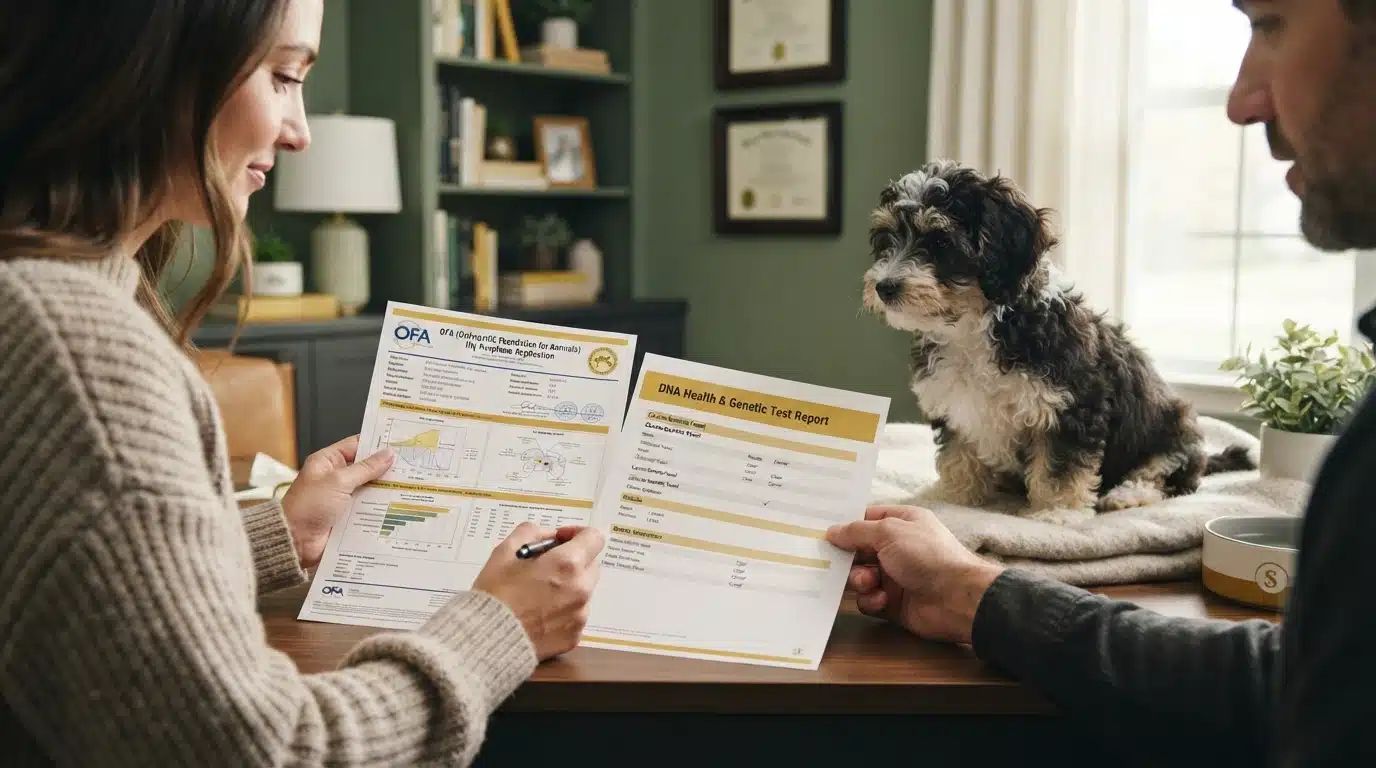
- Parent clinical screening: heart and eye exam results for the parents, dated and signed by a vet or specialist.
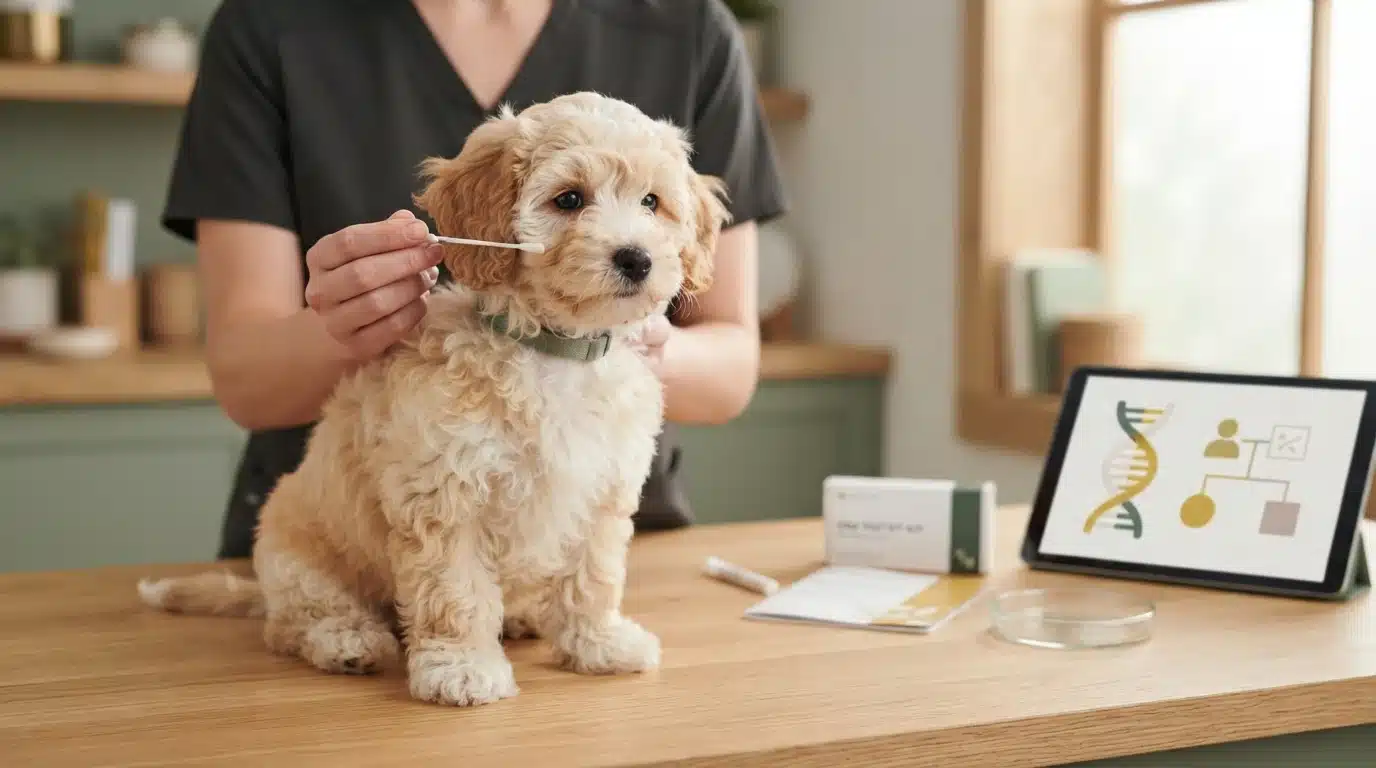
- DNA results: a genetic panel showing which breed-related conditions each parent carries or has cleared.
Cavapoos inherit Cavalier risks, so the Cavalier parent should have mitral valve screening and, ideally, an MRI to rule out syringomyelia. You can see which health tests matter most for a puppy buyer before you commit.
What a Credible Answer Sounds Like
A trustworthy breeder answers in specifics. “The dam had an OFA cardiac exam on March 12, and here is the paper” is a credible answer. “The parents are healthy and we’ve never had problems” is not, because it offers a promise where you asked for a document. Ask to see the actual certificates, not summaries of them. Check that names, dates, and clinic details match across the puppy record, the parent results, and the DNA report.
Questions That Reveal a Screening Breeder
- “May I see the parents’ heart and eye exam reports, with dates?”
- “Which DNA panel did you run, and what carrier status did it show?”
- “Is the puppy vet-checked, and when?”
Screening breeders answer these without hesitation and hand over papers. Vague or defensive replies are your cue to walk.
Questions About Health Testing on Both Parents
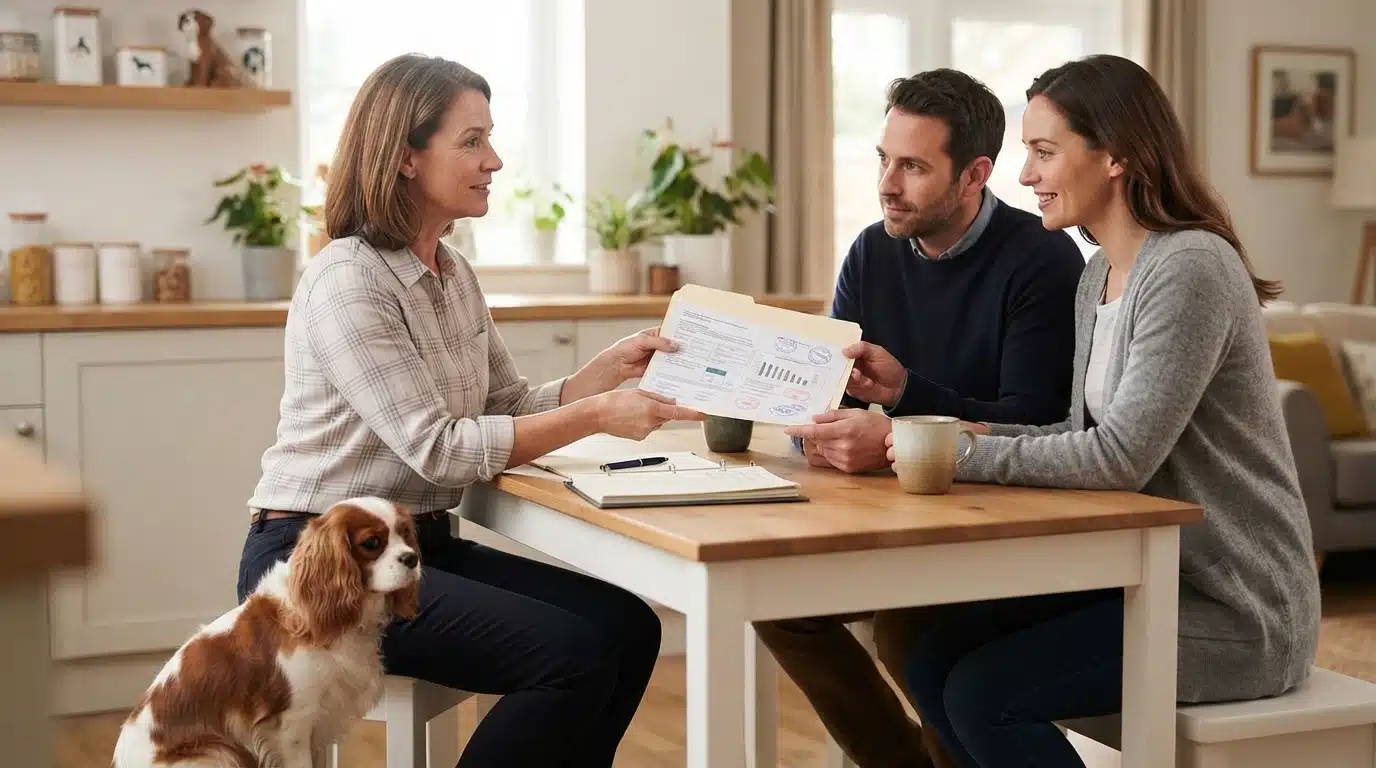
A puppy inherits health from both parents, so a good breeder shows testing for the Cavalier dam and the Poodle sire separately. Ask for each parent’s test by name, and ask to see the actual paperwork, not just a yes. A good answer sounds like “the dam had an OFA cardiac exam on March 12, and here is the paper.”
Questions for the Cavalier Parent
Cavaliers carry two serious breed risks, so press hardest here.
- Mitral valve disease: Ask when each parent’s last heart exam was done and whether a board-certified cardiologist performed it. Cardiac exams need repeating, so a date matters.
- Syringomyelia: Ask whether the breeder has an MRI screening report and will share it.
- Eyes and patellas: Ask for an ophthalmologist’s eye exam date and a patella result.
- The document: Every answer should point to a dated OFA form or a specialist’s report. The breed club’s health statement lists what responsible Cavalier breeders screen for.
Questions for the Poodle Parent
Poodles bring their own list. Ask whether both parents have OFA hip results, patella evaluations, and eye exams on file. For a Toy or Miniature sire, also ask about progressive retinal atrophy screening. Then ask for the documents themselves. If a breeder says “the sire is fine” without paperwork, treat that as a missing test, not a clean one.
What a CHIC Number Does and Does Not Prove
A CHIC number means the dog completed the screenings its breed requires and the results were made public in the OFA database. It does not mean the dog is free of disease. Results are published whatever they show, so read them.
Questions About DNA Results Specifically
DNA tests show carrier status, not current health. Ask which panel was run, who processed it, and whether any parent carries a breed-related variant. Then ask how the breeder pairs parents so no puppy can inherit two copies.
Questions About the Puppy’s Own Veterinary Care
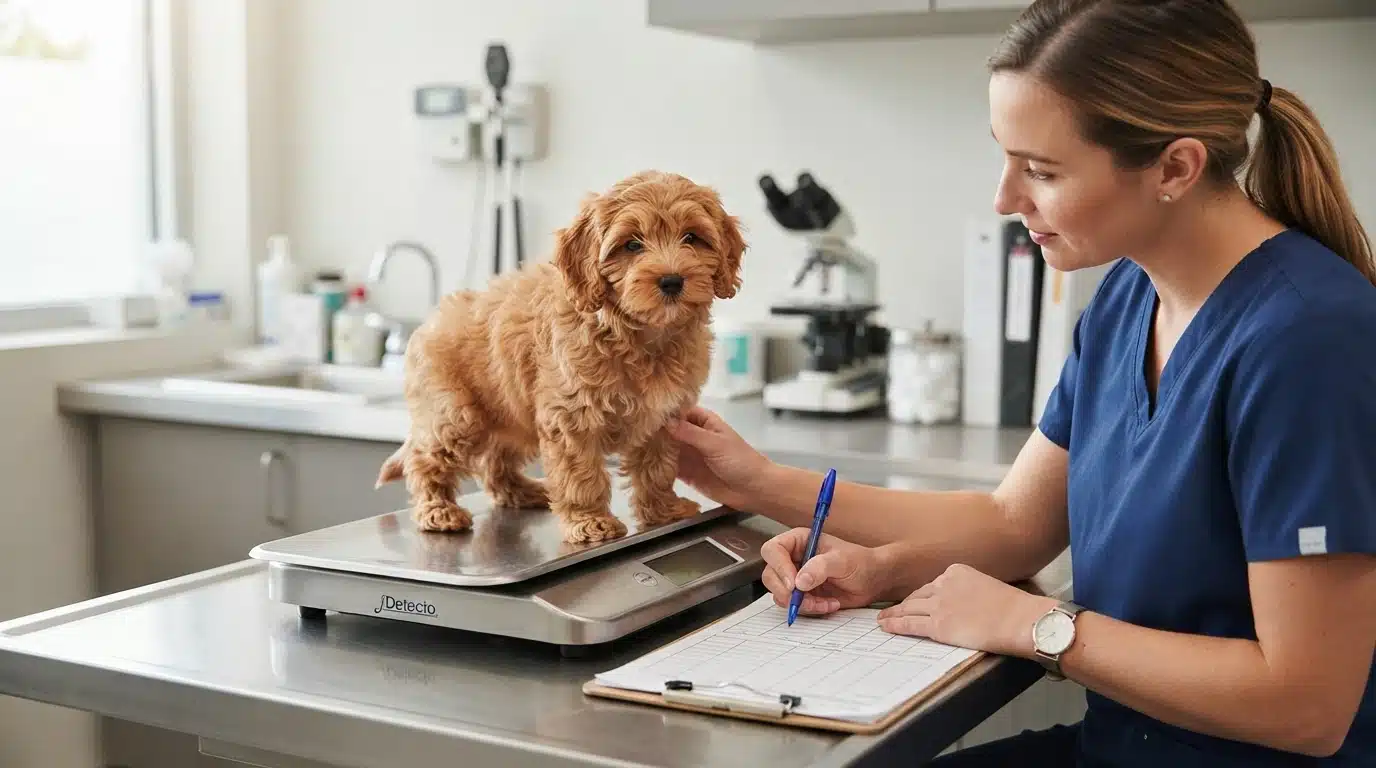
Parent health records matter, but so does the puppy’s own paper trail. Ask any breeder for four documents before you commit:
- Vaccination record listing each vaccine, date, and the vet’s clinic
- Wellness exam note dated within the puppy’s first eight weeks
- Deworming log with the product used and dates given
- Microchip number with registration details
A serious breeder hands these over without being asked twice.
What the Vaccine Record Should Show
Ask for the actual vaccination record, not a summary texted from memory. It should show the puppy’s name, birth date, the vaccine given, and the date. The core DAPP series protects against distemper, adenovirus, parvovirus, and parainfluenza, with doses given every two to four weeks. A puppy sent home at eight weeks has usually had one dose, so you will finish the series with your own vet.
Exam, Deworming and Microchip
Next, ask whether a licensed veterinarian examined the puppy, and ask for the dated exam note. A breeder’s “she looks healthy” is not the same as a vet’s written check. Puppies are dewormed on a set schedule, so the log should list the product used and each date, not a single vague entry. If the puppy is microchipped, ask for the chip number and check it against the puppy in person. These three items together tell you the puppy’s care was real and consistent.
Age at Handoff and Weight Records
Age at handoff shapes everything after. Many states set a minimum sale age, commonly eight weeks, and puppies separated too early often miss key socialization with the dam and littermates. Ask for the birth date in writing and match it to the vaccine dates on the record, since dates that contradict each other point to sloppy or invented paperwork. A weekly weight log is a smaller detail but a useful one, because steady gains signal good nursing and feeding from day one. Ask how the puppy was eating the week before pickup.
Questions About the Breeder, the Dam and the Litter’s Environment
Meeting the Dam and Seeing the Litter
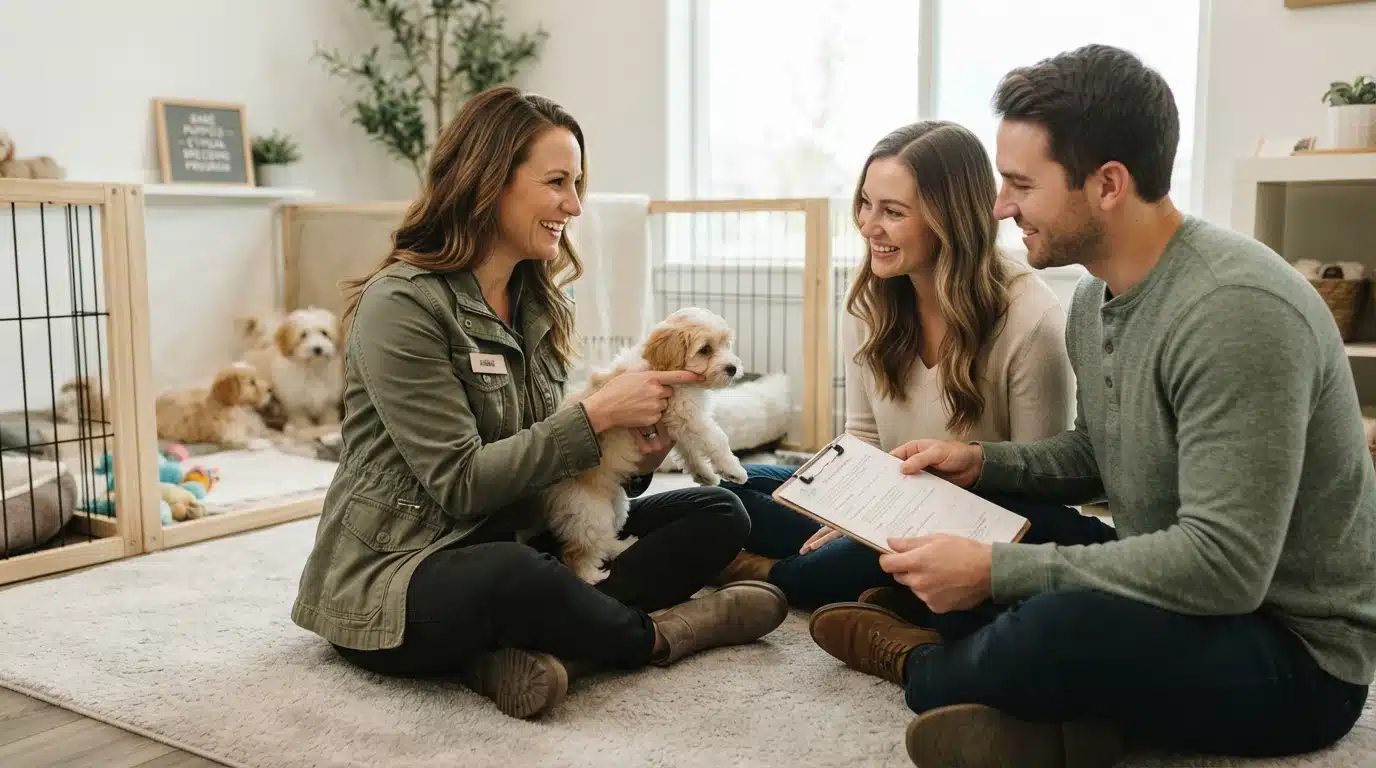
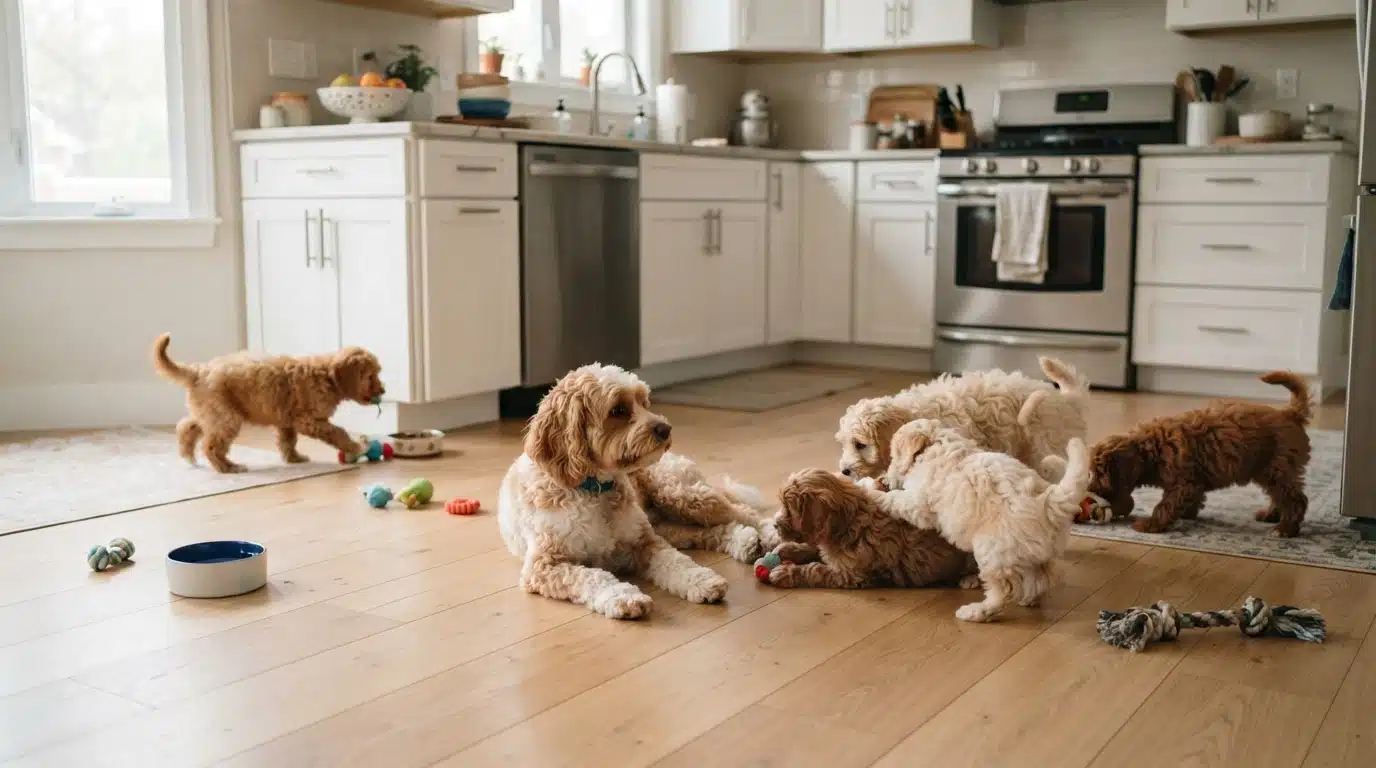
Ask to meet the dam in person, or request a live video call if the litter ships to you. Watch how she greets strangers. A calm, friendly dam matters because her temperament shapes her puppies more than any training you will do later. Ask where the puppies were born and raised. A kitchen or living area beats an isolated kennel run, because house-raised pups meet dishes, doorbells and vacuum cleaners before they meet you. Ask how many litters the dam has had per year. A good answer is one, maybe two.
How Socialization Is Actually Done
“Socialized” means nothing unless the breeder can describe the work. Ask what happens at each age. Do puppies hear household noise, meet children, ride in a car, and start crate training before they go home? Some breeders follow a written plan with named stages. Ask for it. Research on early neurological stimulation, a set of brief handling exercises in a puppy’s first days, shows mixed results, so treat it as one tool rather than a promise of a perfect dog, according to a Purdue Extension review. Daily handling and a real home setting count for more. Sage Puppies, for example, raises litters in the home rather than a kennel building.
Questions About the Breeder as a Long-Term Resource
A breeder’s job does not end at pickup. Ask who you call at 10 p.m. when the puppy will not settle. Ask whether the breeder will take the dog back at any age if your family cannot keep it; a written return clause is a strong sign of a serious program. Ask how past puppy families stay in touch, whether through a group chat or yearly check-ins. breeders who track their dogs into adulthood learn which health and temperament traits they are actually producing, and that history protects your future puppy too.
Questions About Money, Contracts and Delivery

Questions About Price and What It Includes
Ask for the total price in writing before you send a deposit. A clear quote covers the puppy, its first vaccines, a vet exam, and a starter kit. Ask what a deposit buys: does it hold a specific puppy, or just a place in line for a future litter? Ask when the balance is due and which payment methods the breeder accepts. Keep records of every payment. One good sign of a transparent program is a published price range, like the one on Sage Puppies’ pricing and reservation page, instead of a number that changes by phone call.
Questions About the Health Guarantee and Its Limits
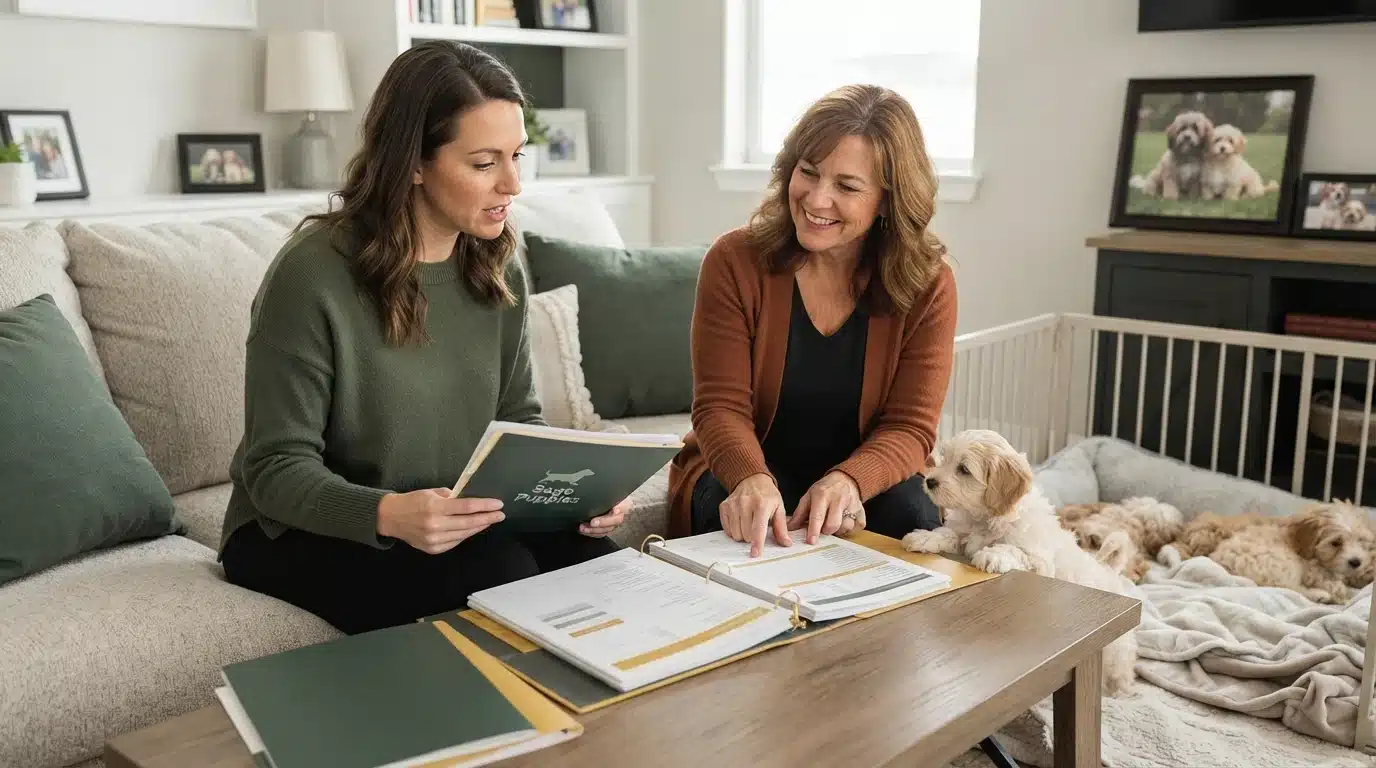
Every breeder should offer a written health guarantee, but the details vary a lot. Ask how long it lasts, some cover 72 hours, others cover genetic conditions for a year or more. Ask exactly which conditions it covers. A strong guarantee names the serious breed-related problems, such as mitral valve disease, and states the remedy: a refund, a replacement puppy, or help with vet bills. Ask what voids the guarantee, too. Missing a required vet visit within a set window is the most common reason claims fail. Read the whole contract before you sign, and keep a copy.
A verbal promise is not a guarantee. If it is not in the contract, assume it does not exist.
Questions About Pickup and Delivery
Confirm where and when you will meet your puppy. Local families usually pick up at the breeder’s home, which lets you see where the litter was raised. If your puppy will be delivered, ask who transports it, by ground or flight nanny, and what it costs. Ask what the puppy travels in, what food goes along, and how the driver handles potty breaks. Ask for pickup timing in writing so you can plan your schedule and your first vet visit.
How to Verify the Answers Yourself
Trust, but check. A breeder’s word is a good start, but Cavapoo health records are easy to confirm on your own, and the checks take minutes.
Checking Public Registries and Registries and Lab Reports
Verifying a breeder’s records takes minutes, and you can do most of it from your couch. Start with the OFA Advanced Search, where the OFA keeps health testing records on millions of dogs. Enter the dam’s or sire’s registered name and confirm the cardiac and eye exam dates match the paperwork you were shown. If the breeder mentions CHIC, check that the number is valid in the same database. For DNA results, ask for the actual lab report, not a summary, and confirm the dog’s name and ID on it match the parents you met.
Calling References and Confirming the Experience
Ask for two or three families who bought puppies in the last year or two, then actually call them. Good questions: Did your puppy match the temperament described? Were records complete on pickup day? Did the breeder help when something came up later? If the breeder hesitates to share references, treat that as data too. Conversations with past buyers often reveal more than any website can.
The Veterinary Review, Before and After Pickup
Book a vet visit within the first few days, whether your puppy arrives by delivery or you pick up in person. Bring the vaccination and deworming records and ask the vet to review the dates and note anything missing. If the puppy was already seen before you got it, ask for those exam notes as well. Your vet can also flag early signs worth watching, which turns the first visit into a baseline for the years ahead.
Common Mistakes to Avoid
The biggest mistake is trusting a cute photo instead of paperwork. Buyers often skip parent health testing, accept vague answers about DNA results, or pay a deposit before seeing the contract. Others miss the gap between puppy records, like vaccination dates, and the parent screenings that actually predict adult health, including cardiac exams and syringomyelia checks. Another trap: assuming a health guarantee covers everything, when some last only 72 hours. Ask for each document by name, then verify registries yourself. A breeder who answers slowly, rushes your deposit, or can’t produce evidence probably can’t back the puppy either. Take your time. Good breeders welcome careful questions.

You know what to ask now, and a breeder worth your deposit will welcome every question. Sage Puppies raises Cavapoo puppies with documented health screening and an owner-managed application process. Browse current puppies or start your application today, and bring your checklist to the first conversation.
Frequently Asked Questions
Q1: How do I choose a healthy Cavapoo puppy?
Ask for three stacks of proof: the puppy’s own records, both parents’ clinical exams, and DNA results. Then verify heart, eye, and patella dates in the OFA database yourself.
Q2: What health tests should a Cavapoo breeder have done?
Cavalier parent: mitral valve screening by a cardiologist, an MRI for syringomyelia, and eye exams. Poodle parent: OFA hips, patellas, eyes, and PRA screening. Ask for dated paperwork.
Q3: What records should I get with my Cavapoo puppy?
- Vaccination record with vaccine, date, and clinic
- Dated vet exam note
- Deworming log with products used
- Microchip number
- Written birth date
Q4: How much should a Cavapoo puppy cost?
Expect roughly $3,500 to $4,500 from transparent programs like Sage Puppies. Get the total in writing before any deposit.
Q5: Do health guarantees cover genetic conditions?
Some last only 72 hours. A strong one names mitral valve disease and states the remedy. Read the contract before signing.
Q6: Can I meet the puppy before buying?
Yes. Visit locally, or request a live video call plus references from past buyers if the puppy ships.
Conclusion
The right Cavapoo breeder proves claims with paper, not promises. Every question in this guide pointed to one document: puppy vaccination records and a dated vet exam, parent cardiac and eye screenings in the OFA database, DNA reports showing carrier status, and a written contract with a real health guarantee. Ask for each by name, then verify the answers yourself through public registries and references. Breeders who welcome that scrutiny, like Sage Puppies with its owner-managed application, are the ones worth your deposit.