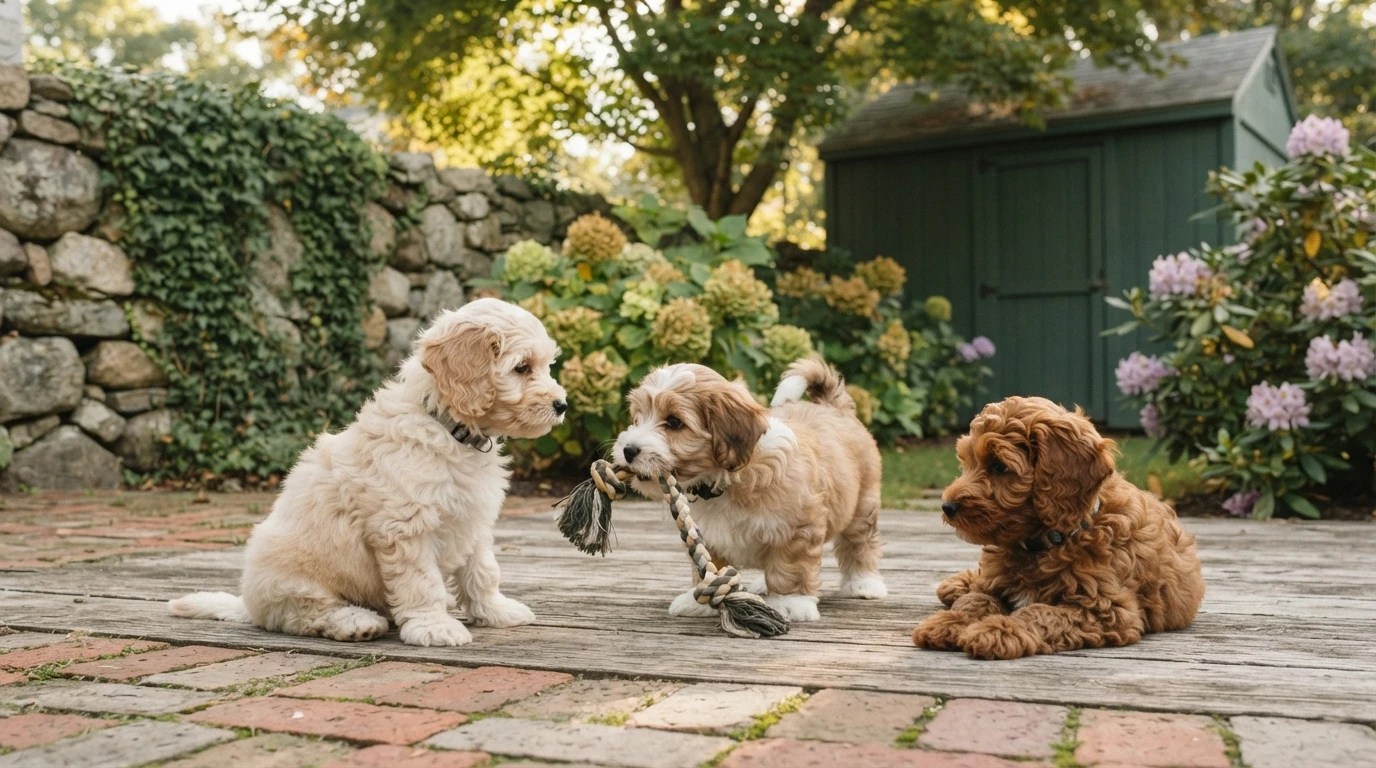
Quick Summary: Choosing a Washington puppy should start with your family’s daily routine, not the puppy’s photo, and responsible breeders ask detailed questions about your home, schedule, and experience before suggesting a match. Ask breeders how they observe each puppy’s temperament, request documented parent health testing, and get pickup or delivery plans in writing before paying a deposit. Vague answers like “they’re all wonderful” signal a weak matching process, while specific observations about energy, recovery, and handling indicate genuine care. The guide provides a checklist to compare breeders fairly, emphasizing that a good match may mean waiting for the right puppy rather than picking the cutest one.
A puppy photo can win a Washington family over in seconds. The harder question is whether that puppy’s energy, sensitivity, and daily rhythm fit life in Seattle, Spokane, Vancouver, or elsewhere in the state.
Many Washington puppy breeders talk about matching, but that word can mean anything. Some ask a few basic questions. Others track each puppy’s play style, confidence, handling response, and need for quiet or activity.
This guide helps you tell the difference. You will learn what to ask Washington puppy breeders about temperament notes, parent health records, home routines, and pickup or delivery plans. You will also see how to spot vague answers before a deposit makes the choice feel final.
Experienced Washington puppy breeders should welcome these questions. A careful match protects the puppy, your family, and the years you will share together.
Start With the Family, Not the Puppy Photo
A sweet face may catch your eye, but your daily life should guide the match. A thoughtful breeder learns about your family before suggesting a puppy.
What should a Washington puppy breeder ask about our home?
Expect questions that go beyond your address or yard size. Responsible breeders ask about the people, pets, and routines that will shape the puppy’s day. The American Kennel Club notes that questions about living conditions, other pets, the main caretaker, and time alone help breeders place puppies well.
A useful conversation covers:
- Ages and dog experience of everyone at home
- Current pets and their temperaments
- Apartment, house, rental rules, and outdoor access
- Work, school, travel, and alone-time routines
- Who will handle feeding, grooming, training, and vet visits
A breeder should welcome honest limits. A calm match matters more than sounding like the “perfect” home.

How should we describe the life our puppy will live?
Skip vague answers like, “We want a friendly puppy.” Describe a normal Tuesday. Explain morning timing, walks, play, naps, visitors, car rides, and where the puppy will sleep.
Share your priorities clearly:
- State your activity level and desired pace.
- Explain your children’s ages and how adults will supervise.
- Say whether you want a lap companion, a social family dog, or a training partner.
- Be candid about grooming time and first-time owner concerns.
Lifestyle, living conditions, and expectations are key parts of a good breeder interview, according to the AKC’s buyer guidance.
What answers suggest the matching process is genuinely individualized?
Look for a breeder who explains why one puppy fits your home. Strong answers mention observed traits, such as confidence, recovery after new sounds, play style, handling comfort, and energy.
| Strong sign | Weak sign |
|---|---|
| Discusses each puppy’s developing traits | Lets color or deposit order decide |
| Asks follow-up questions | Uses one short form for every family |
| Will steer you toward a better fit | Promises any puppy you pick |
A real match can mean waiting for the right puppy.
Also Read: South Carolina Puppies: Questions About Puppy Matching
Ask How Temperament Is Observed and Explained
A good match comes from daily observation, not a puppy photo or a single test. Ask the breeder to explain what they see, how often they see it, and how those notes guide each placement.
When does the breeder begin evaluating personality?
Ask when individual observation starts and what changes as puppies grow. Breeders can notice early differences in activity, confidence, and social interest, but the answer should never sound like a fixed prediction.
A thoughtful breeder watches puppies across normal routines and new, safe experiences. The 6-to-8-week period can reveal clearer individual traits, especially after puppies meet people, sounds, surfaces, and one another. AKC guidance on preparing puppies for homes also stresses matching puppies to buyers after learning their lifestyles.
Ask:
- “What do you record for each puppy?”
- “Do you watch them alone and with littermates?”
- “What could change after they go home?”
A breeder who promises an exact adult personality from one puppy test is overselling certainty. Early tests offer clues, not guarantees.
Which temperament traits should we ask about?
Ask for plain examples, not labels like “sweet” or “perfect.” You want to know how the puppy acts in real moments.
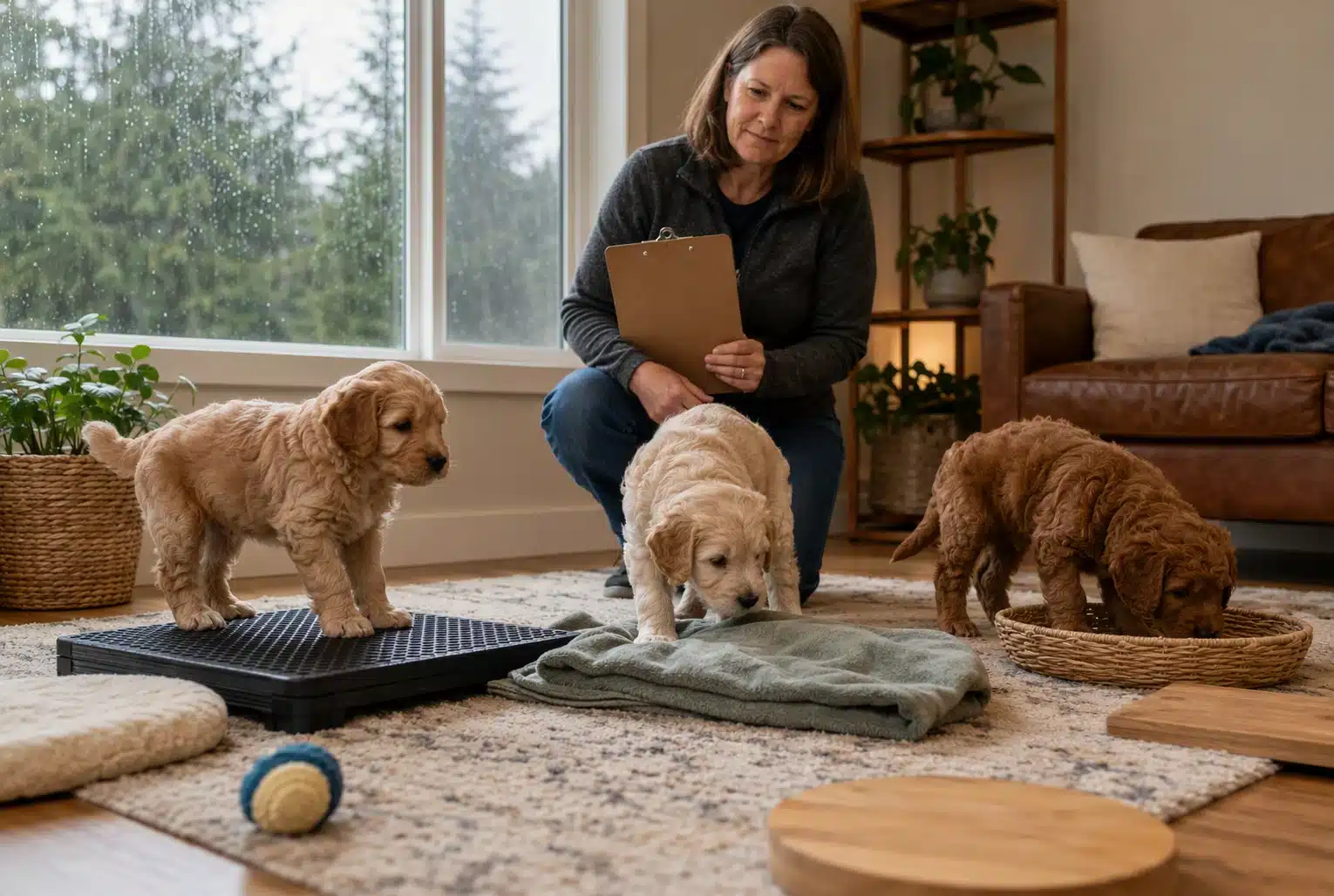
| Trait | Useful question | Strong answer sounds like |
|---|---|---|
| Confidence | How does this puppy respond to a new toy? | “She pauses, checks it out, then returns to play.” |
| Recovery | What happens after a sudden sound? | “He startles, then settles quickly with normal activity.” |
| Handling | How does the puppy react to grooming touch? | “We handle paws, ears, and body gently each day.” |
| Energy | How active is the puppy indoors? | “She plays hard, then naps calmly near people.” |
Ask about recovery, not just boldness. A puppy can be cautious at first and still recover well. Current AKC guidance on puppy temperament tests notes that these tests do not reliably predict adult behavior.
How can a breeder match temperament to children, pets, or first-time owners?
Give the breeder a real picture of your home:
- Share children’s ages and how they interact with dogs.
- Describe resident pets, including their age and energy level.
- State your work schedule, travel, and training plans.
- Explain whether you prefer a playful, steady, or more relaxed companion.
Ask how they would rule out a match, too. That answer matters.
- A busy home may suit a social puppy with good recovery.
- A first-time owner may value a puppy that accepts handling and settles easily.
- A home with an older pet may need a less intense play style.
The best breeder may steer you away from the puppy you first chose. That is matching with care, not a missed sale.
Also Read: 10 Signs a California Puppy Listing Is a Scam – Sage Puppies
Connect Health Records and Early Development to the Match
Which parent health-testing questions should we ask?
Ask to see the actual results for both parents, not a general claim that they are “health tested.” Then ask which tests fit the parent breeds and why those tests were chosen. The OFA recommends breed-specific screening because health risks differ by breed.
Use this short list:
- What are each parent’s registered names and test results?
- Can I verify results in an OFA or lab record?
- Were eyes, heart, knees, hips, or DNA risks reviewed where relevant?
- What did you learn from close relatives or past litters?
- How do these results shape this pairing?
Health testing lowers risk. It does not promise a puppy will never develop a health issue.
What puppy records should be available before reservation or pickup?
A clear file helps you make a calm decision and prepare your vet visit. Before you reserve, ask what you will receive and when.
| Record | What to check |
|---|---|
| Parent testing | Names, results, and source records |
| Veterinary record | Exam date, vaccine and deworming details |
| Puppy ID | Collar color, microchip details if used, or other clear ID |
| Care notes | Food, routine, early behavior, and transition guidance |
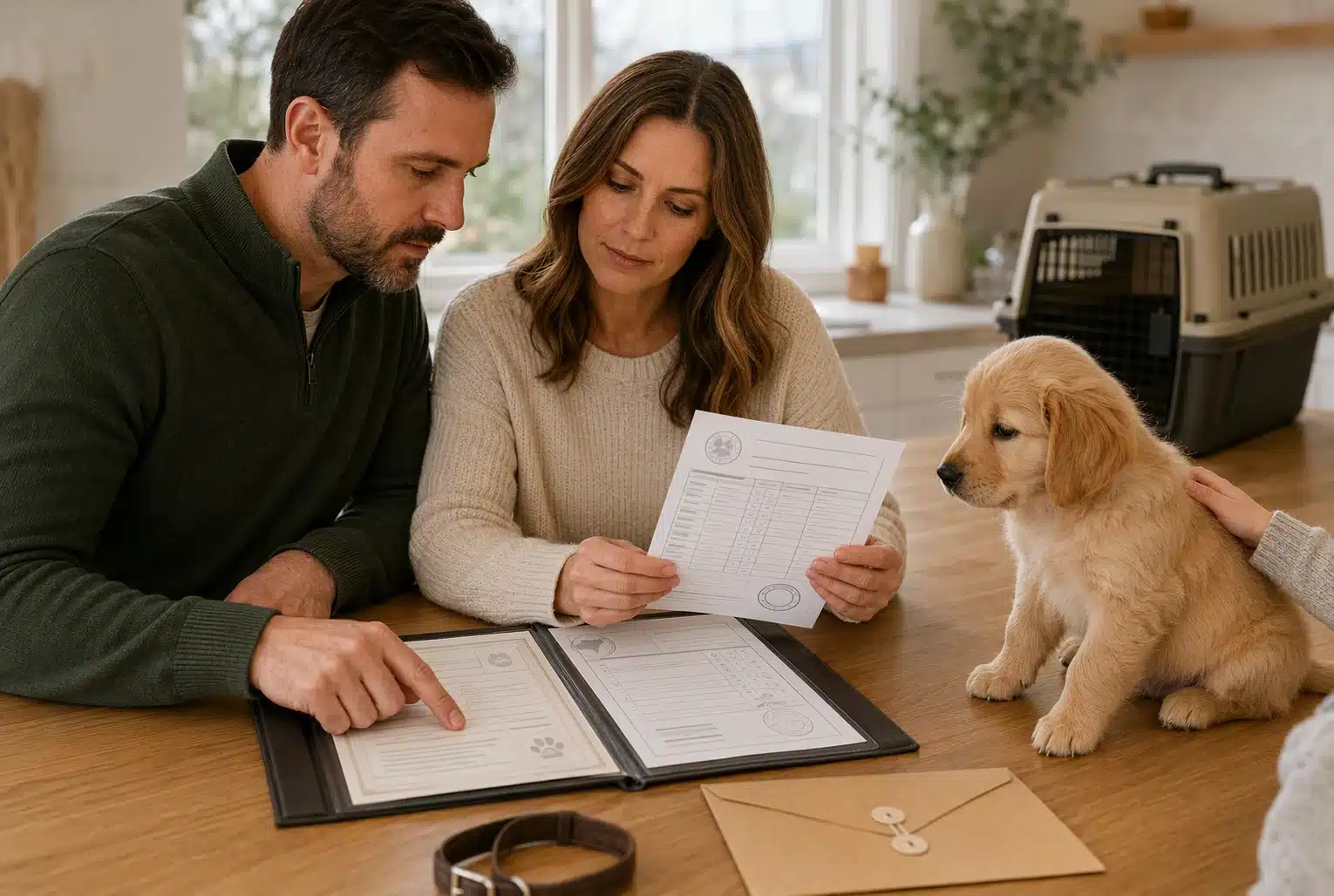
At pickup or delivery, confirm the puppy’s record matches the puppy you are welcoming. Keep digital and paper copies.
How should early socialization affect a recommendation?
A good match should reflect what the puppy has experienced, not only a quick first impression. Ask how the breeder observed each puppy around people, gentle handling, household sounds, grooming, play, rest, and new surfaces.
Then connect those notes to your real home:
- Share your work hours, children, pets, visitors, and activity level.
- Ask which puppy best fits that rhythm and why.
- Ask where the puppy may need patient, steady practice after coming home.
A breeder should explain the recommendation with specific observations. The OFA notes that responsible breeders screen families too, because the goal is the right home for each puppy. Its breeder interview guide also stresses home-based raising and normal household exposure.
Choose the puppy whose needs fit your household, not simply the most outgoing puppy in a short visit.
Also Read: 10 Questions to Ask Before Buying a Puppy Locally
Ask How the Match Becomes a Reservation
What should happen after we submit an application?
A thoughtful breeder should review your application, then talk with you before taking money. Expect questions about your home, work hours, children, other pets, and what kind of companion you want. That two-way conversation matters. The AKC notes that responsible breeders ask buyers questions, too.
Ask for the next steps in writing:
- When will you hear back?
- Who makes the final match?
- What puppy traits are being weighed?
- When will you receive updates?
At Sage Puppies, a family-first match should feel like a clear conversation, not a race to click “reserve.”
What should we ask about deposits, timing, and puppy choice?
Ask exactly when a deposit is due and what it does. Does it hold a place on a waitlist, reserve a specific puppy, or apply only after the breeder recommends a match? Request the amount, payment method, refund terms, and what happens if timing changes.
| Ask this | A clear answer includes |
|---|---|
| When do we choose? | A stated age or evaluation point |
| Can we choose by order? | Whether pick order or temperament comes first |
| What does the deposit cover? | The reservation purpose and written terms |
| When is the balance due? | A date tied to pickup or delivery |
Warning: Do not send a deposit until you have read the contract. The AKC advises that agreements should clearly state each side’s duties in writing.
How should a breeder respond if the first match is not right?
A good breeder does not pressure you to accept a puppy that conflicts with your needs. Ask whether they will suggest another puppy, move your reservation to a future litter, or return funds under stated terms.
The best answer is calm and specific. A breeder who protects the match over a quick sale is showing that your long-term fit comes first.
Clarify Washington Pickup and Nationwide Delivery Before You Commit
What should Washington families ask about pickup?
Ask for the exact pickup window, address, handoff plan, and who will meet you. Confirm what comes home with your puppy, including health records, food guidance, and familiar items.
Ask these questions before paying a reservation fee:
- Can we meet the puppy’s caregiver at pickup?
- What is the final balance and payment method?
- What should we bring for the drive home?
- What happens if weather or travel delays change our plans?
A clear pickup plan should feel calm and specific, not rushed or vague.
What should we ask if the puppy is delivered to Washington?
Get the full route and handoff details in writing. Ask whether the puppy travels by ground or air, who handles each leg, how updates are shared, and what happens during a delay.
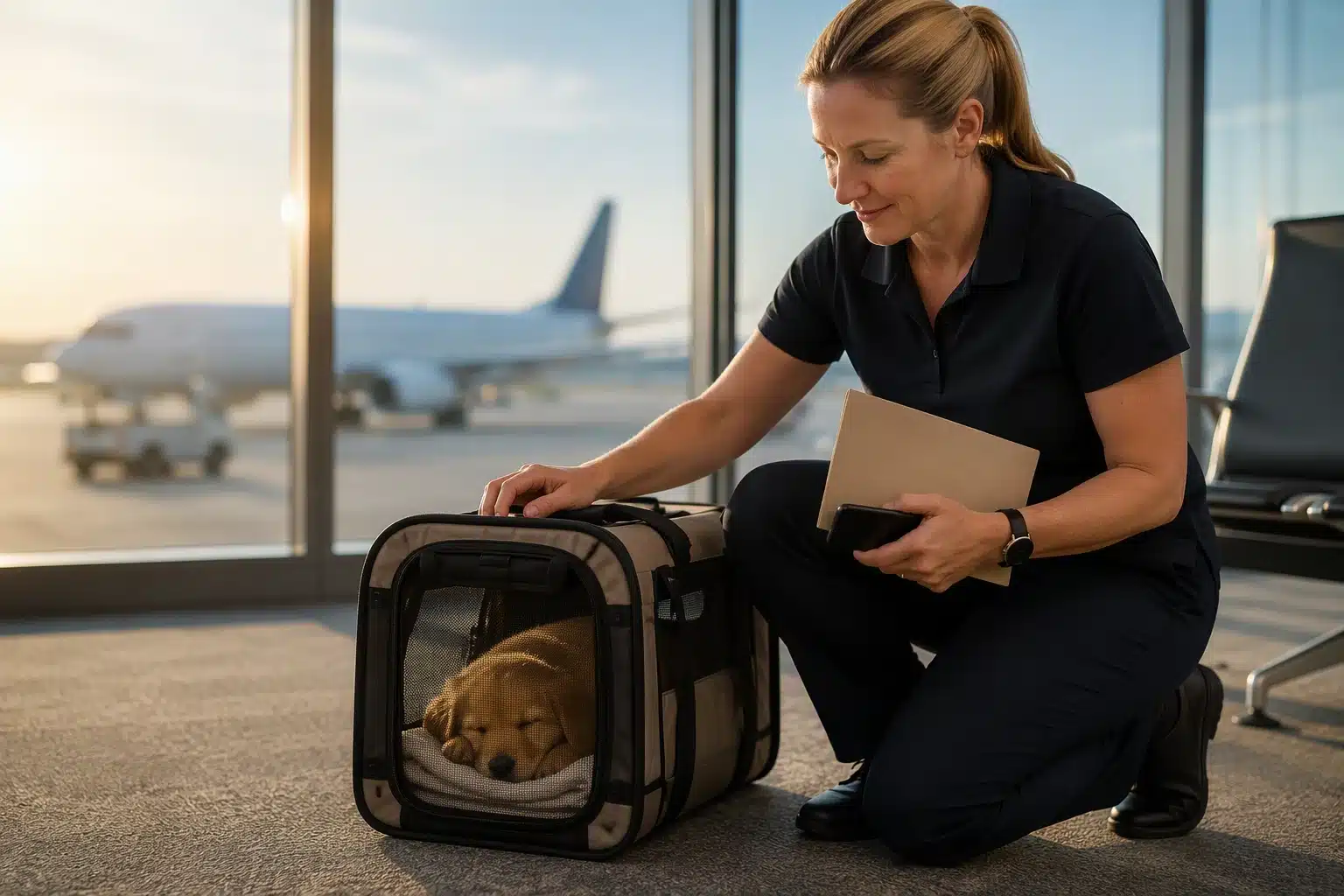
For interstate travel, Washington may require animal health paperwork. USDA APHIS notes that destination states can set requirements such as health certificates, vaccines, testing, or treatment.
| Ask about | Why it matters |
|---|---|
| Travel date and time window | Your family can be ready |
| Carrier and comfort breaks | You understand the puppy’s care |
| Health documents | You can meet Washington entry rules |
| Delay plan | No one improvises under stress |
How can delivery be part of a responsible match?
Delivery should support the match, not replace breeder contact. Sage Puppies should still discuss your home, schedule, and other pets before confirming a puppy.
- Confirm your arrival-day routine.
- Plan a quiet first evening.
- Schedule a vet visit soon after arrival.
Commercial animal transport is subject to humane-care standards under USDA APHIS guidance.
Also Read: 10 Red Flags to Avoid When Visiting a Local Puppy Breeder
Read the Answers for Clarity, Not Just Reassurance
What does a strong breeder answer sound like?
A strong answer is specific, calm, and easy to check. The breeder explains how they assess each puppy, what they observe, and why a pup fits your home.
Look for details such as:
- Parent health testing and records
- Daily handling, social time, and new experiences
- A puppy’s energy, confidence, and recovery after excitement
- Clear pickup or delivery steps
The American Veterinary Medical Association advises breeders should know the dogs they place and match temperament and needs to the family.
“They are all wonderful” is kind, but it is not a matching plan.
Which answers deserve a follow-up question?
Ask again when an answer stays broad or skips proof. “Our dogs are healthy” should lead to, “Which tests were completed, and may I review the results?”
Follow up on:
- “We socialize them” – Ask what happens each week.
- “This puppy is calm” – Ask how that was observed.
- “We can ship anywhere” – Ask who handles transport and when.
- “Pick the one you love” – Ask how the breeder guides the fit.
A careful breeder welcomes clear questions.
How should families compare breeders fairly?
Use the same questions for every breeder. Then compare the depth and consistency of each reply, not the warmth of the sales message.
| Area | Clear answer | Weak answer |
|---|---|---|
| Matching | Specific traits tied to your home | “Any puppy will work” |
| Health | Test names and records | General promises |
| Logistics | Written pickup or delivery plan | Vague timing |
Also Read: Reputable Puppy Breeder Near Me: 9 Signs to Trust
Use This Puppy Matching Question Checklist
Bring this list to every breeder call. A strong match starts with your real routine, not the puppy’s color or first photo.
- How do you assess each puppy’s temperament? Ask what staff watch for, how often, and at what age.
- What details do you need about our home? Expect questions about children, work hours, other pets, activity, and dog experience. Good matching is a two-way conversation, as AKC explains.
- Which puppy fits our daily pace, and why? Ask for specific examples, not labels like “sweet” or “calm.”
- What social experiences has this puppy had so far?
- Can I review the parents’ health testing? Health tests should be breed-specific and documented, not just promised. AKC notes that testing helps lower, but cannot erase, inherited health risk.
- What happens if the match changes before pickup?
- What are the pickup or delivery steps, timing, and records provided?
A breeder who asks thoughtful questions about your household is protecting the puppy and your family.

Ask the questions that lead to the right long-term fit, then choose a breeder ready to answer them clearly. Sage Puppies offers home-raised Havanese, Havapoo, and Cavapoo puppies with health-tested parents, early socialization, and clear pickup or nationwide delivery options.
Frequently Asked Questions
Q1: where to buy puppies in Washington
Choose a breeder who explains parent health testing, early home care, and how they match pups to family needs. Location matters less than clear records, honest talks, and safe pickup or delivery plans.
Q2: What should I ask about puppy matching?
Ask who observes each puppy, what traits they track, and when matching happens. A good breeder discusses energy, handling, noise response, and your daily routine.
Q3: Can I choose my puppy myself?
You can share your preferences, but a breeder’s input helps. The puppy who looks cutest online may not suit your home, children, work hours, or activity level.
Q4: What health records should I request?
Request parent testing details, veterinary records, vaccine dates, deworming information, and written care instructions. Ask what support is available if questions arise after your puppy comes home.
Q5: How do I confirm pickup or delivery details?
Ask for the pickup date, handoff location, travel plan, supplies needed, and total costs. Get each detail in writing before you commit.
Choose the Process That Helps You Choose Well
A strong puppy match is more than choosing the cutest face or the nearest litter. Ask how the breeder learns each puppy’s traits, how parent health testing guides breeding choices, and how they prepare pups for family life.
Use clear questions to compare answers, records, and pickup or delivery plans. A careful breeder should know each puppy well and help match its needs with your home, schedule, and experience. The AVMA advises families to consider temperament, daily care, and long-term fit before choosing a dog.
The right match starts with honest details, not a rushed decision.