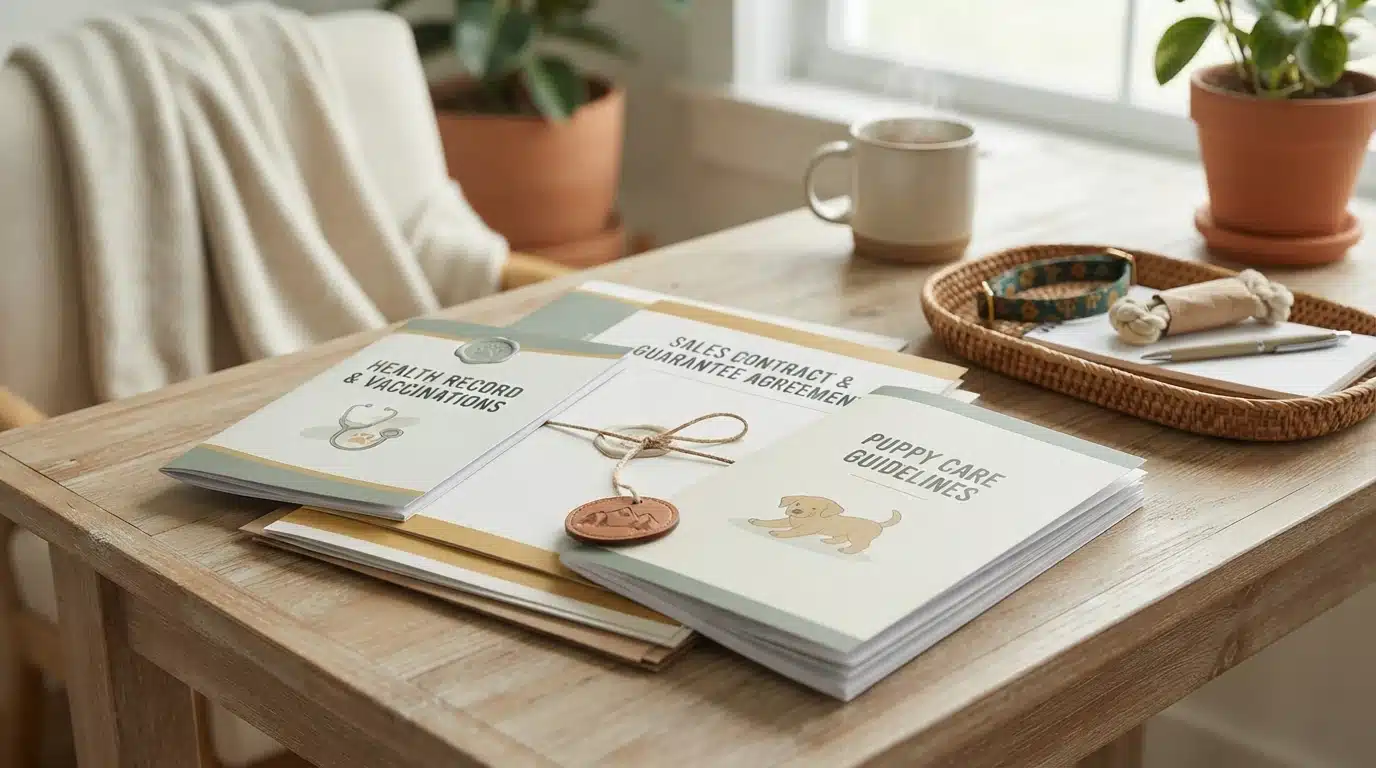
Quick Summary: Utah puppy deposits typically run $200 to $600 and usually count toward the purchase price rather than adding an extra fee. Get the total price, payment schedule, refund and transfer terms, and pickup balance in a signed agreement before paying, since most deposits are non-refundable if you change your mind. Budget sales tax, delivery, and roughly $800 in first-week supplies separately, and walk away if a breeder refuses written terms or pressures you to pay quickly.
You have finally found the puppy, and now the breeder wants a deposit before you have even met them. That is the exact moment most first-time Utah buyers either rush to pay or quietly walk away. Both moves can cost you.
The real issue is that few breeders explain their puppy deposit fees upfront, so buyers face unclear Utah puppy deposit expectations right when pressure is highest. How much is a typical puppy deposit amount? Is it refundable? When is the balance due?
This guide walks you through all of it: common deposit ranges, when money changes hands, the refund and transfer questions to ask before you pay, and the extra pre-pickup costs that surprise new owners. Every dollar figure here is a labeled example, not a promise.
We raise Havanese, Havapoo, and Cavapoo puppies at Sage Puppies in South Jordan, and we place deposits with our own puppy families. So we see exactly where first-time buyers get stuck, and this guide reflects those documented questions.
Step 1: Confirm the Full Purchase Price First
Your deposit is only meaningful once you know the total. A $500 hold feels fair against a $3,000 puppy and steep against a $2,000 one. So before you send any money, ask the breeder for the full purchase price in writing, and check whether it includes everything you expect.
What a deposit is, and what it is not
A deposit is a partial payment that holds a specific puppy, or a spot in a litter, for you. It counts toward the total price. It is not an extra fee, a booking charge, or an automatic guarantee of health or temperament. Most breeders apply the deposit to your puppy’s total price on go-home day, and you pay the balance at pickup.
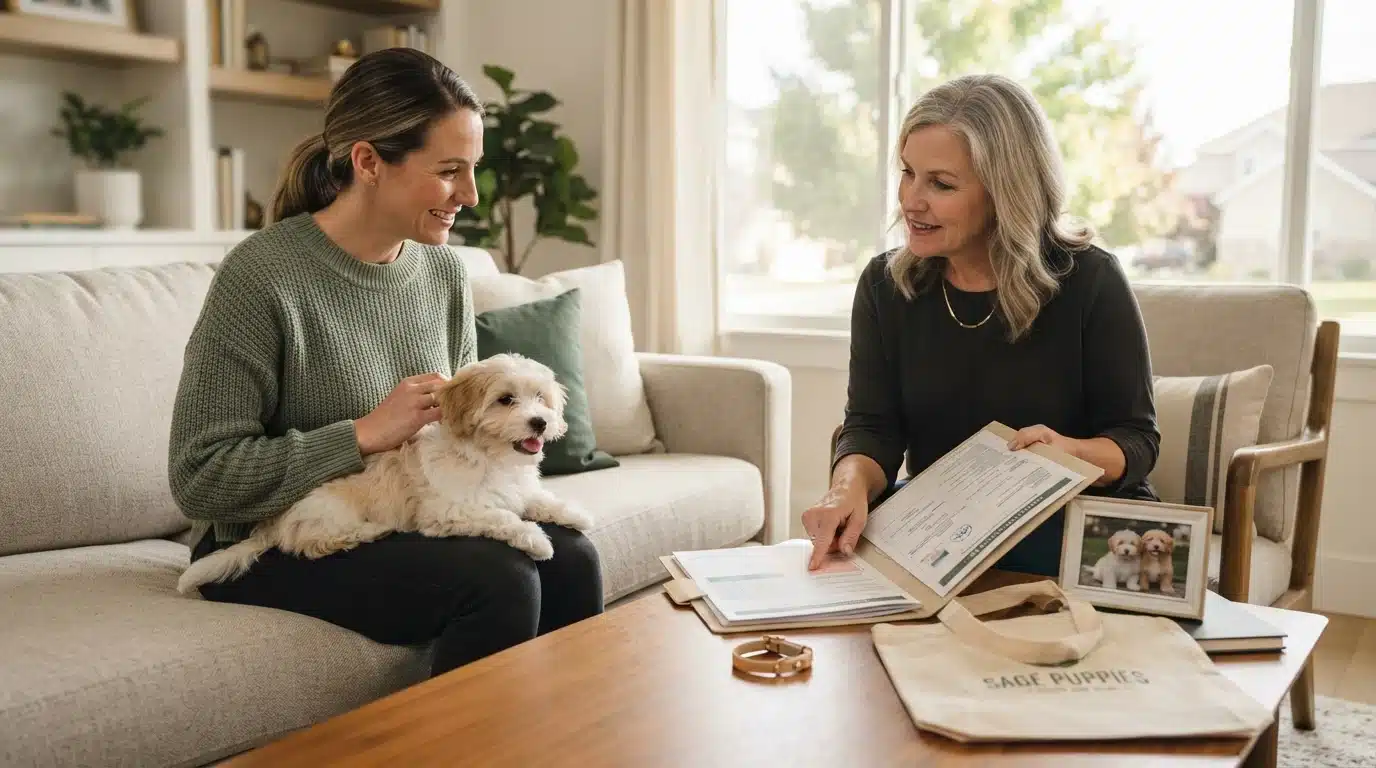
It also usually is not refundable. Once the breeder turns away other families, that money is typically committed. Whether it can transfer to a later litter is a separate question, and one you should ask before you pay. Get the deposit terms, the balance due date, and the refund or transfer rules in your written puppy purchase agreement. A verbal promise protects no one.
How much do you pay to reserve a puppy before pickup?
Expect a deposit of roughly $200 to $600 for a small-breed puppy, though some breeders ask for 25 to 33 percent of the total price. For an illustrative $3,800 puppy, here is how the milestones might look:
| Milestone | Illustrative Amount | When You Pay |
|---|---|---|
| Reservation deposit | $500 | When you pick your puppy |
| Litter update | $0 | Confirmation after birth |
| Go-home day balance | $3,300 | Pickup or delivery day |
| Total | $3,800 | – |
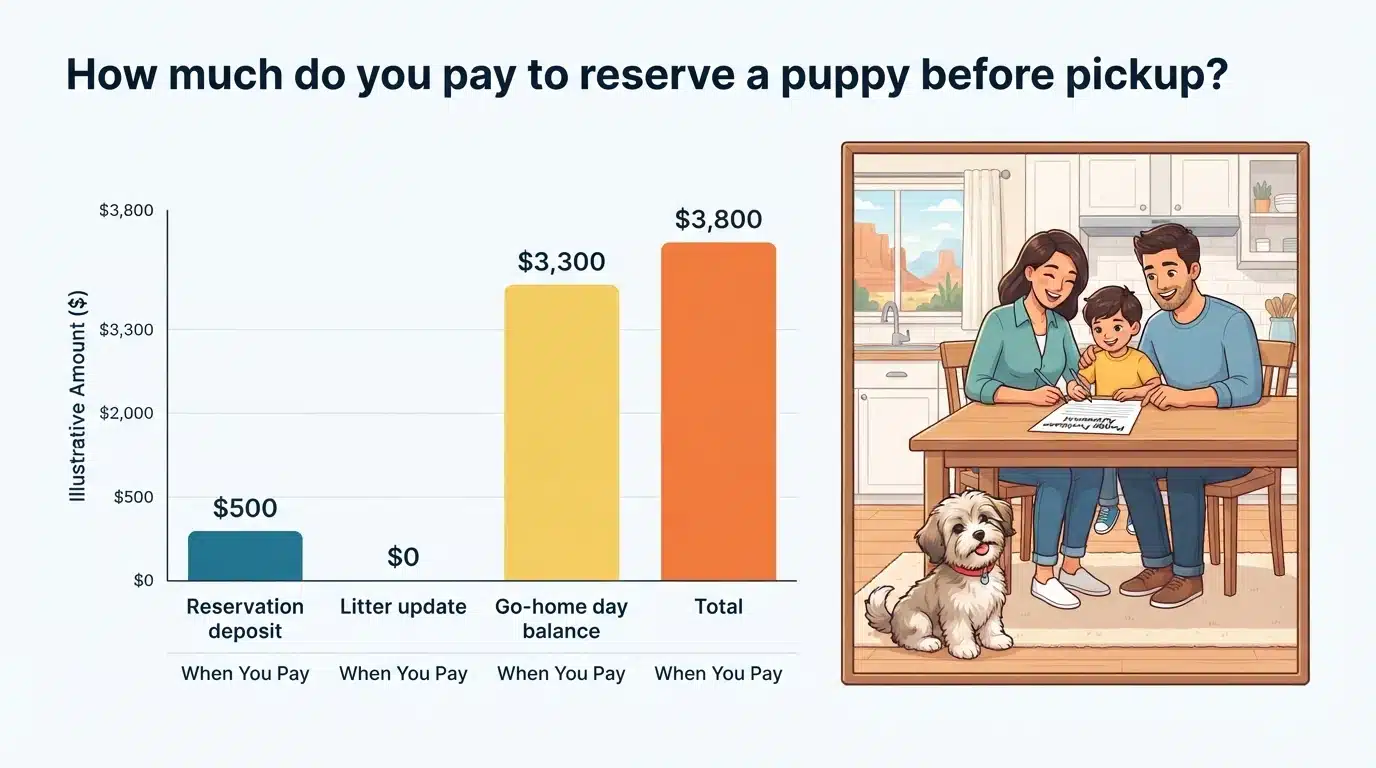
Ask the breeder for three things in writing: the total price, the deposit amount and whether it applies to the balance, and any delivery or pickup fees that come due later.
Step 2: Learn What the Deposit Actually Reserves
Paying a deposit feels simple, but it buys one of two very different things. Ask the breeder which one you are getting before you send money.
A named puppy versus a place in a line
Some deposits hold one specific puppy with your name on it. Once that litter is born and pups are matched to families, a reservation locks in a particular dog. If it passes its vet check, that puppy is yours at pickup. A deposit like this usually closes the door for other buyers immediately.
Other deposits only reserve a spot on a waitlist. You pay now, then wait for a current or future litter, and you pick your puppy in the order people joined. This is common when breeders have no puppies on the ground yet. It sets your Utah puppy deposit expectations differently: the wait could be weeks or several months, so ask when the next litter is planned and what happens if it comes in smaller than expected.
Exact wording matters here. At Sage Puppies, for example, matching is owner-managed, so the deposit follows a conversation about which puppy actually fits your home. A good breeder will spell this out either way; one who shrugs at the question is telling you something.
Application first, deposit second
Most careful breeders screen buyers before taking money. Expect a short application covering your home, yard, work schedule, and experience with dogs. Some also do a phone call or video chat so you can meet the puppy and ask questions face to face.
Never wire a deposit to someone who has not asked a single question about your household. A breeder who takes money from anyone is not vetting homes, and that is a red flag.
The order matters for you, too. An application lets you confirm the puppy purchase agreement, price, and pickup timeline before any cash moves. Send your deposit only after the breeder has approved you and confirmed a puppy or spot is actually available in writing.
Step 3: Read the Refund, Transfer, and Cancellation Terms
What happens to my deposit if the breeder cancels the litter?
If the litter is lost, small, or a chosen puppy does not pass its health check, a fair breeder cancels and returns your money or moves you up. Before you pay, ask which of these the contract offers:
- A full cash refund within a set window, such as 7 to 14 days
- A credit that rolls your deposit to the next litter
- A transfer to a different available puppy in the current litter
- A refund minus only documented costs, such as vet exams already done
- Waitlist priority without paying a second deposit
Utah puppy deposit expectations should always include this answer in writing. A breeder who refuses to say what happens on their end is telling you something. Sage Puppies spells out its refund and transfer options before any money changes hands, and good breeders elsewhere do the same, so treat silence as a red flag.
Non-refundable, transferable, or partially refundable
Most Utah breeder deposits are non-refundable if you walk away, and that part is normal. The deposit compensates the breeder for turning other families away while they held the puppy for you.
What matters is the three-way split in the contract:
| Term | What it means | Ask this |
|---|---|---|
| Non-refundable | You lose it if you change your mind | Are there any exceptions, like a failed home check? |
| Transferable | It moves to a later litter, sometimes with a deadline | How many litters does the transfer cover? |
| Partially refundable | A set fee or percentage is kept | Is the kept amount stated in dollars? |
Get each term in the written puppy purchase agreement, not a text message. If the breeder resists putting refund terms on paper, keep shopping.
Step 4: Map the Full Payment Schedule Before Pickup
A deposit is only the first payment. Before you commit, ask the breeder to lay out every payment from reservation to go-home day, in writing. A clear puppy deposit payment schedule protects both sides and prevents surprises on pickup day.
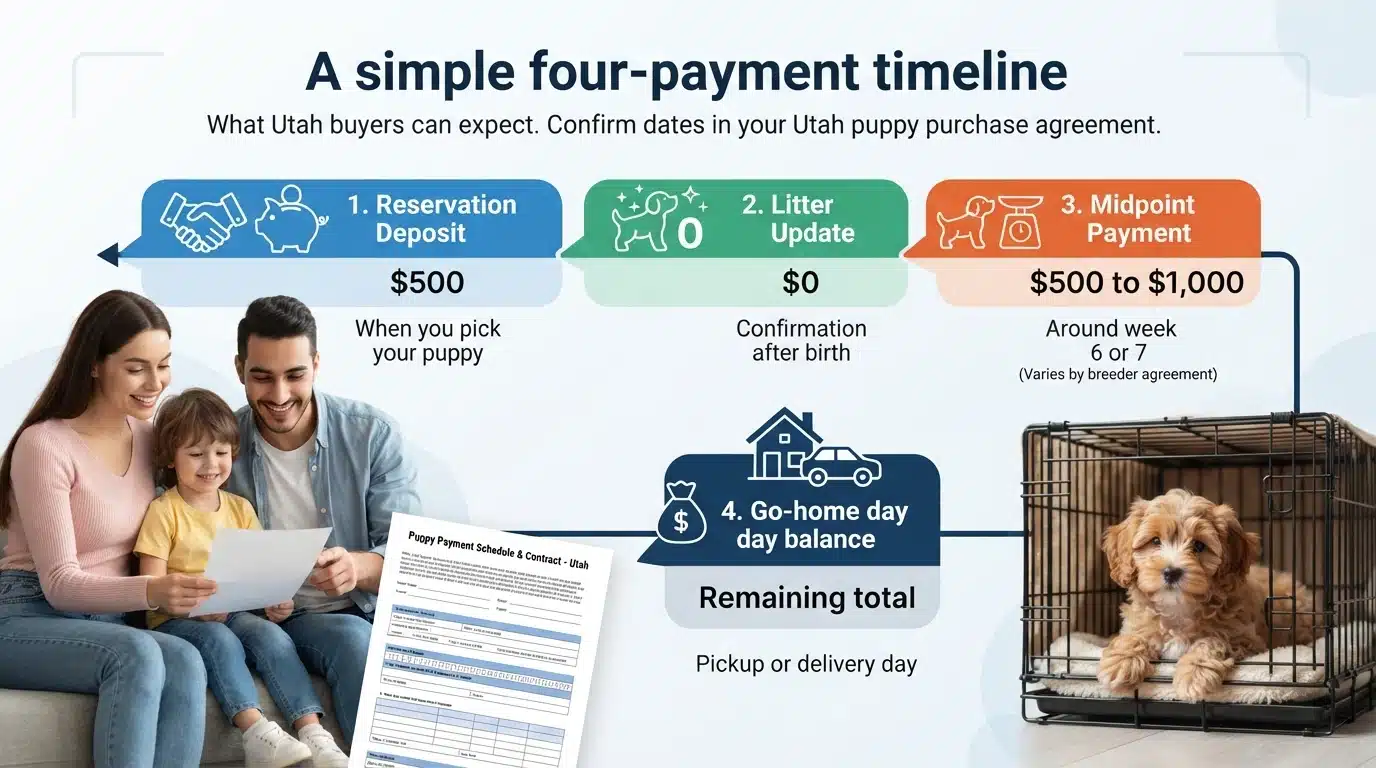
A simple four-payment timeline
Most Utah small-breed programs follow the same shape, even when the dollar amounts differ. Here is what a typical puppy deposit payment schedule Utah buyers can expect looks like:
| Payment | Example amount | When it happens |
|---|---|---|
| Reservation deposit | $500 | When you pick your puppy |
| Litter update | $0 | Confirmation after birth |
| Midpoint payment | $500 to $1,000 | Around week 6 or 7 |
| Go-home day balance | Remaining total | Pickup or delivery day |
The midpoint payment varies. Some breeders skip it and simply collect the full balance at pickup. Others split it so the final payment stays smaller. Ask which structure applies to your puppy, and confirm the dates in your puppy purchase agreement Utah contract.
Also confirm payment methods for each stage. Many breeders accept cards or checks for the deposit but require a cashier’s check, bank transfer, or cash for the go-home day balance due. Ask early so you can arrange funds ahead of time.
Go-home age, vet clearance, and timing
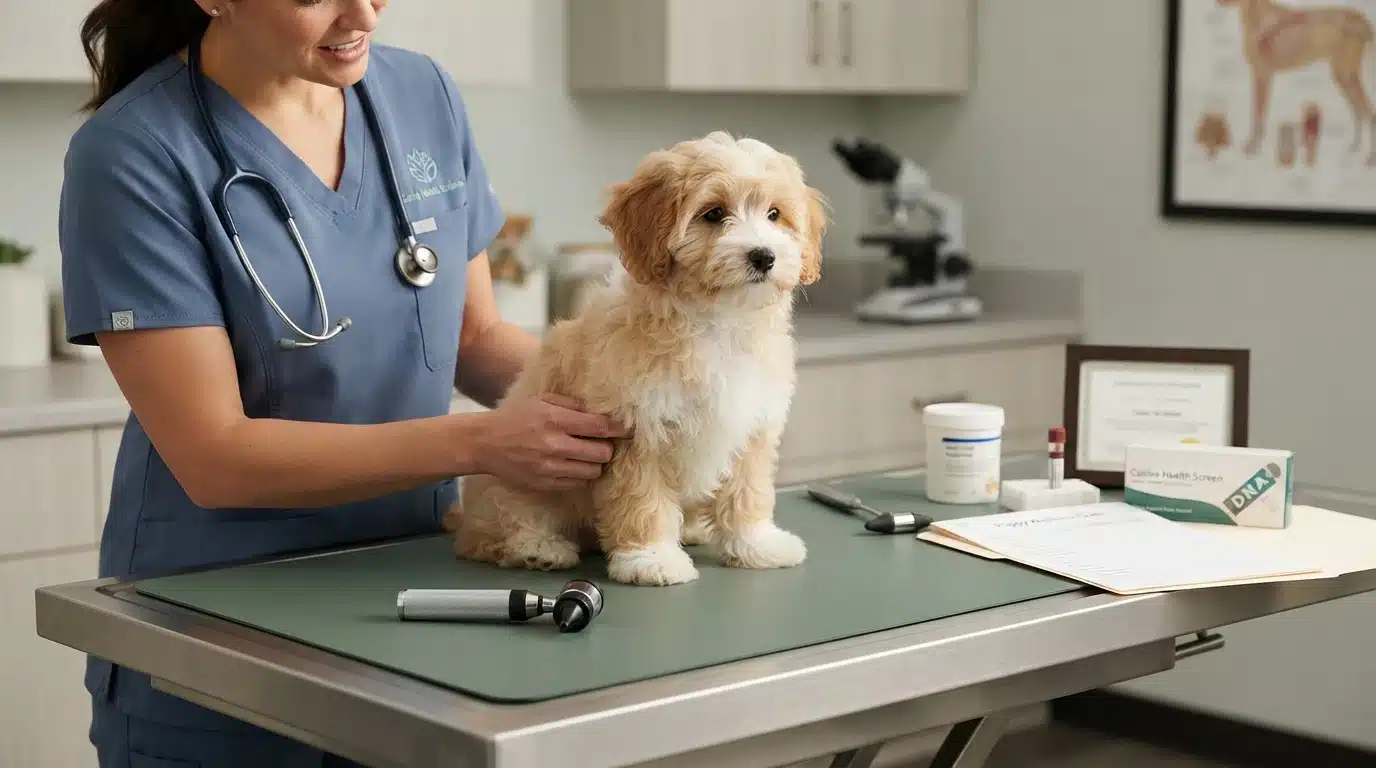
Your payment dates should tie to real milestones, not vague promises. Small breeds like Havanese, Havapoo, and Cavapoo puppies usually go home around 8 to 10 weeks old, once a licensed vet has examined them and cleared them for pickup.
Ask when the vet visit happens and whether you’ll receive the health record on go-home day. Then anchor each payment to those dates in writing. If the litter’s timeline shifts, your balance due should shift with it, not the other way around. Sage Puppies matches this structure, tying payments to confirmed milestones in its owner-managed process.
Step 5: Budget the Costs That Sit Outside the Deposit
Delivery and pickup costs
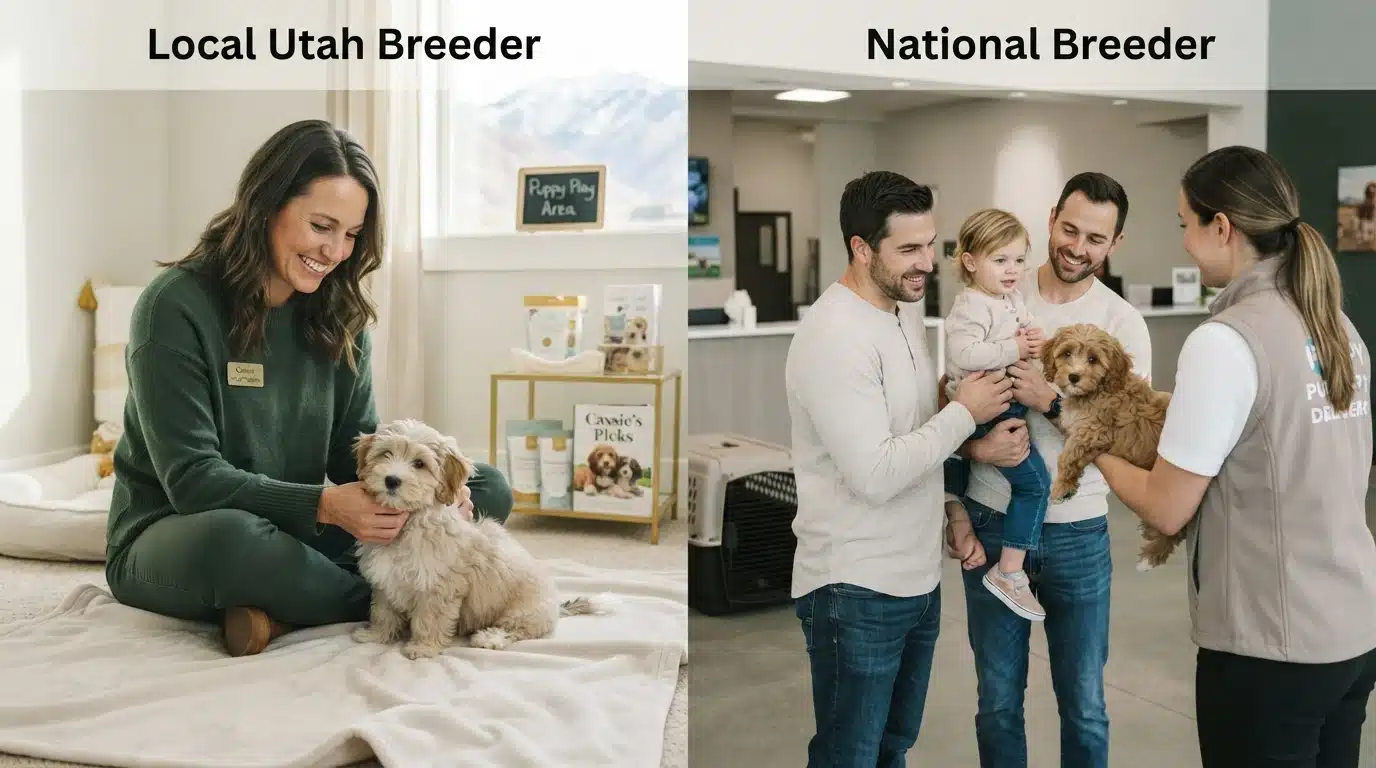
Your deposit never covers the trip home, so price that trip before you sign anything. Local pickup is usually free. You drive to the breeder’s home, meet the litter, and leave with your puppy the same day.
Nationwide delivery works differently. Flight-nanny services fly in-cabin with the puppy and typically charge $500 to $800, depending on distance and airline rules. Some breeders also offer ground transport, which can run $300 to $600 over longer routes.
Ask exactly who books and pays the travel. With a smaller program like Sage Puppies, the owner often coordinates the timing directly with you, so get the delivery cost in writing alongside your go-home day. Any figure you agree on should appear in your puppy purchase agreement, not in a text message.

Sales tax and the rest of your budget
Utah treats a puppy purchase as a taxable sale, so expect state and local sales tax on the full price. Statewide the rate starts at 6.1 percent, and many cities add more, so a $3,800 puppy can carry roughly $230 to $300 in tax. Confirm the total in writing before pickup day.
Then leave room for the first weeks at home. A starter kit with a crate, food, bowls, and a harness usually runs $300 to $500. The first vet visit, shots, and any puppy classes add a few hundred more.
A simple rule works well here. Take your go-home balance, add tax and travel, then set aside about $800 for startup costs. That number, not the deposit, is the real price of bringing your puppy home.
Step 6: Pay Safely and Know the Red Flags
Safe ways to pay a puppy deposit
Most trustworthy Utah breeders take deposits by bank transfer, Zelle, a credit card through an invoicing service, or a good check. Each option leaves a paper trail you can point to later if a dispute comes up. A credit card gives you the strongest protection, because you can ask the card issuer to reverse a charge if the puppy never arrives. Personal checks work well for the go-home balance, since you pay it in person at pickup.
Avoid paying by gift cards, wire transfers to strangers, crypto, or payment apps set to “friends and family.” Those methods offer no buyer protection at all, and scammers push them for exactly that reason. If a breeder asks for cash only, ask why before you agree. One offsetting note: when you pick up in person and can meet the puppy first, cash is a normal, low-risk way to settle the final amount.
Ask for a signed receipt that states the deposit amount, the puppy or litter it applies to, and the refund or transfer terms. File it with your puppy purchase agreement.
Red flags that mean pause
Some warning signs show up before money ever changes hands. Watch for these:
- Price far below market. A $800 Havapoo with no explanation usually means trouble, not a deal.
- Pressure to pay today. “Three other families want this puppy” is a classic push tactic.
- No video calls or visits. A real breeder will show you the puppy and the mother on camera.
- Refuses a written contract. No puppy deposit contract terms, no deposit.
- Photos that look lifted. Run a reverse image search; stolen litter photos are common in puppy scams.
- Asks for the full price up front. Deposits exist so you don’t carry all the risk.
- Ships a puppy before 8 weeks. Early release breaks both vet guidance and most state rules.
Any single item deserves a question. Two or more should end the conversation, and you can walk away with your full deposit intact if you paid by a protected method.

Ready to place a deposit with clear answers instead of guesswork? Sage Puppies walks you through its application, matching, and payment steps before you commit a dollar. Browse available Havanese, Havapoo, and Cavapoo puppies, ask Cassie your deposit questions directly, and reserve your puppy with confidence. Wisely Bred. Beautifully Loved.
Frequently Asked Questions
Q1: How much do you pay to reserve a puppy before pickup?
Most Utah small-breed breeders ask for $200 to $600, or 25 to 33 percent of the total price. It counts toward your balance, never on top.
Q2: How much does it cost to reserve a Havapoo or Cavapoo puppy in Utah?
For an example $3,800 puppy, a $500 deposit is typical, with the $3,300 balance due on go-home day. Confirm the exact amount in writing.
Q3: What happens to my deposit if the breeder cancels the litter?
A fair breeder refunds your money within a set window, rolls it to the next litter, or moves you to another available puppy.
Q4: Are puppy deposits refundable if I change my mind?
Usually no. Most deposits are non-refundable because the breeder turned away other families. Ask about transfer options instead.
Q5: What payment methods are safest for a puppy deposit?
Use a credit card, bank transfer, Zelle, or a check. Avoid gift cards, crypto, and wire transfers to strangers; they offer no protection.
Q6: Does the deposit cover delivery and sales tax?
No. Delivery runs $300 to $800 depending on method, and Utah sales tax applies to the full price. Budget both separately.
Conclusion
Utah puppy deposit expectations come down to four questions answered in writing: the total price, the deposit amount and whether it counts toward the balance, the refund or transfer terms, and the go-home day balance due date. Typical deposits run $200 to $600, most are non-refundable if you walk away, and travel plus sales tax sit outside the deposit entirely. Get every term in a signed puppy purchase agreement, pay by a method that leaves a paper trail, and treat pressure or missing contract terms as your cue to keep shopping. Labeled examples help you plan, but the breeder’s written numbers are the only ones that matter for your puppy.