Quick Summary: Check a breeder website for missing parent health results, reused puppy photos, vague or constantly available litters, unclear business details, payment pressure, and contracts that appear only after you pay. Before sending money, verify health records through public registries, confirm the litter by live video, check licenses and business records, and demand written contract, deposit, refund, and health terms. Walk away from sellers who refuse documentation, use untraceable payments, or push you to decide quickly.
Two websites can show the same three photos of a Havapoo litter, use the phrase “family-raised,” and look equally trustworthy on a phone screen. Yet one has never published a single parent health result or a phone number a human answers. That gap is the whole problem, because most breeder website red flags hide in what a site leaves out, not what it claims.
This guide gives you a website-first checklist to verify a puppy breeder online before you send money. You will learn which claims carry weight, how to run a reverse image search on puppy photos, and what transparent health testing and contract pages should actually show. We draw on documented experience from a Utah-based Havanese, Havapoo, and Cavapoo breeding program, so every warning here comes with a concrete check you can run today.
Breeder Website Red Flags: A Quick Reference
What are the most common red flags on a puppy breeder website? The worst ones usually look like this:
- No health testing shown. Parents have no DNA panels or vet records listed.
- Always-on puppy inventory. Multiple litters of many breeds are “available now.”
- No real breeder identity. No location, full name, or facility details.
- Pressure pricing. Countdown timers, “price drops today,” or crypto-only payment.
- Stolen photos. Puppy pictures that trace back to other websites.
Any one of these is reason to stop and dig deeper before you send money.
The Flags That Matter Most
Treat the five flags above as high severity. They point to puppy mills, resellers posing as breeders, or outright scams. Check each one on every website you review, even if the site looks polished. Scammers invest in design because it works. Cross-check parent dog photos with a reverse image search, and ask for a live video walkthrough of the litter before any deposit.
Lower-Severity Flags Worth a Follow-Up Question
Some issues are softer signals, not dealbreakers. A site missing its health guarantee details, using stock-style testimonials, or staying vague about pickup and delivery terms deserves a direct question. Write down what the breeder says, then verify it later. Vague answers twice in a row become a serious flag.
For a fuller walkthrough of warning signs, see what to watch for on an unreputable breeder’s site.
Health Claims That Do Not Hold Up to Scrutiny
Read the Health Testing Page Line by Line
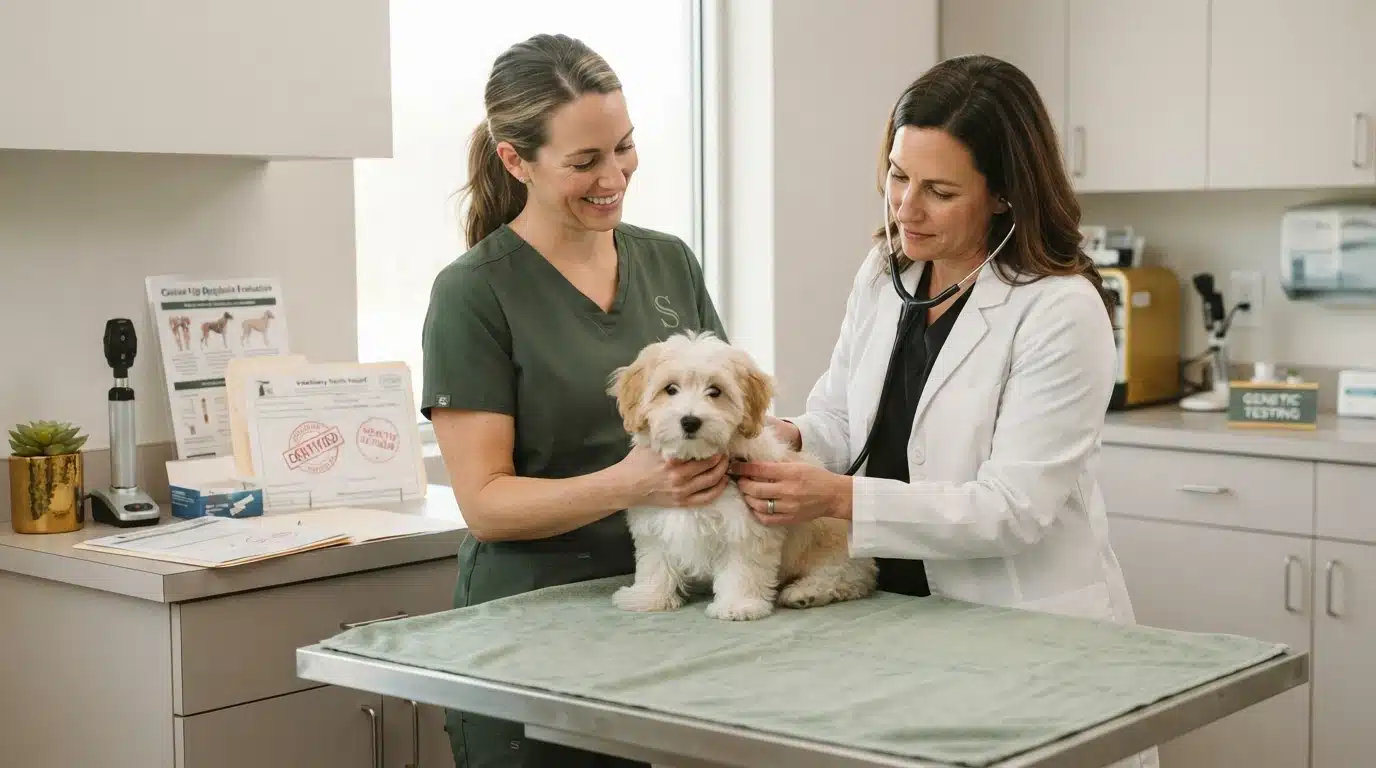
A credible puppy breeder health testing page shows three separate things: a vet exam for each puppy, clinical screening of both parents, and DNA results for breed-specific conditions. Vague phrases like “health tested parents” cover none of that.
| Record | What it proves | What to look for |
|---|---|---|
| Puppy exam | The pup was healthy at release | Dated vet check, not a blanket promise |
| Parent clinical screening | Parents were tested for physical faults | Hips, patellas, cardiac, and eye exams with ages and results |
| DNA results | Parents do not carry known gene variants | Test names and clear or carrier statuses |
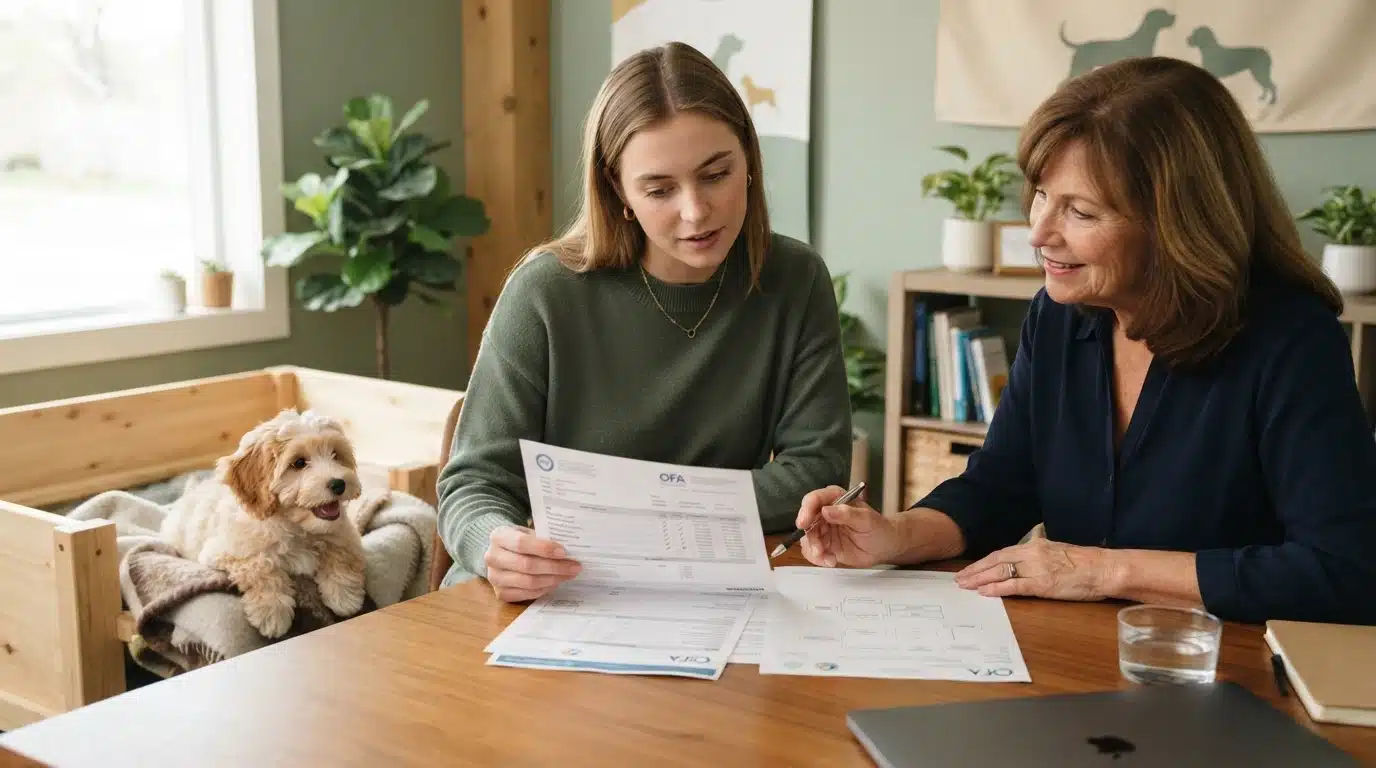
Serious breeders register results with the Orthopedic Foundation for Animals, so you can search a dog’s name and see the paperwork yourself. Note the timing rules: OFA requires hip certification at 24 months or older, and cardiac, patella, and thyroid screening after 12 months. For Havanese, hips are one of three exams needed for a CHIC number. So a two-year-old parent with “hips tested” may only have prelims, and a six-month-old parent cannot have final hip scores at all.

The Questions to Ask When a Record Is Missing
Missing records are not always fraud, but the reply tells you a lot. Ask these four questions:
- Which registry holds the result? OFA listings are public. “We do our own testing” is not.
- Who performed the test? Eye exams need a board-certified ophthalmologist; cardiac exams need a cardiologist.
- How old were the parents? Young parents cannot have final hip scores.
- Can I see the actual report? A screenshot with a registry number should check out on the registry site.
A breeder who answers with documents is fine. One who answers with irritation, or swaps “health tested” for “very healthy lines,” is showing you the first real red flag. The same pattern applies across the whole list of red flags that signal an unreputable puppy breeder, so treat missing proof as a symptom, not an isolated slip.
Listing Photos, Availability, and Breed Claims
A breeder’s listing photos and availability language tell you a lot before you ever send a message. Both are also the two easiest places for a scammer to fake. Here’s how to pressure-test them.
Testing Whether the Photos Are Real and Current

Start by running a reverse image search on the puppy pictures. Right-click, save the image, and drop it into Google Images or a similar tool. If the same photo shows up on multiple breeder sites or stock photo libraries, walk away. Real breeders take their own photos, so images usually match their location and litters. Also check dates: a photo labeled “available now” that also appears on a site archived two years ago is a red flag.
Availability Language That Does Not Add Up
Vague phrasing like “puppies ready now” with no litter details, or pressure to pay a deposit within hours, should make you pause. A trustworthy breeder tells you the parents’ names, the litter’s birth date, and how many puppies are available. If a site lists fifteen breeds with litters always open, that’s a puppy mill or a broker, not a breeder. Breed claims deserve scrutiny too: verify that the puppy is actually the stated breed or mix, and ask for proof like a DNA panel or registration papers before you commit.
Licenses, Registration, and Business Details
So how do you check whether a puppy breeder is legitimate online? Run these named checks:
- Search the USDA APHIS license database by the breeder’s name, city, and kennel name.
- Look up the state business registry and the county recorder for a registered entity.
- Check the city or county site for a required kennel or breeder permit.
- Confirm the phone number, address, and name match across the website, application, and payment page.
Federal, State, and Local Checks
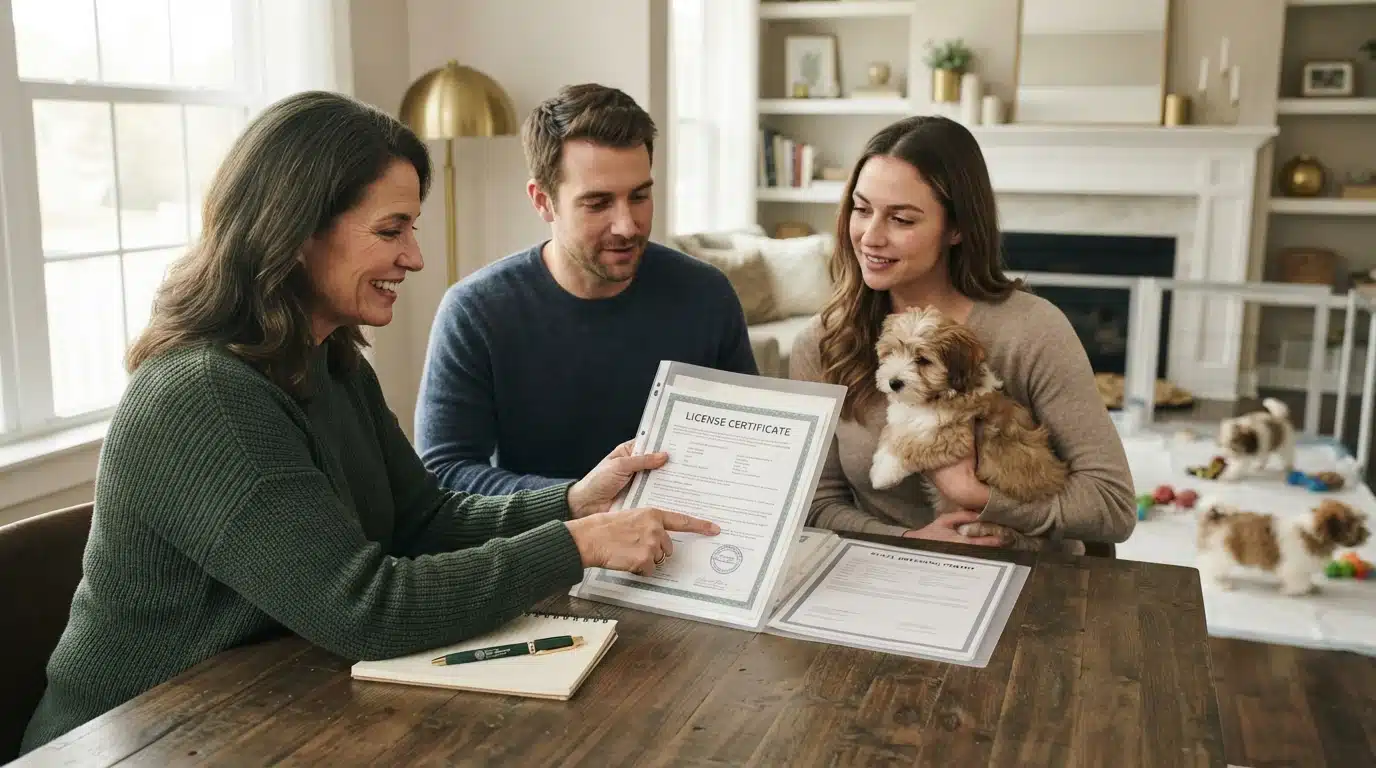
A USDA Class A breeder license is required when a breeder keeps more than four breeding females and sells puppies sight unseen, which covers most shipped-puppy websites. Any license number on the site should match the APHIS inspection records. Small home programs that sell in person may be exempt, so absence of a USDA number is not itself a red flag. State and city rules vary, so a Utah buyer should ask which local kennel permits apply.

Registration, Papers, and Business Records
Is a registration certificate proof the puppy is healthy? No. Registration papers only record pedigree and ownership. They say nothing about health testing, vet care, or how the puppy was raised, so never treat them as a health guarantee.
Ask for a copy of the puppy’s registration application, the parent’s registration numbers, and the name of the entity you are paying. Then verify those numbers yourself through the registering organization. A seller who hides the business name or lists a “deposit only” contact that differs from the stated breeder name is a serious red flag.
Match every name on the website, the payment page, and the paperwork. Mismatches are the fastest way to spot a scam operation.
Contact, Pressure, and Sales-Pitch Red Flags
What a Legitimate Breeder Welcomes Without Hesitation
A good breeder answers questions before you ask them. Expect a working phone number or email, a real location, and a name attached to the program. Ask for a live video walkthrough of the litter and the mother, and a reputable program says yes without excuses. Questions about health testing, vet care, and how puppies are raised should get specific answers, not vague reassurance. Many serious breeders, including small Utah programs like Sage Puppies, also screen buyers with an application, because they care where their puppies end up. If your careful questions annoy the breeder, that says more about them than you.

Red Flags in the Sales Conversation
Watch how the breeder handles money and timing. Classic warning signs include:
- Pressure to pay a deposit within hours, often by gift card, wire, or payment app
- “Someone else is about to buy this puppy” claims used to rush you
- Refusal to talk by phone or video, only texts and messaging apps
- Prices that drop suddenly, or “shipping included” deals that sound too cheap
- No written contract or health record offered until after you pay
Walk away if the deal depends on speed instead of trust.
Payment, Contract, and Guarantee Red Flags
What a Legitimate Contract Contains
A real breeder puts the whole deal in writing before money moves. Expect the puppy’s price, the deposit amount, pickup or delivery terms, and a spay or neuter clause spelled out clearly. Health terms should state what the breeder covers, for how long, and what the buyer must do to keep coverage, such as a vet exam within a set window. You should also see the return policy if the placement fails.
Vague or missing puppy contract terms are a warning sign on their own. A breeder who promises a guarantee “in email” but never drafts a document is asking you to trust memory. Ask for the contract early; a confident breeder sends it without hesitation.
Payment Red Flags
Watch how a breeder asks for money. Wire transfers, gift cards, Zelle, Venmo, or crypto are the classic payment red flags in puppy scam prevention, because none of them offer a way to reverse a bad deal. A deposit demand before you have seen the contract, a live video of the litter, or proof the puppy exists is another strong signal.
Pressure tactics compound the risk: “three families are waiting,” or a price that expires this week. Legitimate programs accept traceable payment methods and publish clear puppy deposit and refund terms. If terms only appear after you pay, walk away and keep screenshots of every message.
What a Transparent Breeder Website Should Publish
Nine Specifics a Serious Breeder Site Publishes
A transparent breeder website answers most vetting questions before you ask. Look for:
- Real breeder and kennel names, plus a physical location
- Parent dog photos with names, ages, and health testing results
- Breed-specific screening details, not just “health tested parents”
- A written health protocol for litters, including vaccines and deworming
- A sample contract you can read before paying anything
- Clear puppy deposit and refund terms
- Pricing, or at least an honest price range
- An application or screening process, not just a “buy now” button
- Ongoing support terms, including what happens if a placement fails
Small programs often publish this naturally. For example, the way a boutique matching process works shows the level of detail a careful buyer should expect.
Reading a Professional Site Without Being Sold To
Transparency and polish are not the same thing. A slick site with stock photos and no names tells you less than a simple page with real puppies and dated updates. Check dates on litter announcements, compare puppy photos across pages, and note whether testimonials include last names or locations. If a site hides pricing until you call, treat that as a question to ask, not a dealbreaker yet.
A Step-by-Step Vetting Routine for the Next Hour
Questions to Put in Writing Before You Pay Anyone
A reputable puppy breeder near me will answer these in writing, not with vague promises. Ask:
- Who are the parents, and can I see their health test results?
- Can we schedule a live video walkthrough of the litter and the mother?
- What puppy deposit and refund terms does your contract state?
- Which vaccines and deworming has this puppy had so far?
- Do you register litters with a vet, and who examines the puppies?
Email or text these questions and keep the replies. Written answers give you proof later, and a breeder who dodges simple questions has already told you something.
When to Walk Away
Stop immediately if the site only offers payment by wire transfer, gift cards, Venmo, or crypto, because those methods leave no refund trail. Walk away when the seller refuses a video call, claims shipping-only, or pushes a same-day deadline. Mismatched photos that show up on several other websites are the classic sign of a how to spot a puppy breeder website scam search you should run yourself. And if no one can name the vet who checked the litter, that gap matters. Some programs, like the application and matching process at Sage Puppies, keep everything in one place so buyers can review terms before paying. Written, verifiable answers should be the floor, not a favor.

Use this checklist before you trust any breeder site, because a few minutes of reading can save you years of heartache. If a site passes your audit, Sage Puppies is a good next look: Havanese, Havapoo, and Cavapoo puppies, bred wisely and loved beautifully.
Frequently Asked Questions
Q1: What breeder website red flags should I check first?
Look for missing parent health tests, always-on litters of many breeds, no real names or location, countdown-timer pricing, and photos that trace to other sites. Any one of these means pause before paying.
Q2: What should I ask a breeder before paying a deposit?
- Which registry holds the parents’ health results?
- Can I see a live video walkthrough of the litter and mother?
- What do your contract and refund terms say?
- Who examined this puppy, and when?
Keep the written replies.
Q3: Is a USDA license number proof a breeder is reputable?
No. It confirms federal inspection for certain sellers, not health quality. Small in-person programs may be exempt, so a missing number is not a red flag by itself.
Q4: Do registration papers guarantee a healthy puppy?
No. Papers record pedigree and ownership only. Always check health testing and vet records separately.
Q5: Which payment methods should make me walk away?
Wire transfers, gift cards, Zelle, Venmo, and crypto leave no refund trail. Insist on traceable payment after you have seen the contract.
Q6: Are two-year-old parents’ “hips tested” claims reliable?
Maybe not. Final OFA hip scores require age 24 months, so ask whether results are finals or prelims, and verify on the registry site.
Conclusion
A trustworthy breeder website answers your questions before you ask them. Parent names, health testing results, a written contract, clear deposit and refund terms, and a real location should all be visible before money moves. Missing proof, pressure pricing, wire-only payment, and photos that trace to other sites mean stop. Run the checklist, send the written questions, and verify every answer against public registries. A few minutes of reading can save you years of regret, so treat any vague reply as a warning rather than an inconvenience. When a site clears every check, you can move forward with real confidence in both the puppy and the person behind it.