Grooming Guide
Puppy Grooming Guide for Havanese, Havapoo, and Cavapoo Families
A soft, beautiful puppy coat starts with simple habits: gentle brushing, calm handling, clean routines, and the right grooming schedule. This guide explains what Sage Puppies families should know about grooming Havanese, Havapoo, and Cavapoo puppies.
One of the first things families notice about Havanese puppies, Havapoo puppies, and Cavapoo puppies is their soft, sweet, touchable coat. That beautiful coat is part of their charm, but it also means grooming should be part of your normal puppy routine from the beginning.
Puppy grooming does not need to feel overwhelming. The goal is to make coat care feel normal, gentle, and predictable so your puppy learns that brushing, bathing, nail handling, and grooming appointments are just part of life.
Why Puppy Grooming Matters
Grooming is not just about keeping a puppy cute. It helps keep the coat manageable, reduces tangles, supports comfort, and gives you regular opportunities to check your puppy’s skin, ears, paws, and overall condition.
For small companion breeds with soft or wavy coats, grooming also prevents small tangles from turning into uncomfortable mats. A few minutes of brushing at home can make a big difference in how comfortable your puppy feels between professional appointments.
Start before your puppy “needs” it.
The best time to build grooming confidence is before your puppy has a tangled coat, dirty paws, or a long grooming appointment. Short, positive practice sessions help grooming feel familiar.
Understanding Havanese, Havapoo, and Cavapoo Coat Care
Havanese, Havapoos, and Cavapoos can have different coat textures depending on genetics. Some coats are straighter and silkier. Others are wavy, fluffy, or curlier. The more wave or curl in the coat, the more important regular brushing usually becomes.
Havanese
Havanese coats are often soft and flowing. They can tangle if not brushed regularly, especially behind the ears, under the legs, and around the collar area.
Havapoo
Havapoo coats may be soft, wavy, or curlier depending on the puppy. Families should plan for consistent brushing and regular grooming appointments.
Cavapoo
Cavapoo coats may range from loose waves to fluffier curls. Regular brushing helps keep the coat comfortable and easier to maintain.
How Often Should You Brush Your Puppy?
Most Havanese, Havapoo, and Cavapoo families should expect to brush several times per week, and some puppies may do best with light daily brushing. The exact schedule depends on coat length, texture, activity level, and how easily your puppy’s coat tangles.
Common areas that tangle first
- Behind the ears
- Under the collar or harness
- Under the front legs
- Chest and belly
- Tail and hind legs
- Where the puppy rubs, sleeps, or wears gear
Keep early brushing sessions short. A few calm minutes can be more productive than a long session that frustrates your puppy. Use praise, gentle handling, and breaks as needed.
Puppy Bathing Basics
Puppies do not need constant baths, but they do need to learn that bath time is safe and manageable. Use a gentle puppy-appropriate shampoo, warm water, secure footing, and a calm pace. Avoid getting water directly into the ears or eyes.
Do this
- Brush before bathing to reduce tangles.
- Use lukewarm water.
- Keep the experience calm and brief.
- Dry thoroughly, especially in cool weather.
- Praise your puppy for calm behavior.
Avoid this
- Bathing too often without a reason.
- Using harsh products.
- Letting wet tangles tighten into mats.
- Rushing through the process.
- Making bath time feel scary or chaotic.
When Should Your Puppy Have a First Professional Groom?
Many families schedule an introductory grooming visit once their puppy is old enough, settled at home, and cleared for the grooming environment by their veterinarian or groomer. The first appointment does not always need to be a full haircut. It may simply introduce the puppy to the groomer, table, tools, gentle trimming, nail handling, and bathing.
Ask your groomer what they recommend for your puppy’s age, coat, vaccination status, and comfort level. A good first grooming experience should be patient, gentle, and focused on confidence building.
Think of the first groom as training.
The first appointment is not only about appearance. It is also about helping your puppy learn that professional grooming is a normal, safe part of life.
Helpful Grooming Supplies to Have at Home
You do not need a complicated grooming setup before your puppy comes home. Start with simple, safe basics and ask your groomer which tools they recommend for your puppy’s specific coat.
- A soft brush or slicker brush appropriate for small puppies
- A metal comb for checking tangles near the skin
- Gentle puppy shampoo
- Soft towels
- A non-slip mat for bath time
- Puppy-safe nail care tools or a professional nail-trim plan
- High-value treats for calm grooming practice
For more go-home preparation, see our new puppy supply checklist.
Preparing for a Sage puppy?
Build simple grooming habits from the beginning.
A calm grooming routine helps your puppy feel more comfortable at home, at the groomer, and during everyday handling.
How to Make Grooming Feel Easier for Your Puppy
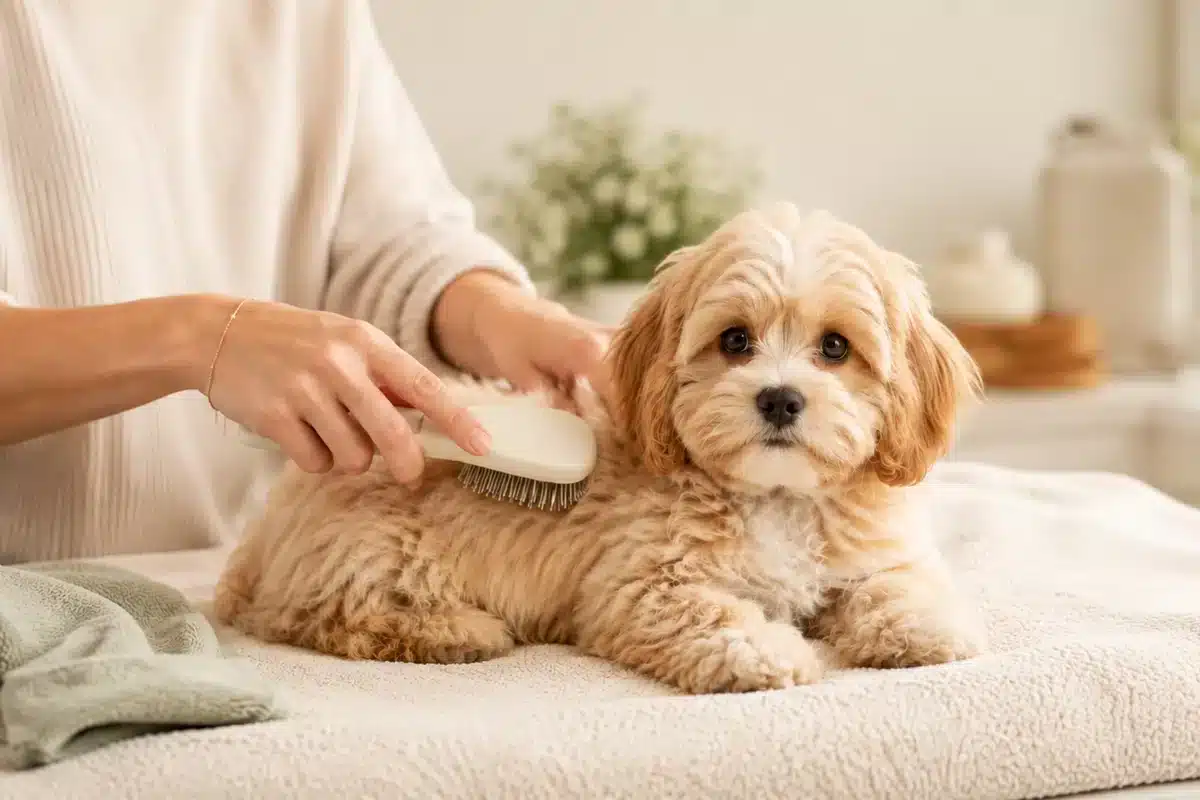
Grooming should feel calm and predictable. Touch your puppy’s paws gently, lift the ears briefly, brush small sections, and reward relaxed behavior. Stop before your puppy becomes overwhelmed whenever possible.
Simple at-home grooming practice
- Let your puppy sniff the brush.
- Brush one small area for a few seconds.
- Reward calm behavior.
- Practice touching paws, ears, and tail gently.
- End on a positive note before your puppy gets frustrated.
Short sessions done consistently are usually better than occasional long sessions. The goal is to build trust, not to rush through the whole coat at once.
How Grooming Supports a Family-Raised Puppy
Grooming is part of everyday life with a small companion dog. When families approach it gently and consistently, it becomes another way to bond with their puppy. Brushing, bathing, nail handling, and professional grooming all help your puppy learn to be handled with confidence.
At Sage Puppies, we want families to feel prepared before go-home day. If you are considering a Havanese, Havapoo, or Cavapoo, grooming should be part of your planning along with crate setup, food, potty routines, and your first-week schedule.
Puppy Grooming FAQs
How often should I brush my puppy?
Many Havanese, Havapoo, and Cavapoo puppies do well with brushing several times per week, and some coats may need light daily brushing. Coat length, texture, and activity level all affect the best schedule.
When should my puppy have a first professional grooming appointment?
Many families schedule an introductory groom once their puppy is settled at home and cleared for the grooming environment by their veterinarian or groomer. Ask your groomer what they recommend based on your puppy’s age, coat, and vaccination status.
How often should I bathe a puppy?
Puppies should be bathed as needed, using gentle puppy-appropriate products. Overbathing can dry the coat or skin, so ask your groomer or veterinarian for guidance if your puppy has sensitive skin or frequent messes.
Do Havanese, Havapoo, and Cavapoo puppies need regular grooming?
Yes. These small companion breeds generally need regular brushing and professional grooming to keep their coats clean, comfortable, and manageable.
What grooming supplies should I have before my puppy comes home?
Helpful basics include a puppy-appropriate brush, metal comb, gentle shampoo, soft towels, a non-slip bath mat, nail-care plan, and treats for positive grooming practice.
Next Steps
If you are preparing for a Sage Puppies Havanese, Havapoo, or Cavapoo, grooming is one part of creating a smooth transition home. Review available puppies, learn how our process works, and prepare your home before go-home day.