Quick Summary: Before a breeder visit, request the puppy’s identity, available health records, visit rules and written purchase terms. During the visit, ask specific questions and record what was actually demonstrated. Afterwards, resolve gaps before paying. A calm puppy or attractive room cannot certify health or temperament, and this researched checklist does not establish a particular Sage test, guarantee or visit arrangement.
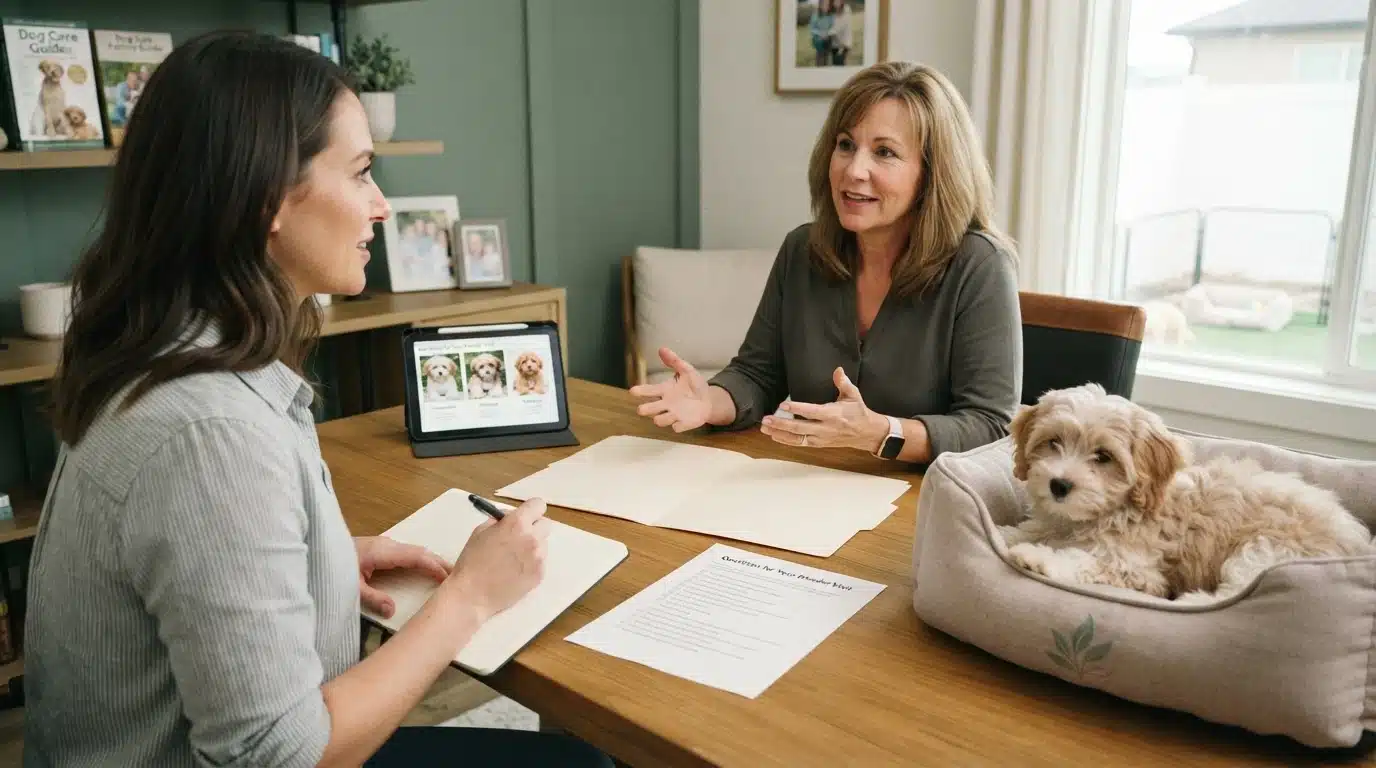
A useful breeder visit is a chance to collect evidence, not a test of whether you can resist a cute puppy. This checklist is organized around the answers you need before committing. Matt Milar is the editorial author; Cassie Milar is Sage Puppies’ founder and the person to ask about the actual program and puppy.
Before the visit: request a small information packet
Confirm the seller’s name, the puppy’s identity and date of birth, where it is cared for and who is arranging the visit. Ask which visitors are permitted and what hygiene or handling rules apply. Do not assume a nursing dam or every room will be accessible.
Request the written price, included items, payment schedule and agreement in advance. If a deposit is proposed, ask what it secures, whether it is applied to the price and exactly when it can be refunded or transferred.
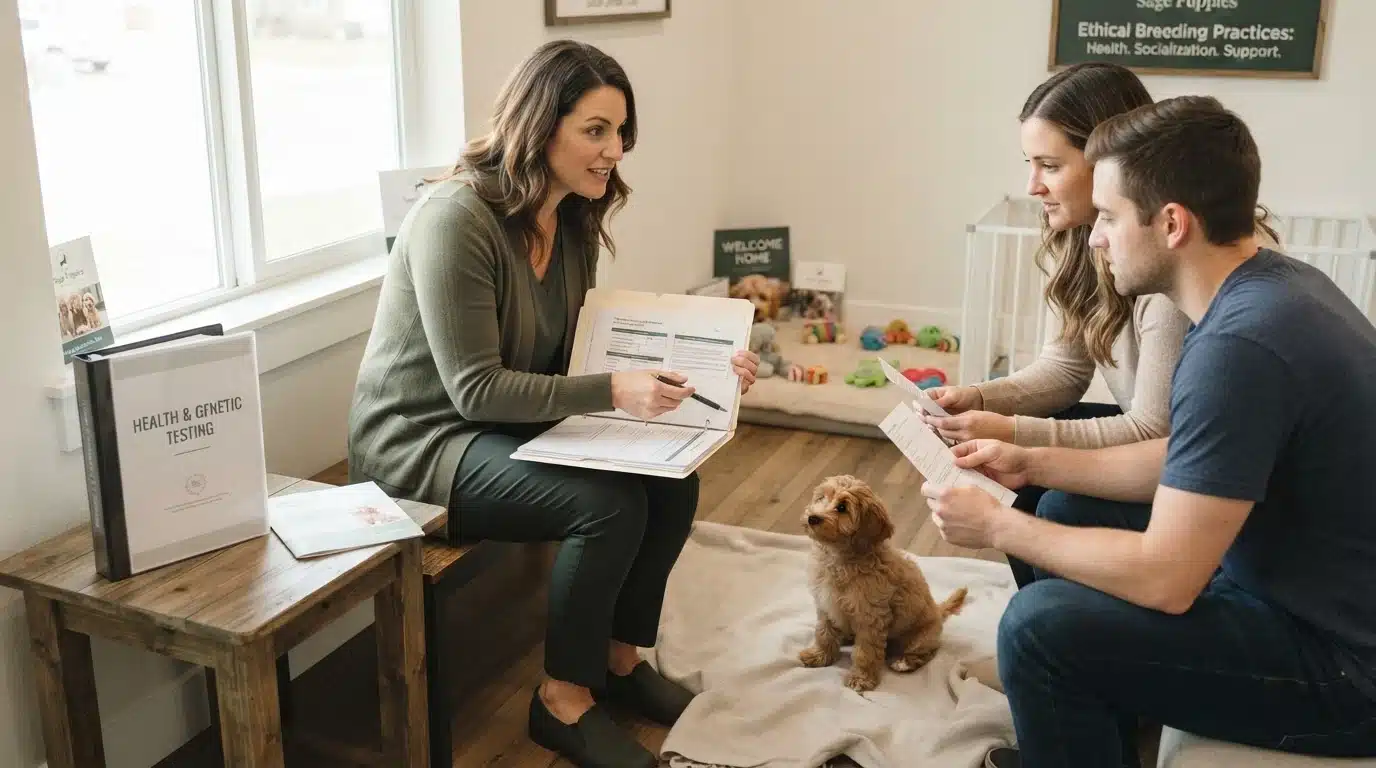
Ask for available puppy examination and treatment records plus relevant screening documents for both parents. A breeder may need time to collect records or obtain permission to share details; agree on what will be supplied before any commitment.
| Write down | What to verify |
|---|---|
| Puppy and parents | Names or identification match the records |
| Screening | Actual test, date, age and result |
| Payment | Total, included items and deposit terms |
| Homecoming | Agreed date, care plan and examination requirements |
| Unanswered question | Who will answer, and before which decision |
During the visit: ask questions that produce useful answers
Ask: “Why was this pairing chosen, and what is known about each parent?” Follow with questions about expected adult size, coat care and the individual puppy’s daily behavior. Distinguish an estimate or observation from a guarantee.
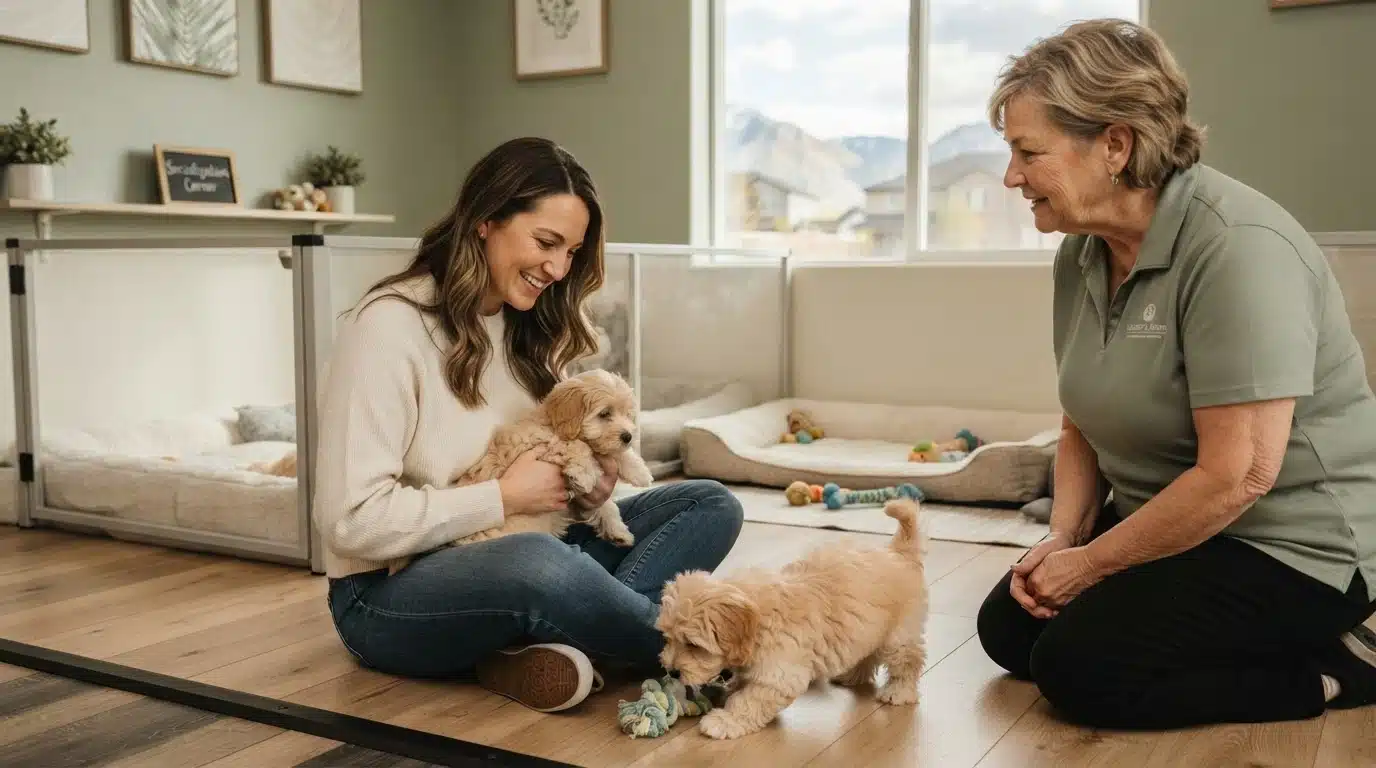
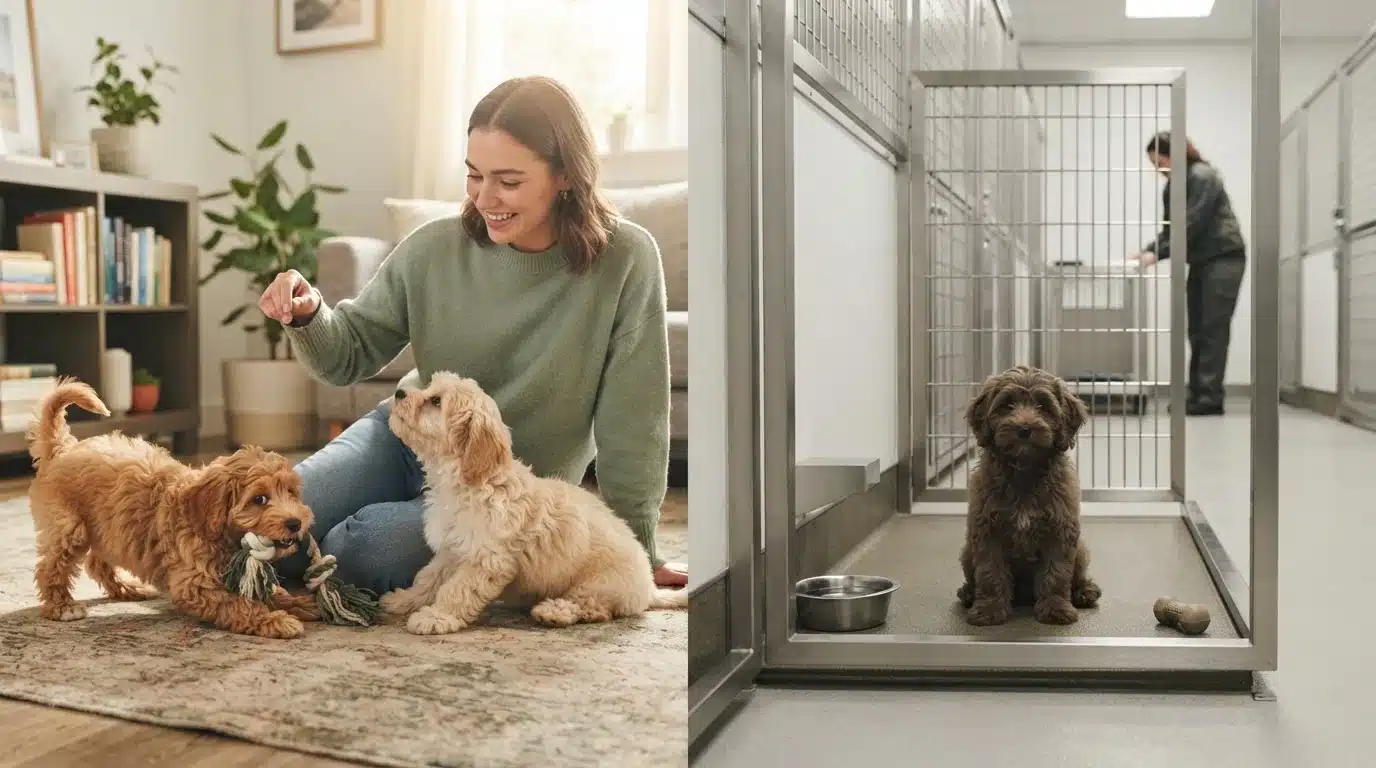
Ask where puppies sleep, eat and spend their awake time, how handling is introduced and what the puppy has experienced. Request ordinary examples. Neither a posed picture nor a short encounter establishes how every day is managed.
Ask how the dam is cared for and whether a suitable meeting or other verification is possible. Respect rest, nursing needs and household privacy. Do not insist on handling her or infer inherited aggression from a single reaction to a visitor.
Check records against identities and dates
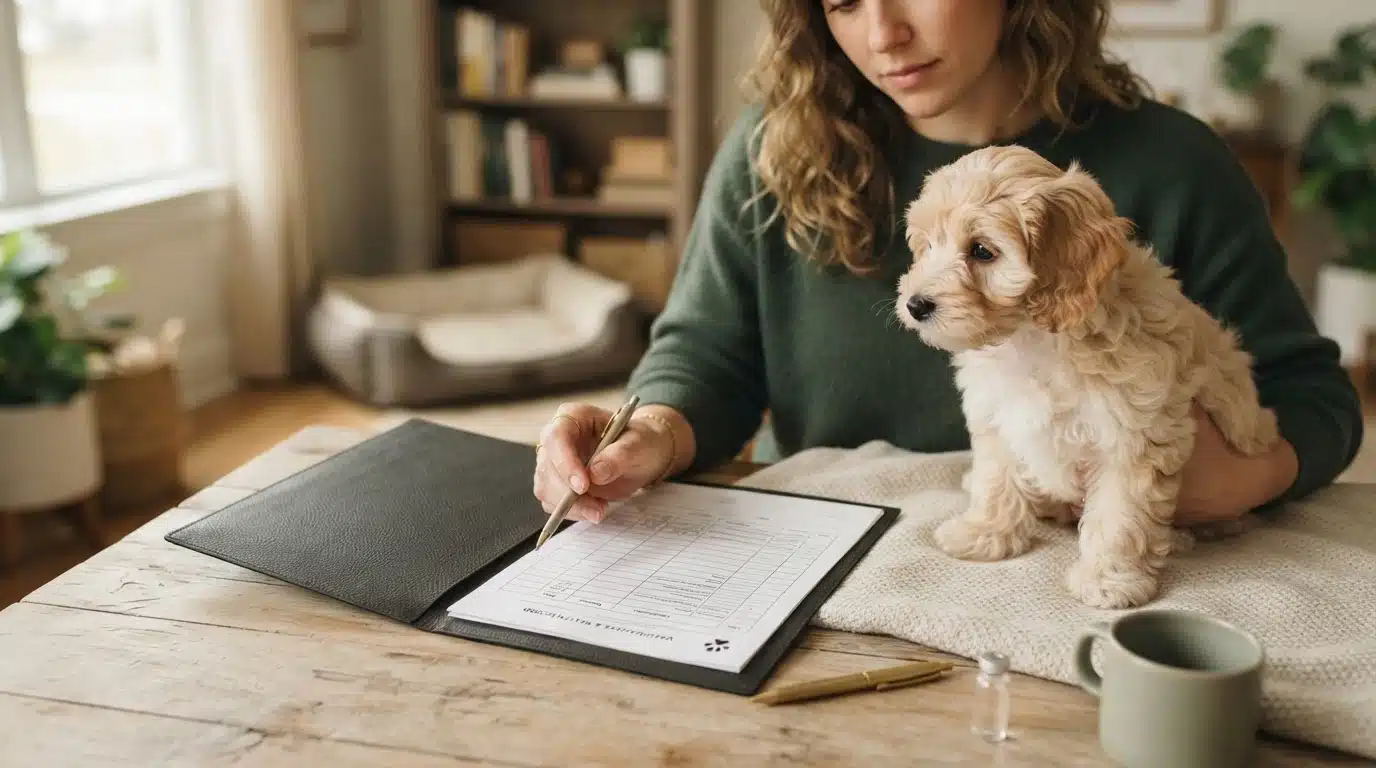
Record which dog each result belongs to, the test or examination, the date, age and evaluator, and the actual outcome. The puppy’s veterinary examination and its parents’ screening are separate evidence.
For Havanese, the current HCA CHIC list includes hips, patellas and annual eye examinations. Ask about the appropriate plan for both parent breeds and Poodle variety in a cross; there is no one universal package for all small mixes.
Use OFA/CHIC where records were submitted, and inspect original clinical or laboratory reports as needed. A CHIC number does not mean all results were normal, and a DNA panel cannot exclude every inherited condition.
Have your veterinarian review unclear findings or gaps. Do not turn a generic checklist into a demand for an irrelevant elbow examination or assume all test results are publicly listed.
Observe without diagnosing or testing tolerance
Watch the puppy move, rest and choose whether to approach. Ask about changes in appetite, movement, breathing or behavior. A sleepy or hesitant puppy is not automatically ill or unsuitable, and a sociable one is not certified healthy.
Do not deliberately startle, restrain or let children overwhelm the puppy to see what it will tolerate. Follow the breeder’s handling rules and give animals space. Ask a veterinarian about concerning signs rather than interpreting them from a visit alone.
Write down what you saw separately from what the breeder said. For example: “Observed a short calm handling session” is more accurate than “proven good with children.”
Review the agreement and make a decision at home
Identify the written examination deadline, covered conditions, claim procedure, exclusions and stated remedies, if any. Read return or rehoming provisions and any breeding restrictions. Do not assume a standard 48–72-hour window, guarantee duration or lifelong support commitment.
An application, deposit and reservation can mean different things between sellers. The label alone does not determine refund rights. Ask for the actual terms and seek appropriate advice if an important contractual issue is unclear.
Agree on the handoff, caregiver, food and water plan, records and travel quote. Ask your veterinarian when the first appointment is appropriate. Take enough time to discuss unanswered questions; a fixed 24-hour rule is optional, not a guarantee against a bad decision.
Sage’s pricing and reservation information and current puppies can help frame questions. Use the application when you are ready for the owner-managed discussion, and confirm the puppy-specific terms directly.
Frequently asked questions
What should I ask first?
Confirm the puppy’s identity, who cares for it, what records are available and the written terms before discussing payment.
Must I handle the mother dog?
No. Ask for suitable verification and an explanation of any access limits, respecting her welfare and household privacy.
Does a confident puppy prove good temperament?
One encounter is limited evidence. Ask for repeated observations during ordinary care.
Should I pay during the visit?
Pay only after resolving your questions and understanding the exact agreement; avoid pressure.
What examination deadline applies?
Use the actual written agreement and your veterinarian’s advice, not a generic deadline from an article.
Who wrote this guide?
Matt Milar is the editorial author. Ask Cassie directly about Sage’s current program and each puppy.