Quick Summary: Neither a Havapoo nor a Yorkiepoo is automatically safer around children. Both can be injured by falls, grabbing or rough play, and any dog can bite when frightened or hurt. Choose the individual puppy and a supervision plan your household can maintain. Coat type does not establish allergy safety, and size does not make a dog tolerant of toddler handling.
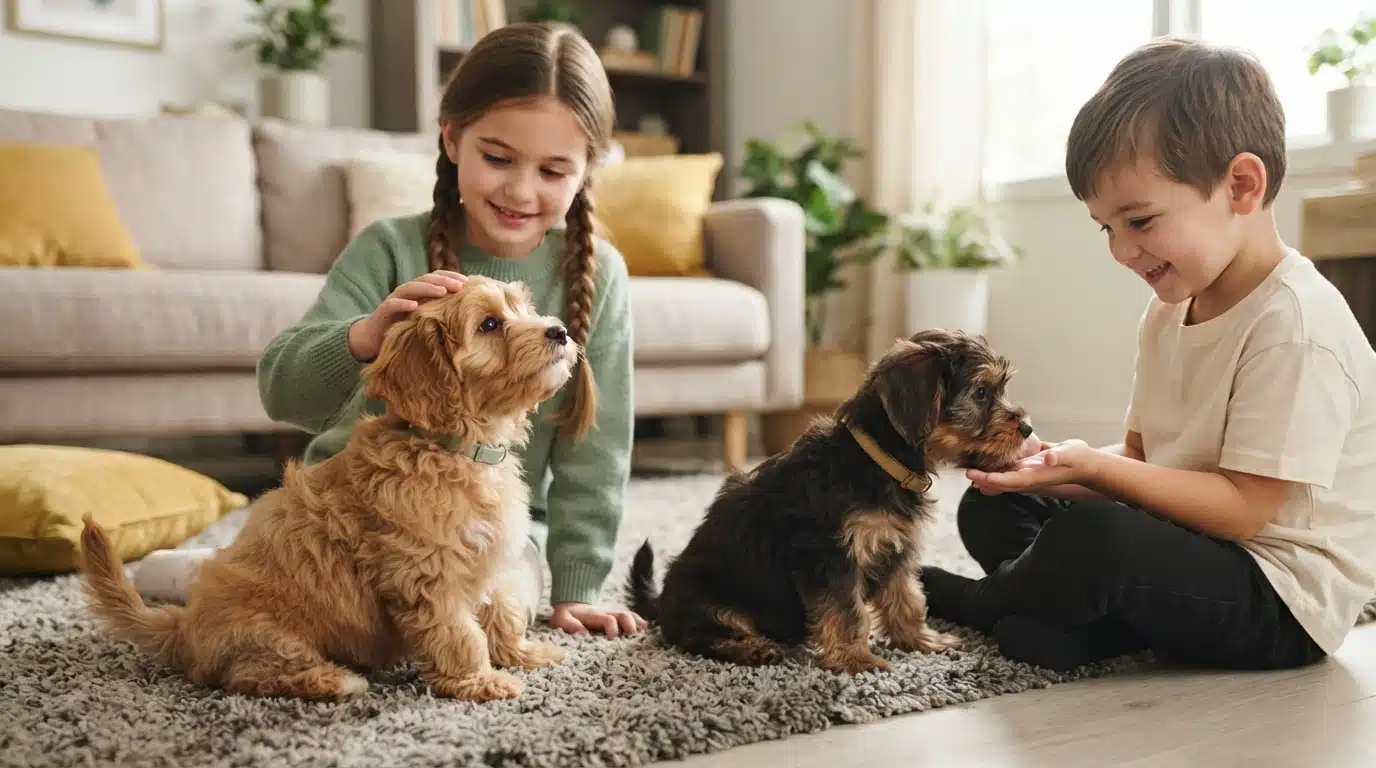
A Havapoo combines Havanese and Poodle ancestry; a Yorkiepoo combines Yorkshire Terrier and Poodle ancestry. Those parent breeds offer useful background, but they cannot tell you how a particular puppy will respond to your children. A useful comparison starts with the adults’ ability to manage daily interactions.
Start with the same safety rules for either mix
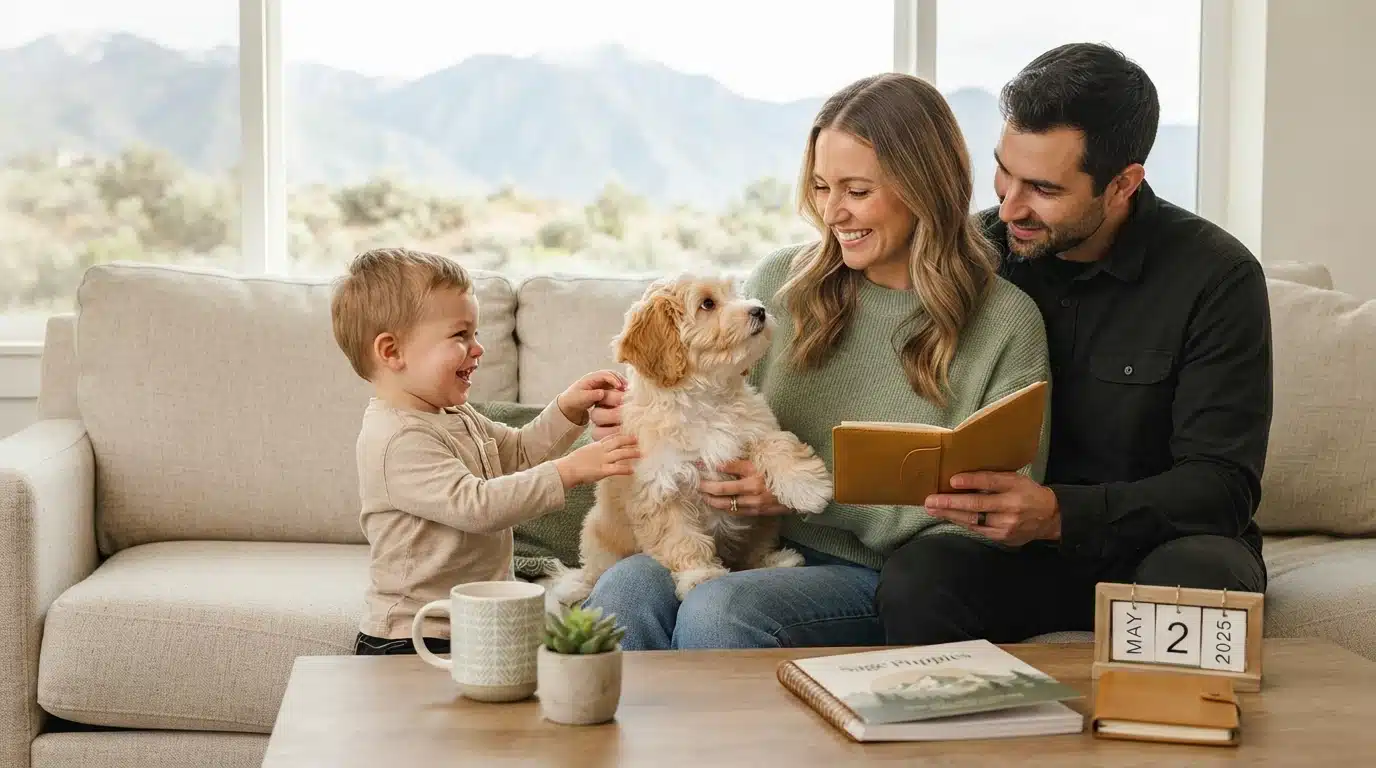
An adult should actively supervise every interaction with young children. When that is not possible, separate the puppy and child with a suitable gate, pen or closed door. Being somewhere in the same house is not active supervision.
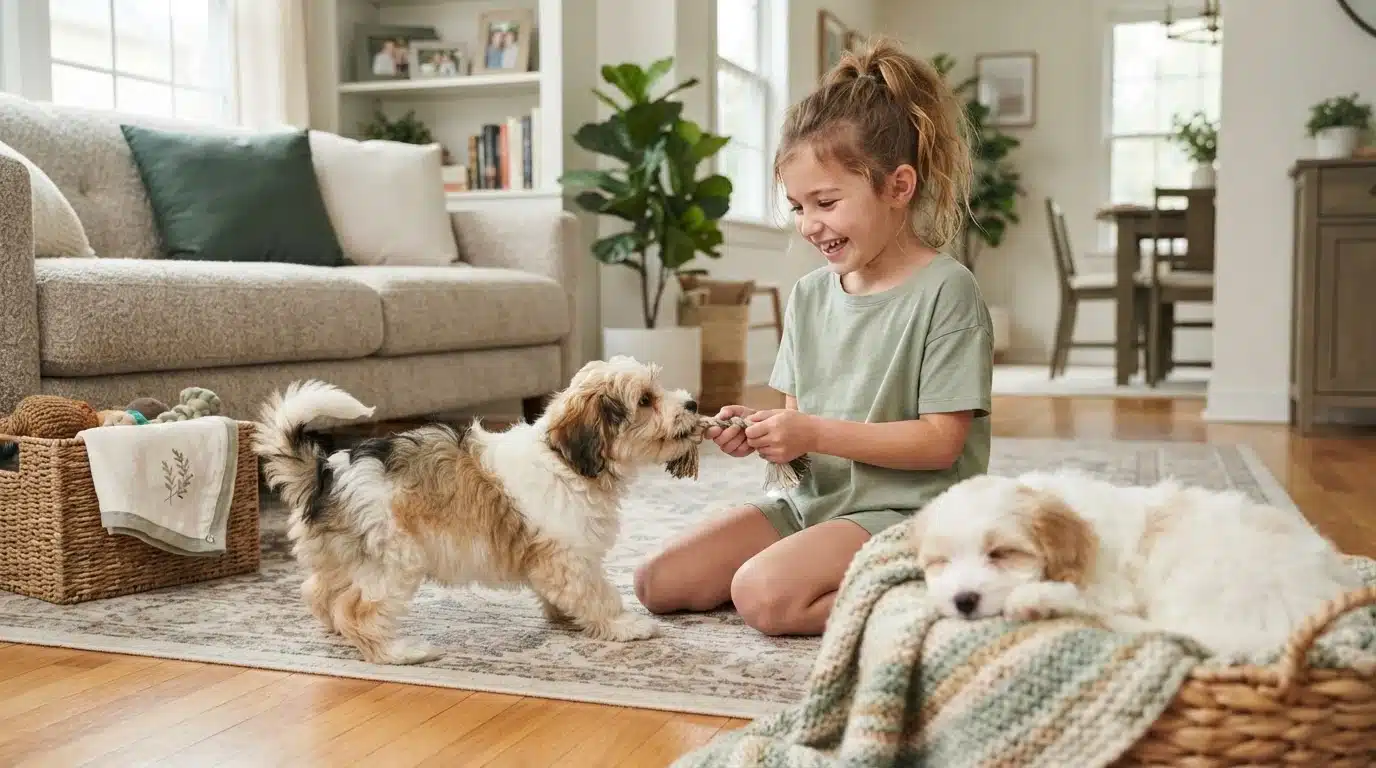
Teach children to sit calmly and let the puppy choose whether to approach. Prevent chasing, hugging, tail pulling, stepping on the dog and carrying it around. Leave the dog alone while it eats, sleeps or retreats. A quiet rest area must stay out of children’s reach.
A Havapoo’s body does not make falls from furniture harmless. Do not test a puppy’s tolerance for rough handling. After a fall or suspected injury, ask a veterinarian what assessment is needed rather than assuming the dog is fine because it walks away.
The CDC’s dog-safety guidance stresses supervision even with familiar family pets. These rules apply to every breed and mix.
| Decision | Havapoo | Yorkiepoo |
|---|---|---|
| Young children | Adult supervision and separation plan | Same supervision and separation plan |
| Size | Ask about actual parents; estimate varies | Ask about actual parents; estimate varies |
| Noise and learning | Assess the individual puppy and routine | Assess the individual puppy and routine |
| Allergies | No allergen-free assurance | No allergen-free assurance |
Compare the individual dogs, not a promised winner
Ask about the actual parents’ sizes and the puppy’s observed behavior during ordinary care. Toy versus Miniature Poodle ancestry can change expected size; neither mix has a dependable universal adult-weight limit. An estimate is not a guarantee.
Find out how the puppy responds to gentle handling, household sounds, short separation and recovery after a mild surprise. Request examples from daily care rather than a seller’s score for “kid friendliness.” One brief meeting cannot establish future behavior.
Fear, freezing, avoidance or growling calls for space and a calmer setup. Do not ask children to fix those reactions or punish a warning. Seek a qualified reward-based trainer and veterinary advice for persistent concerns.
Energy, barking and training need a household plan
Either mix can be playful, vocal, easily distracted or quick to settle. This guide does not establish that Havapoos bark less, that Yorkiepoos need only one trainer, or that either has a reliable “off switch.” Ask what the individual puppy has actually practiced.
Adults should lead short reward-based sessions and agree on the same cues. Children can participate with suitable supervision, but feeding, exercise, grooming and behavior management remain adult responsibilities.
Plan protected naps, gentle play and age-appropriate activity. Avoid using exhausting exercise to suppress behavior. If your household cannot provide enough supervision during the puppy stage, waiting or considering an individually assessed adult dog may be a better decision.
Coat care, allergies and health
Coats vary within both mixes. Ask a groomer to assess the actual coat and demonstrate comfortable brushing, then obtain a local quote for ongoing care. A soft or low-shedding coat can still mat and does not mean less work.
Neither mix is allergen-free. Do not choose on an “allergy-friendly” label or use a visit as a diagnostic test. Discuss your household’s risks with an allergist before arranging exposure; AAAAI explains the limits of hypoallergenic claims.
Ask for each parent’s relevant screening records and the puppy’s veterinary history. A DNA panel, a clear result or a breeder’s confidence cannot rule out all disease. Have your veterinarian interpret the documents and plan appropriate ongoing care.
A practical family-fit checklist
Before committing, name the adult who manages morning care, daytime breaks, grooming and children’s interactions. Show where the puppy can rest undisturbed. Work through a busy school morning and a weekend gathering on paper.
Then compare that plan with the puppy’s observed needs. A slightly larger dog still needs gentle handling; an older child still needs instruction. The right match depends on both the dog and the household, not a minimum child age copied from a breed chart.
Sage Puppies is based in South Jordan, Utah and offers Havanese, Havapoo and Cavapoo puppies. For a Havapoo inquiry, review current availability and pricing and reservations, then explain your household through the application. Availability and suitability require an individual discussion.
Frequently asked questions
Is a Havapoo safer for toddlers?
Breed or mix alone cannot establish safety. Neither dog should be expected to tolerate grabbing, falls or rough play.
Can children carry a small puppy?
Make adults responsible for safe handling. Calm seated interactions avoid many risks associated with children lifting or chasing a small dog.
Which mix barks less?
This comparison cannot establish a dependable ranking. Ask about the actual dog and plan for training, rest and supported separation.
Does either mix suit allergy sufferers?
That is an individual medical decision for an allergist, not a coat-based promise.
Can my child do the training?
Children may join suitable supervised sessions. An adult must manage consistency, welfare and safety.
What should I ask Sage?
Describe your children’s ages, daily schedule and supervision plan, and ask what is known about the particular puppy.