Quick Summary: Massachusetts’ pet sale rules are stuck in legislative limbo: the Senate passed a ban on retail pet-shop sales, but the House stripped it out, leaving buyers waiting for reconciliation. Until the law settles, the only real protection is asking the right questions-like demanding parent health-test results, a live video of the puppy with its mother, and a written contract before sending money. The article warns that even if a retail ban passes, unregulated online sellers or out-of-state breeders could fill the gap, so buyers must focus on traceable care, not just the sales channel. Sage Puppies is cited as an example of a breeder that provides health records, home-raised puppies, and clear contracts for small breeds like Havapoos, reinforcing that responsible breeding practices matter more than where you buy.
Massachusetts pet sales rules remain unsettled in 2026. On July 15, the House passed S.3028, 151-1, but removed the Senate’s pet-shop sales ban. The House version is now listed as H.5589, so the bills must still be reconciled.
Misleading ads can blur proposed pet sales rules, current law, and direct breeder sales. Before sending a deposit, verify the seller and puppy records. This guide explains the split bills and safe steps for reserving a Havanese, Havapoo, or Cavapoo.
Massachusetts Has Not Yet Settled the 2026 Pet-Shop Sale Question
Massachusetts pet sales rules are still moving through the State House. The Senate acted, but buyers should not treat a proposal as settled law.
What the Senate Proposal Would Have Done
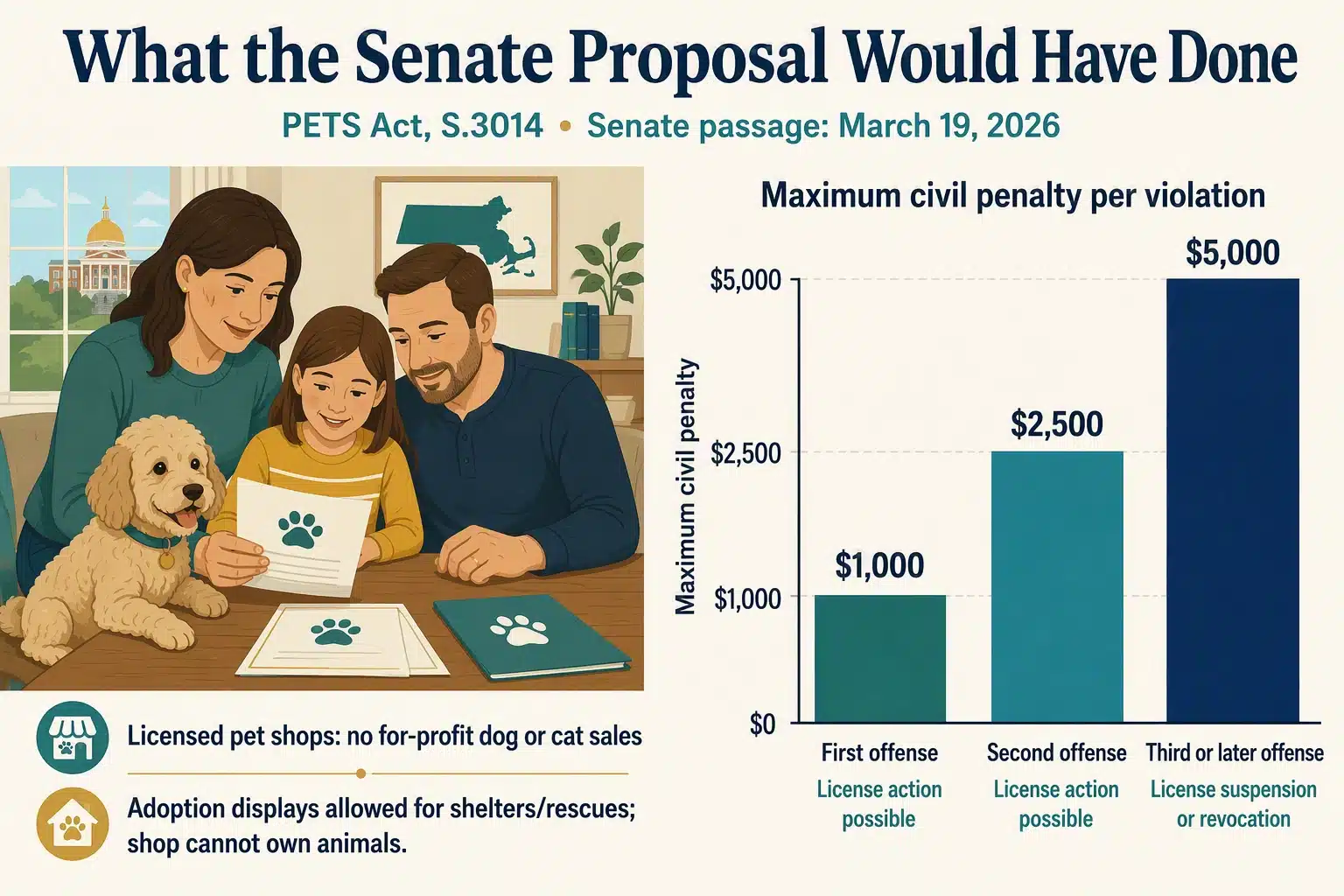
The Senate passed the PETS Act, S.3014, on March 19, 2026. It would bar licensed pet shops from selling dogs and cats for profit.
Pet shops could still give rescue groups or shelters space to show animals for adoption. The shop could not own those animals.
The bill sets penalties for a shop that breaks the ban:
| Violation | Maximum civil penalty | Other risk |
|---|---|---|
| First offense | $1,000 | License action possible |
| Second offense | $2,500 | License action possible |
| Third or later offense | $5,000 | License suspension or revocation |
The Senate’s bill text also treats each unlawful ad, offer, or sale as a separate violation.
A pet-shop ban would not stop families from working directly with an ethical, responsible breeder.
What the House Passed Instead
The House did not pass that same retail-sales ban. A House proposal covering dogs, cats, rabbits, and guinea pigs was sent to a study order on May 7, 2026, according to the Massachusetts General Court bill record.
That leaves the final statewide outcome unresolved. The Senate measure may still need House approval, changes, or both before it becomes law.
For buyers, the practical rule is simple: do not rely on a shop label or a pending bill. Ask who bred the puppy, where it was raised, and whether you can review health testing and care records.
Use this short check before a deposit:
- Confirm the breeder’s full name and location.
- Ask for parent health-test results.
- Request current puppy photos or a live video visit.
- Read the contract before sending money.
- Confirm pickup or delivery details in writing.
Strong pet sales rules help, but careful buyer checks still matter most.
Also Read: Small Breed Puppies: Best Family Dogs for Small Homes
What the Proposed Rules Could Mean for a Small-Breed Puppy Buyer
Ask Who Actually Owns and Raises the Puppy
The debate centers on retail pet-shop sales, not a ban on working directly with a breeder. The Senate bill would let shops host rescue adoptions only when the shop has no ownership interest in those animals, according to the bill text.
Ask direct questions before you reserve a Havanese, Havapoo, or Cavapoo:
- Who owns the puppy’s parents?
- Where was the litter born and raised?
- Can you meet the breeder by video or in person?
- Can you review parent health testing and the puppy’s care records?
A broker may handle the sale without raising the litter. That does not automatically prove poor care, but it adds distance between you and the source.
A clear answer should include names, location, records, and a real look at how the puppies live.

| Seller type | Best question to ask | Good sign |
|---|---|---|
| Direct breeder | “Did you raise this litter?” | Clear parent and home details |
| Broker | “Which breeder raised this puppy?” | Full source records shared |
| Retail shop | “Who owns the puppy now?” | No vague supply-chain answer |
Do Not Confuse a Retail Ban With a Quality Guarantee
Massachusetts has not settled the issue. The Senate passed a retail sales ban, while the House version left that provision out, so lawmakers still must resolve the difference, WBUR reports.
A future ban could reduce storefront puppy sales. It cannot promise that every online listing, breeder, or delivery offer is ethical.
Use your own quality screen:
- See current photos and a live video call.
- Ask for health testing relevant to both parent breeds.
- Confirm age, vaccine records, and travel plans.
- Read the contract before paying a deposit.
- Walk away if the seller pushes urgency or will not name the breeder.
For a family choosing a small companion dog, trust comes from traceable care, not the sales channel alone.
Also Read: Puppy Care Blog & Resources | Sage Puppies
The Records a Responsible Buyer Should Request Before Paying
Verify Identity, Location, and the Puppy’s Origin
Ask for the breeder’s full name, physical address, phone number, and the puppy’s date of birth. Request a live video call or visit when practical. You should see the puppy with its mother, not just staged photos.
Massachusetts advises buyers to confirm they are dealing with a breeder and to ask to see the mother interact with her litter, especially while nursing in its healthy-dog buying guidance.
Request these records before a deposit:
- The parents’ names, breeds, and health-test results
- The puppy’s birth date, litter details, and microchip number if assigned
- A clear explanation of where the puppy was raised
- Interstate transport records if the puppy will travel to Massachusetts
A breeder who cannot clearly show where a puppy began life is asking you to take on too much risk.
Review Health and Veterinary Documentation
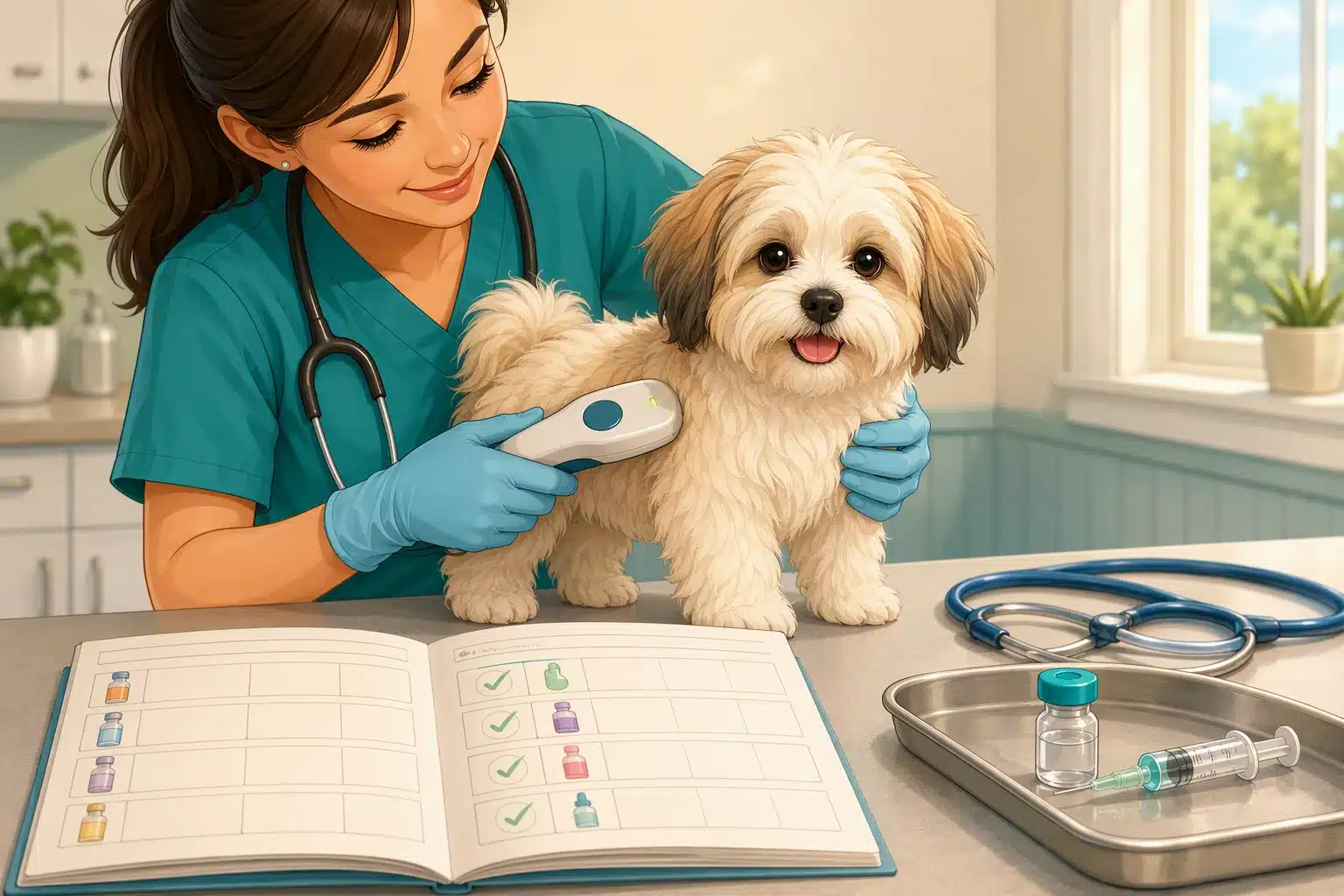
Ask for a dated veterinary record for the exact puppy you plan to bring home. It should list exams, vaccines, deworming, medicines, and any health concern already noted.
Use this quick check before you pay:
| Record | What to confirm | Red flag |
|---|---|---|
| Vet record | Puppy name or ID, dates, clinic details | A generic sheet with no puppy ID |
| Parent testing | Test type and parent names match | “Health tested” with no proof |
| Health certificate | Exam date and veterinarian signature | Old, altered, or missing document |
| Transport paperwork | Puppy ID matches travel plan | Seller will not explain delivery route |
For licensed Massachusetts pet shops, individual animal records include vaccination and treatment history, source, official ID, and sale details under 330 CMR 12.00. Responsible breeders should be equally open, even when those shop rules do not apply.
Read the Contract Before Sending a Deposit
Get the full contract before money changes hands. Read it slowly, then save a signed copy and every message about the puppy.
Check these points:
- The puppy’s identity, price, deposit amount, and balance due.
- Whether the deposit is refundable and under what conditions.
- Health terms, return steps, and any deadline for a first vet visit.
- Pickup or delivery details, including who handles travel.
- What happens if the breeder cannot place the named puppy.
Never send a deposit based only on a social post, a text promise, or pressure that another family is waiting.
A clear agreement protects both sides and gives your family a calm, informed start.
Also Read: Questions to Ask About Health Records for Massachusetts Puppies
How the House Bill Could Affect Animal Care and Buyer Confidence
A Proposed Civil Process for Neglect Cases
The House version of the bill would give animal control and law enforcement a civil route to act when a pet lacks basic care. Instead of relying only on a criminal cruelty case, an officer could ask a district court to order care or remove an animal in danger.
The proposed process covers failures such as food, water, shelter, veterinary care, and sanitary living conditions. The court could require care, transfer custody, or take other action based on the animal’s needs, according to the House bill text.
What this means for buyers: stronger intervention may help animals in clear trouble, but it does not tell you whether a puppy was thoughtfully bred, socialized, or matched to your home.
For a family, the useful lesson is simple:
- Ask how puppies live each day.
- Request health-testing records for both parents.
- Confirm who provides early care and social time.
- Keep all sales and health records.
Kennel Oversight Is Not the Same as Breeder Due Diligence
The House bill also calls for stronger kennel oversight and reporting. That can raise accountability, but a license or inspection should be your starting point, not your final yes.
The House passed its version without the Senate’s pet-shop sales ban, so the two chambers still need to resolve key differences, WBUR reported.
| Check | What a confident buyer should see |
|---|---|
| Parent health | Clear testing records and plain answers |
| Puppy care | Clean home setting, routines, and social contact |
| Pickup or delivery | Written timing, handoff plan, and support details |
A regulated kennel can still vary widely in care. Choose transparency, direct access to records, and a breeder who welcomes careful questions.
What Families Should Watch as Lawmakers Reconcile the Bills
The Scope of Any Final Retail-Sales Rule
The key question is simple: will the final bill ban retail pet-shop sales, or leave them untouched?
The Senate approved a ban on pet-shop sales of dogs, cats, and rabbits. The House version removed that restriction, so negotiators must settle the difference before a final bill can reach the governor. WBUR reports that this is a central point of conflict.
Watch for these details:
- Which animals the rule covers
- Whether rescue adoption displays remain allowed
- Whether existing pet shops receive an exception
- Whether local city and town rules still apply
- Whether direct, breeder-to-family placements fall outside the retail definition
| Purchase path | What to confirm |
|---|---|
| Pet shop | Whether the final law permits retail sales |
| Rescue partner display | Who owns the animal and handles the adoption |
| Direct ethical breeder | Parent records, home-raising practices, and clear contract terms |
A retail-sales rule is not a shortcut around careful screening. Ask where the puppy was born, raised, and socialized.

Effective Date, Enforcement, and Transition Rules
Do not assume a passed bill changes your options overnight. The final text should state an effective date, enforcement agency, fines, and any transition period for licensed shops.
An earlier House bill text proposed a January 1, 2027 start date, with penalties up to $5,000 for repeat violations and possible license loss. The legislative text also shows why final wording matters: exemptions can change who remains able to sell.
Before placing a deposit, take these steps:
- Confirm the seller’s location and business model.
- Request health testing and veterinary records before payment.
- Read the refund, delivery, and pickup terms.
- Keep every receipt and written promise.
Families can still choose carefully now. A transparent, direct relationship with a responsible breeder gives you facts that a storefront label cannot.
Also Read: 10 Adorable Havapoo Colors You Need to See (2026)
How the 2026 Debate Reached This Point
Why Supporters Backed a Retail-Sales Ban
Supporters want to cut the link between pet-store sales and large commercial breeding operations. In March, the Massachusetts Senate voted 38-0 for the PETS Act, which would ban for-profit sales of dogs, cats, and rabbits in pet shops while allowing stores to feature nonprofit adoption animals, according to the Massachusetts Senate press office.
They argue that a retail ban reduces impulse buying and removes a sales path for poorly raised animals.
Key points behind the Senate approach:
- Stop the puppy-mill-to-store supply chain.
- Move stores toward rescue partnerships and adoption events.
- Make sellers focus on a pet’s lifelong care, not a quick sale.
- Add broader animal welfare and housing protections in the same bill.
A retail ban would not prevent a family from working directly with a responsible, transparent breeder. It targets the storefront sales model.
Why Retail Groups Opposed the Senate Approach
Retail groups say a ban may shift demand, not solve it. They favor strict sourcing rules, inspections, and clear buyer disclosures over a full prohibition.
Their concern is that families seeking a specific breed could turn to unregulated online listings or out-of-state sellers. The House left the sales ban out of its animal welfare bill, creating a major difference with the Senate version that lawmakers still must resolve, WBUR reported.
| Senate view | Retail-group view |
|---|---|
| Ban retail sales to curb harmful supply chains | Regulate legitimate stores and punish bad actors |
| Encourage adoption displays in stores | Keep a local, inspected buying option |
| Reduce impulse purchases | Avoid pushing buyers to less visible sellers |
For buyers, the dispute changes the shopping path, not the core rule: ask for health records, parent testing, breeder access, and a clear care plan.
Also Read: How to Compare Boutique Small-Breed Puppy Breeders Nationwide
A Calm Decision Framework for Massachusetts Puppy Families
A puppy should fit your home, budget, and daily rhythm. A quick reservation rarely helps. Use these questions to compare breeders with care.
Five Questions to Ask Before You Reserve
- Can I see health testing for both parents? Ask what was tested and request clear records.
- Where was this puppy raised? Look for a clean, home-based setting and honest details about early care.
- How is the puppy socialized? Ask about handling, sounds, children, grooming, crate time, and car rides.
- What does the full price include? Get the reservation terms, remaining balance, transport cost, and paperwork in writing.
- Who helps after pickup? A responsible breeder stays available for practical transition questions.
Massachusetts bars the sale of dogs younger than eight weeks and limits sales in public places, including parking lots and outdoor markets, under its animal-sale rules.
Warning: Do not send a deposit because a seller says another family is waiting. A good match can handle thoughtful questions.
| Good sign | Pause and ask more |
|---|---|
| Parent records are shared clearly | Records are vague or withheld |
| Terms are written before payment | Price details change in messages |
Choose a Process That Leaves Room for Questions
Choose a breeder who welcomes a call, explains the timeline, and gives you time to read the agreement. You should understand the puppy’s routine before bringing them home.
A licensed Massachusetts pet shop must renew its license each year, and dogs or cats sold there carry a 14-day refund or replacement right if a veterinarian finds disease or a congenital disorder, according to Massachusetts pet-shop guidance. That is useful protection, but it does not replace careful screening.
Sage Puppies provides a family-first process for Havanese, Havapoo, and Cavapoo families, including clear pickup or nationwide delivery planning from South Jordan, Utah. Ask every breeder the same core questions, then choose the one that answers plainly.

Choose a breeder who welcomes careful questions and clear records. Sage Puppies offers home-raised Havanese, Havapoo, and Cavapoo puppies from health-tested parents, with a transparent process for Massachusetts families. View available puppies, review pricing, and begin an application when you are ready.
Frequently Asked Questions
Q1: What is changing in pet sale laws this year?
Massachusetts lawmakers continue to debate tighter limits on retail puppy sales. Buyers should watch for updates, but ethical breeder purchases may remain different from pet-store sales.
Q2: Can I buy a puppy from an out-of-state breeder?
Yes. Ask how pickup or delivery works, review records before payment, and confirm the breeder can meet Massachusetts import and health paperwork rules.
Q3: What records should I receive?
Request vaccination and deworming records, parent health-testing details, a purchase contract, feeding notes, and your puppy’s veterinary history.
Q4: How can I spot a risky seller?
Walk away from pressure, vague parent details, cash-only demands, or sellers who will not discuss where puppies are raised.
Q5: Does a law change guarantee a healthy puppy?
No. Responsible breeding, clear records, early care, and honest breeder support matter more than a sales rule alone.
Conclusion
Massachusetts buyers should treat the 2026 debate as a reason to ask better questions, not rush a decision. The Senate has passed a proposal to end for-profit dog sales in pet shops, but its final legal outcome still depends on the full lawmaking process, according to the Massachusetts Senate.
Focus on the puppy, the breeder, and the paper trail:
- Confirm age, health records, and transport details.
- Ask for proof of parent health testing and family-raised care.
- Avoid parking-lot handoffs and pressure to pay fast.
- Keep every promise in writing.
A careful match matters more than a quick purchase.