Quick Summary: Skip the rush and pack a secure carrier, health records, the puppy’s current food, and cleanup supplies before pickup. Illinois breeders like Sage Puppies often provide a familiar blanket to ease the car ride, but always confirm feeding schedules, vaccine dates, and travel rules for your destination state. The first hours home should focus on quiet rest, sticking to the breeder’s routine, and avoiding sudden changes-like new treats or crowded spaces-that could stress a small Havanese or Havapoo.
A smooth handoff takes more than a carrier and a few treats. Your puppy pickup checklist should cover health records, a safe ride home, familiar food, and a calm plan for the first few hours with your Havanese, Havapoo, or Cavapoo.
Many families who adopt puppy Illinois focus on the exciting parts, then rush the details. Missing puppy travel documents, using an unsafe carrier, or changing food too soon can make pickup day harder for a small puppy.
This guide gives you a practical puppy pickup checklist for local Illinois handoffs and longer trips home. You will know what to pack, which records to review, what to ask at pickup, and how to help your puppy settle. A complete puppy pickup checklist keeps the first day calm, safe, and well planned.
Step 1: Confirm the Handoff Details and Your Destination Requirements
Confirm What the Breeder Will Provide
Ask for a clear handoff plan before pickup day. Confirm the meeting time, exact Illinois location, who will meet you, and what happens if travel delays arise.
Request a folder or digital copy of:
- Signed purchase agreement and receipt
- Health and vaccine record
- Feeding schedule and current food details
- Microchip information, if applicable
- Parent health-testing details and support contacts
At Sage Puppies, also ask which familiar item can travel home with your puppy. A blanket or small toy carrying the litter’s scent can make the first car ride calmer.
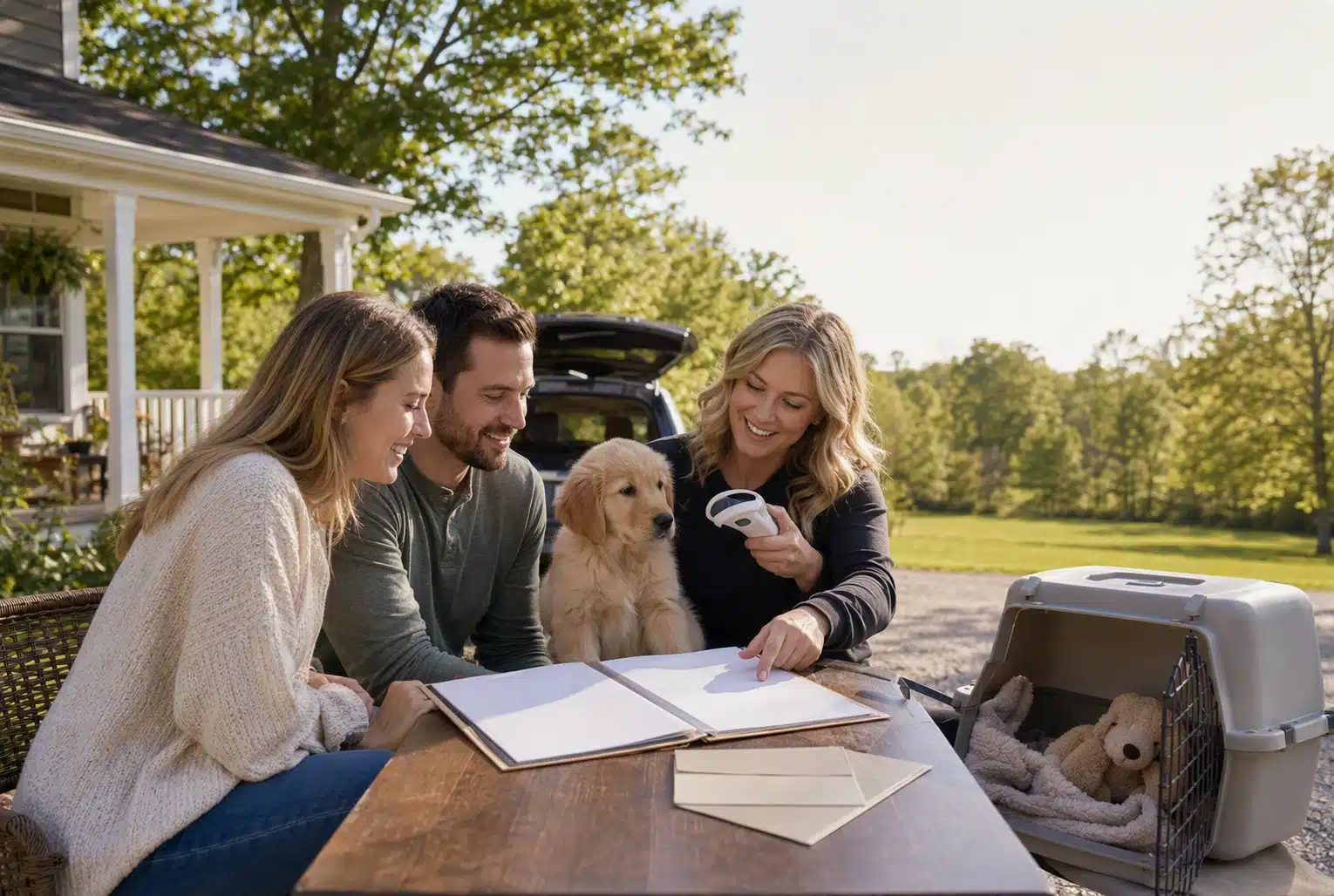
Tip: Read every document before leaving. Match the puppy’s name, birth date, sex, and identifying details to your records.
Check the Rules for the Puppy’s Final Destination
Illinois families driving home usually need fewer travel steps. Crossing state lines, flying, or arranging delivery needs more planning.
The receiving state sets its own pet-entry rules. Requirements may include a health certificate, vaccine record, or other paperwork, so use the USDA APHIS state-by-state travel guide before finalizing transport.
Confirm these points:
- Your destination state’s entry rules.
- Airline or delivery carrier carrier and crate rules.
- Any apartment, HOA, or local pet limits.
- Your first veterinary appointment date.
A Certificate of Veterinary Inspection, when required, must travel with the animal and show the owner and destination details, according to USDA APHIS guidance.
Also Read: 10 Must-Ask Questions Before Buying a Puppy Locally
Step 2: Pack the Puppy Pickup Checklist Essentials
Pack one small bag before you leave. It keeps the handoff calm and lets your puppy settle safely on the ride home.
Safety and Containment Supplies
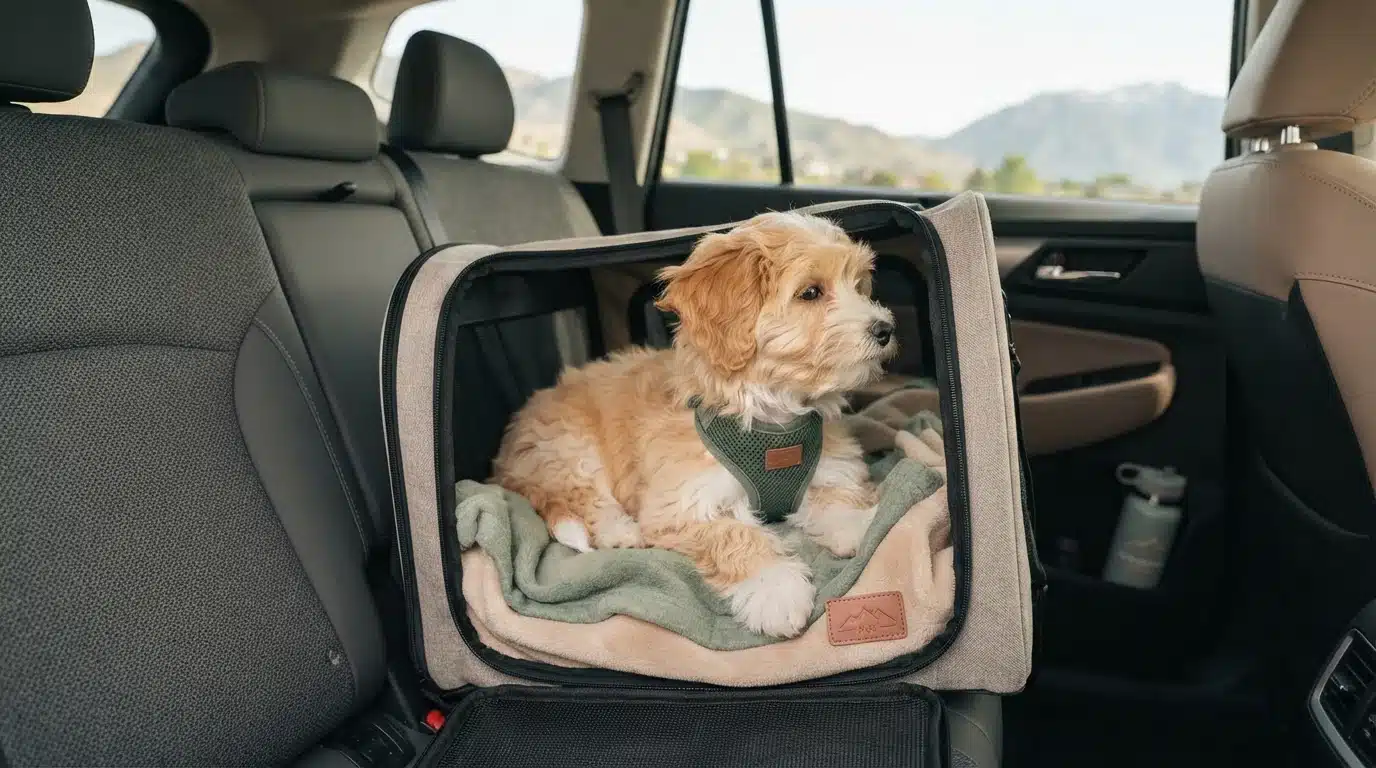
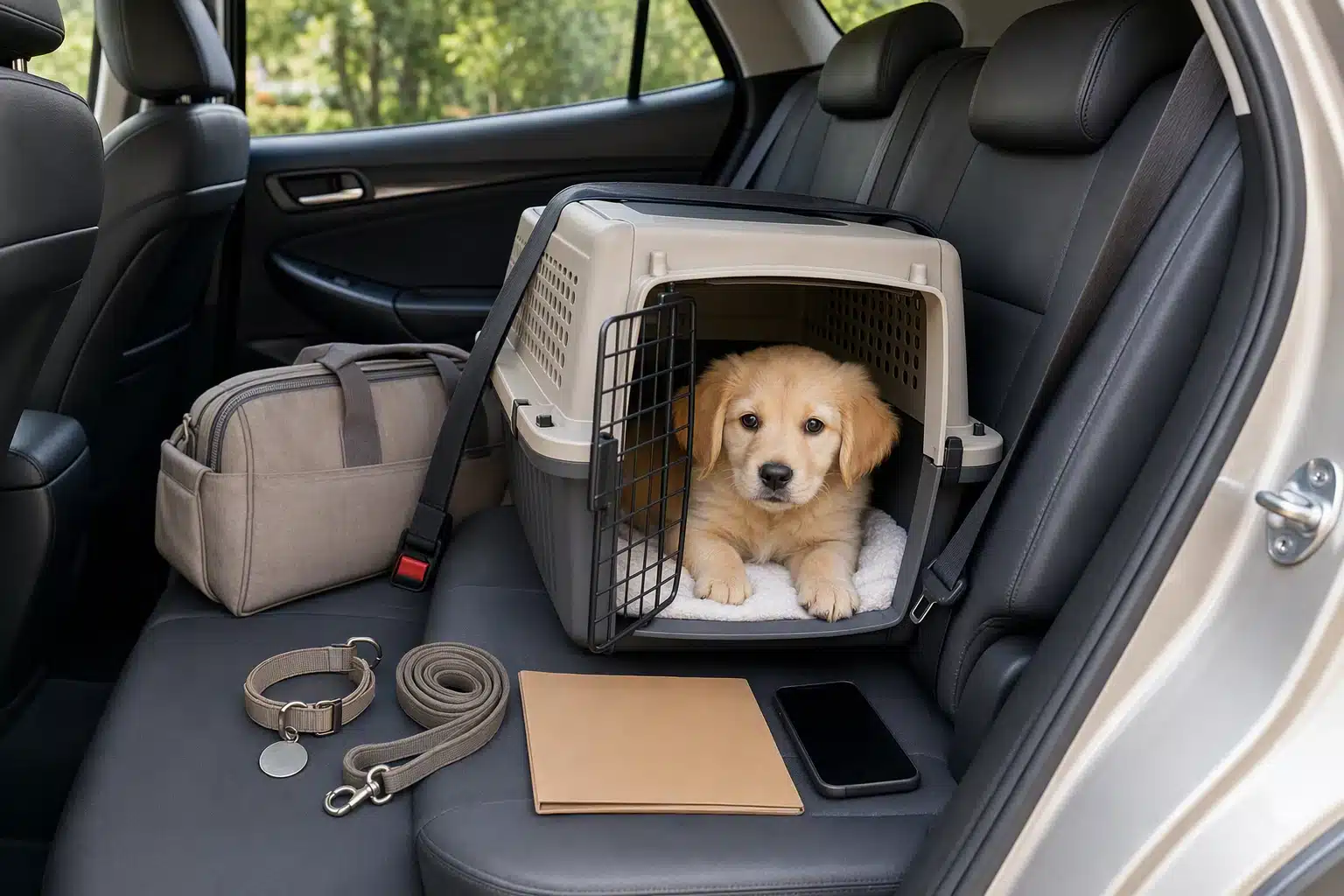
Bring a secure, well-ventilated carrier sized for a small Havanese, Havapoo, or Cavapoo puppy. It should allow them to stand, turn, and lie down. Secure it near the center of the car so it cannot slide.
The AVMA advises using a carrier, crate, or proper restraint rather than letting a puppy ride loose.
- Carrier with an absorbent pad
- Light collar, ID tag, and leash
- Seat belt strap to secure the carrier
- Recent puppy photo on your phone
- Paperwork folder kept within reach
Never hold a puppy in your lap while the car is moving. Do not leave them alone in the vehicle, even for a quick stop.
Cleaning and Comfort Supplies
New puppies may get carsick, have an accident, or feel unsure during the first ride. Pack for all three.
| Item | Why it helps |
|---|---|
| Puppy pads | Protect the carrier and car seat |
| Unscented wipes | Clean paws or small messes |
| Paper towels and bags | Handle waste without delay |
| Thin blanket | Adds a familiar, soft resting spot |
| Small chew toy | Gives the puppy a safe focus |
Use a thin blanket, not bulky bedding that could bunch around a tiny puppy. Keep the car cool and quiet. A calm voice and steady drive matter more than constant handling.
Food, Water, and Medication Questions
Bring a spill-resistant bowl, bottled water, and a small portion of the puppy’s current food. Sudden food changes can upset a young dog’s stomach.
Ask the breeder:
- What food and serving amount should we use tonight?
- When was the puppy’s last meal and potty break?
- Has any medicine, dewormer, or flea prevention been given?
- What signs mean we should call our veterinarian?
For interstate travel, keep health records and any required travel papers with you. The AVMA lists food, water, medication, and medical records as key travel items.
Offer small sips of water during long trips. Ask before feeding in the car, especially if your puppy seems queasy.
Also Read: Puppy Care Blog & Resources | Sage Puppies
Step 3: Organize Your Puppy Travel Documents
Health and Veterinary Records
Keep your puppy’s health papers together before you leave the pickup. Ask for the vaccination record, deworming history, veterinary exam notes, and any health certificate needed for the trip.
For an Illinois pickup followed by travel to another state, check your destination rules early. States set their own pet-entry requirements, which may include a health certificate, vaccines, tests, or treatment, according to USDA APHIS guidance.
Confirm that your puppy’s name, breed, birth date, and your contact details match across all records.
- Vaccination and deworming record
- Veterinary health exam or certificate, if required
- Feeding and care notes for the first days home
- Parent health-testing information, if provided
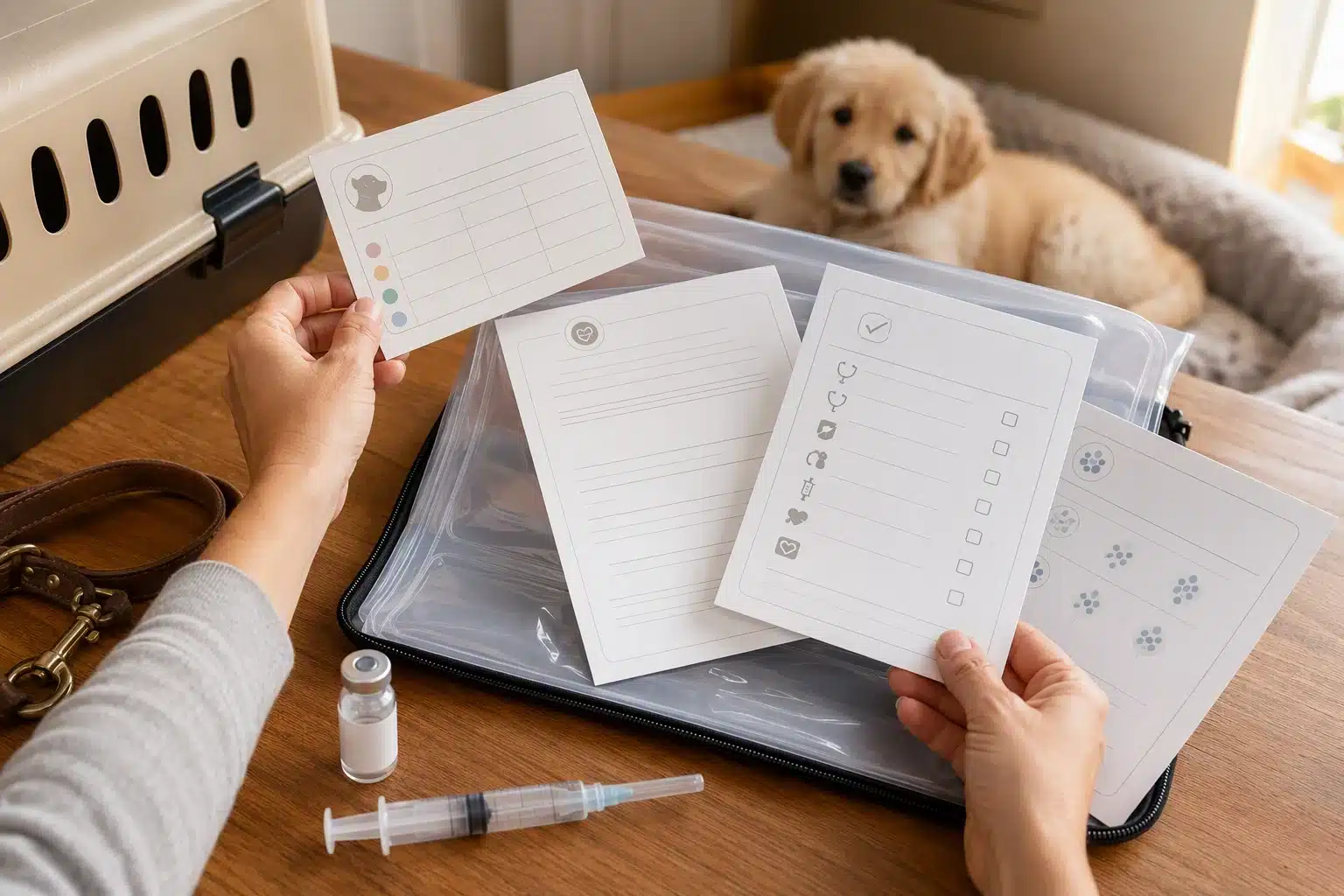
Put original health records in a waterproof sleeve. Airport counters, car stops, and new-puppy nerves are a poor mix for loose paper.
Identification, Contract, and Ownership Records
Bring the signed purchase or adoption contract, payment receipt, and breeder contact details. These papers show the agreed terms and give you one clear place to look if a question comes up later.
If your puppy will fly or travel with a ground carrier, save the carrier’s itinerary and emergency number too. Interstate certificates, when required, must identify the owner and destination, as outlined in APHIS movement-document guidance.
| Document | Why it matters | Where it goes |
|---|---|---|
| Signed contract | Confirms terms and ownership | Original folder |
| Payment receipt | Records your transaction | Digital and paper copy |
| Travel itinerary | Helps during delays or handoffs | Phone and folder |
| Breeder contact | Supports quick questions | Phone contacts |
Build a Two-Copy Document Folder
Make one paper folder and one digital folder before pickup.
- Place originals in a labeled, waterproof pouch.
- Scan or photograph every page clearly.
- Save copies to your phone and email them to yourself.
- Give a trusted travel partner access to the digital set.
Keep the paper folder with you, not in checked luggage or the car trunk.
Step 4: Prepare the Vehicle for a Calm Ride Home
Set Up the Carrier Before Leaving
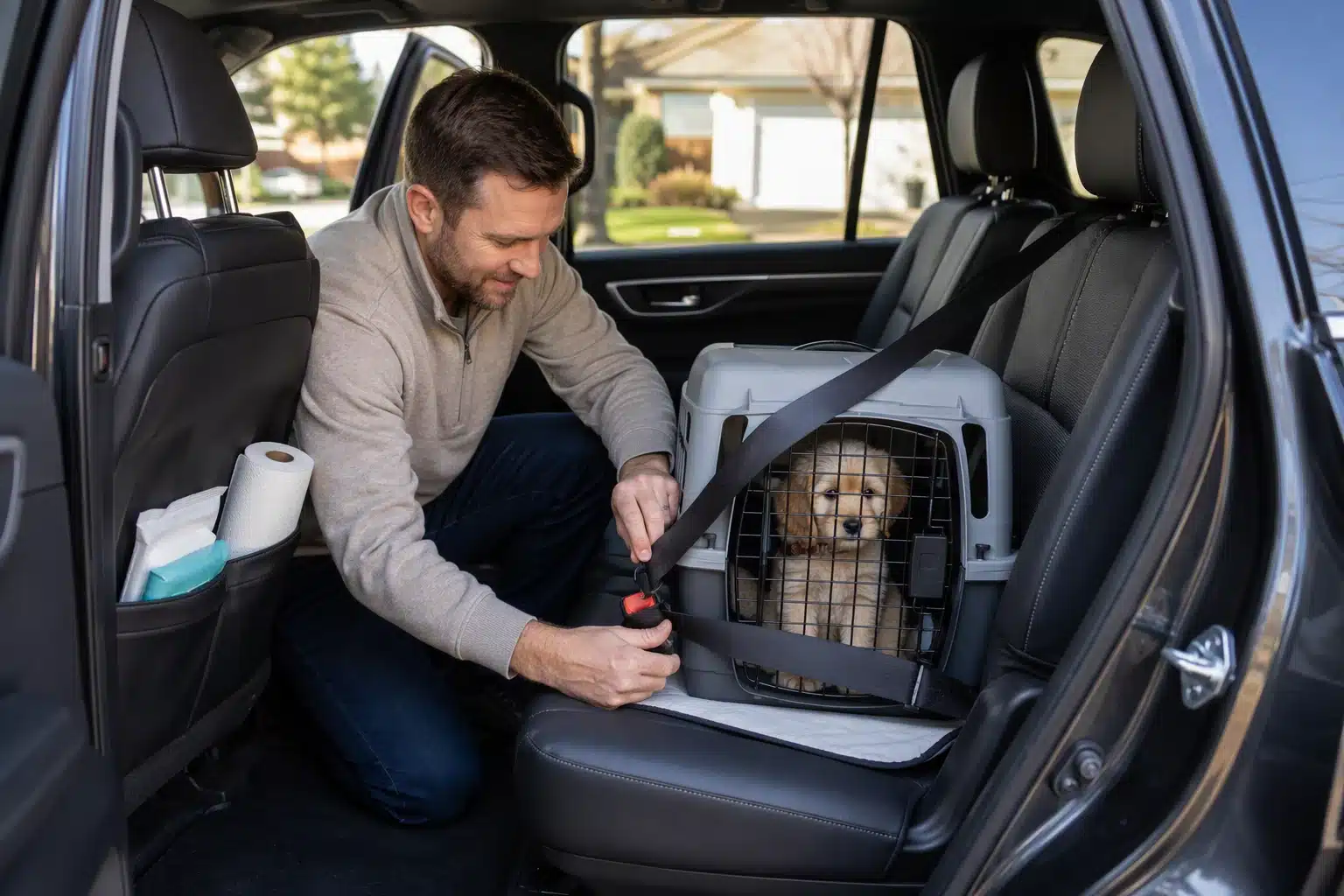
Place a small, secure carrier on the back seat or cargo area before pickup. Add an absorbent pad and a light blanket that will not bunch around your puppy.
Secure the carrier so it cannot slide during turns or braking. It should let your puppy stand, turn, and lie down. The AVMA recommends a properly restrained carrier or crate, positioned near the center of the vehicle.
- Keep the car cool and quiet.
- Pack paper towels, wipes, and a spare pad within reach.
- Do not let children hold the puppy while the car is moving.
Never leave a puppy alone in a parked vehicle, even for a quick stop.
Plan Stops and Feeding Carefully
Ask the breeder when your puppy last ate, drank, and relieved itself. Keep that routine in mind before you drive away.
For a short Illinois ride, head straight home. On a longer trip, choose quiet, low-traffic stops and keep your puppy on a secure leash. Offer small sips of water during breaks. Avoid a large meal in the car, which can worsen nausea.
| Trip need | Pack it in the front seat |
|---|---|
| Cleanup | Pads, wipes, paper towels, waste bags |
| Comfort | Small blanket and familiar toy |
| Safety | Harness, leash, carrier, and water |
| Records | Health paperwork and breeder contact |
Follow the food plan your breeder provides for the first few days. A sudden food change can upset a small puppy’s stomach.
Know What Is Normal During the First Ride
Your puppy may sleep, whine, pant lightly, or have a small accident. This is a big change, not a sign that you have done anything wrong.
Keep voices low and avoid passing your puppy around. Watch for repeated vomiting, weak behavior, or labored breathing, and call your breeder or a veterinarian if you are concerned.
A calm ride starts with containment, steady temperature, and fewer surprises.
Also Read: 10 Signs a California Puppy Listing Is a Scam – Sage Puppies
Step 5: Use the Handoff to Confirm Care and Temperament Details
Ask About the Puppy’s Current Routine
Use the handoff to copy the routine your puppy already knows. Ask what time they eat, how much food they get, where they sleep, and how often they go outside. For a small Havanese, Havapoo, or Cavapoo puppy, familiar patterns make the first night less stressful.
Ask:
- What food, amount, and feeding times do you use?
- When does the puppy nap and go potty?
- What crate, pen, blanket, or calming cue is familiar?
- What play, grooming, and handling has the puppy had?
A good match starts with honest details. The AVMA advises breeders to match puppies with families based on temperament and needs.
Ask About Recent Health and Behavior Observations
Ask plainly about the last few days, not just the puppy’s best moments. Has the puppy had loose stool, coughing, low appetite, scratching, or trouble sleeping? Ask how they react to children, visitors, car rides, nail trims, and being picked up.
Tip: Write answers in your phone before leaving. A calm puppy may become quiet or restless during the ride home.
Check the Records Before You Drive Away
Review each paper while the breeder is present. Confirm the puppy’s name or ID, birth date, vaccine dates, deworming dates, food details, and any care instructions. Ask when to book your own vet visit and what records to share.
Puppies need a vaccine series, and your veterinarian should set the next steps based on the puppy’s health and history, notes the AVMA vaccination guidance.
| Record | Confirm Before Leaving | Why It Matters |
|---|---|---|
| Health record | Dates and treatments match your puppy | Helps your vet plan care |
| Feeding notes | Food, amount, and schedule | Prevents abrupt changes |
| Handoff contacts | Best number for questions | Gives you support after pickup |
Also Read: 8 Illinois Puppy Sale Documents Every Buyer Should Check
Step 6: Complete the First Hours at Home
Go Straight to the Prepared Puppy Area
Bring your puppy straight to the potty spot, then into the prepared puppy area. Keep it small, quiet, and easy to clean. Offer water, a calm greeting, and time to sniff.
- Use the same food and routine provided at pickup.
- Keep the crate or bed open and nearby.
- Watch for a potty break after drinking, eating, or waking.
A small-breed puppy may be tired after travel. Let rest come before play, photos, or introductions.
Schedule Veterinary Follow-Up
Call your chosen veterinarian before pickup or on the first business day home. Ask for the earliest suitable new-puppy visit and bring every record from the handoff. The AVMA advises owners to bring medical records and health history to the appointment.
| Bring to the visit | Ask the veterinarian |
|---|---|
| Vaccination and deworming records | When the next vaccines are due |
| Food details and feeding schedule | What safe social outings look like |
| Notes on appetite, stool, and energy | Which symptoms need a same-day call |
Avoid dog parks, pet-store floors, and contact with dogs of unknown vaccine status until your vet guides you. Young puppies need a vaccine series, not one dose, for fuller protection, according to the AVMA’s parvovirus guidance.
Protect the Transition From Too Much Too Soon
Keep the first day boring in the best way. Limit visitors, loud play, and room-to-room access. Let children sit calmly and allow the puppy to approach.
- Use short, gentle handling.
- Introduce resident pets slowly and with close supervision.
- Save big outings for later.
A calm first night helps your puppy learn that home is safe.
Common Mistakes to Avoid on Illinois Puppy Pickup Day
The Most Common Packing Errors
Do not arrive with only a leash and good intentions. Small puppies need a secure travel crate, absorbent pads, water, a small bowl, paper towels, and a blanket that smells like home. Avoid a loose puppy on a lap or car seat.
| Packing miss | Better choice |
|---|---|
| Adult-size harness | A properly fitted puppy harness or crate |
| New rich treats | The puppy’s current food for the drive |
| No cleanup kit | Pads, wipes, bags, and towels |
Keep the car calm and cool. Plan a quiet first ride, not a string of errands.
The Most Common Handoff Errors
Do not rush the paperwork or leave before you understand it. Confirm feeding amounts, last meal time, vaccine and deworming records, and the next vet visit. Illinois licenses and inspects dog breeders under its Animal Welfare program, but you should still save every handoff document.
Ask who to contact if the puppy will not eat, has loose stool, or seems stressed that first night. Take the puppy straight home, limit visitors, and give them one quiet room.
Also Read: Havanese, Havapoo & Cavapoo Puppy Care Blog
Your Printable Puppy Pickup Checklist
Pack this the night before, then check each item before you leave.
| Bring | Why it matters |
|---|---|
| Secure small-dog carrier | Keeps your puppy safe and calm in the car. |
| Towels, paper towels, and wipes | Covers spills, carsickness, or accidents. |
| Water bowl and bottled water | Offers a drink at rest stops. |
| Collar, leash, and ID tag | Use only after confirming the fit. |
| Training treats and the puppy’s current food | Avoids sudden food changes on day one. |
| Folder or phone scan of records | Keeps contracts, feeding notes, and health papers together. |
- Confirm the puppy’s microchip details, vaccination record, food routine, and next vet date.
- Ask who to call if you have a first-night question.
- Check the breeder’s status through Illinois’ licensed dog breeder list.
Keep your puppy secured in the back seat. Do not make a first-day pet store stop.

Ready to plan a smooth puppy pickup or delivery to Illinois? Sage Puppies helps families prepare with clear handoff details, health-tested parents, and home-raised Havanese, Havapoo, and Cavapoo companions. View available puppies and start your application today.
Frequently Asked Questions
Q1: What should I pack for Illinois puppy pickup day?
Bring a secure small carrier, towel, water, bowl, paper towels, waste bags, and your breeder paperwork. Pack a light blanket with a familiar scent. Keep the first ride quiet and direct.
Q2: What essentials do I need to bring for my new puppy from Illinois?
Bring a carrier, harness, leash, cleanup supplies, water, and a soft blanket. Ask for feeding notes, vaccine records, and transition food. Avoid new treats during travel.
Q3: How do I prepare for my first puppy pickup in Illinois?
Set up the crate, sleep area, and potty spot before leaving. Confirm pickup timing, weather, and route. Plan for frequent quiet breaks on long drives.
Q4: Should my puppy ride loose in the car?
No. Use a properly sized, secured carrier. It protects a small puppy during sudden stops and helps them settle.
Q5: What should I ask at the breeder handoff?
Ask about feeding amounts, sleep habits, potty cues, current routine, records, and the best way to support the first few days home.
Conclusion
A calm puppy pickup starts before you leave home. Pack a secure carrier, water, cleanup supplies, a small blanket, and the food your puppy knows. At handoff, confirm the puppy’s records, feeding routine, vaccine details, and travel plan.
For Illinois pickups, keep every document together and ask clear questions before driving away. The Illinois Department of Agriculture oversees licensing and inspection for dog breeders and dealers, which makes document checks worth your time.
Keep the first ride quiet and short if possible. Small breeds settle best with warmth, low noise, and a familiar scent.