Prepare the part of your Nebraska home the puppy will actually use first: a quiet resting place, a supervised toilet route and an adult who knows the daily routine. An elaborate shopping list cannot replace those basics. Walk through the first morning and evening before choosing equipment or agreeing on arrival.
Sage Puppies is in South Jordan, Utah, offering Havanese, Havapoo and Cavapoo. Share your Nebraska household and timing with Cassie when discussing a puppy. This guide helps you prepare a manageable home for the individual puppy, with practical indoor and outdoor responsibilities.
Start with the puppy and the budget you can maintain
Sage’s general puppy purchase range is $3,500–$4,500. Confirm the individual puppy’s price with Cassie; travel, ongoing care and guardian arrangements are separate. Read Pricing & Reservation and How It Works before committing.
Open Sage’s current puppy profiles and ask which puppy’s care needs may fit your home. Separate the purchase from ongoing grooming, veterinary care, supplies and caregiver costs. Use the Nebraska first-puppy guide to compare those responsibilities before reserving or booking a journey.
Choose a small first area and check access
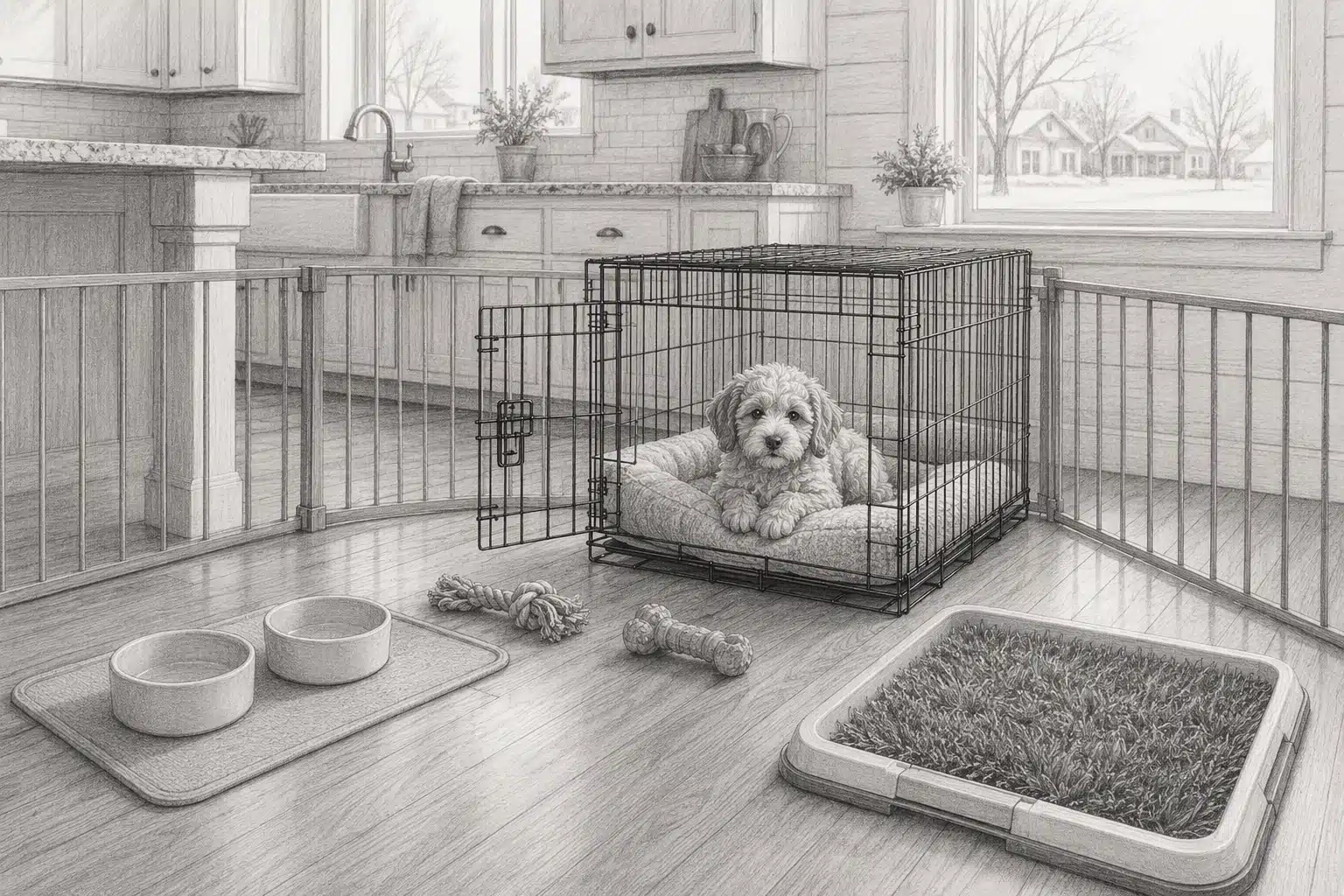
- Create a resting space away from the busiest doorway, with an adult able to supervise.
- Check gates and doors from the puppy’s height; prevent access to stairs and rooms you have not prepared.
- Store medicines, cleaners, food hazards and chewable cords securely out of reach.
- Make sure children and other animals have separate calm areas and an adult guides introductions.
For an apartment, check pet permission and the door-to-toilet route, including stairs or an elevator. For a rural home, inspect the immediate gate, driveway and first outdoor area instead of treating the whole property as safe exploration space. Agree on who opens doors and handles the lead when people arrive carrying bags or supplies.
Prepare the winter entry and toilet routine
Cornell’s winter safety guidance explains that small dogs and puppies can be more vulnerable to cold, and that tolerance varies. Ask your veterinarian about the individual puppy’s exposure rather than choosing a universal temperature or minute limit. Prepare a short, secure route and a warm, dry place to return to.
Keep a towel and suitable cleanup supplies near the entry. Check paws and remove snow, salt or de-icer after returning indoors, following veterinary advice if the skin looks irritated. Store de-icers and antifreeze safely, clean spills and prevent access. Seek veterinary help promptly if you suspect an exposure or illness; a “pet-friendly” label does not make every use safe.
Decide how an adult will manage the toilet routine when the usual path is icy, snow-covered or unavailable. Use the receiving veterinarian’s advice about age and exposure for any alternate setup. Check the route again when conditions change rather than assuming the arrangement you made on arrival day still works.
Build an indoor routine that fits a normal workday
Start with short supervised activities, gentle handling, familiar feeding instructions and protected rest. Introduce a grooming routine gradually and ask what the puppy has already experienced. Give the puppy time to settle before filling the calendar with visitors or outings. A breed label is not a promise that it can manage long periods without care.
Write down who covers the morning, midday and evening tasks and who can step in during a meeting or delayed return. A nearby helper should know the care notes, entry rules and contact plan. In a rural setting, account for the actual drive to help; in a city home, account for access to the building and shared outdoor areas.
Include the puppy in the household emergency plan
NEMA’s pet-preparedness guidance recommends a pet care buddy system, accessible supplies and a confirmed place for pets if evacuation is needed. Keep food, water, a carrier, records and identification information together where the responsible adult can find them. Check a proposed destination’s current pet arrangements directly; a general emergency shelter listing is not a space reservation.
A delay can also affect an ordinary care trip. Read NDOT winter-travel guidance before setting out, and arrange who cares for the puppy if roads disrupt the usual plan. Our first vet visit in Nebraska guide helps prepare the receiving clinic, records and backup contacts. Keep the actual veterinarian’s instructions separate from general household notes.
Walk through arrival day with Cassie
Tell Cassie how your Nebraska home is prepared, who receives the puppy and how flexible your timing is. Use Delivery & Pickup and How It Works to discuss the supported arrangement. In your application, describe the actual address, care coverage and backup plan. Confirm the individual puppy, travel documents and receiving care before booking.