
Quick Summary: Choose a Havanese if you want predictability and can commit to daily brushing, or a Havapoo if you prefer a potentially easier coat and don’t mind variation in size and energy. Both breeds need about 30-45 minutes of daily activity and struggle with long periods alone, so plan for a midday visit if you work full-time. The real decision hinges on your grooming time and tolerance for unpredictability, not just the breed label. Sage Puppies, a home-raised breeder in Utah, offers both breeds and matches puppies to families based on their daily routine.
If your day holds a full work shift, a couple of short walks, and a few minutes for brushing, a Havanese may be the steadier fit. If you’d enjoy a playful Havanese-Poodle mix and can roll with some variation in coat and energy, a Havapoo might suit you better. This Havapoo vs Havanese choice depends less on the breed label than on how your real routine runs.
Both breeds promise the same thing: a small, affectionate companion. But coats, company needs, and activity levels can quietly decide whether the match feels easy or overwhelming.
In this guide, we compare the two through the rhythm of an ordinary day, show what’s predictable and what varies, and give you the questions to ask about each puppy and its parents. As a home-raised program in South Jordan, Utah, we raise both breeds, so families can compare them side by side and explore our available puppies when ready.
Havapoo vs Havanese: Routine Fit at a Glance
| Havapoo | Havanese | |
|---|---|---|
| Typical routine fit | People-oriented home ready for daily interaction | Social companion for an involved household |
| Time alone | May struggle with long periods alone | Does not do well left alone for long |
| Activity and enrichment | Moderate daily activity; individual needs vary | Moderate exercise and regular interaction |
| Coat-care planning | Coat texture varies; regular care needed | Long coat needs frequent brushing |
| Predictability | More variation in coat, size, and traits | Defined breed standard; individual variation remains |
How Havapoo and Havanese Compare
Havapoo
The Havapoo is a Havanese-Poodle mix bred for families who want an affectionate, people-oriented companion. Its coat, size, and traits can vary between individual puppies, so matching one to your routine means evaluating each pup. It fits homes where someone is around most of the day.

Key strengths
- Warm, affectionate family companion
- Moderate daily activity needs
- Poodle heritage in the mix
Havanese
The Havanese is an established companion breed with a defined breed profile, which gives families a clearer reference for what to expect. It thrives in an involved household and does not do well left alone for long. Its long coat needs frequent brushing to stay healthy.

Key strengths
- Defined breed standard for expectations
- Social, engaging temperament
- Moderate exercise requirements
How Each Puppy Fits Into a Typical Weekday
A Havapoo and a Havanese share the same basic weekday needs. Both are companion breeds, and both want to be near their people. The real difference is how flexible each one is as your schedule shifts.
| Weekday Factor | Havanese | Havapoo |
|---|---|---|
| Routine needs | Steady and predictable | Adapts to your rhythm |
| Alone-time tolerance | Learns it well with practice | Varies by individual puppy |
| Activity spread | Short play sessions | Often a bit more energy |
If Your Household Is Home Most of the Day
This is the easier setup for both breeds, honestly. A puppy under 10 weeks can only hold its bladder for about an hour, and even at six months the limit is around six hours, according to the AKC’s puppy alone-time guidance. With someone home, that is rarely a problem.
Break the day into short blocks: potty break, play, meal, nap. Puppies sleep up to 18 hours a day, so most of the “work” is keeping a rhythm, not entertaining them. A Havanese will settle into that rhythm quickly because the breed expects companionship and routine. A Havapoo often brings a little more playfulness to the mix, so plan two or three active bursts instead of one long session.
If Everyone Leaves for Work or School
Now predictability matters more. Havanese lines tend to be more standardized in temperament, so their response to a midday break is easier to anticipate. Havapoo puppies can vary more from one puppy to the next, which is not a flaw. It just means you should ask more questions before choosing.
A midday visit from a dog walker or sitter solves most of the gap for either breed. Ask a breeder which individual puppy in a litter handled short crate sessions calmly. That single question tells you more than the breed name on the paperwork.
Also Read: 10 Signs a California Puppy Listing Is a Scam – Sage Puppies
Daily Activity, Training, and the Pace of Home Life
Neither the Havanese nor the Havapoo needs a marathon schedule. Both do well with about 30 minutes of daily activity, and the AKC notes that brisk walks or playtime with their person are often enough for a Havanese.
A Manageable Activity Plan for a Busy Household
Here’s what a realistic weekday looks like for either puppy:
- Morning: One 10 to 15 minute walk before the day starts.
- Midday: A short potty break and a few minutes of fetch or a puzzle toy.
- Evening: Another short walk, plus 5 minutes of training practice.
- Wind-down: Calm cuddle time. Both breeds are true lap dogs at heart.
PetMD suggests aiming for 30 total daily minutes, broken into 10-minute sessions. That’s easy to fit around school runs, work calls, and dinner.

Training matters as much as exercise. Both breeds are smart and eager to please, but the Havanese is sensitive, so reward-based methods work best. A Havapoo inherits some Poodle biddability and is usually just as quick to learn. Keep sessions short, positive, and consistent.
Both breeds hate being alone for long stretches. If your household is empty for 9 hours a day, plan for a midday dog walker or doggy daycare before you commit to either puppy.
Matching Energy to the Puppy in Front of You
This is where the two differ. Havanese are more standardized: the breed was built for companionship, so energy is predictably moderate with bursts of play. A Havapoo varies more, because Poodle genes can swing either direction. Some Havapoos are mellow couch dogs. Others want two play sessions and a training game on top of their walk.
So don’t shop by breed label alone. Ask the breeder which puppy in the litter zooms around after meals and which one naps in your lap. A good program like Sage Puppies raises puppies at home and watches each litter daily, so they can honestly match a calmer puppy to a quieter household and a busier one to a family that hikes on weekends.
Two quick questions before you choose:
- Can you honestly offer 30 to 60 active minutes plus companionship most days?
- Do you want predictability (lean Havanese) or are you happy to meet the individual puppy where it lands (Havapoo)?
If both answers feel good, either breed can fit your routine.
Also Read: Puppy Care Blog & Resources | Sage Puppies
Grooming Time: Plan for the Coat, Not Just the Breed Name
Both breeds carry hair instead of fur, so neither sheds much. The real difference is how predictable the coat is. A Havanese puppy usually grows into the coat its parents have: silky, fine, and prone to mats without steady brushing. A Havapoo can land anywhere between that silky texture and a denser, curlier poodle-type coat, sometimes within the same litter. Per the AKC breed standard, the Havanese coat is long, soft, and wavy, which is exactly the texture that tangles fastest.
What Changes When Coat Texture Varies
Texture drives your schedule more than breed does. Straighter, silky coats mat along the collar, behind the ears, and in the armpits. Curlier coats hold debris and tighten into felt if you skip a week. That is why the honest answer to “how much grooming?” is: ask to see the parents’ coats in person.
- Silky coats (typical Havanese): brush 3 to 4 times a week, bathe every 2 to 3 weeks.
- Wavy or curly coats (common in Havapoos): brush every 1 to 2 days, and plan professional trims every 6 to 8 weeks.
- Either coat: start handling paws, ears, and the muzzle early so brushing stays calm.
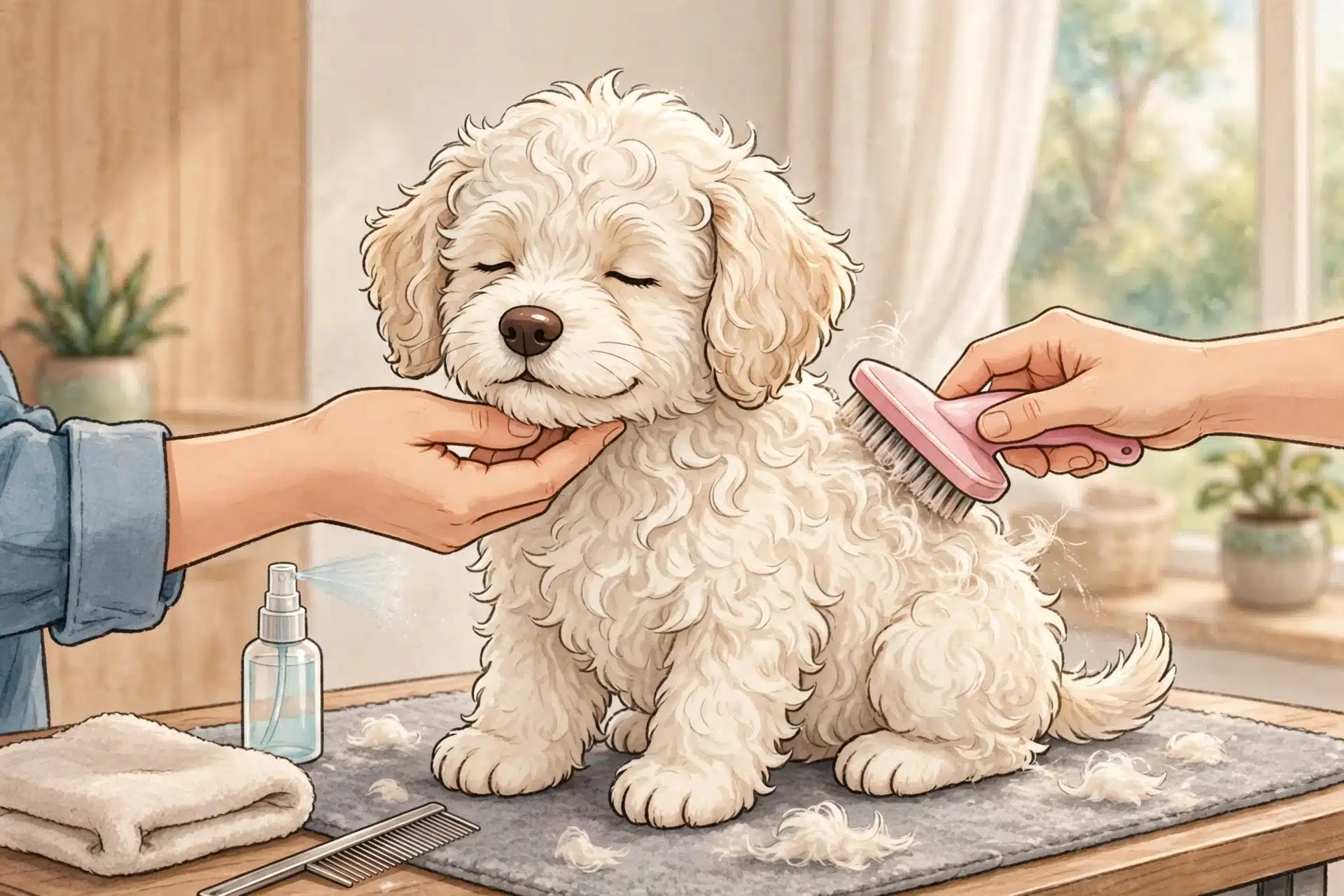
A good breeder tells you which coat type a litter leans toward and shows you the adult dogs. At Sage Puppies, we send puppies home already used to brushes, clippers running nearby, and short handling sessions, so the first groom is a normal day rather than a scary one.
Build Grooming Into the Week Before Puppy Comes Home
Set the routine before pickup day, not after mats appear.
- Buy a slicker brush and a metal comb now; the comb checks whether brushing reached the skin.
- Book your first professional trim for 8 to 10 weeks out.
- Schedule five short brushing sessions a week, two minutes each, on a set evening time.
- Trim nails weekly from day one so it stays routine.
Key insight: Budget grooming time like exercise. A Havanese needs a steady weekly slot; a Havapoo’s time can swing higher, so confirm the coat with the breeder before you commit either way.
Predictability, Puppy Matching, and Questions to Ask
What the Breed Label Can and Cannot Tell You
A breed label sets expectations. It just cannot promise them. Havanese are a recognized breed with a written standard, so size, coat, and general temperament fall within a fairly narrow range. A Havapoo carries mixed genetics, so adult coat, size, and energy can lean more toward the Havanese parent or more toward the poodle.
Research backs this up. Studies following puppies into adulthood found that puppy temperament scores predicted breed but not how the individual dog would turn out, and one large review concluded early tests hold “limited predictive validity” for adult pet dogs. Even within a breed, one study found breed explained only about 10% of personality differences, while litter mattered more.
That is not a warning. It is a planning tool. A Havanese gives you a tighter range. A Havapoo gives you a looser one, which a good breeder narrows by knowing their parent dogs and each puppy’s tendencies. At Sage Puppies, we match families by talking through your daily routine, not just the breed name, because the puppy in front of you matters as much as the breed on paper.

Questions That Make a Puppy Search More Useful
Bring these questions to any breeder you talk to:
- Which parent does each puppy favor in coat, size, and energy?
- How do you describe this puppy today – bold, mellow, watchful, social?
- What early exposure has the litter had – kids, handling, new sounds, crate starts?
- Can I see or video the parents, and what health testing have they had?
- How do you match puppies to families, and what happens if my pick is a poor fit?
- What support do you offer after pickup or delivery?
Breeder answers tell you as much as the breed label does. Vague answers suggest a loose process. Specific ones suggest a breeder who knows every puppy individually.
Also Read: Havapoo Puppy Checklist: Supplies, Scheduling, and First-Week Tips
If you want predictability, the Havanese wins. It’s an established breed with a clear standard: friendly, playful, alert, and intelligent, weighing 7 to 13 pounds. The AKC’s breed guide notes these dogs adapt to city or suburb homes and only need moderate exercise, like brisk walks or play sessions. The trade-off is the coat. Daily brushing keeps the silky hair mat-free, though many owners choose a short clip to cut grooming time.
If you want flexibility, the Havapoo fits. Crossing a Havanese with a Poodle often produces a lower-shedding, wavier coat that’s easier to maintain, plus a slightly sturdier build. The catch: less standardization. Coat type, adult size, and shedding can vary from one puppy to the next, even within the same litter. You won’t know exactly what you’re getting until you meet the individual pup.
Use these questions to decide:
- Grooming time. Can you brush daily for a Havanese, or would a Havapoo’s easier coat suit your routine better?
- Allergies. If mild allergies matter, a curlier Havapoo coat may shed less, but always spend time with the puppy first.
- Predictability. Do you want a known adult size and temperament, or are you happy with some healthy variety?
- Schedule. Both breeds are people dogs who struggle with long days alone, so plan company or a midday visit either way.

At Sage Puppies, we raise both in our South Jordan, Utah home, so you can compare temperaments side by side before you commit. Tell us about your typical week and we’ll help you match the right puppy, then arrange pickup or nationwide delivery.

Whichever breed fits your routine, the right puppy comes down to how it’s raised. At Sage Puppies, our home-raised Havanese and Havapoo puppies come from health-tested parents and get early socialization from day one. Browse available puppies, then apply or reserve – with pickup in South Jordan, Utah or nationwide delivery to your door.
Frequently Asked Questions
Q1: Should I choose a Havapoo or a Havanese for my routine?
If someone is home most days and wants predictability, pick a Havanese. If you want a slightly calmer, possibly lower-shedding companion and can handle some trait variation, a Havapoo fits well.
Q2: Which breed needs more grooming?
Both need regular brushing. Havanese coats are more predictable in texture, while a Havapoo may inherit wavier, denser fur that mats faster. Plan on brushing several times weekly for either.
Q3: Are Havapoos good for first-time owners?
Yes. Their small size and friendly nature suit beginners. Just meet the parents and ask about coat and temperament so you know what to expect as your puppy matures.
Q4: Can I get a puppy delivered instead of picking up?
Many breeders, including Sage Puppies, offer nationwide delivery alongside pickup. Ask how puppies are transported, what age they travel, and how they’re prepared for the trip.
Q5: How much exercise does each breed need daily?
Both need about 30 to 45 minutes. Short walks, play sessions, and training games cover it. Neither breed demands runs, making both realistic for busier households.
Your Next Step Toward the Right Puppy
If your schedule is steady and you want fewer surprises, a Havanese is the safer bet. The breed standard describes the temperament, coat, and size you can reasonably expect from a well-bred puppy. If you want a little extra variety in coat and energy, and you like the idea of a low-shedding mix, a Havapoo gives you more range to match. Either way, the puppy comes from the same Havanese line. The Havanese Club of America notes both are happiest with steady human company. Match the puppy to your real week, not your ideal one.



