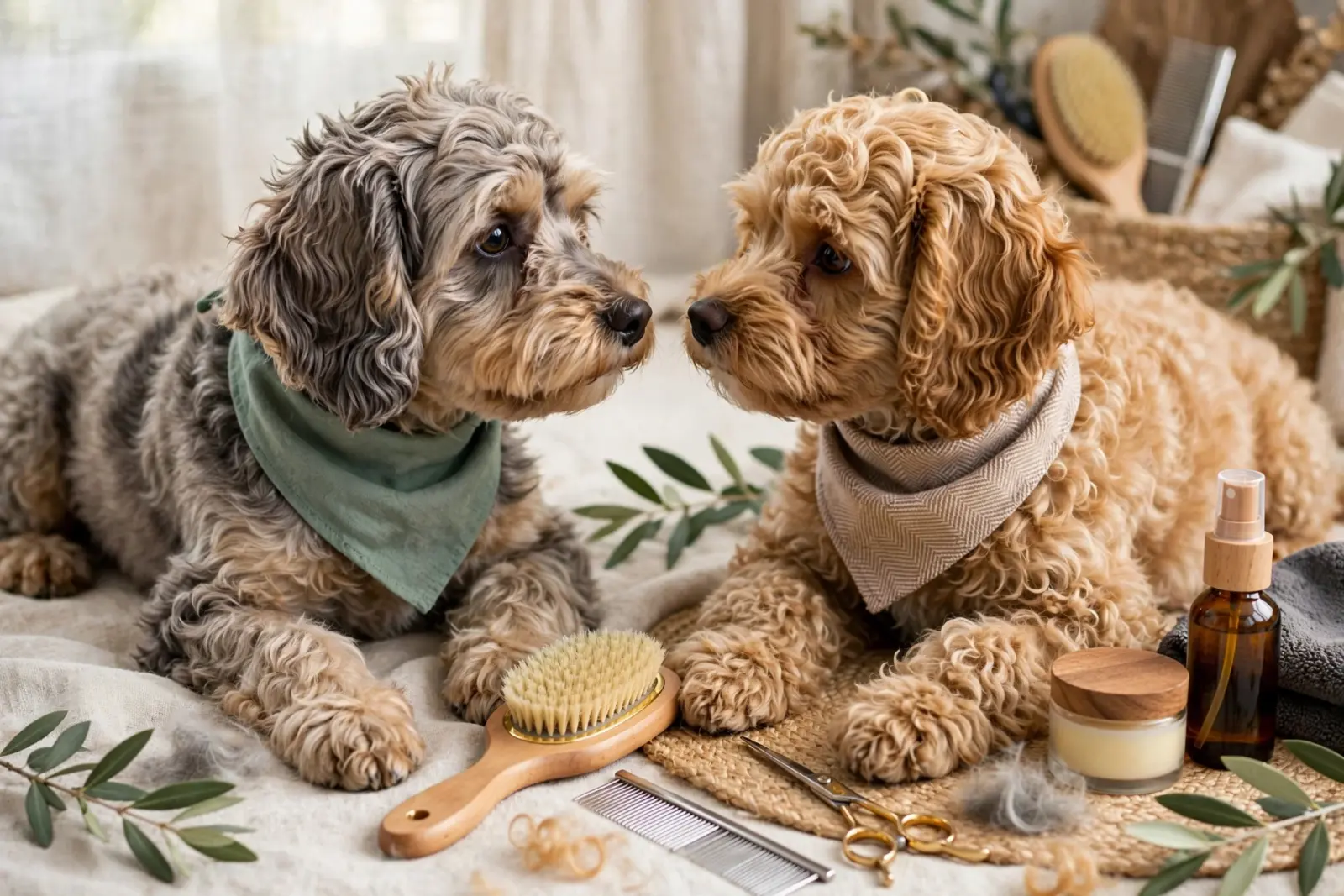
Quick Summary: Havanese puppies are easier to manage day to day, needing brushing three or four times a week and trims every 8 to 12 weeks, while their colored coats hide staining better. Bichon Frise puppies need daily brushing, regular tear-stain cleanup, and professional grooming about every four weeks to maintain their sculpted white coat. The Bichon costs more to groom, while the Havanese requires more consistent home brushing, especially during the coat change between 8 and 12 months.
Two puppies that look like cousins on paper can ask for two very different calendars. In the Havanese vs Bichon puppies question, the Havanese needs a thorough brush-out most days to keep that silky double coat from tangling at the skin, but its trim can wait eight to twelve weeks. The Bichon Frise may look like a neat powderpuff, yet it needs a bath-and-trim visit roughly every four weeks, plus tear staining on a white coat that shows every miss.
Most families read a breed profile that covers coat care in one line, then discover the real grooming load the week the puppy arrives. This comparison walks through what actually changes your week and your budget: how each coat mats, bathing, trimming, staining, the tools to buy before day one, and which coat fits your home.
Havanese vs Bichon Puppies: Coat Care at a Glance
| Havanese | Bichon Frise | |
|---|---|---|
| Coat type and texture | Long, silky double coat, wavy to curly, many colors and patterns | Soft curly white double coat with coarse guard hairs, trimmed rounded shape |
| Brushing frequency | Daily to every other day for full coats; several times a week for shorter puppy cuts | Daily once the adult coat arrives, plus combing to the skin |
| Professional grooming schedule | Every 8 to 12 weeks typical, more often if kept in a long show-length coat | Full bath and haircut about every 4 weeks per breed club guidance |
| Bathing and stain upkeep | Baths every 4 to 6 weeks; staining is less visible than on white coats | Baths every 1 to 2 weeks; tear and saliva staining need daily attention |
| Best fit for coat-care lifestyle | Owners who will brush daily and want color and cut flexibility | Owners who want the sculpted look and can budget regular salon visits |
How Havanese and Bichon Frise Compare
Havanese
Cuba’s national dog, the Havanese is a small companion breed with a long, silky double coat that waves or curls and comes in many colors and patterns. It suits owners who will brush daily or every other day on a full coat and enjoy color and cut flexibility. A typical trim happens every 8 to 12 weeks, more often at show length.
Key strengths
- Silky double coat in many colors, so staining shows less than on white coats
- Baths only every 4 to 6 weeks
- Flexible between short puppy cuts and long coats
Bichon Frise
The Bichon Frise is a small, cheerful companion with a soft, curly white double coat, traditionally trimmed into a rounded powderpuff shape. Its grooming plan rewards owners who want that sculpted look and can budget regular salon visits, since full baths and haircuts come about every 4 weeks. Daily brushing to the skin keeps the white coat mat-free and helps manage tear and saliva staining.
Key strengths
- Classic powderpuff style that holds its shape
- Bright white coat that photographs beautifully
- Cheerful, people-focused temperament during grooming sessions
Two Coats That Look Similar but Behave Nothing Alike
At a glance, a fluffy Havanese puppy and a Bichon Frise puppy could be siblings. Both are small, white or cream, and adorably round. The care they need, though, runs on two different systems, and knowing the difference helps you choose the coat you can actually live with.
What the AKC breed standard says about the Havanese coat
The Havanese standard calls for a long, untrimmed, wavy double coat. Unlike most double coats, it lacks harsh guard hair and a woolly undercoat, so it feels light and silky rather than dense. In the show ring it stays untrimmed, which is why a full-length adult Havanese looks like a walking silk scarf. At home, most families keep it shorter: a typical trim comes every 8 to 12 weeks, with brushing down to the skin between visits. Mats form behind the ears and in the armpits first, so those spots need the most attention. The adult coat goes through a change between roughly eight and twelve months, which is when tangles spike. For a closer look at how the breed behaves day to day, see this guide to Havanese temperament and care basics.

Why the Bichon powderpuff shape is a grooming decision
The Bichon’s famous powderpuff outline is not what the coat does naturally. It is the product of scissor work: the groomer sculpts the curly coat into that round, plush shape. Keeping it means committing to the four-week professional cycle, plus frequent brushing so the curled hair does not felt against the skin. If you skip the salon appointments, the coat still needs trims, just on a looser, more casual shape. The look is a choice, and the schedule comes with it. Per the official AKC Havanese standard, the Havanese coat is meant to stay untrimmed, which is the opposite approach: length is the default, and cutting is the owner’s option rather than the breed’s signature.
Brushing and Matting: Where the Two Coats Diverge
Both coats tangle, but not in the same places or at the same pace. The Havanese has a silky double coat that mats when loose hair and undercoat get trapped, so it needs a brush-out down to the skin several times a week, plus a trim every 8 to 12 weeks. The Bichon’s curly double coat tightens fast in friction spots, so it needs daily brushing and salon visits about every 4 weeks.
- Brushing frequency: Havanese, 3 to 4 sessions a week; Bichon, daily
- Mat risk: Havanese, trapped undercoat; Bichon, curling hair behind ears and armpits
- Trim cadence: Havanese, every 8 to 12 weeks; Bichon, about every 4 weeks
- Stain upkeep: both white-ish coats show tear and saliva staining, worse on the Bichon’s crisp white coat
The daily brush-out the Havanese owner needs
Set aside 10 to 15 minutes, three or four times a week. Mist the coat with a detangling spray first, because pulling a dry brush through long hair breaks it and hurts. Then work in line brushing: part the hair, brush from the skin outward, and move across the body one strip at a time. Follow with a metal comb to catch anything the brush missed. The spots that fail first are behind the ears, under the collar, the armpits and the pantaloons on the back legs. Skip the topcoat-only brushing most people do by habit. It looks fine for a week, then a solid mat forms underneath. Our care guide for Havanese puppies walks through this routine step by step.
Why the Bichon mats where it mats
The Bichon’s curls start at the skin and kink back on themselves, so any hair that sheds stays stuck in the coat instead of falling out. Friction areas go first: behind the ears, the armpits, the groin, and the harness or collar line. A mat there tightens within days, pulls the skin, and can hide hot spots. Daily brushing is the fix. Use a slicker brush in short strokes, then a greyhound comb down to the skin to prove you got the base. Check those four zones every evening; 60 seconds each beats an hour of dematting later. Keep the coat short in summer and you cut the daily session in half without changing anything else.
Bathing and the Reality of a White Coat
The Bichon bathing rhythm
A Bichon’s white coat shows everything, so baths come often. Most groomers set a full bath and haircut about every 4 weeks, and the breed’s club guidance supports that rhythm. Some owners stretch it by keeping the coat in a shorter trim and wiping the coat down after meals and outdoor play.
Technique matters as much as timing. Always brush out tangles before water touches the coat, because shampoo tightens mats instead of loosening them. Then blow dry to the skin while lifting the hair; air drying leaves the undercoat damp and curled, which sets the stage for mats and skin problems. A high velocity dryer makes this fast, but a regular dryer and your fingers work on a patient puppy.
Tear staining: a white coat problem with a color-coat workaround
Tear staining is the part of white-coat life nobody warns you about. Moisture from the eyes and around the mouth reacts with bacteria and iron, leaving reddish-brown streaks that stand out sharply on white hair. Daily care keeps it in check: wipe the eye area each morning, keep the face hair trimmed short, and ask your vet if staining is heavy, since blocked tear ducts or allergies can be the real cause.
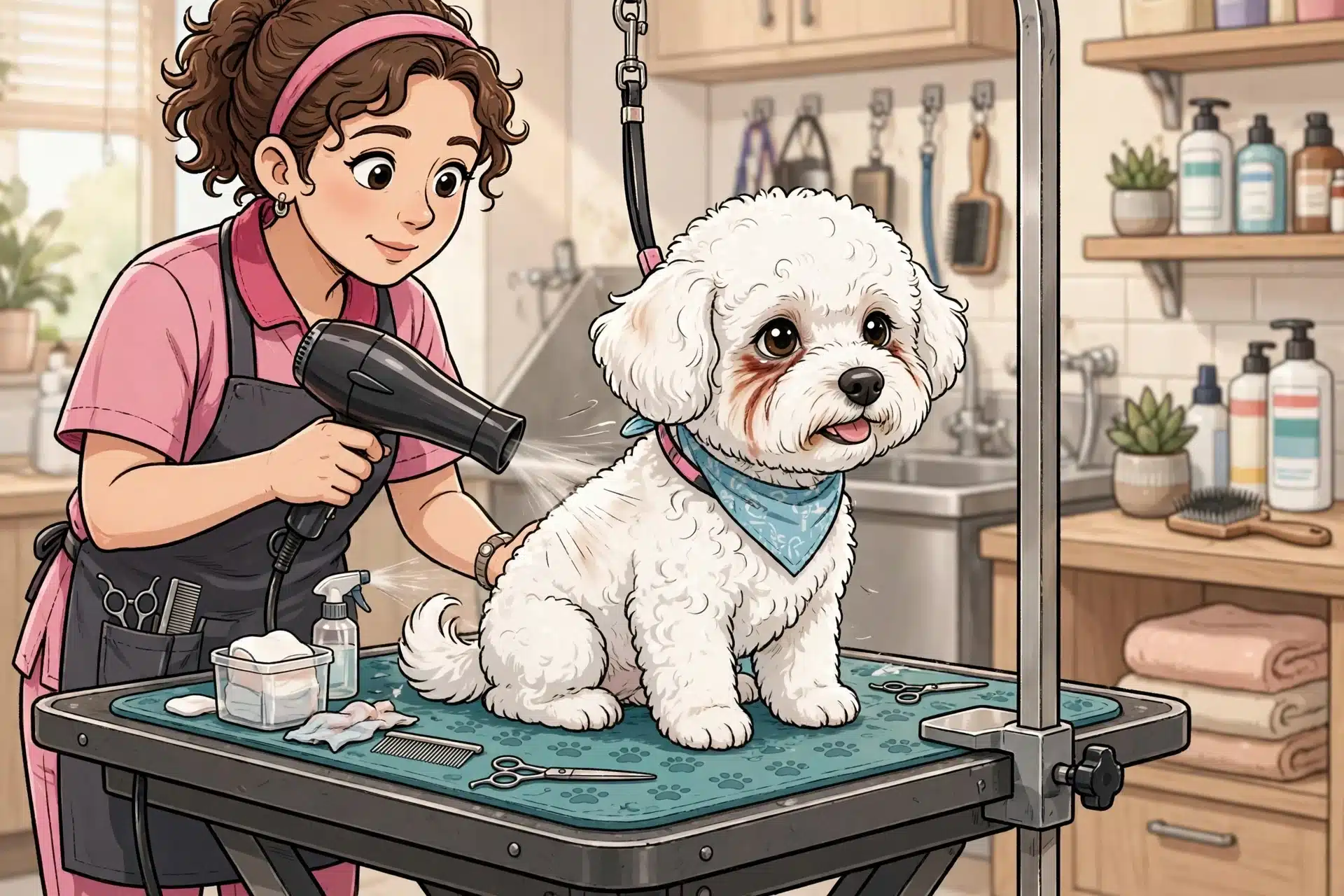
The Havanese gets a partial pass. Tear and saliva stains still happen, but the breed’s cream, fawn, and silver tones hide them well, so daily face wipes are optional rather than required. That is a real time saver if you want a polished dog without a nightly stain routine. For general care context, our page on Havanese puppy temperament, care, and training covers the same day-to-day handling habits.
Trims, Salon Schedules and What Coat Maintenance Actually Costs
Short answer: a Bichon Frise needs professional grooming about every 4 weeks, and at a typical $50 to $100 per visit that adds up to roughly $1,500 to $2,600 in salon fees in the first year. A Havanese on an 8 to 12 week trim cadence visits far less often, so the salon bill drops but home brushing time rises.
Why the Bichon is the salon breed
The Bichon’s curly double coat grows tight and dense, and that sculpted round head and body look does not happen at home. So most owners book a full bath and haircut monthly, which matches breed-specific grooming guidance. Skip a visit and the coat tightens into mats behind the ears and armpits, then the groomer has to clip shorter than you wanted. Most Bichon families pay $50 to $100 per visit, depending on region and coat condition.
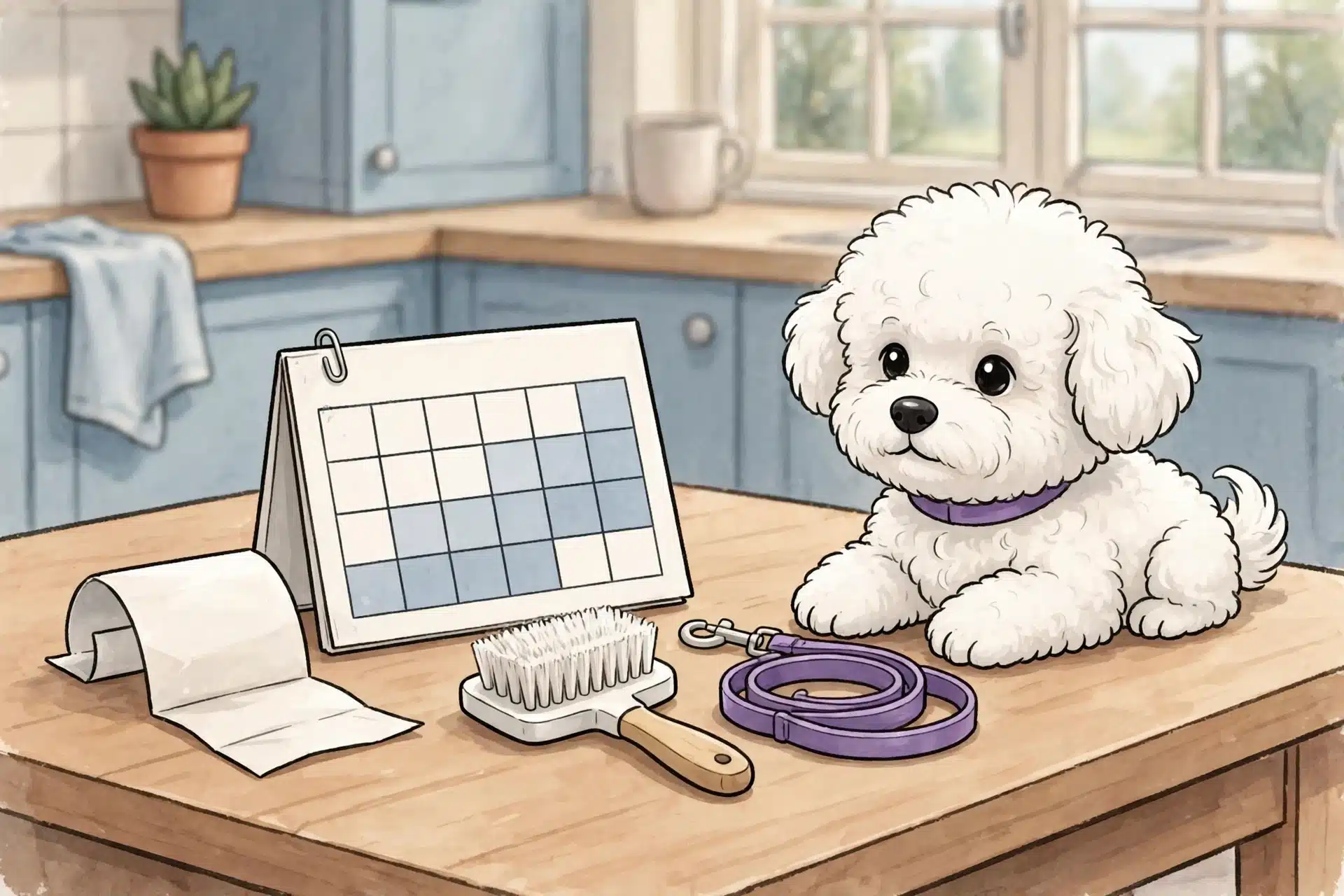
A labeled budget example for year one
This is a labeled example, not a quote. Say a Bichon puppy starts salon visits at 4 months and goes every 4 weeks:
| Item | Example | Year-one total |
|---|---|---|
| Salon grooms, 10 visits | $75 each | $750 |
| Puppy intro grooms, 2 visits | $50 each | $100 |
| Brush, comb, detangling spray | one-time | $60 |
| Total | $910 |
A Havanese family might book 4 to 6 trims instead, around $300 to $500, but adds weekly brushing time at home. For how that daily routine changes as the adult coat grows in, see our Havanese care basics.
Tools, Time and the First-Year Coat Transition
The right tools depend on which coat you bring home. A Havanese puppy needs a slicker brush, a metal greyhound comb, and a detangling spray used before every session. The comb matters most: it tells you whether you reached the skin or only the top layer. Bichon puppies need the same brush and comb plus daily attention behind the ears and armpits, where the curly coat tightens into mats fastest. Both breeds benefit from a grooming table with a non-slip mat, because a raised, steady surface calms a wiggly puppy and saves your back. Add blunt-nosed scissors, puppy shampoo, and a dryer, since both coats need to be dried fully down to the skin to prevent damp mats.
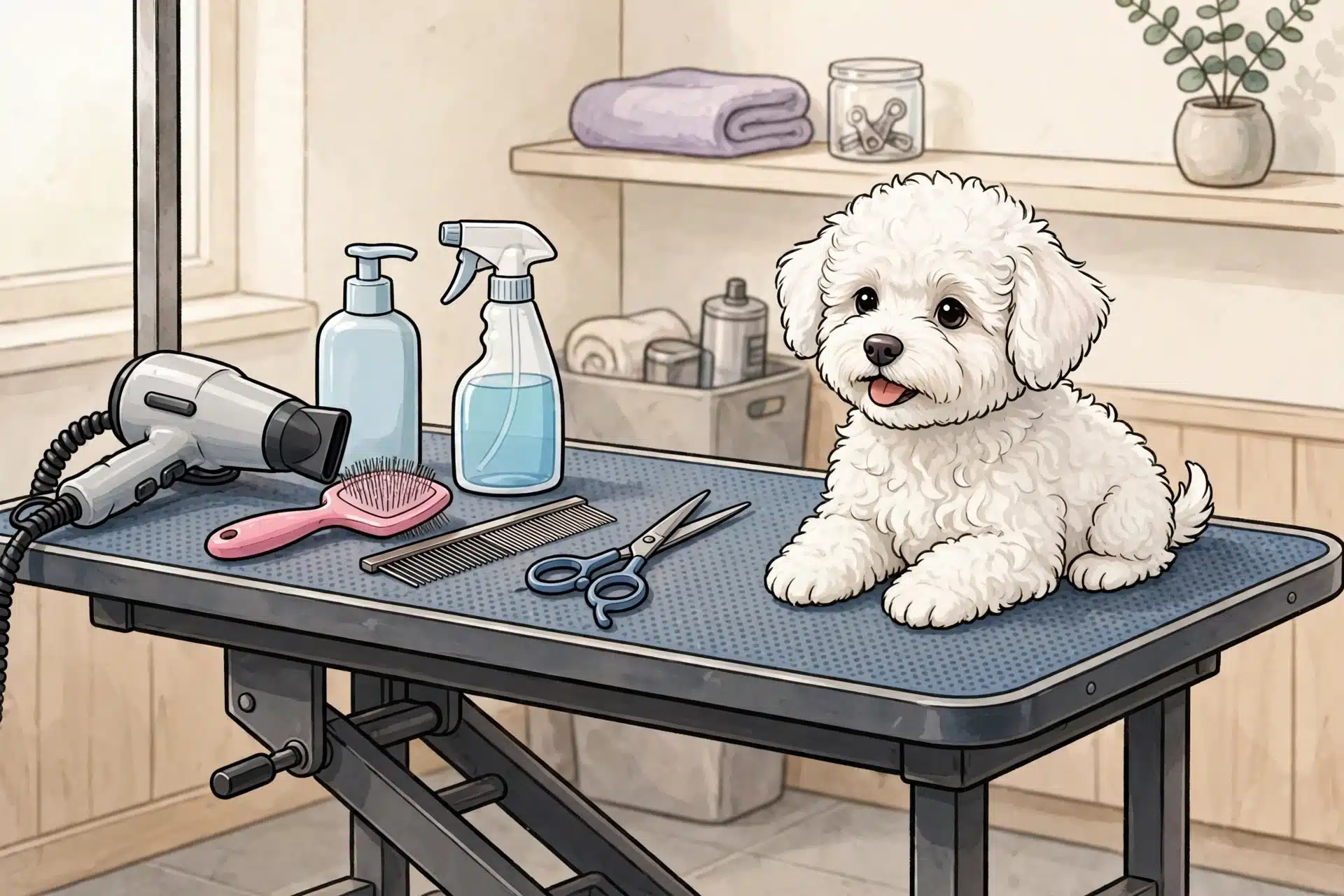
How often should you brush a Havanese puppy? Follow this timeline:
- Weeks 2 to 8: breeder handles coat; you just handle the puppy daily so touch becomes normal.
- Month 2: start 5-minute brush sessions, three or four times a week.
- Months 3 to 7: build to 10 to 15 minutes per session and add the comb check.
- Months 8 to 12: the puppy coat change hits; brush daily, because shedding adult undercoat mats fast.
- Month 12: settle into the adult routine of three to four weekly sessions plus a trim every 8 to 12 weeks.
For Bichon puppies, the same months apply but brushing stays daily from month 3 onward, with salon visits on the four-week cycle from about 4 months old. Sage Puppies sends each puppy home with a simple starter plan so month one never feels like a guess.
Which Should You Choose: Havanese or Bichon?
The honest answer: the Havanese is easier to groom day to day, but the Bichon fits homes that love the look and can keep the salon rhythm. Pick by budget and time, not by which puppy is cuter.
Choose the Havanese when
Choose the Havanese if you want fewer salon trips and a lower long-term grooming bill. Its silky double coat needs brushing three or four times a week with a comb worked down to the skin, plus a trim every 8 to 12 weeks. That cadence keeps salon fees low and gives you flexible scheduling.
It also fits homes that can handle some shedding. The Havanese sheds very little, but loose hair still gets trapped in the coat, so missed sessions turn into mats behind the ears and armpits. Families willing to run a short evening brush-out will do fine.
The breed suits first-time owners who want a forgiving coat. A spritz of detangling spray before brushing a long coat prevents breakage, and the puppy coat change between 8 and 12 months is usually the hardest stretch. After that, the adult double coat settles into a routine. Many Utah families come to us for Havanese puppies for exactly this balance of softness and manageability.
Choose the Bichon when
Choose the Bichon if you want a truly non-shedding white coat and can commit to its demands. Plan on daily brushing, a full groom about every 4 weeks, and roughly $1,500 to $2,600 in salon fees over the first year.
You should also enjoy the sculpted, rounded look. That signature Bichon silhouette only holds with professional trims, a high velocity dryer, and a blow dry to the skin at home. Daily attention to tear and saliva staining matters too, since white coats show every mark.
If those habits sound pleasant rather than burdensome, the Bichon rewards you with a cloud-soft companion that stays tidy between visits.

Whichever coat fits your family’s rhythm, the right start matters. At Sage Puppies, Cassie matches Havanese and Havapoo puppies to how you actually live, then walks you through a grooming plan before pickup or delivery. See available puppies and start the application today.
Frequently Asked Questions
Q1: How do Havanese and Bichon puppy coat care needs compare?
Havanese puppies need brushing three or four times weekly and trims every 8 to 12 weeks. Bichons need daily brushing to the skin and salon visits about every 4 weeks, so the Bichon costs more and takes more time.
Q2: When does the Havanese puppy coat change?
Between eight and twelve months. Shedding adult undercoat mats fast, so brush daily during that stretch.
Q3: Where do mats form first on both breeds?
Behind the ears and in the armpits, plus collar or harness lines. Check those zones daily.
Q4: Does tear staining affect both breeds?
Yes, but the Bichon’s white coat shows it most. Wipe the face daily; Havanese colors hide stains better.
Q5: Which breed costs less to groom?
The Havanese, roughly $300 to $500 yearly versus $1,500 to $2,600 for a Bichon.
Conclusion
Coat care is the real difference in the Havanese vs Bichon puppies decision. The Havanese asks for brushing three or four times a week down to the skin, plus a trim every 8 to 12 weeks, with a harder stretch during the puppy coat change around 8 to 12 months. The Bichon Frise runs on a tighter schedule: daily brushing, a salon visit about every 4 weeks, and steady tear staining upkeep on that white coat. Budget matters too, since a labeled first-year example puts the Bichon’s salon fees far above the Havanese’s. Match the coat to your calendar, your budget, and how much you enjoy grooming, and either breed becomes easy to live with.