Quick Summary: Havanese stay small, topping out at 8.5 to 11.5 inches at the shoulder per the AKC standard, with healthy adults usually landing between 7 and 13 pounds depending on sex, bone structure and diet. The real work is the coat: a long, untrimmed double coat that requires line brushing two to three times a week, baths every two to four weeks, and full blow drying, or it tangles fast. Brush handling should start around eight weeks, and owners can choose a shorter puppy cut instead of the full coat to cut grooming down to a few minutes a day. Sage Puppies, run by Cassie Milar in South Jordan, Utah, matches families with Havanese puppies whose grooming routines are already underway before they go home.
A Havanese puppy looks impossibly small in your arms. That silky coat flatters the impression even more, which is why so many new owners guess wrong about the dog’s final size. Some expect a lap dog that stays tiny forever. Others brace for something far bigger than the breed ever gets.
This guide answers the question directly. It covers Havanese adult size using the official AKC breed standard for height, then gives the average weight range as a reference point rather than an official number. You will also find a coat care plan built around how the breed is actually structured: a long, untrimmed double coat that needs steady attention to stay healthy.
The guidance here follows the AKC standard and grooming direction from the Havanese Club of America, so the numbers and the schedule come from the people who wrote the breed, not from guesswork. Whether you are comparing Havanese adult size against other small breeds or planning a grooming routine, the answers below are the ones breeders and the Havanese adult size standard actually agree on.
How Big Do Havanese Puppies Get as Adults?
A Havanese puppy grows into a small dog, but “small” covers a wide span. Ask three owners and you may hear three different answers, so it helps to start with what the official standard actually says.
What the Breed Standard Actually Specifies
The AKC breed standard defines the Havanese by height, not weight. The acceptable range is 8.5 to 11.5 inches at the withers, which is the highest point of the shoulders. The Havanese Club of America calls 9 to 10.5 inches ideal and notes that height below 8.5 inches is a fault.
Weight is a different story. The standard does not set an official number. Most healthy adults land between 7 and 13 pounds, but treat that as a reference range from breeder experience, not a rule judges measure. Bone structure and muscle matter more in the ring than the scale.
Why the Weight Numbers Vary So Much
Two Havanese can both be correct and still differ by several pounds. Sex plays a part, since females often run lighter than males. Bone density matters too: a heavy-boned dog at 10 inches can outweigh a fine-boned dog of the same height. Some bloodlines simply run sturdier, and breeder discussions commonly report show dogs between 7 and 13 pounds with no single typical figure.
Diet and body condition shift the number as well. A spayed or neutered adult needs fewer calories, so an overfed Havanese can drift well past 13 pounds without getting taller. If a breeder quotes you a fixed adult weight for a puppy, treat it as an educated guess. Our own buyer materials, including the Havanese puppy buyer guide, cover what breeders can and cannot promise about adult size.
Measuring Your Own Havanese
You need two tools: a bathroom scale and a tape measure. For weight, step on the scale holding your dog, then subtract your own weight. For height, have your dog stand square on a hard floor and measure from the floor to the withers with the tape held straight.
Puppies reach most of their height by 8 to 10 months, so a late-adolescent measurement predicts the adult dog fairly well. Keep notes as your puppy grows.
Understanding the Havanese Double Coat
The Havanese carries a long, soft double coat, and the AKC standard expects it shown as naturally as possible with minimal trimming. That structure drives everything about grooming this breed, so it pays to know what you are working with before your puppy comes home.
Outer Coat and Undercoat, Explained
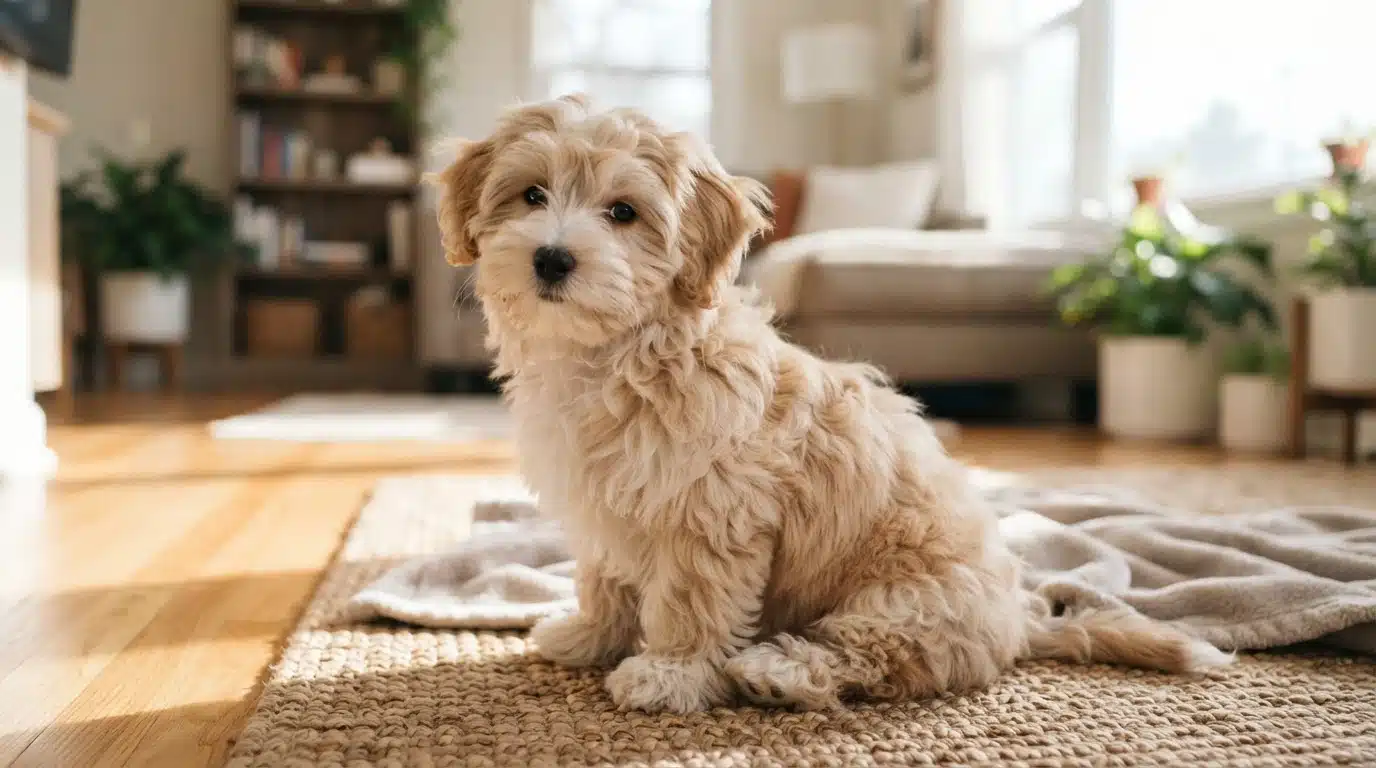
The breed’s profuse double coat has two layers. The outer coat is long, abundant and slightly wavy, while the softer undercoat sits beneath it. According to the UKC breed standard, the whole coat is very soft, and the hair on the head blends toward the face and ears. Adult coats reach roughly 6 to 8 inches with a pearly sheen, per Dog Breed Info. The two layers together trap air, which insulates the dog in both heat and cold. They also mat easily, so daily care matters more than any single product.
What Changes as Your Puppy Grows
Puppies do not start with the adult coat. Most Havanese pups wear a shorter, fluffier puppy coat that sheds out somewhere between 8 and 15 months. During this transition the coat often looks thin, patchy or tangled where the longer adult hair pushes through, which surprises first-time owners. This stage needs the same brushing routine you will use later, because loose puppy hair weaves into the incoming adult coat and forms mats fast. The Havanese Club of America stresses regular brushing and combing, and never brushing the coat dry.
Full Coat or Puppy Cut: Making the Choice Early
You have two realistic paths. A full coat matches the breed standard and turns heads, but it needs near-daily brushing for life. A puppy cut keeps grooming short and easy, though you still brush several times a week. Decide before adolescence, because growing out a trimmed coat takes a year or more. For a schedule that fits either choice, our guide to a Havanese grooming schedule by coat type breaks down the daily work.
A Coat Care Routine You Can Actually Keep Up
A full adult Havanese coat grows 6 to 8 inches long, and the breed standard calls for it to be left untrimmed. That means the grooming work falls on you, not a clipper. The good news: the routine is simple once it becomes a habit.
Building the Habit in the First Year
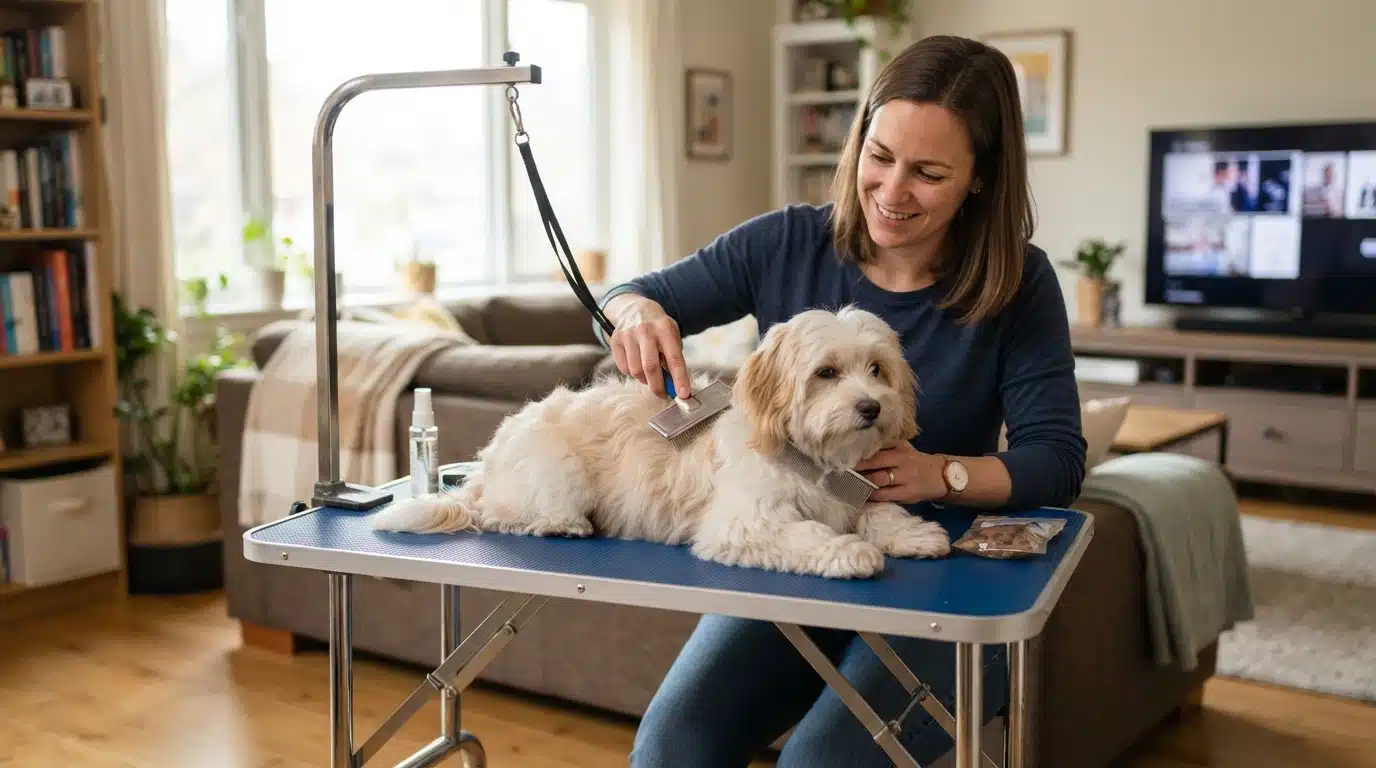
Start brushing your puppy at eight weeks, even though the soft puppy coat barely mats. Three short sessions a week is enough at this stage. The goal is not the coat; it is teaching your puppy that lying still on a table feels normal.
When the adult coat starts to shed in around 8 to 15 months, step up to brushing several times a week. The Havanese Club of America advises two to three brush-outs weekly for a dog in full coat, depending on texture. Many owners find a daily 15-minute session while watching TV is easier than one long weekly battle.
How to Brush and Comb Without Causing Pain
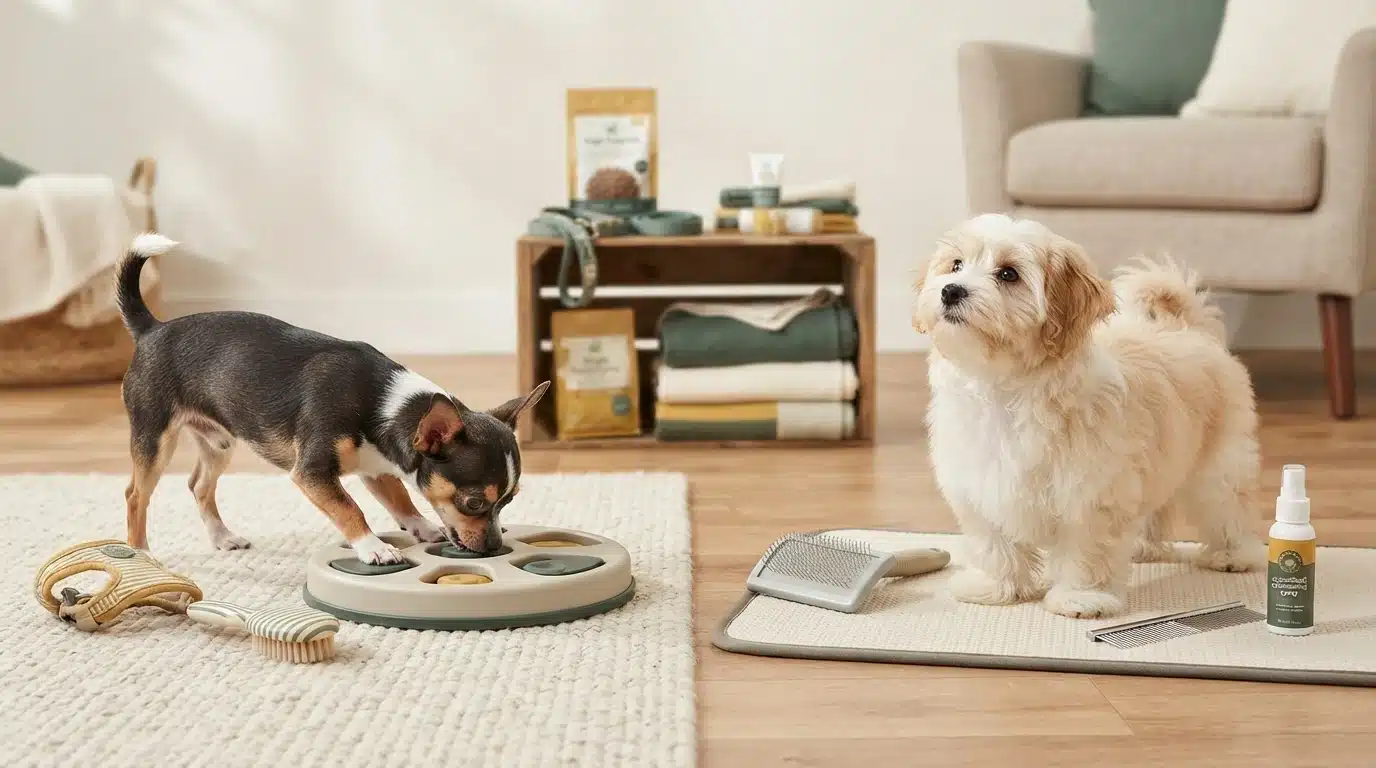
Use a pin brush for the coat and a metal comb for the finish. The comb is your mat detector: if it glides through, you are done; if it catches, go back with the brush.
Spray a light mist of water or detangling spray first, because dry brushing breaks hair. Then brush in line brushing style: part the hair, brush a narrow strip from the skin outward, and work down the body strip by strip. Pulling at tangles hurts, and a hurt puppy learns to hate the brush. Hold the hair at the base with your fingers so any tugging lands on your hand, not the skin. Pay extra attention behind the ears, in the armpits, and inside the legs, where mats form first.
Bathing and Drying
Bathe your Havanese every two to four weeks, or whenever the coat feels oily. Always brush out tangles before the bath, since water tightens mats into felt.
Shampoo twice, then rinse until the water runs clear, because leftover soap itches. The drying step matters more than most owners expect: a damp Havanese mats fast. Squeeze the coat with towels first, then blow dry on low heat while brushing the hair in the direction it lies. Never let the dog air dry.
Trims, Eyes, Ears, and Nails
The breed standard allows only a few trims: hair on the feet and between the pads, a tidy topknot if you choose, and nothing sculpted. Many pet owners skip the full coat entirely and keep a shorter puppy cut, which cuts brushing to a few minutes a day. Our first-time grooming guide walks through both options in detail.
Whatever coat length you keep, stay on the small jobs. Wipe tear stains daily, check ears weekly for wax and odor, and trim nails every few weeks so you can hear the click disappear on the floor.
Coat Care and Size Working Together Day to Day
A small body and a long coat shape your daily routine more than any number on a scale. Here is how the two fit together once your Havanese is home.
Handling a Small Dog in a Long Coat
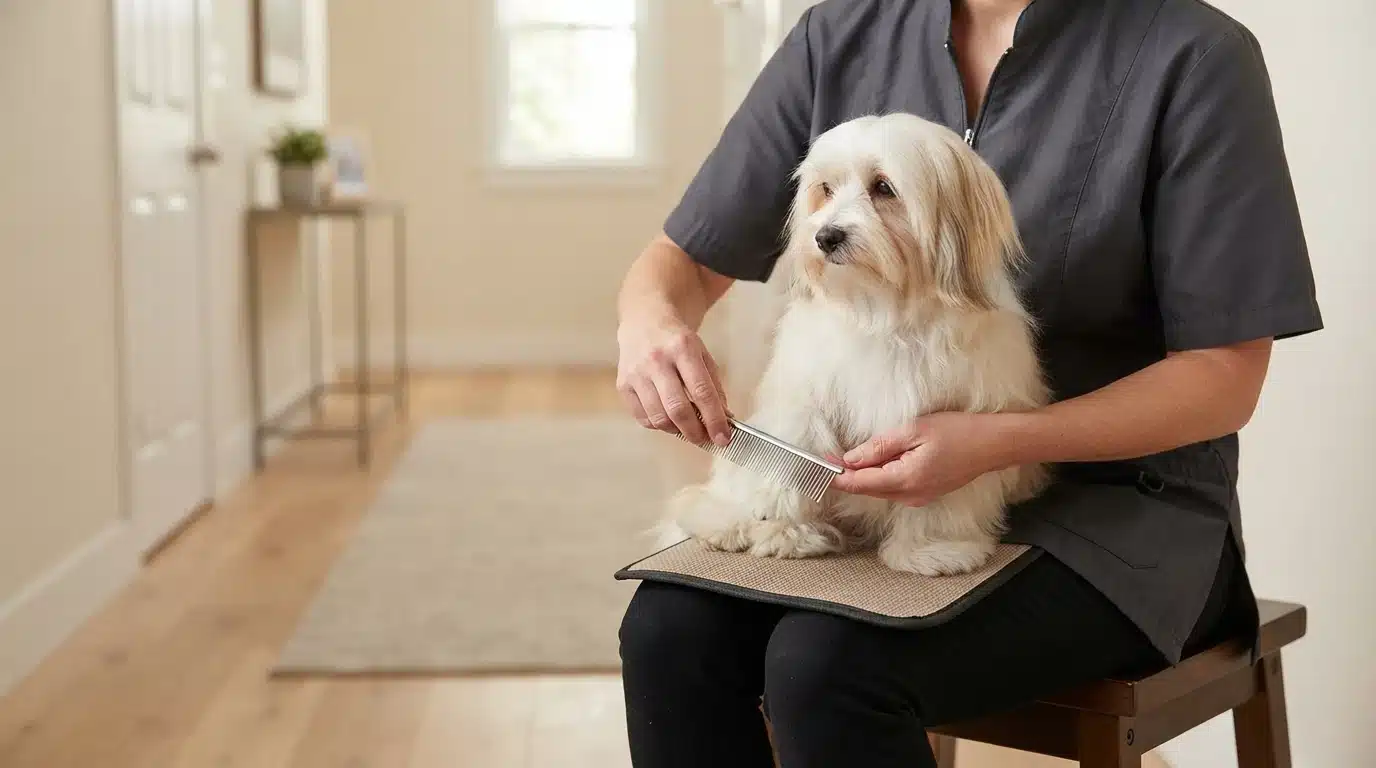
At 8 to 13 pounds, a Havanese is light enough to groom on your lap or a low table, which makes the work easier than it would be with a big dog. The trade-off is fragility. Rough handling, a fall off the couch, or a tug on a matted tangle can injure joints or skin. Work gently from the ends of the hair upward, and never yank on mats. The Havanese Club of Great Britain notes family dogs can be clipped short for easier care, even though the standard favors a long coat.
Planning Your Weekly Time Budget
Give the coat a realistic slot in your week. Many owners find a daily 15-minute session while watching TV easier than one long weekly battle. That adds up to roughly 90 minutes of brushing, plus a bath every two to four weeks and a nail trim along the way. Havanese kept in full coat need daily brushing because the silky hair mats quickly, as professional groomers on Facebook’s pet stylist community warn. If you would rather keep a short clip, budget for groomer visits every four to six weeks instead. Choose one system and stay with it.
When Grooming or Size Worries Are Not the Main Issue
Sometimes the coat or the scale is not the real problem. A dog that fights brushing may be sore, anxious, or under-socialized, so training and a vet check come first. Rapid weight gain often traces to diet and treats rather than bone structure. Breeders like Cassie at Sage Puppies help new owners read these signs early, and a good veterinarian confirms the rest.
What To Ask Before You Bring Your Havanese Home
Good breeders expect questions. Asking them protects your puppy and tells the breeder you are a serious match.
Questions About Size and Growth
Ask to see both parents, or at least their height and weight. Height matters more than weight here, since the AKC standard measures at the shoulder, not the scale. Then ask: How big were this puppy’s parents and grandparents? Where do the puppy’s siblings measure right now? Because a Havanese reaches most of its height by 8 to 10 months, a breeder with experience in the line can give you a solid estimate. Get that estimate in writing.
Questions About Coat and Daily Care
Ask what the puppy’s coat will need at each stage. The short, fluffy puppy coat is easy. The adult coat is not, so ask how the breeder grooms their own dogs and what schedule they recommend. A useful question: Will this puppy’s coat likely be cottony or silkier? Texture changes how much it mats. Ask whether the breeder starts brushing and handling habits before the puppy goes home, because that head start makes your daily 15-minute sessions much easier.

Questions About Records and Screening
Ask for written proof of three things: vaccinations, deworming, and a vet exam. Then ask about parent health testing. The Havanese Club of America recommends BAER hearing tests, CAER eye exams, and OFA hip and patella checks on both parents. The OFA suggests asking breeders directly which tests they run. A confident breeder shares results openly. One that dodges? Walk away.

Ready to meet a Havanese raised with brushing already started? Sage Puppies matches families with well-bred Havanese puppies from Cassie Milar’s program in South Jordan, Utah, with delivery available nationwide. You’ll know what to expect at full size, and daily 15-minute grooming sessions will feel like routine, not a battle. Start your application today.
Frequently Asked Questions
Q1: How big do Havanese puppies get and how do I care for their coat?
Adults stand 8.5 to 11.5 inches at the shoulder per the AKC standard, typically weighing 7 to 13 pounds. Their long double coat needs line brushing two to three times weekly, baths every two to four weeks, and full drying.
Q2: Do Havanese shed?
Very little. The low-shedding coat traps loose hair, but that hair tangles into mats unless you brush it out, so grooming replaces vacuuming.
Q3: When is a Havanese fully grown?
Most reach adult height by 8 to 10 months. Weight fills in a bit longer, and the adult coat finishes transitioning between 8 and 15 months.
Q4: Is a puppy cut better than a full coat?
A puppy cut cuts daily brushing to a few minutes; a full coat needs near-daily care. Neither affects health, so choose based on your schedule.
Q5: How often should I bathe my Havanese?
Every two to four weeks, brushing out tangles first and blow drying completely. A damp coat mats fast, so never let it air dry.
Q6: At what age should I start grooming my puppy?
Start around eight weeks with short, gentle sessions. Early handling makes adult coat care easier and prevents brush anxiety later.
Q7: Can a breeder promise my puppy’s exact adult weight?
No. Weight depends on sex, bone structure and diet, so treat any fixed number as an estimate and ask for the parents’ measurements in writing.
Conclusion
A Havanese stays a small dog with a big grooming commitment. The AKC standard sets height at 8.5 to 11.5 inches, while the 7 to 13 pound range is a breeder reference, not an official number. Expect most of that height by 8 to 10 months, and ask for the parents’ measurements in writing.
The coat drives your daily routine. That long, untrimmed double coat needs line brushing two to three times a week, baths every two to four weeks, and full blow drying, or it mats fast. A puppy cut trades show looks for a few minutes of brushing a day, so pick your path before adolescence and build the brushing habit early. Choose a breeder who shares health testing and starts handling before the puppy comes home.