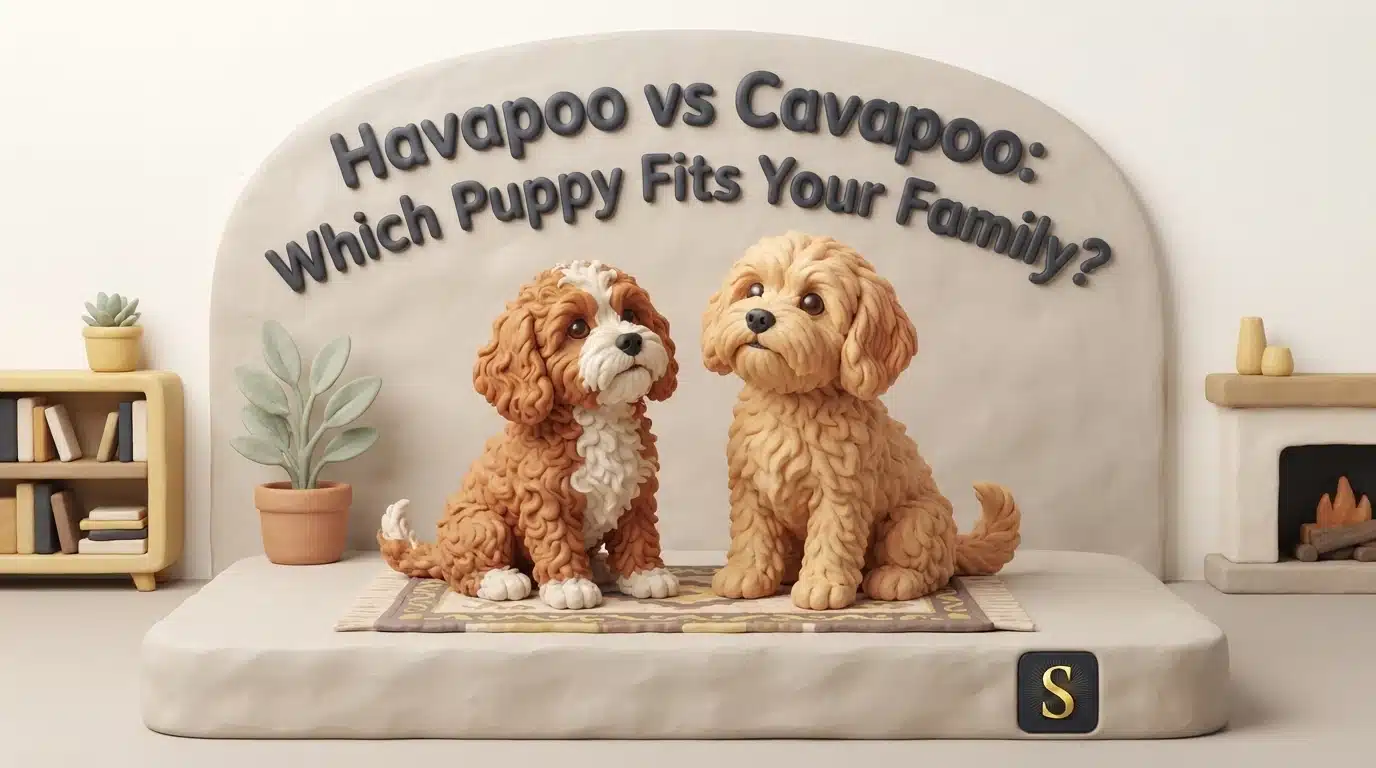
Quick Summary: Havapoos are generally easier for busy owners because they need less daily exercise and adapt better to shorter routines. Cavapoos require more activity and mental stimulation to stay content, making them better for families with more structured schedules. Both breeds benefit from short walks, indoor play, and mental games, but Havapoos handle unpredictable days more easily. Ultimately, choose the breed that matches your routine to keep your dog happy and well-adjusted.
If your weekdays are packed, this choice is usually close, but not identical. Cavapoo Exercise Needs tend to be a bit more predictable day to day. A Havapoo can be the easier fit if you want a flexible, moderate-energy dog that stays happy with simple play, short walks, and easy enrichment.
That is the real question for busy owners. First-time puppy families often want to know which breed will stay content without long hikes, endless fetch, or a routine that feels like a second job. Cavapoo Exercise Needs and Havapoo Exercise Tips matter most when your schedule changes from one day to the next.
This guide compares Cavapoo Exercise Needs, puppy-safe activity, mental stimulation, and real-life planning. It is built as a practical Puppy Exercise Guide for families who want a small companion dog that fits their home, work rhythm, and energy level with confidence.
Cavapoo vs Havapoo: Exercise Needs at a Glance
| Cavapoo | Havapoo | |
|---|---|---|
| Daily exercise need | Moderate; usually around 30–60 minutes total | Moderate; usually around 30–45 minutes total |
| Puppy exercise tolerance | Short, frequent sessions; avoid long or repetitive impact | Short, low-impact sessions; keep it light and age-appropriate |
| Mental stimulation need | High; benefits from training and puzzle games | High; thrives on interaction and simple training |
| Best for busy owners | Good for owners who can offer a predictable daily routine | Very good for owners wanting an adaptable, manageable routine |
| Activity style | Walks, play sessions, and gentle enrichment | Walks, indoor play, and enrichment games |
| Risk if under-exercised | Restlessness, barking, and attention-seeking | Boredom, barking, and destructive habits |
How Cavapoo and Havapoo Compare
Cavapoo
The Cavapoo is a small, affectionate companion mix that fits families who want a sweet dog with a steady daily rhythm. In this comparison, it represents the option that usually does best when busy owners can stick to regular walks, play, and brain work.
Key strengths
- Moderate daily exercise
- Strong with routine
- Loves gentle play and training
Havapoo
The Havapoo is a bright, people-focused mix that suits owners who need a more flexible routine. Here, it stands out as the adaptable contender for busy homes that want moderate exercise, indoor play, and simple enrichment without a rigid schedule.
Key strengths
- Moderate, manageable exercise
- Flexible activity style
- Thrives on interaction and simple training
How much daily exercise does each breed actually need?
For most busy homes, Havapoos usually need about 30 to 45 minutes of total daily exercise, while Cavapoos usually do better with 45 to 60 minutes. That tracks with common breed guides that place Havapoos a bit lighter and Cavapoos a bit higher on daily activity in this side-by-side comparison. Cavapoos are also widely described as playful, people-focused companions that need daily exercise and playtime in Chewy’s breed guide.
What a realistic weekday routine looks like
The key for both breeds is split sessions, not one long workout.
| Breed | Good weekday target | Easy busy-owner routine |
|---|---|---|
| Havapoo | 30 to 45 minutes total | 15-minute walk, 10-minute play break, 10 to 15 minutes of indoor games |
| Cavapoo | 45 to 60 minutes total | 20-minute walk, 15-minute play or training, 15 to 20 minutes of evening movement |
A realistic plan looks like this:
- Morning – short walk and potty break.
- Midday – quick tug, fetch, or hall play.
- Evening – another walk plus calm play.
For a Havapoo, that often feels manageable even on a packed day. Many adults are happy with a brisk walk and a few short play sessions.
For a Cavapoo, skipping the evening outlet is where families start to notice barking, zoomies, or clingy behavior. They are still small dogs, but many have a little more bounce.
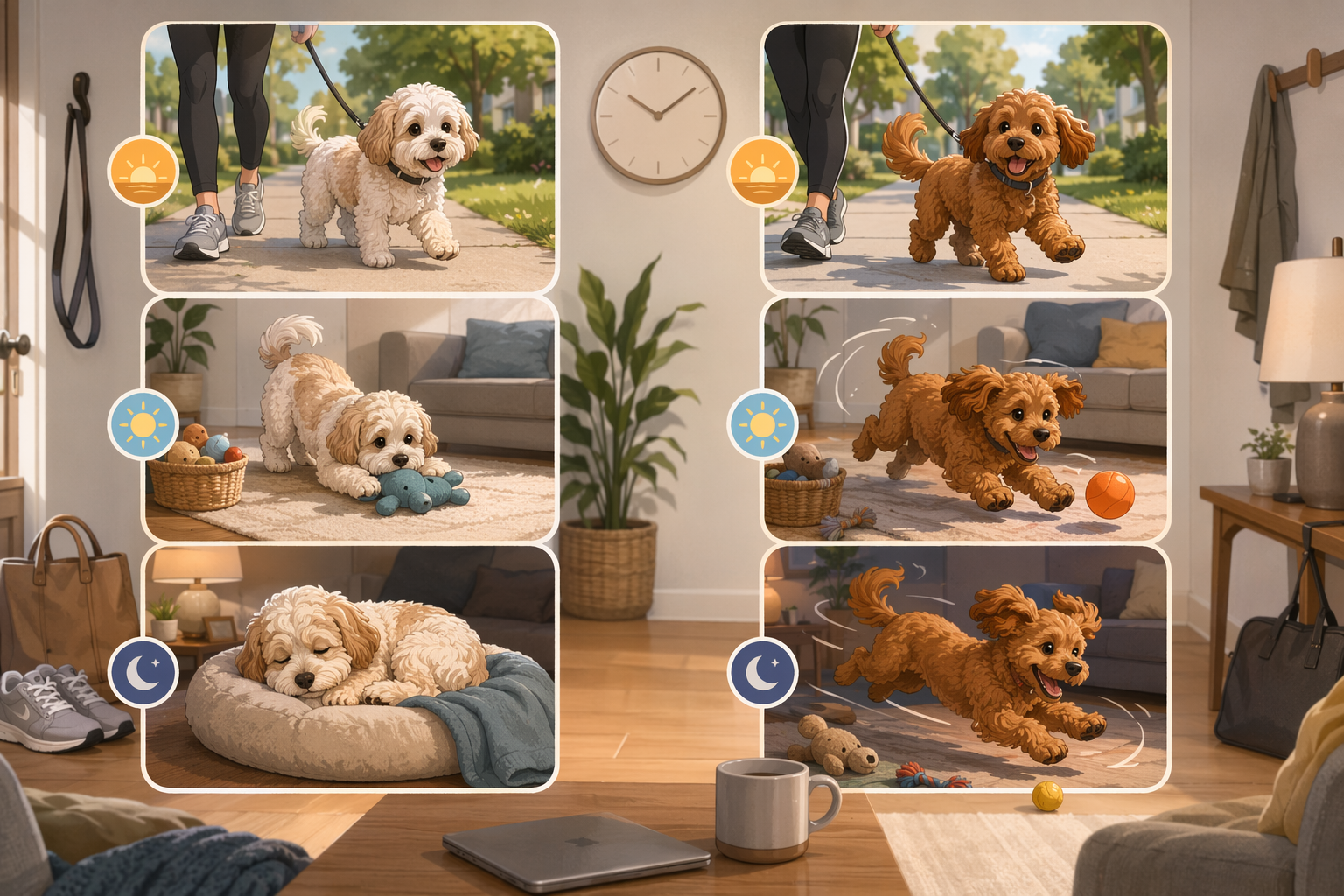
If your schedule changes every day, the Havapoo is usually easier to keep content with shorter exercise windows.
Why mental exercise counts as part of the total
Physical exercise is only half the job. Both breeds are smart, social, and very tuned in to people. That means 10 to 15 minutes of brain work can take the edge off just like extra walking.
Good options include:
- Snuffle mats
- Treat puzzles
- Short training reps
- Hide-and-seek
- “Find it” games with kibble
Use this quick rule:
- Low-energy day – keep the walk shorter, add two brain games
- Rainy day – swap outdoor time for training and nose work
- Puppy day – use several short sessions, not forced long walks
For puppies, avoid thinking “more exercise is better.” Short, safe play and simple training are usually enough.
Cavapoos often need a bit more total engagement. Havapoos are often slightly easier to settle once their social and mental needs are met.
Also Read: 7 Best Small Breed Puppies for Apartment Living in 2026
Which breed is easier to manage when your schedule is packed?
If your days are full, the Havapoo is usually a bit easier to manage. Most need a moderate amount of daily exercise, while Cavapoos often need a little more activity and mental work to stay settled. PetMD notes that Havapoos are active but need only moderate daily exercise, while Chewy says Cavapoos still need daily exercise and playtime and can form deep attachments to their people according to PetMD and Chewy’s Cavapoo guide.
When a shorter routine works better
A packed schedule usually means you need a dog that can do well with:
- One solid walk
- Two or three short play breaks
- Simple indoor enrichment
That leans Havapoo for many families.
| Situation | Havapoo | Cavapoo |
|---|---|---|
| Short weekday walk | Usually handles it well | Often wants a bit more |
| Indoor play on busy days | Usually enough with training games | Helps, but may not fully cover needs |
| First-time owner routine | Slightly easier | Still manageable, but needs more structure |
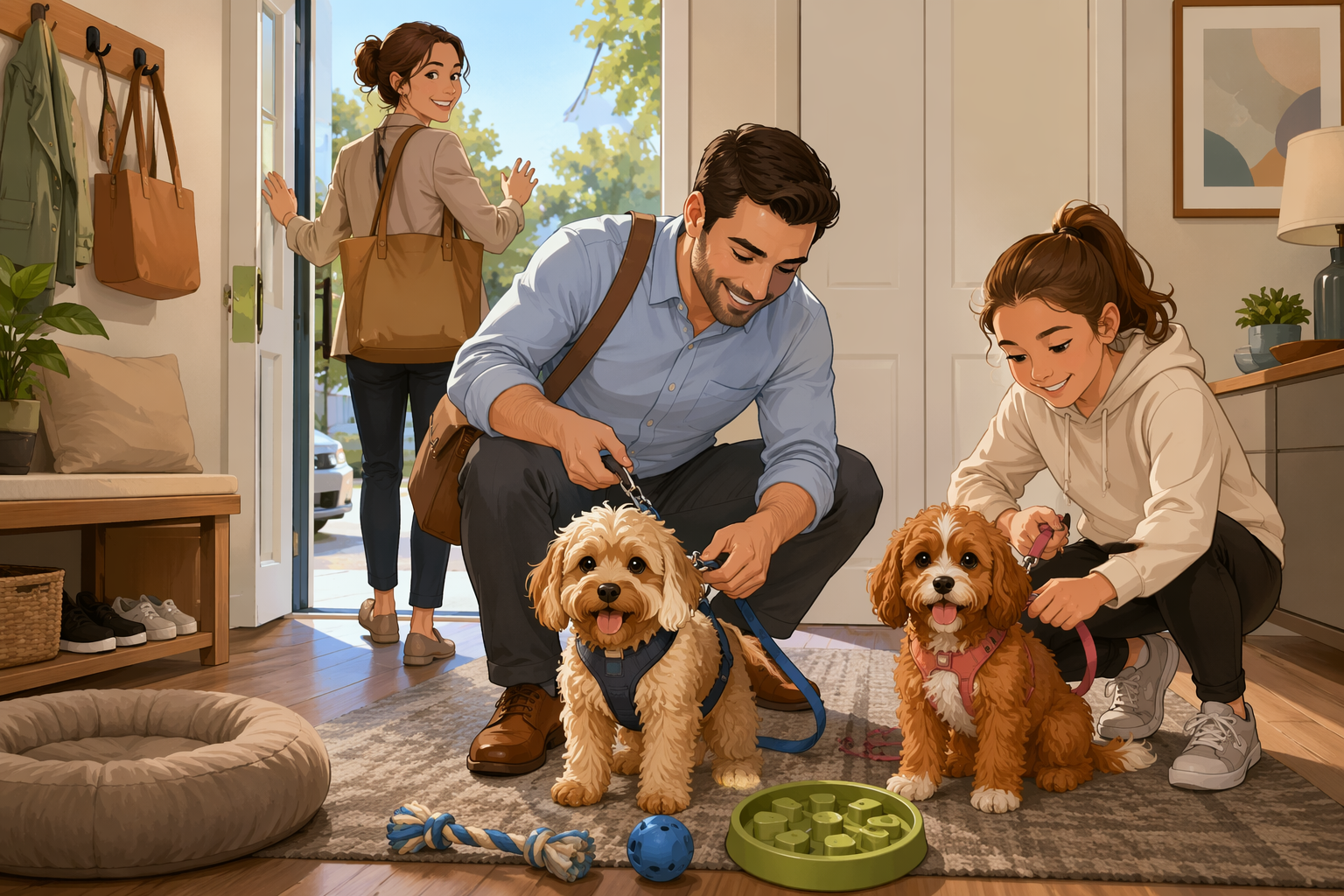
Pick the Cavapoo if you still want:
- More playful energy
- Longer walks on most days
- More frequent training games
If your workdays change a lot, the easier dog is often the one who stays content with a “good enough” routine, not a perfect one.
How separation time changes the picture
This is where the gap matters more.
Both breeds are companion dogs. Neither loves being alone for long stretches. Still, Havapoos often struggle more if left too long, while Cavapoos can be slightly more flexible in some homes if you build alone-time skills early.
Watch for these signs in either breed:
- Barking after you leave
- Following you room to room
- Trouble settling alone
A busy owner should care as much about alone-time tolerance as walk length.
If your home is empty for long blocks most days, neither breed is ideal without help like:
- A midday potty break
- A dog walker
- Gradual crate or pen training
Also Read: Cavapoo vs Havapoo vs Havanese: Which Small Breed Is Best?
Puppy exercise: what busy owners should not overdo
Young Cavapoo and Havapoo puppies do not need long workouts. They need short, safe bursts and lots of sleep. The big mistake busy owners make is trying to “wear them out” with extra walks, stairs, fetch, or jogging. The AKC notes that puppies should avoid sustained hard exercise while their bones are still growing, and small breeds usually mature faster than large dogs, often around 6 to 8 months for skeletal growth milestones according to AKC.
Safer ways to use short bursts of energy
Use quick sessions that let your puppy stop when they want.
- 5 to 10 minute leash walks at an easy pace
- Sniff breaks over distance
- Indoor recall games between two people
- Tug with rules like “take it” and “drop”
- Scatter feeding or a snuffle mat
- Short training reps for sit, touch, down, and place
AKC also recommends keeping leash sessions short and positive, often 5 to 10 minutes at first, and avoiding jogging with puppies until maturity in its puppy exercise guide.
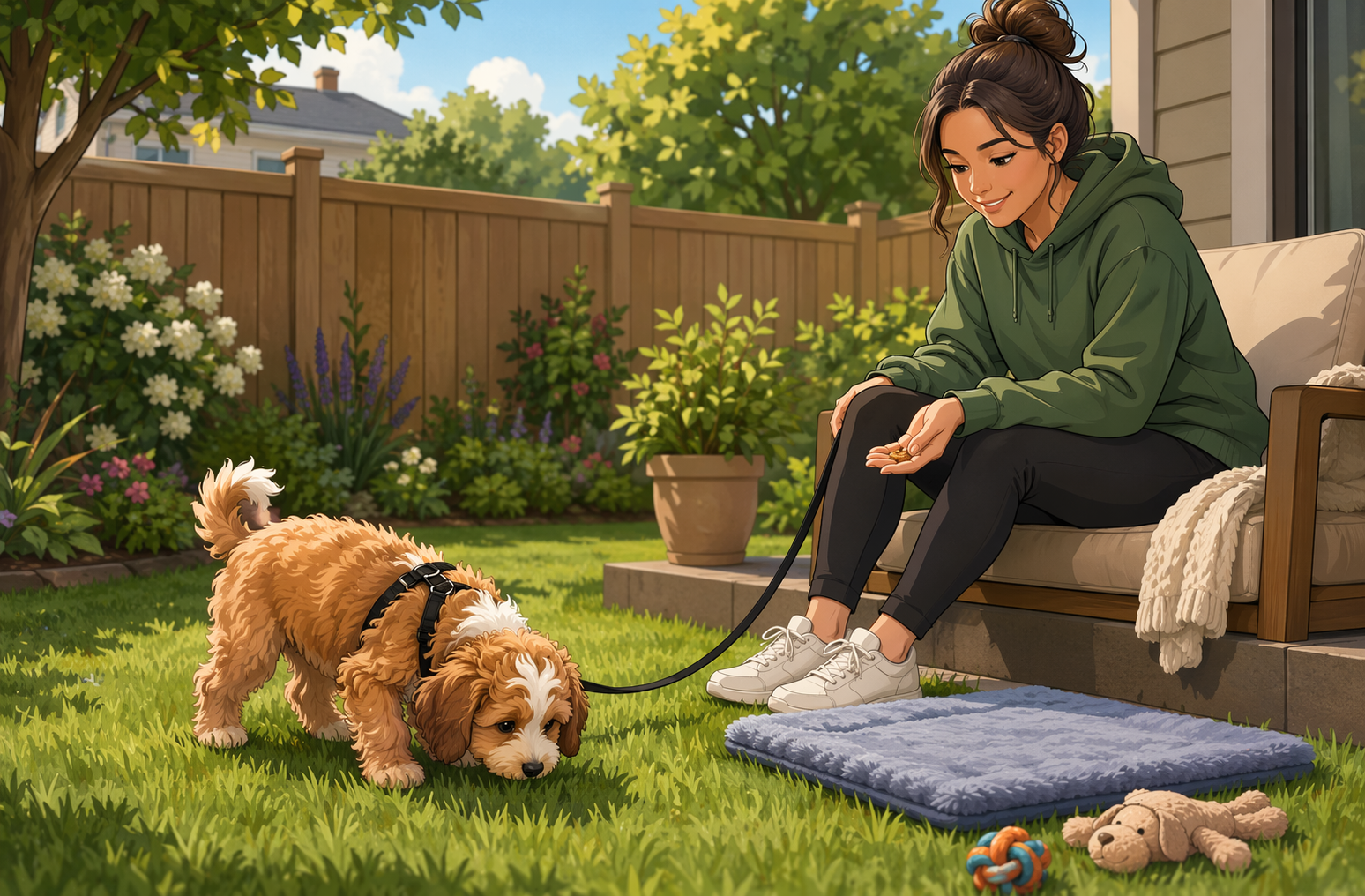
A simple busy-day plan works well:
| Time available | Better choice | Skip this |
|---|---|---|
| 5 minutes | potty walk plus sniffing | brisk block walk |
| 10 minutes | mini training and tug | repeated ball throws |
| 15 minutes | easy walk on grass | stairs or jogging |
Let your puppy choose the pace. Self-paced play is safer than forced mileage.
Signs your puppy needs less, not more
Some puppies get wild when they are tired. That tricks owners into adding more exercise.
Watch for signs like:
- Sitting or lying down during a walk
- Lagging behind or needing to be carried
- Zoomies followed by biting or meltdowns
- Less interest in treats or play
- Limping, stiffness, or sore paws later
A quick check helps:
| Sign | What it may mean | What to do |
|---|---|---|
| won’t settle | overtired, not under-exercised | crate nap or quiet chew |
| biting gets worse | stress and fatigue | end play |
| sloppy movement | muscles are done | rest and monitor |
If you see limping, stiffness, or pain after activity, stop and call your vet.
Training, enrichment, and the exercise gap that busy owners can close
The simplest enrichment tools for weekday life
Busy owners usually do better with small daily wins than long, perfect outings. For Cavapoos and Havapoos, the easiest fix is to replace some raw exercise time with short brain work. AAHA notes that varied enrichment helps reduce stress, boredom, and destructive behavior.
| Tool | Time needed | Why it helps |
|---|---|---|
| Stuffed food toy | 10-15 minutes | Keeps your pup busy and calm |
| Snuffle mat | 5-10 minutes | Turns breakfast into nose work |
| Short cue practice | 3-5 minutes | Builds focus and manners |
| Treat scatter game | 2-5 minutes | Drains energy fast indoors |
Try this weekday mix:
- Feed one meal in a stuffed toy or snuffle mat.
- Do 3 minutes of sit, down, touch, or place.
- Add a sniff walk, even if it is short.
- Rotate toys so they stay interesting.
A puppy who gets mental work often feels more settled than a puppy who only gets a fast walk.
Why routine matters more than one big outing
One long walk on Saturday does not fix five under-stimulating weekdays. Dogs usually settle better with a predictable rhythm. The CDC found many dog walkers got useful activity from repeated walks, with 58.9% taking two or more walks in a day and 42.3% reaching 30 minutes total from walks of at least 10 minutes, according to this CDC research on dog walking.
For busy families, that means:
- 2 to 3 short outlets beat one huge session
- Morning sniffing can lower edge and barking
- Evening training can close the exercise gap indoors
Consistency is usually easier on a Havapoo. A Cavapoo may ask for a bit more engagement if you skip the routine.
Also Read: 10 Unique Care Tips for Small Breed Puppies in Urban Settings
Which should you choose for your home: Cavapoo or Havapoo?
If your schedule changes a lot, a Havapoo is usually the easier fit. If you like a more active routine and want a dog that pushes you to stay consistent, a Cavapoo often makes more sense. For the full side-by-side breakdown, go back to the parent guide on Cavapoo vs Havapoo exercise needs for busy owners.
Choose a Havapoo if you want flexibility
A Havapoo tends to suit homes where some days are full and others are quiet. That comes from the Havanese side, which the AKC describes as a cheerful, social companion that does well with city living and smaller spaces in its Havanese breed overview.
What that means at home:
- Shorter bursts work well – a walk, a short play session, and a few training reps can be enough.
- Indoor enrichment matters a lot – food puzzles, hallway fetch, and scent games help on busy days.
- They usually settle faster – many Havapoos are happy once they get attention plus light activity.
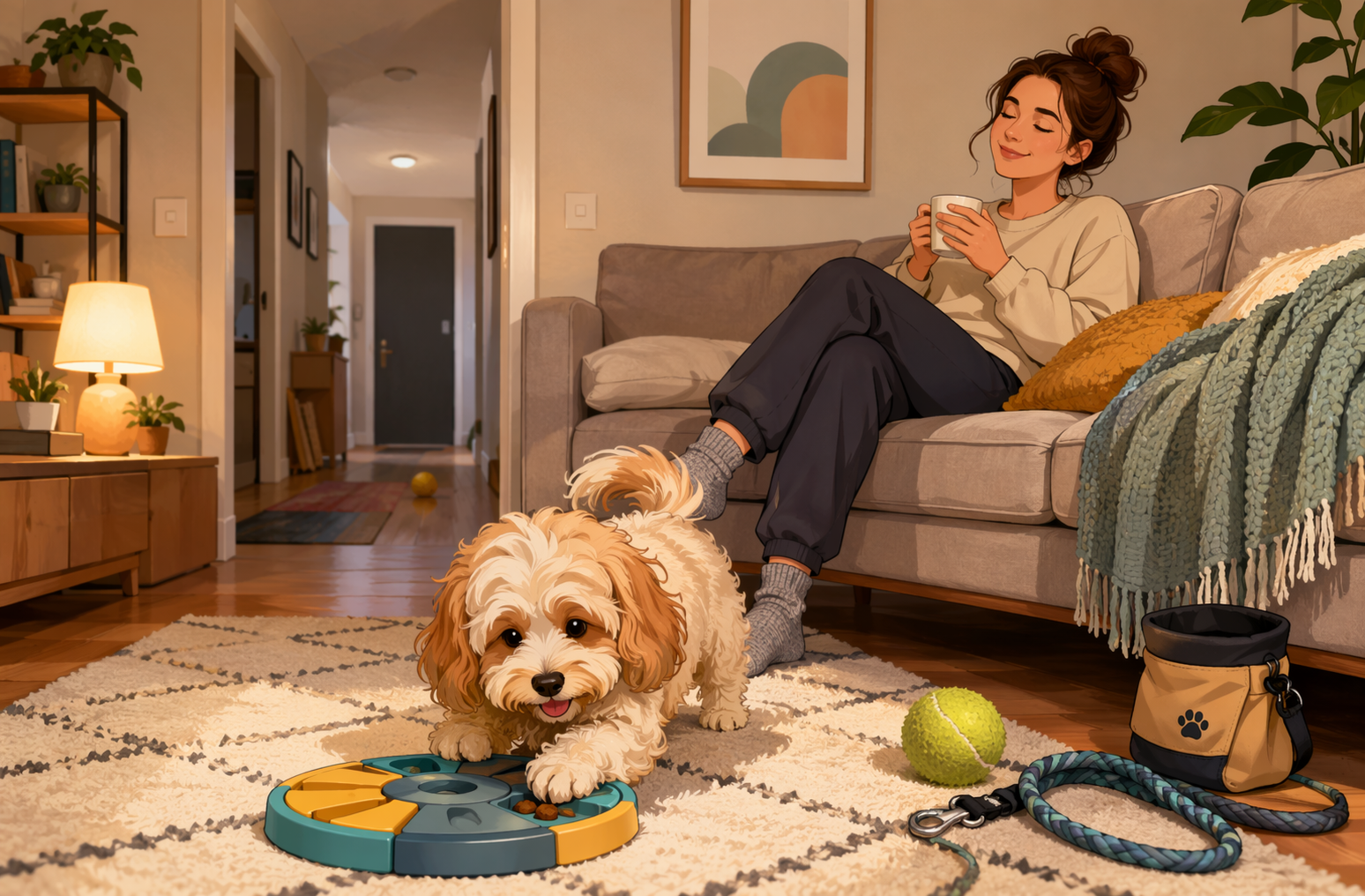
Choose a Havapoo if your week looks like this:
- You miss the occasional walk window.
- You need a dog that can handle apartment or townhouse life.
- You want exercise to feel manageable, not scheduled down to the minute.
A flexible dog still needs daily engagement. Flexible does not mean ignored.
Sage Puppies naturally fits this type of family because early socialization and a calm home start can make that easygoing companion side even more useful in real life.
Choose a Cavapoo if you want a bit more activity and structure
A Cavapoo is a better pick if you want a dog that enjoys a fuller daily rhythm. Cavapoos are commonly described as playful, people-focused, and in need of daily exercise and playtime in Chewy’s Cavapoo care guide.
That usually looks like:
- More consistent walks
- More training games
- More need for routine to prevent boredom
Choose a Cavapoo if you want:
- A dog that joins school-drop walks or evening loops
- A companion for regular play and simple training
- A small breed that feels a bit busier day to day
A Cavapoo can still work for busy owners, but only if you like structure. Miss too many outlets and you may see:
- Restlessness
- Attention-seeking
- More clingy behavior
If you already plan two short activity blocks most days, a Cavapoo is often easy to enjoy. If not, a Havapoo is usually the safer choice.

Still deciding which breed fits your schedule? Talk it through with Sage Puppies. We raise Cavapoo and Havapoo puppies in a home setting, with health-tested parents, early socialization, and a clear family-first process. Visit the site to view available puppies, compare next steps, and choose a companion that matches your real daily routine.
Frequently Asked Questions
Q1: What are the exercise needs of Cavapoos and Havapoos for busy owners?
Both need daily movement, but not marathon workouts. Plan for 2 short walks plus 10 to 20 minutes of play or training. Havapoos often settle faster indoors. Cavapoos may ask for more active play, especially as young adults.
Q2: How much daily activity does a Cavapoo require compared to a Havapoo?
A Cavapoo often does best with 45 to 60 minutes total daily activity. A Havapoo is often comfortable with 30 to 45 minutes. That total can include walks, fetch, hallway games, and simple brain work like food puzzles.
Q3: Are Cavapoos or Havapoos better suited for owners with a busy schedule?
For many busy homes, Havapoos feel easier to manage day to day. They usually need a bit less physical activity. Cavapoos still fit busy families well, but they often do better with a more consistent routine.
Q4: Can indoor play replace one walk?
Yes, sometimes. On bad weather days, use tug, fetch, sniff games, and short training sets. One indoor session should be focused, not random. Puppies still need bathroom breaks and chances to practice calm leash skills outside.
Q5: What kind of exercise is safest for a small-breed puppy?
Keep it low impact. Choose short walks, gentle play, and soft-surface exploring. Skip long runs, repeated jumping, and stair workouts. If you want a well-started companion, Sage Puppies highlights early socialization that helps puppies handle activity changes better.
Conclusion
For busy owners, the better fit is usually simple. Havapoos often need a bit less daily exercise, while Cavapoos usually need a bit more movement and mental work to stay settled. That lines up with broad care guides that describe Havapoos as moderate-energy companions and Cavapoos as playful, people-focused dogs that still need daily activity according to PetMD and Cavapoo breed overview details.
The real difference is not just walk time.
- Havapoo: often easier for packed schedules
- Cavapoo: often better for families who enjoy more play
- Both: need short walks, training, and indoor enrichment
- Puppies: need gentle, age-safe activity, not long outings
If your days are full, pick the dog whose energy level matches your real routine, not your ideal one.