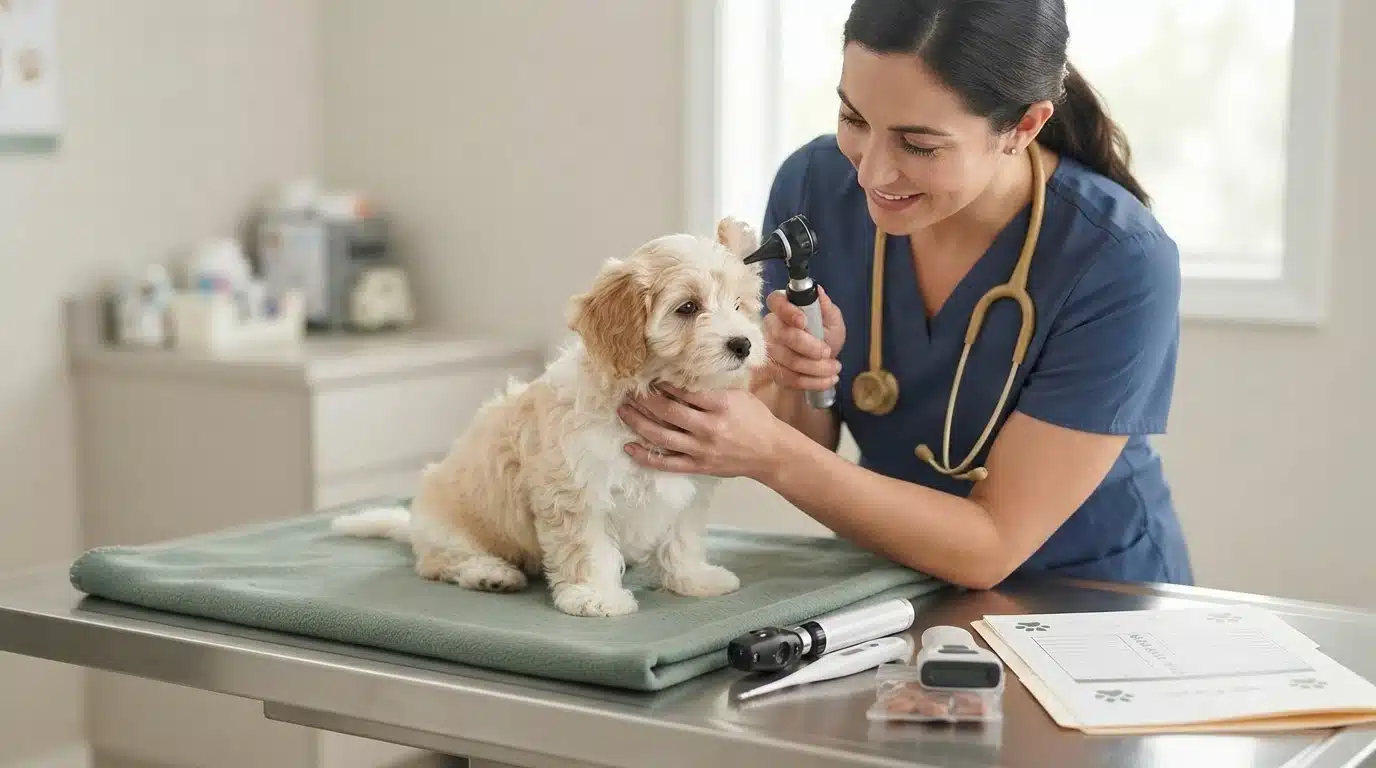
Quick Summary: Cavapoos typically reach 12 to 15 years, but the actual outcome depends on breeding and daily care rather than luck. Inherited heart risk from the Cavalier side, especially mitral valve disease, is the biggest variable, making parent heart testing critical before you bring a puppy home. Weight control and consistent dental care are the two daily habits that most strongly protect a small dog’s heart and joints over time. Screenings should begin early (annual heart checks from age 4, baseline bloodwork by 6, twice-yearly visits after 8), since catching a murmur or organ shift years before symptoms gives you real options.
If your Cavapoo is still tearing around the living room at 9, you might assume you have a decade-plus ahead. You probably do. But how those years actually look depends on choices made long before the gray muzzle appears. That’s the gap this Cavapoo lifespan and aging guide fills. Most sources repeat “12 to 15 years” and stop there. We go further, mapping each life stage from puppyhood through the senior years and connecting inherited risks from the Cavalier King Charles Spaniel and Poodle sides to signs you can actually watch for and act on. As a Cavapoo breeder based in South Jordan, Utah, we’ve built this Cavapoo lifespan and aging guide around one goal: giving families a real plan for every stage, not just a number on a chart.
The Real Cavapoo Lifespan Range
The honest answer is about 10 to 15 years, with most healthy Cavapoos landing between 12 and 15. The 12-to-15 figure you see everywhere is real, but it describes the lucky middle of the range, not a promise. A well-bred Cavapoo with strong heart lines can reach 15 or beyond. One that inherits serious valve disease may fall short of 12.
Why the range is wide
Two things decide where your dog lands: breeding and daily care. On the breeding side, heart health and eye health run in family lines, so a puppy from tested parents starts with a real advantage. On the care side, weight matters more than most owners realize. Extra pounds strain a small dog’s joints and heart, and small breeds live longest when they stay lean.
You control the second half of that equation from day one. Regular vet visits, dental care, and a healthy weight all push your dog toward the top of the range. Skip them, and even good genetics cannot fully protect him. That is why two Cavapoos from the same litter can age so differently.

Where each parent breed pulls the number
The Poodle side generally adds years. Toy and Miniature Poodles often live into their mid-teens, and they pass along that hardiness. The Cavalier King Charles Spaniel side is the risk. Cavaliers average closer to 10 years, largely because so many develop mitral valve disease, a heart condition that appears in more than a third of Cavalier lines early in life, according to research on chronic valvular disease in Cavaliers. A good breeder tests parent hearts before breeding, which is the single biggest lever on your puppy’s lifespan.
Puppy and Young Adult Years (0 to 3)
Cavapoos grow fast, and most reach adult size between 9 and 12 months. A full-grown Cavapoo usually weighs 7 to 30 pounds and stands 9 to 18 inches tall, with the Poodle parent’s size doing most of the deciding. A rule of thumb many breeders use: double the weight at 14 weeks to estimate the adult number.

Growth, weight targets, and body condition
Growth is not just about weight. Watch body condition too. You should feel ribs easily under a thin fat layer and see a clear waist from above. Puppies that run heavy during growth carry extra strain into adulthood, and that matters more for small breeds with inherited heart risks.
Most Cavapoos finish height by 9 to 12 months, then fill out through year two. Weigh your puppy monthly and keep a simple record. Sudden jumps or stalls deserve a call to your vet.
Habits that pay off for the next 12 years
The first three years set patterns you will live with for a decade or more. Keep meals measured, treats under 10 percent of daily calories, and exercise steady rather than extreme. Jumping from high furniture is worth limiting while joints mature.
Start tooth brushing now. Dental disease in small breeds drives other health problems later, so two minutes a day is cheap insurance.
If you are still choosing a puppy, asking breeders about the parent dogs’ heart testing and adult weight is one of the best lifespan questions you can raise.
Prime Adult Years (4 to 7)
Between 4 and 7, most Cavapoos look and act young. Energy stays high, appetite is steady, and nothing seems to need attention. This is exactly when quiet problems start, so the habits you build now shape the last third of your dog’s life.
Screening worth starting now
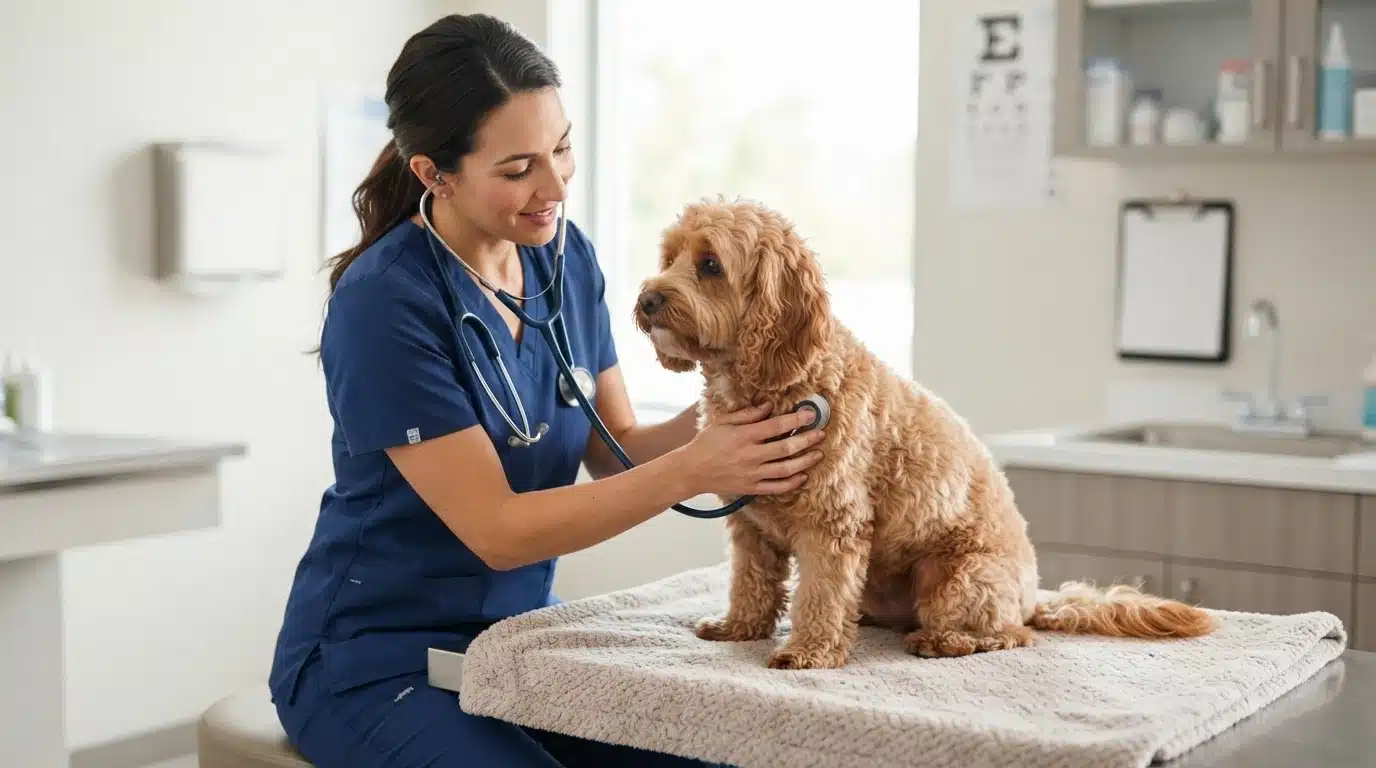
Ask your vet to listen to the heart at every annual visit from age 4 onward. Mitral valve disease, the condition that shortens so many Cavalier lives, often starts as a soft murmur with no other sign. One study notes Cavaliers should be screened for heart murmurs annually beginning at age one, and a Cavapoo with Cavalier ancestry deserves the same watchfulness. A murmur caught early can be tracked with echocardiograms and managed for years before it ever causes symptoms. If you want to see which conditions trace back to each parent breed, this comparison of Cavapoo health issues breaks down the inherited risks side by side. Baseline bloodwork at 5 or 6 also gives your vet a reference point for later years.
Weight, dental, and the quiet health risks
Two threats in this age range are slow and invisible. The first is weight. A few extra pounds on a 15-pound dog is a real percentage, and it stresses joints and the heart. Keep meals measured and treats under 10 percent of daily calories, as you did in young adulthood.
The second is teeth. Most small breeds show gum disease by midlife, and infected gums seed bacteria into the bloodstream. Brush several times a week and schedule a professional cleaning if your vet recommends one. Neither risk announces itself, which is why steady habits beat waiting for symptoms.
Mature Years (8 to 10)
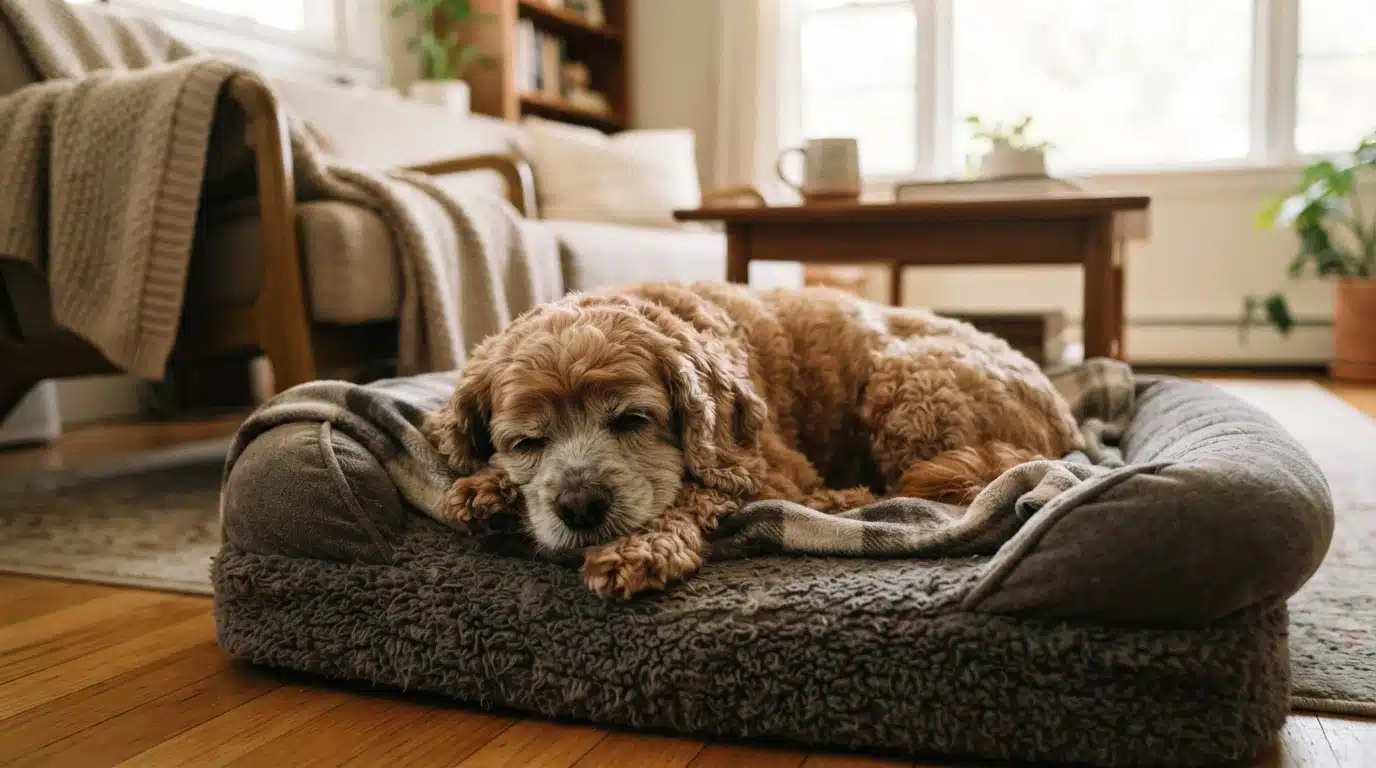
At 8, your Cavapoo is a middle-aged senior. Small dogs age slower than big ones, so many still act like puppies here, but this is when early wear starts to show. Graying around the muzzle, longer naps and a slightly slower fetch are normal. Your job now is telling the difference between normal aging and a health problem worth checking.
Behavioral and body changes to watch
Expect gradual shifts, not sudden ones. The AKC lists increased sleeping, irritability and anxiety among normal aging signs, along with gray hairs and slower movement. A stiff first few steps after a nap usually means mild joint wear. Vision and hearing may dim a little, so your dog may startle more easily or stop responding to a called name.
Watch for changes in routines. New confusion at night, house-training slips or unusual clinginess can signal discomfort or early cognitive decline. The ASPCA also points to increased sensitivity and fear of unfamiliar people or pets as common in older dogs. Any sudden change deserves a call, not a wait-and-see.
When to bring the vet in sooner
Some signs should not wait for the next annual visit. Because mitral valve disease runs in Cavalier lines, report a new cough, a resting breathing rate above 30 breaths per minute, fainting or tiring on short walks right away. Heart problems respond much better when caught early.
Get an urgent appointment for lumps that grow or change, weight loss without dieting, vomiting that lasts more than a day, sudden limping, or apparent pain when touched or lifted. Ask about moving to twice-yearly senior checkups with bloodwork, which catch kidney, liver and thyroid shifts before symptoms appear. If the baseline bloodwork from age 5 or 6 exists, compare new results against it.
Inherited Risks That Shape the Senior Years
A Cavapoo’s later years depend heavily on which genes it inherited from each parent. Knowing the risks on both sides turns vague worry into a checklist you and your vet can actually watch.
Mitral valve disease from the Cavalier side
Mitral valve disease is the big one. The valve between the heart’s left chambers weakens, so blood leaks backward and the heart works harder. Because Cavaliers develop it in large numbers, many Cavapoos carry the risk too. The first sign is usually a heart murmur your vet hears during a routine visit, often years before symptoms appear. Caught early, it can be monitored for a long time with medication added once it progresses. Dogs with strong heart lines on both sides often never develop it at all.
Eye, joint, and skin conditions from both sides
Both parent breeds pass down eye trouble. Poodles contribute progressive retinal atrophy and cataracts, while Cavaliers can add other inherited eye problems, so a Cavapoo parent should have current eye clearances. Watch for night bumping, cloudy eyes, or a hesitant gait in dim light. Joints come next: loose kneecaps (luxating patella) and early arthritis show up in small dogs on both sides of the family. Skin rounds out the list, since allergies and ear infections plague many Poodle crosses. A mom-and-dad pair tested for these conditions, like the pairings behind every Cavapoo breeding at Sage Puppies, lowers the odds your senior dog faces them.
Less obvious risks worth knowing
A few quieter conditions deserve a mention. Syringomyelia, a painful fluid-filled cavity near the spinal cord, appears in Cavalier lines, so report scratching at the air or sensitivity to neck touch. Poodles can carry Addison’s disease, which causes cycles of weakness and vomiting. Epilepsy also shows up in both breeds. None of these are common, but knowing the signs helps your vet diagnose them faster.
Senior Years (11 and Beyond)
A Cavapoo who reaches 11 has entered the final stretch, and the goal shifts from prevention to comfort. Small dogs age gently, so many still want their daily walk. The pace just slows.
Comfort and home setup
Small changes at home pay off now. Senior dogs lose traction on hard floors, so add runners or rugs along the routes your dog uses most. An orthopedic bed cushions aging joints, and a low-sided version helps a stiff dog get in and out without a leap. If your Cavapoo hesitates at the sofa or the car, use a ramp instead of forcing the jump.
Keep grooming gentle and frequent. Mats pull on the skin and hide lumps, so short, calm sessions work better than a long clip. Warmth matters too, because thin coats and older bodies chill fast. A raised food bowl can ease the neck, and night lights help dogs whose eyesight is fading. Watch for a new reluctance on stairs. That is often the first sign of joint pain, and your vet can treat it.
Routine, nutrition, and the quality-of-life conversation
Twice-yearly vet visits make sense from here on, because small breed dogs change faster after 11. Older senior dogs also do better on food made for seniors, which usually runs lower in calories but keeps protein levels up to protect muscle. If dental disease is present, ask whether a cleaning is safe, since painful teeth depress appetite and mood.
At the same time, keep the heart watch going. Report a new cough, heavy breathing at rest, or fading on short walks, the same signs that matter from age 8 onward. Many seniors live well with managed mitral valve disease when it is caught early.
The hardest part is knowing when quality slips. Vets often use a simple scale, marking good days against bad ones. When bad days outnumber good for two or three weeks running, it is fair to talk about hospice care or euthanasia. Your vet can help you judge eating, mobility, and interest in the family against what your dog has always loved.
Common Mistakes That Shorten a Cavapoo’s Healthy Years
Two habits do the most quiet damage to a small dog’s lifespan: extra weight and ignored teeth. Both are fixable, and both are easier to fix before they become problems.
Letting weight creep up “just a little”
A pound sounds harmless. On a 15-pound Cavapoo, it’s close to 7 percent of body weight, and two pounds starts stressing joints and the heart. Weight gain usually comes from a steady habit, not one big mistake: the training treat here, a shared bite of dinner there, a shorter walk in bad weather. If you can’t easily feel ribs or see a waist from above, talk to your vet about a measured feeding plan. Small corrections work better than crash diets.
Skipping dental care until there’s a problem
Small breeds build tartar fast, and gum disease feeds bacteria toward the heart. Brush a few times a week, use vet-approved chews, and expect a professional cleaning at some point in middle age. Bleeding gums, bad breath or dropped kibble all deserve a vet visit sooner rather than later.
Planning Your Next Steps
A simple lifespan-care checklist
Turn everything in this guide into habits you can actually keep:
- Before 12 months: book a heart exam with your first vet visits and start nail trims, tooth brushing and calm handling early.
- Ages 1 to 4: keep meals measured and treats under 10 percent of daily calories, maintain steady exercise, and brush teeth several times a week.
- Ages 4 to 7: ask for a heart check at every annual visit and get baseline bloodwork by 5 or 6.
- Age 8 onward: schedule vet visits every six months, watch the resting breathing rate at home, and adjust food and exercise as joints and energy change.
- Any age: report a new cough, fainting, or tiring on short walks the same week.
Print this list, tape it inside a cabinet door, and review it once a year. Small habits, repeated for a decade, are what add up to the longer end of that 12-to-15 range.

Knowing the lifespan number is a start, but a plan is what adds healthy years. If you want a well-bred Cavapoo with strong heart lines behind it, Sage Puppies can help you start right. Review the guide, then visit our site to learn more.
Frequently Asked Questions
Q1: cavapoo lifespan and aging guide
A Cavapoo lives about 10 to 15 years, with most healthy dogs reaching 12 to 15. Where your dog lands depends on parent heart testing, weight, and dental care, which this guide maps stage by stage.
Q2: What health screenings matter most for a Cavapoo?
Annual heart checks from age 4, baseline bloodwork by 5 or 6, and eye exams. From age 8, move to twice-yearly visits with bloodwork.
Q3: What is the first sign of mitral valve disease?
Usually a soft murmur your vet hears during a routine visit, often years before symptoms. Report a new cough or resting breathing above 30 breaths per minute.
Q4: How can I help my Cavapoo live longer?
Keep him lean, brush teeth several times weekly, and stay current on vet visits. Those habits matter as much as genetics.
Q5: When is a Cavapoo considered a senior?
Around 8, though small dogs age slowly. Many still act playful; watch for graying, longer naps, and stiffness after rest.
Q6: Do Cavapoos stay healthy at 14 or 15?
Many do, especially with tested parents. Managed heart disease and good dental care let plenty of seniors enjoy life well past 12.
Aging Well With Your Cavapoo
A Cavapoo’s lifespan is not a fixed number. It is a range shaped by breeding and daily care, and the guide maps both across every stage. Inherited risks matter most at the start: parent heart testing predicts much of what mitral valve disease will or will not do later. Weight and dental habits matter most after that, quietly deciding how many of those 10 to 15 years stay healthy. From the first heart exam to twice-yearly senior checkups, small steps repeated for a decade are what move a dog toward the top of the range.