Quick Summary: Cavapoo exercise needs change with age because open growth plates and aging joints cannot handle the same activity. Puppies do best with short bursts of about five minutes per month of age and lots of indoor mental work, while avoiding forced running, jumping, and public outdoor walks until vaccines are complete around 16 weeks. Adolescents move up to 30 to 45 minutes split into a few sessions, adults thrive on 45 to 60 minutes mixing walks, fetch, and brain games, and seniors drop to about 30 minutes of low-impact movement like sniff walks, swimming, and gentle strength exercises. The same rule applies at every stage: balance physical effort with mental work, end sessions before the dog quits, and adjust for the individual dog rather than the calendar.
A tired Cavapoo is a happy Cavapoo. But the dose that settles a 12-week-old puppy will exhaust an 11-year-old with slow mornings, and the romp that fits a 4-year-old can harm growing joints. This guide lays out Cavapoo exercise needs by life stage, so you can match daily activity to your dog’s actual age. You will find physical and mental dose numbers for each stage, the vaccination limits that restrict puppy outings, and the growth windows when hard exercise should wait. We raise Cavapoos, Havapoos and Havanese at our South Jordan, Utah program, and this comes from that daily work with small-breed families. Here is what changes, stage by stage, and what stays the same.
Why Exercise Shifts by Life Stage for a Cavapoo
Cavapoo exercise needs by life stage change for a simple reason: the same body that grows new bone in week ten also runs the risk of harming it in week twelve. A Cavapoo inherits energy from both sides of its family, but its joints, immune system and attention span do not mature all at once. So the dose has to move with the dog.
The Four Stages We Use for a Cavapoo
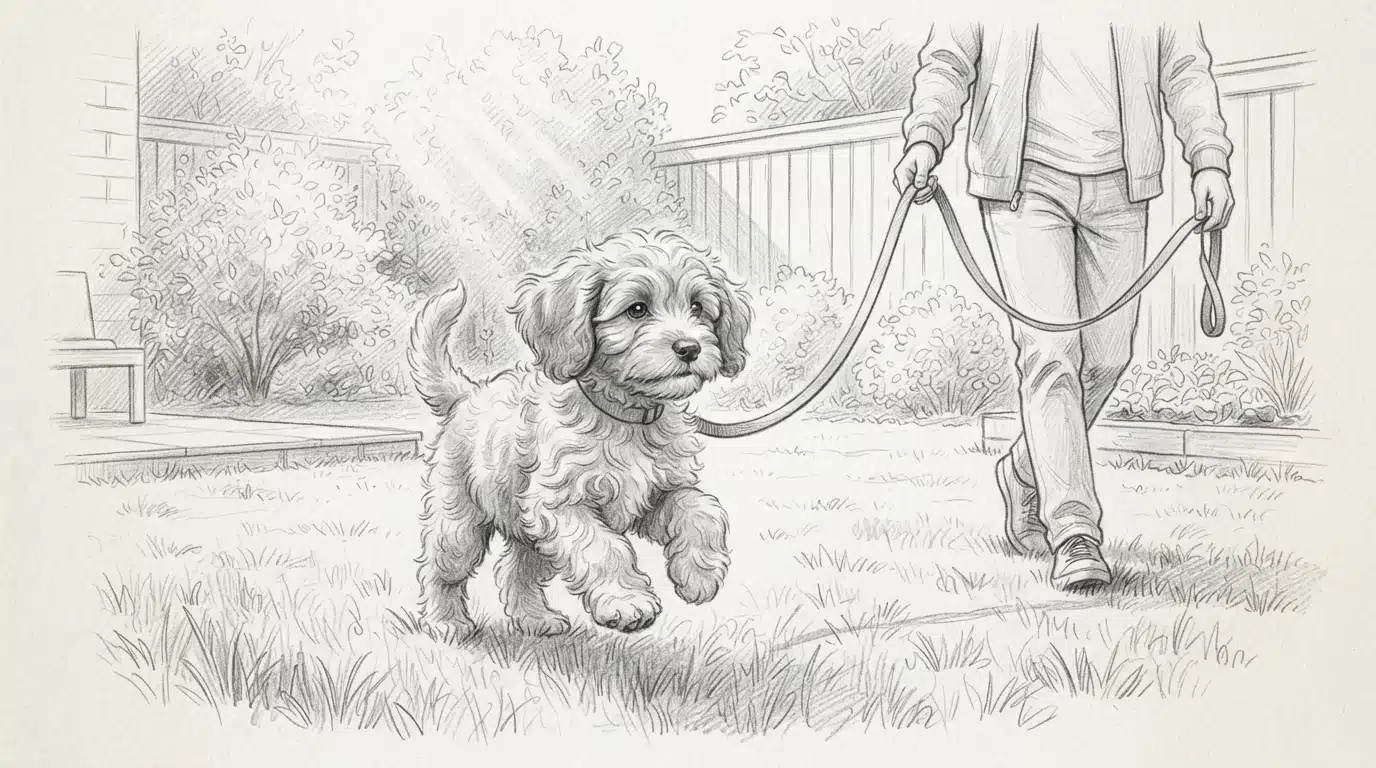
Breaking the timeline into four stages keeps the math simple and the dog safe:
- Puppy (8 weeks to 6 months): short play bursts, no forced running, growth plates still open.
- Adolescent (6 to 12 months): stamina climbs, but joints stay vulnerable until growth closes.
- Adult (1 to 7 years): full physical and mental dose, the easiest stage to plan.
- Senior (7 years and up): gentler, more frequent sessions that protect aging joints.
The stage matters more than the calendar date. A slow-maturing puppy may still need puppy rules at eight months, so watch the dog, not just the chart.
What a Cavapoo Is Built For
Cavapoos come from Cavalier King Charles Spaniels and Poodles, a pairing that produced a small companion dog with a working mind. The mix loves short games, sniff walks and training puzzles more than marathon fetch or long jogs on pavement. That is good news for families: you can meet most of the daily dose indoors or in a yard. If you are still comparing bloodlines, the questions worth asking a breeder about a Cavapoo include how parents were health tested, since sound structure makes exercise safer at every stage.
Puppy Stage: 8 Weeks to 6 Months
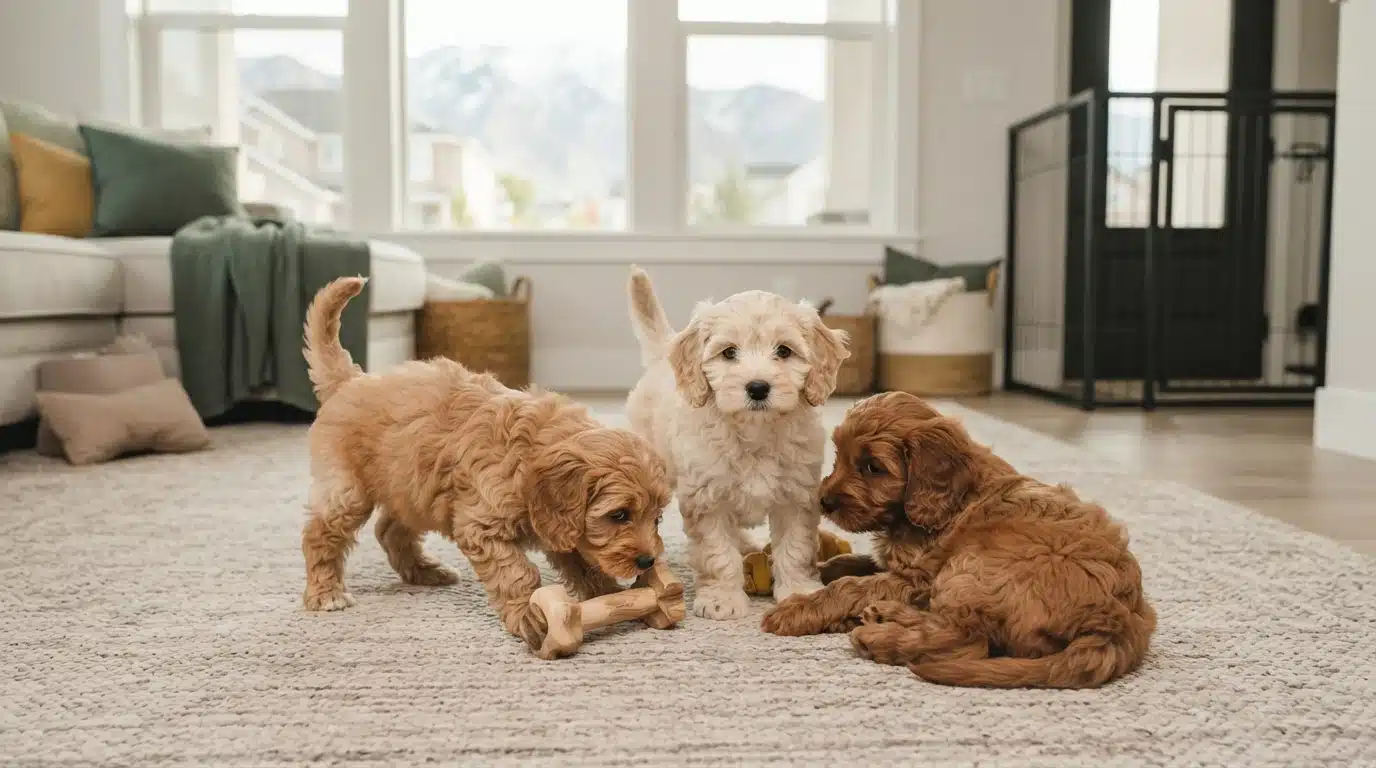
A Cavapoo puppy needs far less exercise than its energy suggests. Growth plates stay open until roughly a year old, so hard running or jumping can stress joints that are still forming.
How Much Exercise a Cavapoo Puppy Needs
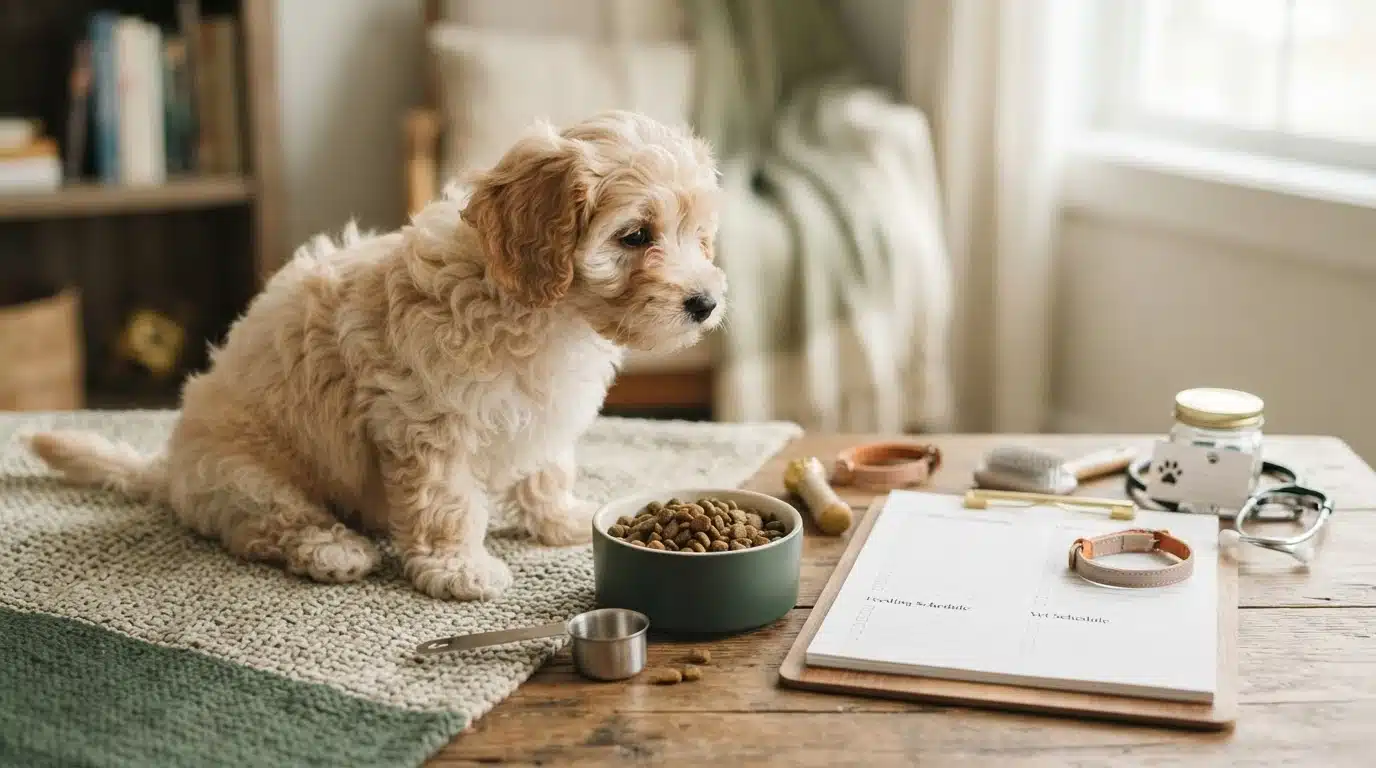
Think in short bursts, not long walks. A common starting point is about five minutes of structured exercise per month of age, once or twice a day. So a three-month-old gets around 15 minutes, twice daily. That rule is a rough guide rather than proven science, and PDSA notes there is no hard evidence behind it. Let your puppy set the pace. Free play, sniffing and exploring count, and they let the puppy stop when tired. Skip forced jogging, stair sprints and jumping from furniture. Mental work matters more at this age: two or three short training sessions, a snuffle mat or a puzzle feeder can tire a puppy faster than a walk.
Indoor Play vs. Outdoor Walks Before Vaccinations
Until your vet finishes the puppy vaccine series, usually around 16 weeks, keep outdoor time cautious. Carry your puppy on walks through busy areas, and save ground-level exploring for your own yard or spaces you know are clean. The risk is parvovirus, which survives outdoors for months. Indoors, the options are wide open: tug, gentle fetch down a hallway, hide-and-seek with treats, and trick training. A daily sniffy walk in a quiet spot is fine for most puppies once your vet clears it, and it doubles as socialization. For a full daily rhythm that fits exercise around naps and meals, our new owner daily routine guide lays it out stage by stage.
Watch For These Signs Your Puppy Got Too Much
Cavapoos often keep playing past their limit, so watch for the signs instead. Heavy panting, a lagging walk, stumbling, or flopping down mid-game all mean stop. Afterward, look for unusual restlessness at night, soreness when rising, or a puppy that refuses the next session. An overtired puppy may also get nippy and wild, which looks like energy but is really stress. End every session while your puppy still wants more, and follow big play with a nap. Most pups this age sleep 18 to 20 hours a day, and that rest is where the growth happens.
Adolescent Stage: 6 to 12 Months
Between six and twelve months, your Cavapoo stops looking like a baby and starts acting like a teenager. Stamina climbs fast, but the growth plates at the ends of the long bones stay soft until they close, so joints remain vulnerable. The goal now is more activity with smarter limits.
Stepping Up the Dose Safely
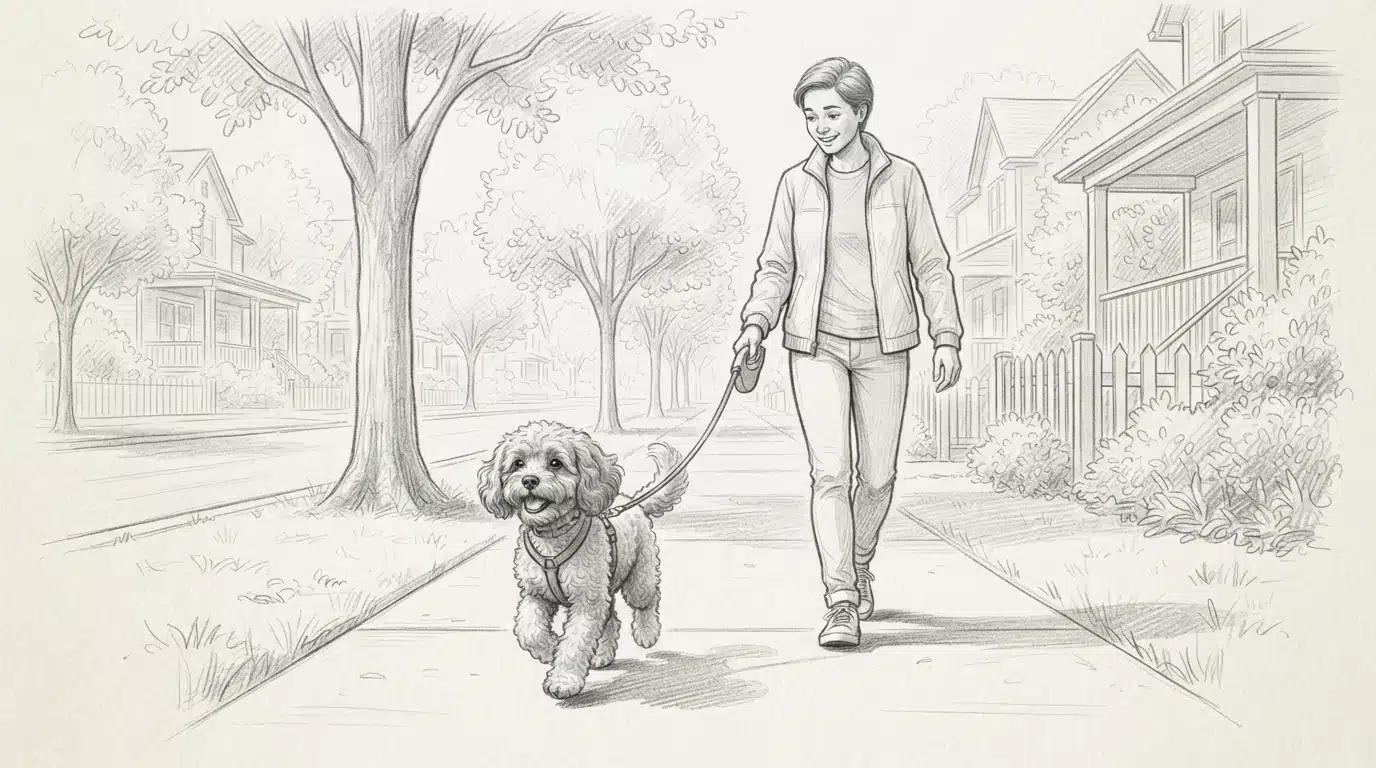
Aim for 30 to 45 minutes of total daily activity, split into two or three sessions. Longer leash walks are now fine, and many pups this age enjoy a relaxed 20-minute stroll. Still avoid forced running, jumping from heights, and repetitive fetch on hard surfaces. Bones finish growing at different ages by breed size, so small breeds like the Cavapoo usually close earlier than large dogs, but over-exercise while growth plates are open can still damage joints and set up early arthritis. Let your puppy set the pace, and stop when the play turns clumsy or the panting gets heavy. If you have no yard, structured walks and indoor games still work well for Cavapoo exercise without a yard.
Mental Work Matters More Now
Adolescence brings testing behavior, short attention spans, and selective hearing. Mental stimulation wears a puppy out faster than physical exercise, so it does the heavy lifting in this stage, as Cornell’s canine health team notes. Mix in puzzle feeders, short training refreshers, and sniff-focused walks. PetMD lists simple options like snuffle mats, hide-and-seek, and trick training that cost little. Ten focused minutes of scent work can settle a wild evening better than another lap around the block.
Sample Weekly Plan for an 8-Month-Old Cavapoo
| Day | Morning | Evening |
|---|---|---|
| Mon | 20-min sniff walk | 10-min puzzle feeder |
| Tue | 15-min basic training | 15-min fetch on grass |
| Wed | 20-min neighborhood walk | 10-min hide-and-seek |
| Thu | 15-min trick training | 20-min sniff walk |
| Fri | 20-min walk with a friend’s dog | 10-min puzzle toy |
| Sat | Longer 30-min park stroll | Rest and chews |
| Sun | Easy 15-min walk | 10-min scent game |
Rotate activities so nothing becomes boring, and keep total daily movement near 30 to 45 minutes.
Adult Stage: 1 to 7 Years
The Adult Range Most Cavapoos Fit
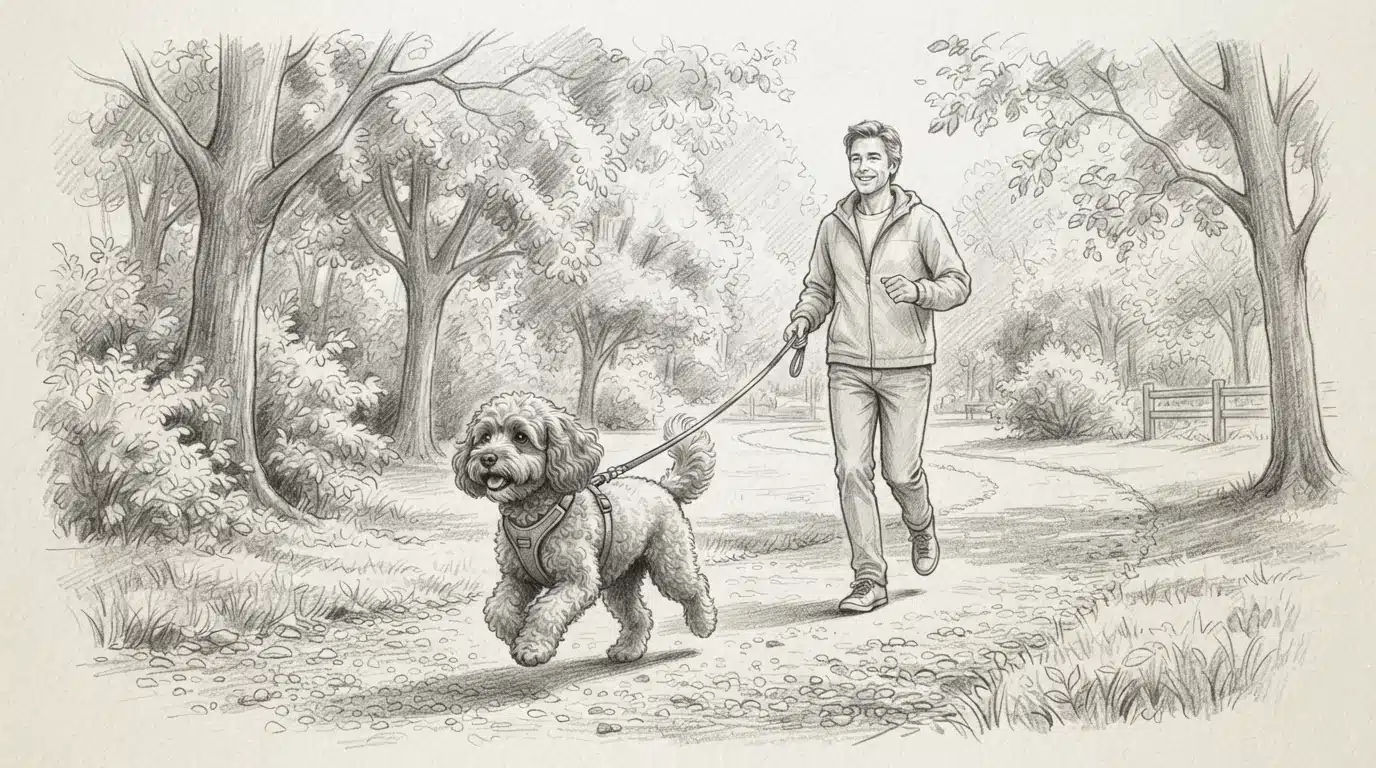
A healthy adult Cavapoo does best with about 45 to 60 minutes of total daily activity, split into two or three sessions. Vets put most adult dogs in the 30-to-60-minute range, with less active breeds on the lower end, and the Cavapoo sits comfortably there thanks to its Cavalier and Poodle mix. That dose blends body work, like walks and fetch, with mental work like training games and sniffing. One veterinary clinic’s life-stage guide confirms 30 to 60 minutes as the standard for adult dogs.
Reading Your Individual Dog
The range is a starting point, not a rule. Some adults settle after 40 minutes while a bouncy two-year-old may still pace the house in the evening. Watch for signals. Pacing, chewing shoes, or barking at nothing usually means the dose is too low. Lingering on the couch, slowing mid-walk, or heavy panting on mild days points to too much or too little fitness. Weight matters too, because an extra pound on a 12-pound dog is a lot. Your vet can tell you at the annual checkup. Aim for a dog that naps contentedly after each session and wakes ready to go again.
Three Buckets of Adult Activity
Think of adult exercise in three buckets, and fill each one daily.
- Physical: two walks of 20 to 30 minutes each, or one walk plus a game of fetch or a safe off-leash romp.
- Mental: 10 to 15 minutes of training, trick work, puzzle feeders, or scent games. Mental work tires a Cavapoo faster than a second walk, and a bored doodle invents its own fun.
- Calm connection: sniffy strolls, gentle grooming time, or relaxed couch cuddles. These lower stress, which matters as much as steps.
Breed guides for small companion dogs often list just 15 to 20 minutes as a floor, but that describes minimum survival needs, not a satisfied pet.
Senior Stage: 8 Years and Older
A senior Cavapoo still needs daily movement, but the goal shifts from building stamina to protecting joints. Cut total activity to roughly 30 minutes a day, split into two or three short, easy sessions. Keep the mental work, too, because sniffing games and puzzle feeders tire an older dog as much as a brisk walk once did.
Why the Dose Goes Down, Not Just Shorter
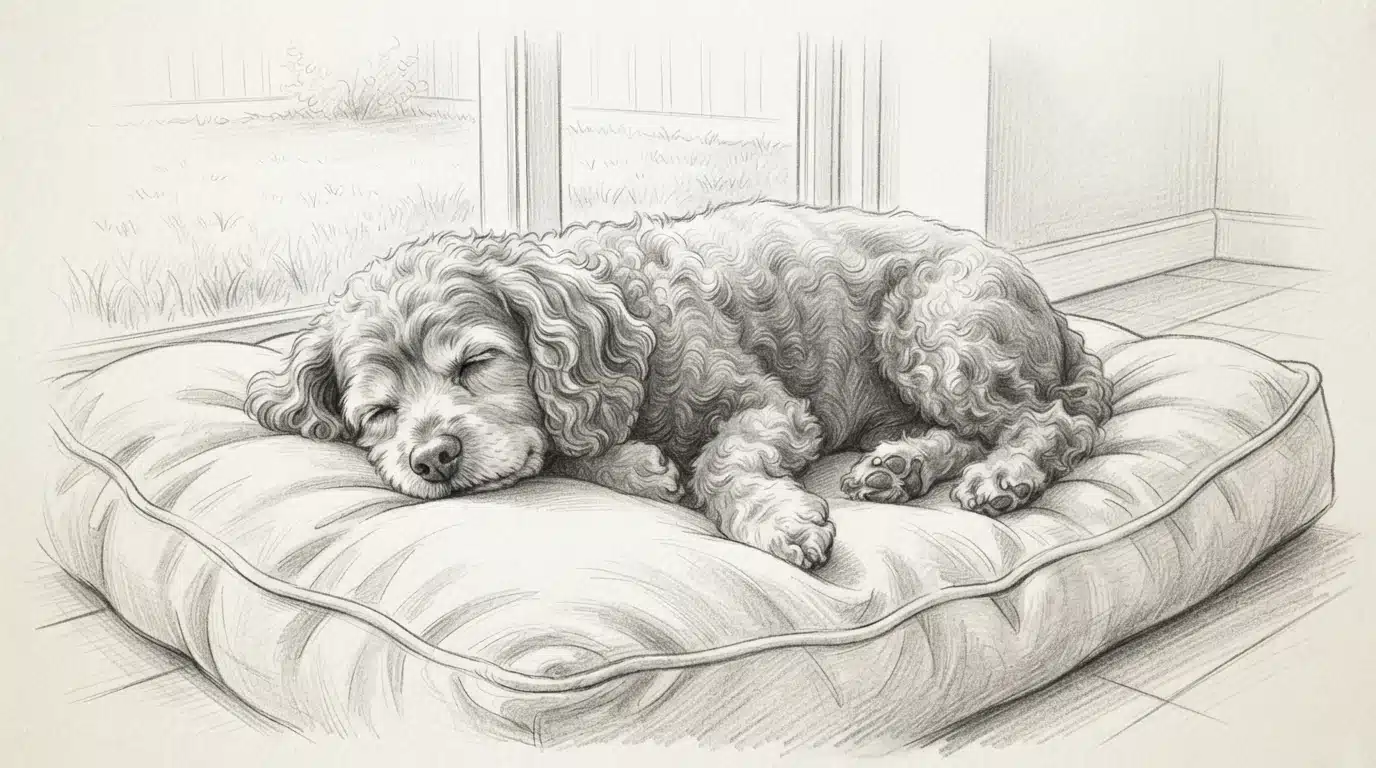
It is tempting to think senior exercise just means shorter walks. The real change is impact. Cartilage wears thin with age, and many small breeds show early arthritis signs by this stage, so jumping, hard turns, and long jogging sessions do more harm than good. Gentle, frequent movement actually helps arthritic joints by keeping them lubricated and slowing muscle loss, which is why vets recommend consistent low-impact activity over rest alone. Two 15-minute easy sessions beat one exhausting weekend outing.
Low-Impact Swaps That Still Tire a Senior
Keep the daily dose, change the format. These swaps protect joints while still working the body and brain:
- Swimming, where available, since water supports the joints while muscles work
- Slow sniff walks on soft grass instead of pavement or hills
- Scent games and puzzle feeders for mental fatigue without physical strain
- Gentle sit-to-stand reps or figure-8 walking to build strength
- Ramps at the car or couch instead of jumping
A warm-up matters now. Start each session with a few minutes of slow walking, and warm your dog up before play, as arthritis exercise guidance advises. Grooming checks also give you a chance to feel for stiffness or sore spots.
When to Slow Down vs. When to See the Vet
Normal aging looks like slower mornings and a longer recovery after busy days. Adjust by trimming session length and adding rest.
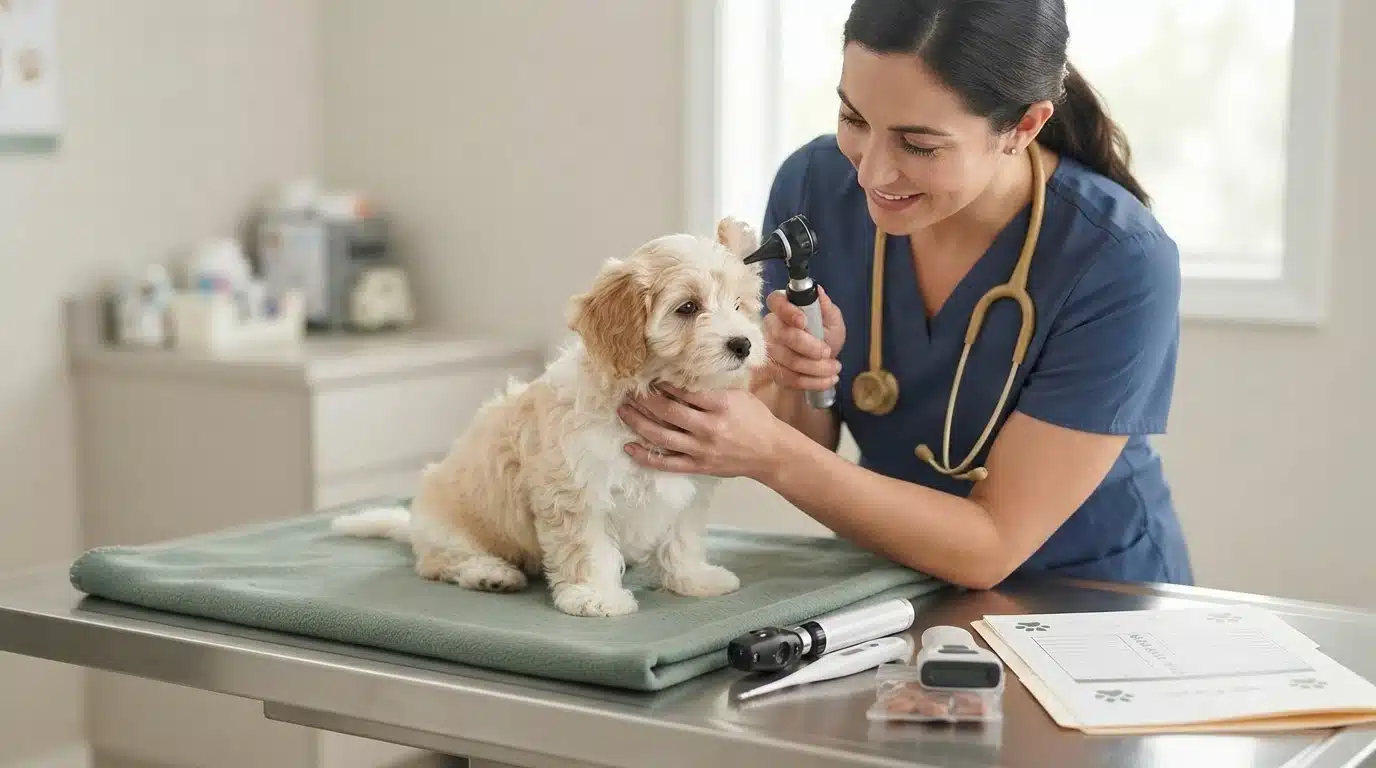
Call the vet instead when you see limping, reluctance to rise, yelping on touch, new stiffness that lasts into the afternoon, or a sudden drop in interest in walks. Early arthritis signs respond much better to treatment when caught early, so do not write these off as “just old age.”
Common Mistakes Owners Make With Cavapoo Exercise
Mistakes That Show Up in the First Year
The biggest first-year error is treating your puppy like a small adult. Long hikes, jogging, and stair sprints stress open growth plates, and strenuous exercise at this age can lead to lasting pain and joint problems. Repetitive fetch on hard floors is a quiet culprit too.
Owners also misread behavior. A puppy that seems wound up usually needs a nap, not another lap around the block, since most pups this age sleep 18 to 20 hours a day. Skipping mental work is the third slip: a bored brain chews shoes no matter how tired the body is.
Mistakes That Show Up Later
Once the dog reaches adulthood, the pattern flips. Owners assume a small dog needs little exercise, then wonder why the couch gets shredded. An adult Cavapoo still wants 45 to 60 minutes spread across the day.
Exercising without a yard is workable, but only with a real plan. Other late-stage mistakes: ignoring weight gain, repeating the same walk until it stops interesting the dog, and keeping the adult routine for a slowing senior whose joints need gentler, shorter sessions.
Matching Your Plan to the Right Puppy
A good exercise plan only works if the puppy behind it came from a healthy start. What a breeder does in the first eight weeks shapes how well your pup handles walks, play and rest later.
What to Ask a Breeder About Exercise Setup
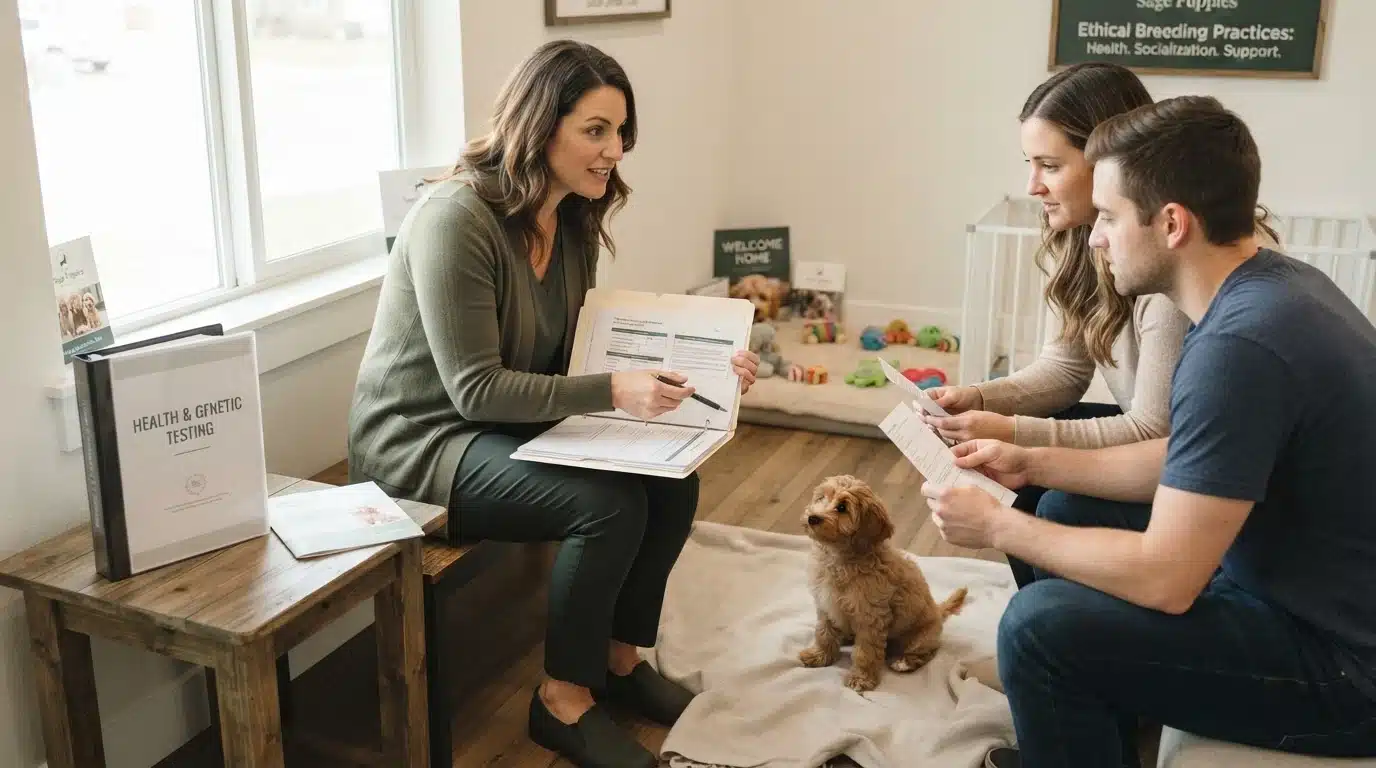
Ask how puppies are raised: indoor or outdoor, and how much daily handling they get. Ask about the parents’ energy levels and any health testing on the Cavalier and Poodle lines. Also ask when puppies start short play sessions and how the breeder matches temperament to each family.
How Sage Puppies Sets Puppies Up for Steady Activity
At Sage Puppies, Cassie raises each litter in her South Jordan home with daily handling, so puppies arrive used to gentle play and short bursts of activity. Every pairing starts with the parents’ health and temperament, and the application matches your household’s energy to the right puppy. That head start makes the stage-by-stage plans in this guide easier to follow from week one.

Raising a Cavapoo by life stage gets easier with the right start. Sage Puppies matches families with well-bred Cavapoo puppies and shares honest guidance from day one. Visit sagepuppies.com to start your application and bring home a companion built for your routine.
Frequently Asked Questions
Q1: cavapoo exercise needs by life stage
Puppies need about five minutes per month of age, twice daily. Adolescents handle 30 to 45 minutes, adults 45 to 60, and seniors about 30 gentle minutes split into short sessions.
Q2: Can I walk my Cavapoo puppy before vaccinations?
Keep outdoor time cautious until the vaccine series finishes, usually around 16 weeks. Carry your puppy in busy areas and save ground exploring for your own clean yard.
Q3: How much exercise does a Cavapoo need without a yard?
Plenty works indoors. Hallway fetch, tug, hide-and-seek, trick training, and puzzle feeders cover most of the daily dose, plus two or three structured leash walks.
Q4: What happens if I over-exercise my Cavapoo puppy?
Watch for heavy panting, stumbling, lagging, or wild nippy behavior. Overworked joints while growth plates stay open can set up early arthritis, so end sessions early.
Q5: Is mental stimulation a substitute for physical exercise?
Partly. Ten focused minutes of scent work or training can settle a dog faster than a walk, but adults still need their daily walks alongside brain games.
Q6: When should a senior Cavapoo see the vet about exercise?
Call about limping, reluctance to rise, yelping on touch, or stiffness lasting past midday. These signal arthritis, which responds better when treated early.
Conclusion
Match the exercise dose to the stage, and most Cavapoo problems disappear before they start. Puppies need short play bursts, roughly five minutes per month of age, with no forced running while growth plates stay open. Adolescents handle 30 to 45 minutes but still need joint protection. Adults thrive on 45 to 60 minutes split across the day, blending walks with mental work. Seniors do best with about 30 gentle, low-impact minutes. Watch your dog, not just the chart, and adjust for weight, weather and energy. Get the dose right at each stage, and you protect joints, settle behavior and build the calm companion you hoped for.