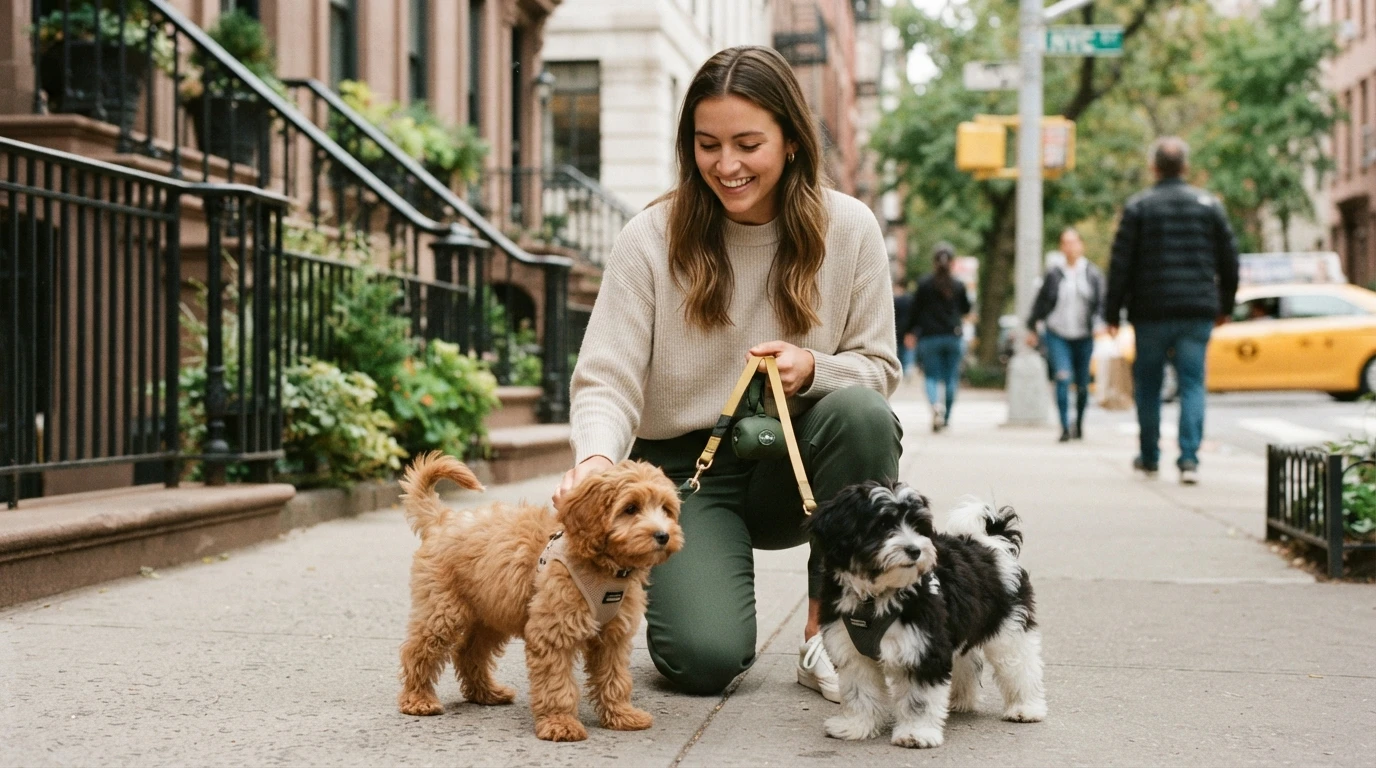
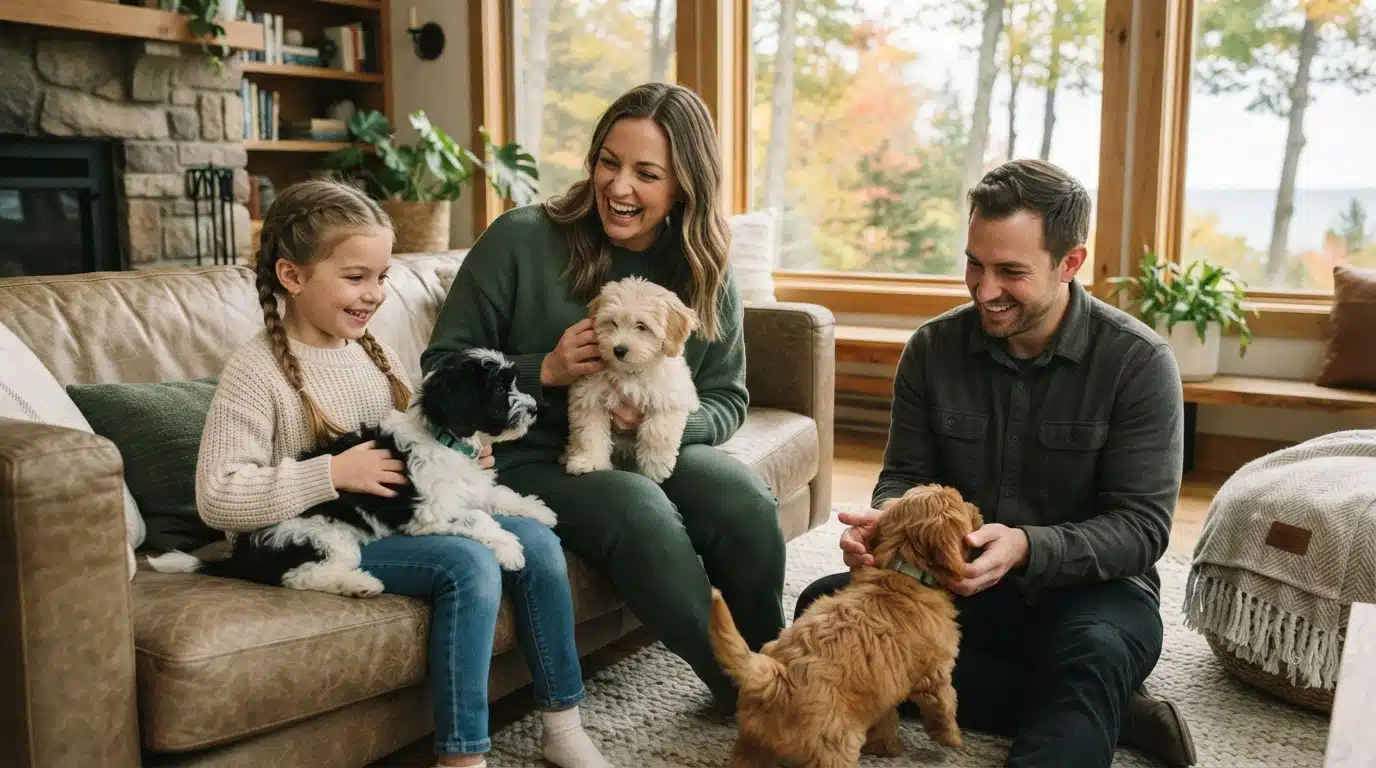
Quick Summary: Calm puppy breeds still need real care, so busy professionals must plan for potty breaks, training, and midday company. The guide ranks seven small breeds, with Havanese, Havapoo, and Cavapoo at the top for apartment-friendly temperaments, but warns that no puppy should be left alone for a full workday. Grooming and individual temperament vary, so judge each puppy and budget for regular trims. Sage Puppies, which raises Havanese, Havapoos, and Cavapoos, is highlighted as a source for well-socialized puppies with delivery to Massachusetts.
A Boston commute, a compact apartment, and a young puppy can work together. But only if the breed and your weekday care plan fit each other. That’s the honest starting point, because calm puppy breeds don’t mean easy dogs.
Lists of quiet dog breeds often make low energy sound like low maintenance. It isn’t. Even the most easygoing companion puppy needs frequent potty breaks, early training, social contact, and a sensible plan for time alone. And breed tendencies are tendencies only. Individual temperament varies, so no list can promise a puppy will sleep through your Zoom meetings.
This guide compares seven small companion breeds – including Havanese, Havapoo, and Cavapoo – on temperament, activity level, vocal habits, grooming, and workday support needs. The order reflects breed-level traits and how each tends to fit a professional’s routine, drawing on established breed guidance and real care demands. None of these are low energy dogs you can leave alone for nine hours. A midday break arrangement matters for every puppy here.
Massachusetts families can ask Sage Puppies about puppy delivery on any of the breeds they raise.
Calm Puppy Breeds at a Glance
| Breed | Best for | Typical activity | Vocality to plan for | Grooming commitment |
|---|---|---|---|---|
| Havanese | Professionals who can provide close companionship and a midday care plan | Moderate; walks, play, and interaction | May alert-bark; teach quiet routines early | Regular brushing and professional grooming |
| Cavapoo | Households wanting an affectionate companion and able to provide daily company | Moderate; varies by puppy and parent pairing | Individual tendencies vary; reinforce calm responses | Regular brushing and professional grooming; coat varies |
| Havapoo | Professionals with a flexible routine and time for engagement | Moderate; play and enrichment are important | Can vary; use early, consistent training | Regular brushing and grooming; coat texture varies |
| Shih Tzu | Apartment households ready for routine grooming and training | Low to moderate as a household companion; individual needs vary | Individual; teach settled behavior and neighbor-aware routines | Regular brushing and professional grooming |
| Cavalier King Charles Spaniel | Professionals with flexible schedules or reliable daytime care | Moderate; daily walks and play | Individual; early training and enrichment matter | Regular brushing and routine coat care |
| Bichon Frise | Social households ready for regular grooming | Moderate; play, walks, and engagement | Individual; early routines can support quieter behavior | High; regular brushing and professional grooming |
| Pug | Owners prepared to learn breed-specific care needs | Low to moderate; follow individualized veterinary guidance | Individual; set household training routines | Low to moderate coat care; routine maintenance still needed |
What to know about calm puppy breeds
“Calm” can be a slippery word. For most breeds, it means a puppy that settles quickly after play, adapts to apartment noise, and naps much of the day as an adult. It does not mean quiet on demand, zero exercise, or instant comfort when you leave for work.
That second part matters most for busy professionals. Every puppy, even the mellowest breed, needs supervision, frequent toilet breaks, early socialization, and slow practice with alone time. Your schedule shapes how that training fits in.
So think of this list as a matching exercise. Below, you’ll see seven breeds known for easygoing adult temperaments, compared by energy, size, grooming, and how they handle a workday routine. Then you can judge which one fits your Boston commute, your condo, and your calendar.
1. Havanese
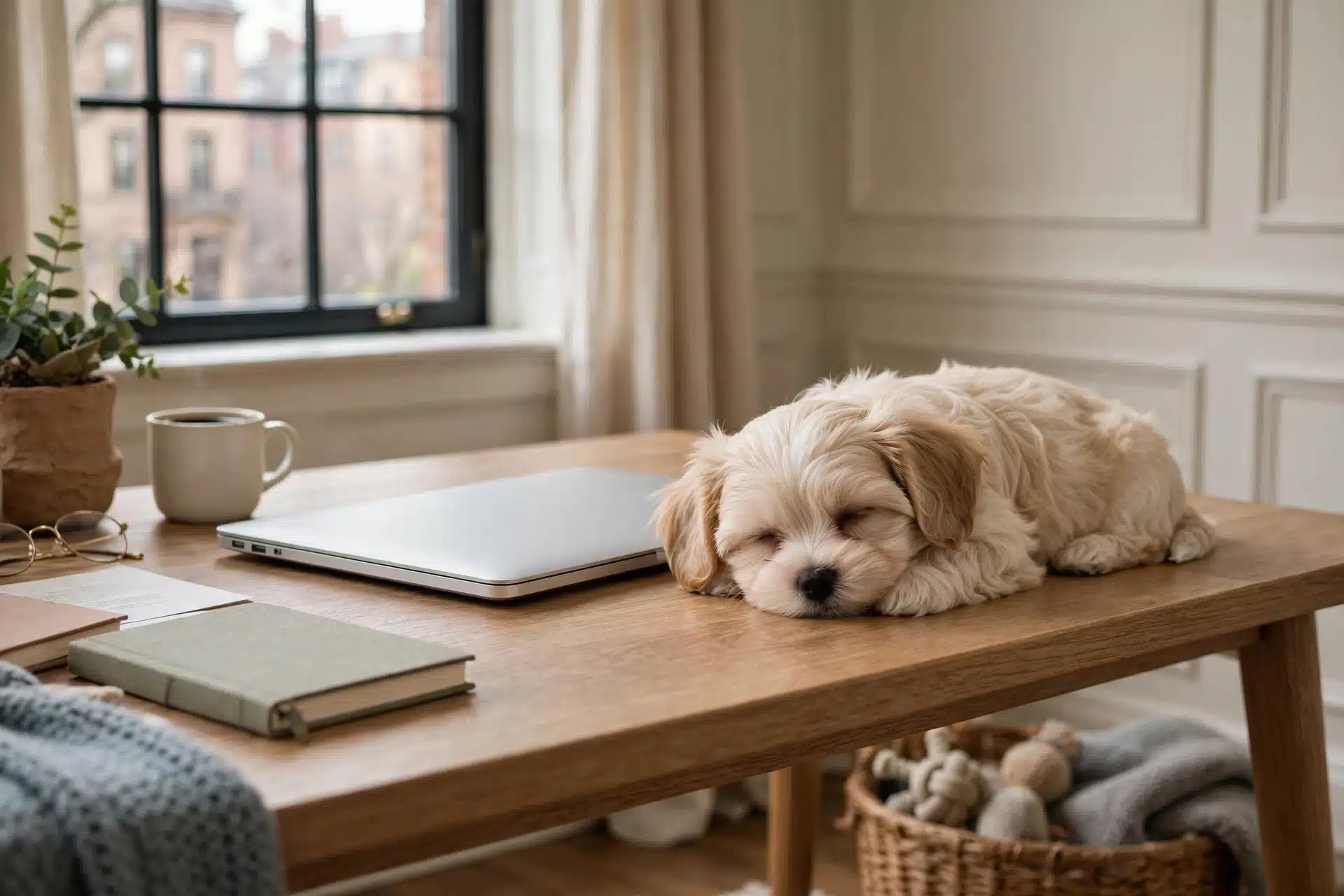
If you want one small dog that checks almost every box for a busy professional, start here. The Havanese is cheerful, sociable, and happy in a Boston apartment or a Concord colonial, with only moderate exercise needs according to AKC breed guidance. The catch is real, though: this is a people dog, not a self-serve pet, so the ranking depends on a daytime care plan.
Highlights
- Small companion breed with a cheerful, social disposition
- Often adapts well to urban and suburban homes with regular walks and play
- People-oriented nature makes planned company and gradual separation training important
- Long silky coat requires daily brushing and occasional professional grooming
Specs
- Best for: Professionals who can provide close companionship and a midday care plan
- Typical activity: Moderate; walks, play, and interaction
- Vocality: May alert-bark; teach quiet routines early
- Grooming commitment: Regular brushing and professional grooming
Pros
- Often adapts well to city and suburban living
- Affectionate and sociable with a manageable activity profile
Cons
- May struggle with long stretches alone, so plan caregiver support and build alone-time gradually
- Coat care takes consistent time
It ranks first because it pairs apartment adaptability with a temperament Sage Puppies knows inside out – as long as your workday plan includes company, it’s a strong match.
Last updated: September 26, 2026
Also Read: Havanese, Havapoo & Cavapoo Puppy Care Blog
2. Cavapoo
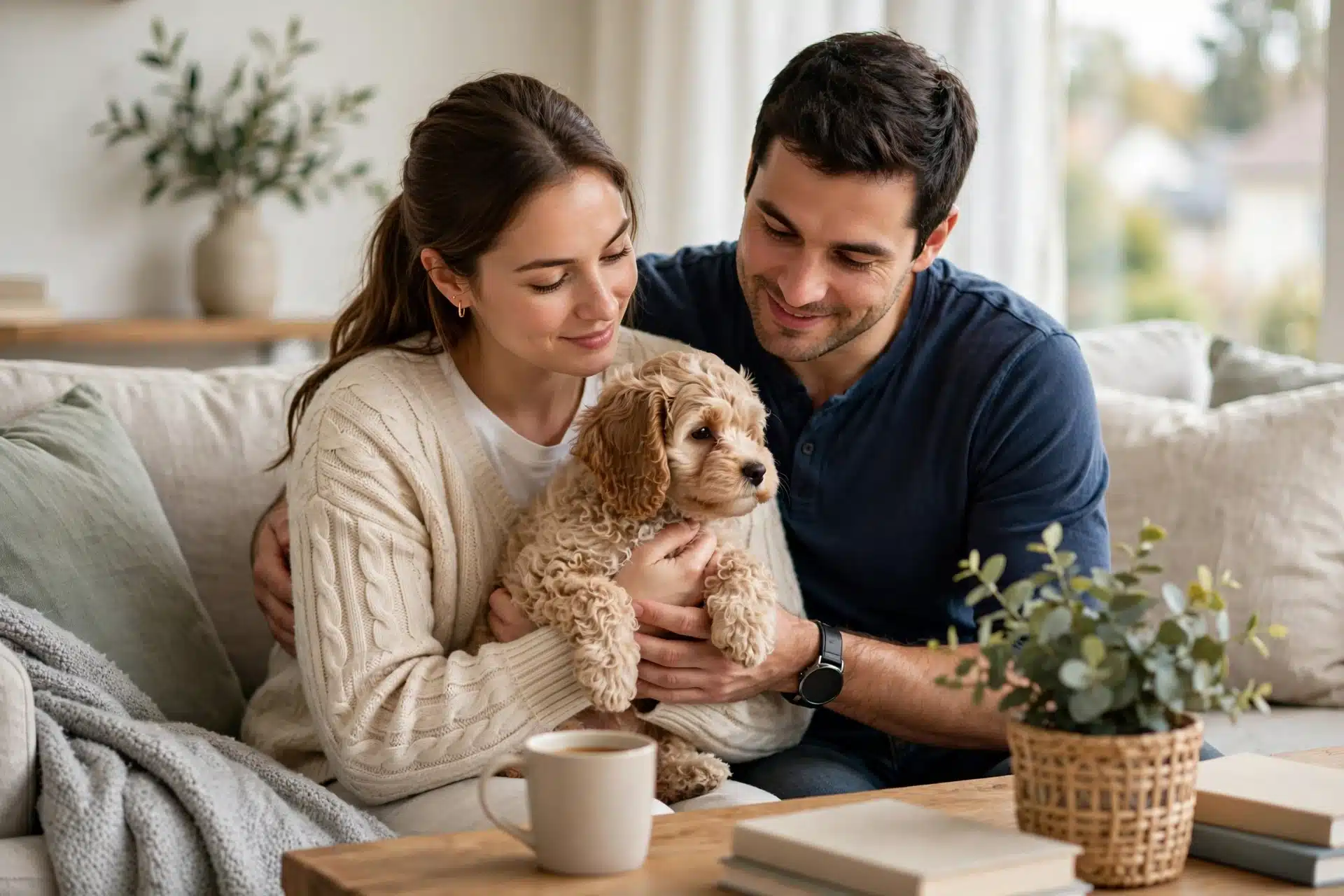
The Cavapoo, a Cavalier King Charles Spaniel and Poodle mix, is often sought for its affectionate, people-focused nature. That reputation makes it a favorite with busy professionals who want a close companion rather than a distant watchdog. Keep in mind that a calm adult-breed image is not a promise – each puppy is its own mix of traits.
Highlights
- Often chosen for an affectionate, social companion temperament.
- Coat texture, adult size, and energy can vary by puppy and parent pairing.
- Regular grooming and positive-reinforcement training are part of ownership.
- Sage Puppies raises Cavapoos in South Jordan, Utah, and serves families locally and nationwide.
Specs
- Best for: Households wanting an affectionate companion and able to provide daily company
- Typical activity: Moderate; varies by puppy and parent pairing
- Vocality to plan for: Individual tendencies vary; reinforce calm responses
- Grooming commitment: Regular brushing and professional grooming; coat varies
Pros
- Often affectionate and closely connected with family.
- Can fit a range of homes when care and activity are tailored to the individual.
Cons
- Coat, size, and temperament are not fully predictable from the mix label.
- People-oriented puppies need a thoughtful plan for workday absences.
Ask for parent health testing and temperament details before reserving – a healthy, well-socialized start matters more than any “calm” label. Sage Puppies can walk you through each available pairing.
Last updated: September 26, 2026
Also Read: 10 Signs a California Puppy Listing Is a Scam – Sage Puppies
3. Havapoo
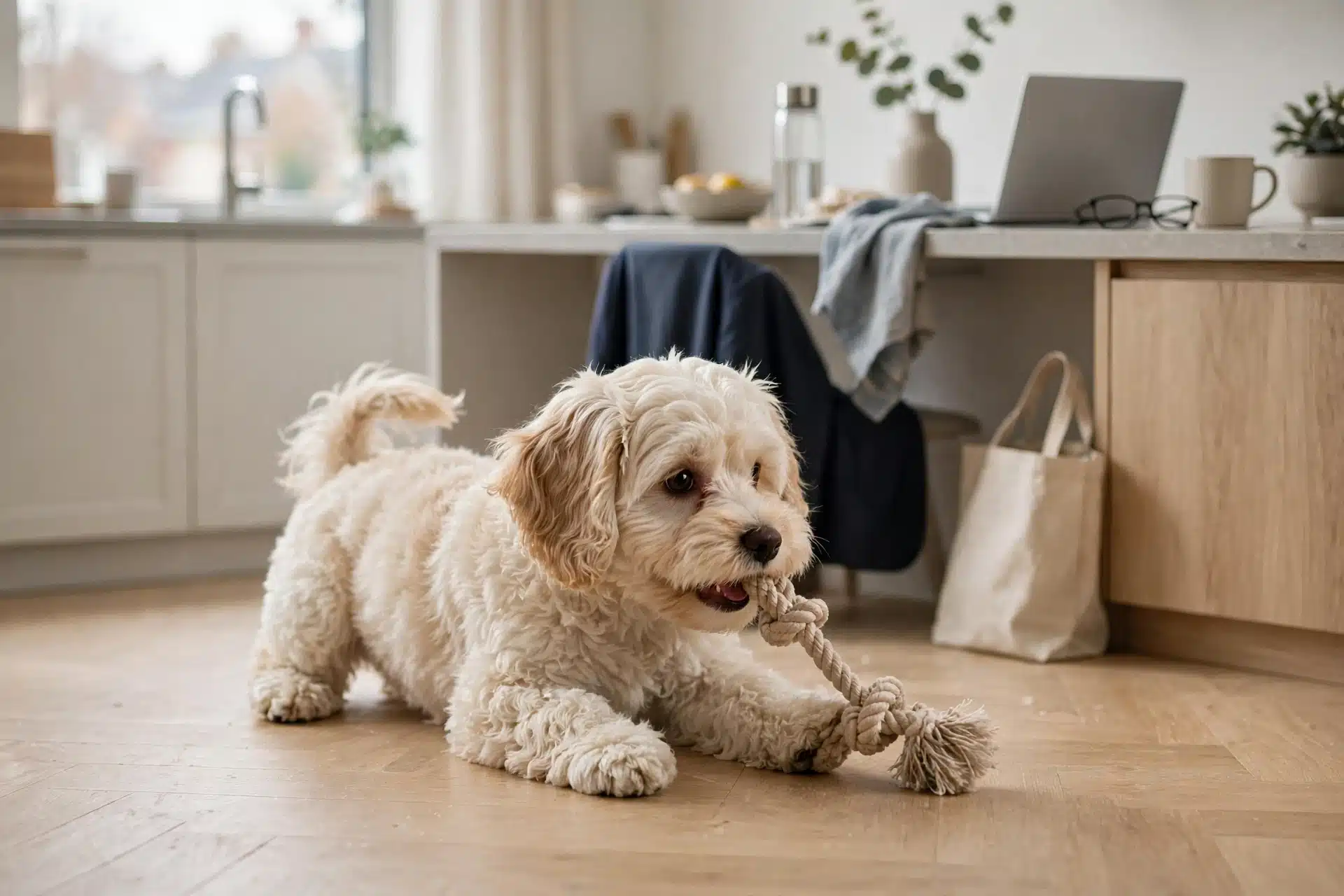
A Havapoo blends Havanese charm with Poodle smarts, and the result is usually a bright, affectionate companion. Just don’t assume low energy. This mix often stays playful well into adulthood, so it fits a professional whose day includes breaks, help, or flexible hours rather than someone gone from 8 to 6.
Highlights
- Combines Havanese and Poodle influence in a companion-oriented mix, with an engaged personality that thrives on interaction
- Small size makes apartment and condo living in Massachusetts easy
- Sage Puppies raises Havapoos alongside Havanese and Cavapoos, so you can compare temperaments in one program
Specs
- Best for: Professionals with a flexible routine and time for engagement
- Typical activity: Moderate; play and enrichment are important
- Vocality to plan for: Can vary; use early, consistent training
- Grooming commitment: Regular brushing and grooming; coat texture varies from wavy to curly
Pros
- Small, affectionate companion profile that bonds closely with its people
- Can be a great fit for families who enjoy positive training and daily interaction
Cons
- Crossbreed traits and coat needs vary from one puppy to the next
- Not a fit if you expect a puppy to spend long workdays alone
A Havapoo ranks here as a relevant small companion choice for Massachusetts professionals, but its lively, variable traits mean schedule planning and careful puppy matching matter. Grooming routines started early keep coat care simple. For more on temperament, see this Havapoo overview.
Last updated: September 26, 2026
Also Read: Massachusetts Puppies for Sale: Choosing Between Pickup Options
4. Shih Tzu
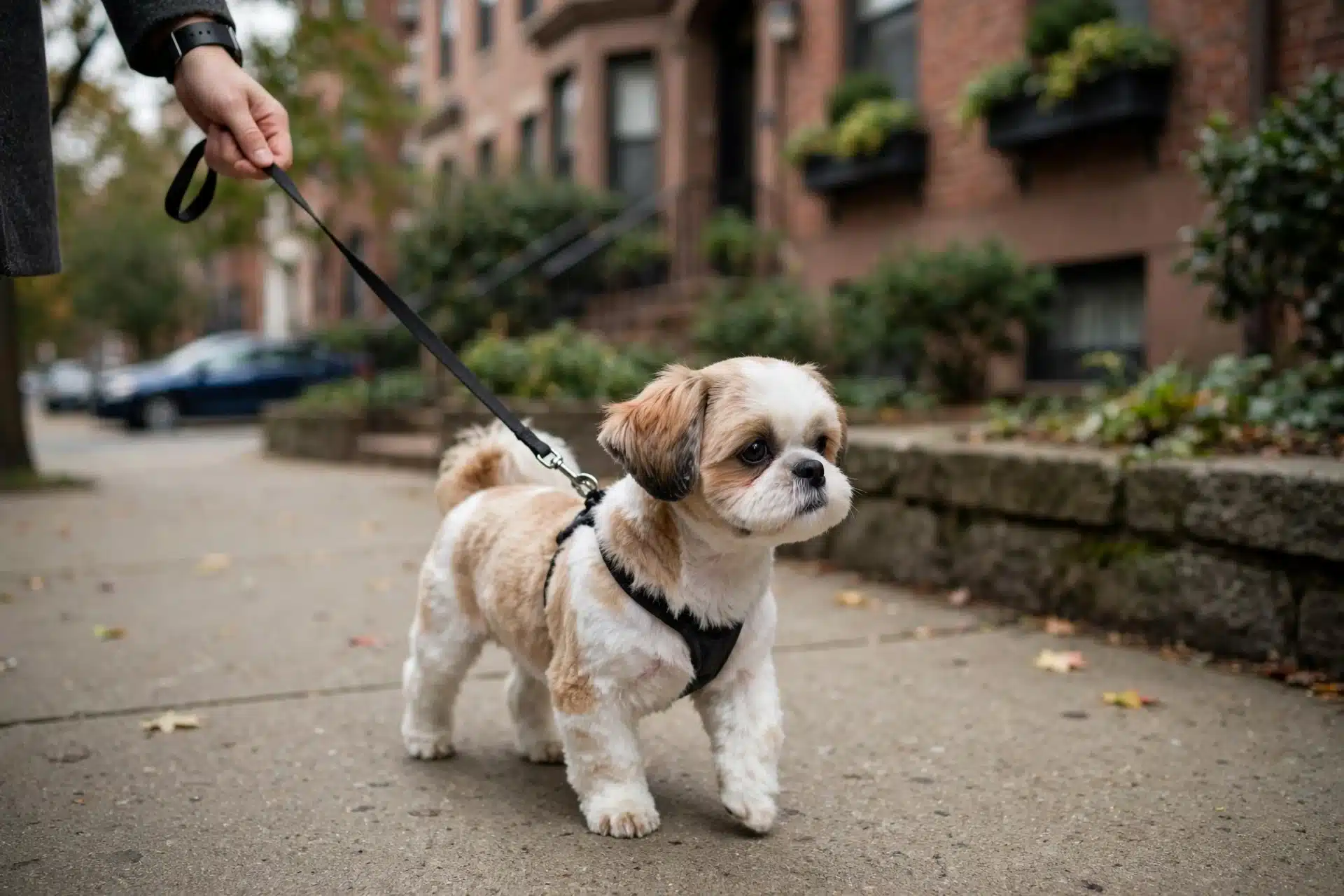
The Shih Tzu is a compact companion breed that fits comfortably into apartment life and a quieter household rhythm. Bred for centuries as a house pet, it stays content with indoor routines and short daily walks, though coat care and training still belong on your calendar.
Highlights
- Compact companion breed commonly considered for apartment living
- An indoor-friendly routine still includes daily activity and training
- Coat maintenance can be substantial, especially if kept long
- Puppy temperament and vocal habits vary by individual
Specs
- Best for: Apartment households ready for routine grooming and training
- Typical activity: Low to moderate as a household companion; individual needs vary
- Vocality to plan for: Individual; teach settled behavior and neighbor-aware routines
- Grooming commitment: Regular brushing and professional grooming
Pros
- Compact size can work well in smaller homes
- Often considered for companion-focused, indoor lifestyles
Cons
- Long or dense coat needs regular care; many owners use a short “puppy cut” with professional grooming every few weeks
- Apartment fit does not mean a puppy can be left alone all day
It ranks here because its indoor companion profile suits a quieter household, but grooming demands and puppy-care needs keep it below the Sage Puppies breeds in this comparison.
Last updated: September 26, 2026
5. Cavalier King Charles Spaniel
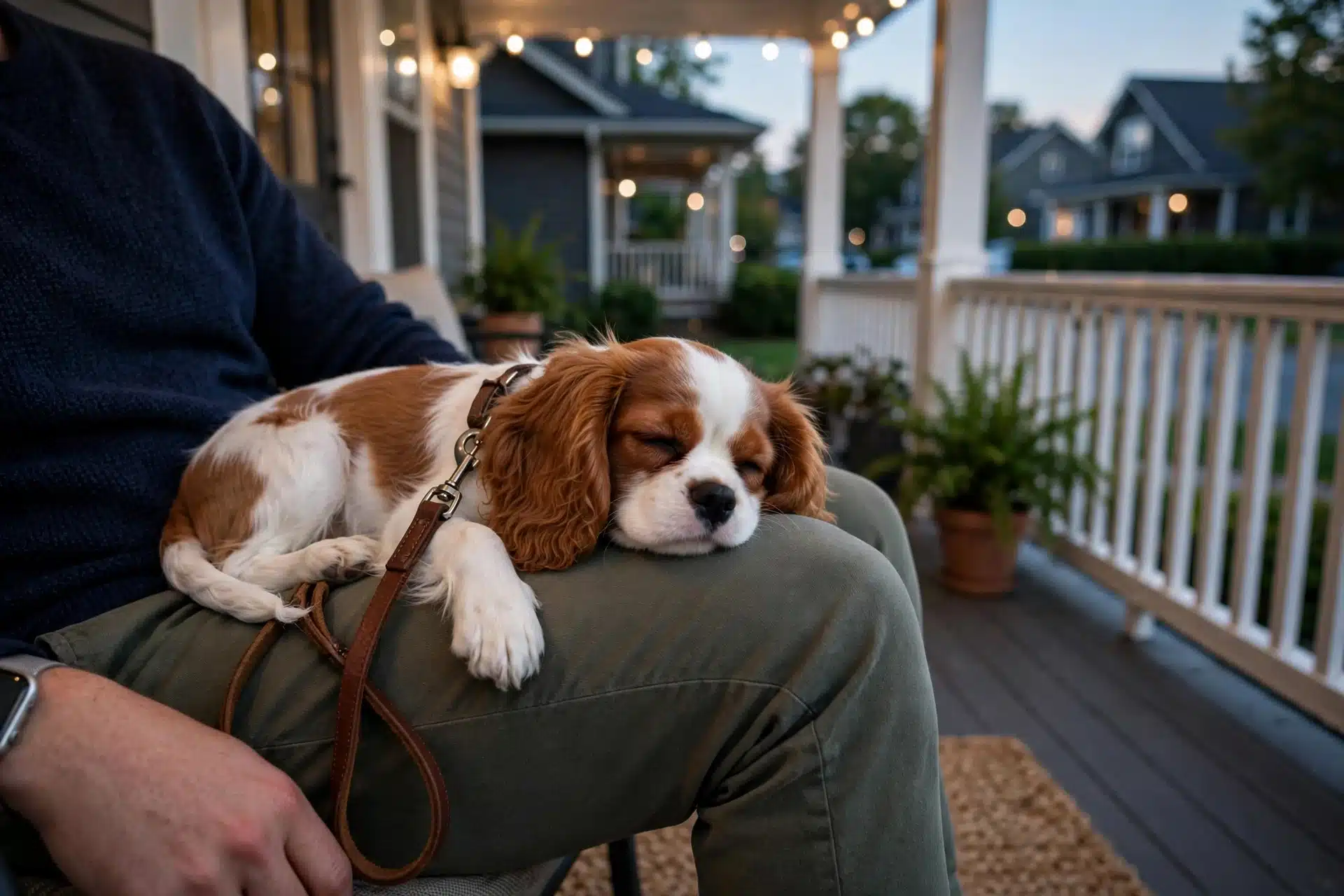
Few dogs match the Cavalier’s soft, people-first temperament. The AKC standard describes the breed as “gentle and affectionate,” with a friendly, non-nervous character (breed standard). That calm charm makes it a favorite among first-time owners, as long as someone is around most of the day.
Highlights
- Known as a companion-oriented, affectionate breed
- Apartment fit depends on training, daily routines, and individual behavior
- Regular activity, grooming, and social interaction remain necessary
- Ask breeders for breed-relevant health testing documentation
Specs
- Best for: Professionals with flexible schedules or reliable daytime care
- Typical activity: Moderate; daily walks and play
- Vocality to plan for: Individual; early training and enrichment matter
- Grooming commitment: Regular brushing and routine coat care
Pros
- Affectionate and often gentle in family settings
- Can adapt to varied homes when companionship needs are met
Cons
- May not suit a household with frequent, prolonged absences; VCA notes some Cavaliers show mild separation anxiety
- Families should ask breeders for relevant parent health-testing documentation
Why it ranks here: The Cavalier’s gentle, social reputation fits the calm-companion goal, but its strong need for company and the importance of health research keep it from being a universal pick for demanding work schedules.
Last updated: September 26, 2026
Also Read: 10 Red Flags to Avoid When Visiting a Local Puppy Breeder
6. Bichon Frise
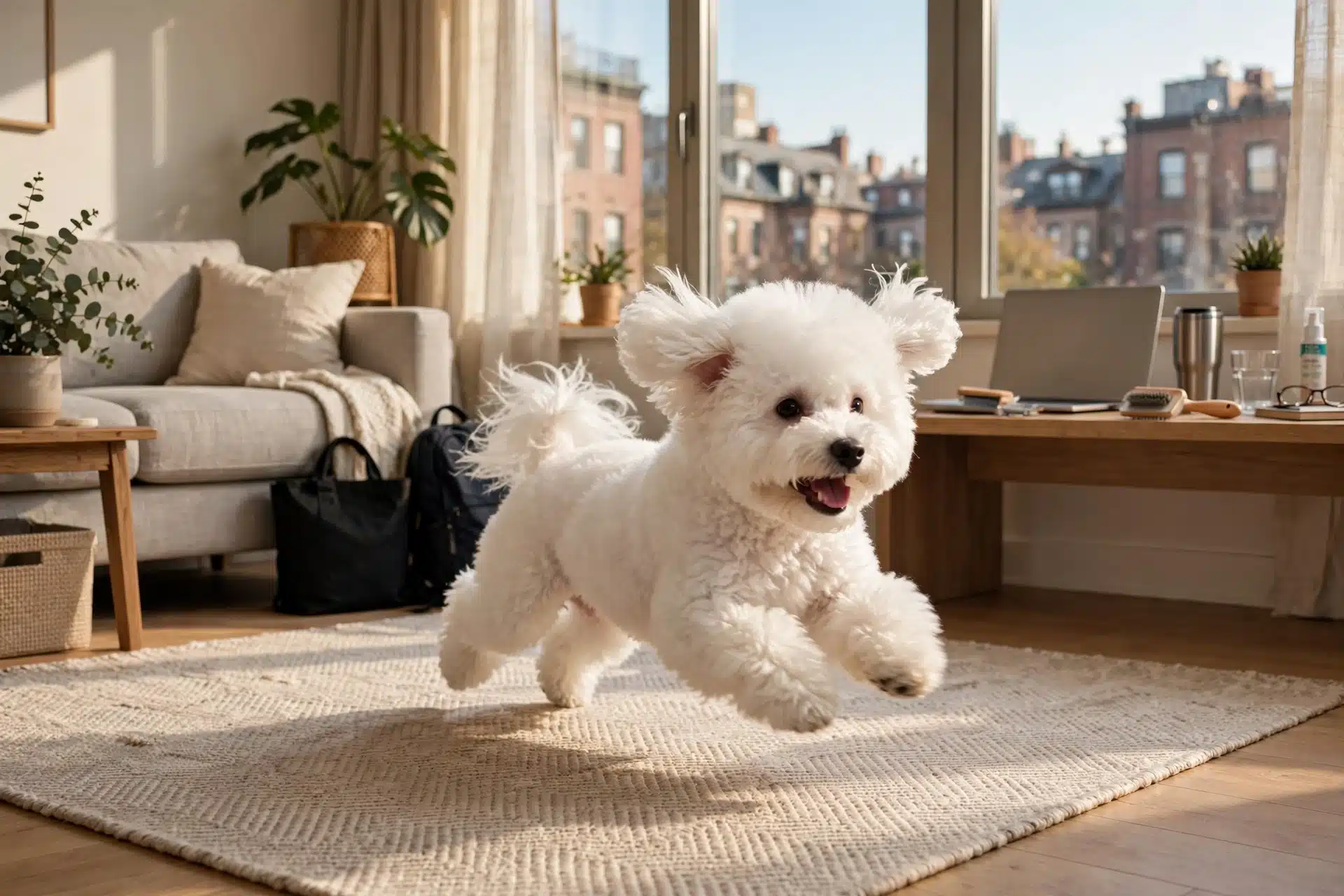
The Bichon Frise is a cheerful small companion that rewards an owner willing to invest in social time and regular grooming. Its compact size works in an apartment or smaller home, but this is not a “set it and forget it” breed. Bichons thrive on people, so a long unsupervised workday needs a plan.
Highlights
- Small companion breed with a lively, social reputation
- Daily play and positive training help build settled household habits
- Curly coat requires planned grooming and brushing
- Professionals should arrange appropriate puppy supervision and breaks
Specs
- Best for: Social households ready for regular grooming
- Typical activity: Moderate; play, walks, and engagement
- Vocality to plan for: Individual; early routines can support quieter behavior
- Grooming commitment: High; regular brushing and professional grooming
Pros
- Small size and sociable nature can suit many home types
- Enjoys positive interaction and family involvement
Cons
- Coat care takes consistent effort
- Social needs make a long unsupervised workday a poor assumption
Some Bichons bark more than others, so early routines help per the AKC’s breed profile. Their coat keeps growing and needs trims every four to six weeks, so budget for steady grooming. It ranks here for small-home adaptability, but social needs and coat work may exceed what time-pressed owners expect.
Last updated: September 26, 2026
Also Read: What to Pack for a Safe Winter Puppy Pickup in Massachusetts
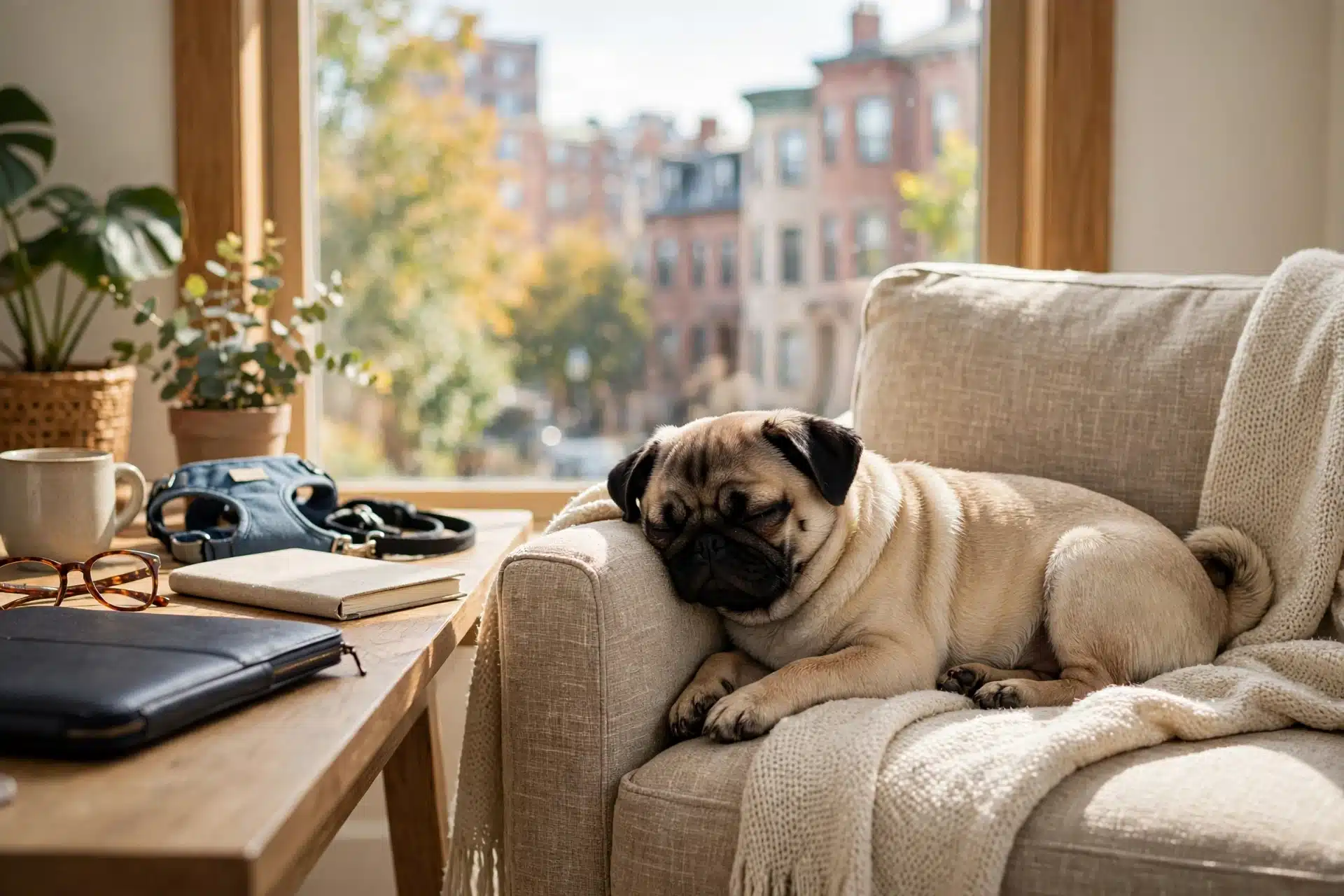
7. Pug
The Pug is a sociable, compact companion that suits owners who understand its distinct exercise and health needs. Low energy does not mean zero effort: daily movement, training, and puppy supervision are still part of the deal.
Highlights
- Compact companion with a sociable, close-to-family profile
- Daily activity should be gentle and discussed with a veterinarian
- Flat-faced breed traits call for careful health and temperature management
- Training and puppy supervision remain essential
Specs
- Best for: Owners prepared to learn breed-specific care needs
- Typical activity: Low to moderate; follow individualized veterinary guidance
- Vocality: Individual; set household training routines
- Grooming: Low to moderate coat care; routine maintenance still needed
Pros
- Compact profile may suit smaller homes and apartments
- Often valued for sociability and closeness with people
Cons
- Requires careful thought around flat-faced breed health and heat sensitivity
- Not a substitute for a real puppy care plan or daily supervision
Why it ranks here: Its compact, companion nature appeals to lower-key households, but breed-specific health considerations make it a more conditional pick for busy professionals.
Last updated: September 26, 2026
How to choose a calm puppy for your workday
Breed temperament matters, but your first three months matter more. Plan those before you fall for a face.
- Map the puppy phase. Puppies need toilet breaks every few hours, meals on a schedule, constant supervision, and short lessons in being alone. Build this into your calendar now, not after pickup day.
- Line up midday care. Decide who handles a lunchtime break: you, a family member, a trusted neighbor, or a vetted daycare once vaccinations allow.
- Judge the puppy, not the label. Ask the breeder which puppies bounce back quickly after new sounds and strangers. One meeting tells you less than weeks of observation.
- Budget for grooming. Havanese, Havapoos, Cavapoos, Shih Tzus, and Bichon Frises all need regular brushing and professional trims every 6 to 8 weeks.
- Plan for apartment noise. Ask about alert barking, then work on calm greetings, sound exposure, and quiet enrichment toys.
For Massachusetts families, a breeder who raises puppies at home with health-tested parents does much of this work for you. Sage Puppies stands out here: home-raised Havanese, Havapoos, and Cavapoos, transparent health records, and pickup or nationwide delivery. Verify availability, pricing, and application steps before reserving.

Ready to meet your calm companion? Sage Puppies raises health-tested Havanese, Havapoo, and Cavapoo puppies in a family home, so they arrive well-socialized and ready for your routine. We offer local pickup in South Jordan, Utah, plus nationwide delivery to Massachusetts. Browse available puppies, check pricing and reservation, or submit an application today – your low-stress workday sidekick is waiting.
Frequently Asked Questions
Q1: What are the best calm puppy breeds for busy professionals?
Havanese, Havapoos, and Cavapoos top the list. All three are small, affectionate, and adapt well to quieter homes with predictable routines. Their easygoing nature makes midday absences and evening training much simpler to manage.
Q2: Where to find puppies for sale in Massachusetts?
Massachusetts has limited ethical small-breed programs, so many families order nationwide. Ask breeders about health testing, references, and delivery details. Sage Puppies ships well-started puppies from Utah to Massachusetts with full transparency.
Q3: Are Havanese puppies good for apartment living?
Yes. Havanese are quiet, small, and moderately active, so apartments suit them well. They need short daily walks and playtime indoors. Early crate and alone-time training prevents barking from becoming a neighbor complaint.
Q4: How long can a puppy stay alone during the workday?
A young puppy should not hold it more than a few hours. Plan a midday break, a dog walker, or a neighbor visit until house training is solid, usually by six months.
Q5: Do calm breeds still need daily exercise?
Yes, but less. About 20 to 30 minutes of walks plus indoor play keeps Havanese, Havapoos, and Cavapoos content and well behaved.