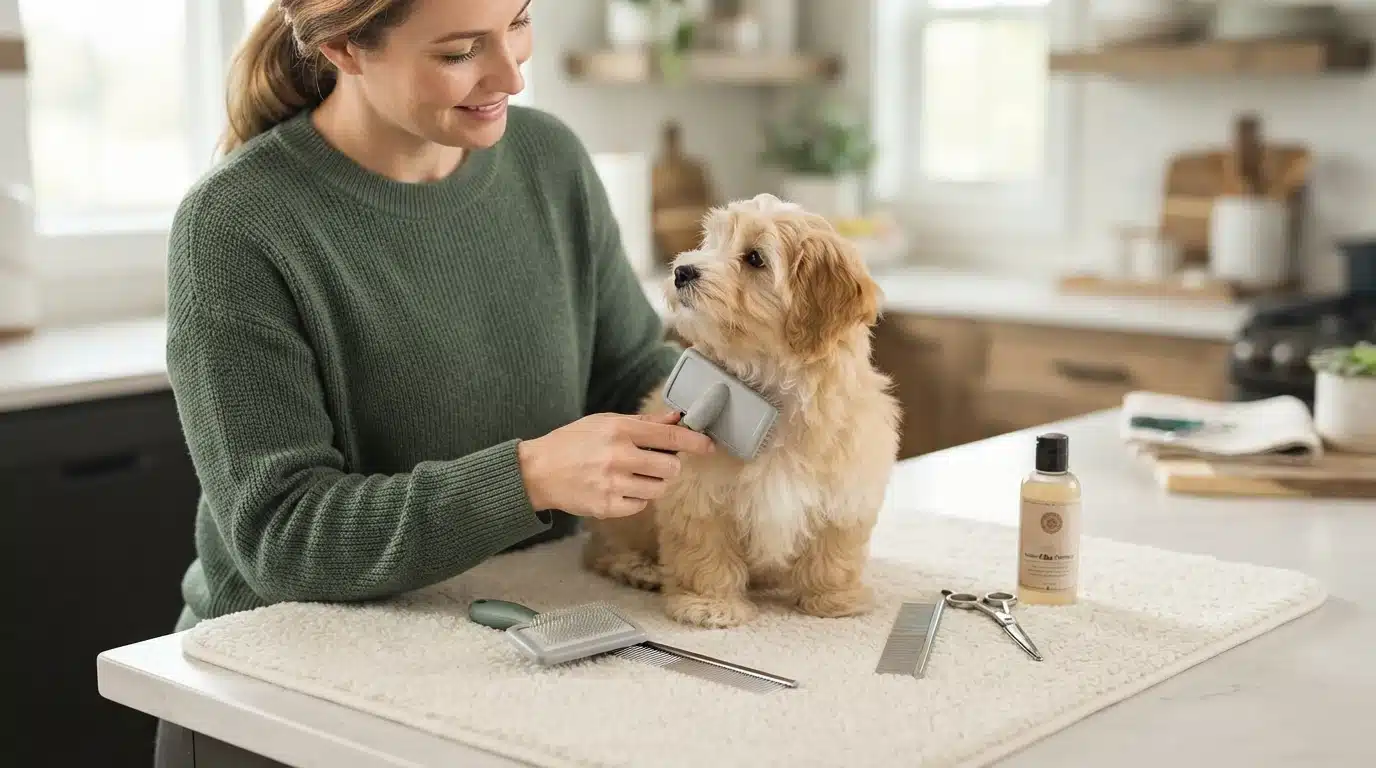
Quick Summary: Small-breed puppies usually finish teething between 6 and 8 months because 42 adult teeth must fit into a smaller jaw, making retained baby teeth more common than in larger dogs. Normal signs include heavy chewing, drooling, swollen gums, blood spots on toys, and fussier eating, while continued bleeding, refusal to eat for more than a day, or a firm baby tooth beside an adult tooth requires a vet. Safe relief includes chilled washcloths, soft chew toys, and softened food, while retained teeth are usually extracted between 4.5 and 6 months before they cause crowding or gum damage.
A Havapoo at eight months can still be dropping baby teeth while a same-age Labrador is finished. The reason is not stubbornness. Small skulls crowd more teeth into less space, so the puppy teething timeline runs longer and the risks run higher.
Most generic guides treat every puppy alike. They leave owners guessing about which puppy teething symptoms are normal and which need a vet, especially when a baby tooth refuses to budge. In toy breeds, that stuck tooth is common, not rare.
This guide walks through a small-breed puppy teething chart by age, shows what the stages look like week by week, and explains how persistent deciduous teeth happen. You will also find relief ideas built for tiny, delicate mouths and a clear line between normal and concerning. The advice draws on veterinary and kennel club references, matched to breeds like the Havanese, Havapoo and Cavapoo.
What Makes Small Breed Teething Different
Teething works the same way in every puppy, but size changes the stakes. A Havanese or Cavapoo mouth holds the same 42 adult teeth as a Lab’s, packed into half the jaw. That tight space is why small breed owners see more crowding, more stuck baby teeth, and a timeline that runs a few weeks longer.
Baby Teeth, Adult Teeth and the Crowding Problem
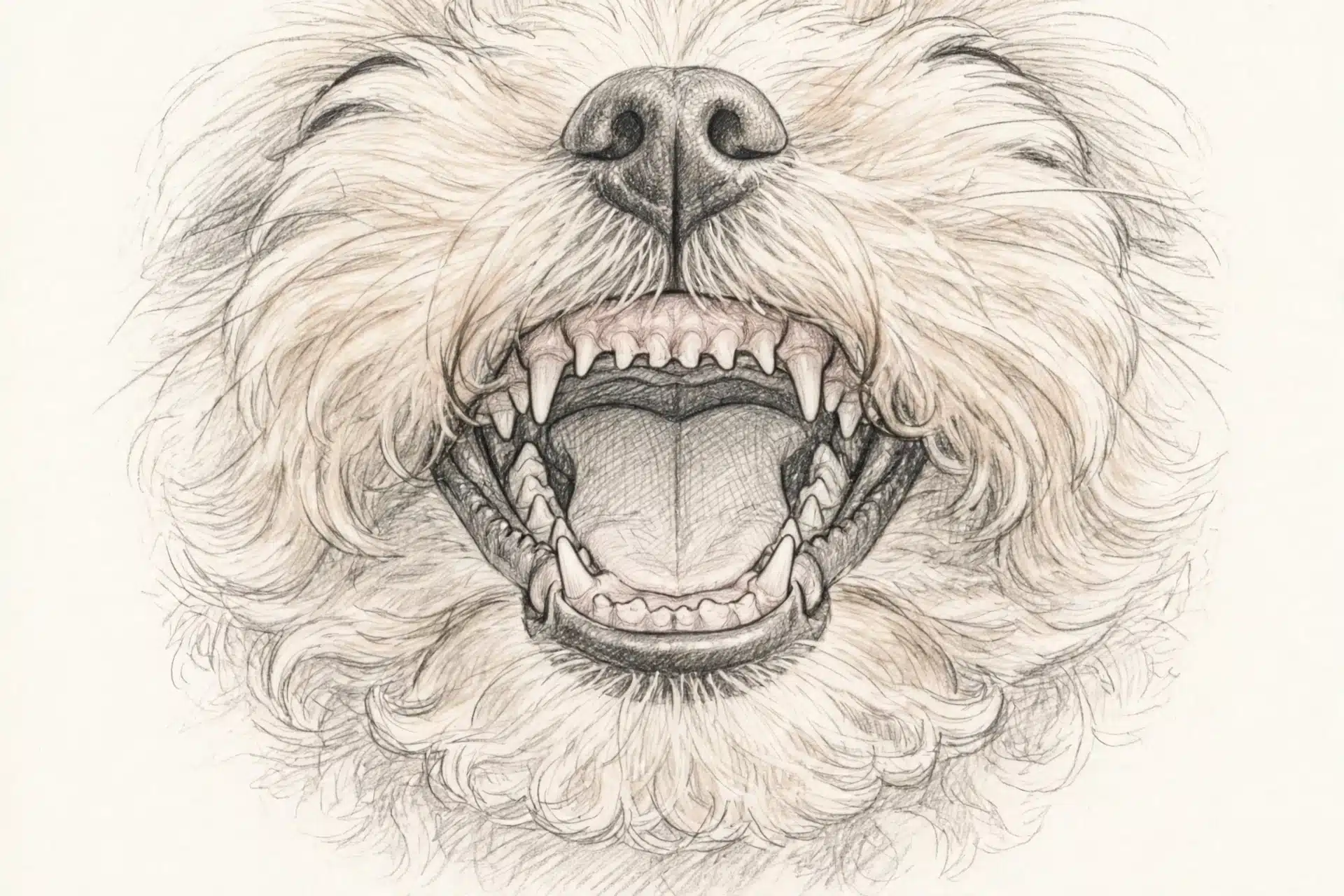
Puppies are born with no visible teeth at all. All 28 baby teeth have erupted by about 8 weeks, which is right when most puppies come home. Around 12 weeks, adult teeth begin pushing the baby teeth out. According to the VCA’s teething guide, the full adult set of 42 teeth usually arrives by 7 to 8 months, a figure the USDA’s breeders’ reference confirms.
Crowding is the small breed twist. Those 42 teeth sit in a much smaller jaw, so adult teeth sometimes come in beside a baby tooth instead of behind it. When a baby tooth never falls out, vets call it a persistent deciduous tooth, and toy breeds get them far more often than big dogs.
Why Small Breeds Run Slightly Longer
Large breeds finish early because their jaws erupt teeth quickly and evenly. Small breeds often push the last canines through closer to 7 or even 8 months. The extra weeks matter: retained teeth caught early are a simple vet visit, while teeth left in place can shift adult teeth and trap food. Small mouths also mean gentler chews, since hard bones that suit big puppies can crack tiny teeth. Plan a mouth check at every vet visit during this window.
The Puppy Teething Timeline From Birth to Adult Teeth
Small breed puppies follow a predictable schedule: baby teeth erupt from weeks 2 to 6, adult teeth start pushing through around 12 weeks, and the full set of 42 usually lands between 7 and 8 months. Here is the puppy teething timeline by age, stage by stage.
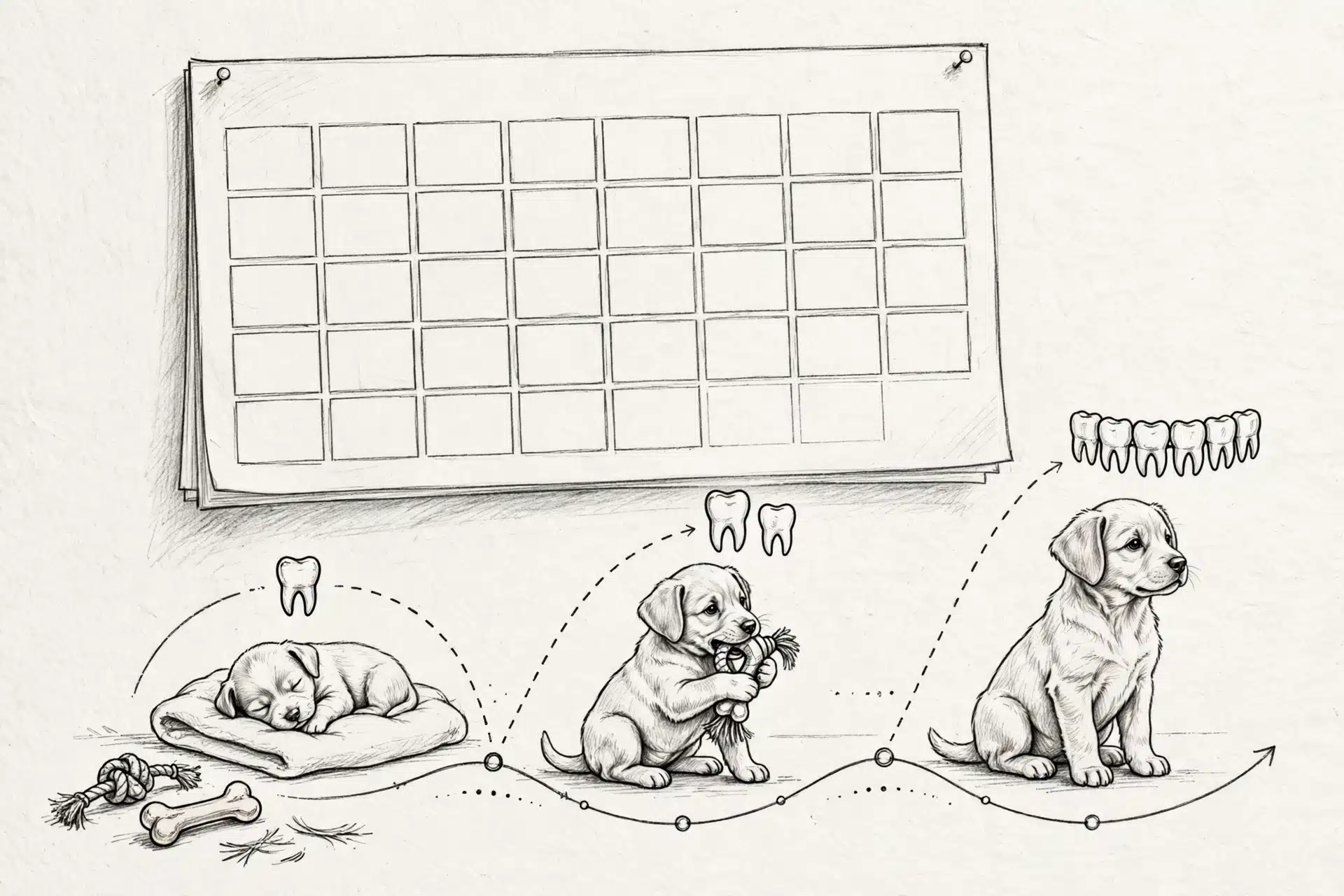
| Age | What Happens |
|---|---|
| Weeks 2 to 6 | 28 baby teeth erupt, starting with canines |
| Weeks 12 to 16 | Puppy comes home; adult teeth start moving |
| Months 3.5 to 4 | Baby incisors fall out, adult incisors arrive |
| Months 4 to 6 | Premolars and molars push through |
| Months 6 to 8 | Canines finish; small breeds run late |
Weeks 2 to 6: Baby Teeth Arrive
Puppies are born with no teeth at all. The needle-sharp canines and incisors start breaking through the gums around week 2 or 3, and the rest of the 28 baby teeth follow quickly. By 8 weeks, most puppies have a complete set, which is right when many families bring theirs home.
Weeks 12 to 16: The Homecoming Window
This stretch feels calm, but change is starting under the gums. Adult teeth begin pushing upward around 12 weeks, and you may notice more mouthing and chewing on hands, shoes and furniture. Gentle chewing helps, so offer safe chew toys for teething puppies rather than your fingers.
Months 3.5 to 4: Shedding and First Adult Teeth
The baby incisors loosen and drop out first, often during meals or play. Most puppies swallow them without any fuss, so do not worry if you never find one. Adult incisors slide in behind the gaps, and the mouth can look slightly uneven for a few weeks as everything settles.
Months 4 to 6: Premolars and Molars
The bigger grinding teeth arrive now, and this is usually the peak chewing phase. Premolars and molars bring deeper gum pressure, so puppies chew longer and harder than before. Rotate two or three sturdy toys so the novelty lasts, and check the gums weekly for redness or swelling.
Months 6 to 8: The Small Breed Tail End
Canines are the last teeth through, and small breeds often push them in closer to 7 or even 8 months. Watch for a baby tooth still sitting beside an adult one. A persistent deciduous tooth that stays put past this window usually needs a quick veterinary check.
When Do Small Breed Puppies Stop Teething?
The Direct Answer
Most small breed puppies stop teething between 6 and 8 months of age. The full set of 42 adult teeth usually lands by 7 months, but Havanese, Havapoo and Cavapoo puppies often push their last canines through closer to 8 months. A quick reference:
- Weeks 2 to 6: baby teeth come in
- Weeks 12 to 16: adult teeth start moving
- Months 6 to 8: canines finish, and small breeds run late
So if your 7-month-old puppy still chews everything in sight, you are likely inside the normal window, not looking at a problem. Once the final canines settle into place, the heavy chewing phase usually fades within a few weeks.
When a Late Finish Is Normal and When It Is Not
Running late is common in small mouths, but there is one catch. Because 42 teeth crowd a tiny jaw, an adult tooth sometimes grows in beside a baby tooth instead of behind it. Vets call these persistent deciduous teeth, and they are more frequent in small and toy breeds. If you see two teeth sharing one spot past 12 weeks, or a baby tooth that never loosened, ask your vet to look. A retained baby tooth can trap food, crowd the adult tooth and lead to decay, so most vets suggest removing it promptly. At an 8-month checkup, your vet can confirm the full set of 42 has arrived and flag anything that needs attention.
Recognizing Teething Signs and Symptoms
A teething small breed puppy shows a tight cluster of symptoms: heavier chewing and mouthing, drooling, red or swollen gums, tiny blood spots on toys, pawing at the mouth, and slower or fussier eating. Many puppies also chew less after teething ends, so a short burst of these signs around 12 weeks is the clearest signal.
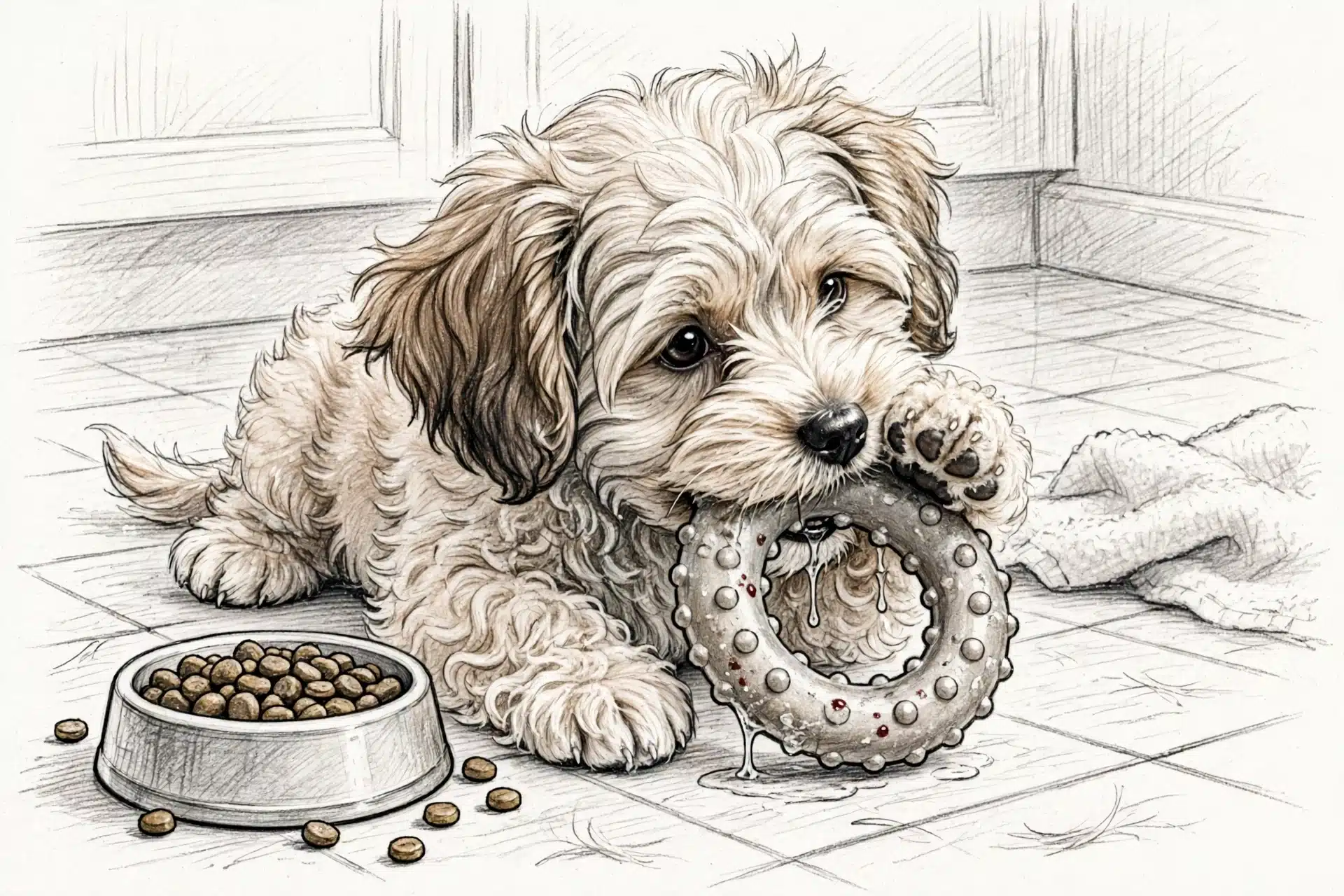
The Normal Teething Cluster
Expect most of these between 12 and 24 weeks, when adult teeth start pushing the baby teeth out:
- Gnawing on hands, furniture and toys with real focus
- Drooling more than usual, sometimes leaving damp spots
- Red, puffy gums where a new tooth is moving in
- Small pink or red spots left on chew items
- Fussiness, whining or rubbing the face on the floor
- Chewing food slowly, dropping kibble, or skipping a meal for a day
A quick gum check tells you more than behavior alone. Lift the lip and look for a baby tooth and an adult tooth side by side, or a swollen ridge along the jaw. Because Havanese, Havapoo and Cavapoo jaws are so small, check weekly and keep a simple note of what you see so patterns stand out. For a broader look at these breeds, our page on small breed puppies covers size-specific care.
What Is Not Teething
Some symptoms point past teething and need a vet:
- Bleeding that does not stop, or heavy blood in saliva
- Gums that bleed badly or swell on one side only
- A bad smell from the mouth, beyond mild puppy breath
- Refusing food for more than a day
- A baby tooth still firm beside an adult tooth after the adult is fully grown in
- Pawing plus yelping, which can signal a broken tooth
Retained baby teeth are common in small breeds, and a persistent deciduous tooth can crowd adult teeth into a bad bite. Persistent deciduous teeth usually need simple removal under sedation, and catching them early protects the adult set. When the mouth looks wrong rather than merely sore, book a puppy mouth check with your veterinarian.
Puppy Teething Relief That Is Safe for Small Breeds
Relieving teething pain in a small breed puppy comes down to four steps. First, offer cold: chill a damp washcloth or a rubber chew toy designed to be frozen. Second, choose soft, flexible chew textures, never hard bones or antlers. Third, soften kibble with warm water if sore gums make eating hard. Fourth, puppy-proof one or two rooms so chewing mistakes get redirected, not punished. Skip ice cubes, frozen knotted cloths left unsupervised, and any human pain medication.
Cold Soothing for Inflamed Gums
Cold numbs sore gums and brings down swelling, which is why vets often recommend it first. Soak a clean washcloth, wring it out, twist it into a rope, and freeze it. Let your puppy chew for five to ten minutes while you watch, then take it away. Veterinary teething tips describe exactly this method for oral discomfort. For a 5-pound Havanese puppy, size the cloth small and stay close, because a rolled or soggy cloth can become a choking risk.
Matching Chew Texture to a Small Mouth
Small mouths need soft, flexible surfaces. Look for rubber or silicone chew toys with some give, in a size your puppy can hold without straining her jaw. Avoid antlers, bully sticks thick enough to crack teeth, nylon bones, and cooked bones of any kind. A thumb-press test works well: if the toy does not dent slightly under your thumb, it is too hard for teething gums. Swap textures every few days so one toy keeps its appeal.
Food-Based Relief and Appetite Support
Sore gums can make dry kibble feel like chewing gravel. Try soaking her meals in warm water for five minutes, or offer chilled plain canned pumpkin or a small amount of plain yogurt in a lick mat. Cold, soft foods give relief and keep calories up. If she refuses food for more than a day, call your veterinarian rather than waiting it out.
Protecting Your Home Without Punishment
Chewing is the behavior; the target is the problem. Block access to one or two rooms with baby gates, and keep shoes, cords and remotes out of reach. When she chews something off-limits, trade it calmly for a chew toy and praise the swap. Scolding after the fact teaches nothing, because puppies connect corrections only to what happens in the moment. A consistent trade, plus plenty of approved outlets, protects both your furniture and her trust in you.
Retained Baby Teeth and the First Adult Dental Check
Small jaws sometimes keep a baby tooth after the adult one has already come through. Vets call this a persistent or retained deciduous tooth, and toy breeds like Havanese, Havapoos and Cavapoos deal with it more often than larger dogs. When two teeth try to share one socket, food and plaque pack between them, which raises the risk of gum disease and tartar while your puppy is still young.
Which Teeth Are Most Often Retained
The troublemakers are almost always the same teeth. The American Kennel Club points to the upper canine teeth first, then the lower canines and the incisors at the front. Canines are the worst place for it, because a stuck baby fang crowds the adult fang into a bad position and can even misdirect the bite.
You can catch most cases yourself. Once the adult tooth is visible at the gumline, check that spot weekly. An adult canine should have exactly one baby fang beside it that then loosens and drops. If the sharp baby tooth is still firmly in place when the adult tooth is halfway through, that pair needs watching. This matters more in small breeds because all 42 adult teeth pack into a tiny jaw, so crowding has less room to fix itself.
How It Is Treated and When to Act
Most retained teeth need one thing: extraction of the baby tooth. A vet pulls the lingering deciduous tooth so the adult tooth can settle into its spot, ideally before it locks into a crooked position.
Timing matters. Vets generally recommend acting by about 4.5 to 6 months of age, when the adult tooth has clearly erupted and the baby tooth clearly refuses to budge. Waiting past 8 months lets permanent misalignment and gum damage take hold. Extraction is a short procedure, often combined with the spay or neuter visit so your puppy needs only one anesthesia.
Schedule a mouth check with your vet around 6 months. If you already have an appointment booked, ask them to look while you are there.

Teething gets easier once you know what to expect, and a well-bred puppy starts with healthy teeth and calm nerves. If you’re still choosing your companion, the Havanese, Havapoo and Cavapoo puppies from Sage Puppies are raised with that care from day one. Visit the site to see available litters, or reach out with your teething questions and we’ll help you sort normal from concerning.
Frequently Asked Questions
Q1: When do small breed puppies stop teething?
Most small breeds finish between 6 and 8 months. Havanese, Havapoo and Cavapoo puppies often push their last canines through closer to 8 months, so chewing at 7 months is usually still normal.
Q2: What are the signs a small breed puppy is teething?
Look for heavy chewing, drooling, red or puffy gums, tiny blood spots on toys, pawing at the mouth, and fussier eating. A short burst of these around 12 weeks is the clearest signal.
Q3: How do I relieve teething pain in a small breed puppy?
Offer a frozen damp washcloth or rubber chew toy, soften kibble with warm water, and choose soft, flexible textures. Never give human pain medication or hard bones.
Q4: Do puppies swallow their baby teeth?
Usually, yes. Most babies’ teeth drop out during meals or play and get swallowed without harm, so finding none is normal.
Q5: When should a retained baby tooth be removed?
Most vets act between 4.5 and 6 months, once the adult tooth is clearly in and the baby tooth will not budge. Often the extraction is combined with the spay or neuter visit.
Q6: Can I give my puppy ice cubes for teething?
Skip them. Hard ice can crack tiny teeth. A chilled, soft washcloth gives the same numbing relief more safely, with you watching the whole time.
Conclusion
Small breed teething simply runs longer than most guides admit. Baby teeth erupt by 8 weeks, adult teeth push through from 12 weeks, and the full set of 42 often lands between 7 and 8 months, especially in Havanese, Havapoo and Cavapoo mouths where crowding leaves less room for error.
Watch the normal cluster: chewing, drooling, red gums and tiny blood spots. Call your vet for bleeding that will not stop, a skipped meal lasting more than a day, or a baby tooth still firm beside an adult one. Most retained baby teeth in small breed puppies need a simple extraction, best done between 4.5 and 6 months. Keep weekly mouth checks and safe chew toys for teething puppies as your routine, and this phase passes on schedule.