
Training Foundations
Puppy Training Foundations: What to Start Before and After Go-Home Day
Puppy training does not begin with perfection. It begins with simple foundations: calm handling, predictable routines, potty rhythm, crate comfort, early socialization, and clear family expectations. This guide explains what Havanese, Havapoo, and Cavapoo families should know before bringing a puppy home.
Families often ask when puppy training should start. The answer is simple: training starts right away, but it should look age-appropriate, gentle, and realistic. A young puppy is not ready for long lessons or high expectations. They are ready for short, positive routines that teach them how life in a family works.
At Sage Puppies in South Jordan, Utah, we want families to understand that puppy training foundations are not about creating a fully trained puppy before go-home day. They are about helping puppies begin with trust, confidence, handling comfort, and a smoother transition into their new homes.
What Do Puppy Training Foundations Mean?
Puppy training foundations are the early building blocks that help a puppy feel safe, learn routines, and understand what is expected. These foundations are not the same as advanced obedience or a fully trained adult dog.
For a young puppy, the most useful early training usually includes calm handling, responding to people, beginning potty patterns, resting in a safe space, exploring new sounds and surfaces, and learning that humans are gentle and trustworthy.
Foundations come before obedience.
A puppy who feels safe, rested, and connected to their people will usually learn more easily. Start with trust and routine before expecting polished behavior.
What Can Begin Before Go-Home Day?
Before a puppy joins their new family, the goal is to begin age-appropriate development. Puppies are still very young, so the work should be gentle and simple. This stage is about exposure, handling, confidence, and early rhythm — not pressure.
Gentle handling
Early handling helps puppies become more comfortable being touched, held, checked, and cared for by people.
Human connection
Positive interaction with people helps puppies begin learning that humans are safe, warm, and worth engaging with.
Early routine
Young puppies benefit from repeated rhythms around eating, resting, potty breaks, and quiet time.
Surface exposure
Gentle exposure to safe household surfaces can help puppies become more adaptable as they grow.
Sound awareness
Age-appropriate household sounds can help puppies begin adjusting to normal family life.
Calm transitions
Short, positive experiences with handling and quiet separation can help prepare puppies for go-home day.
Every puppy is an individual. Some puppies are bold and curious, while others need more time and reassurance. Training foundations should be adjusted to the puppy’s age, temperament, and readiness.
The First Week Home: Keep Training Simple
The first week home is not the time to teach everything. Your puppy is adjusting to a new environment, new people, new smells, new sounds, and a new routine. The most important training goal is helping your puppy feel safe while gently introducing structure.
Focus on these first
- Where your puppy sleeps
- Where your puppy potties
- When your puppy eats
- Where your puppy rests during the day
- How your family handles and picks up the puppy
- How you reward calm, desirable behavior
During the first few days, short and consistent routines matter more than long training sessions. Think of everything as teaching: going outside, resting in the crate, following you to the door, hearing their name, and learning that calm behavior gets rewarded.
Do less, but do it consistently.
A predictable first week helps your puppy settle faster. Avoid over-scheduling, over-visiting, and over-handling while your puppy adjusts.
Potty Training Foundations
Potty training is one of the first routines families want to establish. Young puppies need frequent opportunities, close supervision, and patient repetition. Accidents are normal during the learning process, especially during the transition into a new home.
Helpful potty training habits
- Take your puppy to the same potty area often.
- Go out after waking, eating, drinking, playing, and resting.
- Reward immediately after your puppy potties in the right place.
- Supervise closely when your puppy is loose indoors.
- Use a crate, pen, or safe area when you cannot watch closely.
- Clean accidents calmly and avoid punishment.
Potty training improves with timing and consistency. Your puppy is not being stubborn when they have an accident. They are learning body awareness, routine, and where you want them to go.
Crate Comfort Foundations
A crate can be a helpful tool for rest, safety, travel, and potty training. The goal is not to force a puppy into isolation. The goal is to help the crate become a safe, predictable place for sleep and quiet time.
Do this
- Introduce the crate calmly.
- Use short, positive sessions.
- Offer safe rest time after potty and play.
- Keep the crate comfortable but simple.
- Place it where your puppy can settle.
Avoid this
- Using the crate as punishment.
- Expecting too much too soon.
- Skipping potty breaks before crate time.
- Letting children disturb the puppy while resting.
- Only using the crate when leaving the house.
Many puppies need time to adjust to sleeping alone or resting in a crate. Keep your expectations age-appropriate and build comfort gradually.
Preparing for a Sage puppy?
Start with structure, patience, and a calm first week.
Training foundations work best when your puppy has a predictable routine, gentle handling, and a family that understands what to expect.
A Simple First-Week Training Rhythm
Your exact schedule will depend on your puppy’s age, meals, sleep needs, and your household. This simple rhythm can help families think through the first week without making it too complicated.
| Moment | Training focus | Family goal |
|---|---|---|
| Wake up | Potty routine | Go directly to the potty area and reward success. |
| Meal time | Routine and calm waiting | Feed in the same area and keep the experience predictable. |
| Play time | Bonding and name response | Use short sessions, soft praise, and safe toys. |
| Rest time | Crate or pen comfort | Help your puppy settle before becoming overtired. |
| Handling practice | Paws, ears, brushing, gentle touch | Keep it brief and reward calm behavior. |
| Evening | Wind-down routine | Reduce activity and set up a calm sleep transition. |
Common Puppy Training Mistakes to Avoid
Most early puppy struggles come from too much freedom, too little structure, or expectations that are too advanced for the puppy’s age. A young puppy needs guidance, supervision, and consistency.
Too much freedom too soon
Letting a puppy roam the whole house often leads to potty accidents, chewing, and overwhelm. Use gates, pens, crates, and supervised spaces.
Inconsistent potty timing
Puppies need frequent opportunities. Waiting too long between potty breaks makes accidents more likely.
Overstimulation
Too many visitors, outings, or activities can make a puppy tired and mouthy. Rest is part of training.
Punishment-based reactions
Harsh corrections can damage trust. Redirect, prevent, reward, and teach the behavior you want instead.
Training Foundations for Havanese, Havapoo, and Cavapoo Puppies
Havanese puppies, Havapoo puppies, and Cavapoo puppies are often chosen as family companion dogs because they can be affectionate, people-focused, and well-suited to many home environments. Like all puppies, they still need structure, consistency, grooming practice, potty routines, and patient training.
Small companion puppies can be easy to carry and cuddle, but they still need clear boundaries. Teach them where to rest, what to chew, how to greet people, how to settle, and how your home routine works. The earlier your family agrees on the basics, the easier it is for your puppy to understand.
How Training Supports the Puppy-to-Family Transition
Training foundations are not separate from bonding. They are part of bonding. Every potty trip, crate rest, grooming session, meal routine, and calm cuddle teaches your puppy what life with your family feels like.
If you are preparing to bring home a Sage Puppies Havanese, Havapoo, or Cavapoo, read our new puppy owner guide, review our first week with a new puppy tips, and make sure your home is ready before go-home day.
Puppy Training Foundations FAQs
When should puppy training start?
Puppy training starts right away, but it should be gentle and age-appropriate. Begin with routines, potty breaks, crate comfort, handling, name response, and rewarding calm behavior.
Will my puppy come home fully trained?
No young puppy should be expected to come home fully trained. Early foundations can begin before go-home day, but families should continue potty training, crate comfort, socialization, and household routines at home.
What training should I focus on first?
Focus first on potty routine, safe sleep, crate or pen comfort, gentle handling, name response, and learning your home’s daily rhythm. Keep lessons short and positive.
How do I start potty training?
Take your puppy to the same potty area frequently, especially after waking, eating, drinking, playing, and resting. Reward immediately when your puppy potties in the right place.
How do I make crate training easier?
Introduce the crate calmly, use it for short rest periods, offer potty breaks before crate time, and avoid using the crate as punishment. Build comfort gradually.
When should I start puppy socialization?
Socialization can begin early through safe, positive, age-appropriate experiences. Ask your veterinarian what public exposure is appropriate before your puppy is fully cleared for higher-traffic environments.
Next Steps
If you are preparing for a Sage Puppies puppy, start by learning how our process works, reviewing available puppies, and preparing your home for a calm first week. Training foundations work best when families are ready before go-home day.





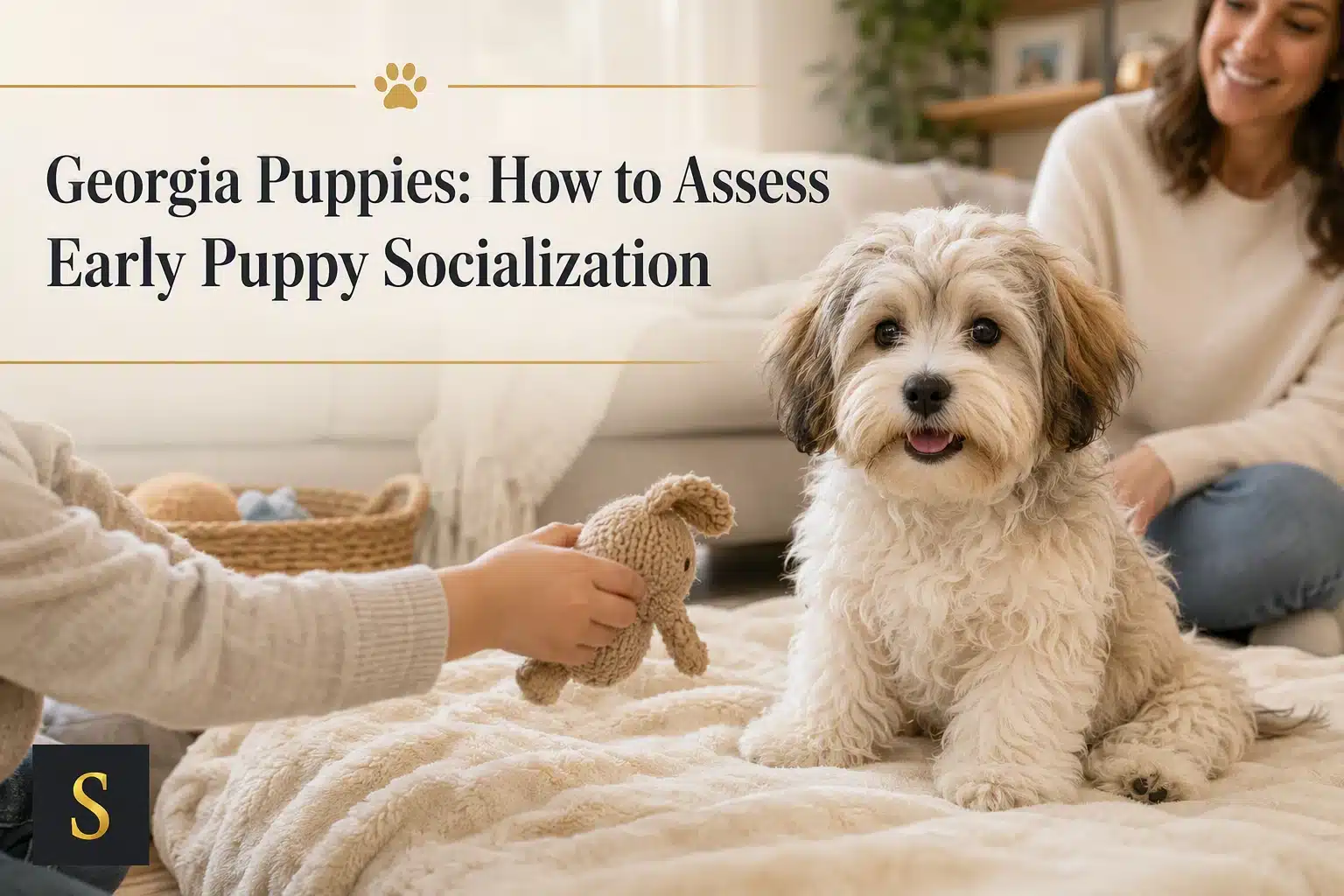
Early Socialization: Confidence Without Overwhelm
Socialization is often misunderstood. It does not mean exposing your puppy to everything all at once. Good socialization means helping your puppy experience the world in safe, positive, age-appropriate ways.
Before your puppy is fully cleared for public places, ask your veterinarian what is appropriate. You can still support socialization through safe household sounds, gentle visitors, car rides, grooming practice, handling exercises, and calm exposure from a distance.
Socialization foundations may include:
The goal is confidence, not chaos. A puppy who is overwhelmed may become more fearful, not more social. Keep experiences short, positive, and suited to your puppy’s temperament.