Quick Summary: A breeder’s written contract usually offers stronger health protection than a pet store’s short return policy because it names covered conditions, a 48-to-72-hour vet exam deadline, and specific remedies such as a refund or replacement. Programs like Sage Puppies also provide screening details and health records, but buyers should verify the testing, read every exclusion, and schedule the first vet visit before bringing the puppy home. The seller with the clearest, most enforceable paperwork wins, regardless of whether it is a breeder or pet store.
In the puppy breeder vs pet store guarantees question, the paper tells the truth. A written hereditary-condition guarantee with a named condition list and a first vet exam window is a real promise. A pet store puppy usually comes with a store-level return policy instead, which is easier to find and faster to use, but often covers less. Between the two documents, the puppy breeder vs pet store guarantees contest usually goes to the breeder contract, yet only if you read the wording before you pay.
Most buyers search for a reputable puppy breeder near me under time pressure, hearing conflicting claims and never seeing the contract until after they fall in love. This comparison breaks both channels down by coverage scope, duration, exam windows, testing evidence, remedies and enforceability, then turns each into questions to ask and documents to request first.
Puppy Breeder vs Pet Store Guarantees: At a Glance
| Puppy breeder programs (worked example: Sage Puppies) | Pet store puppy programs (chain puppy counters) | |
|---|---|---|
| Guarantee scope | Written hereditary and congenital conditions plus a post-pickup exam clause, named in the puppy’s agreement | Store-level satisfaction or return policy; live-animal terms are set and administered at store level |
| Typical coverage length | Short exam window after pickup, then longer hereditary coverage; exact terms read from the individual puppy’s agreement | Often a short satisfaction window rather than multi-year hereditary coverage |
| First-exam window | Defined hours after pickup or delivery, with written veterinary proof required | No individual first-exam clause; the store policy clock starts at purchase |
| Remedy if a problem appears | Stated options such as refund, replacement or credit, with exclusions listed in the written terms | Exchange or refund under the store’s published return policy, subject to documentation and return conditions |
| Genetic testing evidence | Parent health screening discussed with the buyer; general puppy price range $3,500 to $4,500 | Varies widely by source; store policies generally do not publish breed-level screening results |
| Best for | Families wanting a specific small-breed companion with documented records and a written agreement | Buyers who want immediate availability, an in-store purchase and simple, fast return rules |
How Puppy breeder programs (worked example: Sage Puppies) and Pet store puppy programs (chain puppy counters) Compare
Puppy breeder programs (worked example: Sage Puppies)
An owner-managed small-breed program in South Jordan, Utah, selling Havanese, Havapoo and Cavapoo puppies through an application and written purchase process. It fits families who want documented records and a signed agreement, where the health guarantee names hereditary and congenital conditions, a first-exam window and stated remedies.
Key strengths
- Written hereditary coverage plus a post-pickup exam clause in the puppy’s agreement
- Named remedies such as refund, replacement or credit, with exclusions listed in the terms
Pet store puppy programs (chain puppy counters)
Puppies sold at large retail chains under the store’s own policies rather than a breeder contract. This route suits buyers who want immediate availability and a simple, fast return process, though coverage usually means a short satisfaction window instead of multi-year hereditary protection.
Key strengths
- In-store purchase with clear store-level return rules
- Same-day availability across many locations
What Each Guarantee Actually Covers
In practice, neither option comes with a guaranteed edge built into law. A thoughtful breeder usually offers stronger terms in writing, while a pet store relies on state rules and store policy. The real difference sits in the documents each seller hands you, so compare the paperwork, not the slogans.
The Two Documents Buyers Are Actually Comparing
The breeder side is a written puppy contract with a health guarantee built in. A solid one names the exam window, usually 48 to 72 hours for your first vet visit, lists the hereditary conditions covered, and states the remedy if something goes wrong, whether that is a refund, a replacement puppy or help with vet costs. It should also spell out the exclusions, because what a guarantee leaves out matters as much as what it promises.
The pet store side is different. Stores rarely write custom contracts per puppy. You typically get a standard return policy, a state-mandated disclosure form where one exists, and a certificate of veterinary inspection showing the puppy passed a health check before travel or sale. That certificate confirms the puppy looked healthy on one day. It does not promise anything about conditions that show up later. Ask for the full document set before you pay either seller, and read the remedy clause first. Many breeders, including small programs like ours, walk buyers through these clauses during the matching process, and our own guide to questions to ask a puppy breeder covers what to request in writing.

Why Federal Law Does Not Settle the Question
Buyers often assume federal law sets a baseline. It mostly does not. The Animal Welfare Act excludes retail pet stores from licensing and inspection, a carve-out reaffirmed in the USDA’s 2012 rule on the retail pet store exemption. So federal oversight says little about either seller’s guarantee terms. Meaningful protections come from state puppy lemon laws and, mostly, from whatever the seller puts in writing. That is why the document checklist in the next section matters more than the seller’s category.
Coverage Length and the First-Vet Exam Window
How long is a puppy health guarantee? Most run on two clocks at once. A short exam window, usually 48 to 72 hours, covers your first vet visit and infectious problems found right away. A much longer hereditary period, typically one to two years, covers genetic conditions. Read both before you sign.
Two Clocks Running at Different Speeds
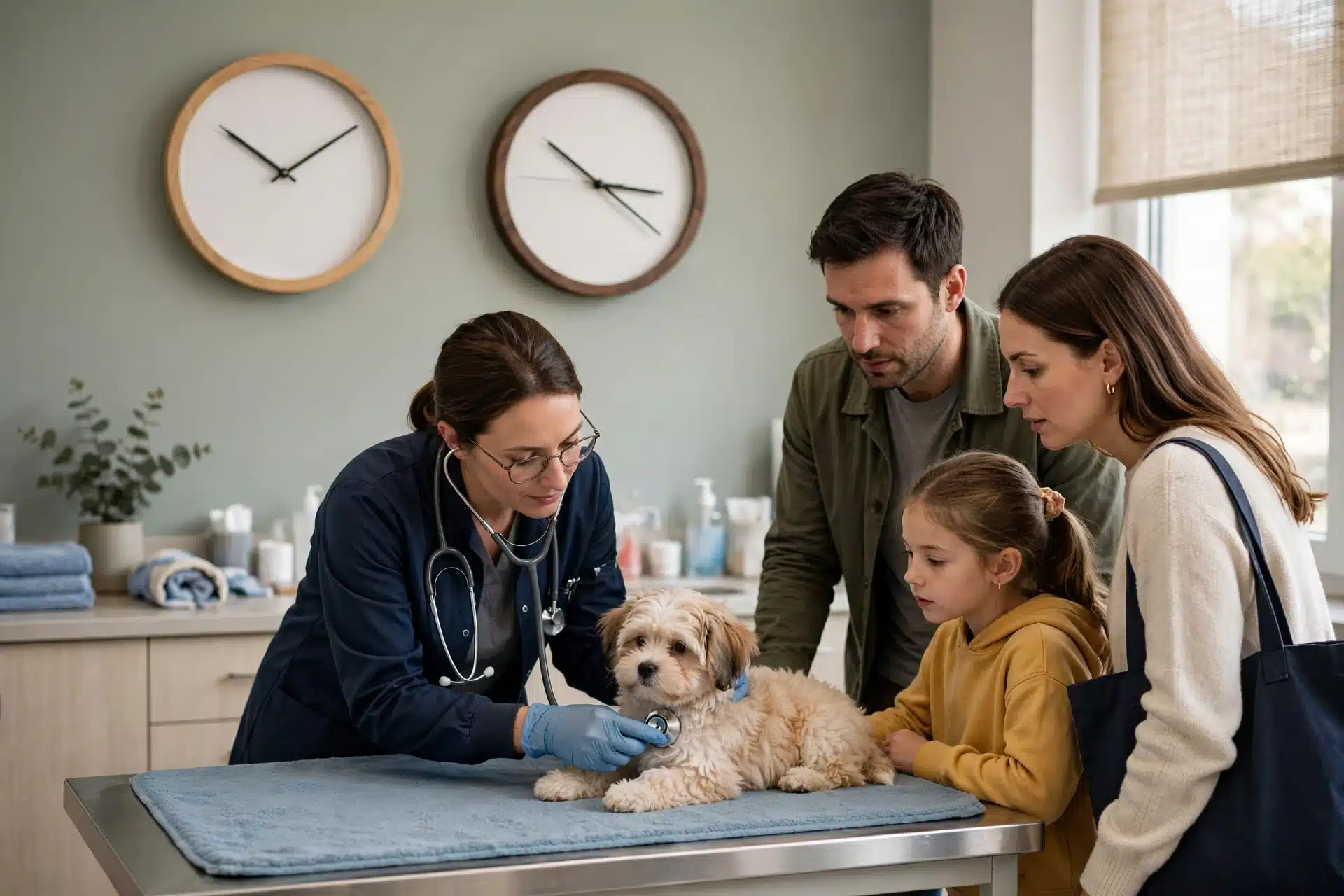
The first clock starts the day you pick up your puppy. Most written contracts give you 48 to 72 hours to have your own veterinarian examine the dog. That visit protects both sides. It confirms the puppy arrived healthy, and it documents any contagious issue, like parasites or an upper respiratory infection, that may have come from the seller’s facility.
The second clock measures years, not hours. Hereditary coverage for conditions such as heart defects, luxating patellas, or eye disease often runs one to two years, and some sellers advertise longer terms. Coverage length matters less than what it names, though. A vague “lifetime” promise with no listed conditions and no stated remedy is worth less than a two-year term that spells out both. Ask to see the actual guarantee document, not a summary of it.
What Happens If You Miss the Deadline
Miss the exam window and you can lose the guarantee entirely, even for a serious hereditary problem found later. Sellers write these clauses tightly, so treat the deadline like an appointment you cannot move.
Book the first veterinary visit after pickup before you bring the puppy home. Many vets reserve slots for new puppies if you call ahead. Bring the contract, vaccination records, and any certificate of veterinary inspection the seller gave you, and ask the vet to put findings in writing.
Plan around realistic timing too. Local pickup in Utah makes a 48-hour window easy to meet. With nationwide delivery, schedule the visit for the day after arrival rather than trusting a busy week to sort itself out. Sellers like Sage Puppies expect the documented visit and build their process around it, so ask any breeder exactly which records they want back and by when.
The Health Testing Behind Each Promise
A written guarantee is only as strong as the testing behind it. Before you trust any breeder’s promise, ask how you can verify a puppy breeder’s health testing:
- Test name. Ask which screenings each parent had, such as patella, cardiac, eye exams, and DNA panels.
- Examiner. A board-certified specialist or a commercial lab should have run it, not just “the vet looked.”
- Date. Results from years ago may not reflect the breeding pair used now.
- Result. Get the actual result, in writing, not a summary like “all clear.”
- Documents at handoff. Ask what paperwork you receive: registration papers, lab reports, and health records.
Requesting Results Instead of Claims
Any seller can say “health tested parents.” A breeder can show you the record. The Orthopedic Foundation for Animals keeps a public database of test results, so you can look up a parent by name or registration number. The OFA’s CHIC program gives buyers direct access to a breeder’s reported testing results. For Havanese, the breed’s parent club also encourages using the OFA database to research a dog’s health pedigree before breeding.
Pet stores rarely show parent records, because store staff usually never met the breeding dogs. That gap is the real difference between the two sources, not the promise printed on the contract.
When a breeder shares the specific tests behind each puppy’s health background, you can check the claims yourself rather than take them on faith.
Screening Reduces Risk but Does Not Replace the First Exam
Genetic and screening tests lower the odds of inherited disease, but they cannot rule out everything. Late-onset conditions can appear even in well-tested lines, and infections can develop during transport. That is why screening and the first vet exam work together.
Use your own veterinarian within the exam window, usually 48 to 72 hours after pickup. The visit confirms what the paperwork claims and catches infectious problems early. Testing predicts hereditary risk; your vet’s exam checks the puppy in front of you. You need both.
Remedies, Refunds and Exclusions
A guarantee is only as good as its remedy. Before you sign anything, find out exactly what happens if the promise breaks. A strong written contract names the conditions covered, states the proof you must provide, sets your first vet exam deadline, and spells out the remedy and the exclusions. If any of those five parts is missing, you are reading a slogan, not a guarantee.

What You Can Realistically Get Back
Most contracts offer one of three outcomes: a replacement puppy from a future litter, a partial or full refund, or reimbursement of vet costs up to the purchase price. Replacement is the most common remedy from breeders, because a healthy littermate or upcoming litter is something they can actually provide. Pet stores more often lean on store credit, which locks you into buying from the same source that just failed you.
Ask how long a replacement decision takes and whether you keep the puppy during that time. Some families cannot face returning a dog they already love, so a cash or reimbursement option matters even if you never use it. A responsible program, including small breeders of Havanese and Cavapoo puppies, will walk you through the remedy in writing before you pay a deposit.
Reading Exclusions Without Overreacting
Every guarantee excludes something. Typical exclusions cover parasites found after the exam window, injuries that happen in your home, and conditions the buyer chose not to treat. These are reasonable. Watch instead for vague or sweeping language, such as refusing all claims unless a specific genetic panel is run, or voiding coverage because you switched food.
A fair contract defines the proof it needs, names who pays for testing, and gives a clear appeal path. If an exclusion list runs longer than the coverage itself, treat that as your answer.
State Rules, Paperwork and What Actually Protects You
Breeder Laws Versus Movement Rules
Two different rule sets shape any puppy purchase, and they do different jobs. State consumer laws, often called puppy lemon laws, define what a seller owes you if the dog turns out sick. As of 2023, 22 states had enacted Pet Purchaser Protection Acts, and the details vary a lot. Some cover only sales from licensed breeders or dealers. Others exempt small programs that sell just a few litters a year, which the AKC’s policy analysis documents state by state. Florida’s statute, for example, sets 14 days for infectious disease claims and a year for hereditary ones.
Movement rules are separate. Crossing state lines with a dog generally requires a certificate of veterinary inspection, issued by a licensed vet shortly before travel. That paper confirms the puppy looked healthy on a given date. It is not a health guarantee, and it replaces none of your contract rights.
The Document Stack to Keep
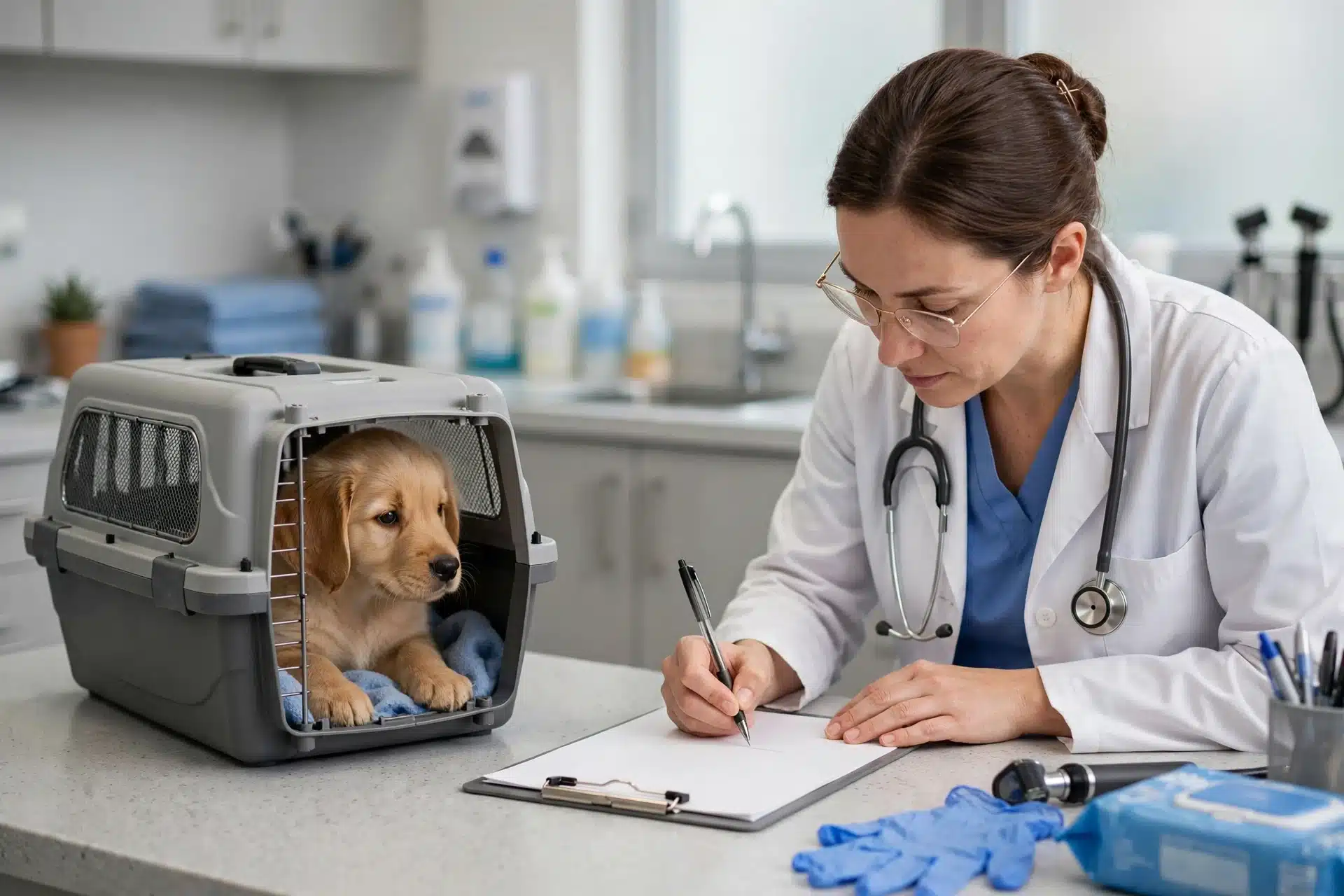
Paperwork is your proof, so keep it organized from day one. A complete stack includes:
- The written contract, with the exam window, hereditary coverage, remedy and exclusions stated in full
- The certificate of veterinary inspection, dated and signed
- Vaccination and deworming records, with product names and dates
- Parent health screening results, or the breeder’s written summary of them
- Your own vet’s exam report from the first visit, ideally within 48 to 72 hours
When buyers work with a Utah breeder, confirm which state’s law governs the sale before signing, especially if delivery crosses state lines. File everything digitally the day you get it. If a claim ever comes, dated documents decide the outcome, not good intentions.
Which Should You Choose: A Breeder or a Pet Store?
Neither seller is automatically the right answer. The better pick depends on what you can verify before you pay, and how much documented health history you want in writing.
When a Breeder Is the Better Buy
Choose a breeder when you want proof, not promises. A reputable puppy breeder near you can show you the parents, explain genetic health testing results, and put hereditary coverage in a written contract. You will usually meet the mother, see where the puppies were raised, and get records for vaccinations, deworming, and the first vet exam. Breeders also tend to know their lines well, so if a Havanese, Havapoo, or Cavapoo develops a breed-prone issue, you have a partner who answers the phone. Ask about the exam window, the remedy clause, and every exclusion before you send a deposit. If a breeder resists those questions, treat that as your answer.
When a Pet Store Is the Better Buy
Pet stores make sense in narrow cases. Some states, like California, have banned retail puppy sales, so availability is shrinking. Where stores still sell puppies, you may get same-day availability, financing, and a structured pet store puppy return policy, and the store must follow your state’s Pet Purchaser Protection Act where one exists. But ask who bred the dog. Store puppies often come from large commercial kennels, and staff rarely know the parents or their health screening. If you buy this way, demand the breeder’s name, the certificate of veterinary inspection, and every guarantee in writing before you leave. If the paperwork is thin, walk away.
The seller with the stronger documents wins, not the one with the friendlier pitch.
That standard applies everywhere. When you evaluate any program, compare the puppy contract details side by side rather than trusting a website’s adjectives.

A good guarantee only protects you if the seller puts it in writing. Sage Puppies shares exam records, screening details and clear terms before you commit. Compare programs yourself, or start with Sage Puppies and ask your questions first.
Frequently Asked Questions
Q1: Which offers better health guarantees, a puppy breeder or a pet store?
Breeders, usually. A breeder contract names hereditary conditions, an exam window and a remedy in writing. A pet store mostly offers a store-level return policy, which is faster but covers less.
Q2: How long do I have for the first vet exam?
Most written contracts give you 48 to 72 hours after pickup. Book your own vet before you bring the puppy home, and keep the exam report.
Q3: What documents should I get before paying?
Ask for the written contract, a certificate of veterinary inspection, vaccination records and parent health screening results, such as OFA reports.
Q4: What happens if a covered condition appears later?
Remedies vary. Contracts usually offer a replacement, refund or vet cost reimbursement up to the purchase price. Ask which applies and in writing.
Q5: What should a fair health guarantee exclude?
Reasonable ones exclude injuries at your home or missed deadlines. Be wary of vague clauses that void coverage for switching food.
Q6: Does a health certificate count as a guarantee?
No. It confirms the puppy looked healthy on one date. It says nothing about hereditary conditions that show up later.
Conclusion
The breeder-versus-pet-store question resolves on paper, not on pitch. A breeder’s written contract usually names hereditary conditions, a 48-to-72-hour first vet exam window, and a stated remedy, while a pet store typically offers a shorter return policy with less coverage. Neither is protected much by federal law, so your state’s rules and the documents matter most. Before you pay anyone, read the guarantee in full: check the exam window, the condition list, the remedy, and the exclusions. Verify parent health screening in a public database, book your own vet right after pickup, and keep every dated record.